


Your marketing team just presented last quarter’s campaign results. The creative was compelling, and everyone feels engaged and confident about the work. But when the CFO asks the inevitable question — “What revenue did we generate from this?” — the room goes quiet.
Marketing ROI connects creative execution to financial accountability by measuring revenue generated from marketing activities against their cost. It gives you concrete data to defend budgets, guide decisions, and prove marketing’s contribution to growth. This guide covers marketing ROI means in detail, including how to calculate it across different business models, and why mastering ROI measurement gives you a competitive edge. We’ll also explore how centralizing your marketing data in platforms like monday.com lets you track ROI in real-time and act on what you learn.
Try monday.comKey takeaways
- Calculate true ROI by including all costs: Use the formula ((Revenue – Marketing Cost) / Marketing Cost) × 100, but include agency fees, software, salaries, and creative costs—not just ad spend.
- Track ROI in real-time to optimize spending: Monitor performance as campaigns run so you can shift budgets from underperforming channels to high-return activities to ensure every dollar is maximized.
- Connect marketing activities to revenue outcomes: Integrating CRM data with campaign costs in one workspace creates a single source of truth that links spend to sales results.
- Set realistic ROI targets based on your industry: B2B software typically sees 5:1 to 7:1 returns, while e-commerce averages 3:1 to 5:1—compare against your sector, not generic benchmarks.
- Use ROI data to defend and grow marketing budgets: Present concrete revenue numbers to executives and finance teams, transforming budget requests from “asks” into investment opportunities with predictable returns.
What is marketing ROI?
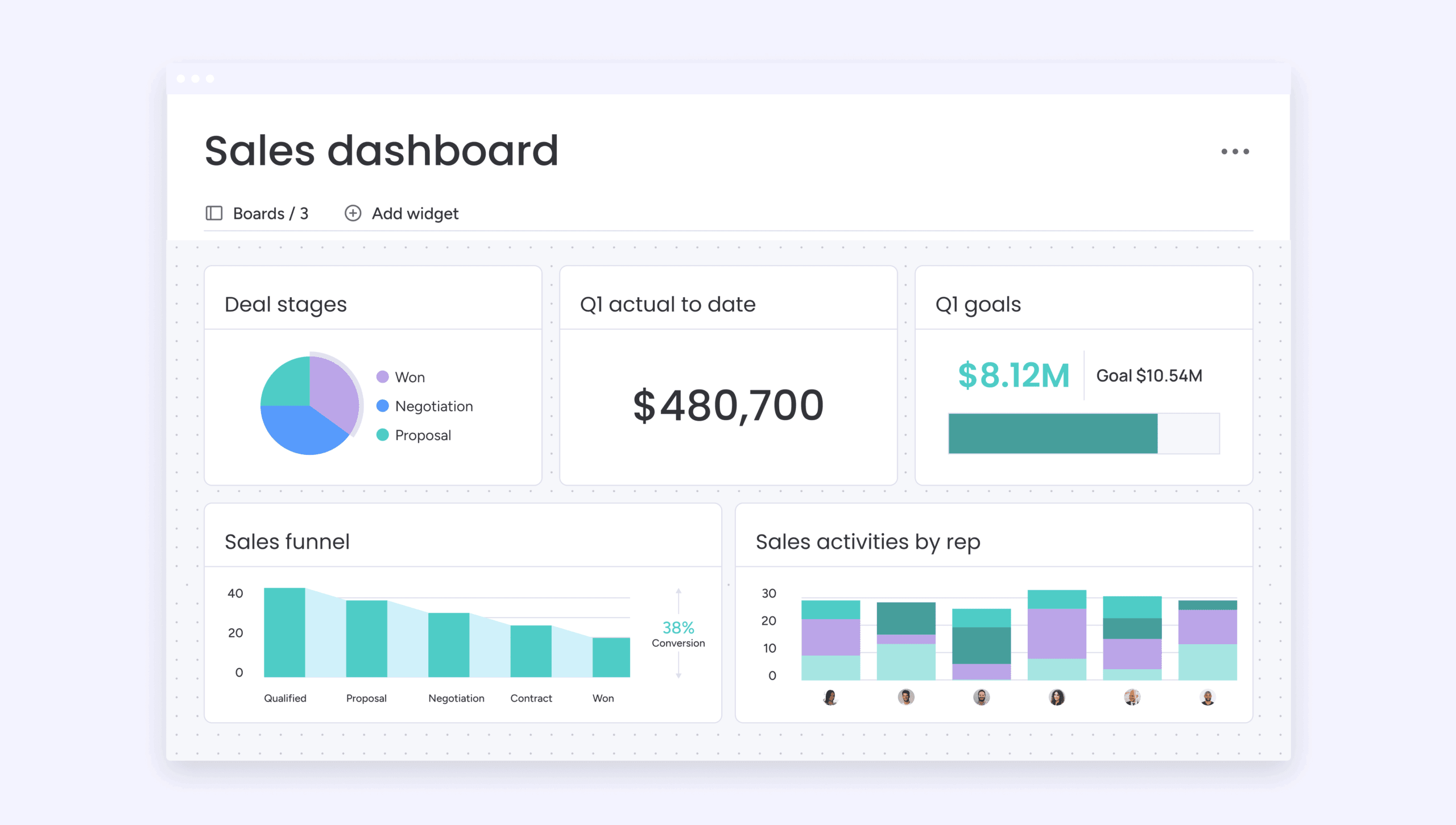
Marketing ROI measures the revenue your marketing generates compared to its cost. This percentage or ratio shows how profitable your marketing investments are — the language that connects creative work to financial results.
Marketing ROI also shows you which initiatives drive growth and which ones drain resources. This metric moves conversations beyond vanity marketing metrics like impressions or social media likes, focusing instead on contribution to the company’s financial health.
When marketing leaders present ROI data, they’re speaking the CFO’s language, which makes budget discussions a lot easier.
ROI vs ROAS
ROI and ROAS (Return on Ad Spend) get confused a lot, but they serve different purposes. Understanding the difference helps you pick the right metric for the situation.
| Aspect | Marketing ROI | ROAS |
|---|---|---|
| Definition | Measures overall profitability relative to all marketing costs | Measures gross revenue generated per dollar of ad spend |
| Scope | Includes all costs: ads, agency fees, software, and salaries | Focuses only on direct media spend |
| Strategic use | Supports long-term planning and budget allocation | Used for day-to-day campaign optimization |
| Time horizon | Accounts for full sales cycles and customer lifetime value | Focuses on immediate or short-term conversions |
ROI measures overall business profitability, while ROAS measures how efficient your specific ad channels are. A campaign might show strong ROAS but a weak ROI if your total costs outweigh the revenue.
What are the key components of marketing ROI?
To calculate ROI accurately, you need to understand four specific elements. Getting these components right keeps your data accurate, leading to smarter decisions. The following components give you a complete picture of marketing performance.
- Revenue attribution: How you connect a sale back to specific marketing touchpoints. This means tracking the customer journey from first interest to final purchase.
- Cost accounting: True ROI requires a “fully loaded” cost model including media buys, creative team time, software subscriptions, and agency management fees.
- Time periods: Marketing impact doesn’t happen overnight. Set clear measurement windows so your analysis captures the full sales cycle, especially in B2B.
- Customer lifetime value: High acquisition costs might look like a loss at first, but they often deliver strong ROI over time. Factor in CLV, so marketing gets credit for the long-term revenue it generates.
Why marketing ROI matters
Marketing ROI changes how executives and directors see marketing, turning it from a discretionary expense to a revenue driver. It gives you the foundation for agile strategy and smarter decisions. Understanding these benefits helps you prioritize ROI measurement and build stronger accountability.
Marketing ROI allows you to justify marketing spend
ROI data is your best defense for marketing budgets. During downturns or restructuring, departments that can’t prove their financial contribution get cut first. Documented ROI gives you the evidence to protect your budget and secure increases.
How confident are you in defending next quarter’s marketing budget? Organizations that track ROI consistently transform budget requests from “asks” into investment opportunities with predictable returns.
Marketing ROI drives your budget decisions
Smart resource allocation depends on having a precise, accurate view of your ROI. Instead of spreading budgets evenly or relying on what worked last year, you can use ROI data to shift funds in real-time. Money moves from underperforming channels to high-impact initiatives in real-time.
This agility lets teams double down on what works right away, getting the most from every dollar before the quarter ends. When marketing leaders see which campaigns deliver the strongest returns through marketing operations software, they make faster, more confident decisions about where to invest.
Marketing ROI proves campaign impact
Marketing ROI connects your daily work to business results. When teams show that specific campaigns drove X% of quarterly revenue, they build credibility across the company.
This proof of impact aligns marketing with sales and product teams, fostering a culture where marketing is seen as a critical driver of business strategy through effective creative strategy rather than just a support function.
Try monday.comHow to calculate marketing ROI
Calculating marketing ROI can be simple arithmetic or complex modeling, depending on how mature your data systems are. The key is picking the right approach for your business and keeping your data inputs consistent. These methods range from basic to advanced, so you can match your analytical needs.
Marketing ROI formula
Calculate marketing ROI by subtracting your marketing costs from the revenue those efforts generated, then divide by the marketing costs and multiply by 100.
The formula looks like this: ((Revenue – Marketing Cost) / Marketing Cost) × 100
When applying this formula, remember to include all relevant costs:
- Direct ad spend
- Agency or contractor fees
- Software and platform costs
- Internal team salaries allocated to the campaign
- Creative production expenses
Example: If you spend $10,000 on a campaign (including ad spend, software, and labor) and that campaign generates $50,000 in revenue, your ROI is 400%. This basic formula works well for short-term campaigns with direct conversions, but it oversimplifies complex B2B sales cycles.
Advanced calculation methods
Advanced teams use methods that capture the nuance of today’s complex marketing landscape. These approaches factor in longer sales cycles, multiple touchpoints, and how customer relationships compound over time.
- Customer lifetime value integration: Swap immediate revenue for projected lifetime value to get a clearer picture of long-term profitability.
- Multi-touch attribution: Give fractional credit to different touchpoints — customers might see an ad, read a blog, and attend a webinar before they buy.
- Incremental ROI: Calculate the extra return from increased spending to find the point of diminishing returns.
- Blended ROI: Combine returns from all channels to see how healthy your overall marketing is.
Attribution models for accurate ROI
The attribution model you choose determines how credit gets assigned, and it directly affects your ROI numbers. Pick a model that matches your sales cycle length and the complexity of your customer journey.
| Model | How it works | Best use case | Key consideration |
|---|---|---|---|
| First-touch | Assigns all credit to the first interaction | Brand awareness campaigns | Ignores mid- and late-stage nurturing efforts |
| Last-touch | Assigns all credit to the final interaction before conversion | Short sales cycles | Devalues early discovery and awareness stages |
| Linear | Distributes equal credit across all touchpoints | Complex B2B journeys with multiple interactions | May overvalue minor or low-impact touchpoints |
| Time-decay | Gives more credit to interactions closer to conversion | Long sales cycles | Can undervalue the initial engagement that started the journey |
| Data-driven | Uses AI to assign credit based on observed patterns and impact | High-volume environments with rich data | Requires substantial data to produce reliable insights |
What is a good marketing ROI?
“Good” ROI is relative and depends heavily on industry, business maturity, and campaign goals. A 5:1 ratio is often cited as strong, but a meaningful evaluation is only possible if you have context. The following benchmarks allow you to set realistic expectations and track progress.
Marketing ROI benchmarks by industry
Different sectors have vastly different margins and customer acquisition costs, which affects their target ROI. Comparing against your own past performance is often more reliable than external benchmarks.
| Industry | Typical ROI ratio | Key factors |
|---|---|---|
| B2B software | 5:1 to 7:1 | High customer lifetime value justifies higher acquisition costs |
| E-commerce | 3:1 to 5:1 | Lower margins require highly efficient ad spend |
| Healthcare | 4:1 to 6:1 | Longer sales cycles and the need to build trust with buyers |
| Financial services | 6:1 to 10:1 | Extremely high customer lifetime value supports higher ROI targets |
| Manufacturing | 4:1 to 6:1 | Relationship-driven sales with longer buying cycles |
Factors that influence ROI targets
Several factors determine what counts as an acceptable return for your organization, so you can set realistic expectations and avoid bad comparisons.
- Business maturity: Startups often accept lower ROI to grab market share, while established companies focus on profitability and efficiency.
- Market conditions: Economic downturns usually lower ROI across the board as customers spend less.
- Customer acquisition cost: Industries with high CAC need higher ROI ratios to cover the upfront investment.
- Sales cycle length: Longer cycles often show lower short-term ROI but deliver higher cumulative value, so be patient with measurement.
- Brand awareness stage: New brands investing in awareness see lower immediate ROI than brands capturing demand in mature markets.
Immediate vs cumulative returns
Marketing activities fall into two buckets: immediate and cumulative returns. Performance marketing delivers quick, measurable returns, but they stop when you stop spending. Brand building creates value that compounds over time, often delivering ROI months or years later.
A healthy marketing strategy balances both, accepting lower immediate ROI on brand work to secure long-term position.
How companies use marketing ROI data
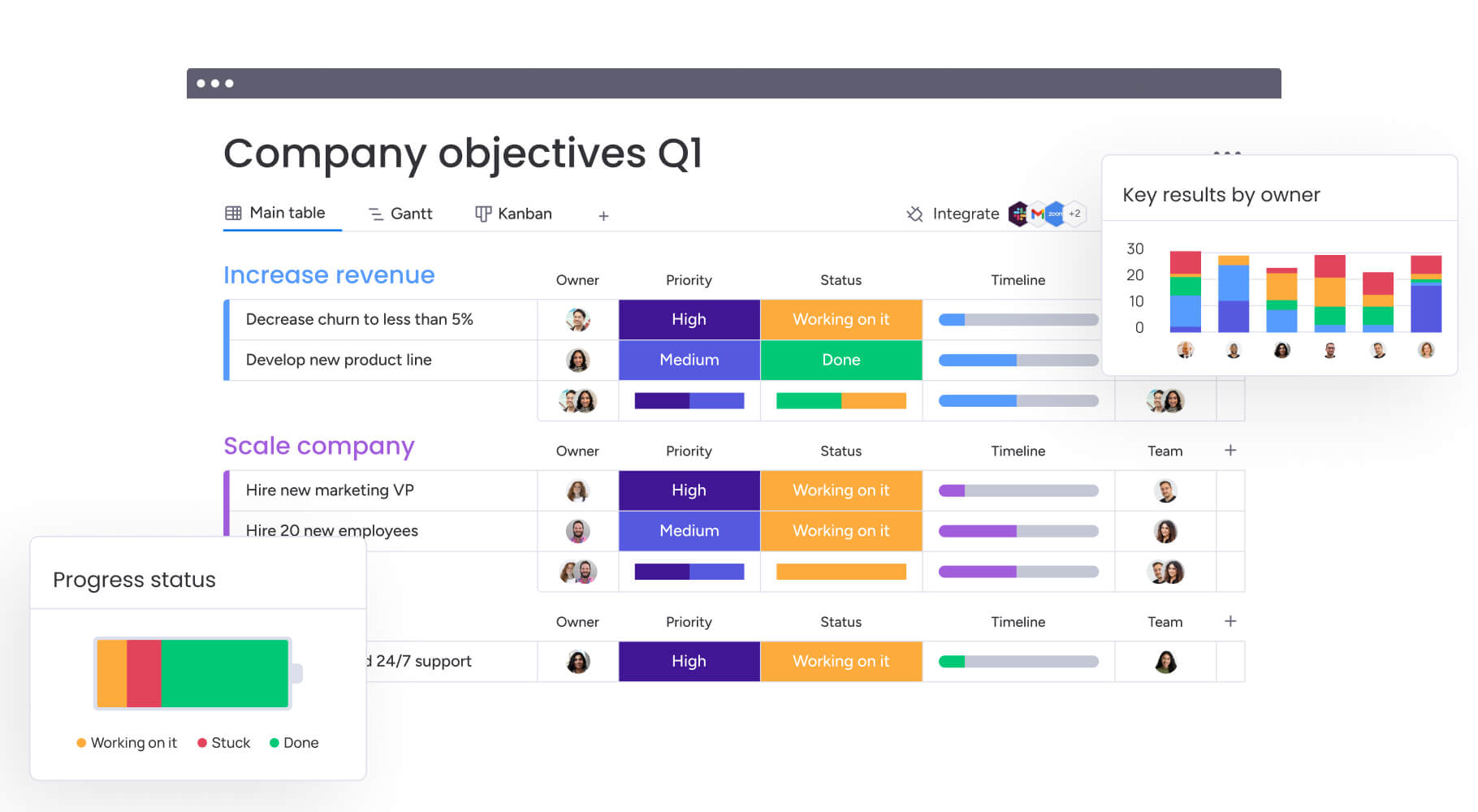
ROI data is an operational asset that shapes daily decisions and business strategy. These examples show how ROI measurement drives real results across the organization.
Allocate marketing budgets
Just like portfolio management, you analyze returns across channels to maximize total value. If LinkedIn ads generate a 6:1 return and display ads deliver 2:1, shift budget from display to LinkedIn until the returns even out.
This approach puts every dollar where it works hardest. Organizations using monday.com visualize this allocation in real-time dashboards through goal tracking software, connecting spend data directly to revenue outcomes across campaigns.
Track campaign performance
Teams monitor ROI trends to make real-time adjustments. If a campaign’s ROI drops below your threshold, automated alerts flag it for review. Teams can pause underperforming creatives, tweak targeting, or fix landing pages before the budget runs out.
Continuous monitoring through goal tracking transforms campaign management from reactive post-mortems to proactive optimization. What would change if your team could see ROI fluctuations as they happen?
Guide strategic decisions
ROI insights shape business strategy beyond marketing. High ROI in a specific region might mean you’re ready for physical expansion. Strong returns on a product line can validate R&D investment in related features.
Marketing ROI acts as a market signal, showing where demand is strong and where your value proposition resonates.
Common marketing ROI measurement challenges
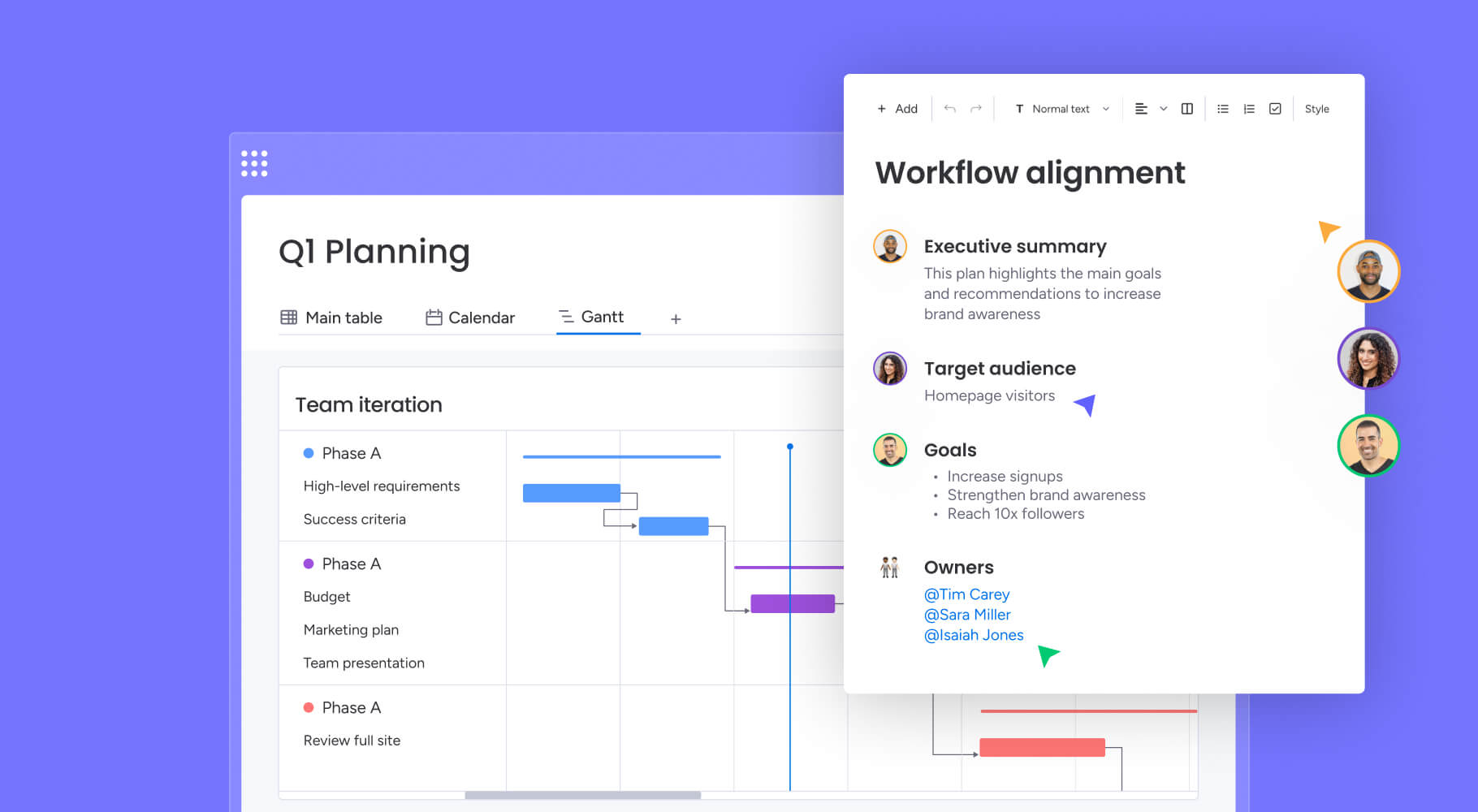
Despite data availability, accurate measurement remains difficult due to the complexity of modern buyer behavior and technical limitations. Understanding these challenges helps organizations prepare for common obstacles and implement solutions proactively.
Multi-channel attribution
Customers rarely follow a linear path. They interact with brands across mobile, desktop, social media, and email before converting. Tracking this fragmented journey and assigning accurate credit to each touchpoint is a significant hurdle.
Without unified tracking, organizations often overvalue the last click and undervalue channels that created initial demand.
Data fragmentation
Marketing data lives in silos. Social platforms, email systems, CRMs, and website analytics all speak different languages. But consolidating this data into a unified view requires significant integration effort.
Manual aggregation leads to errors and delays, making it difficult to get a timely, holistic view of performance. Organizations using monday.com address this by connecting data from multiple sources into one workspace, creating a single source of truth for ROI calculations.
Delayed impact recognition
The gap between spend and return distorts ROI calculations. A branding campaign run in Q1 might not yield measurable sales uplift until Q3. If ROI is calculated monthly, the Q1 campaign looks like a failure.
Organizations struggle to correlate early-stage investments with late-stage revenue, leading to premature cancellation of effective long-term strategies.
Intangible value measurement
Not all value fits into a spreadsheet. Brand sentiment, customer satisfaction, and market authority are critical assets that are difficult to quantify in an ROI formula. Focusing exclusively on easily measurable metrics can lead companies to underinvest in qualities that build lasting brand equity.
Enhance marketing ROI tracking with AI and automation
Artificial intelligence and automation have moved ROI tracking from retrospective reporting to predictive intelligence. These technologies provide deeper visibility and faster insights than manual processes ever could. Organizations leaning into the following capabilities gain competitive advantages through speed and accuracy.
Real-time dashboard analytics
Modern platforms consolidate data streams into live dashboards for tracking marketing metrics. Instead of waiting for end-of-month spreadsheets, marketers see ROI fluctuations as they happen. These dashboards pull data from ad networks and CRMs simultaneously, visualizing the connection between spend and revenue instantly.
Teams using monday.com customize dashboards with drag-and-drop widgets, viewing data the way they need to make sharper, faster decisions. This immediacy allows for agile budget shifts that save money and capitalize on fleeting opportunities.
AI-powered ROI optimization
AI analyzes vast historical datasets to predict future outcomes. Machine learning algorithms identify subtle patterns that correlate with higher ROI. These systems provide recommendations on budget allocation, predicting which channels will yield the strongest returns before money is spent.
The platform’s AI capabilities categorize data at scale, extract information from documents, and summarize complex topics to identify actionable insights. This removes the manual burden of data analysis and accelerates decision-making.
Automated reporting workflows
Automation removes the administrative burden of ROI reporting. Workflows automatically pull performance data, calculate ROI based on pre-set formulas, and distribute reports to stakeholders. Beyond reporting, automation triggers alerts when specific ROI thresholds are met, notifying teams to scale winning campaigns or investigate losing ones.

Operationalize marketing ROI with monday.com
monday.com transforms ROI from a theoretical metric into an operational reality. The platform provides the infrastructure to connect strategy, execution, and measurement in one unified workspace. This integration enables teams to move from reactive reporting to proactive optimization.
Automate ROI tracking and calculations
AI Blocks automate the heavy lifting of data analysis. The Extract Info and Categorize blocks parse incoming data from various sources, automatically sorting campaign expenses and revenue figures into the correct columns. The Summarize block aggregates this data to generate instant ROI reports.
Automation capabilities extend to workflow triggers. The system automatically notifies managers if a campaign’s cost per acquisition exceeds limits, ensuring ROI is monitored proactively rather than retroactively.
Get instant ROI insights with monday sidekick
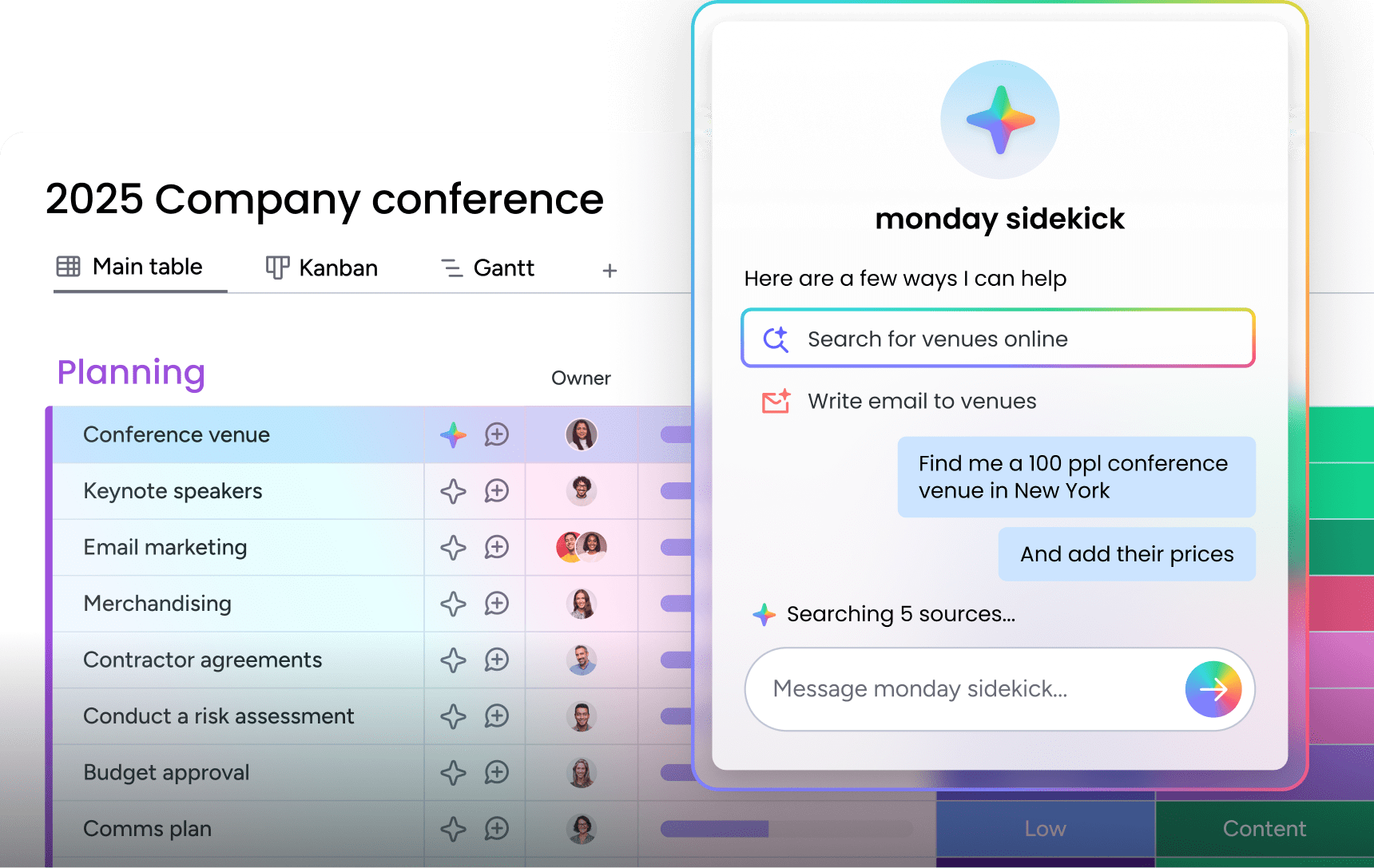
monday sidekick acts as your AI-powered marketing analyst, delivering instant answers about campaign performance without manual data crunching. Ask questions in simple language like “Which campaigns drove the highest ROI last quarter?” or “What’s our current cost per acquisition across channels?” and get immediate, accurate responses pulled from your connected data sources. This conversational interface eliminates the learning curve of complex analytics tools, making ROI insights accessible to every team member regardless of technical expertise.
Create cross-functional ROI dashboards
Marketing data needs to speak different languages for different audiences. The platform allows you to create tailored dashboards, each serving specific stakeholder needs.
A marketing manager’s dashboard might show granular click-through rates and daily spend, while an executive dashboard displays high-level ROI, total revenue influenced, and budget utilization. These widgets are customizable and update in real-time, so finance, sales, and leadership teams always have access to the data they need.
Try monday.comTransform marketing accountability with ROI measurement
The key to success marketing ROI success lies in selecting the right measurement approach for your business context, understanding industry benchmarks, and implementing systems that provide real-time visibility. Whether you’re using basic formulas or advanced attribution models, consistency in measurement and clear communication of results builds trust across the organization.
Modern platforms like monday.com eliminate the technical barriers that once made ROI tracking complex and time-consuming. Get started with a free trial.
Try monday.comFrequently asked questions
What is the ROI of marketing?
Marketing ROI is the measurement of revenue generated from marketing activities compared to the cost of those activities, typically expressed as a percentage that helps businesses understand which marketing efforts generate the most value.
What is the 70 20 10 rule of marketing?
The 70 20 10 rule suggests allocating 70% of marketing budget to proven strategies, 20% to emerging opportunities, and 10% to experimental initiatives to balance reliable returns with innovation.
What is considered good ROI in marketing?
Good marketing ROI varies by industry and business model but generally ranges from 300-500% (3:1 to 5:1 return), though factors like customer lifetime value and sales cycle length significantly influence what constitutes acceptable ROI.
What does an ROI of 20% mean?
An ROI of 20% means that for every dollar invested in marketing, the business generates $1.20 in return, representing a $0.20 profit on the investment.
How do you calculate ROI for digital marketing campaigns?
Digital marketing ROI is calculated using the formula: ((Revenue from campaign - Campaign cost) / Campaign cost) × 100, which requires tracking conversions back to specific campaigns and accounting for all associated costs.
What is the difference between marketing ROI and ROAS?
Marketing ROI measures overall profitability including all costs, while ROAS focuses specifically on revenue generated per dollar of advertising spend, making ROI comprehensive and ROAS more tactical for campaign optimization.

 Get started