


IT projects carry high stakes and slim margins for error. A single delayed migration or an overrun rollout can stall growth and drain budgets, yet demand keeps rising. This guide walks you through the 10 most common types of IT projects, how to plan and measure them, and where AI now fits into delivery.
Whether you lead a PMO, run an IT team, or scope initiatives for the business, this guide offers practical ways to turn your technology investment into measurable outcomes.
Key takeaways
- An IT project is a structured, time-bound initiative that uses technology to solve a business problem or create new capability.
- The 10 most common types range from software upgrades and cloud migration to cybersecurity, ERP, and digital transformation.
- Scope creep, resource constraints, misaligned stakeholders, and technical complexity derail most IT projects, but clear scope and phased delivery contain them.
- AI and task-specific agents now accelerate IT delivery by flagging risks early and handling routine work, while people set direction.
- monday.com’s AI Work Platform connects dashboards, automations, and monday agents, so you get cross-project visibility and clear ROI tracking.
Why IT projects are important for organizational growth
An IT project is any structured, time-bound initiative that uses technology to solve a business problem, improve operations, or create new opportunities. These range from simple software upgrades to complex digital transformations that reshape entire business models.
Organizations invest in information technology projects to stay competitive in increasingly digital markets, and that investment keeps growing. Most business leaders recognize they don‘t need to learn to code but instead need to build digital literacy to work effectively with technical teams.
IT projects create value through several key mechanisms:
- Strategic alignment: Connects technology directly to business goals
- Competitive advantage: Helps organizations differentiate through enhanced capabilities
- Operational efficiency: Streamlines workflows and optimizes resources
High-performing IT projects consistently share 3 characteristics: clearly defined business outcomes, executive sponsorship, and ongoing stakeholder engagement. Together, these reduce project risk and improve adoption.
Common challenges that derail IT projects
Understanding common challenges helps organizations develop mitigation strategies and increase their chances of success. The AI Work Platform gives you a visual workspace that highlights potential risks before they derail projects.
- Scope creep occurs when requirements continuously expand beyond initial agreements. This leads to budget overruns and missed deadlines. Establishing rigorous change management processes helps contain scope while allowing necessary adjustments.
- Resource constraints emerge when IT teams juggle multiple priorities with limited personnel or expertise. Effective capacity planning becomes critical for maintaining momentum across competing initiatives.
- Stakeholder alignment issues arise when departments have conflicting priorities. Without consensus on objectives, projects can deliver results that satisfy no one. A clear project management communication plan helps maintain alignment throughout the project lifecycle.
- Technical complexity often exceeds initial estimates, particularly when integrating with legacy systems. Breaking complex projects into manageable phases lets teams address challenges incrementally.
10 types of IT projects that accelerate value
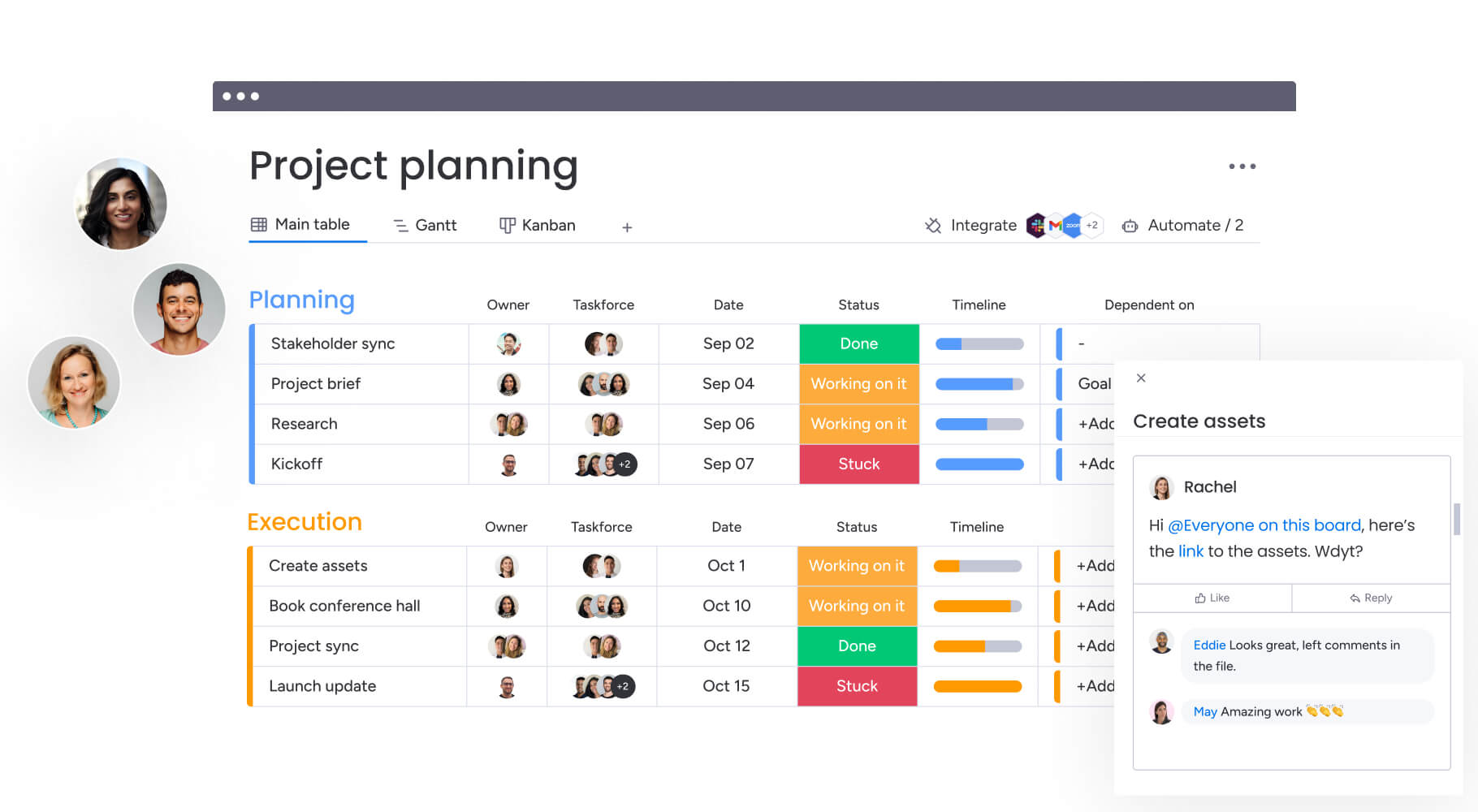
Examples of IT projects range from software upgrades and cloud migrations to cybersecurity programs, ERP rollouts, and full digital transformations. Understanding these different categories helps organizations prioritize initiatives based on their specific business needs. Each of these 10 project types addresses distinct challenges while delivering unique benefits.
1. Software upgrades and custom development
Software development encompasses implementing commercial solutions or building custom applications that address specific business needs. These example IT projects deliver value by enhancing functionality, improving user experiences, or creating entirely new capabilities.
Organizations pursue software upgrades when existing applications no longer meet requirements. Custom development becomes necessary when commercial solutions don’t address unique business processes or when organizations seek competitive differentiation.
Successful software projects require:
- Clear requirements documentation
- Iterative development approaches
- Comprehensive testing strategies
- Thoughtful user adoption planning
2. Cloud migration and optimization
Cloud migration involves moving applications, data, and infrastructure from on-premises environments to cloud platforms. These initiatives help organizations reduce capital expenditures, improve scalability, and enhance business continuity.
Different cloud models serve distinct business needs:
- Public cloud: Provides maximum scalability with minimal management
- Private cloud: Offers greater control for sensitive workloads
- Hybrid cloud: Balances flexibility and control for diverse applications
Cloud optimization extends beyond initial migration to ensure organizations maximize their investments through right-sizing resources and implementing automation.
3. Data analytics and business intelligence
Data projects transform raw information into actionable insights that drive more informed decision-making. Organizations implement data analytics to gain competitive advantage through deeper customer understanding and more efficient operations.
The analytics journey typically progresses through increasingly sophisticated approaches:
- Descriptive analytics: Explains what happened through historical reporting
- Diagnostic analytics: Explores why it happened through root cause analysis
- Predictive analytics: Forecasts what might happen using statistical models
- Prescriptive analytics: Recommends actions based on expected outcomes
With monday.com’s AI Work Platform’s visualization capabilities, teams can translate complex data into intuitive dashboards that drive action rather than just presenting information.
4. Cybersecurity and risk management
Security projects protect critical business assets, maintain customer trust, and ensure regulatory compliance. These initiatives have become increasingly important as cyber threats grow more sophisticated.
Comprehensive security programs address multiple protection layers:
- Network security: Defends the organizational perimeter
- Endpoint security: Protects individual devices
- Application security: Ensures software is developed securely
- Data security: Safeguards sensitive information regardless of location
- Identity management: Controls access to systems and information
Beyond technical controls, effective security projects also address human factors through awareness training and process improvements.
5. AI integration for smarter workflows
AI implementation projects use machine learning and other advanced technologies to automate complex tasks and enhance decision-making. These initiatives help organizations process larger volumes of information and identify patterns people might miss.
Practical AI applications deliver immediate business value through:
- Process automation that handles routine tasks
- Decision support that augments human judgment
- Customer experience enhancements that create personalized interactions
- Predictive maintenance that identifies potential failures before they occur
6. Infrastructure and network modernization
Infrastructure projects build the foundation that supports all other IT initiatives. These IT support projects ensure systems remain reliable, scalable, and secure as business needs evolve.
Modern infrastructure provides the agility organizations need to respond quickly to changing market conditions. It encompasses several key components:
- Computing resources that scale with demand
- Storage solutions that balance performance and cost
- Network infrastructure that connects users, applications, and data
Successful infrastructure modernization aligns technical architecture with business requirements while balancing immediate needs with long-term flexibility.
7. Legacy system overhaul
Legacy modernization addresses the challenges of maintaining outdated systems that have become expensive to operate and incompatible with modern security requirements. These initiatives help organizations reduce technical debt while creating platforms for future innovation.
Organizations approach legacy modernization through several strategies:
- Rehosting: Moves existing applications to modern infrastructure
- Refactoring: Improves internal code structure without changing behavior
- Rearchitecting: Redesigns applications to use modern technologies
- Rebuilding: Recreates functionality from scratch using current approaches
- Replacing: Substitutes legacy applications with commercial alternatives
Phased approaches often prove more successful than “big bang” replacements that introduce significant operational risk.
8. Advanced automation and IT implementations
Automation projects streamline repetitive tasks, improve consistency, and free people for higher-value activities. These IT implementations help organizations accomplish more with existing resources while improving quality.
Effective automation targets processes with specific characteristics:
- High volume of repetitive activities
- Rule-based decision making
- Stable, well-documented procedures
- Significant manual effort
- Error-prone human execution
The AI Work Platform’s automation capabilities let teams create custom workflows that eliminate manual handoffs, trigger notifications, and update related items automatically as projects progress.
9. Custom enterprise resource planning
ERP projects integrate core business processes into unified systems that provide consistent data and standardized workflows. These initiatives help eliminate silos, improve data quality, and enhance operational efficiency.
Modern ERP implementations differ significantly from traditional approaches:
- Cloud-based deployment: Accelerates implementation and reduces costs
- Modular architecture: Allows phased implementation of specific capabilities
- Configuration over customization: Reduces complexity and maintenance
- User-centric design: Improves adoption and productivity
Successful ERP projects require executive sponsorship, cross-functional involvement, and careful change management focused on business outcomes rather than technical features.
10. Digital transformation initiatives
Digital transformation encompasses comprehensive changes to business models, customer experiences, and operational processes enabled by technology. These information technology projects examples help organizations remain competitive by fundamentally rethinking how they create value.
Effective digital transformation extends beyond technology to address:
- Business strategy and operating models
- Organizational structure and culture
- Talent acquisition and development
- Process redesign and optimization
- Customer engagement and experience
5 steps to plan and implement IT projects successfully
Successful IT project management follows a structured approach that maximizes value while minimizing risks. These steps create a framework adaptable to any project in IT, from simple implementations to complex transformations.
1. Define clear objectives and scope
Effective IT projects begin with well-defined business objectives that connect technology investments to organizational goals. These objectives should be specific, measurable, achievable, relevant, and time-bound (SMART) to provide clear direction.
Scope definition establishes boundaries around what the project will and won’t deliver. This includes functional requirements, technical parameters, and implementation constraints. Documenting scope helps prevent misunderstandings and provides a baseline for evaluating change requests.
Successful scope management requires stakeholder involvement in requirement definition and formal change control processes throughout the project lifecycle.
2. Establish budgets and timelines
Financial planning encompasses both initial implementation costs and ongoing operational expenses. Comprehensive budgets include hardware, software, services, internal labor, training, and contingency reserves.
Timeline development requires understanding dependencies, resource availability, and realistic work estimates. Effective schedules include key milestones that provide visibility into progress and create natural checkpoints for assessing project health.
The approach you choose depends on project complexity, requirements stability, and organizational culture:
- Agile methods: Break work into smaller increments with frequent reassessment.
- Waterfall methods: Map out the entire project timeline in advance.
- Hybrid approaches: Combine elements of both methodologies.
3. Build a skilled project team
Team composition directly impacts project success. Effective teams combine technical expertise with business knowledge, communication skills, and problem-solving abilities. Key roles typically include:
- Project sponsors who provide executive support
- Project managers who coordinate activities
- Business analysts who translate business needs into requirements
- Technical specialists who implement solutions
- Change management resources who facilitate adoption
The AI Work Platform supports team collaboration through centralized communication, clear task assignments, and transparent progress tracking.
4. Use collaboration platforms and automations
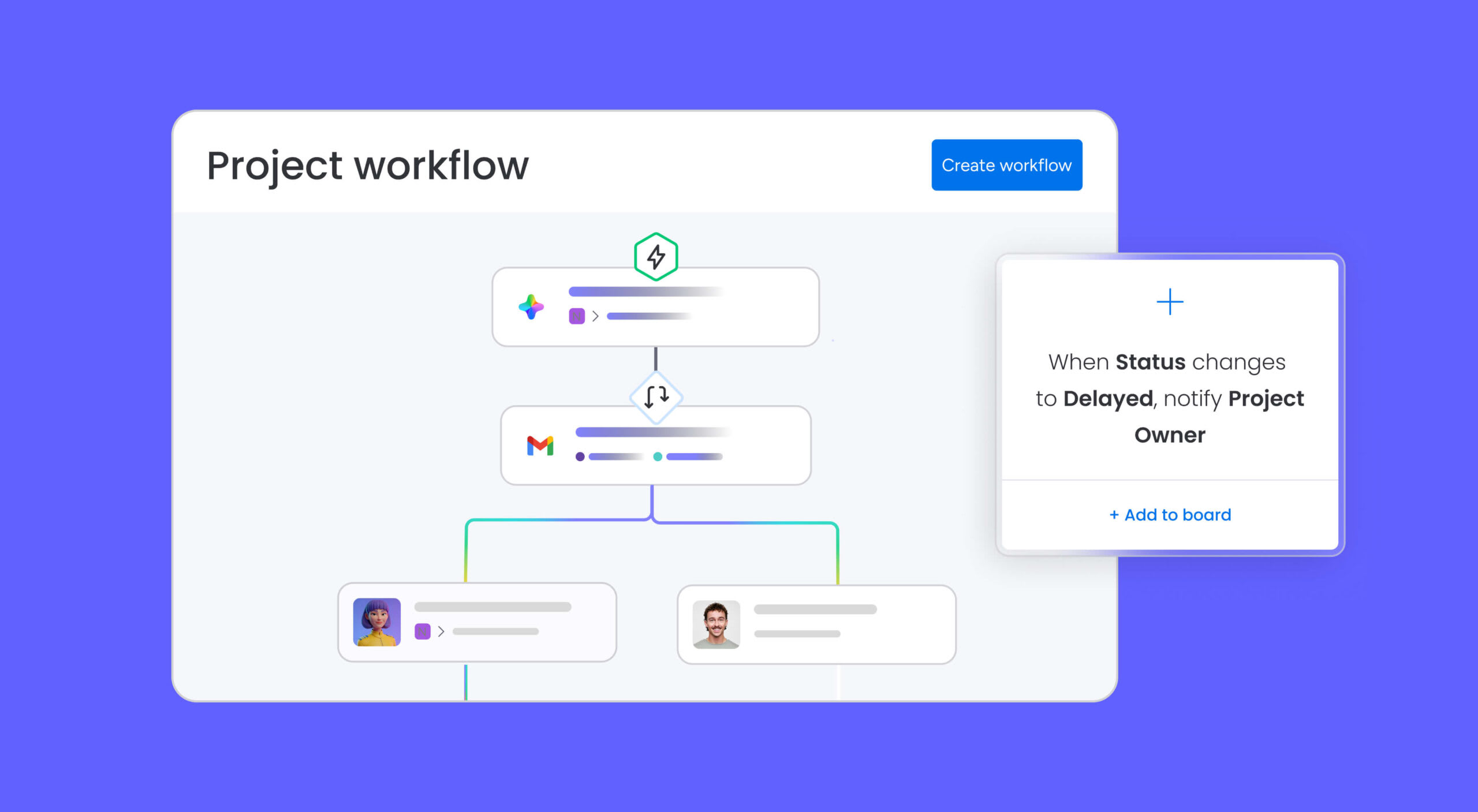
Modern project management platforms streamline communication, automate routine tasks, and provide real-time visibility. These platforms help teams work more efficiently while reducing administrative overhead.
Effective collaboration solutions provide these essential capabilities:
- Centralized documentation: Ensures everyone works from current information
- Task tracking: Establishes clear ownership and deadlines
- Automated notifications: Alerts when items require attention
- Status visualization: Makes progress visible to all stakeholders
- Integrated communication: Maintains context around discussions
Automations on the AI Work Platform eliminate manual work by automatically updating statuses, sending notifications, and triggering dependent tasks when conditions are met.
5. Monitor progress and adjust quickly
Regular monitoring helps teams identify issues early when they’re easier to address. Effective project controls include:
- Status meetings focused on accomplishments and obstacles
- Dashboards that visualize key performance indicators
- Risk registers that track potential issues
- Change logs that document scope modifications
Agile adaptation lets teams respond to changing requirements or unexpected challenges. This requires establishing feedback loops and empowering team members to raise concerns quickly.
How AI is changing IT project management
Artificial intelligence is transforming how organizations plan and execute IT projects. These technologies help teams work smarter by automating routine tasks and providing data-driven insights.
AI capabilities enhance multiple aspects of project management:
- Predictive analytics: Identifies potential risks before they impact schedules
- Automated resource allocation: Optimizes team assignments based on skills
- Natural language processing: Extracts key information from requirements documents
- Machine learning: Improves estimation accuracy by analyzing historical performance
The AI Work Platform brings AI throughout the platform to help teams identify bottlenecks, suggest process improvements, and automate routine tasks that would otherwise consume valuable time.
The bigger shift is from AI features you trigger to agentic AI that runs work for you. Task-specific agents act on triggers, follow clear guardrails, and move IT-project work forward without someone watching every step. The results are still uneven, so treat adoption as a project in itself.
Only 28% of AI use cases in IT infrastructure and operations fully meet ROI expectations, while 20% fail outright. Used well, the payoff is real: Two-thirds of organizations report self-reported productivity and efficiency gains from enterprise AI adoption.
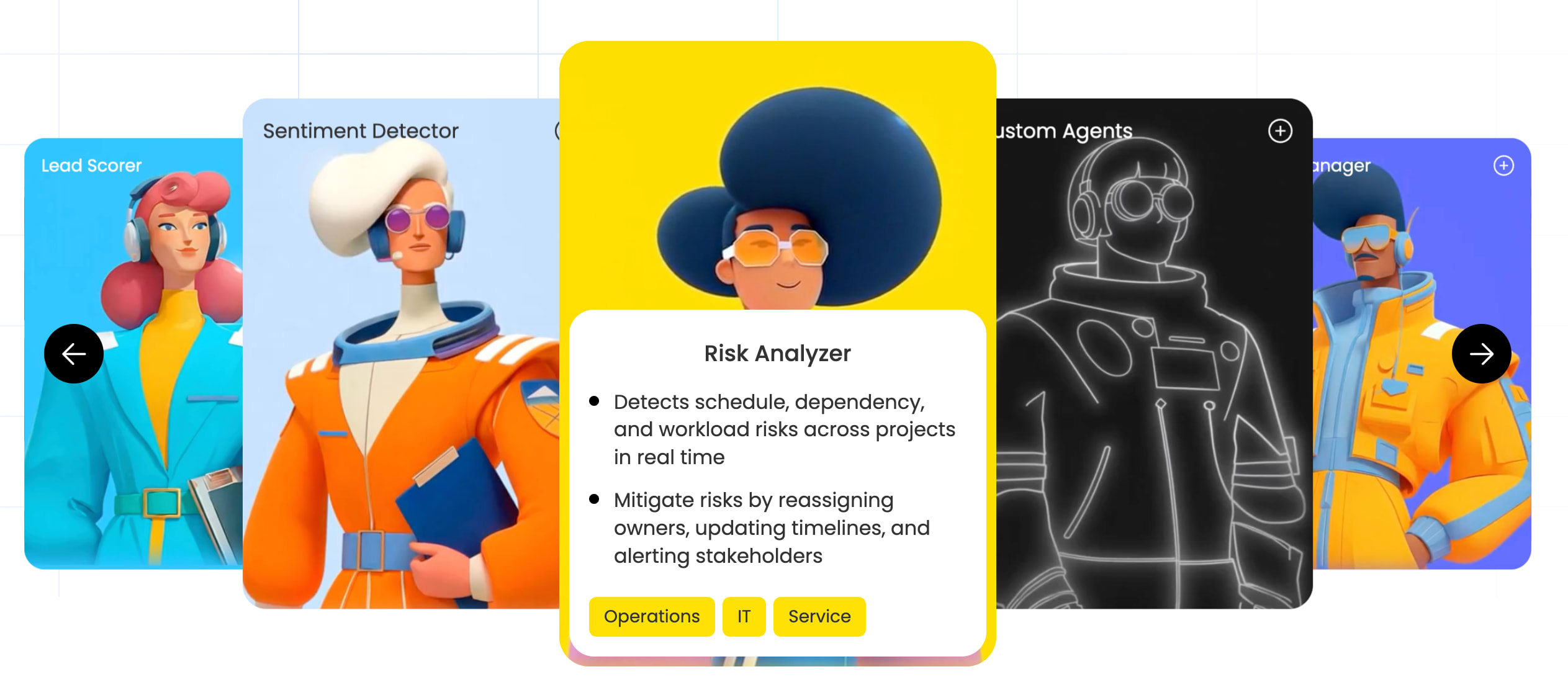
In an IT-project setting, monday agents put that within reach. Agents like Process Automator handle repetitive intake and updates, SLA Monitor watches response times, and Risk Analyzer flags schedule and resource risks early. People set direction and make the calls, while the Agents handle routine delivery, so your team and AI work together as one team.
Get startedMeasuring ROI for IT projects
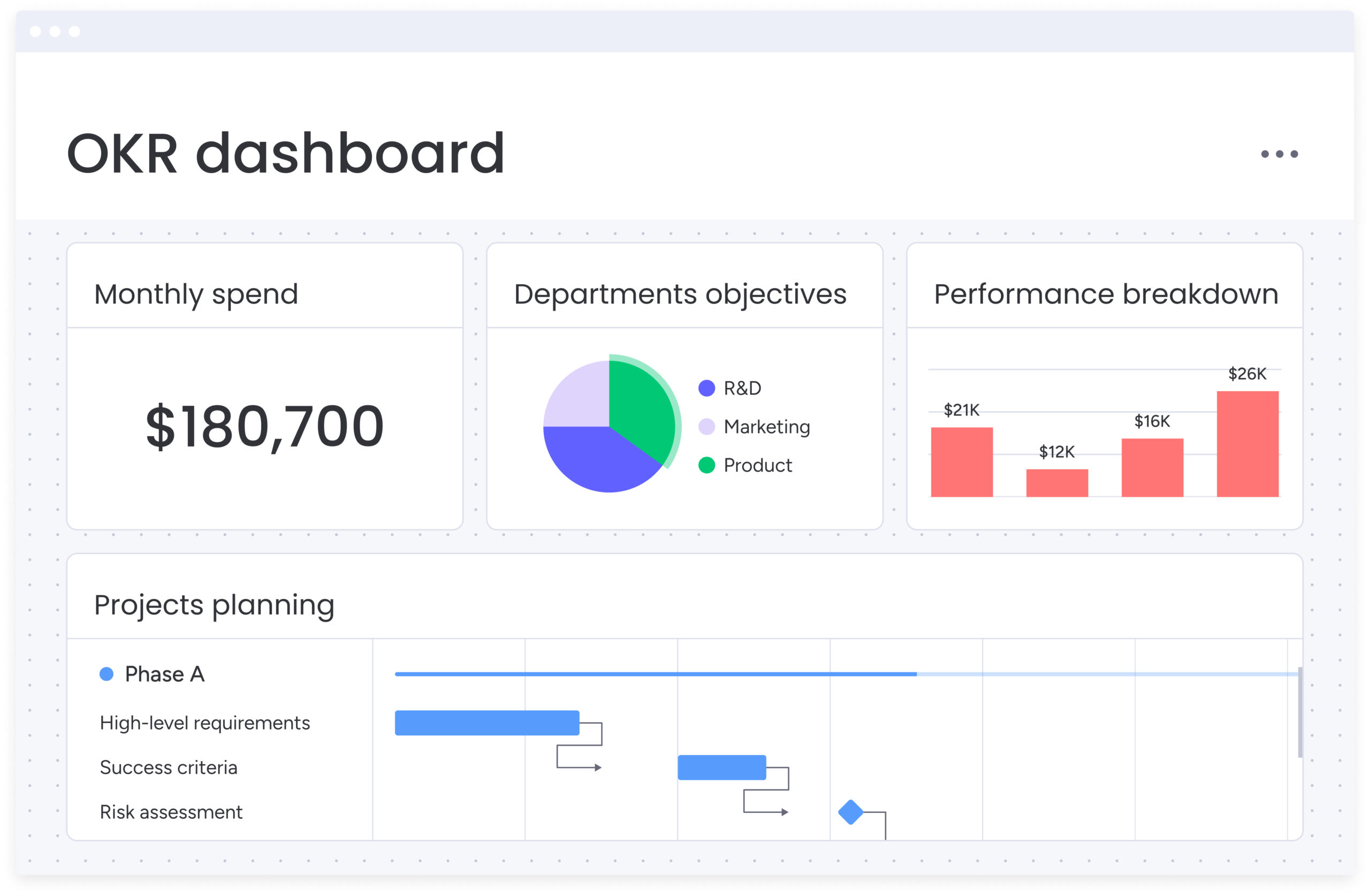 To measure ROI for a technology project:
ROI (%) = [(Financial benefits − Total project costs) ÷ Total project costs] × 100
Effective measurement frameworks balance these quantitative metrics with qualitative assessments to give a complete picture of success. When you evaluate the success of IT projects, weigh these key metric categories:
- Financial metrics: ROI, payback period, cost savings
- Operational metrics: Efficiency gains, error reduction, time savings
- Strategic metrics: Market position improvement, innovation capacity
- User metrics: Adoption rates, satisfaction scores, productivity impact
Real-time dashboards on the AI Work Platform help you visualize these metrics, so stakeholders understand project performance and make data-driven decisions.
Remember: Financial benefits can include increased revenue, lower operating costs, productivity gains, reduced downtime, and avoided risk — not just direct profit.
How monday.com's AI Work Platform supports IT projects
Most IT teams juggle work across disconnected systems, which hides risk and slows delivery. monday.com’s AI Work Platform brings projects, data, automation, and AI into one connected workspace, so you can see everything and act faster.
Here’s how the pieces fit together for IT work:
- Dashboards and reporting: Connect data across multiple IT projects into pre-built or custom dashboards. AI risk identification analyzes org-wide data to flag schedule and resource risks early.
- Automations and monday workflows: No-code automations remove manual handoffs, while Workflows move work end to end across people and agents.
- monday agents: Task-specific AI workers like Process Automator, SLA Monitor, and Risk Analyzer run on triggers within clear guardrails. You set direction, and the Agents execute the routine work.
- monday vibe: Describe the internal app you need, such as an asset tracker or incident dashboard, and Vibe builds a secure custom app that inherits your permissions.
- monday MCP: Connect AI assistants like Claude, ChatGPT, Copilot, and Cursor to act on your monday.com data, from migrating a Jira project to converting notes into structured tasks.
Every capability runs on mondayDB, one connected data layer, and links to the rest of your stack through 200+ integrations. Security is built in, with SOC 2 Type II, ISO 27001, HIPAA, and GDPR compliance, and MCP work stays inside your existing permission model. That combination is why 225,000+ organizations run work on the platform.
This table shows how this connected approach compares with generic, disconnected IT systems across the factors that decide whether an IT project succeeds.
| Capability | Generic disconnected IT systems | The AI Work Platform |
|---|---|---|
| Cross-project visibility | Data sits in separate systems, so status is pieced together by hand | One workspace shows every project, with dashboards that update in real time |
| Automation | Manual handoffs and scripts that break as processes change | No-code automations and workflows that move work end to end |
| AI and agents | Bolt-on AI features with little context about your work | monday agents that act on your connected data within clear guardrails |
| Custom app building | New apps need developers or another subscription | Describe an app in plain language and Vibe builds it securely |
| Security and governance | Governance varies system by system | SOC 2 Type II, ISO 27001, HIPAA, and GDPR, with shared permissions |
| Adoption | Teams learn and maintain several disconnected systems | One familiar workspace trusted by 225,000+ organizations |
Empower your organization with future-ready projects
Strong IT projects change how you operate, serve customers, and compete. When you understand the different types, plan them with structure, and measure ROI honestly, you turn technology spend into results your organization can feel.
Lasting success takes more than technical skill. It takes clear business alignment, real collaboration, and the willingness to adapt as conditions shift. Increasingly, that means people and agents working side by side, with your team setting direction while agents handle routine delivery.
Get startedFAQs
What are examples of IT projects?
Examples of IT projects include developing a custom CRM system, migrating company data to the cloud, implementing an ERP solution, and launching a cybersecurity training program. Most fall into common categories such as software upgrades, infrastructure modernization, data analytics, and digital transformation.
How do I measure ROI for technology projects?
To measure ROI for technology projects, subtract total project costs from the financial benefits gained, then divide by the project costs. Track key metrics like cost savings, revenue increases, efficiency gains, and risk reduction to build a complete picture of returns.
Do I need certifications to manage an IT project?
You do not need certifications to manage an IT project. Certifications can help, but practical experience, strong communication, and the right project management platform often matter more when it comes to delivering IT projects on time and on budget.
Can AI be used to streamline IT project management?
Yes, AI can streamline IT project management by automating routine tasks, flagging risks early, and providing actionable insights. On the AI Work Platform, monday agents handle repetitive work while people set direction, so teams and AI move IT projects forward together.
Are there low-code ways to start an IT implementation?
Yes, low-code and no-code platforms let non-technical teams build and launch IT solutions quickly. With monday vibe, you describe the internal app you need, such as an asset tracker or incident dashboard, and it builds a secure custom app on the platform.
How does the AI Work Platform support IT projects?
The AI Work Platform supports IT projects by connecting dashboards, automations, and monday agents in one workspace. You get cross-project visibility, early risk identification, and clear ROI tracking, so your team and AI can plan, deliver, and measure IT projects together.

 Get started