

Organizations often approve major system upgrades, process transformations, or operational initiatives with detailed timelines and budgets in place. Yet even the most meticulously planned projects can encounter unexpected challenges: extended downtime, workflow disruptions, or delays in reporting and compliance.
Impact analysis is the structured process for understanding how proposed changes ripple across people, processes, and systems. It identifies who and what will be affected, where potential breakdowns may occur, and which hidden costs could emerge. By mapping consequences before implementation, organizations gain a clear view of operational, technical, financial, and human impacts, enabling informed planning, effective risk mitigation, and smoother execution of complex initiatives.
This guide explains what impact analysis involves, the types commonly used, and a seven-step process for conducting assessments that uncover critical dependencies. It also highlights how modern work management tools can enhance visibility, scenario planning, and impact tracking throughout the lifecycle of a change initiative.
Key takeaways
- Impact analysis evaluates consequences of planned changes: it identifies how systems, processes, and stakeholders are affected before implementation.
- Different types address specific needs: business, technical, financial, organizational, and AI-focused analyses capture distinct operational, financial, and human impacts.
- Structured, step-by-step processes improve accuracy: defining scope, mapping stakeholders, assessing dependencies, modeling scenarios, and documenting mitigation strategies ensures comprehensive analysis.
- Continuous monitoring and scenario modeling reduce surprises: tracking actual impacts versus predicted outcomes allows timely adjustments and informed decision-making.
- Work management platforms enhance analysis efficiency: tools like monday work management centralize data, visualize dependencies, and automate risk detection to support collaborative, data-driven planning.
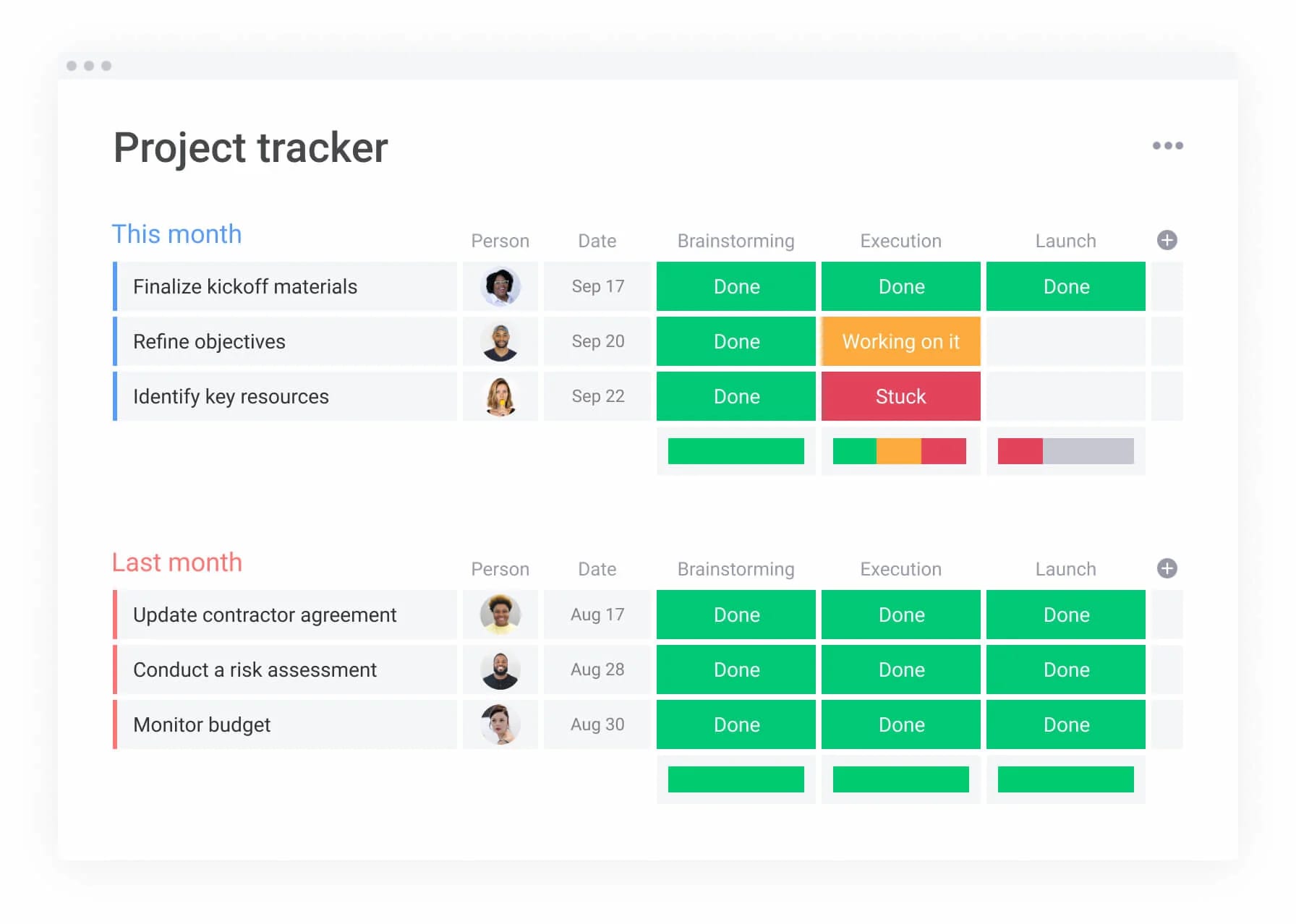
Impact analysis is the process of evaluating what happens when business processes, systems, or operations change. It maps both benefits and risks before committing to a decision. Think of it as a diagnostic platform for understanding how one change ripples across an entire operation.
Risk assessment asks “what could go wrong?” Impact analysis asks “what happens when we do this?” Organizations often require formal impact analysis at critical junctures: upgrading core technology stacks, restructuring teams, or complying with new regulations. It turns abstract plans into concrete scenarios by showing where disruptions might occur before they happen.
A strong impact analysis is more than basic planning. It is a structured, data-driven process that ensures insights are actionable. Four key characteristics make an assessment thorough and effective:
- Holistic scope: examines upstream and downstream effects, ensuring no dependency is overlooked.
- Data-driven evaluation: relies on quantifiable metrics rather than intuition.
- Cross-functional input: gathers insights from all affected departments.
- Iterative review: evolves as new information becomes available.
Understanding impact analysis definition and purpose
Impact analysis evaluates “what if” scenarios when organizational changes are proposed. It examines operational, financial, and technical consequences through business process analysis.
For example, when a company migrates to a new CRM, process analysis goes beyond software costs. It considers migration downtime, training hours for sales teams, and potential temporary disruptions to customer service workflows. Mapping consequences upfront allows organizations to budget for real costs, such as downtime, retraining, and lost productivity, rather than just the software price.
When organizations need impact analysis
Impact analysis becomes essential when the potential cost of change outweighs the effort of planning. Certain large-scale initiatives demand formal analysis. Key scenarios include:
- Major system implementations: replacing legacy ERP or HRIS systems requires mapping data dependencies to prevent information loss.
- Organizational restructuring: changing reporting lines affects communication flow, approval hierarchies, and team morale.
- Regulatory compliance updates: new legal standards require changes to data handling processes.
- Process automation: automating manual workflows impacts workforce allocation and skill requirements.
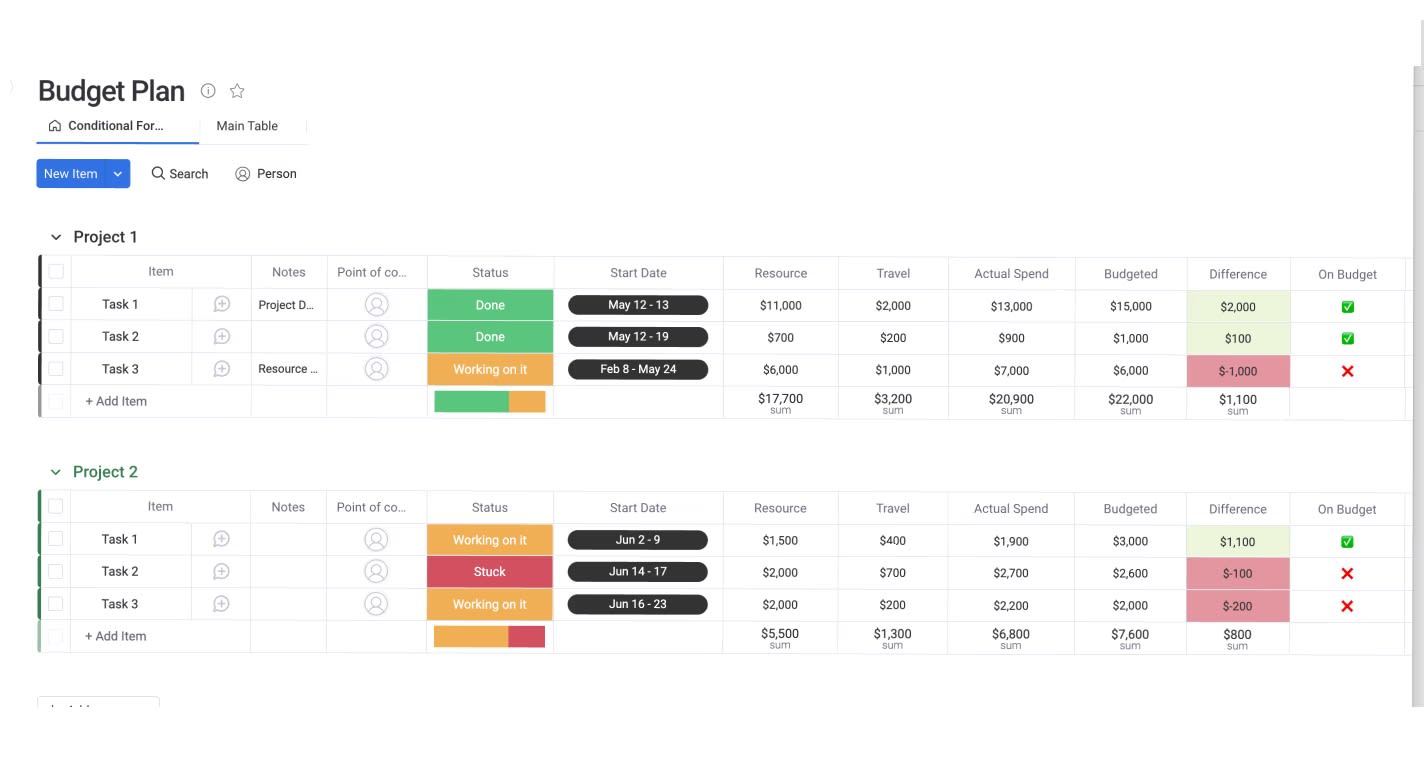
Impact analysis protects budgets and keeps projects on track. Understanding the full scope allows accurate resource allocation and realistic expectations. Leaders can make decisions with confidence when potential risks are identified and quantified. Key benefits include preventing costly surprises, enabling informed decisions, and building stakeholder trust.
Prevent costly surprises and disruptions
Effective analysis identifies friction points before they escalate into crises. Examples of costly surprises include:
- Budget overruns: unforeseen technical dependencies.
- Timeline delays: resource conflicts across projects.
- Compliance violations: overlooked data regulations.
Mapping these risks systematically creates predictability, allowing teams to budget for real costs. Modern platforms like monday work management give teams visibility through real-time dashboards that track project data, including budgets, schedules, and resources across connected initiatives.
Enable confident decision making
Leadership teams face go/no-go decisions with incomplete information. Impact analysis connects strategy to execution, revealing whether projects are feasible.
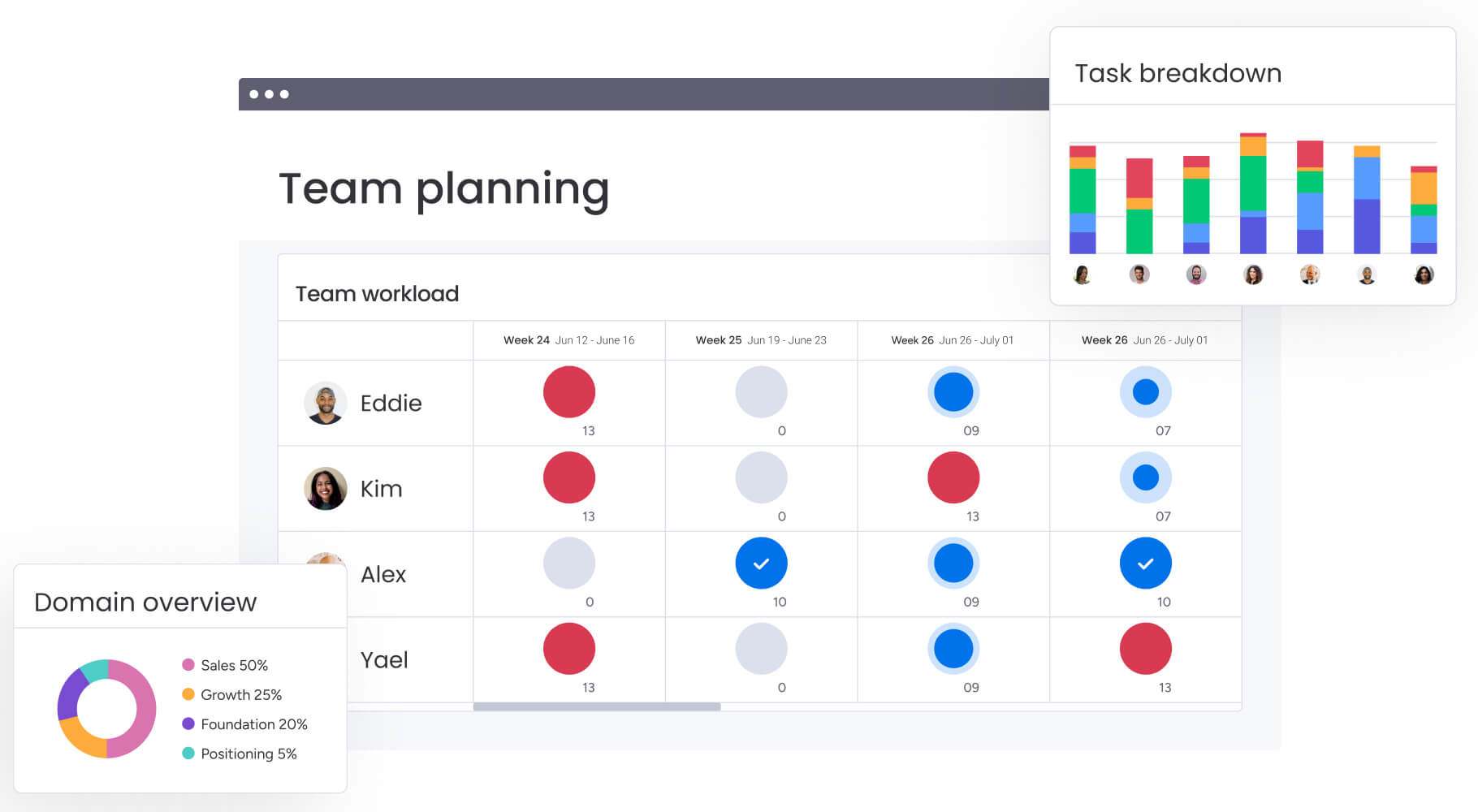
By quantifying trade-offs, executives gain clarity. Portfolio management features help leaders see the big picture, detect bottlenecks, and integrate data across multiple programs, enabling informed approval of initiatives.
Build stakeholder trust and buy-in
Transparency fosters trust during organizational change. Thorough analysis demonstrates consideration for the impact on teams.
Documenting choices and timing explains decisions, reducing pushback and improving adoption. Teams can see their concerns have been addressed, increasing engagement and alignment.
Try monday work management5 essential types of impact analysis
Not all changes affect an organization the same way. Selecting the right type ensures the right aspects are evaluated, including operational continuity, technical dependencies, financial impact, or organizational change.
| Type | Primary focus | Best used for |
|---|---|---|
| Business impact analysis (BIA) | Operational and financial consequences of disruption | Business continuity planning |
| Technical system impact analysis | Technology infrastructure and dependencies | Software migrations, API updates |
| Financial impact analysis | Monetary consequences and ROI | Budget planning, investment decisions |
| Organizational change impact analysis | Culture, roles, and workflows | Restructuring, policy changes |
| AI implementation impact analysis | Data privacy, bias risks, workflow transformation | AI and automation deployments |
Business impact analysis (BIA)
BIA examines operational and financial consequences when critical functions fail. It identifies essential processes, recovery time objectives, and financial losses. For an e-commerce retailer, BIA would evaluate revenue loss per hour of website downtime and fulfillment disruptions. This prioritizes systems that require robust backup plans.
Technical system impact analysis
This type focuses on technology infrastructure and interdependencies. It evaluates how changes, such as API updates or server migrations, affect connected platforms.
Technical analysis prevents unintended failures where improvements in one area cause issues in another. It helps IT teams identify potential integration or performance bottlenecks before deployment.
Financial impact analysis
Financial analysis quantifies monetary consequences of proposed changes throughcost-benefit analysis. It includes indirect costs such as:
- Temporary productivity dips: learning curve effects.
- Training expenses: staff development costs.
- Opportunity costs: resources diverted from other initiatives.
This data supports accurate ROI calculations and budget planning. For example, subscription costs for new project management software are weighed against hours lost during learning and long-term efficiency gains.
Organizational change impact analysis
This type examines how changes affect people, including culture, roles, and workflows. It identifies skill gaps, communication needs, and potential resistance points.
Organizational change impact analysis ensures adoption success through business process analysis. For example, moving to hybrid work requires evaluation of collaboration patterns, communication norms, and employee engagement impacts.
AI implementation impact analysis
AI deployment requires specialized assessment. It covers concerns such as:
- Data privacy: compliance with regulations.
- Ethical bias risks: fairness in automated decisions.
- Workflow transformation: changes to human-AI collaboration.
Analysis assesses whether current data infrastructure can support AI models and identifies human-in-the-loop requirements for safe automation. Platforms like monday work management provide Portfolio Risk Insights to flag potential AI risks and highlight critical issues at a glance.
Impact analysis vs risk assessment: understanding the distinction
People often confuse impact analysis and risk assessment, but each serves a distinct purpose. Impact analysis assumes change will occur and asks, “what are the consequences?” Risk assessment examines what could go wrong and evaluates the probability of potential threats.
Knowing when to apply each method ensures teams choose the right approach at the right time. Here is how these two practices differ and complement each other:
| Feature | Impact analysis | Risk assessment |
|---|---|---|
| Primary focus | Consequences of specific, planned change | Potential threats and vulnerabilities |
| Key question | "If we do X, what happens to Y and Z?" | "What could prevent us from achieving X?" |
| Timing | Conducted during project planning or change requests | Conducted periodically or before new initiatives |
| Outcome | Detailed map of dependencies and effects | List of prioritized risks with mitigation strategies |
| Scope | Internal systems, processes, and stakeholders | Internal vulnerabilities and external threats |
Different scopes and objectives
Impact analysis focuses on known variables of planned initiatives. For example, if a company discontinues a product line, impact analysis details:
- Revenue loss: direct financial impact.
- Inventory disposal costs: asset liquidation expenses.
- Staffing reassignments: human resource implications.
Risk assessment identifies potential threats that might occur, such as competitor product launches or supply chain disruptions. Impact analysis addresses the implications of decisions, while risk assessment evaluates the environment surrounding those decisions.
When to use each approach
The timing and purpose of your analysis determine which approach to use. Both are important but answer different questions.
Use impact analysis when:
- Specific change is proposed: software migration, policy update.
- Project scope changes mid-stream: dependencies need reassessment.
- Dependencies are modified: system connections change.
Use risk assessment when:
- Starting new projects from scratch: unknown variables exist.
- Conducting annual strategic planning: environmental scanning is needed.
- Entering new markets: external threats require evaluation.
Risk assessment generally comes before impact analysis during strategic planning, while impact analysis continues throughout execution phases.
How they work together
Effective change planning uses both approaches. Risk assessment highlights potential project pitfalls, while impact analysis clarifies operational realities during execution.
Insights from one method inform the other. Impact analysis may reveal critical system dependencies, identifying significant operational risks that prompt updates to the risk register. Together, they provide a complete view of initiative feasibility.
7 steps to conduct comprehensive impact analysis
A structured approach ensures impact analysis produces actionable results rather than a simple list of concerns. Consistent frameworks allow comparison across projects and objective prioritization. Follow these seven steps to uncover dependencies and prepare for successful change.
Step 1: define your change initiative
Clearly define the scope, objectives, and boundaries of the initiative. Vague definitions produce vague results.
Document what is changing, the timeline, and success criteria. Stakeholders should validate the definition to ensure alignment with strategic goals before analysis begins. Modern platforms like monday work management make it easy to collect and standardize project information through intuitive forms.
Step 2: map all affected stakeholders and systems
Identify every team, individual, and system the change will affect. Direct impacts are obvious, but indirect effects require careful mapping.
Include:
- Internal teams: all departments affected by the change.
- External partners: vendors and suppliers with system integrations.
- End customers: those experiencing downstream effects.
Step 3: identify dependencies and ripple effects
After mapping stakeholders and systems, trace their connections. This reveals cascading impacts: system A changes, process B is disrupted, team C is delayed.
Dependency mapping helps identify bottlenecks that might otherwise go unnoticed. Examine both upstream inputs and downstream outputs. Tools like Gantt charts in monday work management help track project scope, schedule, milestones, and dependencies at any level.
Step 4: assess impact severity and likelihood
Not all impacts carry equal weight. Quantify consequences by:
- Severity: minor inconvenience vs critical failure.
- Likelihood: rare occurrence vs certain outcome.
- Timeline: immediate vs long-term effects.
Impact matrices help prioritize issues that need immediate attention. Standardized severity criteria ensure consistent decision-making across teams.
Step 5: create multiple scenario models
Planning for a single scenario rarely matches reality. Construct multiple scenarios:
- Best-case scenario: seamless adoption occurs.
- Worst-case scenario: major disruptions occur.
- Most-likely scenario: realistic middle ground.
Scenario modeling supports contingency planning, allowing teams to prepare for worst-case outcomes while aiming for best results.
Step 6: document analysis results and actions
Present findings in structured documents that stakeholders can use. Include:
- Identified impacts: specific consequences for each stakeholder group.
- Proposed mitigation strategies: actionable plans to reduce negative effects.
- Resource requirements: budget, personnel, and platform needs.
Clear documentation preserves reasoning and provides implementation teams with a functional roadmap. monday docs enable teams to execute workflows efficiently from brainstorming through reporting.
Step 7: establish ongoing impact monitoring
Impact analysis continues after implementation. Set up monitoring to track actual effects against predictions.
Define key performance indicators to measure adoption and health. Continuous monitoring allows leaders to intervene quickly when impacts exceed acceptable thresholds.
Try monday work management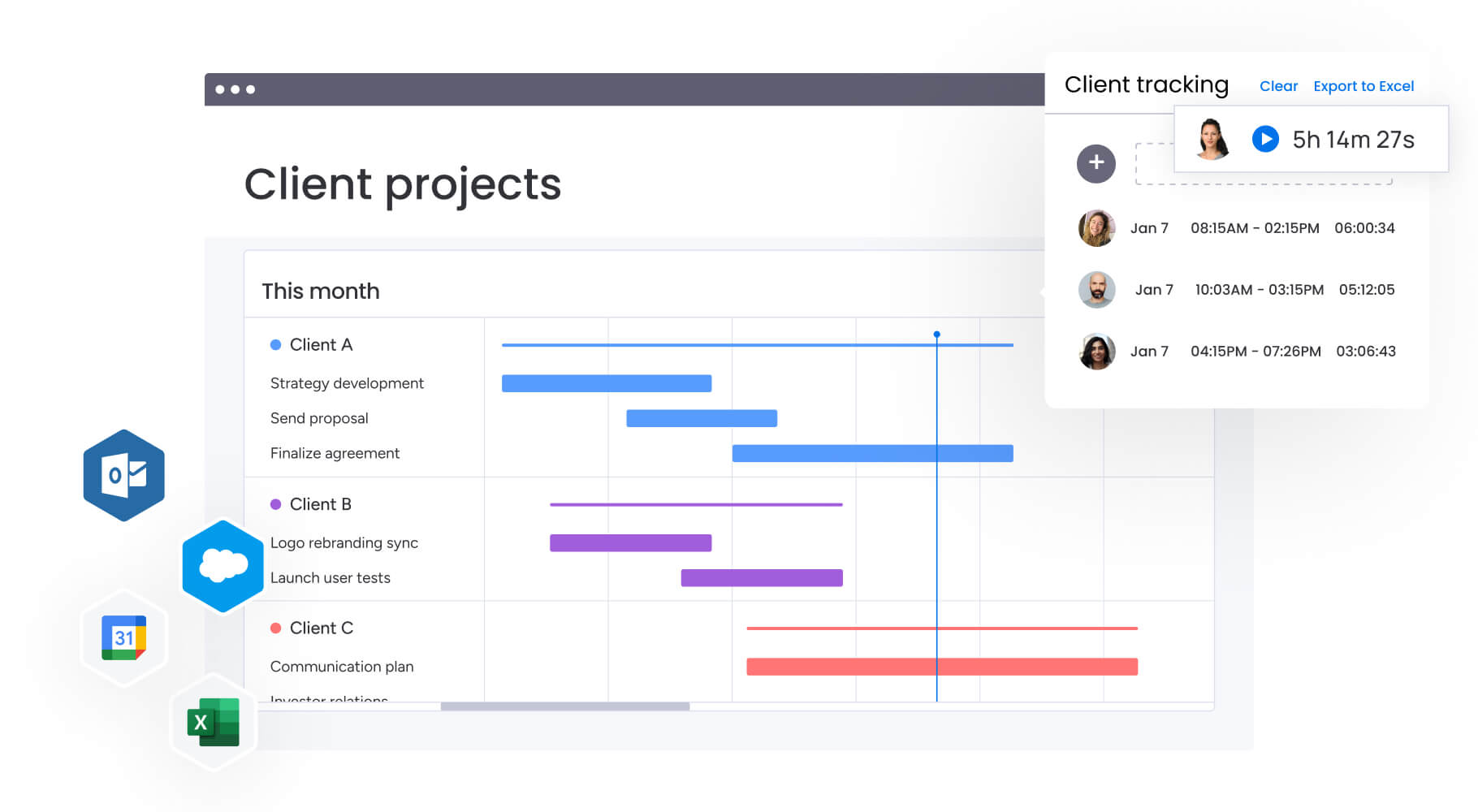
Essential components of effective impact analysis
Good impact analysis requires several specific components to ensure completeness and accuracy. Including each element provides a holistic, 360-degree perspective and positions your initiative for success. These components work together to create assessments that guide actionable implementation.
Every impact analysis document should include these foundational components:
- Stakeholder identification: comprehensive list of all internal and external affected parties.
- Impact quantification: measurable data on costs, time, and resources.
- Timeline assessment: schedule of when impacts occur and their duration.
- Resource requirements: detailed breakdown of budget, personnel, and platforms needed.
- Mitigation strategies: specific, actionable plans for reducing negative consequences.
Setting recovery objectives (RTO and RPO)
Two metrics are essential for business continuity. Recovery Time Objective (RTO) defines the maximum acceptable downtime following a disruption. Recovery Point Objective (RPO) defines the maximum acceptable data loss measured in time.
Financial transaction systems might require zero-second RPOs, while internal archiving systems may allow 24-hour RPOs. These objectives help prioritize resources during impact analysis and ensure business resilience.
Creating actionable documentation
Documentation bridges analysis and action. Structuring reports for specific audiences ensures clarity:
- Executive summaries: leadership focus on risks and costs.
- Technical appendices: implementation teams need detailed specifications.
- Stakeholder communications: clear explanations of changes and expectations.
Store documentation centrally to ensure stakeholders can access it easily. Link impacts to specific action items and assign ownership for each mitigation plan.
AI has evolved impact analysis from static, manual work into a dynamic, continuous process. It processes large volumes of historical and real-time data, detecting patterns and risks that humans might miss. This leads to more accurate predictions and faster responses to emerging issues.
Automated impact detection across portfolios
AI can scan entire project portfolios to automatically flag conflicts and dependencies. When one project timeline shifts, AI identifies resource constraints that may affect other projects months later.
Automated scanning allows large enterprises to scale impact analysis and avoid overlooked dependencies. Features like Portfolio Risk Insights on monday work management enable teams to quickly flag risks by severity across multiple project boards.
Real-time impact monitoring and alerts
Continuous monitoring provides immediate awareness of emerging issues. AI-driven alerts notify teams when trigger conditions occur:
- Budget variances: exceeding 5% of allocated funds.
- Critical path delays: schedule slips affecting project completion.
- Resource conflicts: team members overallocated across projects.
Real-time feedback allows teams to correct course before minor issues escalate. Notifications link directly to relevant items, keeping teams informed and accountable.
Predictive analytics for future impacts
Predictive analytics uses historical project data to forecast future outcomes. By analyzing thousands of past projects, AI predicts the likelihood of schedule slips or budget overruns.
This approach improves scenario modeling by providing probability-weighted outcomes for strategic decision making. Impact analysis becomes proactive rather than reactive, allowing teams to optimize performance.
Platforms and templates for impact analysis
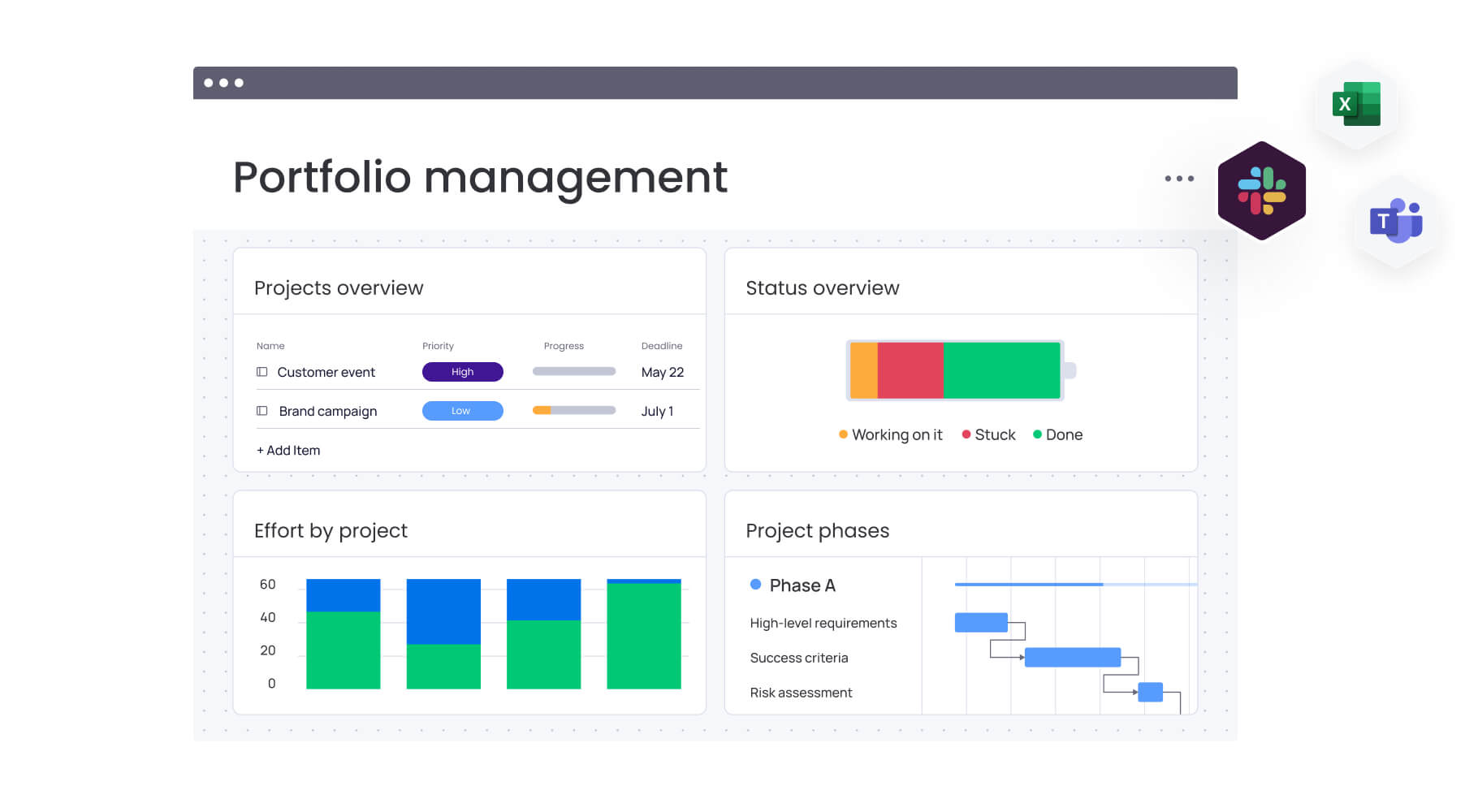
Modern work management platforms make advanced impact analysis accessible for any team through dashboards and templates. These solutions reduce complexity and enable thorough change assessments.
Visual impact mapping techniques
Visualization simplifies complex dependencies and improves comprehension:
- Network diagrams: show system connection webs.
- Gantt charts: visualize timeline impacts with dependency lines.
- Heat maps: communicate risk severity using color codes.
Visual tools accelerate understanding and support more effective decision making.
Collaborative analysis platforms
Impact analysis is most effective when teams collaborate. Real-time collaboration platforms allow multiple stakeholders to contribute simultaneously.
Centralized workspaces ensure all team members work from the same data, eliminating version control issues. Inline commenting and @mentions maintain context and streamline discussions. Platforms like monday work management support cross-department collaboration and break down organizational silos.
Ready-to-use impact analysis templates
Templates standardize processes, improving analysis consistency and quality. Pre-built templates include:
- Standard categories: common impact areas for specific change types.
- Risk factors: typical concerns for different industries.
- Evaluation criteria: consistent scoring methods.
Templates reduce setup time and create repeatable frameworks aligned with governance standards. Automations on monday work management accelerate project initiation by creating templated boards and sending approval notifications automatically.
Try monday work managementElevate impact analysis with monday work management
Effective impact analysis requires integration into daily workflows, not just static documentation. Organizations need systems that make analysis visible, measurable, and actionable. Modern platforms like monday work management bring strategy, execution, and monitoring together in one place, ensuring alignment and control. This creates a living process that evolves with projects and supports complex change management.
See portfolio-wide impacts at a glance
High-level dashboards and portfolio risk insights provide real-time views of all initiatives. Leaders instantly understand how delays in one project affect broader portfolio timelines.
Visual widgets consolidate data from multiple boards, enabling executives to monitor resource allocation and budget burn rates across the organization. This visibility ensures decision-makers have full context before approving changes.
Automate impact detection and workflows
Modern platforms like monday work management leverage automation and AI to streamline analysis processes. AI capabilities interpret unstructured data from project requests to identify potential risks automatically.
Custom automations send notifications to stakeholders whenever critical dependencies shift or risk statuses change. This ensures the right people are alerted immediately, reducing reaction time and keeping initiatives on track.
Unite teams around impact data
Cross-functional collaboration becomes seamless with shared boards and monday docs. Teams co-author impact analysis documents directly on the platform, linking specific action items to live project boards.
This integration ensures mitigation strategies are executed, not just documented. Centralized communication preserves stakeholder feedback in context, creating single sources of truth for change initiatives.
| Feature | Traditional approaches | monday work management |
|---|---|---|
| Visibility | Siloed spreadsheets and static reports | Real-time, portfolio-wide dashboards |
| Collaboration | Email chains and disjointed files | Centralized communication on shared workspaces |
| Automation | Manual updates and tracking | Custom triggers and AI-driven workflows |
| Scalability | Difficult to maintain across complex orgs | Scales effortlessly with enterprise-grade structure |
| Integration | Disconnected from execution | Analysis directly linked to action items |

“monday.com has been a life-changer. It gives us transparency, accountability, and a centralized place to manage projects across the globe".
Kendra Seier | Project Manager
“monday.com is the link that holds our business together — connecting our support office and stores with the visibility to move fast, stay consistent, and understand the impact on revenue.”
Duncan McHugh | Chief Operations OfficerMaster impact analysis for competitive advantage
Systematic impact analysis provides a competitive advantage beyond safety nets. Organizations that excel in this capability move faster, anticipate market shifts, and execute complex transformations precisely while maintaining operational stability.
Transitioning from periodic, manual impact assessments to continuous, embedded practices represents a fundamental change management evolution. Companies integrating impact analysis into daily operations respond quickly to opportunities and challenges. Decisions are data-driven rather than based on intuition.
Platforms like monday work management transform impact analysis from a bureaucratic task into a strategic engine, ensuring every change drives business forward. This approach builds operational resilience while maintaining the agility required to thrive in dynamic markets.
Try monday work managementFrequently asked questions
What is the meaning of impact analysis?
Impact analysis is the structured process of examining proposed changes to identify potential consequences across organizations. It evaluates negative and positive effects on business processes, systems, and stakeholders to inform decision-making.
What is an impact analysis example?
A company upgrading its email server would perform impact analysis to evaluate required downtime, effects on remote workers, mobile device reconfiguration, and potential data loss during migration.
What are the three types of impact analysis?
The three most common types are business impact analysis (BIA), which focuses on operational continuity; technical impact analysis, which examines system dependencies; and financial impact analysis, which quantifies costs and ROI.
How do you write an impact analysis?
Writing impact analysis involves defining the change scope, gathering stakeholder data, mapping dependencies, quantifying impact severity, and documenting mitigation strategies in actionable reports.
What is the difference between impact analysis and risk assessment?
Impact analysis focuses on the consequences of planned changes or events, while risk assessment identifies potential threats and vulnerabilities that could affect the organization generally, regardless of specific changes.
Can impact analysis be automated?
Platforms use AI and automation to scan project portfolios for dependencies, identify potential resource conflicts, and trigger alerts when risk thresholds are exceeded. This approach significantly accelerates analysis processes.

 Get started