


Many organizations see strong effort across teams but still struggle to translate activity into consistent progress. Projects move forward, yet deadlines slip, priorities compete for attention, and output doesn’t always reflect the level of work being invested. The challenge is rarely motivation — it’s how effectively systems, processes, and priorities support meaningful execution.
Employee productivity today is shaped less by individual effort and more by the environment people work within. When workflows are fragmented, goals feel disconnected, or collaboration becomes complex, even high-performing teams lose momentum. Improving productivity therefore requires a broader approach that aligns strategy, tools, and ways of working so effort consistently leads to results.
This guide explores the structural factors that influence productivity at scale, from leadership practices and measurement frameworks to workflow design and AI-enabled support. You’ll learn how to reduce friction, strengthen alignment across teams, and build conditions that help employees perform at a high level without creating unnecessary pressure or burnout.
Key takeaways
- Focus on outcomes, not hours worked: Measure productivity through deliverables and goal achievement rather than time tracking to build trust and drive real results.
- Remove friction from daily workflows: Automate repetitive tasks and standardize processes across departments so teams spend time on strategic work, not administrative overhead.
- Connect individual work to company goals: Help employees understand how their specific contributions support organizational success to boost motivation and reduce wasted effort.
- Scale productivity with unified work management: A unified platform provides real-time visibility, AI-driven insights, and automated workflows that eliminate silos and optimize resource allocation across your organization.
- Address wellbeing to unlock cognitive capacity: Support employee financial security and mental health because external stress directly reduces focus, decision-making, and work quality.
How employee productivity drives organizational success
Employee productivity reflects how effectively effort turns into meaningful results. It goes beyond activity levels or hours worked, focusing instead on whether teams are delivering outcomes that move the organization forward. When work is aligned with clear priorities and supported by efficient processes, productivity improves naturally without increasing pressure on employees.
At an organizational level, productivity becomes a multiplier for growth. Small improvements in how work flows across teams can compound over time, helping organizations deliver faster, reduce operational waste, and adapt more easily as priorities evolve.
Understanding how work connects to business performance helps leaders focus on the conditions that enable consistent execution:
- Revenue growth and profitability: Efficient teams bring products and services to market faster while reducing unnecessary operational costs.
- Competitive advantage through execution: Streamlined workflows allow organizations to respond quickly to change and capitalize on new opportunities.
- Employee engagement and retention: People perform at their best when expectations are clear, workloads are balanced, and their contributions visibly support company goals.
7 critical factors affecting workforce productivity
Productivity challenges rarely come from individual shortcomings. They’re symptoms of the systems your employees work within. Leaders who fix these systemic issues get the best out of their teams.
Here are the seven factors that most directly affect how well teams execute. Each one is a chance to cut the friction and let work flow the way it should.
Technology stack and digital workspace
Fragmented systems create context-switching fatigue. Your team loses hours just jumping between disconnected apps. Integrated platforms centralize data and communication so teams can focus on execution, not logistics.
When optimizing your tech stack, focus on:
- Unified data access: Employees can find information without switching between multiple systems
- Streamlined communication: Teams collaborate within the same platform where work happens
- Automated data sync: Information updates across all connected systems without manual intervention
Organizational culture and environment
Psychological safety lets people take smart risks and try new things without worrying they’ll get burned for failing. Clear norms and expectations cut the social friction so teams can solve problems faster.
The cultural pieces that actually drive productivity:
- Open feedback loops: Teams can discuss challenges and improvements without fear of retribution
- Shared accountability: Everyone understands their role in collective success
- Innovation encouragement: Calculated risks are supported, and failures become learning opportunities
Leadership effectiveness
Managers either multiply productivity or kill it, depending on how well they provide direction. Effective leaders clear obstacles, get their teams what they need, and model the focus they want to see.
Skills development and training
Continuous learning keeps teams sharp enough to handle whatever comes next. Investing in skills development speeds up complex work and builds a more adaptable team.
Workload balance and resource distribution
Smart resource allocation stops bottlenecks before you overload your best people. Balance capacity based on real skills and availability so projects move forward without burning out your top performers.
Communication systems and collaboration
Clear communication rules cut down on constant interruptions. Define which channels are for urgent stuff and which aren’t — it protects deep work time while keeping everyone aligned.
Employee wellbeing and financial security
External stress — money worries, health issues — eats up mental energy. Support your people through these challenges and they’ll bring their full focus to work.
Try monday work managementHow to measure staff productivity without micromanagement
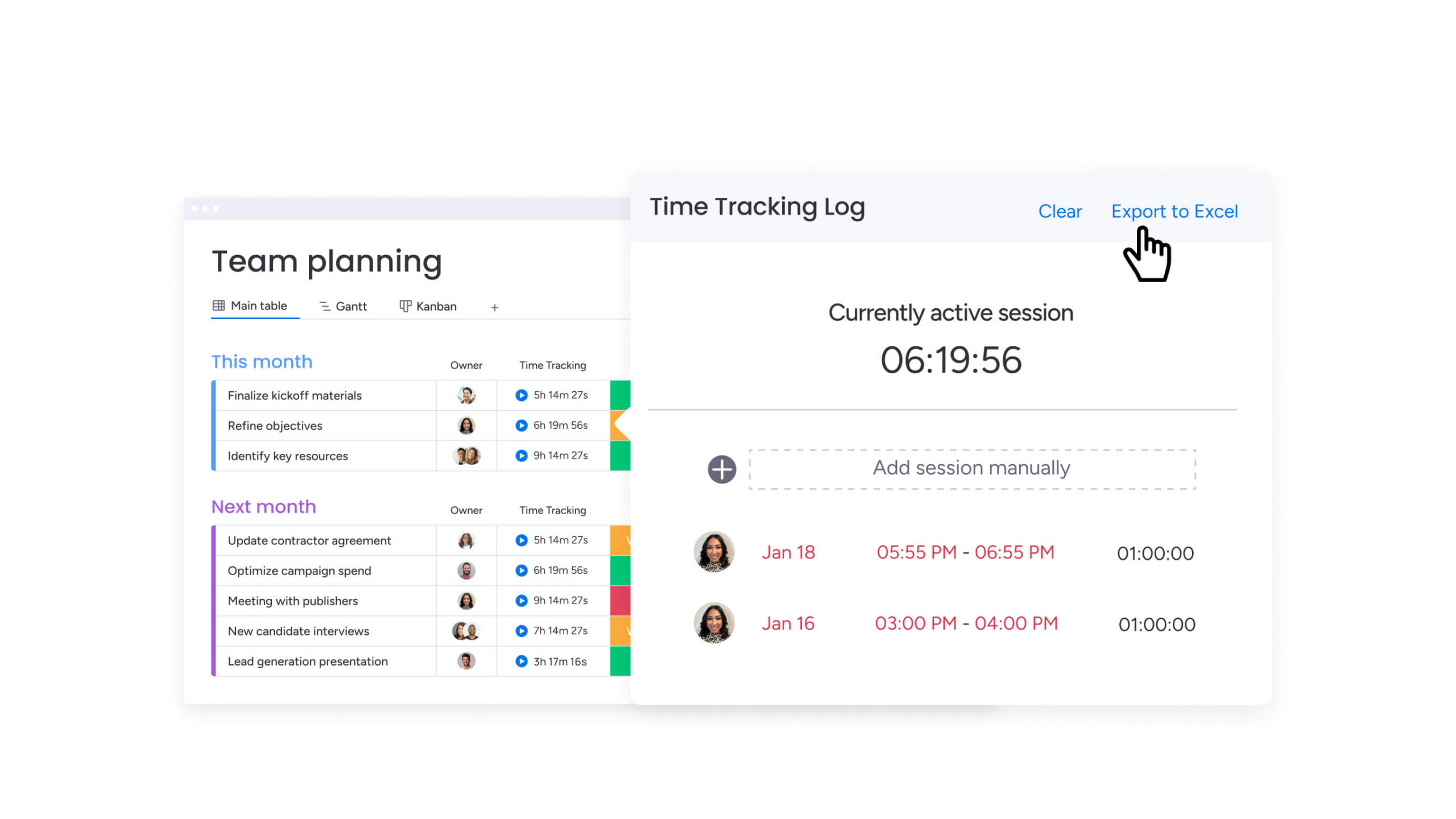
Time-tracking fails because it measures presence, not value. This creates a culture where people focus on looking busy instead of delivering results.
Effective measurement focuses on outcomes, respecting employee autonomy while providing the data leaders need to make informed decisions. Here’s how the shift from activity-based to outcome-based measurement changes the game:
| Measurement approach | Activity-based | Outcome-based |
|---|---|---|
| Primary metric | Hours logged, tasks completed | Deliverables, milestone achievement |
| Leadership focus | Monitoring individual behavior | Enabling team success |
| Employee experience | Surveillance, performative work | Autonomy, ownership |
| Data quality | Volume of activity | Value of output |
| Decision support | Limited strategic insight | Actionable business intelligence |
Modern measurement focuses on four areas that give you real insights without turning into Big Brother:
- Output and outcome metrics: Focus on tangible deliverables, completion rates, and hitting specific milestones. This shifts the conversation from “how long did this take?” to “did we achieve the intended result?”
- Quality performance indicators: Speed doesn’t matter if you have to redo everything. Track accuracy rates, stakeholder satisfaction, and how often errors pop up.
- Goal achievement and OKR tracking: Assess productivity by tracking progress toward team and company objectives. Connect individual work to broader OKRs so every effort moves the company’s strategy forward.
- Real-time visibility through dashboards: Aggregated data shows you workflow patterns and flags bottlenecks at the team level. Leaders can step in and help struggling teams based on real data.
10 proven ways to boost employee productivity
Real productivity improvements come from fixing root causes, not slapping on band-aids. These ten strategies set you up for consistent high performance by cutting the friction from daily work.
How many of these are you already doing? The gap between where you are and where you want to be shows you the biggest opportunities.
Step 1: connect individual work to company objectives
When employees see a direct line from their work to the company’s success, their motivation and engagement increase significantly. This connection transforms daily effort from a list of assignments into a meaningful contribution, which in turn reduces wasted effort on low-impact busywork. This cuts wasted effort on busywork and gets teams more engaged.
Here’s how to do it:
- Transparent goal cascading: Company objectives flow down to department and individual levels
- Regular alignment check-ins: Teams discuss how their work connects to broader strategic priorities
- Impact visibility: Employees can see how their contributions affect company-wide metrics
Step 2: automate repetitive manual processes
Automation kills the time-sucking admin work that doesn’t need a human brain. Offload routine data entry, status updates, and notifications so your team has time for strategic thinking and creative problem-solving.
Step 3: standardize workflows across departments
Consistent processes cut decision fatigue by giving teams a clear roadmap for recurring projects. Standardization gets everyone speaking the same language so collaboration actually works.
Step 4: optimize team resource allocation
Match people to projects based on their skills and bandwidth to avoid both underuse and burnout. Data-driven allocation puts the right people on the right projects when you need them.
Step 5: enable seamless cross-functional work
Break down silos and you’ll cut the delays that come from passing work between departments. Shared workspaces and transparent workflows make collaboration easier and keep projects moving.
Step 6: invest in continuous skills development
Give people learning opportunities tied to their actual work and they’ll get smarter at what they do. Skilled-up teams can adopt more advanced methods to achieve faster, higher-quality results.
Step 7: implement flexible work policies
Policies focused on output instead of presence let people work during their peak energy hours. Flexibility builds trust and helps people balance work with life.
Step 8: reduce communication overhead
Set clear rules for when to use email, chat, or meetings to cut interruptions and keep info organized. Real-time collaboration frees up time previously spent in status meetings and on endless email chains.
Step 9: build recognition into daily operations
Recognize good work in real time and you’ll see more of it. When success is visible, people push for excellence and appreciate each other more.
Step 10: make data-driven workforce decisions
Finally, use performance data to allocate resources and improve processes. Leaders use real insights to spot trends, forecast needs, and adjust strategies before problems hit.
Try monday work managementLeadership's role in maximizing productivity
Leadership sets the foundation for productivity by shaping the environment where work happens. High-performing teams usually have leaders who know how to set them up for success.
What does it look like when leaders actually drive productivity instead of just tracking it? These practices separate managers who multiply output from those who accidentally kill it.
Leaders who create productive environments focus on four things:
- Creating direction through expectations: Leaders define success upfront so everyone knows exactly what’s expected. Clear priorities stop the confusion that wastes effort and misaligns output.
- Providing resources and removing obstacles: High performance needs the right infrastructure. Leaders clear technical and logistical obstacles so teams have the software, budget, and info they need.
- Building psychological safety: When people feel safe speaking up about errors or pitching ideas, problems get solved faster. Remove fear and people focus on work instead of covering their backs.
- Demonstrating productive work habits: Leaders model what they want to see — respecting focus time, prioritizing ruthlessly, and communicating concisely. What they do becomes the standard.

“monday.com has been a life-changer. It gives us transparency, accountability, and a centralized place to manage projects across the globe".
Kendra Seier | Project Manager
“monday.com is the link that holds our business together — connecting our support office and stores with the visibility to move fast, stay consistent, and understand the impact on revenue.”
Duncan McHugh | Chief Operations OfficerLeveraging AI to transform workplace productivity
AI handles the routine mental work so people can focus on creative and strategic problem-solving. Integrate AI into daily workflows and you can boost capacity without hiring more people.
Moving from manual coordination to AI-assisted orchestration is one of the biggest productivity wins available right now. When AI is built into workflows, every team gets access to advanced features.
Here’s how AI is transforming workplace productivity:
- AI-powered resource management: Smart algorithms match people to projects by analyzing their skills, availability, and past performance. You get the right team without bias or guesswork.
- Intelligent prioritization: Automated systems route work to whoever has the capacity and expertise to handle it. AI prioritizes work by looking at deadlines and dependencies.
- Predictive analytics for capacity planning: AI looks at past project data to forecast resource needs and spot bottlenecks before they hit. Early warnings let leaders adjust hiring or timelines before it’s too late.
- Digital workers handling routine processes: AI agents handle repetitive stuff like data analysis, report generation, and status updates. These digital workers run 24/7, ensuring administrative processes move forward continuously and keep your team focused on high-value work.
Financial wellbeing as a productivity driver
Financial stress eats up mental energy and directly hurts performance and engagement. Employees worried about money make more errors, have lower focus, and are more likely to leave for higher-paying opportunities.
Organizations that address the economic wellbeing of their workforce see tangible returns in focus and output. This connection between financial security and productivity manifests in three key areas:
- Addressing economic stress factors: Financial worries distract employees, leading to higher error rates and lower cognitive function. Alleviating this stress allows employees to direct their full attention to professional responsibilities.
- Benefits that enable peak performance: Comprehensive benefit packages that include financial planning, emergency support, and fair compensation reduce anxiety. These investments signal that the organization values the whole employee.
- Measuring ROI of wellbeing programs: Investments in financial wellbeing correlate with improved productivity and retention metrics. Organizations can track impact through reduced absenteeism and higher engagement scores.
Organizations that address the economic wellbeing of their workforce see tangible returns in focus and output.
How to optimize productivity in hybrid work settings
Hybrid work requires a distinct approach to productivity that accommodates distributed teams and varying schedules. The challenge is maintaining coordination and visibility regardless of where employees are located.
Successful hybrid productivity depends on four critical elements that bridge the physical gap between team members:
- Asynchronous collaboration excellence: Workflows designed to function without simultaneous presence reduce reliance on real-time meetings. Documentation and defined handoffs allow work to progress across different time zones.
- Maintaining visibility across locations: Remote and in-office workers must have equal access to information and context. A centralized digital workspace ensures location doesn’t determine an employee’s ability to contribute.
- Supporting work-life integration: Defined boundaries protect focus time and prevent the “always-on” culture that leads to burnout. Policies that respect personal time enable employees to recharge.
- Creating connected team culture: Building relationships and shared purpose across physical distances prevents isolation. Virtual rituals and consistent communication foster a sense of belonging.

Sustaining high performance without burnout
Sustainable productivity focuses on long-term consistency rather than short-term bursts of effort. Organizations that push for maximum output in every sprint eventually pay the price in turnover, quality issues, and declining morale.
Building sustainable productivity requires three interconnected approaches:
- Strategic workload management: Leaders balance capacity with demand to ensure output remains consistent over time. Visualizing team capacity helps managers avoid the “crunch culture” that leads to exhaustion.
- Proactive mental health support: Systems that identify early signs of stress allow for intervention before performance is impacted. Normalizing conversations about mental health creates a supportive environment.
- Building sustainable work practices: Processes are designed to be maintained long-term without requiring heroic effort. Efficiency comes from smart systems, not from individuals consistently working beyond capacity.
Scale productivity excellence with monday work management
monday work management serves as the central operating system that connects productivity strategy to daily execution. It provides the infrastructure for organizations to visualize, optimize, and automate their workflows at scale.
Unified work visibility across your organization
Real-time dashboards display productivity patterns and identify bottlenecks instantly. Portfolio management capabilities connect individual work to high-level organizational goals. Cross-departmental workflow visibility eliminates silos, providing a single source of truth.
AI-driven insights for productivity optimization
Portfolio Risk Insights detect potential productivity threats before they impact delivery timelines. Resource management features optimize team allocation, ensuring skills are matched effectively to demand. AI capabilities automate routine work such as categorizing data and extracting key details.
Automated workflows that eliminate productivity friction
Standardized processes reduce decision fatigue by guiding teams through established best practices. Automated routing assigns work based on predefined rules regarding skills and capacity. Integration capabilities connect disparate systems, while custom automations handle routine coordination.
| Approach | Traditional methods | monday work management |
|---|---|---|
| Productivity measurement | Time tracking and activity monitoring | Outcome-based dashboards and goal alignment |
| Resource allocation | Manual assignment and spreadsheets | AI-powered matching based on skills and capacity |
| Workflow optimization | Separate systems for different processes | Unified platform with automated workflows |
| Cross-team visibility | Email updates and status meetings | Real-time dashboards and portfolio views |
| AI integration | Add-on systems with limited integration | AI-driven insights and automations are integrated directly into workflows to optimize decisions and reduce manual work. |
Revolutionize your organization's productivity potential
Productivity excellence isn’t about working harder—it’s about creating systems that enable teams to work smarter. Organizations that invest in the right infrastructure, measurement approaches, and cultural foundations see compound returns across every department and initiative.
The strategies outlined here work best when implemented as an integrated approach rather than isolated tactics. Start by assessing your current productivity gaps, then prioritize the interventions that will have the greatest impact on your specific organizational challenges.
Teams that coordinate work on monday work management experience smoother collaboration, enhanced visibility, and automated workflows that eliminate friction from daily operations. The advanced platform connects individual productivity to organizational success, ensuring every effort contributes to strategic outcomes.
Try monday work managementFrequently asked questions
What is employee productivity and how is it calculated?
Employee productivity and its calculation refer to the measure of output produced per unit of input. It is typically calculated by dividing total revenue or deliverables by the number of hours worked or resources utilized and focuses on value creation rather than activity levels.
What is the difference between employee productivity and performance?
The difference between employee productivity and performance is that productivity is a quantitative measure of efficiency and output volume, while performance is a broader qualitative assessment that includes behavior, quality of work, and alignment with company values. Performance encompasses productivity but also includes factors like collaboration and innovation.
How can managers improve team productivity without being overbearing?
Managers improve productivity by setting defined expectations, removing obstacles, and focusing on outcomes rather than monitoring specific hours or methods used to achieve them. This approach maintains team autonomy while ensuring accountability.
What productivity metrics matter most for remote teams?
For remote teams, the most critical metrics are outcome-based, such as project completion rates, quality of deliverables, and adherence to deadlines. These metrics focus on results rather than time-based activity logs.
How does employee engagement impact productivity levels?
High employee engagement directly correlates with increased productivity, as engaged employees are more committed to organizational goals, take greater ownership of their work, and exhibit lower absenteeism. Engagement drives both quality and quantity of output.
What role do benefits play in workforce productivity?
Comprehensive benefits reduce financial and personal stress, allowing employees to focus more mental energy on their work. This leads to higher sustained performance and retention, creating a more stable and productive workforce.

 Get started