


Your project has a hard deadline, with marketing needing the campaign live by quarter-end and development depending on design approval. Since legal review can’t start until content is finalized, one delay anywhere creates a domino effect that pushes everything back.
This is where the Critical Path Method becomes essential. CPM helps you map the longest sequence of dependent activities that determines your project’s minimum completion time. It shows exactly which activities drive your timeline and which ones have flexibility.
In the sections below, you’ll learn how to calculate the critical path in seven steps, use float and slack to allocate resources smarter, and spot when CPM actually makes sense for your project. You’ll also see how the right work management platform handles the math automatically so your team can focus on getting work done instead of updating spreadsheets.
Key takeaways
- Focus resources where delays hurt most: Critical path activities have zero flexibility. When they slip, your entire project deadline moves by the same amount.
- Transform manual calculations into visual insights: monday work management automatically identifies your critical path and updates timelines instantly when dependencies change, making CPM accessible to every team member.
- Distinguish between urgent and flexible work: Critical activities demand immediate attention while non-critical activities offer scheduling flexibility for resource optimization and risk management.
- Use float strategically to optimize schedules and mitigate risk: Non-critical activities with positive float give you breathing room. They can absorb delays on risky work without pushing your final deadline.
- Build realistic timelines through dependency mapping: Map how activities connect and how long they’ll take. The longest sequence tells you when you’ll actually finish.
What is the Critical Path Method?
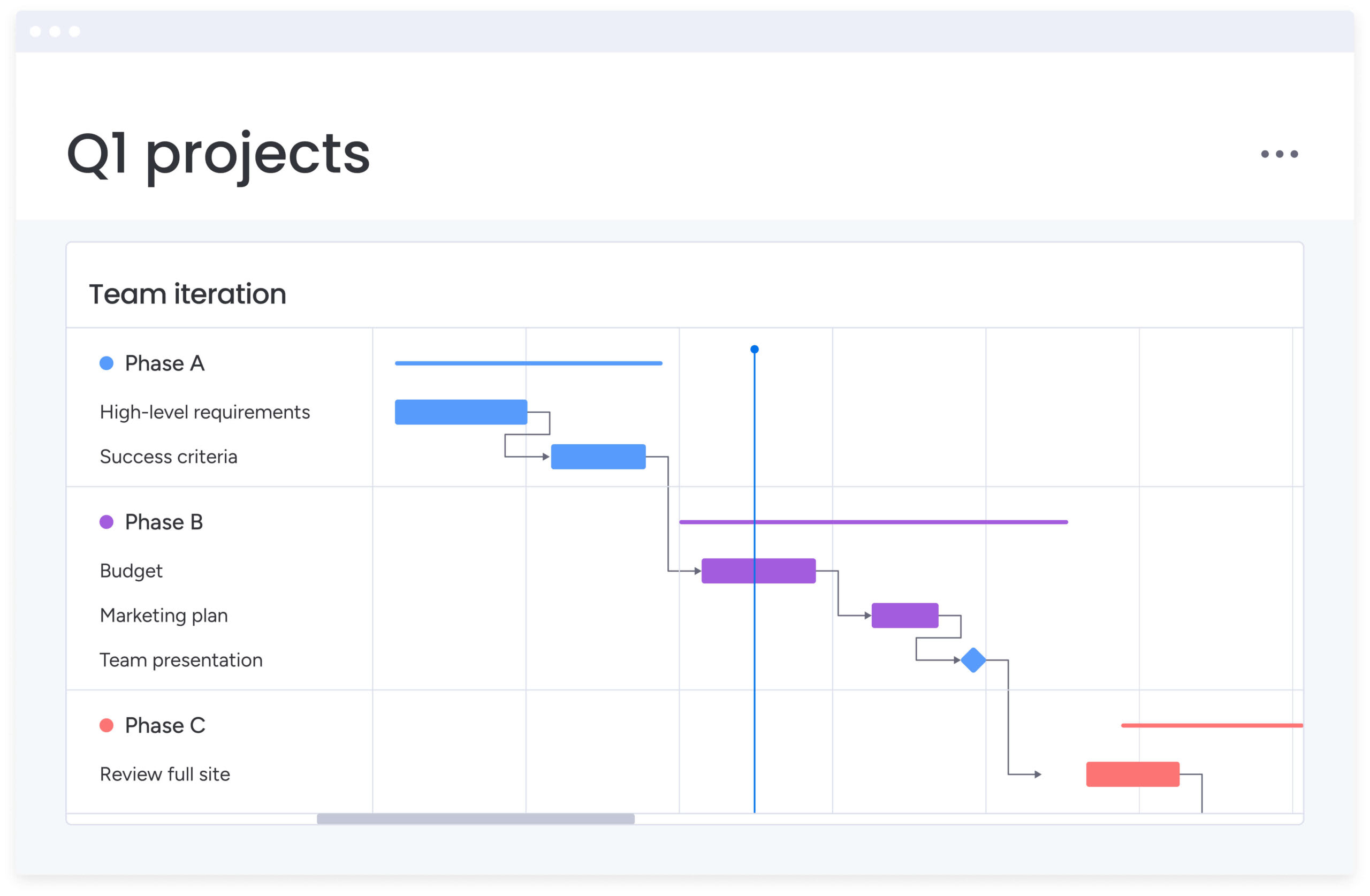
At its core, the Critical Path Method (CPM) finds the longest chain of dependent tasks in your project. Because this specific chain determines the fastest you can finish, the process involves mapping every activity, establishing relationships between them, and calculating which sequence takes the longest to complete.
Ultimately, that sequence becomes your critical path.
While CPM started in the 1950s for industrial projects, it is now essential when you’re managing work across departments with deadlines you can’t miss. This is because every activity on the critical path has zero flexibility. Consequently, if there is even one delay, your entire timeline shifts.
Defining critical path in project management
Unlike a standard checklist, the critical path visualizes how activities actually interlock. Think about launching a new product: you can’t begin marketing until branding is finalized, and you can’t finalize branding until the concept is approved. CPM reveals these “locked-in” sequences that control your delivery date.
What truly makes an activity “critical” is its total lack of scheduling flexibility. When one of these tasks runs long, your completion date moves by that exact amount. In contrast, non-critical activities have “buffer time” (or float), meaning they can absorb minor delays without impacting the final deadline.
Distinguishing between the two tells you exactly where to focus your highest-performing resources.
How CPM determines project duration
CPM calculates total project timeline by mapping every possible path through your project network and identifying the longest one, which becomes your critical path. This specific duration represents the absolute minimum time required to complete the project.
Three variables drive the calculation:
- Activity dependencies: The logical order in which work must occur (design before development).
- Duration estimates: Predicted time for each activity based on historical data or expert judgment.
- Sequencing: How activities arrange based on constraints, resources, and preferred workflows.
CPM used to mean manual calculations for forward and backward passes. For instance, monday work management does the math automatically and updates your timeline the moment critical activities change.
Essential components of Critical Path Method
CPM needs three things to turn your activity list into a network that shows your real timeline. Get these right and you’ll identify your critical path accurately.
Network diagrams and activity dependencies
Network diagrams map your project visually. Activities appear as boxes, and arrows show how they connect. These relationships (dependencies) control how work flows.
To avoid accidentally stretching your timeline, it is essential to understand the four primary dependency types. Each serves a specific strategic purpose in project scheduling:
| Dependency type | Description | Example |
|---|---|---|
| Finish-to-start (FS) | Activity A must complete before Activity B begins | Foundation poured before framing begins |
| Start-to-start (SS) | Two activities begin simultaneously | Writing documentation while developing code |
| Finish-to-finish (FF) | Activities must conclude together | Quality assurance ends when development ends |
| Start-to-finish (SF) | Activity A cannot finish until Activity B starts | Shift handovers or security protocols |
While Finish-to-Start is the most common for sequential work, Start-to-Start relationships allow you to run activities in parallel, significantly speeding up your project.
Modern solutions like monday work management visualize these connections instantly on a Gantt chart, allowing you to see exactly how one task’s delay impacts the rest of the chain.
Activity duration and sequencing
A critical path is only as reliable as the data supporting it. Because duration estimates serve as the foundation of your entire timeline, your calculations must be grounded in reality rather than best-case scenarios.
To achieve this accuracy, three estimation techniques work best:
- Expert judgment: Leveraging experience from team members who’ve performed similar work.
- Historical data: Analyzing past project metrics to predict future performance.
- Three-point estimation: Calculating weighted averages using optimistic, pessimistic, and most likely scenarios.
Sequencing involves arranging these estimated activities in logical order as part of effective project scheduling. Get the sequence wrong and your critical path won’t be valid. Know the difference: mandatory dependencies are physical limits you can’t change. Discretionary dependencies are just preferences.
Critical vs. non-critical activities
Knowing which activities are critical tells you where to put resources, manage risk, and focus daily. It shows you exactly where to focus.
| Feature | Critical activities | Non-critical activities |
|---|---|---|
| Float/slack | Zero float (0 days) | Positive float (>0 days) |
| Impact on deadline | Direct impact; delay equals project delay | No immediate impact within float limits |
| Management focus | Requires strict monitoring and immediate resolution | Allows flexible scheduling and resource leveling |
| Network position | Forms longest continuous path | Exists on parallel, shorter paths |
Critical activities need your full attention, as there’s no buffer. Non-critical activities give you flexibility. Therefore, you can shift resources or adjust timelines without missing your deadline.
How to calculate the critical path in 7 steps
Calculating the critical path transforms raw project requirements into a functional schedule. By following this structured approach, you ensure your timeline is built on logic rather than guesswork, allowing you to make better decisions when project variables change.
Step 1: list all project activities
Begin by breaking your project scope into discrete, manageable tasks using a Work Breakdown Structure (WBS). This ensures every critical step is accounted for before you begin scheduling. To keep your list effective:
- Start with deliverables: Identify final outputs and work backward to determine required activities.
- Consider resources: Group work based on skills required for completion.
- Maintain consistency: Keep activities roughly equivalent in scope and complexity.
Step 2: identify activity dependencies
Next, map the relationships between activities by answering: “What must happen before this activity can start?” Finding predecessors and successors builds your schedule logic.
Separate mandatory dependencies (physical limits) from discretionary ones (preferences). Too many discretionary dependencies will stretch your timeline and kill flexibility.
Step 3: create a network diagram
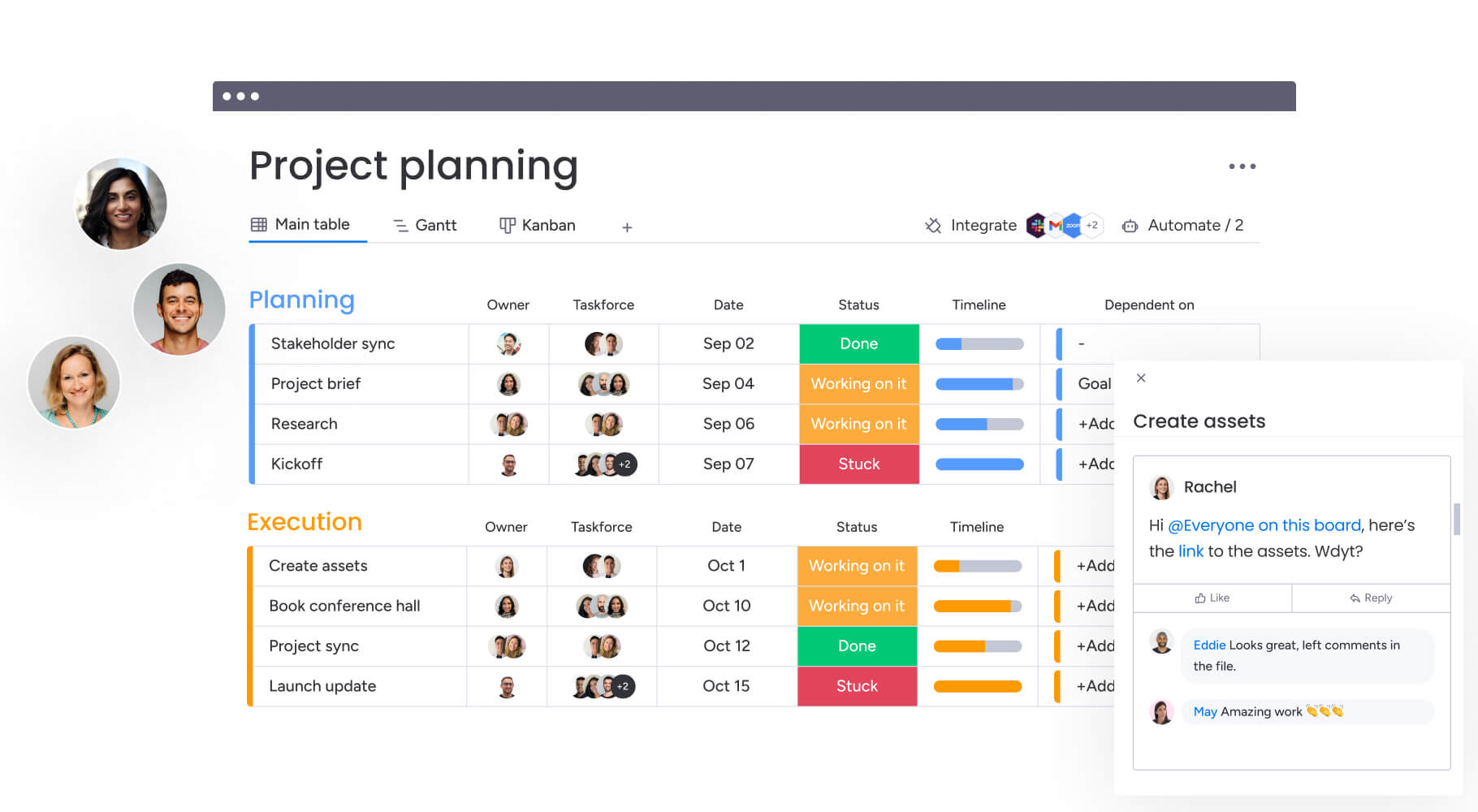
Visualize your workflow using the Activity-on-Node (AON) method, where boxes represent activities and arrows represent dependencies. This diagram allows you to see exactly where work flows in a single line and where paths run in parallel.
While you can draw these manually, platforms like monday work management generate these diagrams automatically, highlighting the critical path directly on your Gantt chart as you add tasks.
Step 4: estimate activity durations
Because your critical path is only as accurate as your time estimates, it is best to be realistic rather than aggressive. To account for uncertainty, use the three-point estimation formula:
(Optimistic + four × Most Likely + Pessimistic) ÷ six
It weights the most likely scenario but factors in best and worst cases. Back it up with historical data and expert input to keep estimates realistic.
Step 5: calculate early start and finish dates
The “Forward Pass” calculation determines earliest possible dates for each activity. Start with the first activity and move forward through your network.
The formulas are simple:
- Early Start (ES): Latest Early Finish date of all immediate predecessors.
- Early Finish (EF): Early Start + Duration.
When an activity has multiple predecessors, the predecessor with the latest finish date determines the current activity’s start. This keeps your schedule aligned with all dependencies.
Step 6: calculate late start and finish dates
The “Backward Pass” calculation determines latest possible dates without delaying your project. Start at the end and work backward to find where you have flexibility.
The formulas work like the forward pass, but in reverse:
- Late Finish (LF): Earliest Late Start date of all immediate successors.
- Late Start (LS): Late Finish − Duration.
Step 7: identify the critical path
Finally, compare the two passes. Any activity where the Early Start equals the Late Start (and Early Finish equals Late Finish) has zero float. The continuous sequence of these zero-float activities constitutes your critical path.
This path represents both the longest duration through your network and the shortest possible time to complete the project.
Begin by breaking your project scope into discrete, manageable tasks using a Work Breakdown Structure (WBS). This ensures every critical step is accounted for before you begin scheduling.
Understanding float and slack in CPM
Float (or slack) is the flexibility in your schedule. Understand float and you can shift resources and manage risk without missing deadlines. It’s essential for allocating resources and managing risk.
Total float vs. free float
Float types differ based on how they affect your project. The distinction matters because using one type impacts different parts of your schedule.
- Total float: Measures how long an activity can delay from its early start without delaying project finish. Calculate it as Late Start − Early Start or Late Finish − Early Finish.
- Free float: Measures delay time without affecting any immediate successor’s early start. Calculate it as Early Start (successor) − Early Finish (current).
Total float applies to the whole path, while free float applies to just one activity. Use total float on one activity and you reduce float for later activities on that path.
Calculating float values
Float calculations translate schedule risk into concrete numbers. By comparing your Early Start and Late Start dates, you can pinpoint exactly which activities are “locked in” and which offer breathing room.
The following table illustrates how these values reveal the status of your activities:
| Activity | Early start | Late start | Duration | Total float (LS − ES) |
|---|---|---|---|---|
| Activity A | Day 1 | Day 1 | Five days | Zero days (critical) |
| Activity B | Day 1 | Day 3 | Two days | Two days |
| Activity C | Day 6 | Day 6 | Four days | Zero days (critical) |
Activities with zero float form your critical path. Activities with positive float can handle delays without pushing your completion date.
Using float for schedule optimization
Float gives you strategic options for managing your project. They help you make smart trade-offs during execution.
Teams use float in several ways:
- Resource leveling: Shift resources from non-critical activities (high float) to critical activities for bottleneck relief.
- Risk mitigation: Float acts as buffer for high-uncertainty activities, preventing minor issues from impacting delivery.
- Cost optimization: Schedule activities with float to align with cash flow or avoid overtime costs.
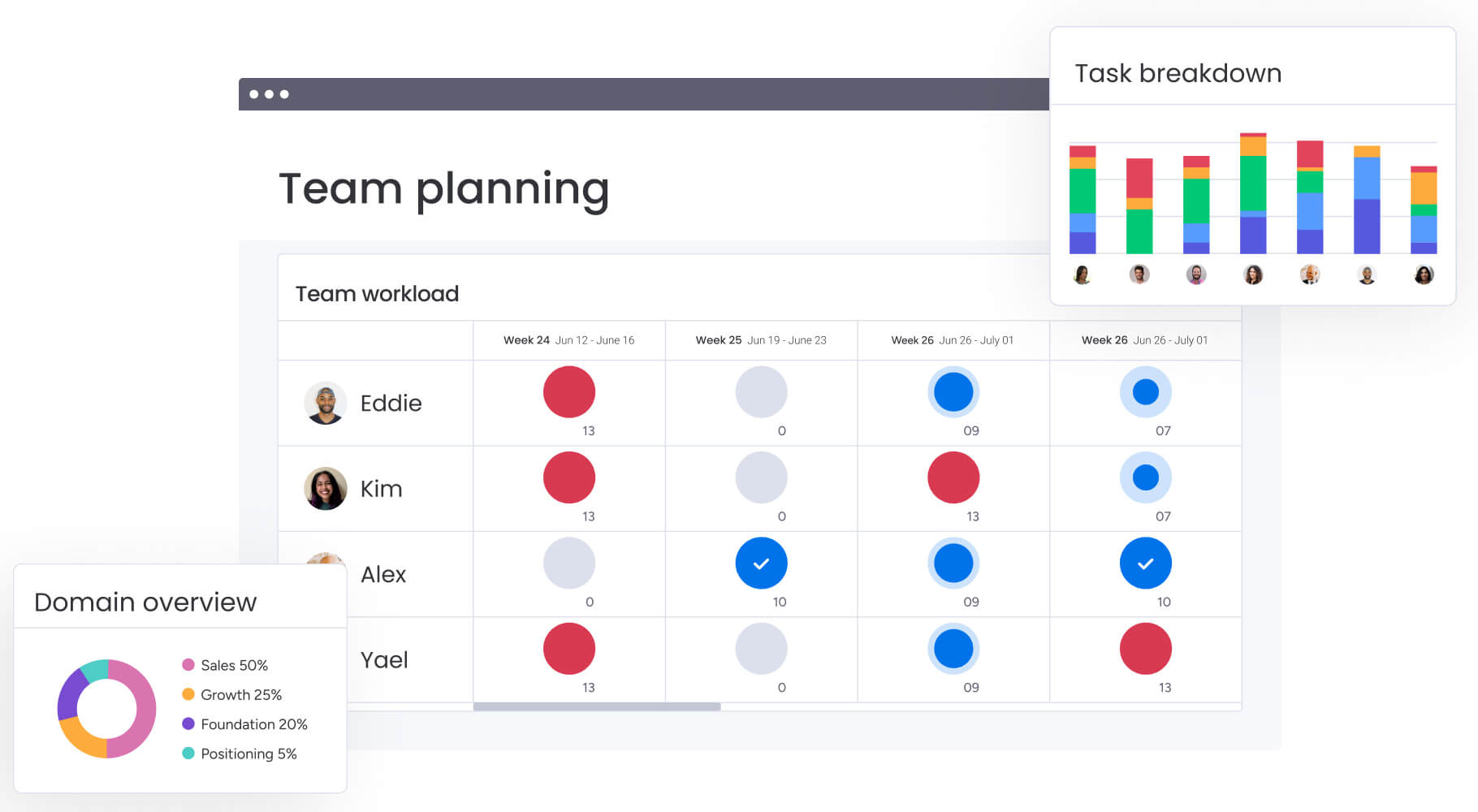
To make these decisions in real-time, monday work management’s Workload View visualizes resource allocation across all activities. This allows you to see exactly who has the bandwidth to jump onto a critical task and which non-critical dates can be pushed to balance the load.
6 key benefits of Critical Path Method
CPM changes how your whole organization plans and executes work, not just the PMO. The benefits reach every department.
1. Visible project timeline
CPM replaces guesswork with timelines based on logic and math. As a result, you get a definitive completion date based on the longest sequence of dependent activities.
Sales, marketing, and operations can plan confidently. The timeline is backed by data, not wishful thinking.
2. Improved resource allocation
Know which work is critical and you’ll deploy resources smarter. You can assign your most experienced leads to critical path activities where speed and precision are non-negotiable.
Meanwhile, junior staff can handle non-critical activities where there’s room for learning or split focus. This approach gets the most from your team without risking timelines.
3. Early risk identification
CPM acts as an early warning system by highlighting the activities that have zero “give.” By focusing risk management efforts on the critical path, you can intervene the moment a task starts to slip, weeks before it actually threatens the deadline.
This proactive stance prevents cascading delays and the stress of last-minute scrambles.
4. Data-driven scheduling decisions
Data resolves scheduling conflicts, not politics or hierarchy. When stakeholders want changes, the critical path shows exactly how it affects your timeline.
This removes emotion from decision-making and ensures choices reflect business impact. Teams using monday work management can instantly show how proposed changes affect the overall schedule, making trade-off discussions more productive.
5. Enhanced team coordination
The critical path creates shared language for your project team. Team members understand how their contributions fit the larger picture.
Someone working on a critical activity understands urgency not because of manager pressure, but because they see how their delay halts the entire production line. This visibility drives accountability and collaboration.
6. Stronger stakeholder communication
Executives and clients prefer transparency over vague reassurance. CPM provides the concrete data needed for accurate status reporting.
Instead of making promises, project leads can communicate exactly which activities are driving the current timeline and why certain delays are consequential while others remain manageable.
This precision builds high levels of trust and enables better strategic decision-making at the executive level.
Know which work is critical and you’ll deploy resources smarter. You can assign your most experienced leads to critical path activities where speed and precision are non-negotiable.
When to use Critical Path Method
CPM excels in specific conditions but isn’t universal for every workflow. Understanding where it adds value ensures the methodology matches your needs and delivers maximum benefit for your investment.
Ideal project types for CPM
CPM excels in environments characterized by well-defined activities and intricate interdependencies. If your project involves multiple teams, sequential handoffs, and non-negotiable deadlines, CPM is likely the right fit.
Projects that benefit most from CPM typically share these four characteristics:
- Complex dependencies: Construction or software integration where operation order is rigid.
- Fixed deadlines: Regulatory compliance or event planning where end dates are non-negotiable.
- Resource constraints: Limited specialized talent requiring optimization across parallel tracks.
- High stakes: Large-scale capital projects where delays result in significant financial penalties.
Knowing when CPM is the right fit
Despite its precision, CPM has constraints that may make it unsuitable for certain environments. Output reliability depends on duration estimate accuracy.
In highly volatile projects where scope changes daily, maintaining a CPM network becomes administrative overhead. For straightforward workflows with few dependencies, CPM analysis complexity is unnecessary, and simpler project management methodologies may be more appropriate.
Basic CPM also assumes infinite resources — it requires additional analysis to account for capacity limits, which is where critical chain methodology can help.
Combining CPM with Agile methods
CPM and Agile aren’t mutually exclusive. Many organizations employ hybrid approaches, using CPM for high-level roadmap planning and dependency mapping while utilizing Agile sprints for specific activity execution, as part of their overall project management methodologies.
This allows strategic predictability at the program level while maintaining flexibility and iteration at the team level. Organizations using monday work management can effectively blend these methodologies, tracking both long-term critical paths and short-term sprint progress.
Master CPM with monday work management
Managing critical paths across multiple projects and teams requires more than spreadsheets and manual calculations. monday work management embeds CPM logic into an intuitive, visual platform that removes calculation barriers and lets teams focus on execution.
This transformation makes critical path analysis accessible to every team member while maintaining mathematical precision.
Visual CPM without manual calculations
The platform democratizes critical path insights. Team members input activities and dependencies, and monday work management automatically calculates the critical path, highlighting it directly within the Gantt chart view.
Every team member can instantly visualize which activities drive the project timeline, regardless of their technical project management background. This accessibility transforms CPM from a specialist technique into organizational knowledge.
Automated dependency tracking
Managing dependencies becomes a drag-and-drop experience. The platform supports all standard dependency types and visualizes them within the Gantt chart.
When timelines shift, the automation engine instantly propagates changes through all dependent activities, updating start and end dates automatically. This eliminates human error risk inherent in manual schedule updates.
AI-powered risk detection
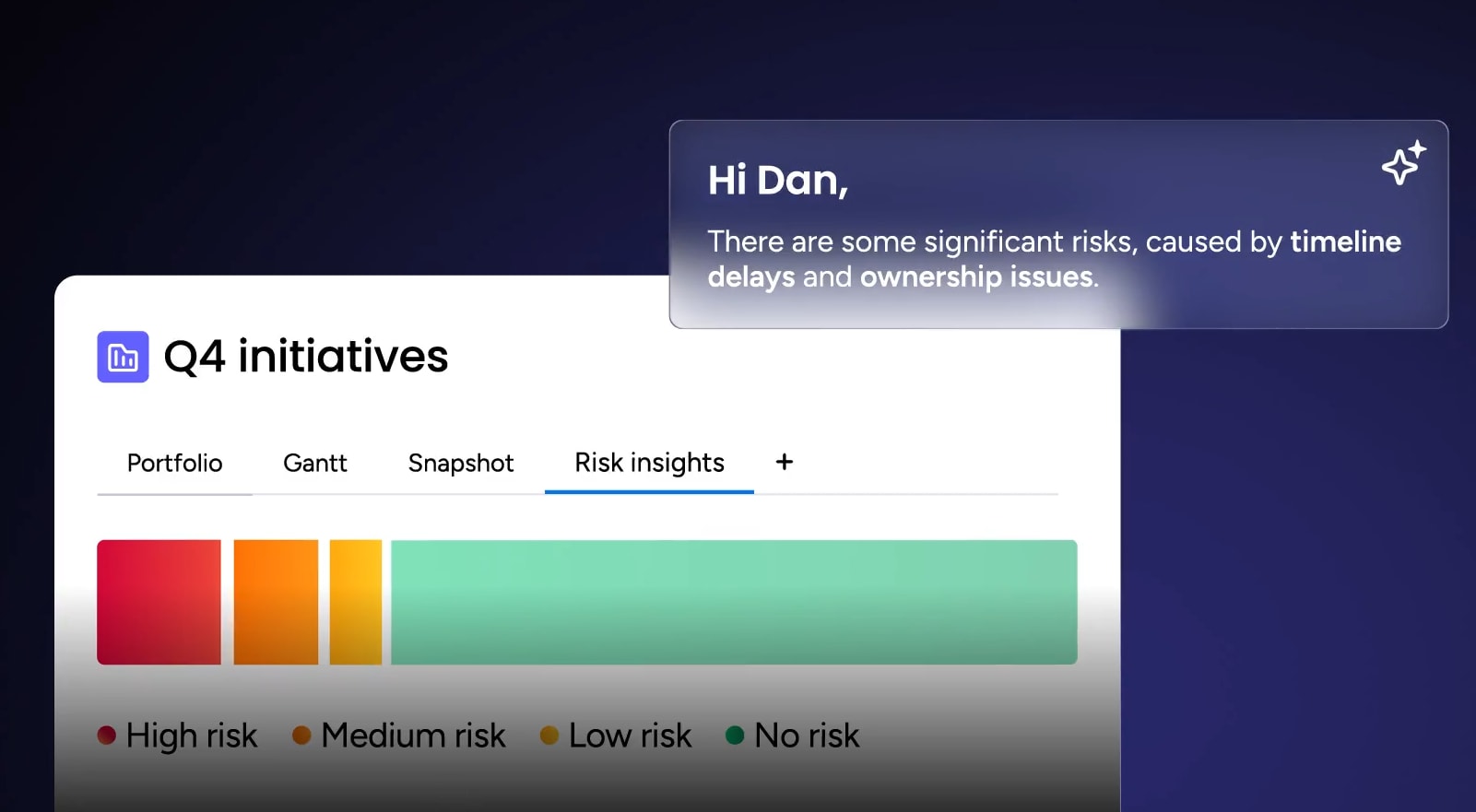
The platform’s AI capabilities scan project boards to identify potential delays and anomalies. By flagging activities at risk of slipping onto the critical path, the system empowers managers to take corrective action early.
This predictive capability shifts management from reactive firefighting to proactive optimization. Teams stay ahead of issues rather than discovering them after impact.
Collaborative critical path planning
CPM transforms from solitary planning into collaborative team effort. The platform enables real-time interaction on project plans, allowing cross-functional teams to define dependencies and estimate durations together.
| Traditional CPM | monday work management CPM |
|---|---|
| Manual, error-prone arithmetic | Automated, instant updates |
| Static, complex network diagrams | Dynamic, interactive Gantt charts |
| Restricted to trained project managers | Intuitive for all stakeholders |
| Periodic, often outdated reports | Real-time, live data visibility |
| Siloed planning documents | Shared, transparent workspace |

“monday.com has been a life-changer. It gives us transparency, accountability, and a centralized place to manage projects across the globe".
Kendra Seier | Project Manager
“monday.com is the link that holds our business together — connecting our support office and stores with the visibility to move fast, stay consistent, and understand the impact on revenue.”
Duncan McHugh | Chief Operations OfficerMaster critical path planning for project success
Critical Path Method transforms project uncertainty into predictable execution by revealing the exact sequence of activities that determine your delivery date. This mathematical precision eliminates guesswork and enables confident planning across complex, multi-team initiatives.
The methodology’s power lies in its ability to distinguish between activities that demand immediate attention and those that offer scheduling flexibility. Teams gain clarity on where to focus resources, when to escalate risks, and how to communicate realistic timelines to stakeholders.
Organizations ready to move beyond reactive project management find CPM provides the foundation for strategic execution. With platforms like monday work management automating the calculations and visualizing the insights, critical path analysis becomes accessible to every team member while maintaining the mathematical rigor that makes it reliable.
Frequently asked questions
What is the critical path formula?
The formula for the critical path is not a single calculation but a condition: it is identified where an activity’s Early Start equals its Late Start (ES = LS) and its Early Finish equals its Late Finish (EF = LF). This indicates zero float and determines the project's total duration.
How do you calculate critical path in project management?
Calculate critical path by performing a forward pass to find early dates, a backward pass to find late dates, then identifying the sequence of activities with zero float.
Can you have multiple critical paths?
Yes, projects can have multiple critical paths if several sequences of dependent activities share the exact same longest duration, which increases project risk.
What is the difference between CPM and PERT?
CPM uses single, deterministic duration estimates for projects with known timeframes, while PERT uses three-point probabilistic estimates to account for high uncertainty in research or development projects.
How does float work in Critical Path Method?
Float (or slack) is the amount of time an activity can delay without impacting the final project deadline — critical path activities have zero float while non-critical activities possess positive float.
When should you use Critical Path Method?
CPM is essential for complex projects with multiple dependencies, strict deadlines, and high stakes where delays carry significant costs and require mathematical precision for resource optimization.

 Get started