

A team can hit every target and still feel uneasy. Conversations stay careful, decisions take longer than they should, and people hesitate before raising concerns. Work gets done, but it takes more effort than necessary because confidence is missing. When trust is low, even simple collaboration can feel heavier than it needs to be.
Trust changes how teams operate at every level. It creates the conditions for open communication, faster decisions, and shared accountability that does not rely on constant oversight. People focus on solving problems instead of protecting themselves, which makes progress more consistent and far less fragile.
This helpful posts explores how leaders build trust through everyday clarity, not occasional gestures. It looks at how transparency, predictable communication, clear ownership, and meaningful feedback create an environment where teams feel confident contributing and following through. It also explains how the right systems reinforce trust at scale, helping organizations maintain alignment, and perform with greater stability over time.
Key takeaways
- Transparency reduces friction and defensive behavior: Making work, decisions, and progress visible enables teams to focus on execution instead of seeking information or protecting themselves.
- Consistent communication creates stability and alignment: Predictable rhythms such as daily, weekly, and monthly touchpoints eliminate uncertainty and help teams stay connected to priorities and strategy.
- Clear ownership strengthens accountability without control: Assigning single owners with defined decision rights ensures responsibility while preserving autonomy and trust.
- Operational metrics reveal trust health early: Tracking collaboration frequency, decision speed, and engagement levels helps leaders identify and address trust gaps before they impact performance.
- Technology platforms enable trust at scale: Advanced platforms like monday work management support transparency, automate workflows, and create shared visibility, helping organizations maintain accountability without micromanagement.
What is organizational trust and why do leaders prioritize it?
Organizational trust is the confidence people have that the company will follow through on what it promises, consistently and honestly. It is not built through statements or policies alone. Instead, it grows through daily actions, decisions, and how teams experience the workplace over time.
For example, when a marketing manager allocates budget for a product launch without double checking every engineering milestone, that decision reflects trust. In the same way, when a remote developer reports a critical issue close to a deadline without fear of blame, it shows that trust is already part of the culture.
Trust creates measurable competitive advantage
High trust organizations operate with fewer delays and less friction. Teams move faster because they are not stuck waiting for approvals or second guessing each other. As a result, energy goes into meaningful work rather than defensive behavior.
Research supports this clearly. Organizations with a strong sense of purpose see employees who are 2.1× more likely to describe their workplace as healthy. That sense of health directly connects to how efficiently teams execute their work.
Leaders often rely on clear operational signals to understand how trust is impacting performance:
- Employee retention rates: Teams with strong trust tend to stay longer, which reduces the cost and effort tied to hiring and onboarding.
- Project completion velocity: Work moves faster because teams are not held back by unnecessary approvals or repeated checks.
- Cross team collaboration frequency: Information flows freely, which reduces silos and improves alignment across departments.
- Decision making speed: Teams make decisions independently while staying aligned with company goals, easing pressure on leadership.
The real cost when workplace trust erodes
When trust starts to break down, even simple processes begin to slow. People become cautious, and instead of acting quickly, they hold back information or delay decisions to avoid risk.
As a result, everyday operations become heavier and less effective. Teams spend more time protecting themselves than solving problems, which directly affects business outcomes.
The table below outlines how low trust impacts different parts of the organization:
| Impact area | Operational consequence | Business cost |
|---|---|---|
| Decision making | Decisions pushed upward to avoid liability | Executive bottlenecks slow market response |
| Information flow | Data hoarded or sanitized before sharing | Leadership operates with incomplete information |
| Innovation | Risk-aversion becomes default | Missed opportunities and stagnant growth |
| Execution | Excessive meetings verify status | Reduced capacity for actual work |
How high-trust teams outperform the competition
The difference between high trust and low trust teams shows up clearly in day to day work. High trust teams treat information as something everyone can use. On the other hand, low trust teams tend to guard information as leverage.
This contrast becomes especially visible during key moments like delays, conflicts, or changes in direction.
| Scenario | Low-trust team behavior | High-trust team behavior |
|---|---|---|
| Project delays | Information hidden until last moment | Delays flagged immediately with solutions |
| Conflict resolution | Disagreements become personal or go offline | Conflict focuses on problem in open channels |
| Change management | High resistance; rumors circulate | Teams adapt quickly, trusting the rationale |
| Resource sharing | Departments guard resources | Resources shift to highest priority |
High trust organizations operate with fewer delays and less friction. Teams move faster because they are not stuck waiting for approvals or second guessing each other.
4 essential types of trust leaders must build
Trust inside an organization is not one dimensional. Leaders need to focus on multiple areas to make sure operations remain stable and efficient. Each type of trust plays a specific role in how teams collaborate and deliver results too.
Team trust for daily collaboration
Team trust means you can rely on your colleagues to deliver what they committed to, both in quality and timing. It reduces the need for constant follow ups and manual checks.
In remote or hybrid setups, this becomes even more important. For instance, when a designer marks a task as complete in monday work management, the developer can confidently move forward without needing extra confirmation. That shared visibility keeps work moving smoothly.
Organizational trust across departments
Organizational trust connects teams across functions, making sure everyone is aligned toward the same goals. Without it, departments tend to work in isolation, which creates delays and confusion.
Leaders build this by making information accessible across teams. When sales can see product updates in real time and product teams can access customer feedback instantly, collaboration becomes much more natural.
Intelligent and easy-to-use solutions like monday work management supports this by bringing different workflows into one shared space.
Stakeholder trust with customers and partners
External trust is a direct reflection of how well internal operations run. When teams are aligned and processes are clear, customers experience consistency and reliability.
For example, giving clients visibility into project progress builds confidence. It shows that timelines are being managed properly and that there is nothing hidden. This level of transparency strengthens long term relationships.
Digital trust in AI and technology systems
As organizations rely more on automation and AI, confidence in how these systems operate becomes increasingly important. Teams need clarity on how decisions are generated, how data is used, and where human oversight still plays a role. When logic is visible and processes are consistent, people are more comfortable relying on automated outcomes.
Research shows that 71% of employees trust their employers to act ethically when developing AI. That confidence strengthens when technology is transparent and easy to interpret. monday work management helps reinforce this clarity by making automation logic visible, so teams understand how workflows operate and how decisions are triggered.
Try monday work management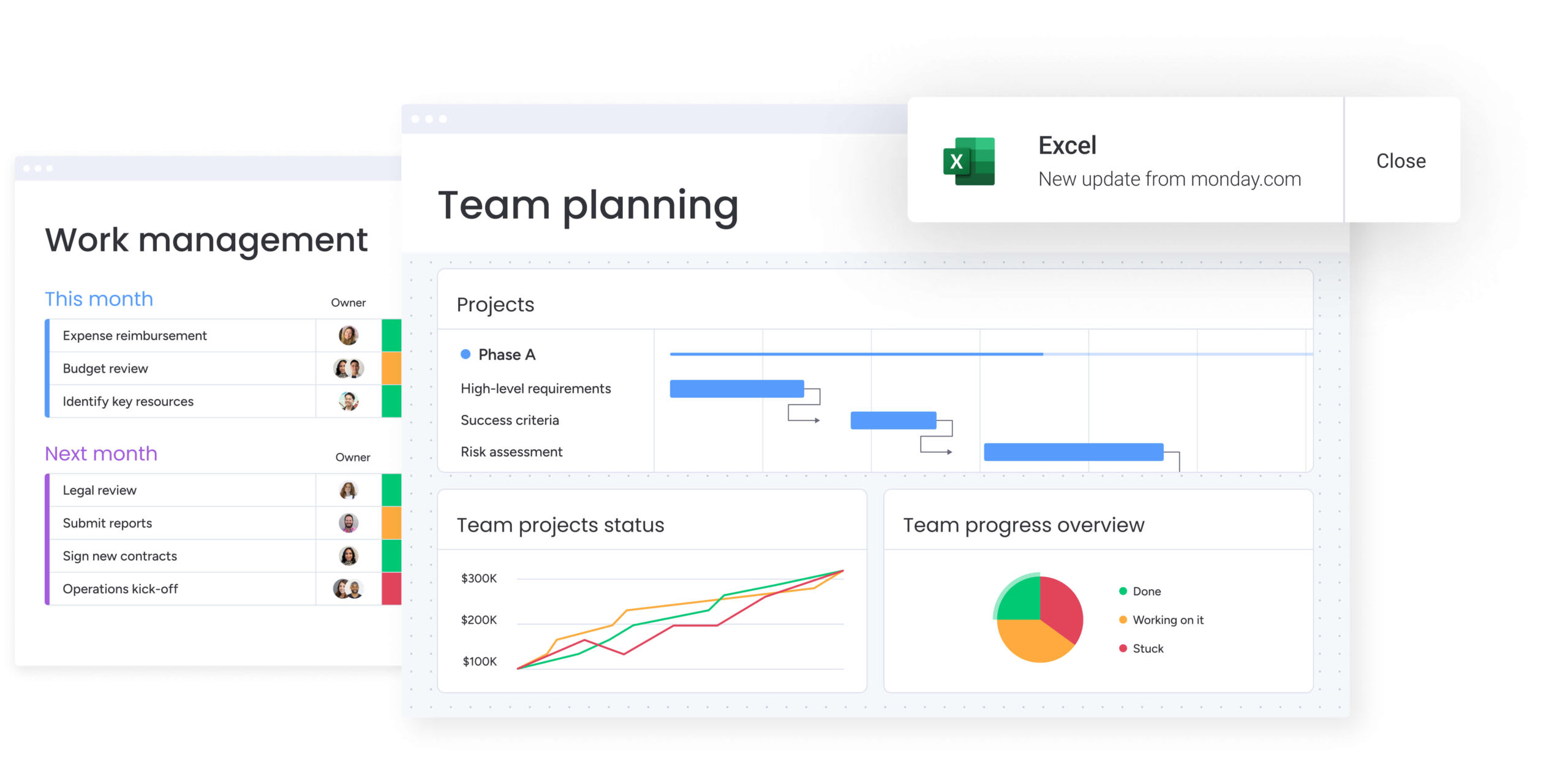
7 steps to build organizational trust systematically
Building trust at work doesn’t happen by accident. You create it through consistent actions, clear systems, and honest communication. When people can see what is happening, understand decisions, and feel heard, trust becomes part of how the organization operates every day.
Below are seven practical steps that help you build trust in a way that holds up over time and across teams.
1. Make all work transparent and visible
Trust starts when people are no longer guessing what is going on. When work is visible, teams spend less time chasing updates and more time actually moving forward. As a result, confusion drops and confidence grows.
Create shared visibility into projects and progress
When everyone can see project status, timelines, and blockers, work becomes easier to follow. Instead of asking for updates, people can check for themselves and stay aligned without friction. This clarity also reduces unnecessary back and forth across teams.
To make this work, you need structured visibility that updates automatically. That way, information stays current without adding extra effort for your team.
- Centralized dashboards: Display live data on budgets, goals, timelines, and resources so everyone works from the same view.
- Accessible timelines: Share Gantt charts with cross functional teams to clarify dependencies and handoffs.
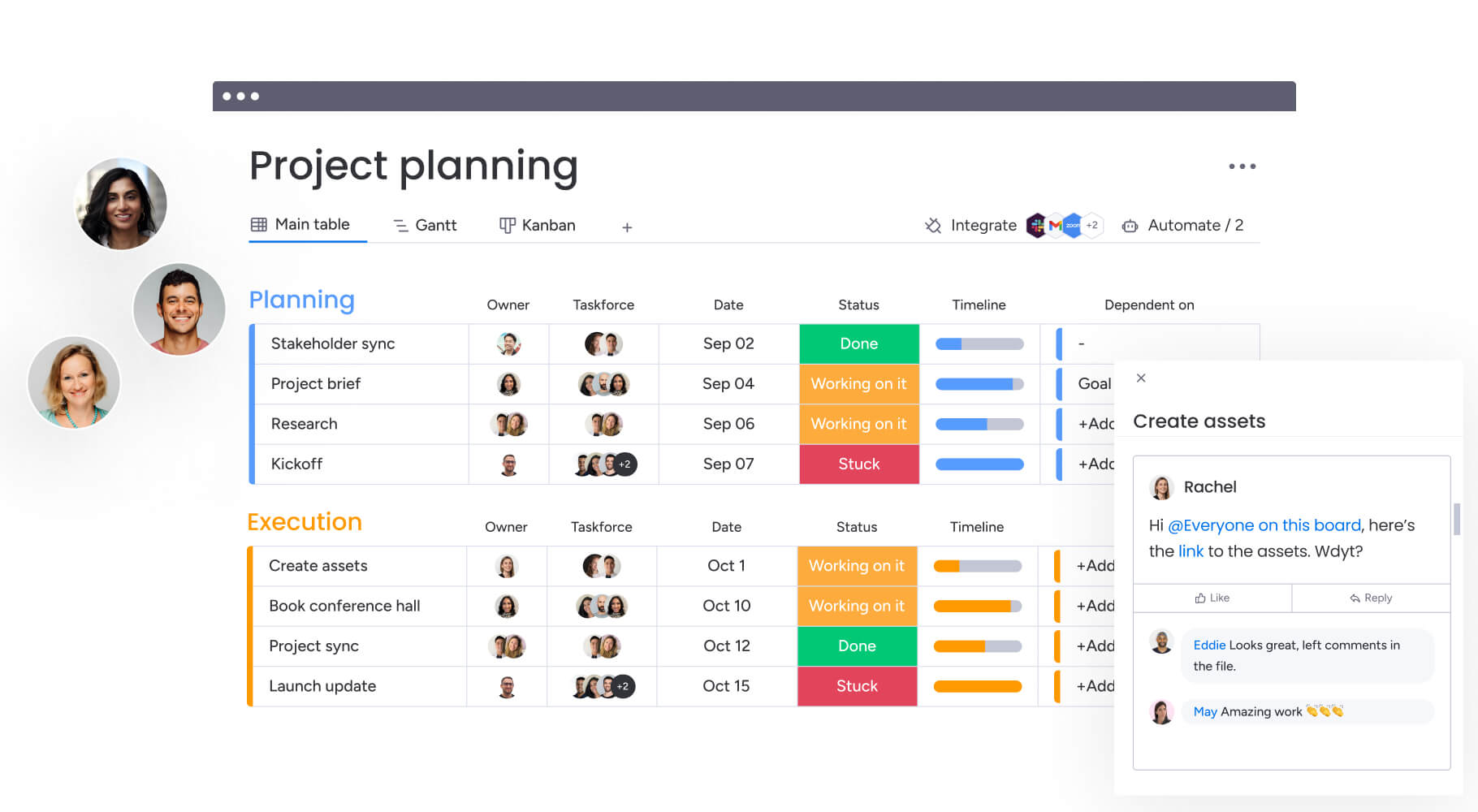
- Status definitions: Use clear labels like “Stuck,” “Working on it,” and “Done” so there is no confusion.
With monday work management, you can bring all of this into one place, so teams rely on a single source of truth instead of scattered updates.
Document decisions and context openly
When decisions are not explained, people start to question them. That uncertainty can slowly weaken trust, especially during changes or pivots.
Instead, document what was decided and why. A simple decision log helps everyone understand the reasoning behind changes, which makes leadership feel consistent rather than reactive.
Build transparency into daily workflows
Transparency should not feel like extra work. It should happen naturally as people complete tasks and update progress.
- Automated status updates: Task completion triggers notifications, so no one is left waiting.
- Visible resource allocation: Workload views show who is handling what, which helps prevent overload.
- Open access permissions: Default view access allows people to find answers without asking.
2. Establish predictable communication patterns
Silence often creates doubt, especially in remote or hybrid teams. When communication is predictable, people know when to expect updates and how to stay aligned. That rhythm reduces stress and builds confidence.
Daily standups that strengthen connections
Daily standups should focus on alignment, not reporting. The goal is to quickly surface blockers and keep priorities clear.
Async standups work well for distributed teams. They allow everyone to contribute without interrupting deep work.
- What you completed yesterday
- What you are focusing on today
- Any blockers that need support
Weekly priority alignment sessions
Weekly meetings help teams step back and connect daily work to broader goals. This is where priorities are clarified and risks are discussed openly.
When leaders talk honestly about constraints, it shows they are grounded in reality (that honesty builds credibility across the team).
Monthly strategic transparency meetings
Monthly sessions give teams a clearer view of the bigger picture. This includes company direction, financial health, and market challenges.
Even though it may feel uncomfortable, sharing setbacks builds more trust than only highlighting wins. People appreciate knowing the full story.
3. Define ownership without micromanaging
Without clear ownership, work either stalls or overlaps. On the other hand, too much control limits autonomy. The balance sits in clearly defined responsibility with room to execute.
Assign accountability with autonomy
Ownership means one person is responsible for the outcome and has the authority to make decisions. Leaders define expectations, while the owner decides how to deliver.
- Single owners: Each task has one accountable person to avoid confusion.
- Decision rights: Define what decisions can be made independently.
- Outcome focus: Measure success by results, not activity.
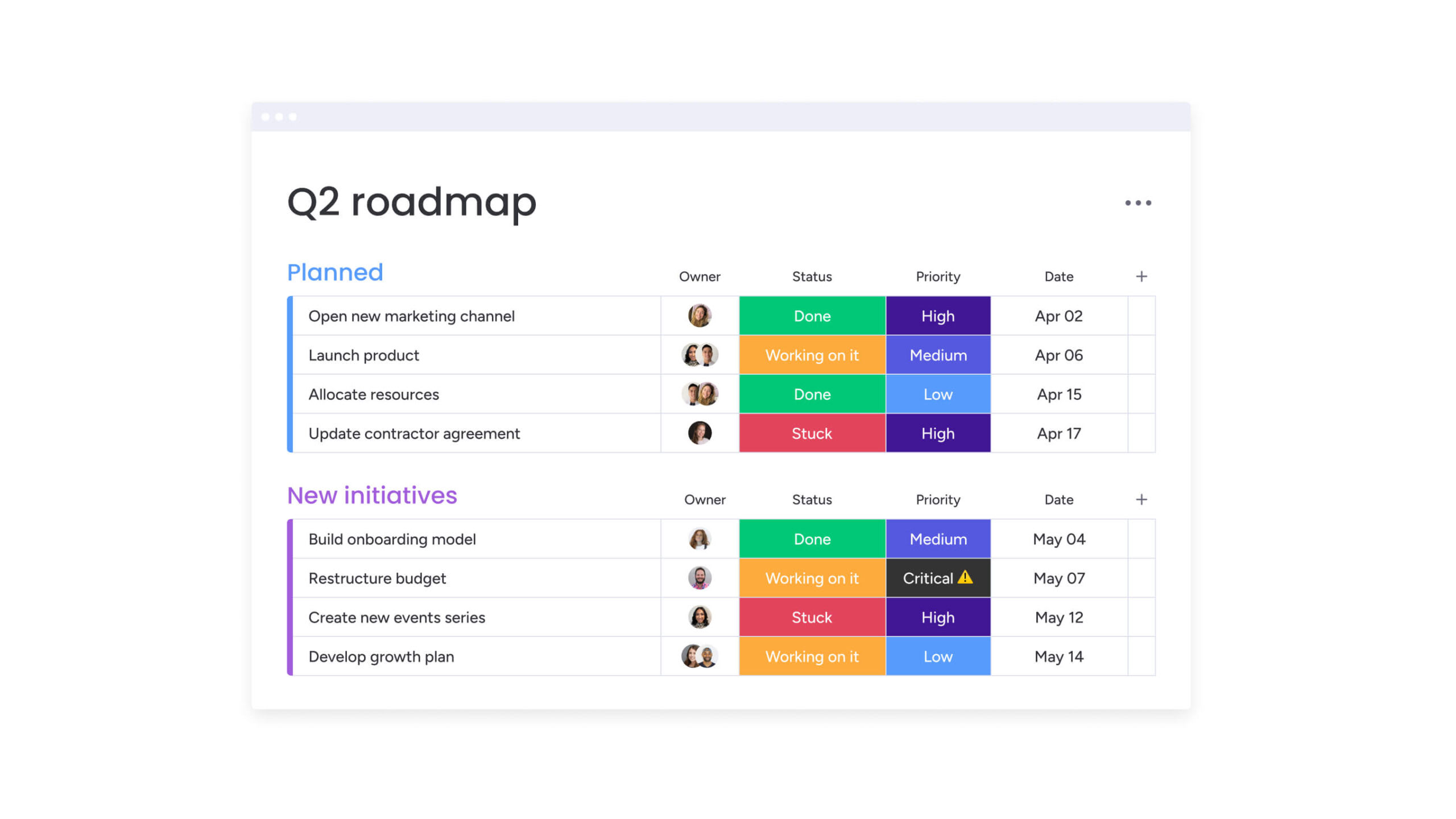
monday work management supports this with clear ownership fields and permissions, so accountability stays visible without feeling intrusive.
Track commitments transparently
Tracking should support people, not monitor them. When systems highlight missed deadlines, it creates an opportunity to solve problems together.
Instead of assigning blame, the conversation shifts to support and adjustment. That approach keeps accountability strong while maintaining trust.
Recognize accountability achievements
When people consistently follow through, it should be acknowledged. Recognition reinforces the behaviors that keep trust strong.
Be specific when you recognize someone. For example, call out how early risk communication helped the team adjust, rather than offering general praise.
4. Create psychological safety through leadership actions
People need to feel safe to speak up, ask questions, and admit mistakes. This does not come from policies, it comes from how leaders behave every day.
Normalize productive failure and learning
Mistakes are part of progress. When leaders treat failures as learning moments, teams become more willing to take smart risks.
Retrospectives should focus on what can improve, not who is at fault. When leaders share their own lessons, it sets the tone for everyone else.
Actively seek diverse perspectives
When only a few voices are heard, trust weakens. Inviting different viewpoints shows that ideas matter, even when they challenge the status quo.
Leaders can encourage this by asking quieter team members to contribute or by collecting anonymous input when needed.
Protect innovation time
Trust also shows up in how you prioritize the future. When teams are given space to explore new ideas, it signals confidence in their creativity.
Whether it is dedicated innovation time or short experimentation cycles, this investment builds long term trust in the organization’s direction.
5. Build feedback systems that drive real change
Feedback only builds trust when people see results. If nothing changes after feedback is shared, engagement drops quickly.
Implement continuous feedback mechanisms
Feedback should happen regularly, not just once a year. Multiple channels make it easier for people to share input when it matters most.
- Pulse surveys: Short and frequent check ins to understand team sentiment.
- Always on suggestion boards: Spaces where ideas can be shared and voted on.
- Contextual feedback: Forms embedded directly into workflows.
With monday work management, you can collect and organize feedback in a structured way, so teams can act on it quickly.
Structure growth focused conversations
Performance discussions should focus on future development. This keeps conversations constructive and forward looking.
Using real data from your platform helps ground these discussions in facts instead of opinions.
Run action oriented retrospectives
Retrospectives should always lead to action. If issues are identified, they need clear owners and deadlines.
When teams see their feedback turn into completed improvements, trust in the process increases.
6. Track trust through operational metrics
Trust may feel abstract, but its impact shows up clearly in how teams work. By tracking the right signals, you can spot where trust is strong and where it needs attention.
Monitor cross team collaboration frequency
When teams collaborate often, it shows confidence in each other. On the other hand, reduced interaction may signal growing silos.
Tracking shared work across teams helps you understand how connected your organization really is.
Measure decision making velocity
Speed often reflects trust. When decisions move quickly, it usually means people feel confident in their roles and systems.
If decisions slow down, it may point to unnecessary approvals or hesitation.
Assess engagement across departments
Engagement shows how invested people feel. Look at participation in optional initiatives, survey completion rates, and interaction on updates.
Higher engagement often means stronger trust and willingness to contribute beyond basic responsibilities.
7. Use technology to scale trust organization-wide
finally, while trust is built by people, it is sustained by the systems around them. The right platform helps reinforce trust through consistency and clarity.
Eliminate information silos systematically
When information is locked in different places, trust breaks down. Integrating platforms like Microsoft Teams, Gmail, Slack, and Salesforce into monday work management keeps data accessible.
As a result, teams no longer rely on gatekeepers for information.
Automate trust building processes
Consistency builds reliability, and automation helps maintain that consistency without extra effort.
- Workflow handoffs: Notifications ensure smooth transitions between teams.
- Deadline reminders: Automatic alerts prevent last minute surprises.
- Report generation: Standardized reports keep data objective and clear.
Deploy real time transparency dashboards
Real time dashboards give everyone the same view of progress, resources, and performance. This removes guesswork and prevents misaligned narratives.
When data is visible to all, conversations shift toward solving problems instead of debating what is true.

“monday.com has been a life-changer. It gives us transparency, accountability, and a centralized place to manage projects across the globe".
Kendra Seier | Project Manager
“monday.com is the link that holds our business together — connecting our support office and stores with the visibility to move fast, stay consistent, and understand the impact on revenue.”
Duncan McHugh | Chief Operations OfficerHow leaders successfully rebuild trust after setbacks
When trust is shaken, people look for signals that things will be different moving forward. What matters most is not only addressing the issue itself, but creating clearer ways of working that prevent the same friction from returning. Consistent visibility, shared context, and reliable follow through help teams regain confidence and move forward without hesitation.
monday work management helps reinforce trust by bringing clarity to how work progresses and how decisions connect to priorities. When responsibilities are visible and information flows openly, teams spend less time second guessing and more time focusing on meaningful progress.
- Limited visibility across work and decisions: Teams can view real-time updates on priorities, ownership, and progress, helping reduce uncertainty and unnecessary follow ups.
- Misalignment between daily work and business goals: Shared workflows connect individual tasks to wider objectives, keeping teams focused on what matters most.
- Inconsistent accountability across teams: Clear ownership and status tracking make responsibilities easy to understand, supporting follow through without added pressure.
- Fragmented communication and scattered context: Updates, decisions, and discussions stay connected to the work itself, so information is easier to interpret and act on.
- Delays caused by unclear decision paths: Shared context and live data help teams move forward with confidence, reducing bottlenecks and repeated approvals.
When work is easy to follow and expectations feel consistent, trust begins to rebuild naturally. Teams gain confidence in each other’s contributions, stay aligned on priorities, and maintain momentum even when challenges arise.
Try monday work managementFrequently asked questions
How long does it take to build trust in a new team?
Building basic trust usually takes three to six months of consistent actions. However, deeper trust that holds during difficult situations can take twelve to eighteen months to fully develop.
How can you identify trust gaps in an organization?
You may notice signs like information being withheld, more people looping in leadership unnecessarily, slower decisions, or higher turnover. In addition, low participation in feedback channels can signal a lack of confidence.
How do you build trust with remote and hybrid teams?
Trust grows when work is visible and communication is predictable. When people have access to the same information, regardless of location, it reduces uncertainty and builds alignment.
Can work management platforms really improve organizational trust?
Yes, because they create a shared source of truth. When progress, ownership, and timelines are visible to everyone, it reduces doubt and removes the need for constant oversight.
What is the difference between trust and psychological safety?
Trust is about believing others will follow through on commitments. Psychological safety is about feeling safe to speak up, share ideas, or admit mistakes without fear.
How do you maintain trust during major organizational changes?
Leaders need to communicate clearly and often, explaining the reasons behind decisions. At the same time, being honest about uncertainties helps build credibility, even when not all answers are available.

 Get started