


Services teams juggle dozens of client projects at once, but too many are still stuck in spreadsheet hell, endless email threads, and a maze of disconnected systems. The result? Missed deadlines, double-booked resources, and clients wondering where their project stands. The average knowledge worker loses 13.seven hours weekly to context switching between apps, time that could be spent delivering client value instead of hunting for project updates.
Great work management software does more than track projects — it becomes your team’s command center. You’ll bring client work into one place, cut hours of manual coordination with smart automation, and see exactly where every project stands across your portfolio. When teams can see project health, resource allocation, and deliverable status in one place, they make informed decisions faster and deliver consistent results.
In this guide, we’ll show you what actually works for services teams — from must-have features like resource planning and client portals to practical implementation steps that get your team on board quickly. We’ll further explore how leading platforms handle the unique challenges of multi-client coordination. Let’s begin.
Key takeaways
When you’re juggling multiple client projects across distributed teams, the right task management software becomes your operational backbone.
Here are the key points project managers (PMs) in services organizations need to know about choosing and implementing the right platform.
- Eliminate tool switching to save 13+ hours weekly: consolidate client projects, team tasks, and stakeholder communication into one platform instead of juggling spreadsheets and disconnected systems.
- Gain real-time visibility across your entire project portfolio: track project health, team capacity, and deadlines in unified dashboards so you can spot risks before they impact delivery.
- Automate repetitive coordination work: set up rules for client approvals, task handoffs, and deadline reminders so your team focuses on strategic work instead of manual updates.
- Enable direct client collaboration without security risks: give clients controlled access to view progress and approve deliverables while protecting internal planning and other client projects.
- Transform delivery speed with monday work management: organizations like Playtech doubled their project delivery speed by centralizing workflows, achieving 26% efficiency gains and saving three hours per person weekly.
What makes project managers choose monday work management for services delivery?
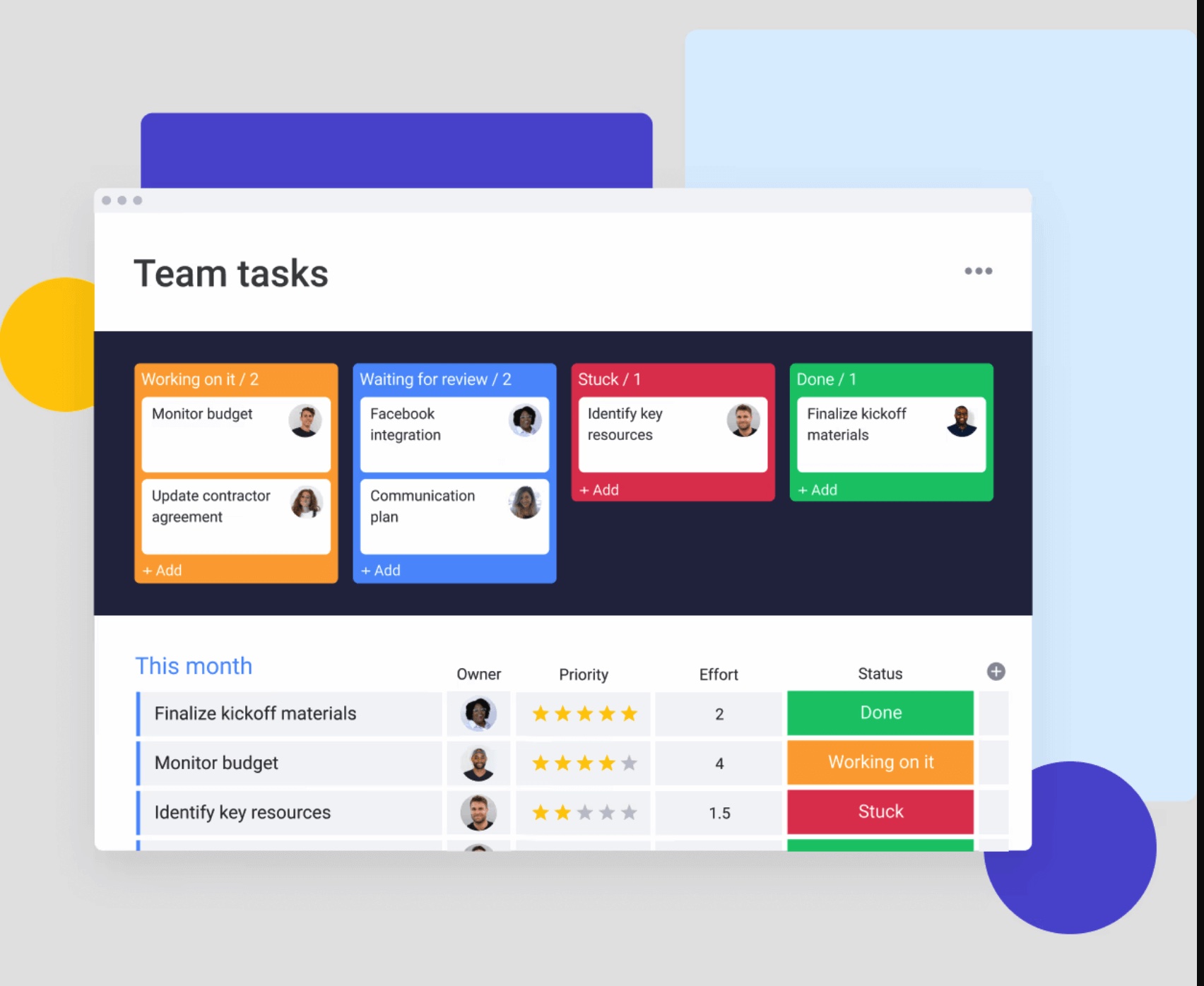
The primary driver for platform selection among services project managers is eliminating work fragmentation. When client projects, team tasks, and deliverables exist in one workspace instead of scattered across spreadsheets and disconnected systems, PMs gain the visibility needed for proactive management.
When your team handles everything from client kickoffs to final deliverables, you need one place to work. No more jumping between tools to check progress, balance workloads, or update stakeholders — everything lives in a single workspace. This unified approach directly solves the visibility challenge that causes service delivery delays.
Whether you’re a solo PM or running an enterprise PMO, the platform grows with you. Just ask Playtech: they doubled their delivery speed after bringing everything into one system.
That’s not marketing fluff; it’s measurable results.
monday work management features for services project management
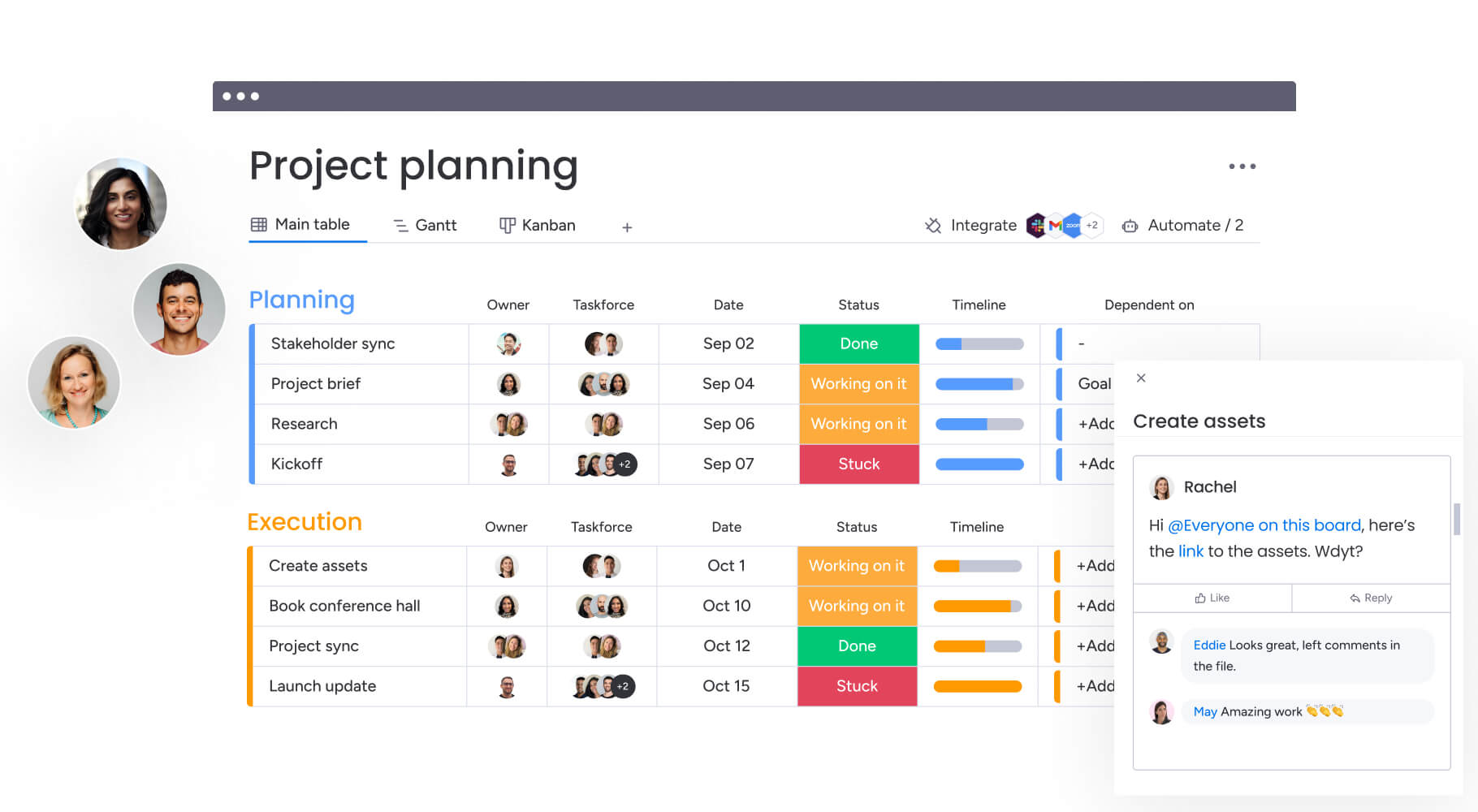
The following features address the specific challenges services organizations face when managing multiple client projects. Each capability directly impacts project visibility, team coordination, and delivery efficiency.
Centralized project dashboards
Build dashboards that pull live data from all your client projects into views that actually make sense. See project health, budget burn, team bandwidth, and upcoming deadlines at a glance — no more spreadsheet-hopping or system-switching to piece together the big picture.
This capability eliminates the visibility gaps that cause missed deadlines in services organizations. Real-time data updates automatically as teams work, enabling instant progress reports for clients and accurate status visibility for internal stakeholders.
Customizable workflow automation
Set up automations without writing a line of code. Need client approvals? Task handoffs? Deadline reminders? Create rules that handle these tedious tasks for you, freeing up hours every week for work that actually matters.
For services teams managing standardized processes across client engagements, you can template onboarding workflows, review processes, and project closure checklists. Automated transitions between stages ensure consistency while freeing project managers for strategic coordination.
Resource management and workload view
See exactly who’s slammed and who has bandwidth with built-in resource views. Spot overloaded team members before they burn out, and redistribute work before deadlines slip — all with visual workload trackers that show you the real picture.
Services organizations struggling with workload distribution gain the visibility needed for fair task assignment:
- Capacity planning: see which consultants have capacity for new work.
- Workload balancing: identify who’s approaching limits before burnout occurs.
- Quality maintenance: data-driven allocation maintains service quality while protecting team wellbeing.
Client collaboration and approval workflows
Bring clients directly into your workspace with guest access. They’ll see their project progress, leave feedback, and approve deliverables — without paying for full licenses or accessing other clients’ work. Control what clients see while maintaining transparency.
Here’s how this solves your client communication headaches:
- Direct visibility: give clients project access instead of sending status emails.
- Real-time feedback: clients comment on deliverables and approve milestones instantly.
- Reduced delays: track progress without scheduling check-ins.
Multiple project views
Choose from ten different ways to visualize your work — from Gantt charts to Kanban boards to calendars. Flip between views instantly depending on who you’re talking to or what you need to see, all without rebuilding anything.
Project managers juggling varied client workflows gain essential flexibility:
- Waterfall projects: use Gantt charts for sequential planning.
- Agile work: leverage Kanban boards for iterative delivery.
- Deadline-driven deliverables: calendar view for time-sensitive work.
Time tracking and billing integration
Built-in time tracking lets team members log hours directly on tasks, creating accurate billing records and profitability analysis. Integration with billing systems like Harvest and Toggl streamlines the path from tracked time to client invoices.
For services organizations billing on time and materials, everything connects automatically:
- Accurate records: see exactly how much time deliverables consumed.
- Performance analysis: compare actual versus estimated hours.
- Future planning: use historical data for improved project estimates.
AI-powered risk identification
On monday work management, AI capabilities analyze project data to identify potential risks before they impact delivery. The system flags projects trending toward missed deadlines, budget overruns, or resource conflicts for proactive intervention.
Stop putting out fires and start preventing them. You’ll get early warnings when projects are heading off track, giving you time to shift resources, have tough conversations, or adjust scope before small issues become client crises.
How project managers in services benefit from monday work management
When services teams bring their work into monday, they see real improvements in how they operate — and these benefits only grow as teams refine their workflows over time.
Time savings through consolidation
Eliminating tool switching saves 13.7 hours weekly by centralizing project work. Playtech PMO saves three hours per person weekly through streamlined workflows and automated processes. This recovered time gets reinvested in strategic planning and client relationship building rather than administrative coordination.
Cost efficiency via resource optimization
Strategic resource allocation and reduced tool sprawl drive significant cost savings:
- Direct savings: Oscar saves $50,000 monthly through consolidation.
- ROI achievement: Motorola achieved 346% ROI over three years.
- Cost reduction sources: eliminating duplicate licenses, reducing manual work, and preventing project overruns.
Compliance and data accuracy
When everyone works from the same data, you’ll stop wasting time figuring out which spreadsheet version is current or why two team members have different information. Templated processes and automatic workflows also cut down the mistakes that frustrate clients and damage trust. Audit trails and permission controls maintain compliance with client contracts and regulatory requirements.
Productivity improvements
Teams increase output by removing workflow friction:
- Cross-team collaboration: Genpact achieved 40% improvement in collaboration.
- Deliverable increase: m Booth increased deliverables by 49% after adoption.
- Strategic focus: automation handles repetitive tasks, freeing project managers for client value work.
Enhanced output quality
Improved coordination and accountability lead to higher-quality deliverables. With project context, files, and communications centralized, team members have the information needed for effective execution. Client approval workflows ensure feedback gets captured and addressed systematically.
Visibility and tracking improvements
Real-time visibility into project progress, team workload, and risks spans your entire portfolio. Customizable dashboards show task status, project health, or resource utilization across client engagements. This transparency enables informed decisions and keeps stakeholders aligned without manual reporting.
How to manage services projects with monday work management
Ready to move from your current chaos to a streamlined system? Follow these steps to build a project management approach that actually works for client delivery.
Step 1: set up your client project structure
Create dedicated workspaces for each client or use folders to organize multiple projects within workspaces. Configure custom fields to track client-specific information like contract value, key stakeholders, billing model, and service level agreements. This foundation ensures every project starts with consistent structure.
Step 2: build your service delivery workflow
Design boards reflecting your actual delivery process from client onboarding through project closure. Add columns for project phase, deliverable status, assigned members, due dates, and client approval status. Your board becomes the single source of truth for execution.
Step 3: configure resource allocation
Set up workload views to visualize team capacity across client projects. Assign tasks based on availability and expertise, ensuring balanced distribution that prevents burnout while maintaining quality. monday work management’s resource management capabilities help you see exactly who has bandwidth for new work.
Step 4: automate repetitive processes
Create automation rules for common scenarios:
- Client notifications: notify clients when deliverables need review.
- Task progression: move tasks when approvals are received.
- Deadline management: send deadline reminders automatically.
- Status updates: update project status based on completion.
This reduces manual coordination significantly.
Step 5: enable client collaboration
Add clients as guests with controlled permissions to specific boards. They view project progress, comment on deliverables, and approve milestones without accessing internal planning or other client projects. This transparency reduces status meetings and email exchanges.
Step 6: track time and monitor profitability
Enable time tracking on tasks so members log hours while working. Connect this data to billing systems through integrations, and use dashboards to monitor actual versus estimated hours. This visibility helps identify profitable projects and improve future estimates.
Comparison: monday work management vs competing platforms
When services teams evaluate task management software, the real question isn’t who has the longest feature list — it’s which platform can actually handle the pressure of multi-client delivery. monday work management is built to operate as a central command center for services organizations, while many competing tools remain better suited to single-team or internal project tracking.
The comparison below highlights where monday work management pulls ahead for services delivery: deeper resource visibility, scalable automation, native time tracking, and controlled client collaboration. It also shows where other platforms often introduce limits — whether through restricted guest access, add-on pricing for core capabilities, or automation caps that become bottlenecks as client volume grows.
| Feature | monday work management | Jira | Asana | Microsoft Project |
|---|---|---|---|---|
| Developer tool integrations | 200+ native integrations including GitHub, GitLab, Jira | Built for development teams | Limited developer integrations | Requires additional configuration |
| Visual project planning | 15+ views including Gantt, Kanban, Timeline | Primarily boards and backlogs | Multiple views with less customization | Strong Gantt capabilities |
| Cross-functional collaboration | Designed for technical and non-technical teams | Developer-focused interface | Good for general collaboration | Enterprise-focused, steep learning curve |
| Automation capabilities | No-code automation builder with 200+ recipes | Automation rules require configuration | Basic automation features | Limited automation options |
| Portfolio management | AI-powered insights across 1000+ projects | Requires additional products | Basic portfolio features | Strong portfolio tools but complex |
| Resource management | Integrated directory and capacity planning | Limited resource features | Basic workload view | Comprehensive but requires expertise |
| Time to value | 2-4 weeks typical implementation | Longer setup for non-dev teams | Quick start but limited depth | 3-6 months typical implementation |
How Playtech's PMO transformed project delivery
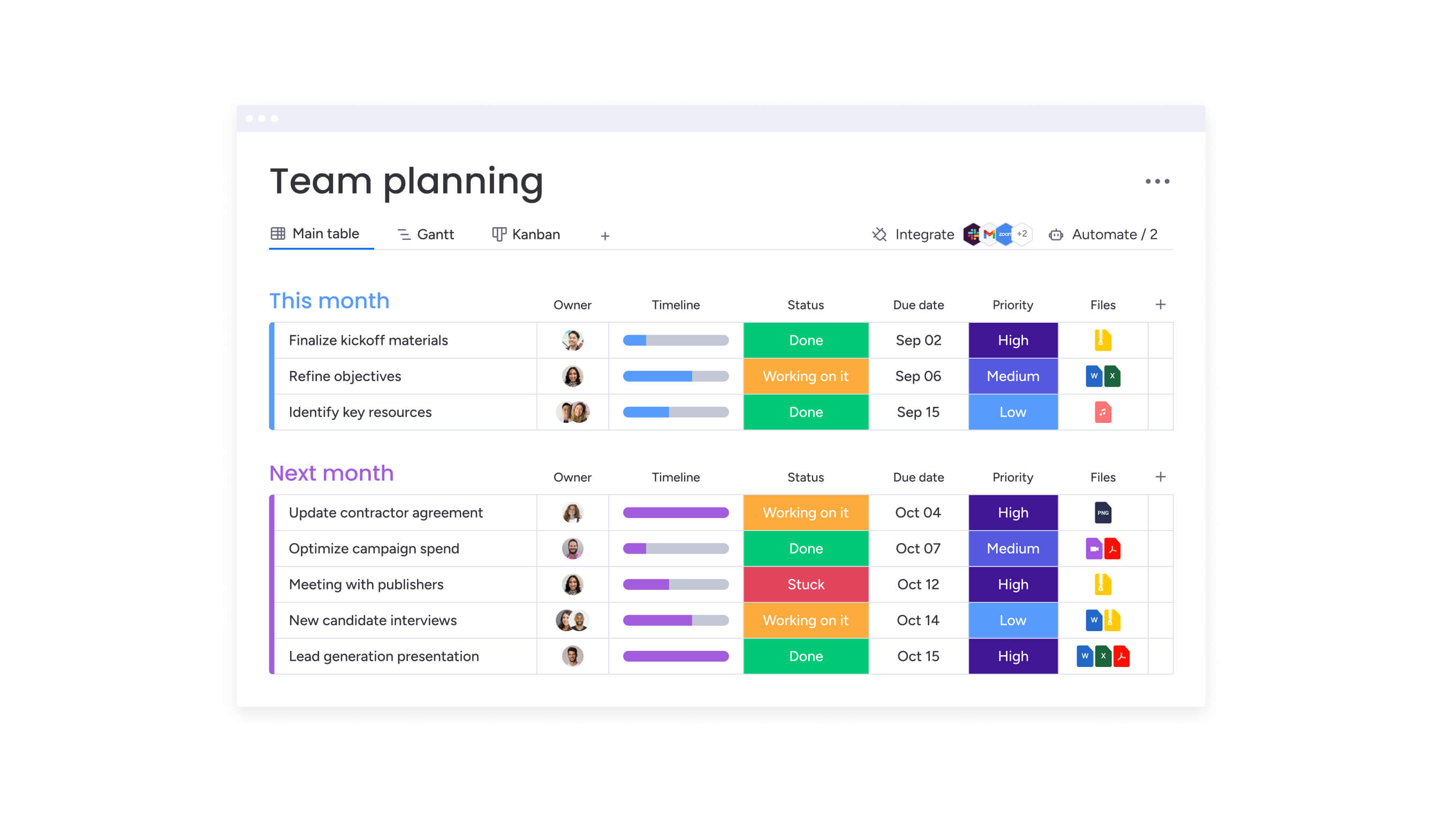
This real-world case study demonstrates how a gaming industry PMO achieved measurable improvements by consolidating project management into monday work management.
The transformation addressed specific operational challenges while delivering quantifiable results.
The challenge
Playtech’s PMO department managed countless client projects using spreadsheets, email, and notepads. As gaming industry transformation accelerated, clients demanded more frequent updates and faster results.
Key operational issues included:
- Visibility gaps: scattered tools prevented tracking of preliminary discussions.
- Resource conflicts: teams often booked resources for undefined projects.
- Documentation gaps: decision-making processes lacked proper documentation.
- Status confusion: project status remained unclear across stakeholders.
The solution
Playtech implemented monday work management to operationalize their established methodology in one platform. They created separate boards for project initiation and active projects, preventing premature resource booking.
Implementation highlights:
- Connected workflows: management Approval boards linked to Project Budgeting boards.
- Automated calculations: formula columns calculating baseline and estimation costs automatically.
- Template efficiency: custom templates allow quick duplication and adjustment for each client engagement.
- Real-time collaboration: external stakeholder collaboration happening instantly.
The results
The PMO department achieved measurable improvements across multiple metrics:
- Efficiency increase: 26% improvement in overall department efficiency.
- Collaboration improvement: 49% enhancement in collaboration and stakeholder transparency.
- KPI performance: 23% improvement in meeting established KPIs.
- Time savings: three hours saved per person weekly through streamlined processes.
- Technical integration: real-time visibility into technical team progress through Jira integration.
- Proactive management: automated notifications preventing bottlenecks and week-by-week cost tracking.
Ready to revolutionize your services project management approach?
Services organizations across industries have proven that consolidating project management into a unified platform delivers measurable results. monday work management provides the visibility, automation, and collaboration capabilities needed to scale services delivery while maintaining quality.
The evidence can’t be overlooked: organizations save significant time, reduce costs, and improve client satisfaction when they eliminate tool fragmentation. With features designed specifically for services delivery — from client collaboration to resource management — teams can focus on strategic work instead of administrative coordination.
Ready to experience these benefits in your organization? Start with a pilot team, import your existing project data, and see how unified project management transforms your delivery capabilities.
The content in this article is provided for informational purposes only and, to the best of monday.com’s knowledge, the information provided in this article is accurate and up-to-date at the time of publication. That said, monday.com encourages readers to verify all information directly.
Frequently asked questions
How long does migration from spreadsheets to monday work management take?
Migration from spreadsheets to monday work management typically completes in two to four weeks without disrupting active client work. Start with one project team as a pilot, validate the workflow, then expand to additional teams. Import existing spreadsheet data directly, run both systems in parallel during transition, and gradually shift work as teams become comfortable.
Can monday work management handle different billing models?
monday work management supports multiple billing models common in services organizations. Track time and materials projects with built-in time tracking and hourly rate calculations. For fixed-fee projects, use budget columns to monitor costs against agreed prices. Retainer work gets managed through recurring task templates and capacity allocation.
What security features protect client data in monday work management?
monday work management provides enterprise-grade security including SOC two Type II certification, GDPR compliance, and ISO 27001 certification. The platform offers IP restrictions, two-factor authentication, multiple SSO options, and tenant-level encryption. Role-based permissions control access to specific client projects, audit logs track all changes, and data residency preferences meet regulatory requirements across jurisdictions.
How does monday work management integrate with existing tools?
The platform offers 200+ native integrations including Slack, Microsoft Teams, Google Workspace, Jira, Salesforce, and Zoom. Sync calendar events, convert emails into tasks, link development work from Jira, and conduct client meetings through Zoom without leaving the platform. The open API enables custom integrations for specialized tools, ensuring monday work management fits your existing tech stack.
What's the difference between task and project management in monday work management?
Task management in monday work management organizes individual work items with owners, due dates, and statuses. Project management encompasses broader coordination of multiple related tasks toward specific client deliverables, including dependencies, milestones, resource allocation, and budget tracking. The platform handles both seamlessly — manage simple task lists for straightforward work or build complex project structures with phases and cross-functional coordination for larger engagements.
How do I ensure team adoption of monday work management?
Successful adoption in services organizations follows this pattern: start with a pilot team managing real client work, demonstrate quick wins like time saved or improved visibility, then expand based on success. Import existing project data so teams don't start from scratch, create templates matching current workflows, and identify team champions for colleague support. The intuitive interface means most users become productive within days.

 Get started