

Media teams are drowning in chaos daily — tracking campaigns across platforms, hunting for assets in random folders, and chasing client feedback through endless email threads. Even your most detail-obsessed project managers hit a wall when basic updates require jumping between six different platforms. The result is missed deadlines, duplicated work, and creative teams spending more time searching for information than actually creating.
The best project management software for media projects goes beyond basic workflow tracking. It centralizes creative workflows, automates approval processes, and provides real-time visibility across all campaigns without forcing teams to abandon the creative tools they already use. When media teams can coordinate production timelines, manage client feedback, and track resource allocation from one platform, they deliver campaigns faster and with fewer revision cycles.
In this guide we will dig into what actually works for media teams, stack up the leading platforms against real-world media challenges, and show you exactly how companies SPH Media Content Lab overhauled their creative operations with the right solution.
We’ll also sine a light on the essential features for creative workflows and walk you through implementation strategies that minimize disruption.
Key takeaways
To overcome the daily chaos of media production, teams need a solution that addresses their most significant pain points. Here are the core strategies that the right platform enables, transforming scattered work into coordinated execution.
- Centralize scattered workflows across creative teams, clients, and freelancers: stop juggling email threads, asset folders, and feedback channels by unifying everything in one platform that everyone can access.
- Automate repetitive approval workflows and feedback loops: eliminate manual follow-ups and status meetings by setting up automated notifications that keep projects moving without constant oversight.
- Gain real-time visibility into campaign progress and production timelines: track all active projects through visual dashboards so you can spot bottlenecks and resource conflicts before they impact delivery.
- Transform media project management with monday work management’s visual boards: use timeline views, Kanban boards, and Gantt charts that match how creative teams naturally think and work.
- Connect creative tools directly to your project management platform: integrate Adobe Creative Cloud, Slack, and cloud storage so teams can update project status without switching between disconnected applications.
What makes project managers choose monday work management for media project management?
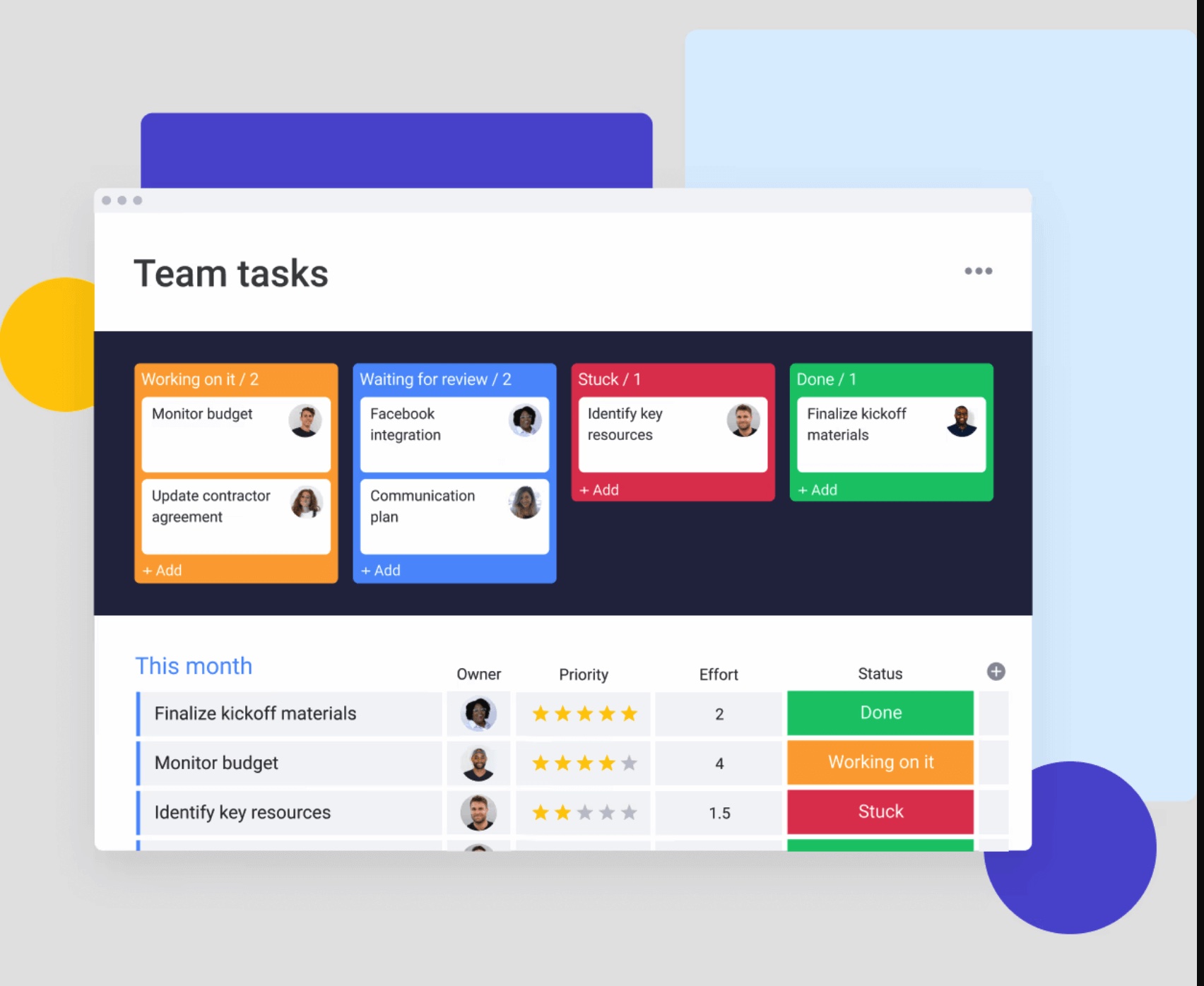
Media project management requires specialized capabilities that go beyond basic task tracking. The creative teams who choose monday work management do it for specific reasons that address the unique chaos of production workflows. Let’s explore the three core advantages that set it apart for media teams.
Visual boards that match creative thinking
Creative teams think visually, and their project management platform should mirror this approach. Traditional task lists fail to capture the dynamic nature of media production.
Visual project boards let teams see campaign progress through timeline views, Kanban boards, and Gantt charts. Creative directors spot bottlenecks in video production pipelines while account managers track client deliverables across multiple campaigns.
The platform’s 15+ view options mean each team member visualizes work in the format that makes sense for their role:
- Editors: see task cards moving through production stages.
- Project managers: monitor resource allocation through workload views.
- Creative directors: track campaign dependencies across multiple projects.
Real-time collaboration across creative, sales, and operations teams
Media projects require seamless handoffs between departments. Sales teams close deals, creative teams produce content, and operations ensure delivery — yet these groups often work in silos.
monday work management connects these departments through shared workflows and automated notifications. When sales updates a campaign brief, creative teams receive instant alerts. As production completes milestones, operations can prepare distribution channels.
This cross-functional visibility eliminates the endless status meetings that plague media companies. Teams stay aligned through live dashboards that show campaign health, resource utilization, and deadline risks across all active projects.
monday work management top features for media project management
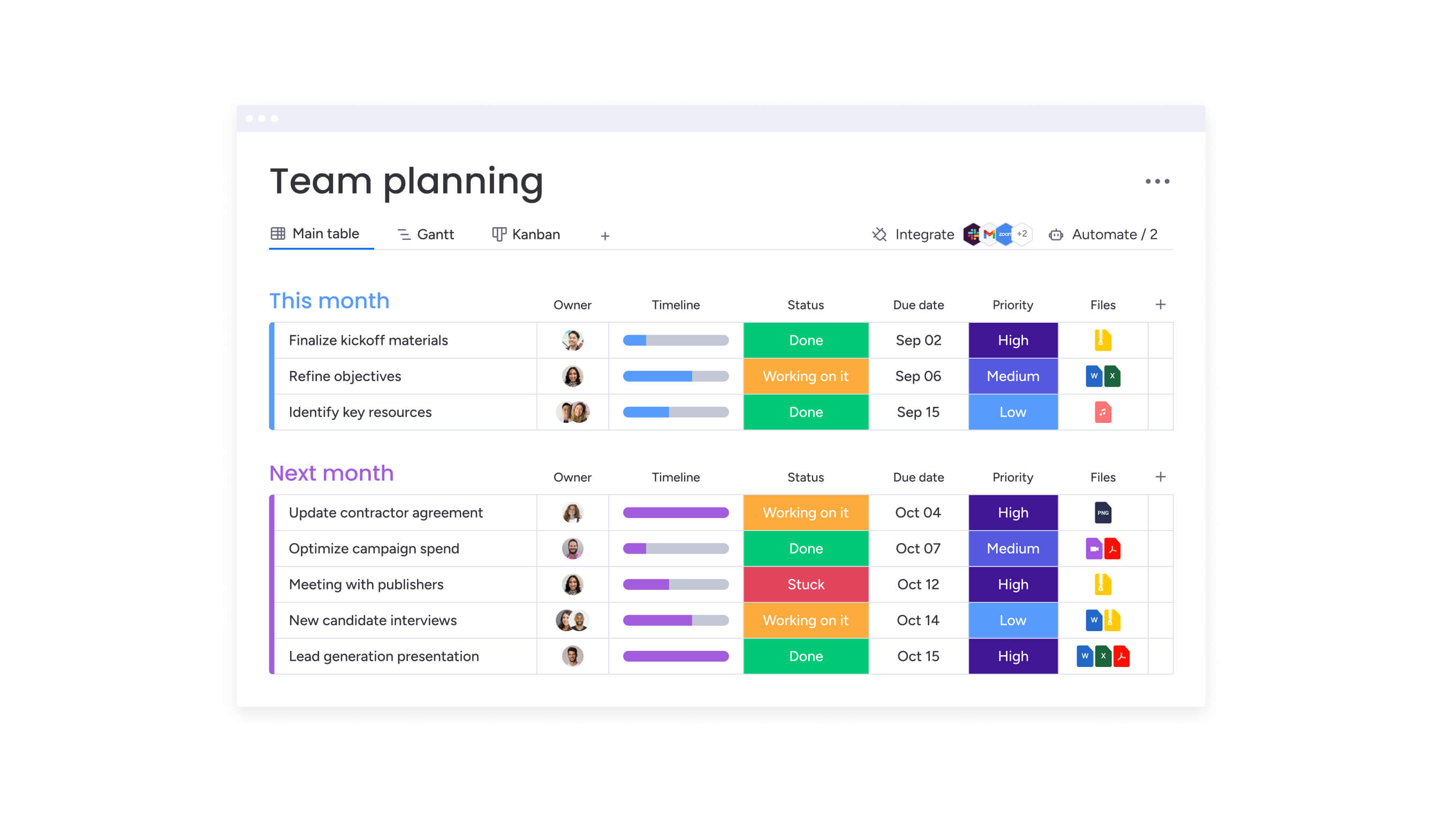
The connected platform’s boasts a feature set that addresses the specific challenges media teams face daily. From timeline management to creative asset organization, these capabilities streamline every aspect of media production.
Here are the six essential features that transform how media projects get delivered.
Visual timeline and campaign planning
Media campaigns involve multiple moving parts that must align perfectly for successful delivery. Project managers orchestrate photo shoots, video production, post-processing, and client reviews across overlapping timelines.
The Gantt view displays all campaign dependencies and milestones in one visual timeline. Project managers adjust deadlines, reassign resources, and identify scheduling conflicts before they impact delivery. The platform automatically updates all connected tasks when timelines shift, keeping everyone informed of changes.
Creative asset management and version control
Managing creative assets becomes exponentially complex as campaigns scale. Teams waste hours searching for the latest design files or accidentally working from outdated versions.
The Files Column centralizes all creative assets directly within project boards. Teams upload, preview, and comment on designs without leaving the platform. Version history tracks every iteration, ensuring teams always work from the most current files. Integration with cloud storage services means large video files stay accessible without slowing down the platform.
Real-time collaboration and feedback tools
Client feedback cycles can extend project timelines when comments scatter across emails and messaging apps. Creative teams need structured feedback that’s easy to track and implement.
The platform’s built-in commenting and @mention features keep all feedback contextualized within specific tasks:
- Clients: annotate directly on creative proofs.
- Teams: track revision requests through customizable approval workflows.
- Stakeholders: receive automated notifications ensuring no feedback gets lost.
Client approval workflows and stakeholder management
Media projects often stall waiting for client approvals. Manual follow-ups consume project manager time while delays cascade through production schedules.
monday work management automates the entire approval process through customizable workflows, supporting business process management across teams. When creative work reaches review stage, the platform automatically notifies stakeholders and tracks response times. Escalation rules ensure approvals don’t bottleneck, while audit trails document every decision for future reference.
Resource allocation and capacity planning
Media companies struggle to balance team capacity across multiple concurrent projects. Without visibility into workloads, teams become overcommitted while freelance resources sit idle.
The Workload View provides instant visibility into team capacity across all projects. Project managers identify who has bandwidth for new assignments and redistribute work before burnout occurs. The Resource Planner helps forecast future capacity needs, enabling proactive hiring decisions and freelancer scheduling.
Integration with creative production tools
Creative teams rely on specialized software for design, video editing, and content creation. Switching between these tools and project management platforms disrupts creative flow.
monday work management integrates with Adobe Creative Cloud, Slack, Google Drive, and 200+ other tools that media teams already use. Designers update task status directly from Creative Cloud while editors sync project files automatically. These integrations eliminate context switching and keep creative momentum flowing.
How a project manager in media benefits from monday work management
As we alluded to above, media project managers face a plethora of unique pressures that require specialized solutions. From managing creative workflows to coordinating client feedback, the role demands tools that understand the complexity of media production.
Here’s how monday work management delivers measurable benefits across six key areas.
1. Time savings through automated workflows
Media project managers spend countless hours on repetitive administrative tasks. Status updates, approval reminders, and progress reports consume time that could focus on strategic work.
Automation handles these routine tasks automatically:
- Video completion: platform notifies clients for review.
- Feedback delays: automatic reminders after 48 hours.
- Status reports: weekly updates generate from live project data.
These automations save project managers 10+ hours weekly while ensuring nothing falls through the cracks.
2. Cost efficiency with centralized project tracking
Scattered project information leads to budget overruns and resource waste. Without centralized tracking, media companies struggle to identify which campaigns deliver ROI.
The platform’s dashboard capabilities provide real-time visibility into project costs, resource utilization, and campaign performance. Project managers spot budget risks early and reallocate resources before overruns occur. Historical data helps estimate future projects more accurately, improving profitability across the portfolio.
3. Improved accuracy in campaign delivery timelines
Missed deadlines damage client relationships and media company reputations. Traditional project tracking methods fail to surface risks until it’s too late to course-correct.
AI-powered risk insights scan project updates to identify potential delays before they impact delivery. The platform flags resource conflicts, dependency issues, and timeline risks with specific mitigation recommendations. This proactive approach helps media teams maintain on-time delivery rates.
4. Increased productivity across creative teams
Context switching between tools and searching for information drains creative energy. When teams can’t find what they need quickly, productivity suffers.
By centralizing all project information in one platform, monday work management reduces time spent searching and switching:
- Creative teams: access briefs, assets, and feedback without leaving workspace.
- Task ownership: clear deadlines eliminate confusion about priorities.
- Structured workflows: teams report productivity gains after implementation.
5. Enhanced output quality through streamlined feedback
Unclear or conflicting feedback leads to multiple revision cycles that frustrate teams and clients alike. Quality suffers when creative intent gets lost in translation.
Structured feedback workflows ensure all stakeholder input gets captured and prioritized appropriately. Creative teams see exactly what needs changing and why. Version control prevents accidental reversions while approval trails document decision rationale. This results in fewer revision cycles and higher client satisfaction.
6. Complete visibility into multi-project portfolios
Media companies typically run dozens of campaigns simultaneously. Without portfolio-level visibility, executives can’t make informed resource allocation decisions.
Portfolio management capabilities aggregate data from all projects into executive dashboards. Leaders see which campaigns are at risk, where resources are overallocated, and how work aligns with strategic goals. This visibility enables data-driven decisions that optimize performance across the entire media operation.
How to manage media projects efficiently with monday work management
Switching project platforms mid-campaign season can feel daunting. Here’s the six-step process our most successful media customers use to make the transition without derailing active work. Each step builds on the previous one, creating a foundation for long-term success.
Step 1: audit your current creative workflow
Start by getting honest about your current workflow mess. Grab a whiteboard and map exactly how work actually moves from briefs to deliverables — including all the unofficial workarounds your team has created to get things done.
Identify pain points where projects typically stall or require manual intervention. Survey team members about their biggest frustrations and time wasters. This audit creates a baseline for measuring improvement and ensures your new system addresses real problems rather than theoretical ones.
Step 2: map your media production process
Transform your workflow audit into a structured process map that defines stages, ownership, and success criteria for each project phase. Media projects typically flow through briefing, concepting, production, post-production, review, and delivery stages.
Define standard timelines for each stage based on project type and complexity:
- Establish handoff protocols between teams and departments.
- Document approval requirements and escalation paths.
- Create blueprint for configuring monday work management to match your specific needs.
Step 3: define integration requirements with creative applications
List all software tools your creative teams currently use and determine which need to integrate with your task management platform. Prioritize integrations based on usage frequency and workflow impact.
Adobe Creative Cloud integration might be critical for design teams while Slack connectivity ensures smooth communication. Video teams may require cloud storage integrations for large file handling. Understanding these requirements upfront prevents adoption roadblocks later.
Step 4: calculate your resource needs across campaigns
Analyze your current and projected campaign volume to understand resource requirements. Consider both internal team capacity and freelancer needs across different skill sets.
Factor in seasonal variations, client demands, and growth projections:
- Configure resource management features appropriately.
- Ensure platform scales with your business.
- Include buffer capacity for urgent requests and unexpected project scope changes.
Step 5: plan your implementation timeline
Successful platform adoption requires a phased approach that minimizes disruption to ongoing projects. Start with a pilot team or single campaign type before expanding organization-wide.
- Week one to two: platform setup and core team training.
- Week three to four: migrating active projects and refining workflows.
- Week five to six: expanding to additional teams with lessons learned applied.
This gradual rollout ensures teams adapt smoothly while maintaining productivity.
Step 6: roll out across creative and operations teams
Begin deployment with your most tech-savvy team members who can become internal champions. Their early success stories and expertise help drive broader adoption.
Provide role-specific training that shows each team how the platform solves their particular challenges:
- Creative teams: focus on simplified feedback management.
- Operations teams: emphasize resource optimization capabilities.
- All teams: customize onboarding to highlight relevant features.
Monitor adoption metrics and address resistance points quickly through additional support or workflow adjustments.
Comparison: monday work management vs competing platforms for media project management
Choosing the right platform requires understanding how different solutions address media-specific needs. This comprehensive comparison examines features, pricing, integrations, and scalability across leading platforms.
Feature comparison for media teams
When evaluating task management platforms for media projects, specific capabilities matter more than generic features. The table below compares how leading platforms address media-specific needs:
| Platform | Starting price | Mid-tier price | Enterprise features |
|---|---|---|---|
| monday work management | $9/user/month | $19/user/month | Custom pricing with AI insights, managed templates |
| Asana | $10.99/user/month | $24.99/user/month | Custom pricing, limited portfolio features |
| Wrike | $9.80/user/month | $24.80/user/month | Separate resource management pricing |
| ClickUp | $7/user/month | $12/user/month | $19/user/month, basic enterprise features |
Pricing models for creative agencies
Understanding cost structures helps media companies budget appropriately for their task management investment. Pricing varies significantly based on team size and feature requirements.
| Platform | Best for | Key strength | Limitation |
|---|---|---|---|
| monday work management | Cross-functional enterprises | AI-powered automation and portfolio visibility | Requires time to explore full capabilities |
| Asana | Marketing and creative teams | Strong workflow templates | Limited customization for complex processes |
| ClickUp | Feature-rich environments | Extensive functionality | Steep learning curve |
| Trello | Visual task tracking | Simple Kanban boards | Lacks enterprise features |
| Smartsheet | Spreadsheet users | Familiar interface | Limited automation capabilities |
| Wrike | Professional services | Resource management | Complex pricing structure |
| Airtable | Database-style workflows | Flexible data structures | Requires technical setup |
How SPH Media transformed their campaign delivery process
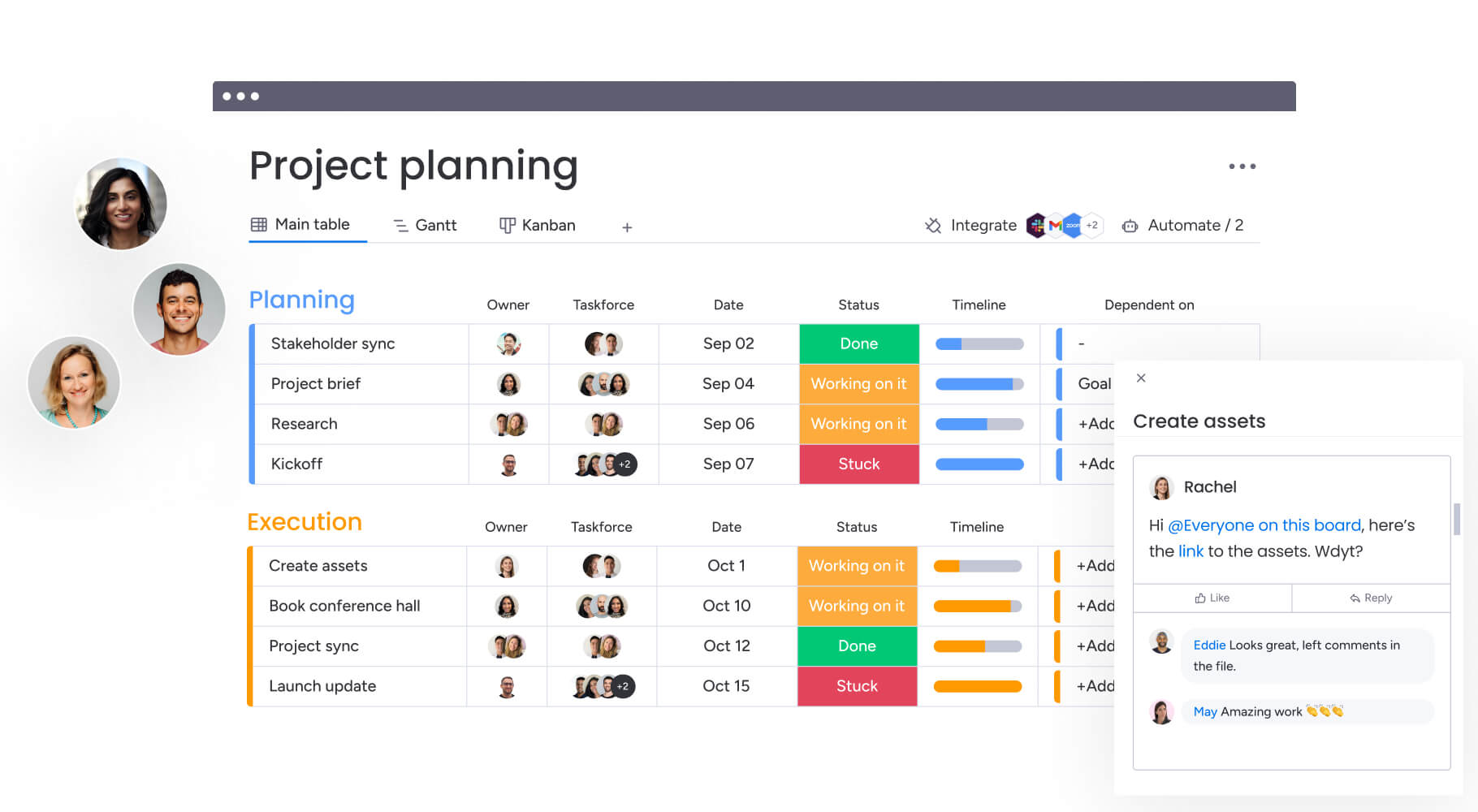
Real-world implementation stories demonstrate how media companies successfully adopt new project management platforms. SPH Media Content Lab’s transformation illustrates the challenges, solutions, and measurable results that organizations can expect.
Their experience provides a roadmap for similar media companies considering monday work management.
The challenge
SPH Media Content Lab managed creative projects across multiple brands, formats, and distribution channels. Their workflow fragmented across spreadsheets, email chains, and various creative tools, making it impossible to track project status accurately.
Project managers spent hours in status meetings trying to understand where campaigns stood. Creative teams worked in isolation, often duplicating efforts or missing dependencies. Client feedback arrived through multiple channels, leading to confusion and rework. The lack of centralized visibility meant leadership couldn’t make informed resource allocation decisions.
The solution
SPH Media implemented monday work management to unify their entire creative operation. They started by mapping their production workflow into customizable boards that reflected their unique process stages.
The team configured automated notifications to alert stakeholders when their input was needed:
- Creative assets: moved to centralized file storage within project boards.
- Client feedback: consolidated into structured approval workflows.
- Resource management: gained visibility into team capacity through workload views.
- Tool integration: teams could update project status without leaving familiar applications.
The results
Within three months, SPH Media achieved measurable improvements across all key metrics. Project delivery times decreased through automated workflows and reduced approval cycles.
The creative team reported 3x output capacity without adding headcount, enabled by eliminated redundancies and streamlined feedback. Client satisfaction increased due to improved transparency and faster turnaround times. The platform’s flexibility meant it could adapt as SPH Media’s needs evolved, providing a foundation for continued growth.
Ready to transform your media project management?
In 2026 the reality is that trying to run media projects with generic task tools is like editing video with a spreadsheet. Your creative teams deserve better, and your clients expect more. The chaos of modern media production demands a platform built for how creative work actually happens.
Intuitive solutions like monday work management brings clarity to this chaos through visual workflows, automated processes, and real-time collaboration features designed specifically for creative operations. The platform scales from small production teams to enterprise media companies while maintaining the flexibility to adapt to your unique processes.
Stop wasting your monday mornings in status meetings nobody wants to attend. Start seeing exactly where every project stands, automating the follow-up tasks nobody remembers to do, and giving your creative teams back the hours they need to actually create. Your creative teams deserve tools that match their thinking while your stakeholders need the transparency that drives successful outcomes.
The content in this article is provided for informational purposes only and, to the best of monday.com’s knowledge, the information provided in this article is accurate and up-to-date at the time of publication. That said, monday.com encourages readers to verify all information directly.
Frequently asked questions
What is the best project management software for video production teams?
The best task management software for video production teams is monday work management, which offers visual timeline planning, automated approval workflows, and native integration with creative tools that video teams already use daily.
How much should media companies budget for task management software?
Media companies should budget between $15-30 per user monthly for comprehensive task management software, with monday work management offering scalable pricing that includes advanced features like AI-powered insights and resource planning at higher tiers.
Can task management platforms handle large creative files?
Yes, task management platforms can handle large creative files through cloud storage integrations, with monday work management connecting directly to Google Drive, Dropbox, and Box for seamless file management without platform limitations.
What integrations are essential for media project management?
Essential integrations for media project management include Adobe Creative Cloud for design work, Slack or Microsoft Teams for communication, cloud storage for asset management, and monday work management provides native connections to all these critical tools.
How quickly can a media team adopt new task management software?
A media team can adopt new task management software within two to four weeks, with monday work management users reporting comfortable proficiency within two weeks due to its intuitive interface and customizable templates designed for creative workflows.
Which platforms offer the best mobile experience for on-location teams?
Platforms offering the best mobile experience for on-location teams include those with full-featured mobile apps, and monday work management provides complete mobile functionality allowing project managers to update tasks, review assets, and approve work from anywhere.

 Get started