


Marketing at the enterprise level is increasingly complex. Heads of Marketing in tech organizations are responsible for coordinating campaigns across dozens of teams, multiple channels, and tight deadlines. Without a centralized system, managing workflows, tracking performance, and ensuring accountability becomes a constant struggle.
The challenge goes beyond simple task tracking, it’s about connecting day-to-day activities with broader strategic goals. Enterprise marketing teams need solutions that provide real-time visibility, streamline collaboration, and automate repetitive work, allowing leaders to focus on strategy, creativity, and measurable business outcomes.
This article will explore how modern task management solutions empower marketing leaders to manage large-scale campaigns efficiently, optimize resources, and demonstrate tangible ROI. This article will cover essential features, and best practices that show how enterprise teams can transform scattered execution into seamless, high-performing operations.
Key takeaways
Managing enterprise marketing operations requires more than basic task tracking. Enterprise marketing leaders need solutions that provide visibility, streamline collaboration, and optimize resources. From this article, here are five essential insights:
- Scale beyond task tracking: connect day-to-day tasks with strategic goals, enabling enterprise teams to see how individual work contributes to overall marketing objectives.
- Centralized campaign visibility: consolidating timelines, deliverables, and performance metrics in one platform reduces confusion and improves cross-team collaboration.
- Resource optimization and workload management: real-time visibility into team capacity, skills, and availability allows leaders to allocate resources efficiently and prevent burnout across large marketing departments.
- Workflow automation and standardization: streamlining repetitive processes through automation and templates ensures consistent quality and faster campaign execution.
- Platform support for enterprise needs: solutions like monday work management provide centralized dashboards, reporting, and integrations that help leaders track ROI, manage resources, and coordinate multi-team campaigns effectively.
What makes heads of marketing choose monday work management for enterprise marketing operations?
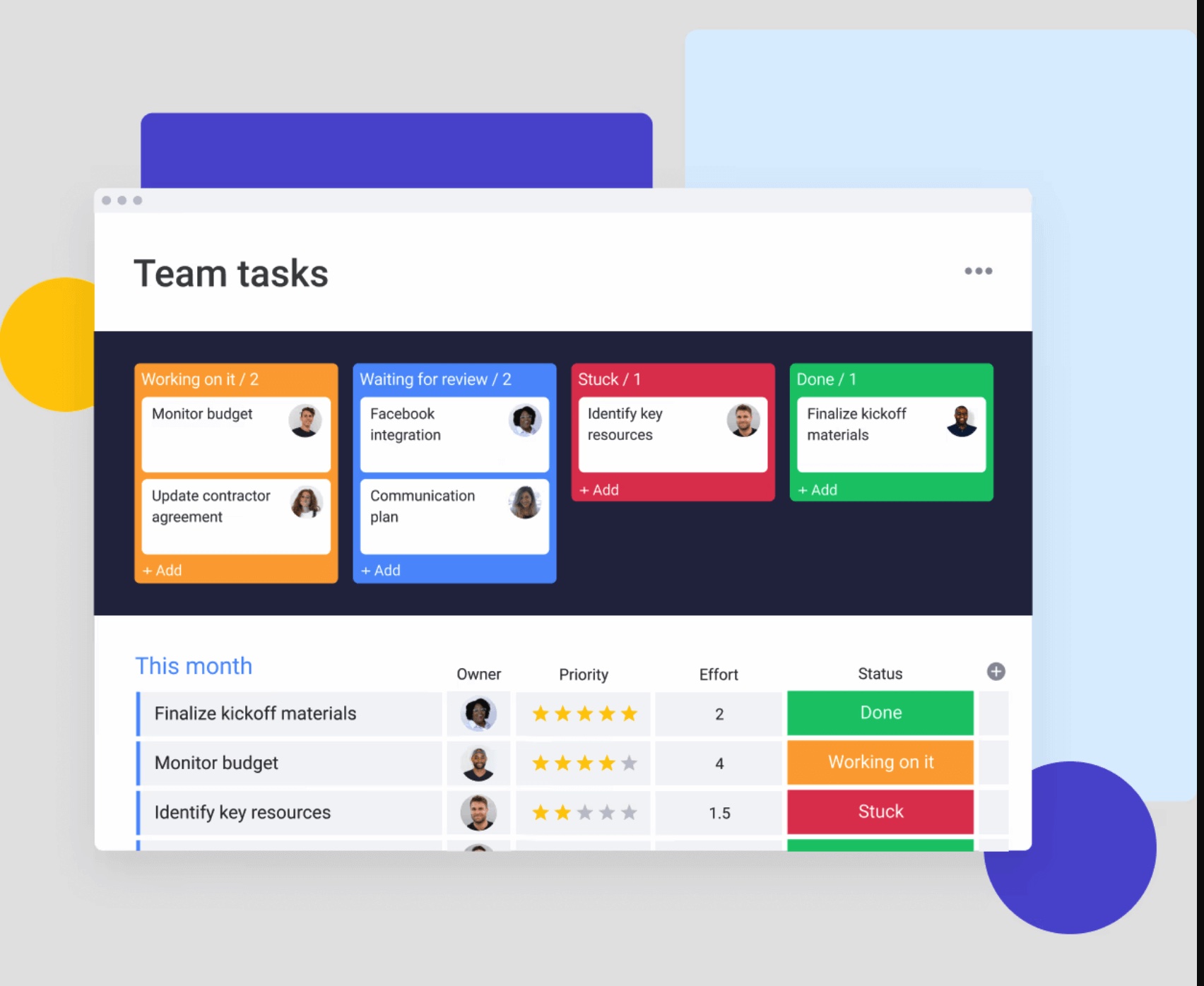
Selecting the right platform is far more than a typical tech decision for marketing leaders. It fundamentally shapes how teams execute strategy, track results, and demonstrate marketing impact to the C-suite.
Heads of Marketing at tech companies rely on monday work management because it transforms fragmented marketing execution into a unified system that delivers measurable business outcomes. By centralizing visibility across campaigns, performance metrics, and team workloads, the platform consolidates information from disparate spreadsheets and streamlines redundant processes that often slow large marketing departments. Its robust task tracking ensures accountability and clarity across the board.
Marketing leaders gain oversight of campaign planning, execution, and performance across content, creative, acquisition, events, and operations teams. This alignment ensures marketing strategy connects to company OKRs while providing real-time visibility into progress, capacity, and ROI.
For marketing leaders managing large-scale, in-house marketing teams, the platform enhances operational efficiency through standardization, automation, and templated workflows. This enables confident reporting of campaign ROI, budget adherence, team productivity, and stakeholder satisfaction metrics that resonate with executive leadership.
monday work management top features for enterprise marketing operations
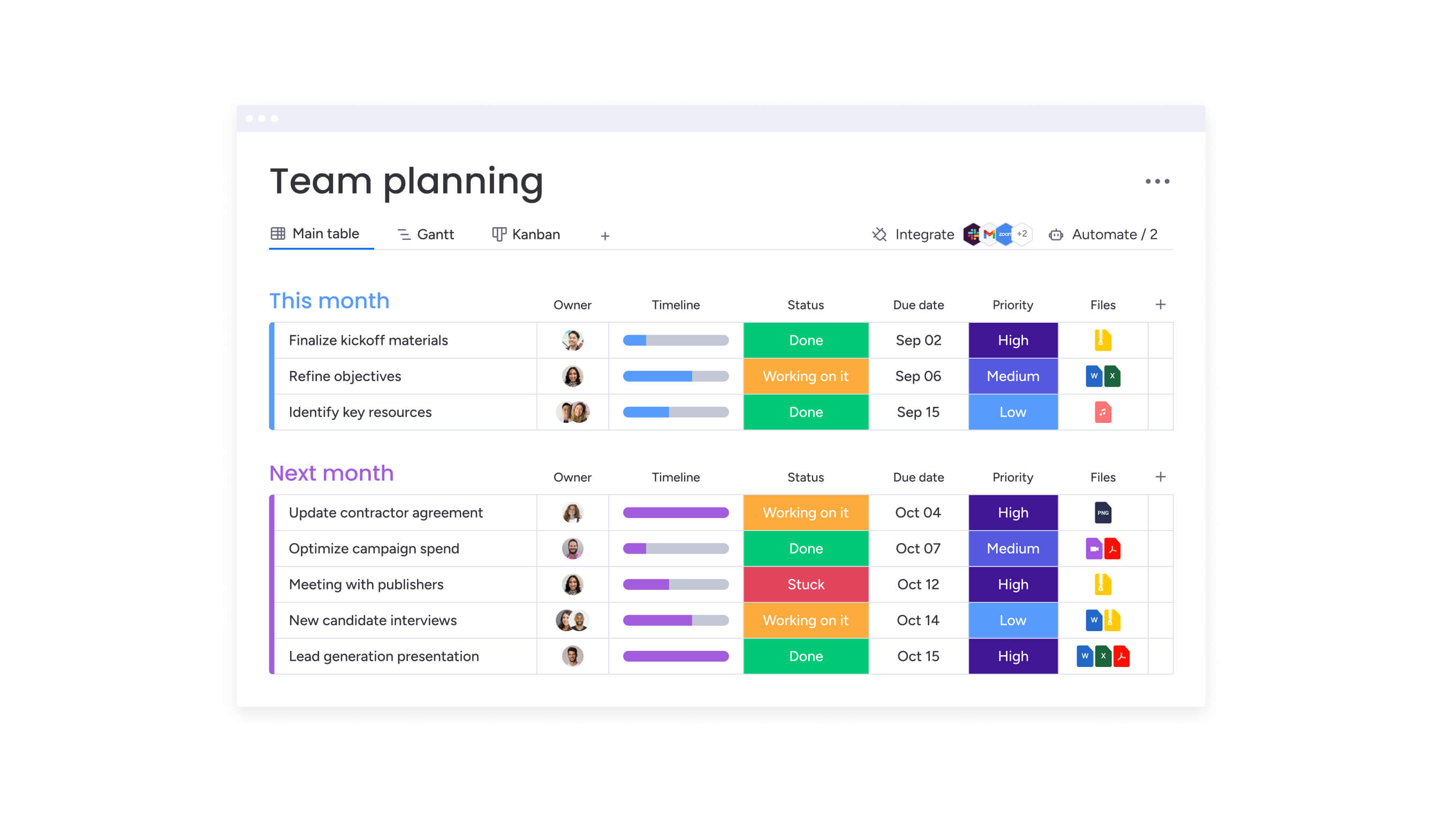
To focus on capabilities that drive results, here are the features addressing the challenges of managing multi-channel campaigns across diverse teams.
Campaign management and multi-channel tracking
Marketing teams gain campaign management that scales from planning to launch and optimization across all channels. Calendars, timelines, and performance insights provide full visibility into each campaign detail.
For teams managing 24 or more large campaigns simultaneously, this feature resolves the visibility gap that prevents real-time tracking of progress and ROI. Campaign managers can oversee the entire activation process for each channel, comparing target dates to actual performance to identify bottlenecks.
Timeline View and dashboards allow teams to drill down into priorities each week or month. Adjustments can be made in real-time, keeping campaigns on track and aligned with strategic objectives.
Resource management and workload balancing
The platform’s resource management capabilities provide real-time visibility into bandwidth, skills, and workload across marketing teams. Marketing leaders allocate resources based on availability and expertise, ensuring the right people work on the right priorities at the right time.
This enables strategic resource utilization, which helps maintain team energy and ensures timely delivery in large marketing departments. Key capabilities include:
- Workload visibility: real-time capacity views across all team members.
- Proactive planning: flag over-capacity situations before they impact delivery.
- Skills-based allocation: match expertise to project requirements.
With the Resource Directory and Capacity Manager, organizations maintain a central view of talent, ensuring consistent delivery of marketing plans and ad hoc requests without overburdening 50–100+ person teams.
Workflow automation and templates
monday work management reduces manual work and scales workflows through templates, automations, and integrations. Marketing teams focus on creative and strategic work rather than administrative tasks. The platform enables teams to create templated project boards, set approvals and reminders, and automate repetitive processes with one-click automations.
For marketing leaders struggling with inefficient processes, this feature provides the standardization needed to scale best practices. Automation capabilities include:
- Routine task automation: notifications, status updates, and deadline reminders.
- Approval workflows: streamlined review processes with clear accountability.
- Template standardization: consistent processes across regions and teams.
The platform’s Managed Templates ensure consistency across regions and teams while maintaining flexibility for different operational needs.
Real-time analytics and ROI reporting
The platform delivers full visibility across campaigns with dashboards and AI-powered alerts that catch risks early. Pre-built or custom dashboards connect data from multiple projects, with easy filtering to uncover real-time insights.
This capability is essential for Heads of Marketing who need to report impact to executive leadership. The platform provides shareable portfolio-level reports that demonstrate marketing ROI through metrics like campaign performance, CAC, MQL-to-customer rate, budget adherence, and team productivity.
monday work management’s AI-powered Portfolio Report instantly generates executive-level summaries with trends, risks, and charts. This addresses the challenge of demonstrating marketing impact to the C-suite with data-driven insights.
MarTech stack integration
monday work management integrates with 200+ marketing tools or allows teams to build custom integrations using an open API. The platform connects seamlessly with CRM systems, analytics platforms, creative tools, and communication software.
For marketing operations leaders focused on process optimization, this integration capability eliminates disconnected execution caused by siloed teams. Teams consolidate work from platforms like Slack, Google Drive, HubSpot, and Adobe Creative Cloud into a single workspace, creating the single source of truth previously impossible to achieve.
Cross-functional collaboration tools
The platform aligns teams around shared goals with collaborative briefs, connected workflows, and centralized planning. Cross-functional coordination creates harmony between people, projects, and dependencies to minimize conflicts.
This feature solves the silos across teams that scatter marketing impact. By providing one workspace where commercial teams, creative teams, and editorial teams connect and establish common workflows, the platform improves collaboration even when teams come from very different functional areas. Cross-project dependencies ensure alignment between marketing, legal, product, and finance teams.
How a head of marketing in tech benefits from monday work management
Beyond basic task tracking, implementing monday work management produces tangible results. Teams operate faster, processes run more smoothly, and leadership gains clear visibility into outcomes.
Time savings through intelligent automation:
- Marketing teams save thousands of hours monthly through automated workflows.
- Standardized processes eliminate manual status updates.
- Email exchanges reduce significantly through centralized communication.
- Routine tasks like approvals and notifications happen automatically.
Cost efficiency and resource optimization:
- Organizations achieve substantial ROI through operational efficiency gains.
- Resource management capabilities ensure effective use of budget and team resources.
- Improved budget adherence and forecasting accuracy.
- Reduced need for additional headcount through better utilization.
Enhanced compliance and data accuracy:
- Complete removal of error-prone spreadsheets.
- Single source of truth for campaign data.
- Elimination of version control issues.
- Reduced manual data entry errors critical for executive reporting.
Productivity improvements across teams:
- Significant improvement in cross-team collaboration.
- Reduction in email communication and conference calls.
- Clear priorities and collaboration across 100+ person departments.
- Teams deliver initiatives on time with aligned objectives.
Output quality and creative excellence:
- Creative teams achieve multiplied creative output.
- Improvement in assets and approvals through streamlined workflows.
- Accelerated time-to-launch while maintaining quality standards.
- Intake, briefs, and approval management capabilities drive efficiency.
Visibility and tracking improvements:
- Real-time visibility into team priorities and campaign performance.
- Resource utilization insights across all marketing functions.
- Proactive decision-making with AI-powered risk identification.
- Ability to identify and address bottlenecks before they impact delivery.
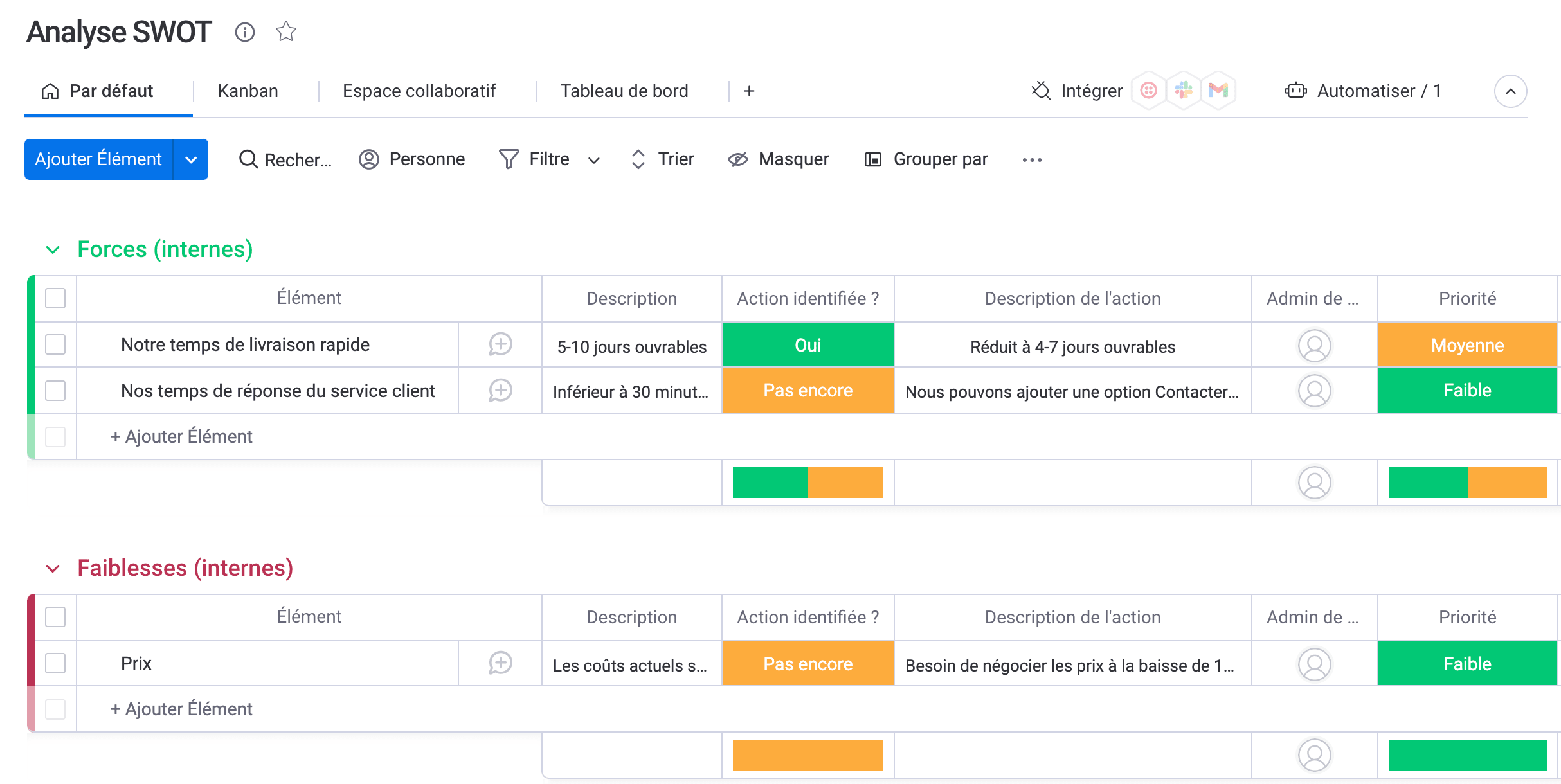
How to manage enterprise marketing operations with monday work management
Implementing monday work management for large marketing teams requires a structured approach. With multiple campaigns, cross-functional teams, and complex workflows, success depends on aligning strategy, execution, and visibility. This step-by-step framework helps ensure smooth adoption while maximizing operational impact across enterprise marketing operations.
Step 1: centralize campaign planning across all marketing teams
Create a master content calendar that houses all key dates, milestones, and campaign activations across content, creative, acquisition, events, and operations teams. Use the platform’s hierarchy features with subitems to show relationships between programs, campaigns, and individual activations.
This provides leadership with a high-level snapshot of marketing initiatives at any given time. The platform’s Portfolio Gantt view enables visual tracking of progress across all campaigns simultaneously.
Step 2: standardize creative request and approval workflows
Implement intake forms for campaign briefs and creative requests that automatically route to the appropriate teams. Set up automated notifications and approval workflows that provide visibility into request queues, turnaround times, and current status.
This eliminates the email chains and manual tracking that previously consumed hours of team capacity. monday work management’s automation capabilities ensure nothing falls through the cracks.
Step 3: establish resource allocation and capacity planning
Configure Workload views that show team and individual capacity across all marketing functions. Set up columns to track target dates versus actual completion times, enabling data-driven resource planning.
The Resource Planner feature allows project-level resource planning with visibility into who’s available and when. This prevents team burnout while maintaining campaign velocity and quality standards.
Step 4: build executive reporting dashboards
Create custom dashboards that aggregate data from multiple campaign boards to provide real-time insights. Configure automated portfolio reports that stakeholders and executives can access to view goal progress.
These dashboards track campaign ROI, budget adherence, team productivity, and progress toward OKRs. The AI-powered Portfolio Report generates instant executive summaries without requiring manual status updates.
Step 5: integrate your MarTech stack
Connect monday work management with your existing CRM, analytics platforms, creative tools, and communication software. Use native integrations or the open API to ensure seamless data flow between systems.
This eliminates the need to switch between applications and creates a true single source of truth. Teams work where they’re comfortable while maintaining visibility in the central platform.
Step 6: scale with templates and automation
Develop standardized templates for recurring campaign types, event management, and marketing operations processes. Implement automation recipes that handle routine tasks like status updates, deadline reminders, and cross-team notifications.
Managed Templates ensure consistency across regions while allowing flexibility for local needs. Your marketing team focuses on strategic and creative work rather than administrative coordination.
Comparison table: monday work management vs competing platforms
Understanding the differences between enterprise marketing platforms can guide your decision-making: take a look at the table below to see how monday work management compares against some of the other most popular solutions on the market right now.
| Feature | monday work management | Asana | Wrike |
|---|---|---|---|
| Campaign management | Multi-channel tracking with calendars, timelines, and performance insights | Basic project tracking with limited marketing-specific features | Marketing-specific templates with approval workflows |
| Resource management | Real-time workload views with capacity planning across 100+ teams | Basic workload management | Resource allocation with workload charts |
| Workflow automation | 200+ automation recipes with no-code customization | Limited automation on lower tiers | Advanced automation on enterprise plans |
| Executive dashboards | Custom dashboards aggregating portfolio-level metrics | Basic reporting dashboards | Customizable analytics dashboards |
| MarTech integrations | 200+ native integrations plus open API | 100+ integrations via apps | 400+ integrations including Adobe |
| Price per user/month | From $9 (billed annually) | From $10.99 (billed annually) | From $10 (billed annually) |
| Implementation time | 2 weeks to one month for full adoption | one to two weeks for basic setup | two to four weeks for enterprise deployment |
| G2 rating | 4.7/five (12K+ reviews) | 4.3/five (9K+ reviews) | 4.2/five (3K+ reviews) |
| Marketing recognition | Leader in 2024 Gartner Magic Quadrant for Marketing Work Management | Not positioned in marketing category | Positioned for marketing teams |
How Genpact's global marketing team transformed their campaign operations
Genpact illustrates how enterprise marketing teams can improve operational efficiency by centralizing workflows and gaining visibility across a distributed department.
The challenge
Genpact’s globally distributed marketing department runs 24 ongoing large-scale campaigns at any given time. Each campaign includes several cross-channel activations jointly managed by campaign managers and channel owners.
The team relied heavily on spreadsheets saved across personal desktops, emails, and SharePoint folders. No one knew who had the latest version or where to find it. With multiple stakeholders and contributors involved, achieving the visibility needed to track campaign status, progression, and key information was almost impossible.
The solution
The marketing team implemented monday work management to create a centralized platform for end-to-end campaign planning and execution. They built workflow apps outlining the entire activation process for each channel, with columns tracking target dates versus actual timeframes.
The team utilized Timeline views and dashboards to see outstanding aspects of campaigns. They could drill down into critical items for each week or month. Forms and automation recipes formalized campaign brief submission and approval processes, providing campaign managers with visibility into request queues and turnaround times.
The results
The implementation delivered transformative results for Genpact’s marketing operations:
- 40% improvement in cross-team collaboration for successful end-to-end campaign planning.
- 100% removal of spreadsheets, creating a single source of truth for all campaign data.
- 25% decrease in email exchanges through centralized communication within the platform.
The platform’s impact extended beyond metrics. Teams gained confidence in their data, reduced time spent searching for information, and improved their ability to deliver campaigns on schedule.
Run enterprise marketing with confidence using monday work management
For heads of marketing in tech, effective task management means more than tracking to-dos. It requires clear visibility across campaigns, teams, and priorities, without slowing execution or adding complexity.
monday work management brings enterprise marketing operations into one connected workspace. Tasks, timelines, workloads, and performance data live together, so leaders can see progress in real time, allocate resources intelligently, and keep teams aligned with strategic goals. Automation and templates remove manual work, while dashboards and AI insights surface risks early and make reporting to leadership effortless.
By connecting daily execution with high-level objectives, monday work management helps marketing teams move faster, work smarter, and scale without chaos. It’s a task management platform built for the realities of modern enterprise marketing.
The content in this article is provided for informational purposes only and, to the best of monday.com‘s knowledge, the information provided in this article is accurate and up-to-date at the time of publication. That said, monday.com encourages readers to verify all information directly.
Frequently asked questions
How long does it take to implement monday work management for a 100+ person marketing team?
Implementation for a 100+ person marketing team typically takes two weeks to one month for full adoption. The platform's intuitive interface requires minimal training, with teams becoming comfortable within this timeframe. Organizations can start with core marketing functions and expand to additional teams progressively. The platform's flexibility allows teams to build workflows that match their existing processes rather than forcing wholesale changes.
What is the typical ROI for enterprise marketing teams using monday work management?
Enterprise marketing teams using monday work management typically achieve 6x ROI through operational efficiency gains. Organizations report saving substantial amounts annually through reduced administrative time, improved resource utilization, and eliminated redundant processes. Teams experience significant improvements in collaboration, reduction in status meetings, and increases in creative output, contributing to measurable improvements in campaign velocity and marketing impact.
Can monday work management integrate with Adobe Creative Cloud and other creative tools?
Yes, monday work management integrates with Adobe Creative Cloud and 200+ other marketing tools through native integrations or the open API. This allows creative teams to manage asset production, approvals, and version control within their existing creative workflows while maintaining visibility in the centralized marketing platform. Teams can also build custom integrations to connect specialized Martech tools specific to their technology stack.
How do you manage change resistance when transitioning from spreadsheets?
Managing change resistance when transitioning from spreadsheets to monday work management requires a structured rollout plan with three key components. First, create a custom implementation timeline that introduces the platform gradually. Second, build out a base structure so teams can see what their work looks like on the platform. Third, provide ongoing support leveraging internal and external resources.
What security certifications are essential for tech companies using task management software?
For tech companies using task management software, monday work management provides enterprise-grade security protocols including IP restrictions, two-factor authentication, multiple SSO options, BYOK (Bring Your Own Key), and tenant-level encryption. The platform maintains compliance with global data protection regulations and industry standards, with advanced admin tools that allow Heads of Marketing to manage access and permissions with confidence.
How much should a head of marketing budget for enterprise task management software?
A head of marketing should budget for enterprise task management software starting at $9 per user per month when billed annually for monday work management. Enterprise plans offer custom pricing based on team size and feature requirements. For a 100-person marketing team, organizations should budget for the platform cost plus any implementation services if needed.

 Get started