

Running marketing at a large organization can feel like juggling dozens of moving parts at once. Campaigns span multiple channels, creative assets get stuck in approval limbo, and deadlines drift while teams scramble to update spreadsheets or attend status meetings. The real challenge? Teams often spend more time tracking work than actually executing it, making it difficult to demonstrate how marketing efforts drive business results.
Great marketing task management solves three core problems: it provides clear visibility into every campaign, keeps creative work moving without bottlenecks, and aligns day-to-day activities with strategic business goals. With the right platform, marketing teams can operate from a single source of truth, whether they’re co-located or distributed across continents.
This guide walks marketing leaders through what truly matters when selecting workflow management software for large teams. This article will cover the features that improve campaign coordination, compare top platforms, and explore rollout strategies that ensure creative, content, and acquisition teams actually adopt the system.
Key takeaways
Marketing leaders face unique challenges when managing large teams across multiple campaigns and channels. The following points summarize the most important insights from this article and highlight practical approaches to improve efficiency, visibility, and strategic alignment:
- Centralize campaign management: consolidate all marketing initiatives in a single dashboard to track timelines, dependencies, and performance across teams.
- Automate repetitive workflows: reduce manual coordination with standardized processes, automated approvals, and task handoffs to increase operational efficiency.
- Align marketing work with business goals: connect daily activities and campaigns to company objectives to measure ROI and demonstrate impact to leadership.
- Optimize resource planning: monitor team bandwidth, match skills to project needs, and balance workloads to prevent bottlenecks and burnout.
- Leverage specialized task management tools: platforms like monday work management provide visual boards, real-time dashboards, and integrated workflows to support campaign execution and cross-functional collaboration.
What's the best task management software?
Selecting the right task management software is never one-size-fits-all. The ideal platform depends on your team’s size and where your processes break down. For marketing leaders managing 50+ specialists across creative, content, acquisition, and operations teams, you need a solution that connects everyone, provides portfolio-wide visibility, and scales without becoming rigid.
Before signing contracts, consider these critical factors:
- Scalability: can the platform grow from 100 to 1,000+ users while maintaining performance?
- Customization: does it allow teams to build workflows without heavy IT involvement?
- Automation: how much manual work can be eliminated through pre-built recipes and AI?
- Visibility: can you see real-time status across all campaigns and teams?
- Adoption: will your teams actually use it consistently?
Choosing wisely turns a chaotic marketing machine into a well-oiled engine. Strategy informs day-to-day decisions, problems are caught before deadlines are affected, and you have data to demonstrate your team’s value during budget planning.
What makes heads of marketing choose monday work management?
Marketing leaders juggle multiple campaigns across teams that rarely share the same space while trying to track performance and allocate resources efficiently. When creative, content, acquisition, and operations teams lose alignment, results suffer.
Modern platforms like monday work management bring all work into one place. Teams can plan campaigns, execute workflows, and track results within a single system, ensuring everyone follows the same playbook. For marketers in media, tech, retail, or finance, proving team impact is critical.
monday work management connects daily tasks to business objectives, showing exactly how campaigns influence revenue, where budgets are spent, and how productive teams are, all while hitting deadlines without cross-department bottlenecks.
Top features for marketing task management
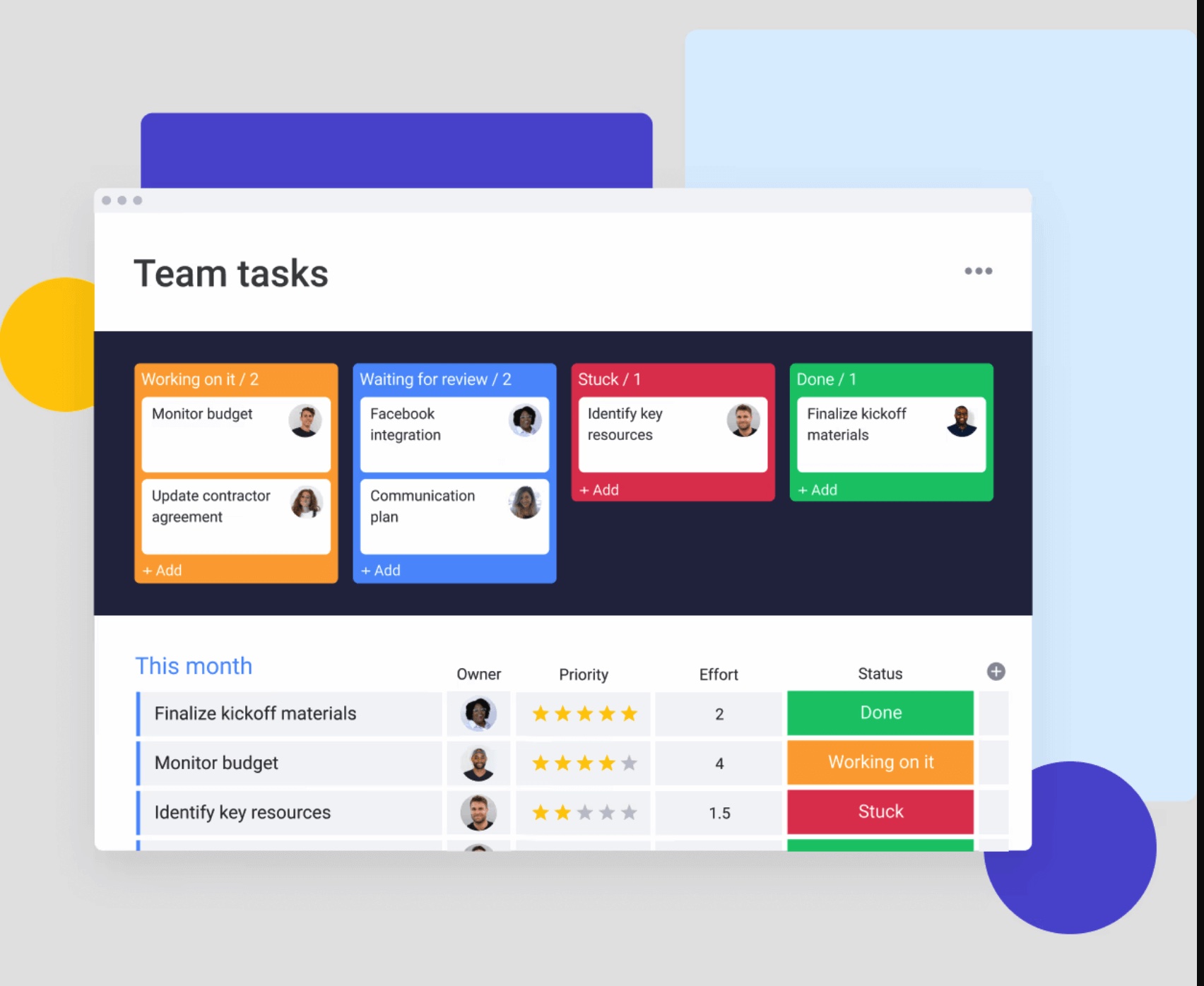
These core capabilities address the most pressing challenges facing enterprise marketing teams. Each feature directly solves operational pain points while enabling strategic growth and improved team performance.
Campaign management capabilities
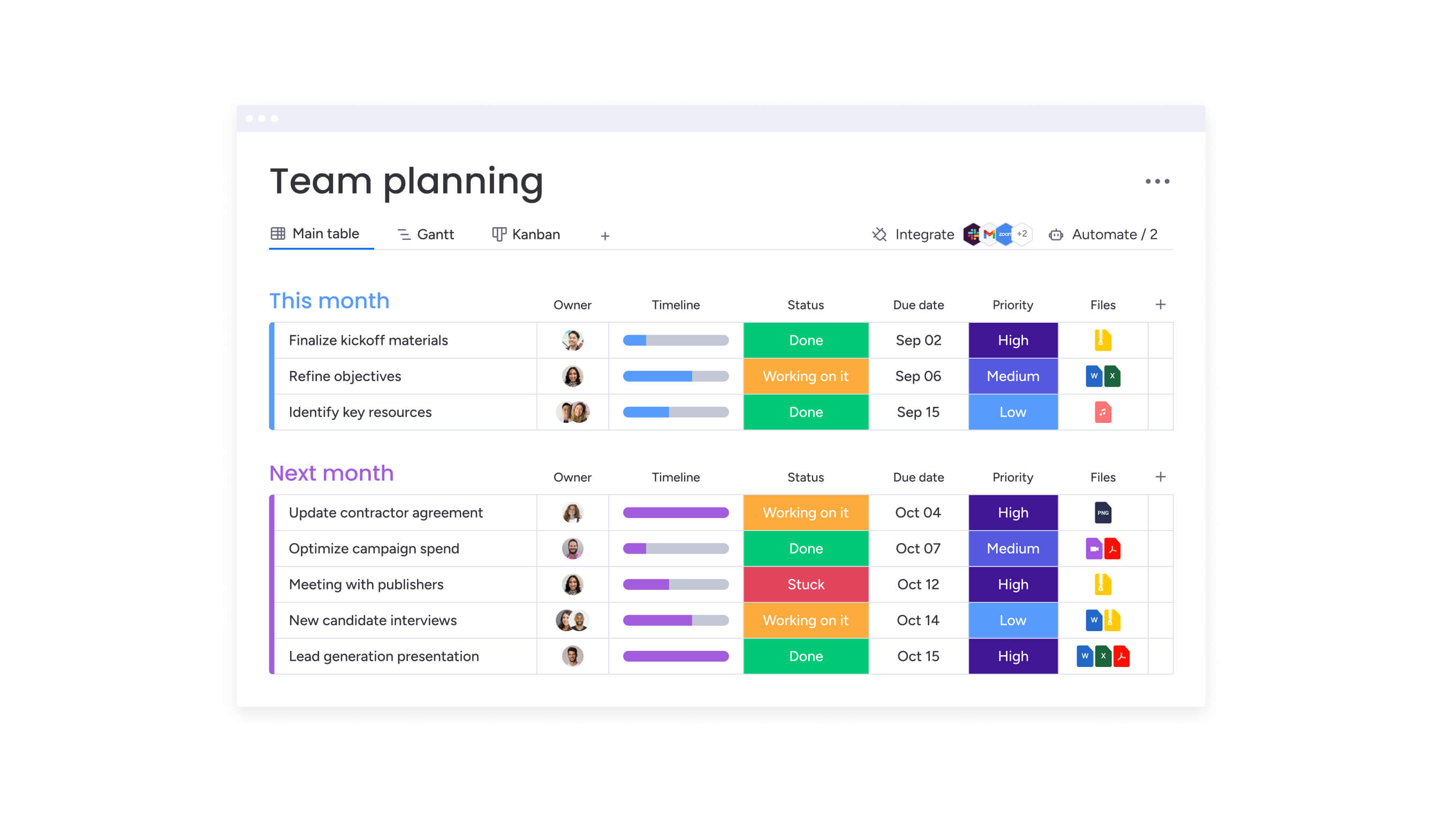
Campaign management on monday work management provides end-to-end visibility from planning through execution. The platform enables you to coordinate campaigns across teams and regions with calendars, timelines, and performance insights that ensure every detail is tracked.
Marketing leaders gain real-time insight into campaign status, team workloads, and performance metrics through multiple visualization options:
- Kanban boards: track campaign stages and creative assets through production.
- Gantt charts: manage dependencies and timelines across multi-channel campaigns.
- Timeline views: coordinate cross-channel activations and launch sequences.
This centralized approach replaces scattered updates, allowing data-driven decisions about resource allocation and campaign optimization.
Resource management for marketing teams
Resource management provides visibility into bandwidth, skills, and workload across the marketing organization. The workload view shows capacity across projects, enabling informed task distribution and preventing burnout. Key features include:
Key resource management capabilities include:
- Skills-based allocation: match team members to projects based on expertise.
- Capacity planning: visualize who’s overloaded and who has availability.
- Resource forecasting: plan future campaigns based on team bandwidth.
With this insight, leaders can optimize resource use, ensuring campaigns meet deadlines and reducing team frustration.
Workflow automation at scale
Automation eliminates manual work and standardizes processes across the marketing organization. Custom automations handle campaign briefs, approvals, and status updates without coding. Features include:
- Intake automation: route creative requests to the right team automatically.
- Approval workflows: move assets through review stages without manual handoffs.
- Status notifications: alert stakeholders when campaigns reach key milestones.
For heads of marketing struggling with inefficient processes, automation provides the standardization needed to scale operations. Templates for recurring campaign types, automated handoffs between teams, and consistent processes free your team to focus on strategic work.
Real-time dashboards and reporting
Dashboard capabilities provide instant visibility into campaign performance, team productivity, and budget utilization. Custom dashboards pull data from multiple boards, displaying real-time metrics that matter to executive leadership.
Dashboard features that drive decision-making:
- Campaign ROI tracking: monitor performance against investment.
- Budget adherence: track spending across all marketing initiatives.
- Team productivity metrics: measure output and efficiency gains.
This addresses the critical need to report impact to executive leadership with confidence. Visual dashboards demonstrate marketing impact through clear metrics, ensuring your strategy aligns with business goals.
Marketing operations management
Marketing operations features enable you to manage roadmapping, OKR tracking, and process governance from a single platform. Connect campaigns to strategic objectives, track progress toward goals, and ensure all initiatives contribute to business outcomes.
Operations management capabilities include:
- OKR alignment: link campaigns directly to company objectives.
- Cross-functional collaboration: coordinate with legal, product, and finance teams.
- Process standardization: create repeatable workflows across all marketing functions.
This provides the strategic alignment needed to drive maximum impact. Marketing roadmaps connect to company OKRs, progress tracking spans all initiatives, and visibility ensures your team focuses on high-impact work.
Creative production workflows
Creative production features streamline intake, briefs, approvals, and asset management. Standardized request forms capture necessary information, route briefs to appropriate team members, and manage approval workflows with version control.
Creative workflow benefits:
- Centralized asset management: keep all creative files and feedback in one place.
- Version control: track changes and maintain approval history.
- Automated routing: move creative through production without manual follow-up.
Standardized workflows improve quality, speed, and ownership clarity.
Benefits for heads of marketing
Organizations using monday work management report significant improvements across operational metrics. The platform delivers measurable impact through time savings, cost efficiency, and enhanced productivity.
Time and efficiency gains
Marketing teams save thousands of hours monthly by eliminating manual status updates and automating repetitive workflows. The platform reduces time spent coordinating across teams, allowing focus on strategic initiatives.
Time-saving impacts include:
- 7,000 hours saved: per account monthly through automation.
- 25% reduction: in email exchanges across departments.
- 2x faster delivery: of marketing initiatives.
Financial and operational ROI
Organizations achieve significant return on investment by consolidating multiple tools into a single platform. This reduces software licensing costs while eliminating inefficiencies from disconnected systems.
Cost efficiency metrics:
- 6x ROI: through improved resource utilization.
- $118K saved: monthly through operational improvements.
- $250K reinvested: annually into growth initiatives.
Quality and compliance improvements
The platform ensures accuracy through automated workflows and approval processes. This creates audit trails demonstrating compliance with brand guidelines and regulatory requirements.
Compliance and quality benefits:
- 100% removal: of spreadsheets from campaign management.
- 62% reduction: in approval cycle times.
- 3x increase: in creative output quality.
Visibility and strategic alignment
Leaders gain real-time insight into campaigns, performance, and workloads, enabling data-driven decisions while keeping strategy aligned. Improvements include:
- Real-time dashboards: track campaign ROI and budget adherence.
- Portfolio-level views: monitor all initiatives from one place.
- OKR alignment: connect daily work to strategic objectives.
A step-by-step framework for enterprise marketing project management
Implementing effective marketing project management requires a systematic approach that progresses from foundational planning to advanced collaboration. These six steps provide a structured framework that supports scale, consistency, and long-term operational clarity across marketing teams.
Step 1: centralize campaign planning
Start by creating a master marketing calendar that includes all campaigns, key dates, and milestones. Use structured boards to organize initiatives by program, region, or channel. This centralized approach replaces scattered information across emails and spreadsheets with a single, reliable source of truth.
Set up your planning structure with the following components:
- Create campaign hierarchies: use subitems to show initiative relationships.
- Define ownership: assign clear accountability for each campaign element.
- Establish timelines: set dependencies between related activities.
Step 2: standardize marketing workflows
Build workflow templates for recurring campaign types, creative requests, and approval processes. Use automation recipes to create consistent handoffs between teams. This standardization eliminates inefficient processes where teams constantly reinvent workflows.
Workflow standardization elements:
- Campaign templates: pre-built structures for common campaign types.
- Approval chains: automated routing through review stages.
- Handoff automation: seamless transitions between teams.
Step 3: implement resource planning
Configure workload views to visualize team capacity across all marketing initiatives. Assign resources based on skills, availability, and current workload. This capacity planning enables effective management of large teams while preventing burnout.
Resource planning components:
- Capacity visualization: see team bandwidth at a glance.
- Skills mapping: match expertise to project needs.
- Workload balancing: redistribute tasks to prevent overload.
Step 4: connect campaigns to OKRs
Link marketing campaigns to strategic company objectives using goal-tracking features. Track progress toward OKRs at the campaign level, ensuring all activities contribute to business outcomes. This alignment demonstrates how marketing drives growth and brand awareness.
OKR connection strategies:
- Goal hierarchies: connect campaigns to department and company objectives.
- Progress tracking: monitor advancement toward key results.
- Impact measurement: quantify marketing contribution to business goals.
Step 5: create performance dashboards
Build custom dashboards displaying campaign ROI, budget adherence, and team productivity. Configure widgets to pull data from multiple boards, providing instant visibility into marketing performance.
Dashboard configuration priorities:
- Executive metrics: ROI, pipeline contribution, brand metrics.
- Operational KPIs: campaign velocity, resource utilization, budget variance.
- Team performance: output volume, quality scores, deadline adherence.
Step 6: enable cross-functional collaboration
Set up shared boards and automated notifications for collaboration with legal, product, and finance teams. Use mentions and comments to keep stakeholders informed without switching between tools.
Collaboration enablement tactics:
- Shared workspaces: create visibility across departments.
- Automated updates: keep stakeholders informed of progress.
- Centralized communication: eliminate email chains and tool-switching.
Comparison: task management platforms for marketing
If you’re weighing up task management software for enterprise marketing teams, consider how each platform addresses your specific needs for scale, automation, and visibility. This comparison highlights key differences across the most popular platforms.
| Feature | monday work management | Asana | Wrike |
| Campaign management | Visual boards with timeline, Gantt, calendar views; automated tracking | Task lists with timeline view; basic templates | Gantt charts and workload view; creative focus |
| Resource management | Real-time workload view with capacity planning; skills-based allocation | Basic workload view; limited capacity planning | Advanced resource management; time tracking included |
| Marketing automation | 200+ pre-built automations; no-code custom workflows | Limited automation on lower tiers | Automation on Business tier and above |
| Dashboards | Customizable with real-time data; connects multiple boards | Basic reporting; advanced on premium tiers | Advanced reporting; custom dashboards |
| Creative approvals | Built-in proofing and approval workflows; version control | Basic approval workflows | Advanced proofing tools |
| Price per user/month | $10-$24 (Standard to Enterprise) | $10.99-$24.99 (Starter to Business) | $10-$24.80 (Team to Business) |
| Implementation time | 2 weeks to one month for 100+ users | two to four weeks for enterprise teams | four to six weeks for complex implementations |
| G2 rating | 4.7/five (12,000+ reviews) | 4.3/five (12,000+ reviews) | 4.2/five (3,500+ reviews) |
What is the best project management software for marketing?
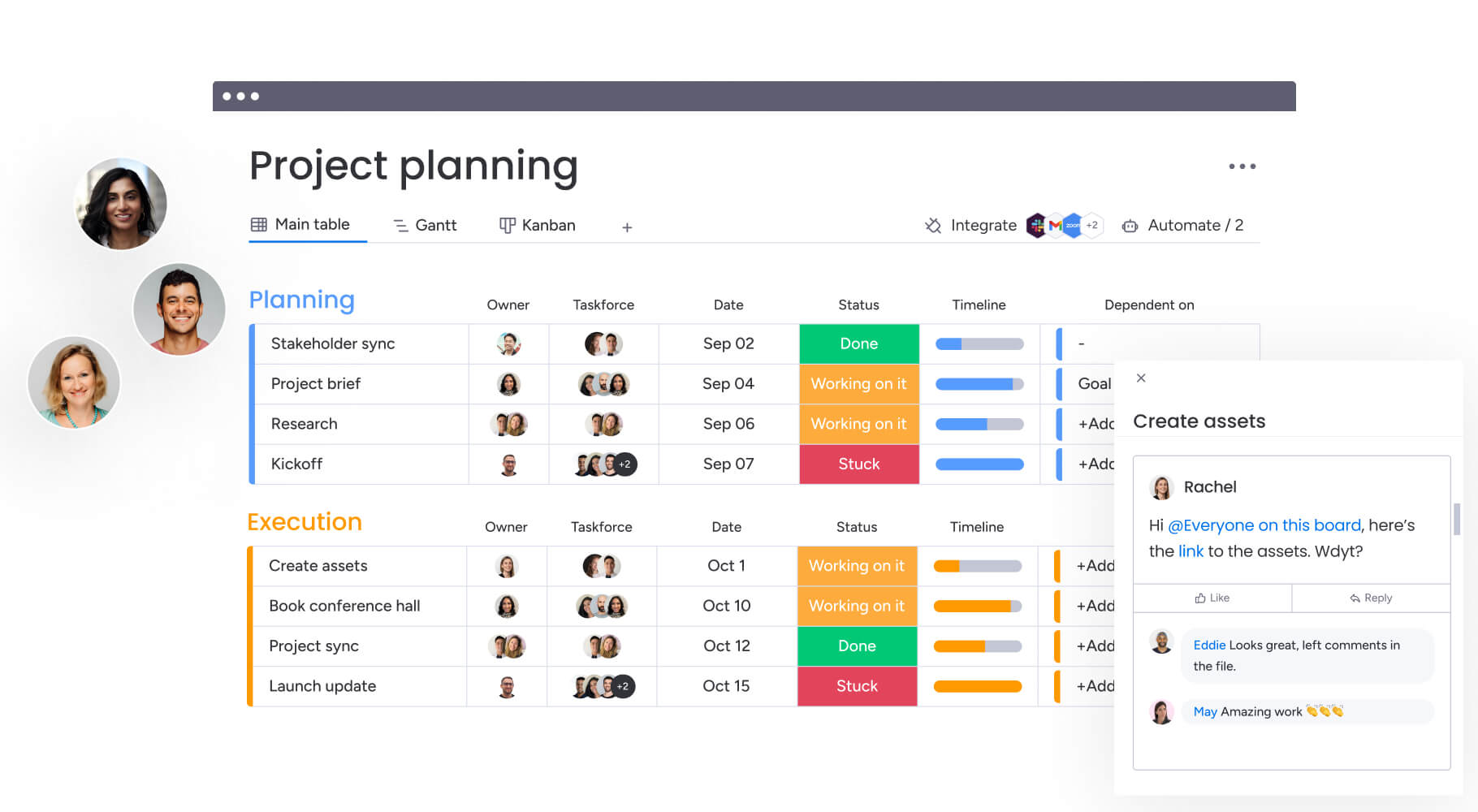
Effective project management software for marketing teams must handle campaign planning, creative production, and cross-functional collaboration at scale. Marketing-specific requirements go beyond basic task tracking to include asset management, approval workflows, and portfolio visibility.
Marketing teams need platforms that address unique workflows across three critical areas:
- Campaign planning: content calendars, launch timelines, channel coordination.
- Creative reviews: proofing tools, version control, stakeholder feedback.
- Performance tracking: campaign metrics, ROI measurement, budget monitoring.
monday work management excels in marketing environments through its combination of visual project tracking, automated workflows, and real-time dashboards. The platform’s flexibility allows marketing teams to build custom workflows matching their specific processes while maintaining standardization across the organization.
For enterprise marketing teams, the platform provides essential governance through managed templates, cross-project dependencies, and AI-powered risk insights. These capabilities ensure consistent execution across hundreds of campaigns while maintaining visibility for leadership.
What software do marketing managers use?
Marketing managers typically work across multiple platforms in their tech stack, creating integration challenges and data silos. Common marketing platforms include CRM systems, analytics software, creative suites, and communication platforms that must work together seamlessly.
The typical marketing tech stack includes these essential categories:
- Analytics tools: Google Analytics, Adobe Analytics for performance tracking.
- Creative platforms: Adobe Creative Cloud, Canva for asset creation.
- Marketing automation: HubSpot, Marketo for campaign execution.
- Communication tools: Slack, Microsoft Teams for collaboration.
Task management platforms must integrate seamlessly with these existing tools. monday work management offers 200+ native integrations, connecting your entire marketing ecosystem. This eliminates tool sprawl by serving as the central hub where all marketing work comes together.
Strong API capabilities and pre-built integrations ensure marketing managers can maintain their preferred tools while gaining centralized visibility and coordination through the work management platform.
Power your media marketing operations with monday work management
Media marketing teams need to move fast without losing control. Campaigns shift quickly, creative cycles are tight, and visibility across teams is critical to hitting deadlines and proving impact. monday work management gives heads of marketing a single platform to plan, execute, and optimize work at scale.
Instead of juggling task lists, approval threads, and disconnected tools, teams manage everything in one workspace. Campaign timelines, creative production, resource allocation, and performance tracking stay connected, so leaders always know what’s on track, what’s blocked, and where to act next.
With monday work management, media marketing leaders gain:
- End-to-end campaign visibility across creative, content, acquisition, and operations
- Faster creative workflows with built-in approvals, version control, and automated handoffs
- Balanced team workloads through real-time capacity and resource views
- Clear executive reporting with dashboards that connect work to outcomes
- Scalable processes using templates, automations, and integrations your teams actually adopt
The result is less time spent chasing updates and more time delivering campaigns that perform. monday work management helps media marketing teams stay agile, aligned, and accountable — without slowing creativity or adding complexity.
The content in this article is provided for informational purposes only and, to the best of monday.com‘s knowledge, the information provided in this article is accurate and up-to-date at the time of publication. That said, monday.com encourages readers to verify all information directly.
Frequently asked questions
What's the typical implementation timeline for a 100+ person marketing team?
Implementation for enterprise marketing teams typically takes two weeks to one month. The timeline depends on workflow complexity and the number of use cases being implemented. Most organizations start with a pilot program for one team or campaign type, then expand after validating the approach. monday work management provides dedicated customer success support and implementation packages to accelerate onboarding and ensure successful adoption across your organization.
How do I ensure adoption across diverse marketing departments?
Successful adoption requires a structured rollout plan with three key components. First, create a custom rollout order prioritizing high-impact teams. Second, build base structures so teams can visualize their work on the platform. Third, provide ongoing support through internal champions and external resources. Start by identifying teams most inclined to adopt new tools, demonstrate quick wins, then expand to other departments.
What integrations are essential for media companies?
Media companies typically require integrations with creative tools like Adobe Creative Cloud, marketing automation platforms including HubSpot and Marketo, analytics tools such as Google Analytics, communication platforms like Slack and Microsoft Teams, and file storage systems including Google Drive and Dropbox. monday work management offers 200+ native integrations and an open API for custom connections, plus integration with other project management tools during transition.
How much should I budget for enterprise task management software?
Enterprise marketing teams should budget $10-$24 per user per month depending on tier and features required. For a 100-person marketing team, expect annual costs between $12,000-$28,800. Organizations typically achieve 6x ROI through time savings, improved resource utilization, and tool consolidation. Companies report saving $118K per month and 7,000 hours per account monthly, making the investment highly cost-effective.
Can project management software help with creative asset version control?
Yes, monday work management includes built-in proofing and approval features supporting creative asset version control. You can upload creative files directly to boards, track versions, manage approval workflows, and centralize feedback from stakeholders. The platform maintains a complete history of file versions and comments, ensuring everyone works from the latest approved assets while eliminating confusion from multiple versions scattered across email attachments.
What change management strategies work best for marketing teams?
Effective change management for marketing teams involves creating a phased rollout plan, identifying internal champions who can advocate for the platform, providing role-specific training, and demonstrating quick wins that solve immediate pain points. Start with teams experiencing the most acute pain from current processes, build standardized templates they can customize, and celebrate early successes to build momentum.
