

Managing projects in the services industry isn’t for the faint of heart. You’re balancing dozens of client engagements, navigating shifting scopes, and trying to keep resources aligned — often with half the information you really need. When every project has a different timeline, budget, and stakeholder dynamic, staying in control can feel impossible without the right systems behind you.
That’s where portfolio management software becomes a game-changer. Instead of piecing together updates from emails, spreadsheets, and meetings, you get a single source of truth that shows exactly what’s happening across every client, every engagement, and every team — right now. It turns scattered data into clear priorities, real-time insights, and decisions you can make with confidence.
In this guide, you’ll get a straightforward look at what actually matters when choosing portfolio software for services teams: the features that solve real delivery headaches, the platforms built for scalability, and the implementation strategies that ensure your teams actually use the tool—not just log into it once and forget it.
Key takeaways
- Start with portfolio visibility, not project tracking: move beyond individual project management to see resource allocation, project health, and strategic alignment across your entire portfolio in real time.
- Implement through pilot programs for faster success: begin with one team to validate workflows and demonstrate value before rolling out organization-wide — this reduces risk and builds momentum.
- Standardize processes while maintaining team flexibility: create consistent templates for project intake, approvals, and reporting that teams can adapt to their specific needs without losing autonomy.
- Connect your existing tools to eliminate data silos: integrate portfolio management software with your CRM, financial systems, and collaboration platforms to ensure everyone works from current, unified information.
- Leverage AI-powered insights with monday.com: use automated risk identification, resource optimization suggestions, and real-time portfolio dashboards to shift from reactive firefighting to proactive portfolio optimization.
Understanding portfolio management software
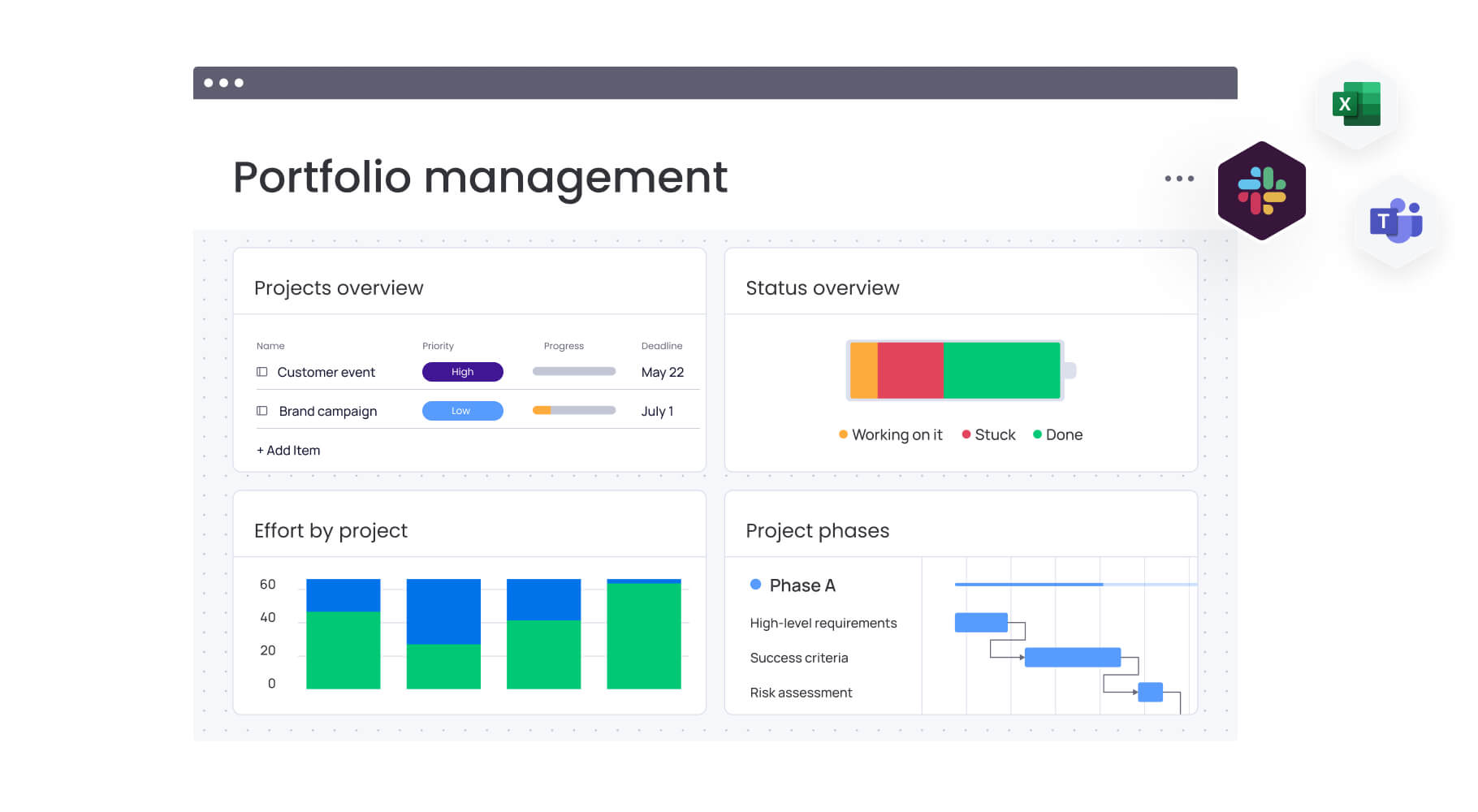
Think of portfolio management software as your organization’s command hub. While project management focuses on individual project execution, portfolio management software elevates your view to see how all projects connect, compete for resources, and contribute to strategic goals.
When you’re running dozens of client projects at once, this isn’t just a semantic difference: it’s the gap between constant firefighting and strategic control. You need more than simple project tracking. You need to understand resource allocation across projects, identify which engagements are at risk, and demonstrate value to both clients and leadership, which is exactly what a portfolio manager helps you accomplish.
Why project managers in services need portfolio management software
Let’s be honest: basic project management platforms fall apart when you’re balancing 20+ client engagements with competing deadlines and shared resources. Your teams juggle multiple client projects with different timelines, budgets, and stakeholder expectations. Without portfolio-level visibility, you’re flying blind: especially when geopolitical instability has emerged as the chief risk to growth according to McKinsey’s most recent global survey on economic conditions.
Your biggest headache? It’s not the projects themselves, it’s the chaos of information spread across spreadsheets, emails, and a half-dozen tools nobody fully uses. When project data lives in spreadsheets, email threads, and various platforms, you lose the ability to make informed decisions about resource allocation and project prioritization, which even free portfolio management software rarely solves adequately.
Consider what happens when a key team member is overbooked across three projects. Without portfolio visibility, you discover the conflict only after deadlines slip. Or when executives ask for project profitability reports, you spend hours manually consolidating data from different sources.
Portfolio management software addresses these challenges by creating a single source of truth. You gain real-time insights into:
- Resource utilization: see who’s overloaded and who has capacity.
- Project health: identify at-risk projects before they derail.
- Financial performance: track profitability across all engagements.
- Strategic alignment: connect project work to business objectives.
Portfolio management vs project management: understanding the difference
Portfolio and project management are different animals, but you need both if you want your service business to thrive. Understanding portfolio management vs project management helps you choose the right approach for your organization’s needs.
Project management: focuses on delivering individual projects successfully. It handles task assignments, timelines, and team collaboration within a single project scope. Think of it as managing the trees.
Portfolio management: provides oversight across all projects. It optimizes resource allocation, manages dependencies between projects, and ensures work aligns with strategic priorities. This is managing the forest.
Here’s how they differ in practice:
| Aspect | Project management | Portfolio management |
|---|---|---|
| Scope | Single project execution | Multiple project oversight |
| Focus | Tasks and deliverables | Resource optimization and strategy |
| Decisions | Tactical (who does what) | Strategic (which projects to prioritize) |
| Metrics | On-time delivery, budget adherence | ROI, resource utilization, strategic alignment |
| Stakeholders | Project team and sponsors | Executives and department heads |
Services organizations need both. Project management keeps individual client engagements on track. Portfolio management ensures you’re taking on the right projects, allocating resources effectively, and maintaining profitability across all work.
Essential features for portfolio management software
When assessing portfolio management software, certain capabilities separate enterprise-ready platforms from basic project trackers. These features directly address the challenges project managers face when managing multiple client engagements.
Here’s what to prioritize when making your selection.
Real-time portfolio dashboards
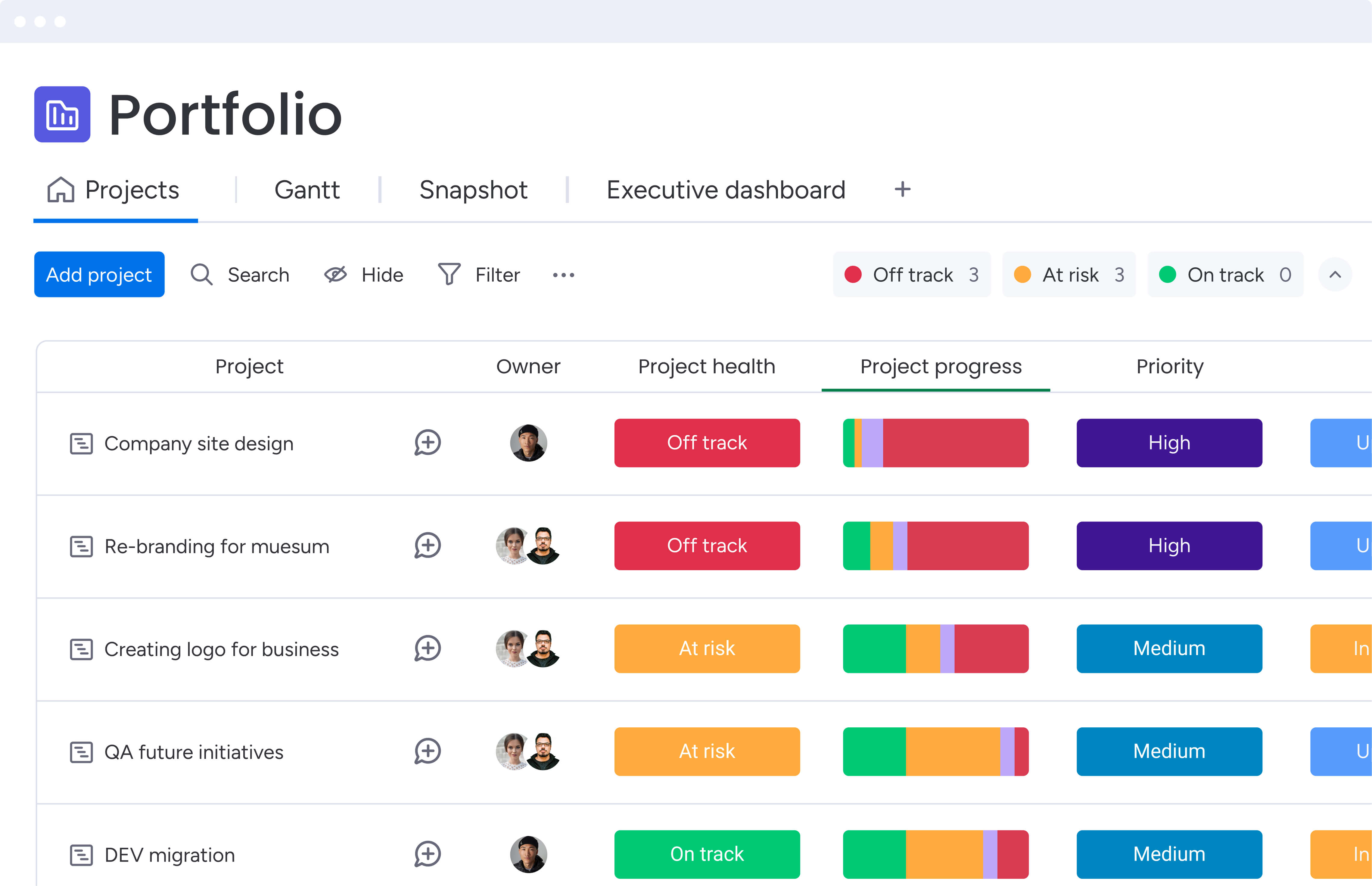
Portfolio dashboards aggregate data from all projects into a unified view. You need instant visibility into project status, resource allocation, and financial metrics without manual data compilation.
Look for dashboards that can handle hundreds of projects simultaneously. The best platforms offer customizable views that surface the metrics that matter most to your role — whether that’s utilization rates, project margins, or delivery timelines.
Resource management and capacity planning
Resource management capabilities show you who’s working on what and when they’ll be available for new projects. This prevents the overallocation that leads to burnout and delays.
Key capabilities include:
- Workload visualization: see team capacity at a glance.
- Skills-based allocation: match people to projects based on expertise.
- Capacity forecasting: plan future resource needs based on pipeline.
Risk identification and mitigation
Advanced portfolio management software uses AI to identify risks before they impact delivery. Instead of discovering issues during status meetings, you get proactive alerts about projects that need attention.
AI-powered risk insights scan project updates, flag concerning patterns, and suggest mitigation strategies. This shifts portfolio management from reactive firefighting to proactive problem-solving.
Learn more: AI portfolio management software
Standardization with flexibility
Enterprise organizations need consistent processes without sacrificing team autonomy. Look for platforms that offer:
- Managed templates: standardize workflows while allowing customization.
- Cross-project dependencies: visualize and manage connections between projects.
- Automated approvals: streamline intake and governance processes.
Integration capabilities
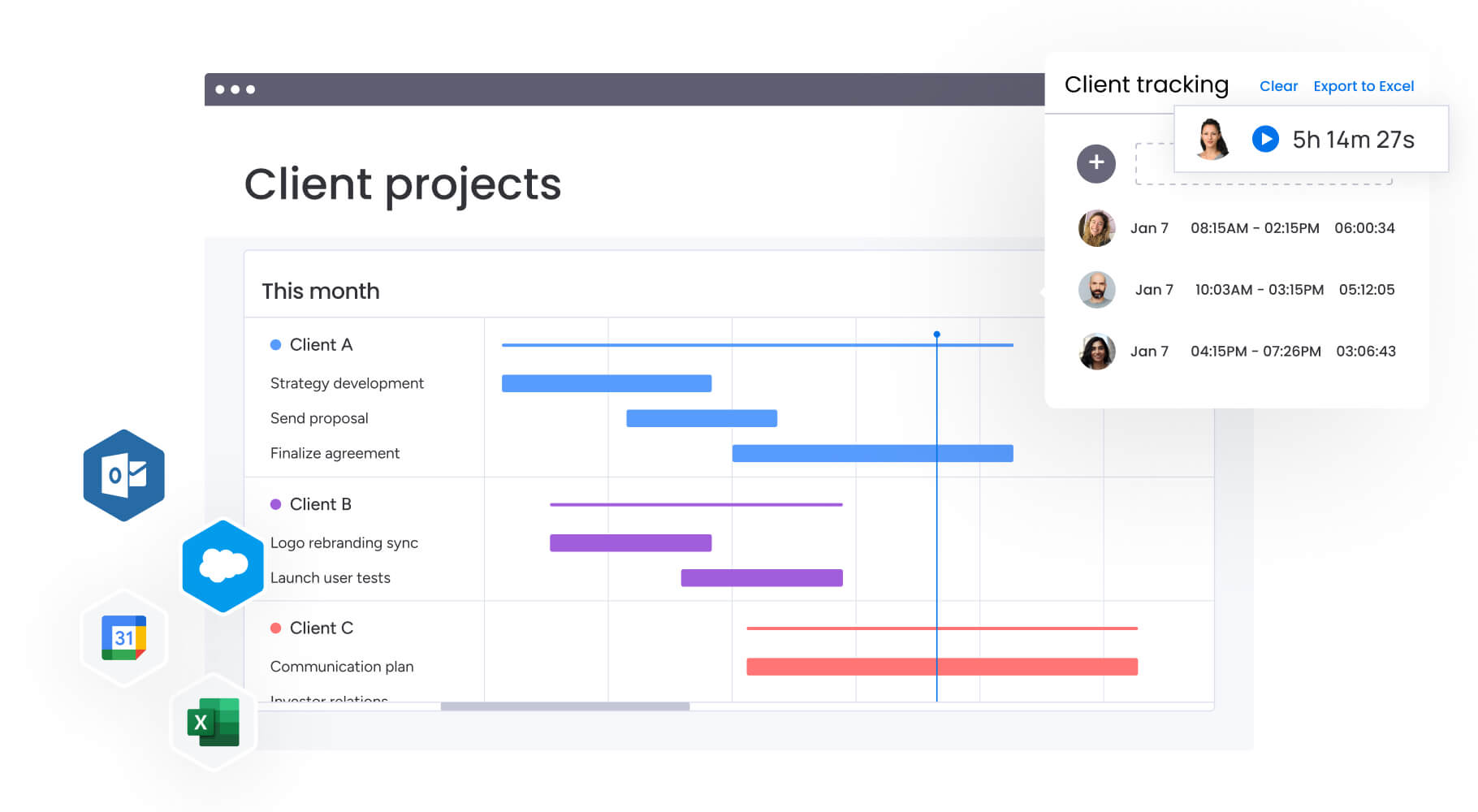
Your portfolio management software must connect with existing tools. Whether it’s your CRM, financial systems, or collaboration platforms, seamless integration eliminates data silos and manual updates.
Prioritize platforms with robust APIs and pre-built connectors. The ability to sync data bidirectionally ensures everyone works from current information, regardless of their preferred tools.
Try monday.comHow portfolio management software drives business value
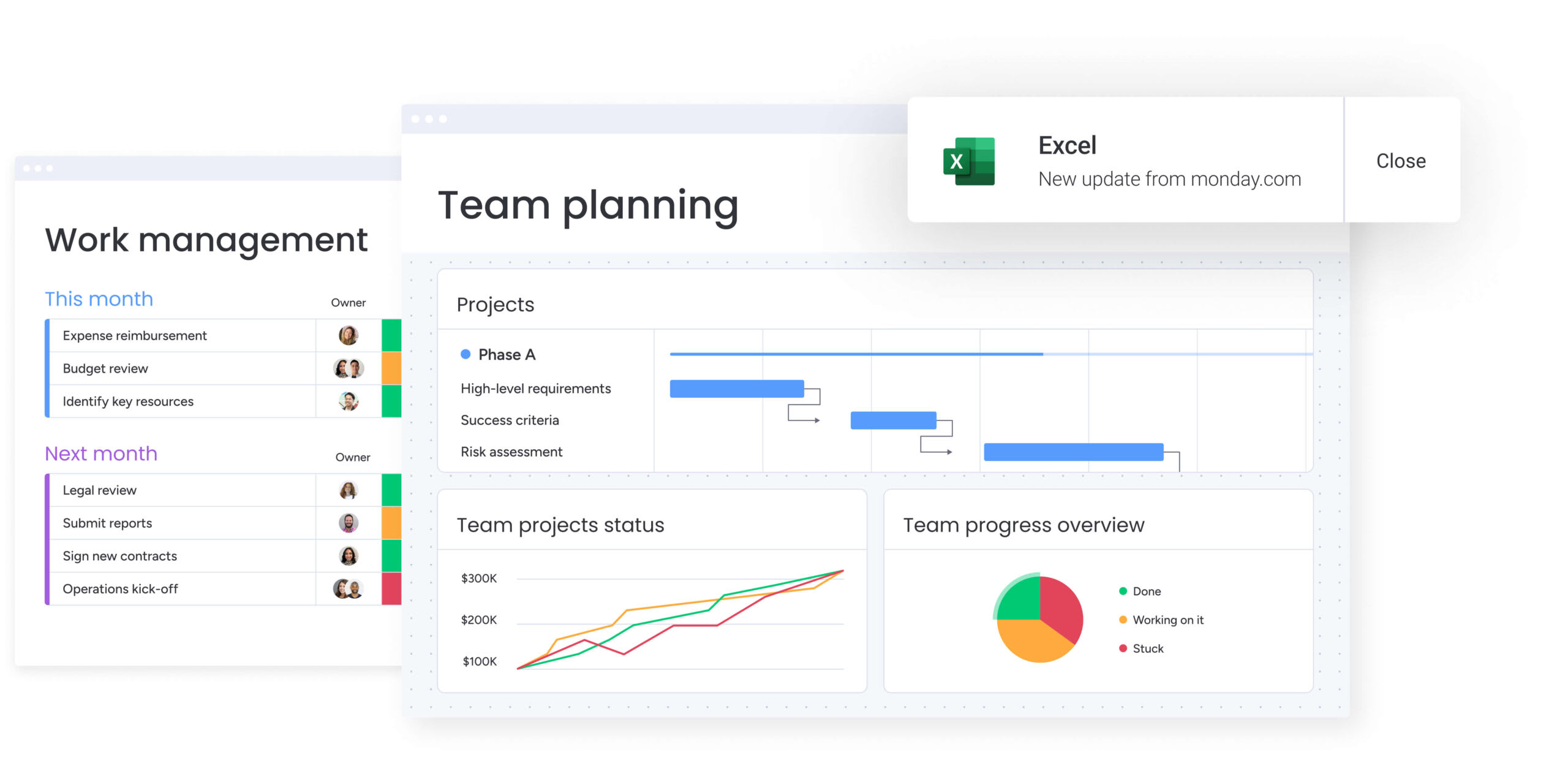
Don’t mistake portfolio management for just another project tool. When done right, it rewrites how your entire service business runs—from how you bid on work to how quickly you can scale. Understanding these benefits helps you build a compelling business case for implementation.
Improved resource utilization
With clear visibility into team capacity and project demands, you optimize resource allocation across the portfolio. This means:
- Higher billable utilization: reduce bench time by matching available resources to project needs.
- Reduced overtime costs: prevent burnout by balancing workloads proactively.
- Better hiring decisions: use capacity data to justify and time new hires.
Organizations using monday.com report saving over three hours per person weekly through better resource allocation and automated workflows.
Faster, more informed decisions
Portfolio dashboards provide instant access to the data leadership needs. Instead of waiting for monthly reports, executives can see project health, resource utilization, and financial performance in real time.
This visibility enables:
- Confident prioritization: choose projects based on strategic value and resource availability.
- Proactive risk management: address issues before they escalate.
- Data-driven planning: use historical performance to improve future estimates.
Enhanced client satisfaction
When you deliver projects on time and within budget consistently, client relationships strengthen. Portfolio management software helps maintain this consistency by standardizing processes, preventing resource conflicts, and ensuring quality across all engagements.
Services teams also report improved transparency with clients. Shared dashboards and automated status updates keep stakeholders informed without manual effort.
Scalable growth
As your services organization grows, portfolio management software provides the foundation for sustainable expansion. Standardized processes, automated workflows, and centralized visibility allow you to take on more projects without proportionally increasing overhead.
The platform grows with you. Whether managing ten projects or 1,000, portfolio planning ensures the same systems and processes scale to meet demand.
Implementing portfolio management software successfully
Buying the software is the easy part. Getting your teams to actually use it? That’s where most organizations stumble. Here’s how to nail the implementation. Follow these four steps to maximize your chances of success and minimize implementation risks.
Step 1: start with a pilot program
Start small — pick one team that’s feeling the pain and let them be your test case. Their success will sell the platform better than any demo could. This approach:
- Reduces risk and implementation complexity.
- Generates early wins to build momentum.
- Allows refinement before organization-wide rollout.
Choose a team experiencing clear pain points that portfolio management can address. Their success becomes your proof of concept.
Step 2: standardize core processes
Create templates for common project types, intake processes, and reporting structures. Standardization doesn’t mean rigidity — it means establishing baselines that teams can adapt.
Focus on standardizing:
- Project intake forms: capture requirements consistently.
- Approval workflows: define clear decision paths.
- Status reporting: automate updates to reduce manual work.
- Resource allocation: establish assignment protocols.
Step 3: connect your tech stack
Integrate portfolio management software with existing systems from day one. This prevents duplicate data entry and ensures everyone works from current information.
Priority integrations typically include:
- CRM systems: sync client and opportunity data.
- Financial platforms: track project costs and profitability.
- Collaboration tools: keep communication flowing.
- Time tracking: capture actual effort for better planning.
Step 4: build adoption through value
Drive adoption by showing teams how the platform makes their work easier. Focus on quick wins like automated status reports, simplified resource requests, and clearer project visibility.
Regular training and support ensure teams use the platform effectively. Consider appointing champions within each department to provide peer support and gather feedback.
Transform portfolio management with monday.com
monday.com is built to give you powerful portfolio control without forcing you to change how your teams already work. Built for services organizations managing complex, multi-project environments, it provides the visibility and control you need without the complexity of traditional PPM tools.
The platform’s three core pillars address your biggest challenges:
- Leadership visibility: surfaces what matters most. AI-powered risk insights scan project updates to identify issues before they escalate. Portfolio dashboards provide real-time analysis across hundreds of projects, while automated reports keep executives informed without manual compilation.
- Standardization and alignment: ensures consistency at scale. Managed templates standardize entire workspaces while preserving team flexibility. Cross-project dependencies visualize connections between initiatives, preventing conflicts and delays. Every project connects to strategic goals, maintaining alignment from strategy to execution.
- Resource optimization: maximizes your team’s potential. The resource directory centralizes information about skills, roles, and availability. Capacity planning shows current and future workload distribution, while AI-powered allocation suggests optimal project assignments based on expertise and availability.
What also sets monday.com apart is how these capabilities work together. When you assign resources in the platform, it automatically updates capacity views and flags potential conflicts. When risks emerge, AI not only identifies them but suggests specific mitigation actions. When you need executive reports, they generate instantly with current data from across your portfolio.
Services organizations choose monday.com because it delivers enterprise capabilities without enterprise complexity. Teams actually use it, data stays current, and you see value within weeks, not months.
The content in this article is provided for informational purposes only and, to the best of monday.com’s knowledge, the information provided in this article is accurate and up-to-date at the time of publication. That said, monday.com encourages readers to verify all information directly
Frequently asked questions
What's the difference between portfolio management and project management software?
Portfolio management software provides strategic oversight across all projects, focusing on resource optimization, prioritization, and alignment with business goals. Project management software handles tactical execution of individual projects, managing tasks, timelines, and team collaboration within a single project scope.
How long does it take to implement portfolio management software?
Implementation timelines vary by organization size and complexity. Most services organizations achieve initial value within the first week using pre-built templates. Full deployment across departments typically takes two to four weeks, with teams becoming proficient within a month.
Can portfolio management software integrate with our existing tools?
Yes, modern portfolio management platforms offer extensive integration capabilities. Look for solutions with 200+ pre-built connectors and robust APIs that enable bidirectional data sync with your CRM, financial systems, and collaboration tools.
What ROI can we expect from portfolio management software?
Services organizations typically see 2-8x ROI through improved resource utilization, reduced administrative overhead, and better project margins. Common benefits include saving 3+ hours per person weekly and achieving 25-50% faster project delivery.
How does AI improve portfolio management?
AI enhances portfolio management by automatically identifying risks, suggesting resource allocations, and generating insights from project data. It shifts management from reactive problem-solving to proactive optimization, flagging issues before they impact delivery.
Do you need technical expertise to manage portfolio software?
No, modern platforms use no-code interfaces that project managers can configure without IT support. Drag-and-drop customization, pre-built templates, and intuitive dashboards ensure you can adapt the platform to your needs independently.

 Get started