


Media marketing teams have to handle dozens of campaigns across multiple brands, channels, and stakeholders simultaneously. However, when campaigns span creative teams, legal approvals, budget tracking, and performance measurement, coordination becomes complex fast. The challenge isn’t just managing individual projects — it’s maintaining visibility and control across an entire portfolio while teams work at speed.
The very best marketing strategy software in 2026 addresses this complexity by unifying campaign planning, execution, and measurement in one platform. These solutions go beyond basic project management to provide real-time visibility into resource allocation, automated workflow coordination, and AI-powered insights that help teams anticipate risks before they impact delivery.
In this helpful post, you’ll discover what actually works in marketing strategy platforms for media teams, see how the top solutions stack up against each other, and learn implementation approaches that deliver real results. You’ll also learn how to evaluate platforms based on your specific needs, and measure success through metrics that matter to both marketing teams and executive leadership.
Key takeaways
- Start with unified campaign visibility: connect all marketing activities in one platform to eliminate silos and gain instant insights into ROI, team capacity, and campaign performance across every brand and channel.
- Automate repetitive workflows to save thousands of hours: use AI-powered automation for approvals, reporting, and resource allocation to reduce manual work by up to 40% while maintaining quality and consistency.
- Leverage AI to transform operations: use AI to categorize requests, monitor campaigns, and intelligently allocate resources to assign the right people to projects automatically.
- Break down departmental silos through shared workspaces: enable marketing, creative, legal, and finance teams to collaborate seamlessly with integrated approval processes and real-time communication that eliminates endless email chains.
- Implement strategically with pilot programs first: begin with one high-impact team to prove ROI quickly, then phase rollout across four stages to ensure 90%+ adoption rates within three months.
What makes marketing strategy software essential for media companies?
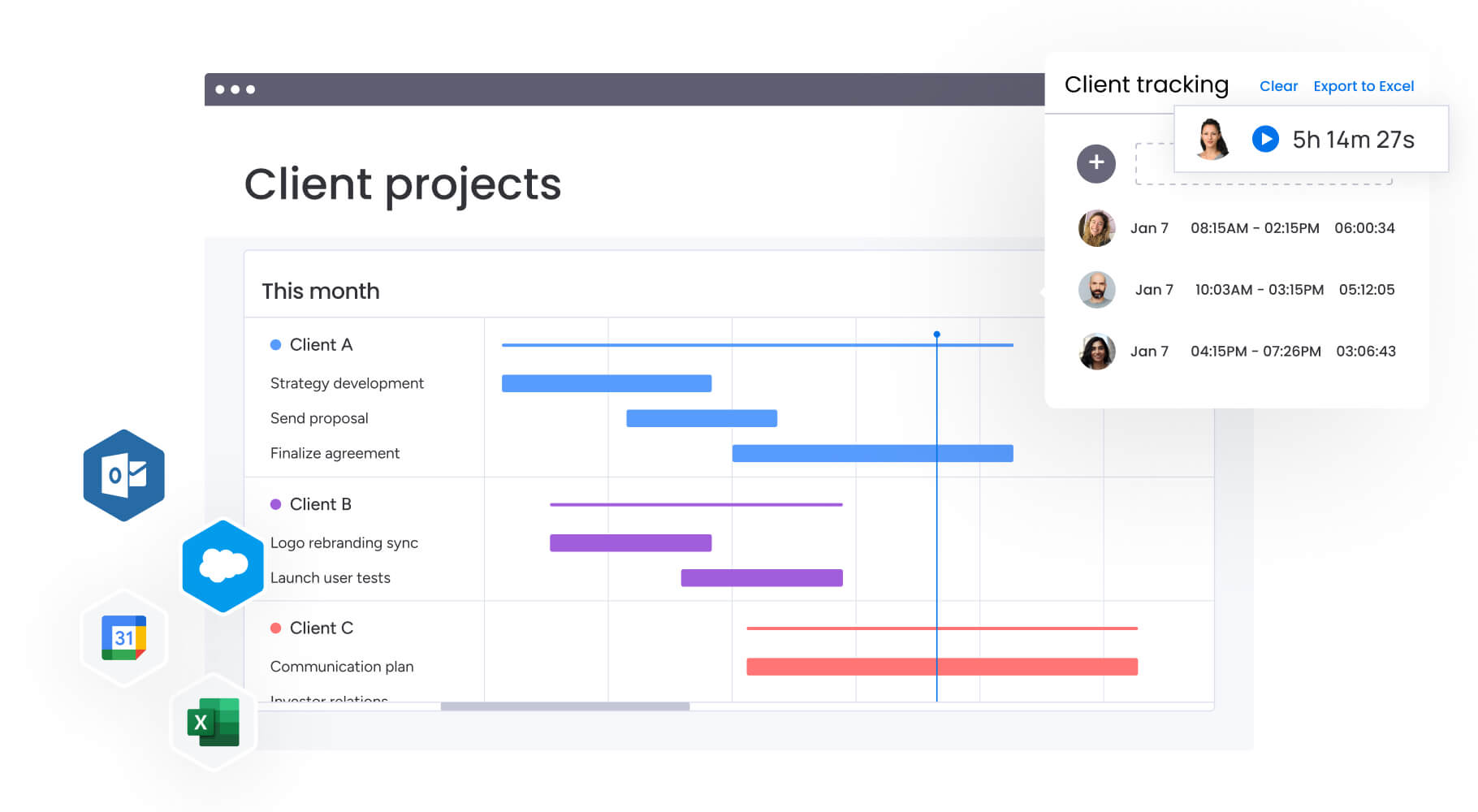
Marketing strategy software (or software de marketing in Spanish) is a comprehensive platform that enables marketing leaders to plan, execute, and measure multi-channel campaigns across distributed teams. For media companies managing dozens of brands and hundreds of campaigns simultaneously, these marketing planning software solutions provide the infrastructure to coordinate complex operations while maintaining strategic alignment.
Moving from a jumble of separate tools to one unified platform solves the biggest headaches in media marketing. When your campaign data lives in fifteen different places, you’re flying blind. Campaign timelines slip. Resources burn out while others sit idle.
Marketing strategy software solves these problems by creating a single source of truth where strategy connects directly to execution.
Advanced platforms go beyond basic project management too by integrating AI capabilities that flag risks before campaigns derail, automate repetitive workflows that consume hours weekly, and provide real-time insights that enable proactive decisions.
For media companies competing with digital-first competitors, this operational efficiency becomes a strategic differentiator.
Core capabilities every marketing strategy platform needs
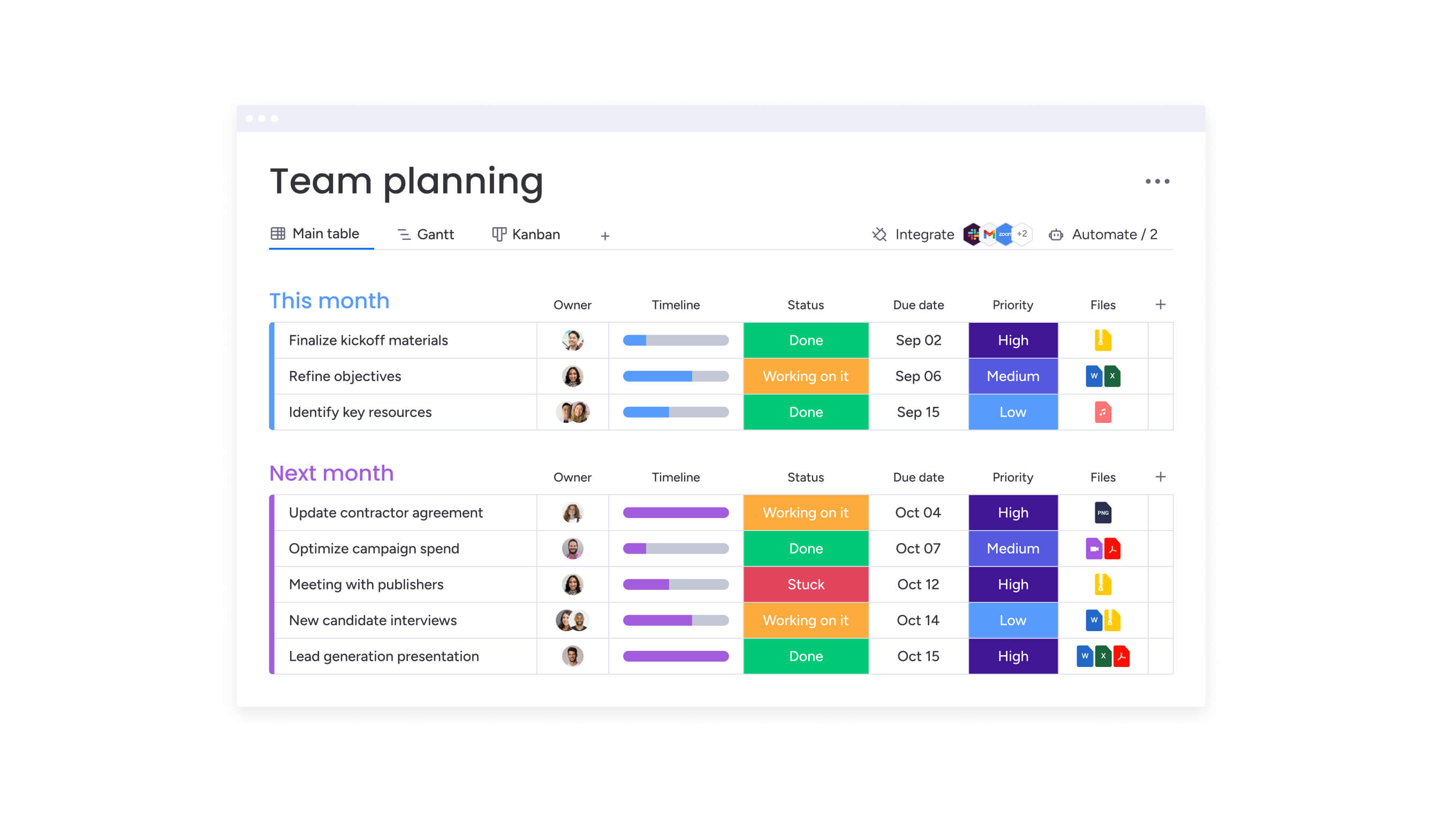
To cut through the feature noise and find what actually moves the needle, focus on these five capabilities. These five essential capabilities form the foundation of successful marketing operations at scale, enabling teams to coordinate complex campaigns while maintaining visibility and control.
Campaign orchestration and multi-brand management
Media companies require more than basic campaign calendars to manage their complex operations. You need platforms that organize everything — from high-level programs down to individual campaign activities — in a single, connected view. Marketing leaders gain instant visibility into how campaigns perform across brands while teams maintain flexibility for brand-specific approaches.
The ability to track cross-channel activations — from digital and social to broadcast and events — eliminates confusion from scattered information. Teams coordinate complex campaigns without losing track of dependencies or deadlines.
Real-time performance visibility
Monthly reports are ancient history when you need to pivot today. The right platform shows you what’s happening right now across all your campaigns with live dashboards that spotlight exactly where to focus your attention.
Pre-built templates for marketing KPIs track everything from campaign ROI and budget adherence to content performance and team productivity. Visual dashboards make it easy to spot trends, identify bottlenecks, and communicate impact to executive leadership without manual compilation.
Intelligent resource management
Gain instant visibility into team capacity to see who is available and who can take on more work. Resource management features show you exactly who is over capacity, who is underutilized, and who has the right skills for your next priority — all in real time.
This visibility transforms resource planning from guesswork to data-driven decisions. Marketing leaders can plan resource allocation for upcoming campaigns while monitoring current utilization, ensuring consistent delivery without overwhelming teams.
Workflow automation and AI enhancement
Your team shouldn’t waste hours on admin busywork. Automation handles the tedious stuff — routing briefs, chasing approvals, sending updates — so your people can focus on work that actually requires their talent. Marketing teams using automation report saving thousands of hours annually on repetitive tasks.
AI marketing capabilities take automation further through intelligent features that enhance decision-making:
- AI Blocks: categorize project requests at scale, summarize complex briefs into actionable insights, and extract key information from documents instantly.
- Risk identification: flag potential issues before they impact delivery timelines.
- Smart resource allocation: suggest optimal team assignments based on skills and availability.
These tools free marketing leaders to focus on strategy rather than administration.
Cross-functional collaboration tools
Effective handoffs between teams are critical for campaign success. When everyone — from creative to legal to finance — works in the same platform, those painful email chains and “did you see my message?” follow-ups disappear. All stakeholders can track progress, provide feedback, and approve deliverables without endless email chains.
This unified approach breaks down departmental silos. Commercial teams, creative teams, and operations connect in one place, establishing common workflows that improve collaboration and reduce coordination overhead.
Comparing leading marketing strategy platforms
Not all platforms can handle the complexity media teams face. Here’s how the top solutions compare on what actually matters for your organization.
This comparison highlights key differentiators across top solutions to help guide your decision-making process.
| Feature | monday work management | Wrike | Smartsheet |
|---|---|---|---|
| Multi-location campaign management | Native support with location-based views | Available with custom fields | Requires manual configuration |
| Real-time resource capacity planning | Built-in Workload view | Available in Business tier+ | Resource Management add-on required |
| Retail-specific templates | Seasonal campaign, product launch, event templates | Generic marketing templates | Generic project templates |
| Cross-functional collaboration | Unified workspace for marketing, merchandising, operations | Project-based collaboration | Sheet-based collaboration |
| Executive reporting dashboards | Customizable with real-time data | Available in higher tiers | Requires manual dashboard building |
| Implementation time (100+ team) | 2 weeks to 1 month | 1-3 months | 1-2 months |
| Price per user/month | From $9/user | From $10/user | From $9/user |
| G2 rating | 4.7/5 (12K+ reviews) | 4.2/5 | 4.4/5 |
How monday work management transforms media marketing operations
The intelligent monday work management solution was designed specifically for the chaos media marketing teams navigate daily — and it grows right alongside your organization without breaking. The platform combines flexibility with standardization, enabling teams to adapt quickly while maintaining governance and control across complex, multi-brand operations.
Enterprise-grade visibility at scale
Need to know how 200+ campaigns are performing across 15 brands without opening 50 different reports? Portfolio dashboards pull everything into one view, so you can spot issues and opportunities in seconds, not days. AI-powered risk insights scan updates across your entire portfolio, flagging potential issues before they impact delivery.
Marketing leaders use these capabilities to achieve comprehensive operational oversight:
- Monitor campaign health: track progress across all brands and channels from one view.
- Identify bottlenecks early: AI surfaces risks with urgency levels and suggested mitigations.
- Report to executives instantly: generate portfolio summaries with trends, charts, and key metrics.
Standardization without rigidity
Managed templates ensure consistent processes across teams while allowing customization for specific needs. When you update a template, changes can cascade across hundreds of active projects, maintaining alignment without manual updates.
This balance between standardization and flexibility delivers measurable benefits:
- Faster campaign launches: pre-built workflows reduce setup time from days to hours.
- Consistent quality: standardized processes ensure nothing falls through cracks.
- Agile adaptation: teams can customize workflows without breaking governance.
AI that works where you work
monday work management integrates AI directly into workflows through three key capabilities that reduce manual work while improving decision quality:
- AI Blocks: ready-made AI actions like categorizing requests, summarizing briefs, or extracting information from documents.
- Product Power-ups: AI-driven resource allocation that assigns the right people to projects based on skills, availability, and workload.
- Digital Workers: autonomous assistants that monitor campaigns, flag risks, and suggest optimizations based on real-time data.
Marketing teams report cutting reporting time in half while gaining deeper insights into performance through these intelligent automation features.
Cross-functional coordination at scale
Breaking down silos between departments requires more than shared documents. monday work management creates connected workflows where marketing, creative, legal, and finance teams collaborate seamlessly. Cross-project dependencies ensure alignment across initiatives, while role-based permissions maintain security and governance.
Integration with 200+ tools means teams continue using specialized software while gaining unified visibility. Whether connecting with Adobe Creative Cloud for asset management or Salesforce for CRM marketing, monday work management becomes the operational backbone that ties everything together.
Implementation strategies for media marketing teams
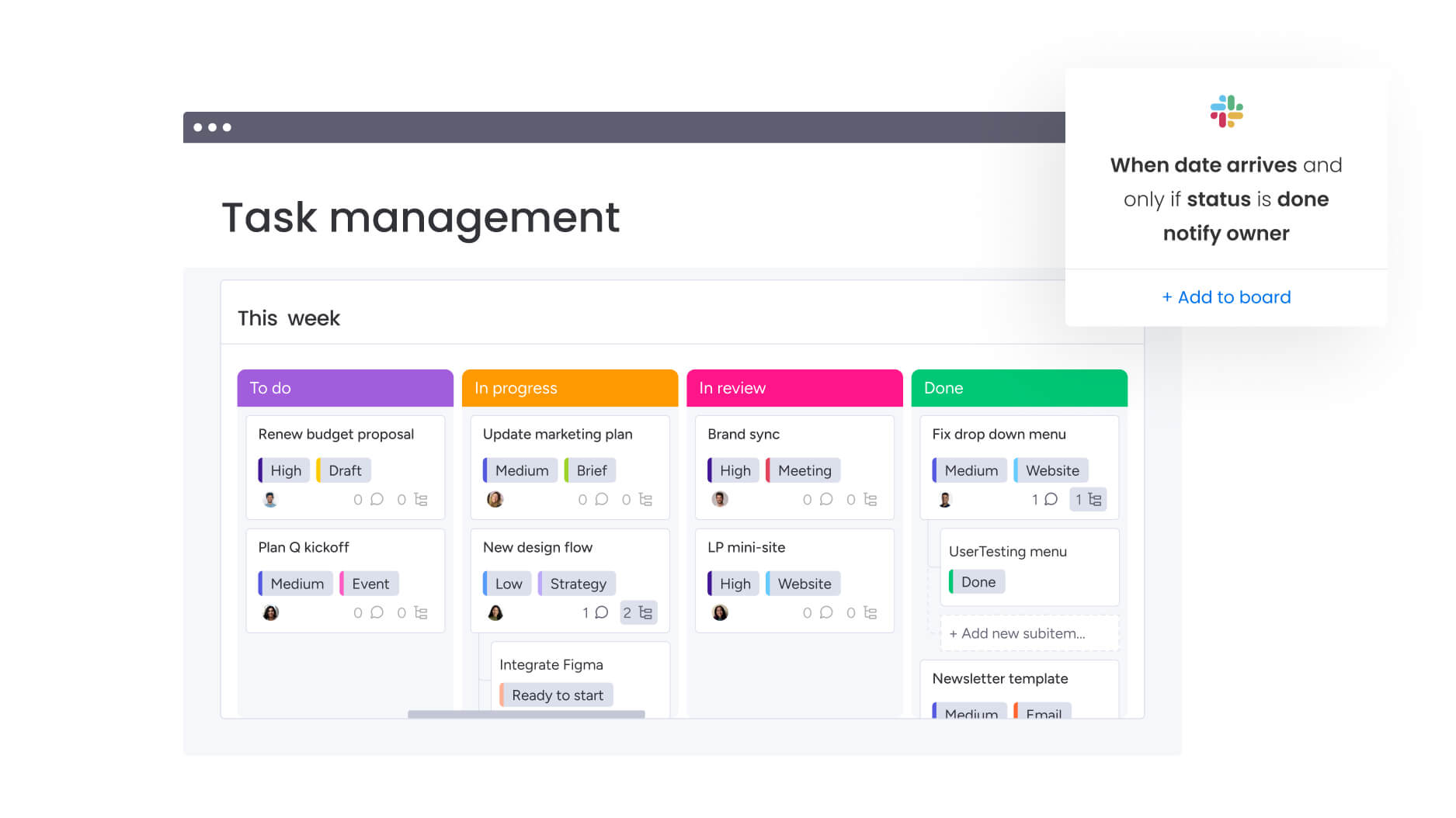
Rolling out new software across dozens of teams can be a mess if you don’t have a plan. Here’s how to get it right the first time. These proven strategies help media companies achieve rapid adoption and measurable results while minimizing disruption to ongoing operations.
Step 1: start with a pilot program
Focus on a targeted pilot program to start. Pick your most visible campaign type or your most influential team, get them winning quickly, then let them become your internal champions.
A strategic pilot program delivers multiple benefits:
- Prove value quickly: demonstrate ROI with measurable improvements in delivery speed or quality.
- Build internal champions: create advocates who can support broader rollout.
- Refine processes: identify and address issues before scaling.
Choose a pilot that represents common workflows but isn’t mission-critical. Campaign planning or creative production workflows often work well as starting points.
Step 2: standardize core workflows first
Identify the workflows that repeat across teams and campaigns to maximize efficiency gains. Focus on processes that consume significant time or create frequent bottlenecks.
Common starting points for workflow standardization include:
- Campaign planning: from brief to launch checklist.
- Creative requests: intake through approval and delivery.
- Performance reporting: data collection through executive presentation.
Build templates for these workflows, test them with pilot teams, then roll out across the organization. This creates immediate efficiency gains while establishing consistent processes.
Step 3: phase your rollout strategically
To ensure a smooth transition, roll out features in manageable phases. Instead, roll out features in four waves, making sure each one delivers clear wins before introducing the next set of tools.
- Phase 1: basic project tracking and collaboration.
- Phase 2: automation and workflow standardization.
- Phase 3: advanced features like AI and cross-project dependencies.
- Phase 4: full portfolio management and executive reporting.
This approach ensures teams can absorb changes effectively while building confidence in the platform’s capabilities.
Step 4: invest in change management
The best software in the world fails without buy-in. Your implementation plan needs to focus just as much on your people as it does on the platform itself.
Essential change management components include:
- Executive sponsorship: visible leadership support drives adoption.
- Training programs: hands-on sessions help teams understand benefits.
- Success metrics: clear KPIs demonstrate progress and value.
- Continuous support: ongoing assistance ensures teams don’t revert to old habits.
Organizations that invest in change management see adoption rates above 90% within three months.
Measuring success and ROI
Tracking the right metrics helps marketing leaders demonstrate value and identify optimization opportunities. Focus on metrics that reflect both operational efficiency and strategic impact to build a comprehensive view of platform performance.
Key performance indicators to monitor include both quantitative and qualitative measures:
- Time to market: measure reduction in campaign launch cycles.
- Resource utilization: track improvement in capacity planning and workload balance.
- Campaign performance: monitor increases in on-time delivery and quality metrics.
- Team satisfaction: survey teams on workload management and collaboration effectiveness.
- Cost efficiency: calculate savings from automation and reduced tool redundancy.
Set baselines before implementation, then track progress monthly. Most organizations see measurable improvements within the first quarter, with significant gains by month six.
Lead marketing operations with clarity using monday work management
What was once a luxury is now table stakes: media companies simply can’t manage dozens of brands and hundreds of campaigns without a unified marketing platform. The right platform unifies fragmented workflows, provides real-time visibility, and enables the agility needed to compete in today’s fast-moving media landscape.
The right platform strikes that perfect balance — powerful enough for your most complex campaigns, simple enough that people actually use it, and flexible enough to adapt as your business evolves. With features like AI-powered insights, automated workflows, and enterprise-grade governance, modern marketing strategy software transforms how media marketing teams deliver results.
The organizations that act now to consolidate their marketing operations into unified platforms will define the future of media marketing — delivering more campaigns, with higher quality, at greater speed than ever before.
By implementing the strategies outlined above and focusing on measurable outcomes, marketing leaders can drive transformation that delivers lasting competitive advantage.
The content in this article is provided for informational purposes only and, to the best of monday.com’s knowledge, the information provided in this article is accurate and up-to-date at the time of publication. That said, monday.com encourages readers to verify all information directly.
Frequently asked questions
What is the typical implementation timeline for marketing strategy software in media companies?
Implementation for marketing strategy software in media companies typically takes two weeks to one month for teams of 100+ people to become comfortable with the platform. The timeline includes initial setup, template creation, team training, and pilot program execution before full rollout.
How does AI in marketing strategy software improve campaign planning?
AI in marketing strategy software improves campaign planning by automatically generating project plans with suggested tasks and phases, categorizing incoming requests by urgency, and flagging risks across portfolios before they impact delivery timelines.
What security features should media companies require in marketing strategy software?
Media companies should require marketing strategy software with IP restrictions, single sign-on (SSO), BYOK encryption, tenant-level encryption, and comprehensive audit trails to protect sensitive campaign data and maintain compliance.
How do marketing teams measure ROI from strategy software investments?
Marketing teams measure ROI from strategy software by tracking time saved through automation, reduction in campaign delays, improvement in resource utilization rates, decrease in tool costs through consolidation, and increase in campaign output volume.
What integrations are essential for media marketing platforms?
Essential integrations for media marketing platforms include creative tools like Adobe Creative Cloud, analytics platforms like Google Analytics, CRM systems like Salesforce, communication tools like Slack and Microsoft Teams, and file storage solutions like Google Drive.
How can marketing leaders ensure successful adoption across large teams?
Marketing leaders ensure successful adoption by starting with pilot programs to demonstrate value, providing hands-on training and ongoing support, establishing clear success metrics, securing executive sponsorship, and rolling out features gradually to avoid overwhelming teams.

 Get started