


You’ve seen it happen: your team crafts ambitious quarterly goals, then promptly loses sight of them in the daily grind. Everyone’s busy, but are they moving the needle on what actually matters? When goals exist separately from the work that achieves them, organizations struggle to maintain alignment, measure progress accurately, and make informed decisions about resource allocation.
Brilliant goal tracking software in 2026 does one thing exceptionally well: it links your big-picture objectives to the actual work happening every day. These platforms provide real-time visibility into goal progress, automate status updates based on actual work completion, and offer the insights needed to keep initiatives on track.
For project managers (PMs) coordinating multiple teams and competing priorities, unified goal tracking becomes essential for maintaining strategic focus while managing operational complexity.
In this helpful guide, we’ll unpack what actually makes goal tracking work, which features your teams will genuinely use, and how the top platforms stack up when connecting strategy to everyday execution. You’ll further discover implementation best practices, learn how to measure success, and see how the right platform can transform goal tracking from administrative overhead into a strategic advantage.
Key takeaways
- Connect goals directly to daily work: link strategic objectives to actual projects and tasks so progress updates automatically as teams complete deliverables, eliminating manual reporting.
- Start with pilot teams before full rollout: choose motivated departments to demonstrate early wins and document workflows, creating powerful adoption drivers for organization-wide implementation.
- Focus on real-time visibility over quarterly reviews: use automated dashboards to spot bottlenecks and resource conflicts early, enabling proactive decisions instead of reactive crisis management.
- Leverage monday work management’s AI-powered insights: get predictive risk detection across hundreds of projects simultaneously, with smart resource recommendations that optimize goal achievement before issues escalate.
- Measure success through time savings and completion rates: track hours reclaimed from manual reporting and improved goal achievement percentages to demonstrate clear ROI within the first quarter.
Understanding the role of goal tracking software in today's organizations
At its core, goal tracking software gives your entire organization a single view of what matters most, automatically updating as work happens so everyone knows exactly where strategic initiatives stand. It connects high-level business goals to daily work, ensuring teams understand how their efforts contribute to broader organizational success.
For project managers in tech dealing with work scattered across multiple platforms, goal tracking software serves as the single source of truth where objectives, projects, and tasks exist in one unified workspace. This eliminates the constant switching between disconnected systems that typically fragments visibility and slows execution.
Go beyond basic progress bars. The most effective platforms deliver real-time dashboards and smart insights that help you anticipate risks to keep projects on track, all while automating status updates.
When goals connect directly to project execution, manual reporting burden disappears and strategic alignment becomes automatic.
What makes goal tracking software effective for organizations?
.jpg)
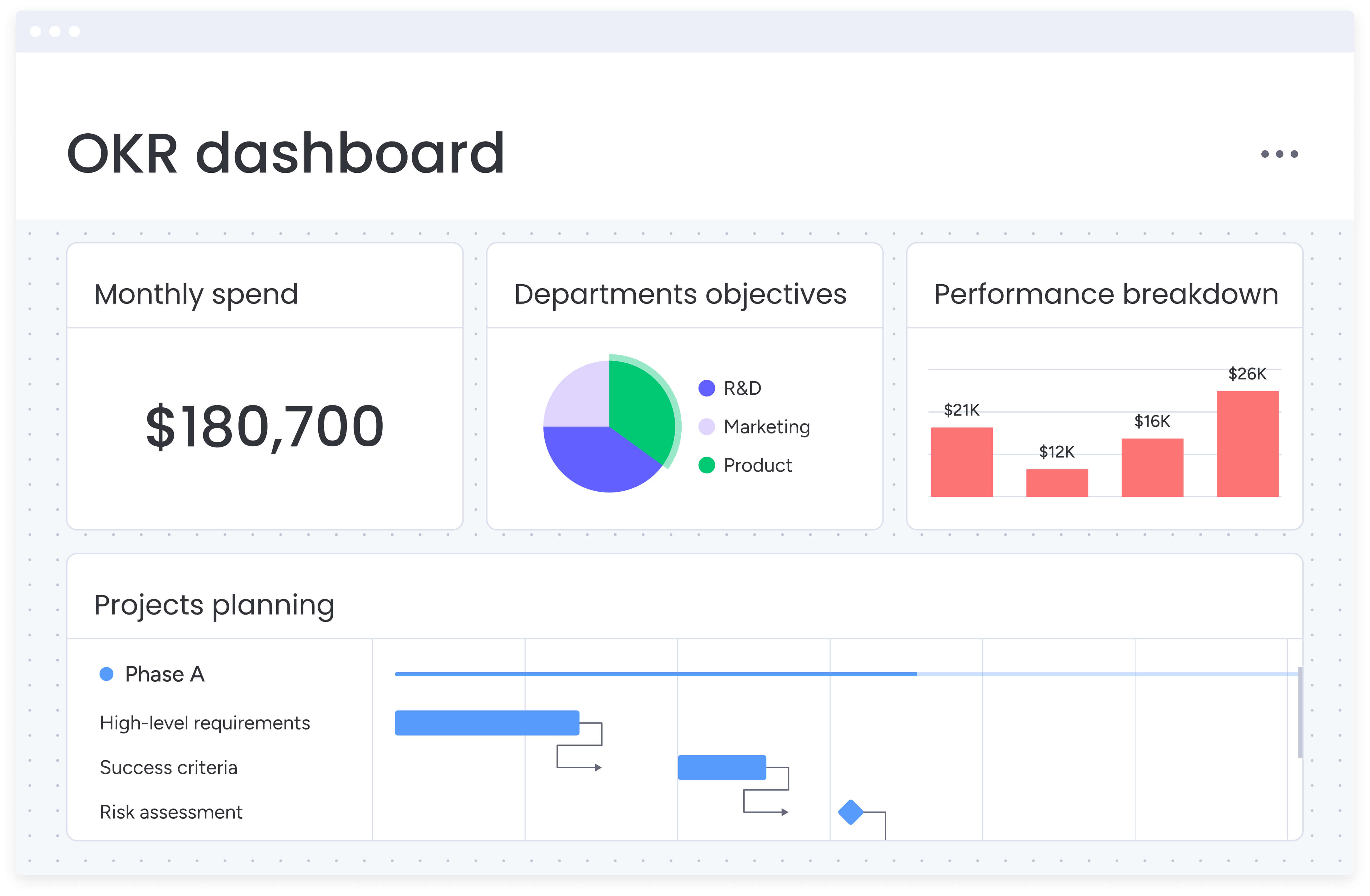
What makes goal tracking software truly effective? It comes down to how well it tackles the real problems project managers battle daily. Understanding these foundational elements helps organizations select goal management software that deliver measurable impact rather than just additional overhead.
- Connection to daily work is the foundation. Goals shouldn’t exist in isolation from the projects and tasks that achieve them. When objectives link directly to ongoing work, progress updates flow automatically as teams complete deliverables, eliminating the need for separate status meetings and manual reports.
- Real-time visibility transforms how leaders make decisions. Instead of waiting for quarterly reviews to discover misalignment, effective platforms provide instant insight into goal progress across departments. This visibility helps project managers identify bottlenecks early and reallocate resources to ensure deadlines are met.
- Automation capabilities reduce the administrative overhead that typically consumes hours each week. From calculating completion percentages to sending alerts when goals fall behind, time tracking software ensures tracking happens consistently without adding to team workload.
- Adoption-friendly design determines whether teams actually use the platform. The most sophisticated features mean nothing if people avoid the system. Intuitive interfaces that integrate naturally into existing workflows drive the consistent usage needed for accurate data and meaningful insights.
Key features project managers need in goal tracking platforms
Project managers require specific capabilities to effectively connect strategy to execution while managing multiple concurrent initiatives. These features address the unique challenges of coordinating cross-functional work and maintaining alignment at scale.
The capabilities discussed below separate basic goal tracking from comprehensive work management platforms.
Step 1: establish goals and OKRs management
Effective platforms support multiple goal frameworks simultaneously, allowing organizations to use goal setting templates such as OKRs, SMART goals, or custom methodologies based on their needs. The ability to cascade objectives from company level down to individual contributors creates clear line of sight between daily tasks and strategic priorities.
This hierarchical structure shows exactly how each project contributes to broader objectives. Project managers can track progress using various measurement types, such as percentages, currency values, or binary completion, matching the metric to what matters most for each goal.
Step 2: build customizable dashboards and reporting
Real-time dashboards aggregate data from multiple projects and teams into unified views that update automatically as work progresses. Project Managers need the ability to create role-specific dashboards — executive views for portfolio progress, team views for departmental objectives, and individual views for personal goals.
The customization extends beyond simple filtering. Effective platforms offer multiple visualization options including:
- Timeline views for deadline tracking.
- Progress charts for completion percentages.
- Workload distributions for resource planning.
- Risk indicators for proactive management.
This flexibility ensures stakeholders at every level get focused, relevant insights.
Step 3: implement automated progress tracking
Manual status updates create unnecessary friction and often result in outdated information. Automated tracking calculates goal completion based on actual work progress, updating percentages as team members complete linked tasks or hit project milestones.
This automation extends to notifications and alerts. When goals fall behind schedule or resources become constrained, the system proactively flags issues for Project Managers to address. The result is more accurate data with less effort from team members.
Step 4: enable portfolio management capabilities
Managing multiple projects simultaneously requires consolidated views that show relationships between initiatives and their collective impact on strategic goals. Portfolio management features aggregate project data to reveal resource allocation patterns, timeline conflicts, and dependency risks.
For PMs overseeing numerous concurrent projects, these capabilities provide the helicopter view needed to make informed prioritization decisions. Drill-down functionality lets them investigate specific issues without losing sight of the bigger picture.
How goal tracking connects to project management
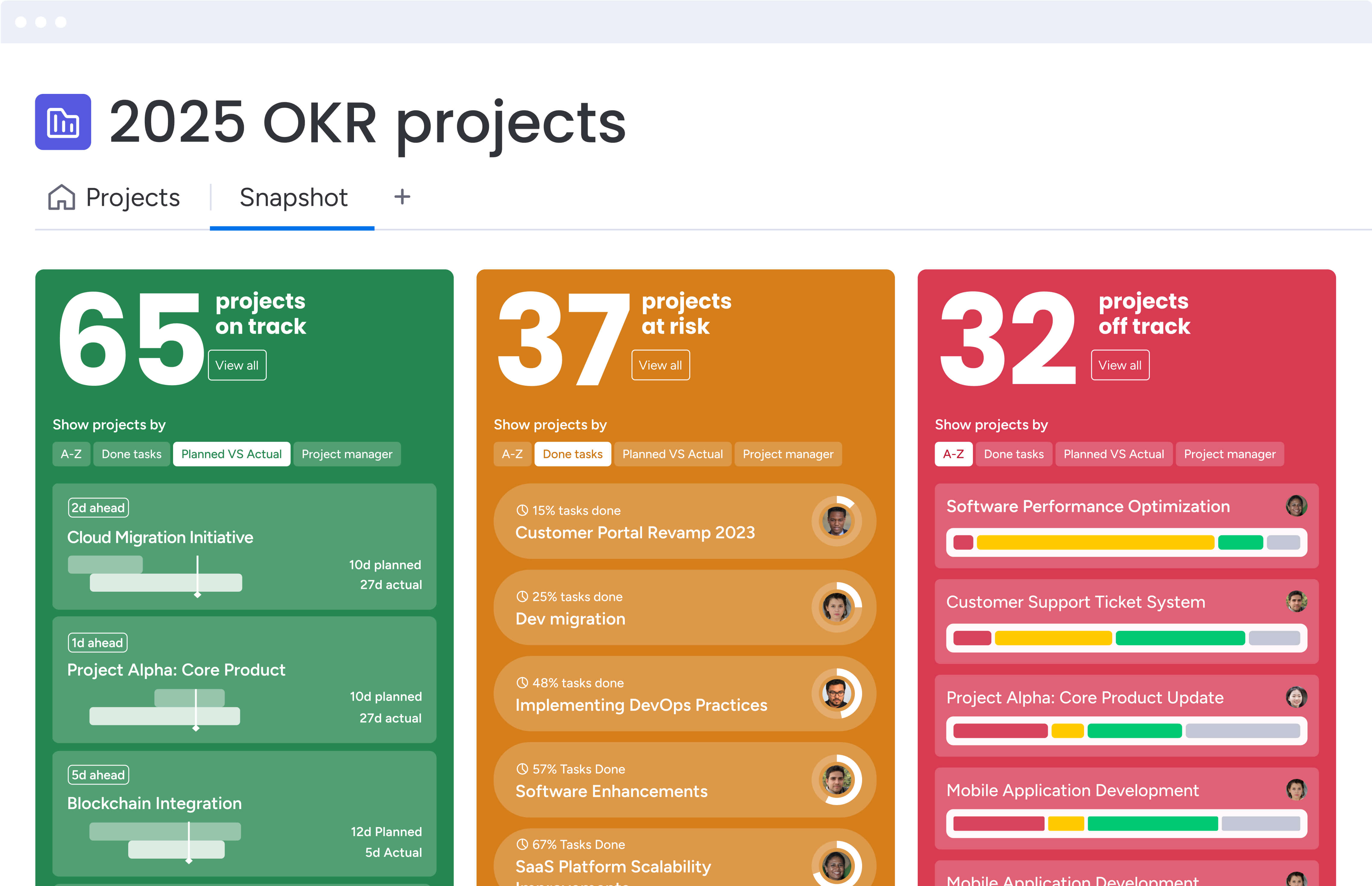
Goal tracking and project management only deliver real value when they operate as one system. Project management focuses on how work gets done, while goal tracking defines why that work matters. When the two are disconnected, teams stay busy but struggle to move strategic priorities forward.
The strongest platforms embed goal tracking directly into project workflows, creating a continuous line from strategy to execution. This connection changes how project managers plan, prioritize, and communicate progress.
Here’s how the connection works in practice:
- Direct goal-to-project linkage: every project is explicitly tied to one or more strategic objectives, making its business impact immediately clear.
- Automatic progress updates: goal status updates in real time as tasks and milestones are completed, removing the need for manual reporting.
- Impact-driven prioritization: project managers can prioritize work based on which initiatives move critical goals forward, not just what feels most urgent.
- Aligned resource decisions: staffing and timeline changes are guided by visibility into which goals are at risk, ensuring resources support the right outcomes.
- Outcome-focused stakeholder reporting: project updates show progress toward business goals, shifting conversations from activity tracking to measurable results.
What project managers need from goal tracking software
Let’s talk about what project managers actually need — because juggling multiple teams and competing priorities requires more than just pretty charts. You need standardization that doesn’t feel rigid, and visibility that cuts through the noise. These requirements reflect the complex reality of managing work that spans departments and reporting structures.
- Standardization without rigidity tops the list. PMOs need consistent processes for setting and tracking goals across departments, but teams require flexibility to adapt frameworks to their specific contexts. The right platform provides templates and governance while allowing customization at the team level.
- Cross-functional visibility enables project managers to see how different departments’ goals interconnect and impact each other. This visibility reveals:
- Dependencies between team objectives.
- Resource conflicts across departments.
- Opportunities for collaboration.
- Alignment gaps that need addressing.
- Resource alignment tools help project managers ensure the right people work on the right priorities. By connecting goals to resource planning, they can see when critical objectives lack adequate support and make adjustments before progress stalls.
- Stakeholder communication features streamline reporting and alignment. Automated reports, shareable dashboards, and clear goal hierarchies help PMs keep executives, team leads, and individual contributors aligned without constant status meetings.
Comparison of leading goal tracking platforms
Understanding how different platforms address goal tracking helps project managers make informed decisions based on their specific organizational needs and constraints.
The comparison table below reveals that while several platforms offer goal tracking, they differ significantly in how they connect objectives to execution and scale across enterprises.
| Feature | monday work management | Asana | ClickUp | Smartsheet |
|---|---|---|---|---|
| Goal frameworks supported | OKRs, SMART goals, KPIs, custom | OKRs, goals | OKRs, targets | Goals, metrics |
| Automated progress tracking | Yes, updates from linked work | Yes, task-based | Yes, task-based | Limited |
| Portfolio-level visibility | AI-powered insights across 1,000+ projects | Basic portfolio view | Folder-based views | Sheet-based views |
| Resource management | Integrated capacity planning and skills-based allocation | Basic workload view | Resource views | Resource sheets |
| Cross-project dependencies | Native dependencies with conflict resolution | Limited | Via relationships | Manual linking |
| Enterprise governance | Managed templates, advanced permissions | Team-level controls | Space-based permissions | Access controls |
| AI capabilities | Risk detection, smart assignment, predictive insights | Limited AI features | AI writing and summaries | None |
| Starting price | From $12 per user/month | From $13.49 per user/month | From $7 per user/month | From $9 per user/month |
How monday work management transforms goal tracking
monday work management addresses the fragmentation that occurs when goals exist separately from project execution. The platform brings objectives, projects, and daily tasks into one workspace where progress flows naturally from work completion to goal achievement. This unified approach eliminates the tool switching and data silos that typically undermine goal tracking efforts.
Creates a unified strategy-to-execution platform
Goals in monday work management connect directly to the projects and tasks that achieve them. This connection means project managers no longer toggle between separate goal tracking and project management systems. Strategic objectives, project timelines, and resource allocation exist in the same workspace, providing complete visibility from strategy through execution.
The platform’s Goals and OKRs feature transforms strategic objectives into measurable outcomes linked to daily work. Companies can cascade goals from organizational level down to individual tasks, creating clear accountability and alignment at every level.
Leverages AI-powered insights at scale
monday work management’s AI capabilities go beyond basic automation to provide predictive insights across portfolios. The platform’s risk detection analyzes patterns across hundreds of projects simultaneously, flagging potential goal misses before they occur.
These AI-powered portfolio reports generate executive-level summaries instantly, surfacing:
- Trends: patterns across multiple initiatives.
- Risks: early warning signals for goal misses.
- Opportunities: resource optimization possibilities.
- Bottlenecks: constraints limiting progress.
For Project Managers handling multiple initiatives, this intelligence transforms reactive management into proactive optimization.
Features enterprise-grade flexibility
The platform’s managed templates standardize goal tracking processes across departments while maintaining the flexibility teams need. These templates include entire workspace configurations — projects, automations, and dashboards — that can be updated across thousands of instances simultaneously.
Cross-project dependencies with automatic conflict resolution ensure that goals remain achievable even as project timelines shift. This capability becomes critical when managing complex initiatives where delays in one area impact multiple objectives.
Helps optimize resources for goal achievement
The Resource Directory within the platform centralizes information about team members’ skills, roles, and availability. The Capacity Manager provides live views of resource utilization across projects, helping project managers identify when critical goals lack adequate support.
This resource visibility directly supports goal achievement by ensuring the right people work on the highest-priority objectives. Smart assignment capabilities can even recommend optimal resource allocation based on skills, availability, and current workload.
Implementation best practices for goal tracking software
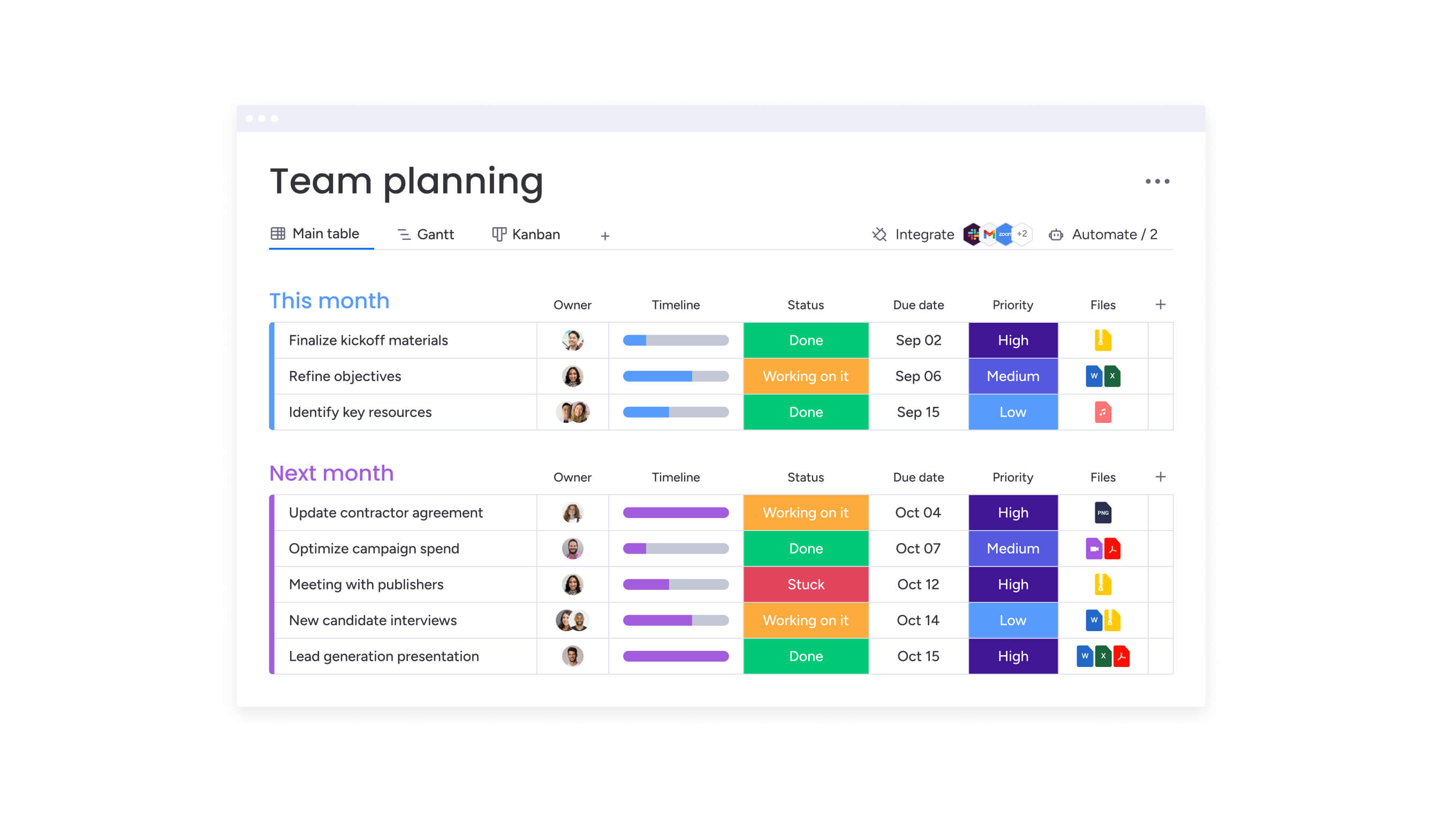
Rolling out goal tracking software? The tech setup is the easy part. The teams that crush it focus on getting people actually using the platform, aligning workflows to reality (not theory), and making constant tweaks based on feedback.
Follow these steps and you’ll avoid the classic fate of enterprise software: expensive shelf-ware nobody opens after month two.
Step 1: start with pilot teams
Begin implementation with a motivated team that can demonstrate early wins. Choose a department already struggling with goal visibility or one launching a new strategic initiative. Their success stories become powerful adoption drivers for other teams.
Document the pilot team’s workflows, challenges, and improvements. These insights inform broader rollout and help identify necessary customizations before scaling across the organization.
Step 2: define your goal hierarchy
Establish clear relationships between organizational, departmental, and individual goals before widespread adoption. This hierarchy should reflect how work actually flows through your organization, not just theoretical reporting structures.
Map existing projects to strategic objectives to reveal alignment gaps. This exercise often uncovers:
- Redundant work: multiple teams pursuing similar outcomes.
- Orphaned projects: initiatives without clear strategic value.
- Under-resourced goals: critical objectives lacking adequate support.
- Alignment opportunities: ways to improve coordination of efforts.
Step 3: build adoption through value
Focus initial training on the problems goal tracking solves rather than features. Show teams how automated progress tracking saves them hours weekly. Demonstrate how clear goal alignment helps them prioritize effectively.
Create role-specific training that addresses each group’s unique needs:
- Executives: portfolio visibility and strategic alignment.
- Project managers: resource insights and dependency management.
- Team members: priority clarity and progress transparency.
Step 4: establish review rhythms
Schedule regular goal review sessions that leverage the platform’s real-time data. These reviews should feel different from traditional status meetings — faster, more focused, and action-oriented.
Use the platform’s dashboards and reports to structure discussions around risks, resource needs, and strategic adjustments rather than basic status updates.
Measuring success with goal tracking software
Evaluating the impact of goal tracking software helps organizations optimize their investment and continuously improve their goal management processes. The right metrics reveal both immediate operational improvements and longer-term strategic benefits.
Key metrics to track include:
- Time saved on reporting: measure hours reclaimed from manual status compilation.
- Goal completion rates: track the percentage of objectives achieved on schedule.
- Alignment scores: assess how well projects map to strategic priorities.
- Adoption rates: monitor consistent platform usage across teams.
- Decision speed: measure time from issue identification to resolution.
Organizations using monday work management typically see measurable improvements within the first quarter. Automated tracking eliminates hours of manual reporting weekly. Real-time visibility accelerates decision-making. Clear alignment improves goal completion rates.
The platform’s built-in analytics make tracking these metrics straightforward. Dashboards visualize trends over time, helping organizations identify what’s working and where to adjust their approach.
Improve your goal tracking today with unified work management
Here’s the bottom line: goal tracking is most effective when it’s woven into your team’s daily workflow. You need a platform where updates happen automatically as work progresses, creating a single source of truth for progress. This integration strengthens alignment and ensures goal tracking efforts succeed.
Solutions like monday work management deliver this unified approach through AI-powered insights, automated tracking, and enterprise-grade flexibility. From setting OKRs to managing complex portfolios, the platform provides the structure and intelligence project managers need to keep teams aligned and goals on track.
Further, organizations gain the visibility to make informed decisions, the automation to reduce administrative burden, and the flexibility to adapt as priorities evolve.
The content in this article is provided for informational purposes only and, to the best of monday.com’s knowledge, the information provided in this article is accurate and up-to-date at the time of publication. That said, monday.com encourages readers to verify all information directly.
Frequently asked questions
How does goal tracking software integrate with existing project management tools?
Goal tracking software integration varies by platform, but leading solutions offer native connectors for popular project management tools. monday work management provides two-way synchronization with tools like Jira, Microsoft Project, and others, ensuring goal progress updates automatically as teams complete work in their preferred systems. This integration eliminates duplicate data entry and maintains single-source-of-truth accuracy.
Can organizations track both OKRs and SMART goals in the same platform?
Yes, flexible goal tracking platforms support multiple frameworks simultaneously. Organizations can run OKRs at the executive level while departments use SMART goals or custom methodologies, all within the same system. monday work management allows this multi-framework approach through customizable fields and views that accommodate different measurement types and reporting needs.
What's the typical implementation timeline for goal tracking software?
Most organizations achieve basic implementation within two to four weeks, with full adoption taking 30-60 days. The timeline depends on organization size, complexity, and existing process maturity. Starting with pilot teams and expanding gradually typically yields better results than organization-wide launches, as it allows for learning and adjustment before broader rollout.
How do you calculate ROI for goal tracking software?
ROI calculation should include time saved on reporting, improved goal completion rates, and reduced project delays. Organizations often see 3-5x returns within the first year through eliminated tool redundancy, reduced administrative overhead, and faster strategic alignment. Factor in both hard savings from efficiency gains and soft benefits from improved decision-making speed.
Which teams benefit most from goal tracking software?
While all teams benefit from goal visibility, PMOs, operations teams, and cross-functional departments see the greatest impact. These groups manage complex dependencies and multiple stakeholders, making centralized goal tracking essential for coordination and alignment. Teams with distributed work or matrix reporting structures also gain significant value from unified visibility.
How does AI improve goal tracking capabilities?
AI enhances goal tracking through predictive analytics, automated risk detection, and intelligent resource recommendations. Platforms like monday work management use AI to analyze patterns across projects, flag at-risk goals early, and suggest corrective actions before issues escalate. This transforms goal management from reactive reporting to proactive optimization.

 Get started