


Your strategic goals should drive your success, but let’s be honest — connecting those big ambitions to what your teams do every day is where most companies get stuck. Teams work hard, yet progress stalls when goals exist in spreadsheets while actual work happens across disconnected platforms. The result is misaligned priorities, delayed course corrections, and leadership operating without real-time visibility into what matters most.
Great goal tracking software does one thing exceptionally well: it links your big-picture objectives directly to the daily projects and workflows that make them happen. These platforms enable organizations to set measurable targets, monitor progress automatically, and maintain alignment across departments without manual reporting overhead.
Ready to see what makes the best goal tracking platforms different from your basic project management software? We’ll show you how AI turns reactive reports into proactive insights, and which capabilities actually deliver on those ambitious goals you’ve set. You’ll also discover proven implementation strategies, common pitfalls to avoid, and how to measure success as your organization scales its goal tracking approach.
Key takeaways
- Connect daily work directly to strategic goals: link every project and task to company objectives so teams see how their work drives business outcomes, not just busy work.
- Use AI to prevent goal failures before they happen: modern platforms predict risks weeks ahead by analyzing patterns, letting you fix problems instead of explaining why goals missed.
- Start with three to five clear company objectives that cascade down: avoid overwhelming complexity by limiting top-level goals and ensuring each department’s targets directly support them.
- Build goal reviews into existing meetings, not new ones: embed progress check-ins into weekly team syncs and monthly reviews to keep objectives alive without creating meeting fatigue.
- Transform reporting from manual to automatic with monday work management: teams save 3+ hours weekly on status updates while gaining real-time visibility into cross-functional progress and resource allocation.
Understanding goal tracking software for modern organizations
.jpg)
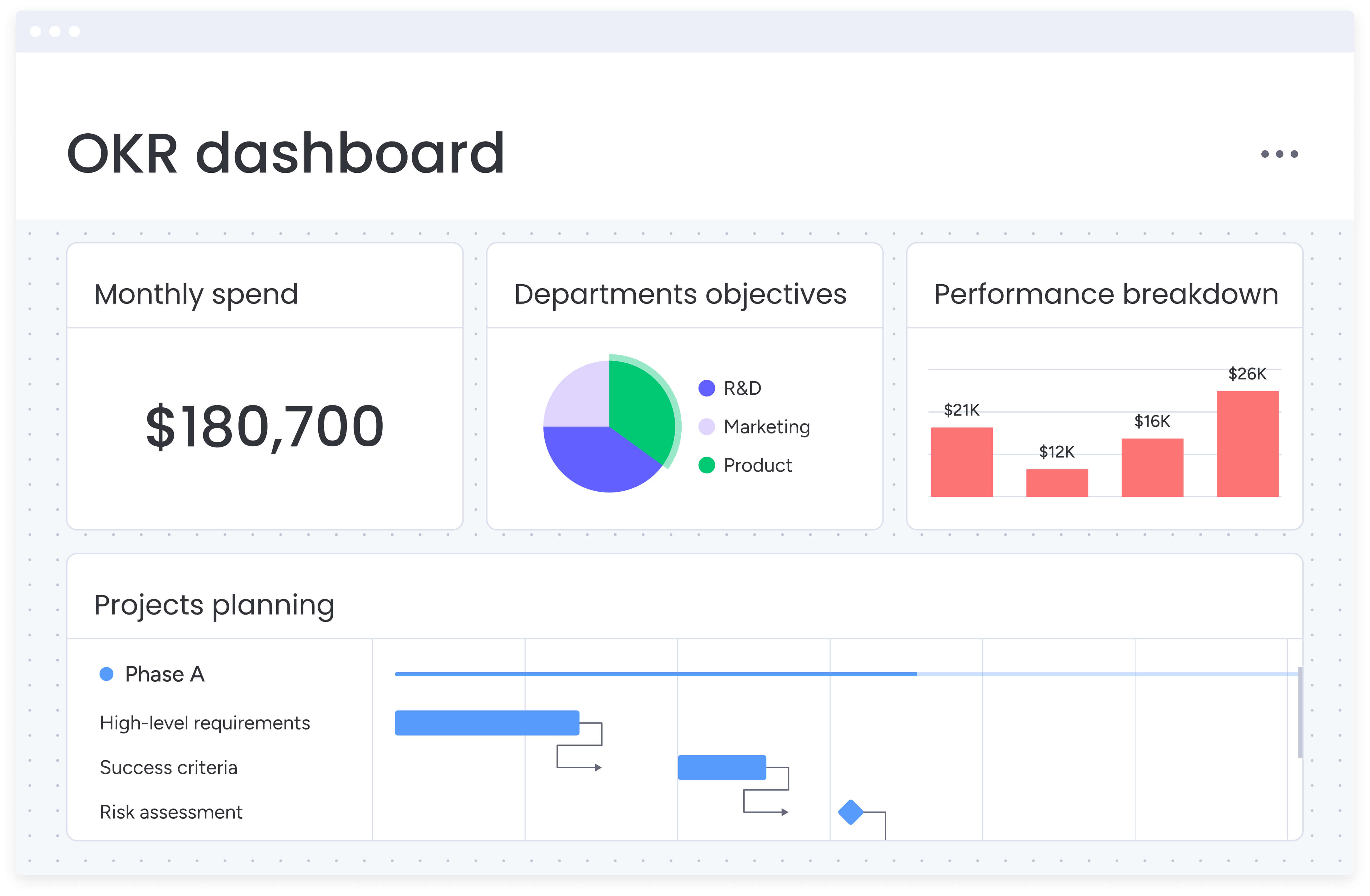
In easy-to-understand terms, goal tracking software connects what you want to achieve with how you’ll actually get it done. It’s where your big goals meet your team’s daily work — no more disconnect between strategy and execution.
This means your teams can see exactly how their work contributes to company priorities, while leadership gains real-time visibility into progress, risks, and resource allocation across departments.
If you’re running a growing team with increasingly complex workflows, you’ve likely felt the pain: your carefully crafted strategy lives in one world while your team’s actual work happens in another. When goals exist in spreadsheets separate from where work happens, alignment breaks down, progress stalls, and teams lose sight of what matters most.
Why organizations struggle without proper goal tracking
You’ve been there: weeks spent crafting the perfect strategic plan, only to watch it collect dust while teams scramble through daily work. The problem isn’t your ambition or your team’s effort — it’s that your planning and doing exist in completely separate worlds. Understanding these challenges helps you recognize why traditional approaches fail and why purpose-built software becomes essential.
Consider these common scenarios that derail goal achievement:
- Fragmented visibility: goals live in PowerPoints, projects in one tool, and progress reports in email threads, making it impossible to see the full picture.
- Manual reporting overhead: teams spend hours compiling status updates from multiple sources instead of driving actual progress.
- Misaligned priorities: without clear connections between daily work and strategic objectives, teams pursue conflicting initiatives.
- Delayed course correction: by the time leadership discovers a goal is off track, it’s often too late to recover.
And here’s the kicker: these problems only get worse as you grow. Your scrappy 50-person approach falls apart when you hit 500 employees, and completely implodes beyond that. That’s where purpose-built goal tracking software becomes essential for maintaining alignment and momentum.
Core capabilities that drive goal achievement
Effective goal tracking is about more than just setting targets and checking boxes. Effective goal tracking platforms provide integrated capabilities that transform how organizations plan, execute, and measure success.
These foundational features ensure your strategic objectives translate into measurable outcomes.
Strategic goal frameworks
First, your goal tracking system needs to flex with your approach — not force you into a one-size-fits-all box. Organizations need flexibility to implement OKRs (Objectives and Key Results), KPIs (Key Performance Indicators), SMART goals, or custom frameworks that fit their culture and industry, and a goal setting template can unify these approaches.
Leading platforms enable you to:
- Define cascading objectives: create parent-child relationships between company, department, and individual goals.
- Set measurable key results: track progress using percentages, numbers, currency, or custom metrics.
- Establish clear timelines: define quarterly, annual, or custom goal cycles with automated rollover.
Real-time progress visibility
In today’s market, relying on quarterly reviews means you’re often discovering problems long after they’ve derailed your objectives. You need to spot risks and course-correct in real time, not discover problems after they’ve derailed your quarter.
Modern dashboards deliver this through:
- Live progress tracking: automatic updates as teams complete work linked to goals.
- Risk indicators: visual flags when goals fall behind or resources are constrained.
- Trend analysis: historical data that reveals patterns and predicts future performance.
Work-to-goal alignment
The most critical capability is connecting strategic objectives to the projects and workflows being executed. This eliminates the artificial separation between “planning” and “doing” that causes most goal initiatives to fail.
Alignment features include:
- Direct task linking: connect projects, tasks, and milestones to their parent goals.
- Automatic roll-ups: progress on individual work items automatically updates goal completion.
- Dependency mapping: visualize how different initiatives support or block goal achievement.
How AI transforms goal management from reactive to proactive
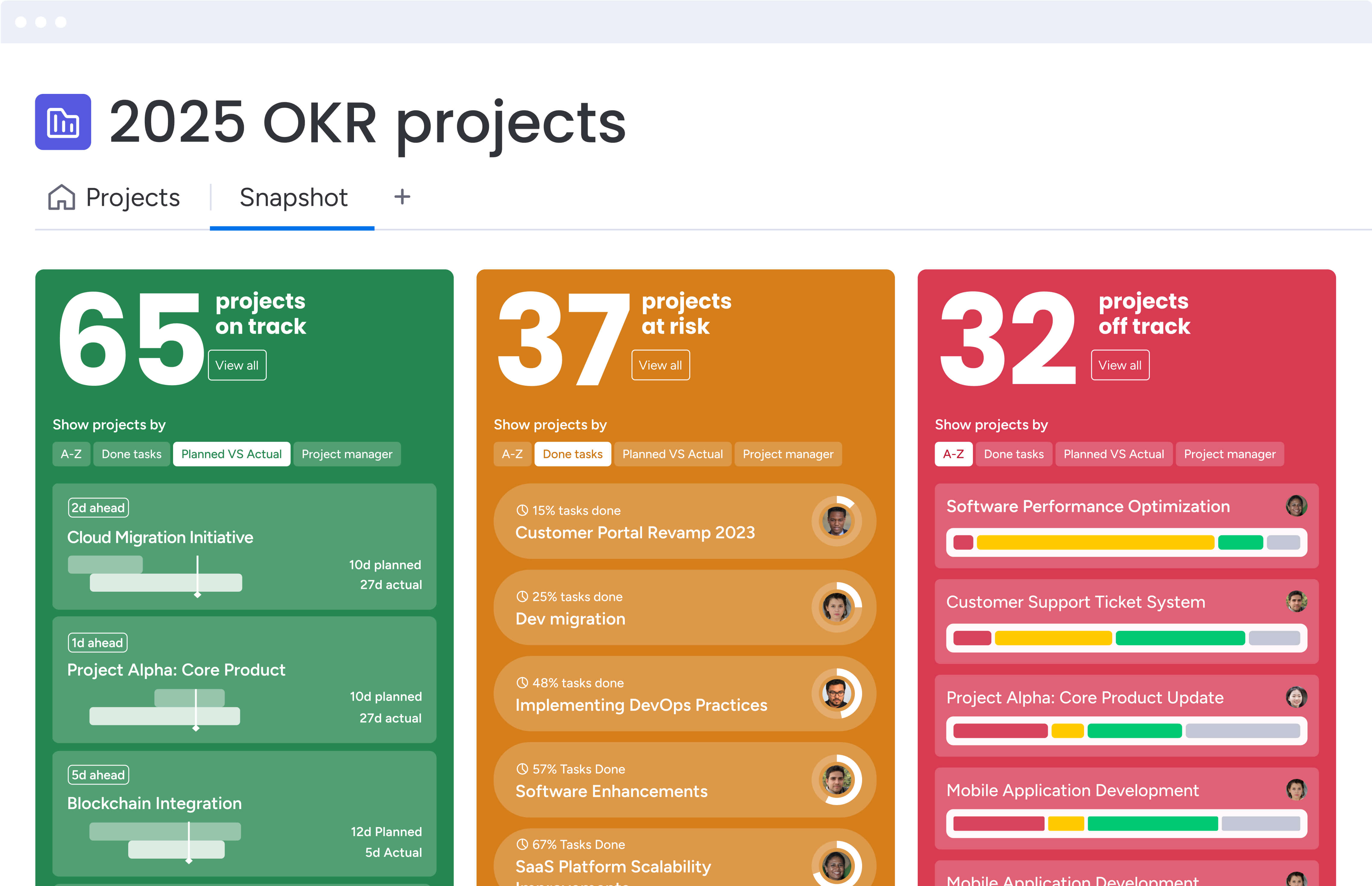
Artificial intelligence has shifted goal management software from data collection to intelligent action. Instead of simply reporting what happened, AI-powered platforms predict what will happen and recommend what to do next. This transformation enables organizations to prevent problems rather than react to them.
Intelligent risk detection
AI continuously analyzes patterns across your portfolio to identify threats before they impact goals. By examining factors like task delays, resource constraints, and historical performance, these systems flag at-risk objectives weeks before traditional reporting would catch them.
For example, if a product launch goal depends on multiple departments completing interdependent work items, AI can detect when the marketing campaign’s timeline conflicts with the engineering release schedule — alerting leaders to realign before delays cascade.
Automated insights and recommendations
Rather than forcing teams to dig through data for answers, AI surfaces actionable insights automatically. This includes:
- Resource reallocation suggestions: when AI detects team overload threatening a priority goal.
- Timeline adjustments: recommendations for shifting deadlines based on current velocity.
- Next-step guidance: specific actions to get stalled goals back on track.
Predictive forecasting
By analyzing historical patterns and current trends, AI helps organizations anticipate future performance. This enables proactive planning rather than reactive scrambling when goals veer off course.
Building goal tracking into your organizational workflow
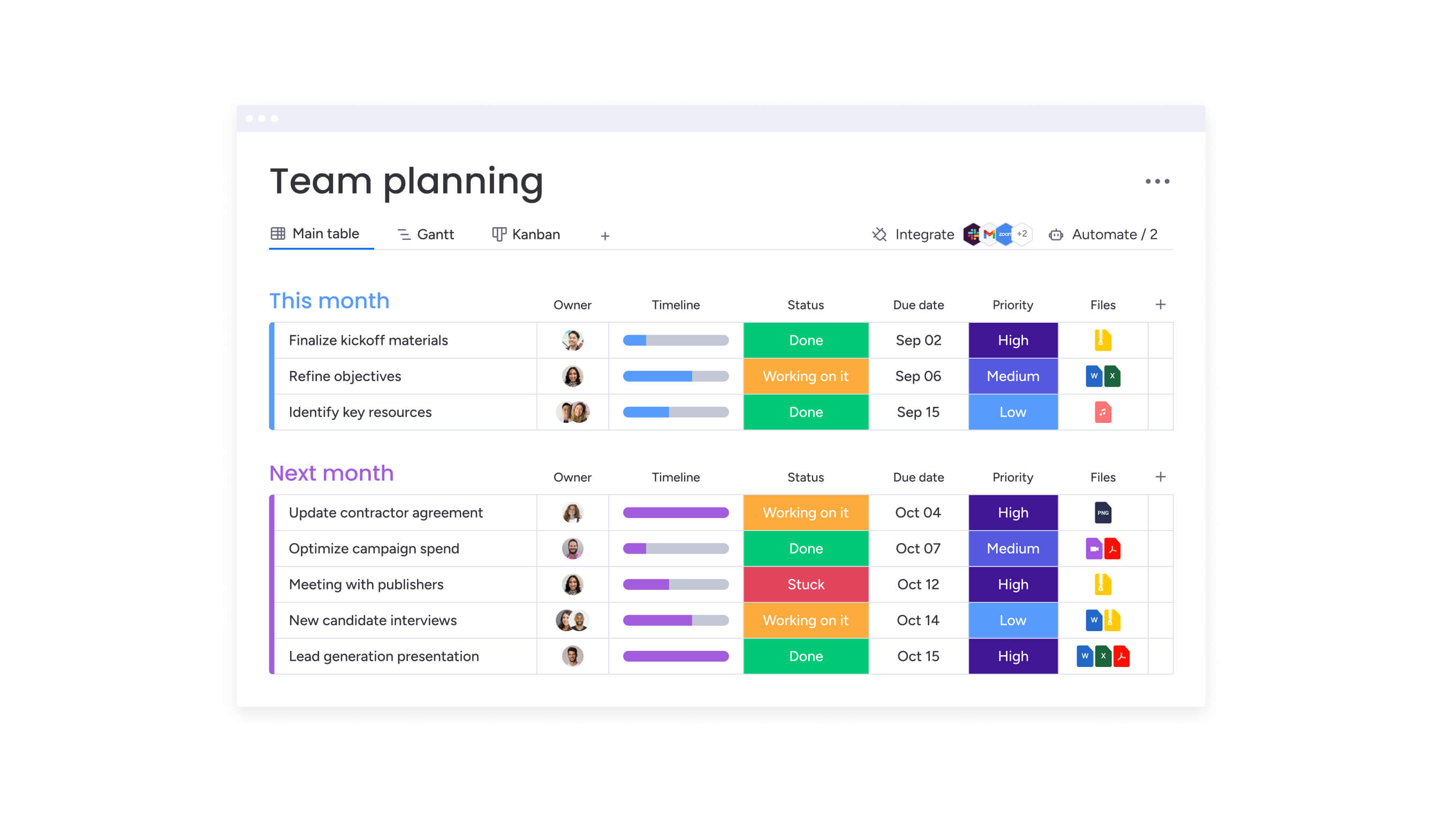
Picking the right software is just step one. The real magic happens when you weave it into your team’s daily workflow and build habits that stick — not just another tool that gets ignored after the initial excitement. This systematic approach ensures your investment delivers lasting value.
Step 1: define your goal hierarchy
Start by establishing how objectives cascade through your organization. Most successful implementations follow this structure:
- Company-level objectives: three to five strategic priorities for the year.
- Department goals: how each team contributes to company objectives.
- Team initiatives: specific projects and outcomes that ladder up.
- Individual contributions: clear ownership and accountability at every level.
Step 2: connect goals to existing work
The biggest mistake organizations make is treating goal tracking as a separate activity from daily execution. Instead, link your current projects and workflows directly to strategic objectives. This creates automatic progress tracking without duplicate data entry.
Step 3: establish review rhythms
Regular check-ins keep goals alive throughout the quarter, not just during planning sessions. Build these touchpoints into your operating rhythm:
- Weekly team syncs: quick progress updates and blocker identification.
- Monthly department reviews: cross-functional alignment and resource adjustments.
- Quarterly business reviews: strategic assessment and goal refinement.
Step 4: scale gradually across teams
Start with a pilot team or department before rolling out organization-wide. This allows you to refine processes, build internal champions, and demonstrate value before asking everyone to change how they work.
Essential features for enterprise goal tracking
As organizations grow, their goal tracking needs become more sophisticated. Enterprise teams require capabilities that go beyond basic progress monitoring to handle complexity at scale. These advanced features ensure your system grows with your organization’s evolving needs.
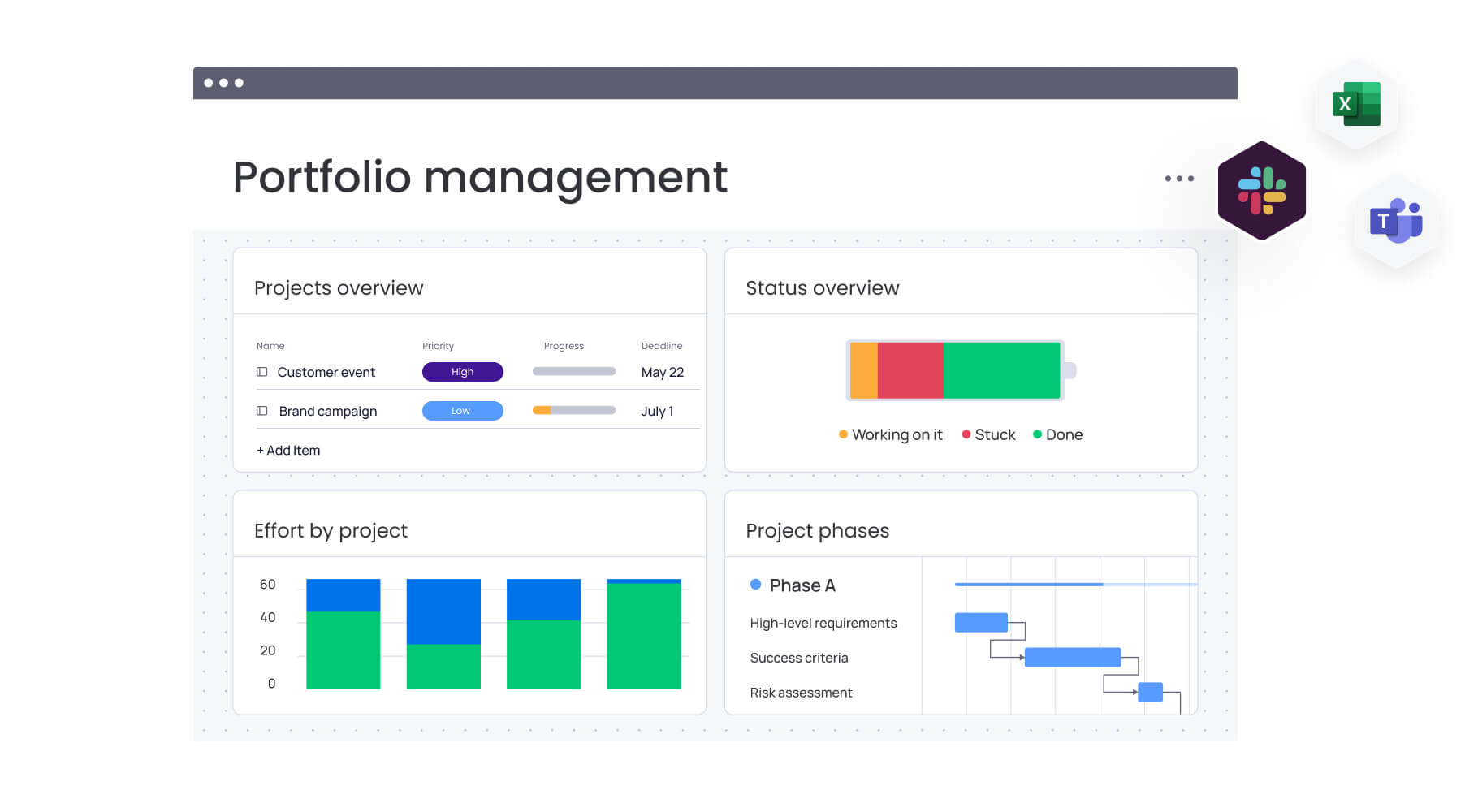
Portfolio-level visibility
Leadership needs to see how hundreds of initiatives contribute to strategic objectives without drowning in details. This requires:
- Multi-level dashboards: executive summaries that drill down to project specifics.
- Cross-functional views: how different departments’ goals interconnect and impact each other.
- Resource optimization: understanding where talent and budget are allocated versus where they’re needed most.
monday work management addresses this through AI-powered portfolio insights that scan across projects to surface risks, trends, and opportunities. Leaders gain instant visibility into what matters most without manual report compilation.
Governance and standardization
Large organizations need consistency without rigidity. This balance comes through:
- Managed templates: standardized goal-setting processes that scale across teams.
- Permission controls: who can view, edit, and approve different goal levels.
- Audit trails: complete history of changes for compliance and learning.
The platform’s managed templates ensure every team follows proven goal-setting practices while maintaining flexibility to adapt to their specific needs.
Integration ecosystem
Goal tracking can’t exist in isolation from where work happens. Enterprise platforms must connect with your existing tech stack:
- Project management tools: sync tasks and timelines with goal progress.
- Communication platforms: share updates and collaborate without context switching.
- Business intelligence systems: feed goal data into broader analytics and reporting.
- HR platforms: align individual performance with goal achievement.
With 200+ native integrations, platforms like monday work management ensure goal tracking becomes part of your workflow, not another system to manage.
Measuring success: KPIs for goal tracking effectiveness
Implementing goal tracking software is an investment that should deliver measurable returns. Track these indicators to ensure your system drives real value. These metrics help you optimize your approach and demonstrate ROI to stakeholders.
Adoption metrics
- Active usage rate: percentage of team members regularly updating and viewing goals.
- Goal coverage: proportion of work explicitly linked to strategic objectives.
- Update frequency: how often progress is refreshed versus becoming stale.
Performance indicators
- Goal completion rate: percentage of objectives achieved on time.
- Cycle time reduction: how much faster you’re achieving similar goals over time.
- Resource efficiency: output achieved relative to investment in people and tools.
Business impact
- Strategic alignment score: how well execution matches stated priorities.
- Decision speed: time from identifying issues to implementing corrections.
- Cross-functional collaboration: reduction in silos and duplicated efforts.
Organizations using monday work management report saving 3+ hours per person weekly on manual reporting while achieving 40% improvement in cross-team collaboration. These efficiency gains compound as teams spend less time on status updates and more on value-driving work.
Strategies for successful goal tracking implementation
Even with powerful software, goal tracking initiatives can stumble. Understanding these challenges helps you navigate around them successfully. Learning from common mistakes ensures your implementation delivers the intended results.
The “set and forget” trap
Creating goals without regular engagement guarantees failure. Goals need continuous attention to remain relevant and motivating.
Solution: build goal reviews into existing meetings rather than creating new ones. Use automated reminders and progress alerts to keep objectives visible without manual effort.
Overwhelming complexity
Some organizations create elaborate goal hierarchies that become impossible to manage. When everything is a priority, nothing is.
Solution: limit top-level objectives to three to five clear outcomes. Each level below should have similarly focused targets that directly support higher goals.
Disconnected systems
When goal tracking exists separately from daily work tools, it becomes another administrative burden rather than a management aid.
Solution: choose platforms that integrate deeply with your existing workflow. monday work management’s work-to-goal linking ensures tracking happens automatically as teams complete their tasks.
Lack of accountability
Without clear ownership and consequences, goals become wishes rather than commitments.
Solution: assign specific owners to every goal and key result. Make progress visible to all stakeholders and tie achievement to recognition and rewards.
Turn goal tracking into a competitive advantage with monday work management
What separates teams that crush their goals from those that don’t? It’s rarely about ambition or talent. The secret is having a system that turns big plans into daily progress. When you connect strategy to daily work through intelligent goal tracking, you create a sustainable advantage that compounds over time.
Sophisticated and intuitive solutions such as monday work management bring together the capabilities modern organizations need: AI-powered insights that prevent problems before they occur, seamless integration with existing workflows, and the flexibility to support your unique goal frameworks.
From setting ambitious OKRs to tracking detailed KPIs, the platform ensures every team member understands their role in driving success.
The path forward is clear: organizations that unify goal tracking with work execution will outpace those maintaining artificial separation between planning and doing. By implementing the strategies and systems outlined here, you position your teams to not just set goals, but consistently achieve them.
The content in this article is provided for informational purposes only and, to the best of monday.com’s knowledge, the information provided in this article is accurate and up-to-date at the time of publication. That said, monday.com encourages readers to verify all information directly.
Frequently asked questions
What’s the difference between goal tracking software and project management tools?
Goal tracking software focuses on strategic objectives and outcomes, showing how work contributes to business goals. Project management solutions focus on execution, timelines, and task delivery. The most effective platforms combine both, connecting daily work directly to strategic goals so progress updates automatically as teams execute.
Do organizations need both goal tracking and project management software?
Not necessarily. Modern platforms like monday work management combine goal tracking and project management in one system, allowing teams to set objectives, manage execution, and track progress without switching tools or duplicating updates.
How long does it take to implement goal tracking software across an organization?
Most mid-size organizations see initial value within two to four weeks, with full adoption taking two to three months. The timeline depends on your current processes, team size, and how gradually you roll out the system. Starting with a pilot team accelerates learning and builds momentum for broader deployment.
Can goal tracking software support different goal methodologies simultaneously?
Yes, modern platforms support multiple frameworks within the same system. You might use OKRs for strategic initiatives, KPIs for operational metrics, and SMART goals for individual development — all tracked and reported through unified dashboards.
What integrations are most important for goal tracking software?
Priority integrations include your primary project management platform, communication tools (Slack, Teams), data visualization systems, and HR platforms for performance management. The specific mix depends on your existing tech stack and workflow patterns.
How do you ensure teams actually use goal tracking software consistently?
Successful adoption requires embedding the tool into existing workflows rather than adding new processes. Choose software with intuitive interfaces, automate data entry where possible, and demonstrate clear value through time savings and improved visibility. Regular training and celebrating early wins also drives engagement.
What's the typical ROI for implementing goal tracking software?
Organizations typically see returns through reduced time on reporting (three to five hours per person weekly), improved project completion rates (20-30% increase), and faster decision-making from real-time visibility. The specific ROI depends on your current inefficiencies and how well you implement the system.

 Get started