


Marketing teams managing complex campaigns across multiple channels face a persistent challenge: creative work, planning, and coordination scattered across disconnected tools create blind spots that derail execution. Unifying these elements in one system provides complete oversight, helping teams meet deadlines, allocate resources effectively, and demonstrate ROI without manually consolidating data from spreadsheets, emails, and disparate platforms.
Effective Gantt chart software resolves these challenges by delivering a unified, real-time view of campaign progress, team assignments, and cross-functional dependencies. For marketing leaders overseeing 50-100+ team members across content, creative, events, and operations, Gantt charts transcend simple schedule visualization. They connect strategic initiatives to measurable outcomes while maintaining the agility to adapt when priorities shift or new opportunities emerge.
Take a few minutes and check out this guide as we explore what truly matters in Gantt chart software for marketing teams, the must-have features for coordinating complex campaigns, and how the right platform transforms scattered efforts into strategic execution that delivers results.
Key takeaways
Marketing teams managing complex campaigns across 50-100+ team members face a critical challenge: disconnected execution creates duplicative work, missed deadlines, and unclear ROI. The right Gantt chart software transforms this chaos into coordinated execution by providing real-time visibility into campaign timelines, resource allocation, and cross-team dependencies.
For heads of marketing in media organizations, these are the key things to takeaway from this guide:
- Replace scattered campaign management with unified visibility: centralize all marketing initiatives in one workspace so teams stop duplicating work and executives get real-time ROI insights without chasing updates.
- Automate approval workflows to eliminate creative bottlenecks: set up automated routing for creative briefs and asset approvals so nothing gets stuck in email chains and campaigns launch on schedule.
- Prevent team burnout with resource planning: track workload across 50-100+ team members using monday work management’s automated alerts when capacity limits approach, enabling proactive reallocation before deadlines slip.
- Connect your marketing tech stack for seamless data flow: integrate CRM, creative tools, and analytics platforms so campaign performance and budget data sync automatically without manual reporting.
- Implement standardized campaign templates for consistent execution: build reusable workflows for product launches, events, and content series so teams stop reinventing processes and maintain quality at scale.
What makes heads of marketing choose monday work management for campaign execution?
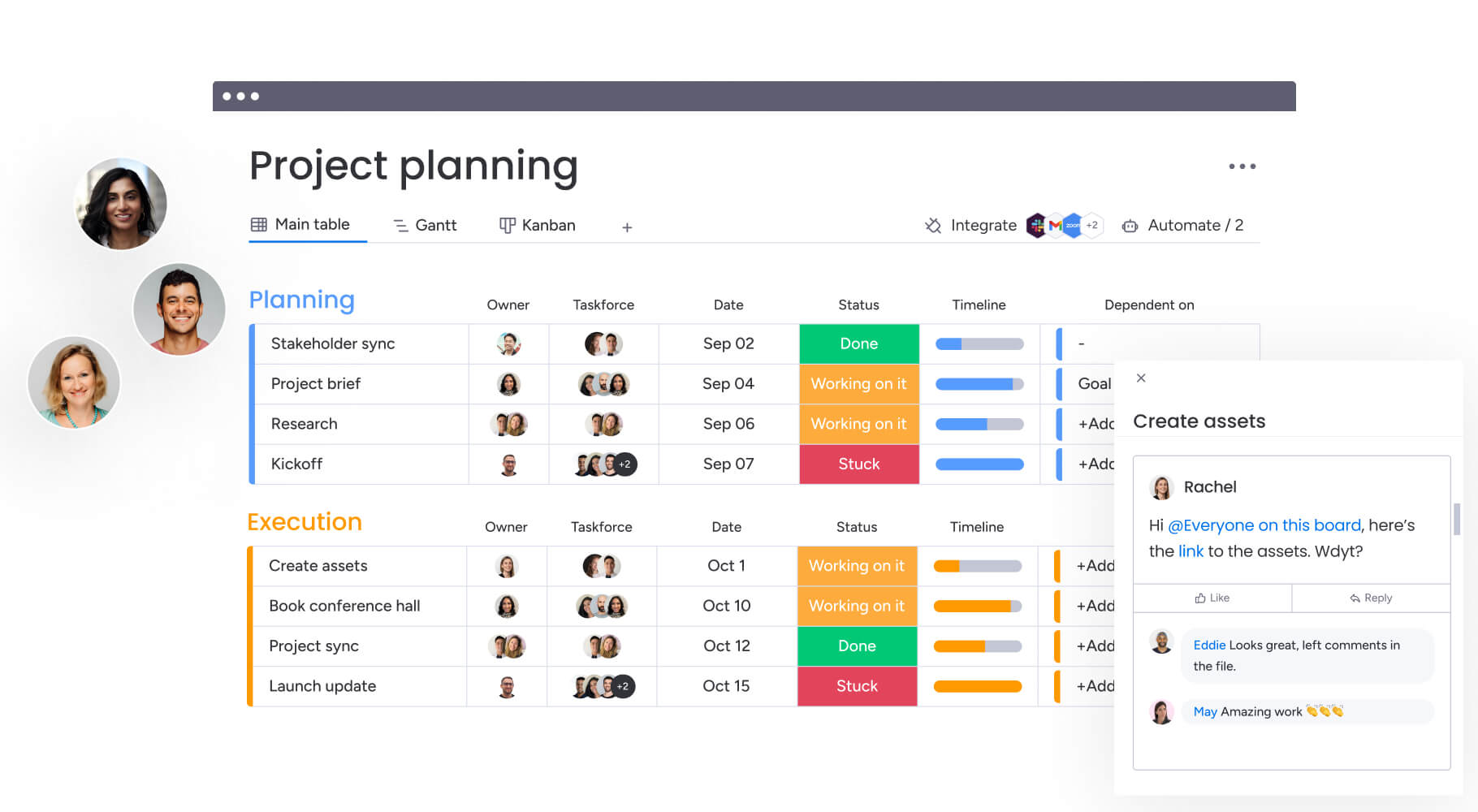
Marketing leaders managing 50-100+ team members across content, creative, acquisition, events, and operations face a fundamental challenge: siloed teams scatter impact and create duplicative processes that prevent real-time tracking of progress, capacity, and performance. When campaign planning happens in spreadsheets, creative production in another platform, and event coordination through email chains, you lose the visibility needed to make strategic decisions and demonstrate ROI: this is especially true if you’re using free Gantt chart apps that often lack enterprise-level capabilities.
Disconnected marketing execution transforms into a unified command center where strategy meets measurable impact. With intelligent platforms like monday work management, you can connect campaign planning, creative production, event coordination, and cross-functional collaboration in one workspace, ensuring every marketing initiative aligns with company goals and delivers on time with well-defined priorities.
Marketing leaders choose monday work management because it directly supports their mandate to drive multi-channel marketing strategies while ensuring effective budget use and team resource allocation. The platform’s standardization capabilities, automation templates, and capacity planning tools enable strategic resource allocation across large teams.
monday work management top features for campaign execution
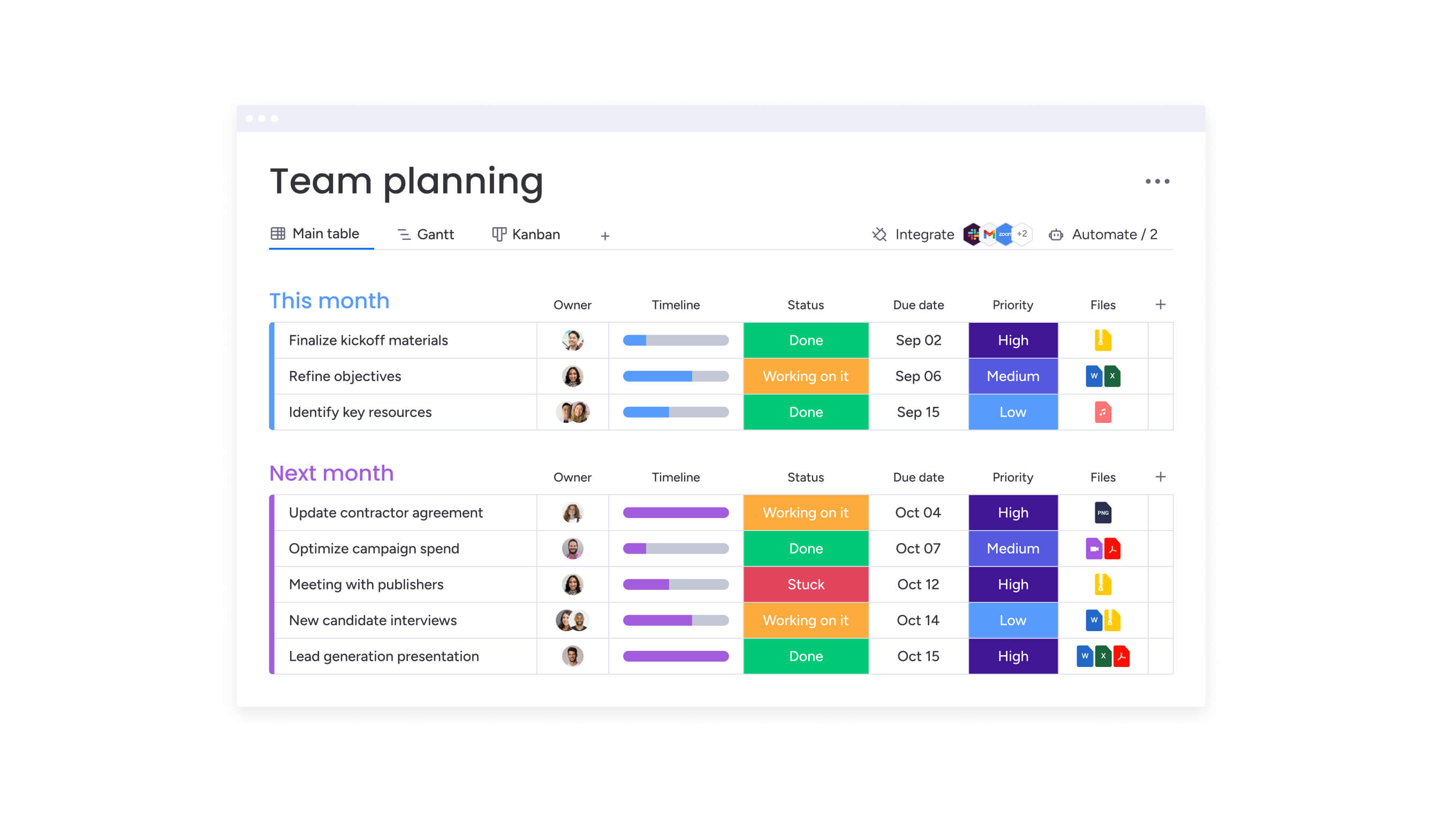
The following features demonstrate how monday work management addresses the specific challenges marketing leaders face when coordinating complex campaigns across large teams. Each capability directly supports the visibility, automation, and strategic alignment that transform scattered execution into measurable business impact.
Campaign management dashboards
Marketing leaders need instant visibility into campaign performance, budget tracking, and team workload without switching between tools or manually compiling reports. Customizable dashboards from monday work management consolidate all this data into a single real-time view, enabling you to monitor campaign ROI, CAC, MQL-to-customer rates, content volume, and budget adherence across all channels.
For heads of marketing managing large-scale teams across tech, media, retail, and finance, these dashboards solve the critical visibility gap that prevents real-time decision-making. Instead of chasing updates across siloed teams, you gain instant access to the metrics that demonstrate marketing impact and enable strategic resource reallocation toward high-performing campaigns.
The dashboard’s ability to drill down from portfolio-level metrics to individual campaign details ensures you can both report strategic impact to the C-suite and identify operational bottlenecks before they affect delivery timelines. This unified reporting approach enables teams across client portfolios to prioritize initiatives and accelerate decision-making by eliminating the need to consolidate data from multiple sources.
Resource management and workload planning
Resource management capabilities built into the platform deliver real-time visibility into team bandwidth, skills, and capacity across multiple projects simultaneously. Marketing leaders gain the ability to:
- Plan and assign resources at the project level: allocate team members based on skills, availability, and workload to ensure the right people work on the right campaigns.
- Balance workloads to prevent burnout: visualize capacity across your entire team and redistribute work before anyone becomes overloaded.
- Make confident allocation decisions without guesswork: use data-driven insights to strategically deploy talent across content, creative, acquisition, events, and operations teams.
This directly addresses the poor resource utilization that creates burnout, misalignment, and missed deadlines across large marketing teams. With clear insight into who’s working on what and where capacity exists, you can ensure high-priority campaigns receive the resources they needwhile maintaining sustainable workloads.
The workload planner transforms resource management from reactive firefighting into proactive capacity planning aligned with strategic priorities. Marketing teams budget time and effort more scientifically, leading to increased operational efficiency through data-driven resource allocation that prevents overcommitment and keeps delivery timelines on track.
Gantt charts and timeline views
Gantt chart online solution provided by monday work management visualizes campaign timelines, dependencies, and milestones within a set schedule, making it simple to understand project status and coordinate cross-functional work. Marketing leaders can identify delays that prevent on-time delivery, adjust timelines with drag-and-drop functionality, and overlay critical paths to maintain realistic deadlines across complex multi-channel campaigns.
When you’re juggling event launches, campaign rollouts, and creative production with teams spread across locations, seeing everything on a timeline turns vague plans into a concrete roadmap everyone can follow. The ability to see how campaigns overlap, where dependencies exist, and which work items are behind schedule enables proactive management that keeps time-to-launch metrics on target.
The platform enables marketing leaders to distinguish between campaigns tracking toward successful completion and those requiring intervention based on submission dates or current workflow stage. This visibility transforms reactive management into proactive risk mitigation, ensuring teams address potential delays before they impact delivery timelines.
Marketing automation and workflow templates
The connected platform offers up to 250,000 automation and integration actions monthly on Enterprise plans, with ready-made templates for common marketing scenarios like creative approvals, campaign launches, and lead handoffs. Marketing leaders can standardize workflows across teams, eliminate manual status updates, and ensure consistent processes without requiring technical expertise.
This puts an end to teams starting from scratch with every campaign or creating their own makeshift processes that nobody else follows. By implementing automated approval workflows for creative assets, triggered notifications for campaign milestones, and templated project structures for recurring campaign types, marketing operations become predictable and scalable.
Marketing teams using monday work management report significant increases in project capacity within months of implementation, with some organizations saving 40,000+ manual actions monthly through automation workflows that eliminate repetitive tasks and streamline campaign execution.
Creative production and approval workflows
Creative intake, briefs, approvals, and asset management are streamlined through customizable forms and automated routing with monday work management. Marketing leaders can track creative requests from submission through final approval, maintain version control, and ensure all stakeholders have visibility into production status without email chains or scattered feedback.
For heads of marketing overseeing creative teams producing content for multi-channel campaigns, this eliminates the visibility gap that causes missed deadlines and duplicative work. Automated notifications ensure the right people review assets at the right time, while centralized feedback keeps all context with the work itself.
Genpact’s marketing team formalized their campaign brief submission and creative brief processes using monday.com forms, providing campaign managers with visibility into request status and turnaround time. Previously, campaign managers lacked insight into where their requests stood in the queue, creating a visibility gap that hindered efficient workflow management and resource planning across the marketing organization.
Integration with marketing technology stack
With 200+ native integrations including Adobe Creative Suite, Google Workspace, HubSpot, Slack, and major social platforms, monday work management connects your existing marketing tools into a unified ecosystem. Bidirectional sync ensures marketing data stays current across all connected platforms without manual data entry or switching between apps.
This integration capability is critical for marketing leaders who need to demonstrate how campaigns connect to business outcomes tracked in CRM systems, creative assets managed in Adobe tools, and communications happening in Slack or Microsoft Teams. Rather than forcing teams to abandon familiar tools, monday work management becomes the central orchestration layer that connects your marketing stack, whether you require a Gantt chart for Mac or another operating system.
The platform’s open API further enables custom integrations for enterprise marketing stacks, ensuring even proprietary or industry-specific tools can connect to your marketing command center.
AI-powered project planning and risk identification
AI capabilities instantly generate detailed project plans with suggested tasks and phases based on campaign objectives, analyze incoming requests to assign labels and streamline workflows, and proactively identify risks across marketing portfolios before they impact deadlines.
For marketing leaders managing hundreds of concurrent campaigns and initiatives, AI transforms planning from a time-intensive manual process into an intelligent system that learns from past performance. The AI can predict potential bottlenecks, suggest optimal resource allocation, and flag campaigns at risk of missing deadlines.
This AI-powered visibility is essential for demonstrating the team productivity and resource utilization metrics that executive leadership expects. Rather than discovering problems after they’ve affected delivery, marketing leaders can address risks early and maintain the on-time delivery rates that build stakeholder confidence.
Goals and OKR tracking
The platform enables marketing leaders to set and track company-level goals and objectives, ensuring that campaigns and initiatives contribute to strategic business outcomes. Marketing teams can verify where each project fits into company OKRs, creating direct alignment between daily execution and high-level strategy.
This capability addresses the fundamental challenge of aligning marketing strategy with company goals while managing large teams across multiple functions. Instead of hoping that busy teams are working on the right priorities, heads of marketing gain certainty that every campaign, event, and content initiative drives measurable progress toward strategic objectives.
Try monday work managementHow a head of marketing in media benefits from monday work management
The transformation from scattered execution to unified operations delivers measurable benefits across multiple dimensions of marketing performance. These outcomes demonstrate how centralized campaign management directly impacts both operational efficiency and strategic business results.
- Time savings: automation of routine tasks, approval workflows, and status updates eliminates thousands of manual actions monthly. Marketing teams report saving 7,000 hours per account monthly, freeing senior talent to focus on strategy and optimization rather than administrative coordination.
- Cost efficiency: real-time budget tracking and spend visibility prevent overspending and enable rapid reallocation of funds to high-performing campaigns. Organizations report 6x ROI and $118K saved per month through improved budget adherence and resource optimization.
- Compliance and accuracy: standardized workflows and automated approval processes ensure creative assets, campaign messaging, and brand guidelines are consistently followed across distributed teams. Centralized documentation and audit trails support regulatory compliance in finance and retail sectors.
- Productivity improvements: teams achieve 40% improvement in cross-team collaboration and 2x faster delivery through centralized communication, clear ownership, and elimination of duplicative processes. Marketing departments report 25% reduction in project management timelines and 66% increase in campaign planning and execution capacity.
- Output quality improvements: structured creative briefs, approval workflows, and feedback consolidation result in 3x creative output and 60K ads produced with consistent quality. Teams report 49% increase in deliverables and 142% increase in campaigns per week while maintaining stakeholder satisfaction.
- Visibility and tracking improvements: real-time dashboards replace manual reporting, providing instant visibility into campaign progress, team capacity, and performance metrics. Marketing leaders report 100% removal of spreadsheets, 25% decrease in email exchanges, and ability to track hundreds of campaigns in one platform across 130+ people and 40 brands.
How to manage marketing campaigns with monday work management
This step-by-step implementation guide shows how marketing leaders can transform scattered campaign execution into unified operations. Each step builds on the previous one, creating a comprehensive system that connects strategy to measurable business outcomes.
Step 1: centralize campaign planning in a unified workspace
Create a master marketing calendar that houses all campaigns, events, and content initiatives across your organization. Use the calendar view to visualize how campaigns overlap, identify resource conflicts, and ensure strategic alignment before execution begins.
This foundation eliminates the scattered planning that causes missed dependencies and duplicated effort. Start by migrating all existing campaigns into a single workspace, then establish this as the single source of truth for all marketing planning activities.
Step 2: standardize workflows with campaign templates
Build reusable templates for recurring campaign types that include pre-configured tasks, approval stages, and automated notifications. Focus on your most common campaign formats first:
- Product launches: include market research, creative development, channel coordination, and launch execution phases.
- Events: cover planning, promotion, execution, and follow-up workflows.
- Content series: establish ideation, creation, approval, and distribution processes.
This eliminates the need for teams to reinvent processes and ensures consistent execution across all marketing initiatives. Templates become your operational backbone, encoding best practices while allowing flexibility for unique campaign needs.
Step 3: implement automated approval workflows for creative assets
Set up forms for creative requests that automatically route briefs to the appropriate teams and trigger approval workflows. Configure automations that notify stakeholders when assets are ready for review and move items through production stages based on approval status.
This systematic approach prevents bottlenecks and ensures nothing gets stuck in email chains. Create specific workflows for different asset types (social media, print, video, web) to ensure the right reviewers are involved at each stage.
Step 4: configure real-time dashboards for executive reporting
Build custom dashboards that display campaign ROI, budget adherence, team utilization, and content performance metrics. Connect these dashboards to your strategic OKRs so executive leadership can see how marketing activities contribute to business goals without requesting manual reports.
Real-time visibility transforms marketing from a cost center to a strategic driver. Include both high-level portfolio metrics and drill-down capabilities for operational details.
Step 5: integrate your marketing technology stack
Connect monday work management to your CRM, creative tools, social platforms, and analytics systems using native integrations or the open API. Enable bidirectional sync so campaign data, creative assets, and performance metrics flow automatically between systems.
This integration means no more copying data between systems and everyone working from the same accurate information. Start with your most critical tools (CRM, analytics, creative suite) and expand integrations based on workflow needs.
Step 6: establish resource allocation and capacity planning
Use the workload view to visualize team capacity across all active campaigns and projects. Set up automated alerts when team members approach capacity limits, enabling proactive resource reallocation that prevents burnout and maintains delivery timelines.
A forward-thinking approach to capacity planning means your team can consistently deliver quality work without burning out, even as your marketing operation grows. Include skills tracking to ensure the right expertise is allocated to high-priority campaigns.
Comparison table: monday work management vs competing platforms
Choosing the right Gantt chart software requires understanding how different platforms address the specific needs of marketing leaders managing large teams and complex campaigns.
This handy table below compares monday work management against leading alternatives across the features that matter most for campaign execution, resource management, and cross-functional collaboration at scale.
| Feature | monday work management | Asana | Wrike | ClickUp |
|---|---|---|---|---|
| Marketing-specific templates | Campaign management, event coordination, creative production, content calendar | General project templates | Custom workflows require configuration | Highly customizable but requires setup |
| Real-time budget tracking | Built-in budget columns with dashboard widgets | Requires third-party integration | Available in Business tier and above | Available in Business tier and above |
| Resource management | Built-in workload view and capacity planning | Workload available in Advanced tier | Resource management in Business tier | Workload view in Unlimited tier |
| Automation actions/month | 250 to 250,000 (plan dependent) | Limited in Starter, robust in Advanced | Varies by plan | Varies by plan |
| Native marketing integrations | 200+ including Adobe, HubSpot, Google Workspace, Slack | 100+ native integrations | Requires higher-tier plans | 50+ native integrations |
| Creative approval workflows | Built-in proofing and approval automation | Available with paid plans | Built-in proofing tools | Requires configuration |
| Price per user/month | $9-$19 (Standard/Pro) | $13.49-$30.49 | $10-$25 | $7-$12 |
| Implementation time | Days to weeks with templates | One to two weeks | Two to four weeks | One to two weeks |
| G2 rating | 4.7/5 (12K+ reviews) | 4.3/5 | 4.2/5 | 4.7/5 |
How SPH Media transformed their marketing operations
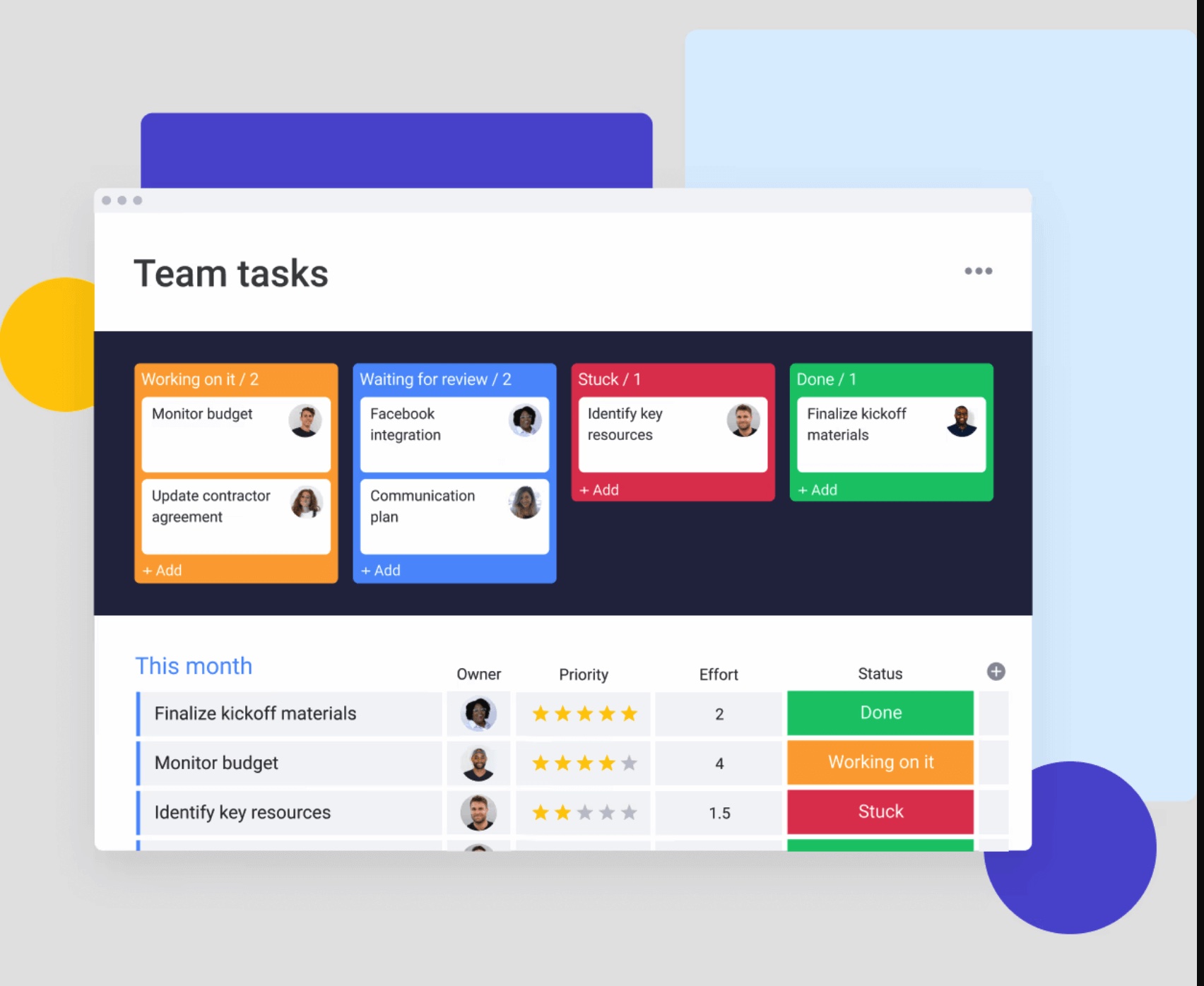
This case study demonstrates how a leading media organization successfully implemented monday work management to coordinate complex campaigns across multiple brands and teams. The results showcase the practical impact of unified campaign management at enterprise scale.
The challenge
SPH Media, a leading media group in Singapore with over 40 media brands, faced complex campaign management across multiple channels and formats. Their Content Lab, which provides advertising services to 20,000+ brands, relied heavily on manual work to coordinate between creative, content, sales, and ad operations teams. As the business expanded, managing campaigns became increasingly unsustainable, with no clear visibility into workloads, timelines, or campaign status.
The solution
SPH Media implemented monday work management to centralize campaign tracking across 130+ people managing work for 40 brands. The platform’s customizable API automatically synchronized bookings from advertisers with creative production processes, while automated alerts sent notifications at every project phase with task reminders as deadlines approached. All assets and communication became centralized and accessible to every relevant stakeholder.
The results
The implementation delivered transformative outcomes for SPH Media’s marketing operations:
- Hundreds of campaigns tracked: complete visibility in one platform.
- 130+ people collaborating: seamless coordination across 40 media brands.
- Faster campaign delivery: automated workflows and centralized communication.
- Reduced information silos: centralized asset management eliminated missed deadlines.
The ready-made functionality provides a flexible platform that grows and adapts with organizational needs over time. The implementation enabled stakeholders to drill into specific tasks or zoom out to track overall campaign delivery flow, providing the multi-level visibility essential for media marketing operations.
Transform your marketing operations with unified campaign management
Marketing leaders who successfully scale operations beyond 50-100+ team members share a common approach: they replace scattered tools and manual coordination with unified systems that connect strategy to execution. monday work management provides the foundation for this transformation by centralizing campaign planning, automating routine workflows, and delivering the real-time visibility that enables proactive decision-making.
By bringing together ready-made marketing templates, powerful automations, and connections to all your favorite tools, the platform tackles the exact problems keeping your team from hitting their goals. Put your campaigns, creative work, team assignments, and results tracking in one place, and suddenly you can show exactly how your marketing efforts drive business results.
Companies using monday work management see real results: faster project completion, more campaigns delivered, better teamwork, and clear visibility into both ROI and how team resources are being used. The result? Your marketing team transforms from a department that’s always defending its budget to a proven engine for business growth.
Ready to transform your marketing operations?
Siloed teams and disconnected workflowsdrain your marketing impact. Centralize campaign planning, demonstrate ROI to executive leadership, and drive measurable business growth with monday work management. Real-time campaign visibility and automated workflows transform how your marketing team operates.
The content in this article is provided for informational purposes only and, to the best of monday.com‘s knowledge, the information provided in this article is accurate and up-to-date at the time of publication. That said, monday.com encourages readers to verify all information directly.
Frequently asked questions
How does monday work management help track campaign ROI and performance metrics?
Customizable dashboards from monday work management pull real-time data from campaigns, allowing you to track ROI, CAC, MQL-to-customer rates, content performance, and budget adherence in one view. You can connect campaign spend to outcomes, monitor performance against goals as campaigns run, and create automated reports for executive leadership without manual data compilation.
Can monday work management manage creative approval workflows at scale?
Yes, the platform includes built-in proofing tools and customizable approval workflows designed for creative production at scale. You can set up forms for creative requests that automatically route to appropriate teams, configure multi-stage approval processes with automated notifications, and maintain version control with all feedback centralized on the asset itself.
How does monday work management integrate with Adobe Creative Cloud and other marketing tools?
With 200+ native integrations including Adobe Creative Suite, HubSpot, Google Workspace, Slack, and major social platforms, monday work management offers bidirectional sync that ensures creative assets, campaign data, and performance metrics flow automatically between systems. For proprietary tools, the open API enables custom integrations that connect your entire marketing technology stack.
What is the typical implementation timeline for a marketing team of 50-100+ people?
Implementation timelines range from days to weeks depending on complexity. SPH Media deployed monday work management across 130+ people managing 40 brands successfully, while Genpact's global marketing team achieved adoption across distributed teams within weeks using the platform's ready-made marketing templates and intuitive interface.
How does monday work management prevent team burnout while managing multiple concurrent campaigns?
The workload view provides real-time visibility into team capacity across all active campaigns and projects with automated alerts when team members approach capacity limits, enabling proactive resource reallocation before burnout occurs. This capacity planning ensures consistent delivery of marketing plans without overloading resources.
Can monday work management support cross-functional collaboration with legal, product, and finance teams?
Yes, the platform is designed for cross-functional collaboration with customizable permissions, shared workspaces, and integrated communication tools. You can create dedicated boards for cross-functional projects, control what external teams can see and edit, and maintain all collaboration context within the platform for improved coordination.

 Get started