

Financial services marketing teams manage some of the most complex event portfolios in business. Between investor conferences, compliance seminars, product launches, and client meetings, marketing leaders coordinate dozens of simultaneous events while navigating strict regulatory requirements, multi-departmental approvals, and demanding ROI expectations.
However, when these events span global teams and involve legal, compliance, and finance stakeholders, traditional event planning approaches quickly break down.
The real challenge goes beyond logistics too: you’re likely juggling cross-team workflows, keeping meticulous compliance records, and constantly proving the business value of every event in your portfolio. Marketing leaders need to see exactly who’s available, where the money’s going, and how events are performing — all while making sure they’re staying on the right side of regulations.
Let’s look at how top financial marketing teams are revamping their event operations with work management platforms that actually deliver. We’ll walk through the must-have features for financial compliance, stack up the best solutions, and share real efficiency and ROI gains teams are seeing when they choose the right platform.
Key takeaways
Managing events in financial services isn’t just about logistics — it’s about orchestrating complex, multi-stakeholder initiatives while maintaining compliance, demonstrating ROI, and keeping distributed teams aligned.
Here’s what marketing leaders need to know about how the best platforms can transform their event operations:
- Unify event operations across departments: connect marketing, legal, compliance, and finance teams in one workspace to eliminate silos and speed up approvals for complex financial services events.
- Get real-time visibility into your entire event portfolio: track 50+ concurrent events, budgets, and team capacity from a single dashboard to ensure complete oversight and accountability.
- Automate compliance workflows with built-in audit trails: monday work management creates automatic documentation for every approval and change, meeting financial sector regulatory requirements without slowing execution.
- Optimize resource allocation across large marketing teams: use intelligent workload balancing to prevent burnout and ensure the right people work on the right events at the right time.
- Demonstrate measurable event ROI to executive leadership: connect event outcomes directly to CRM data and marketing goals to show clear business impact and justify event investments.
What makes heads of marketing choose monday work management for event planning in finance?
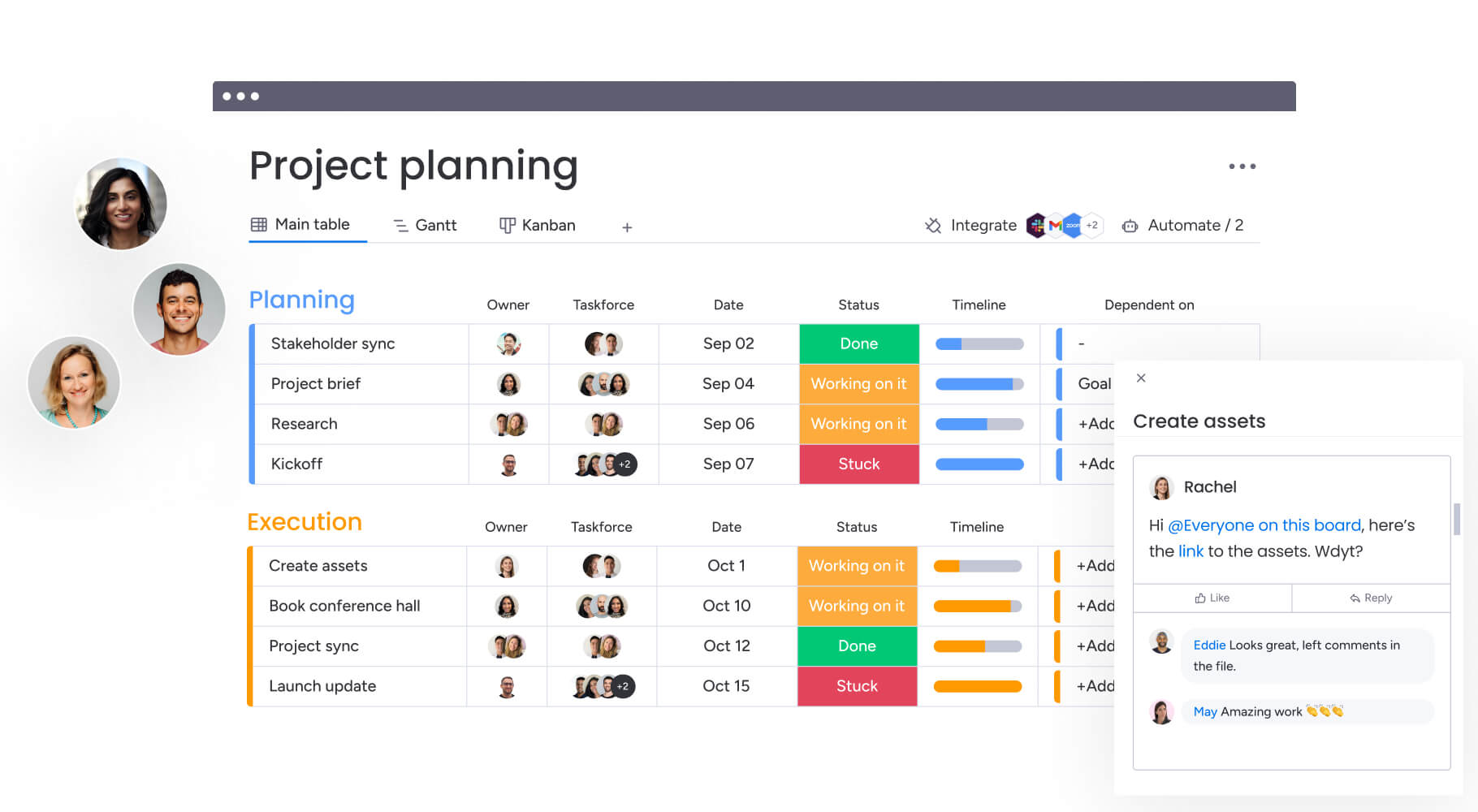
Financial services marketing leaders face a unique challenge: coordinating investor relations events, compliance seminars, product launches, and client conferences while maintaining visibility across departments and meeting strict regulatory requirements.
Traditional event platforms fragment this complexity across multiple systems, creating blind spots that slow execution and obscure ROI.
Advanced and intelligent solutions like monday work management fix this disconnect by tying your event planning directly to your marketing goals, OKRs, and team workflows across departments. Unlike standalone event platforms, it provides the infrastructure marketing leaders need to orchestrate everything from intimate executive dinners to thousand-attendee conferences — all while maintaining the governance and visibility their industry demands.
For heads of marketing managing 50-100+ team members across content, creative, acquisition, and operations, the platform delivers centralized visibility into progress, capacity, and performance. This eliminates the disconnected execution that plagues enterprise marketing departments, replacing spreadsheets and email chains with standardized, automated workflows that scale across entire event portfolios.
monday work management features for enterprise event planning
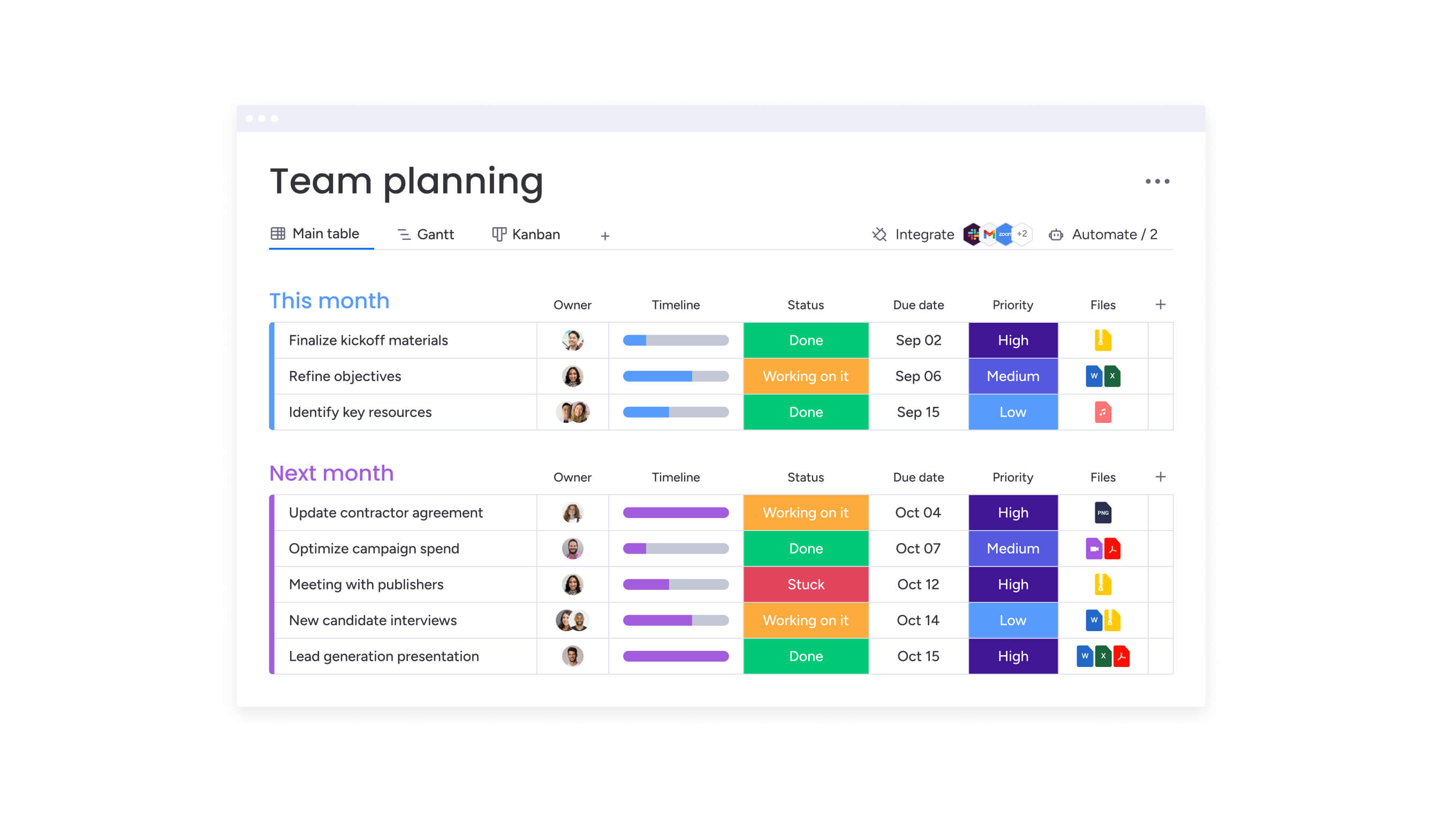
The platform’s comprehensive feature set addresses the unique challenges of financial services event management. From standardized workflows to real-time reporting, these capabilities enable marketing leaders to orchestrate complex events while maintaining compliance and demonstrating measurable impact.
Event management workflows
Financial services events demand more than basic task tracking. monday work management provides customizable workflows that adapt to any event type while maintaining the standardization enterprises require.
The platform’s event management capabilities include:
- Standardized templates: pre-built frameworks for investor conferences, compliance seminars, and product launches.
- Intake automation: custom forms that capture event requests and route them through approval workflows.
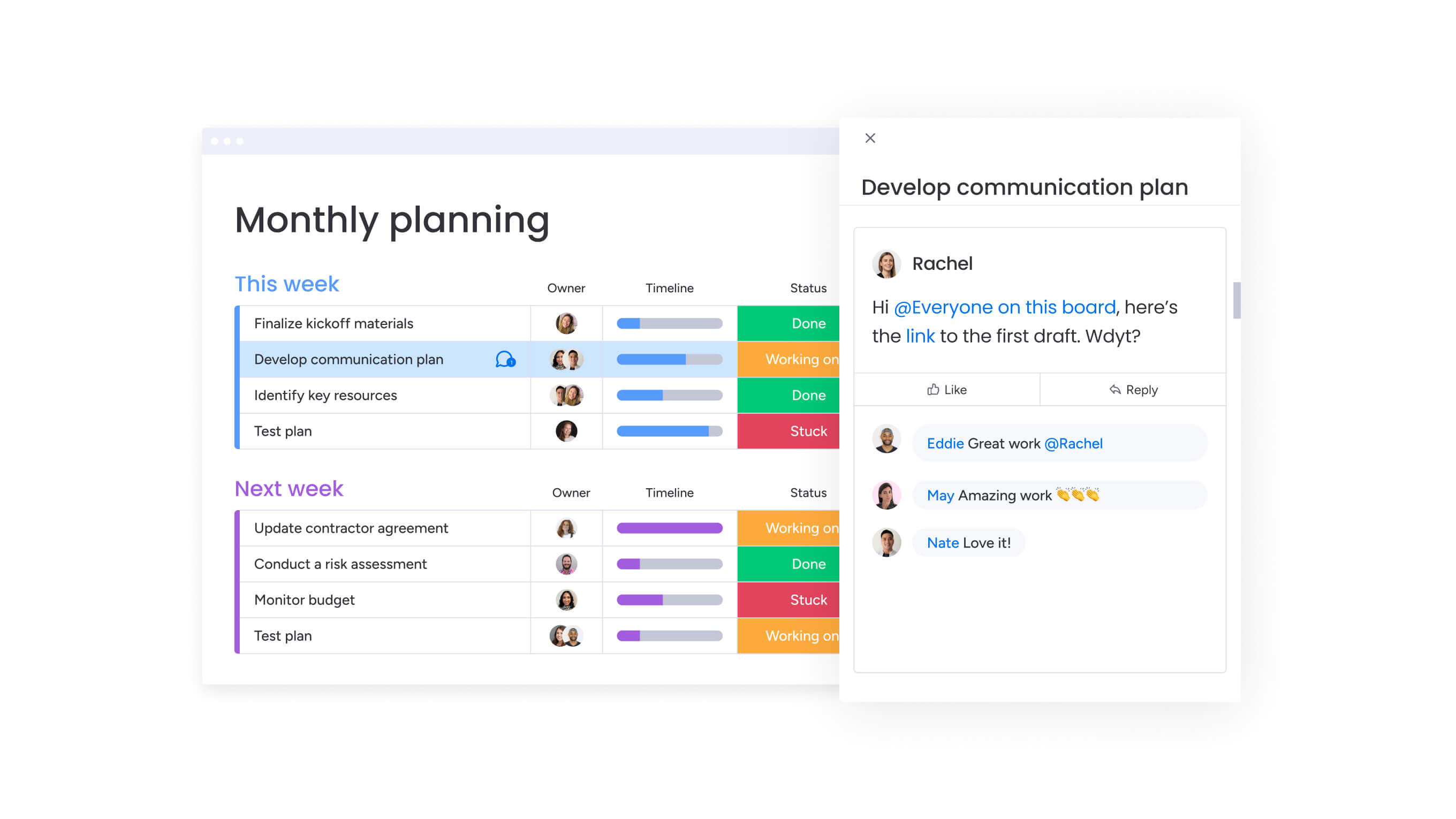
- Cross-functional visibility: shared boards where marketing, legal, and finance teams track progress in real time.
- Milestone tracking: clear checkpoints that flag delays before they impact delivery.
Marketing leaders use these workflows to plan, track, and execute both in-person and virtual events with consistent processes. Templates, like an event planning template, ensure teams aren’t constantly reinventing workflows, while customization options let you adapt to unique requirements without losing standardization.
Resource management and workload view
Managing capacity across large marketing teams requires more than spreadsheets. The Workload view in monday work management gives heads of marketing unprecedented visibility into team bandwidth across all events and initiatives.
This capability transforms resource planning by showing:
- Real-time capacity: see who’s overallocated and who has bandwidth at a glance.
- Skills-based allocation: assign work based on expertise, not just availability.
- Cross-project visibility: track resource utilization across multiple simultaneous events.
- Proactive rebalancing: identify bottlenecks before they impact deadlines.
Instead of relying on manual check-ins, marketing leaders can allocate resources strategically, preventing the burnout and missed deadlines that come from poor utilization. The platform’s resource directory centralizes information about team members’ skills, roles, and availability — making it simple to match the right people to the right work.
Dashboards and real-time reporting
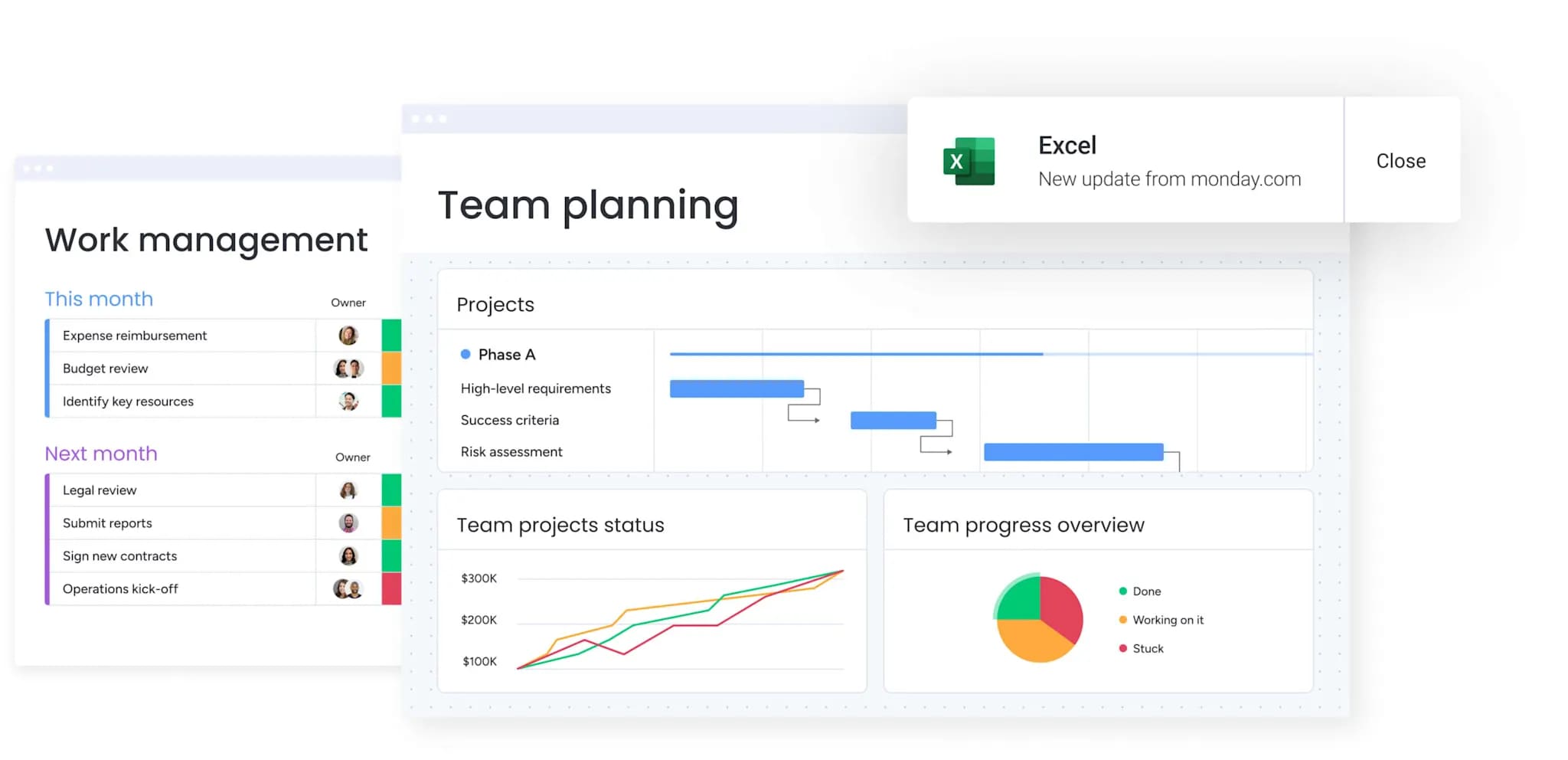
Executive leadership demands clear ROI on event investments. monday work management’s customizable dashboards transform how marketing leaders report impact, providing portfolio-level views that show status, budget adherence, and performance metrics in real time.
These dashboards deliver:
- Portfolio visibility: track all events from a single view, with drill-down capabilities for details.
- Custom metrics: monitor campaign ROI, MQL-to-customer rates, and budget variance.
- Automated reporting: schedule updates to stakeholders without manual report building.
- Risk identification: AI-powered insights flag at-risk events before they derail.
The visual nature of these dashboards makes it easy to communicate progress without requiring stakeholders to dig through spreadsheets. Marketing leaders can demonstrate clear event ROI while maintaining the agility to adjust when priorities shift.
Automation for event workflows
Financial services events require multiple approval layers and compliance checkpoints. monday work management’s automation capabilities eliminate the manual coordination that slows execution.
Automation transforms event planning through:
- Approval routing: automatically send requests to legal, compliance, and finance based on triggers.
- Status updates: notify stakeholders when milestones are reached or changes occur.
- Task creation: generate checklists and assignments when event details are confirmed.
- Reminder sequences: send automated follow-ups to keep approvals moving.
These automations reduce email exchanges while ensuring nothing falls through the cracks. Instead of manually chasing approvals, marketing teams can focus on strategic planning and execution.
Timeline and Gantt views
Coordinating complex financial events requires visual project management. Timeline and Gantt views provide the clarity marketing leaders need to manage dependencies and communicate timelines.
These views enable:
- Dependency mapping: see how tasks connect and identify critical paths.
- Timeline visualization: map out every phase from planning through post-event analysis.
- Conflict identification: spot resource conflicts and scheduling issues early.
- Progress tracking: monitor advancement against deadlines in real time.
When you’re running investor events or compliance seminars that pull in multiple departments, these views provide an intuitive way to show everyone the timeline and pivot quickly when priorities change. Cross-project dependencies ensure that changes in one event automatically update related initiatives.
How heads of marketing in finance benefit from monday work management
Marketing leaders using monday work management experience measurable improvements across three critical areas: operational efficiency, regulatory compliance, and team productivity. The bottom line? You’ll save money, reduce compliance friction, and run more impactful events that move the needle.
Time and cost efficiency
Marketing teams using monday work management report significant operational improvements. The platform cuts out manual status updates, slashes email back-and-forth, and automates the tedious planning tasks. Your team gets hours back to focus on work that actually moves the needle.
Key efficiency gains include:
- 7,000+ hours saved monthly: through automated workflows and reduced manual coordination.
- 25% reduction in email volume: by centralizing communication in context.
- 6x ROI: from consolidated tool costs and improved operational efficiency.
- $118K+ monthly savings: through optimized resource allocation and reduced tool sprawl.
Compliance and accuracy
Financial sector events demand strict compliance with regulations. monday work management provides the infrastructure marketing teams need to maintain audit trails while moving quickly.
Compliance capabilities include:
- Automated audit trails: every change, approval, and decision is logged with timestamps.
- Permission controls: granular access ensures sensitive event data stays secure.
- Version control: track document changes and maintain compliance documentation.
- Standardized processes: managed templates ensure consistent compliance across all events.
The platform’s enterprise-grade security includes SOC two Type II certification and GDPR compliance, meeting the stringent requirements financial services organizations demand.
Productivity and quality improvements
Efficiency is just the beginning. Teams using monday work management see real, measurable jumps in both productivity and the quality of what they deliver.
Performance improvements include:
- 2x faster delivery: through standardized workflows and automated approvals.
- 40% better collaboration: with centralized communication and shared visibility.
- 3x creative output: by eliminating administrative burden from creative teams.
- 100% spreadsheet elimination: removing version control issues and data inconsistencies.
How to plan and execute financial services events with monday work management
Here’s exactly how to implement monday work management and transform your event operations, step by step.
Each step we discuss below builds on the previous one, creating a comprehensive system that scales from small executive meetings to large investor conferences.
Step 1: set up your event management workspace
Create a centralized workspace for all event planning activities. Start with pre-built templates for different event types — investor conferences, compliance seminars, product launches — then customize fields for budget, timeline, and stakeholder tracking.
This foundation ensures consistency while allowing flexibility for unique requirements. Configure your workspace with:
- Event type templates: standardized frameworks for different event categories.
- Custom fields: budget tracking, compliance status, and stakeholder assignments.
- Permission settings: role-based access for marketing, legal, and finance teams.
Step 2: establish intake and approval workflows
Build custom forms that capture event requests with all necessary information. These automatically populate your event boards and trigger approval workflows.
Route requests through legal, compliance, and finance based on event type and budget thresholds, ensuring proper oversight without slowing the process. Key components include:
- Intake forms: capture all required event details upfront.
- Approval routing: automatic assignment based on event criteria.
- Notification systems: alert stakeholders when action is required.
Step 3: build your event timeline and dependencies
Use Timeline and Gantt views to map out tasks, milestones, and dependencies. Identify critical paths and set up automated alerts for delays.
Connect related tasks across teams so everyone understands how their work impacts overall delivery. Cross-project dependencies ensure that resource conflicts are visible before they become problems. Focus on:
- Critical path identification: map essential tasks that impact event delivery.
- Dependency mapping: connect related activities across departments.
- Alert configuration: automated notifications for timeline risks.
Step 4: allocate resources and manage capacity
Leverage the Workload view to assign team members based on availability and skills. Monitor capacity across all events to prevent overallocation.
The platform’s resource planner helps you see who’s available when, while automated notifications alert you when team members approach capacity limits. Essential activities include:
- Skills-based assignment: match expertise to event requirements.
- Capacity monitoring: track workload across all team members.
- Rebalancing alerts: notifications when resources become overallocated.
Step 5: automate communication and updates
Configure automations to send stakeholder updates when status changes, notify speakers about session details, and remind team members of deadlines.
Integration with Slack or Microsoft Teams keeps event communication flowing in the tools your team already uses, reducing context switching. Set up:
- Status notifications: automatic updates when milestones are reached.
- Reminder sequences: scheduled follow-ups for critical deadlines.
- Integration workflows: connect with existing communication tools.
Step 6: track performance and demonstrate ROI
Create dashboards that monitor event KPIs including registration, attendance, budget adherence, and post-event engagement. Connect events to marketing OKRs to show contribution to business objectives.
These insights help optimize future events while providing the data executive leadership needs. Dashboard elements should include:
- Performance metrics: registration, attendance, and engagement tracking.
- Budget analysis: actual versus planned spending with variance reporting.
- ROI calculation: connect event outcomes to business objectives.
Comparison: monday work management vs competing event planning platforms
When you’re shopping for event planning software, you need a platform that can handle complex events with lots of stakeholders — and do it at enterprise scale. This comparison highlights key differentiators across some of the most well-know platforms on the market today.
| Feature | monday work management | Cvent | Bizzabo | EventsAir |
|---|---|---|---|---|
| Workload management for 50-100+ teams | Built-in resource management | Limited | Add-on required | Limited |
| Salesforce/HubSpot integration | Native integrations | Available | Available | Available |
| Compliance audit trails | Automated tracking | Available | Limited | Available |
| Multi-event portfolio view | Unlimited events | Available | Per-event pricing | Available |
| Cross-functional collaboration | Built-in @mentions, comments | Limited | Limited | Limited |
| OKR and goal tracking | Native goals feature | Not available | Not available | Not available |
| Starting price per user/month | From $10/seat | Custom + per-registration | $499/user (min 3) | Custom pricing |
| Implementation time | 2-4 weeks | 8-12 weeks | 4-8 weeks | 6-10 weeks |
How Genpact transformed their global event operations
Genpact’s globally distributed marketing team managed approximately 24 ongoing, large-scale campaigns at any given time, each with multiple cross-channel activations including major events worldwide. The team relied on spreadsheets, emails, and SharePoint folders — making visibility nearly impossible.
Without a single source of truth, team members had to sift through emails and folders to understand campaign status. This fragmentation created confusion and slowed execution across their event portfolio.
The solution with monday work management
Genpact implemented monday work management to standardize their end-to-end event planning process. The team created workflow apps outlining activation processes for each channel, with columns tracking target dates versus actual timelines to identify bottlenecks.
They utilized Timeline views and dashboards to see outstanding campaign aspects, drilling down into critical items for any given period. Forms formalized event brief submissions and approval processes, with automated notifications creating visible request queues.
When the pandemic disrupted in-person events, Genpact used monday work management to quickly restructure their events board, tracking which events went virtual, were canceled, or postponed. This visibility enabled rapid adaptation to changing circumstances.
Measurable results achieved
The transformation delivered significant operational improvements:
- 40% improvement in cross-team collaboration: successful end-to-end campaign planning and execution.
- 100% spreadsheet elimination: complete removal from the event planning process.
- 25% decrease in email exchanges: through centralized communication.
- Real-time visibility: into event status, turnaround times, and team capacity.
- Rapid adaptation: quick pivots when market conditions changed.
Revolutionize your event planning function with monday work management
Marketing leaders in financial services choose monday work management to bring clarity, efficiency, and measurable impact to their event operations. From investor conferences to compliance seminars, the platform provides the visibility and control needed to deliver exceptional events while demonstrating clear ROI to executive leadership.
With real-time event visibility, automated workflows, and intelligent resource management, the clever solution helps marketing teams move from reactive coordination to proactive orchestration.
The platform’s comprehensive feature set also addresses the unique challenges of financial services marketing — from regulatory compliance to cross-functional coordination — while delivering the operational efficiency that drives business results.
Teams that switch to monday work management see their productivity spike, costs drop, and event quality reach new heights — with the metrics to prove it. By centralizing event operations in a single platform or event planning software, marketing leaders gain the visibility and control needed to scale their programs while maintaining the governance standards their industry demands.
Join the organizations that trust the platform to unite cross-functional teams and deliver their best work.
The content in this article is provided for informational purposes only and, to the best of monday.com‘s knowledge, the information provided in this article is accurate and up-to-date at the time of publication. That said, monday.com encourages readers to verify all information directly.
Frequently asked questions
How does monday work management support compliance and audit requirements for event planning?
monday work management provides automated audit trails that track every change, approval, and decision related to your events. All communication, file attachments, and status updates are logged with timestamps and user attribution, creating the documentation trail required for financial sector compliance. The platform's SOC two Type II certification, GDPR compliance, and granular permission controls ensure your event data meets regulatory requirements while maintaining operational agility.
What's the typical implementation timeline for enterprise marketing teams?
Most enterprise marketing teams are operational on monday work management within two to four weeks. The platform's intuitive interface allows teams to start using basic features immediately, while more complex workflows and integrations are configured during initial weeks. Unlike traditional event management software requiring months of implementation, monday work management's no-code approach enables quick iteration and expansion as teams see results.
Can monday work management manage both large conferences and small executive events?
Yes, monday work management scales seamlessly from intimate executive dinners to large investor conferences. You can create different board templates for various event types, each with appropriate complexity levels. Small events might use simplified workflows, while large conferences leverage the full suite including resource management, budget tracking, and multi-session scheduling.
How do you measure event ROI with monday work management?
monday work management enables comprehensive event metric tracking from a single dashboard. Monitor registration and attendance, track budget versus actual spend, measure post-event engagement through integrated CRM data, and calculate cost-per-attendee metrics. By connecting events to marketing OKRs and company goals, you demonstrate how each event contributes to customer acquisition, brand awareness, or product adoption. Custom formulas calculate ROI metrics specific to your organization's needs.
What integrations are essential for finance marketing teams?
Critical integrations for financial services marketing teams include CRM systems (Salesforce, HubSpot), marketing automation platforms (Marketo, Eloqua), communication tools (Microsoft Teams, Slack, Zoom), and calendar systems (Outlook, Google Calendar). monday work management offers native integrations with all these platforms, ensuring event data flows seamlessly between systems. This means attendee information syncs to your CRM, event communications flow through existing channels, and team collaboration happens in familiar tools.
How much does enterprise event planning software cost for large marketing teams?
monday work management pricing starts at $10 per seat monthly for Basic plans, with Standard at $12/seat/month and Pro at $20/seat/month. For a 75-person marketing team, this translates to $750-$1,500 monthly depending on features needed. Unlike event-specific platforms charging per-registration fees, monday work management's seat-based pricing provides predictable costs regardless of event volume. Enterprise plans with advanced security and custom integrations are available with tailored pricing.

 Get started