

Tech project managers (PMs) don’t struggle because they lack tools. They struggle because their work is spread across too many of them. One system for planning, another for delivery, another for updates, and a dozen places where decisions quietly stall.
AI workflow software is changing that dynamic. Not by replacing project management, but by removing the friction that slows it down. The strongest platforms use AI to organize intake automatically, surface risks before timelines slip, and keep teams aligned without constant check-ins or manual reporting.
This article looks at how AI workflow tools actually support tech project managers day to day. You’ll learn which AI capabilities make a real difference, how leading platforms scale across complex portfolios, and what separates practical workflow automation from features that sound impressive but don’t hold up in production.
Key takeaways
Project managers in tech face a tricky challenge: coordinating complex workflows across distributed teams while maintaining visibility into every moving part. The right workflow management approach transforms this challenge into a competitive advantage by unifying scattered work and automating repetitive tasks that drain productivity.
Here’s what sets the best AI workflow platforms apart for project managers in tech:
- Unified workspace that consolidates projects across 200+ integrations — eliminating the constant tab-switching between Jira, Slack, and spreadsheets.
- AI-powered automation that saves 3+ hours weekly: handling categorization, risk identification, and resource allocation without manual intervention.
- Real-time visibility across departments without technical expertise: customizable dashboards that scale to 1,000+ projects.
- 2× faster digital project delivery: proven by companies like Playtech who transformed their PMO operations.
- Enterprise-grade security with rapid adoption: teams become productive within two weeks while maintaining SOC two and ISO compliance.
What makes project managers choose AI workflow automation?
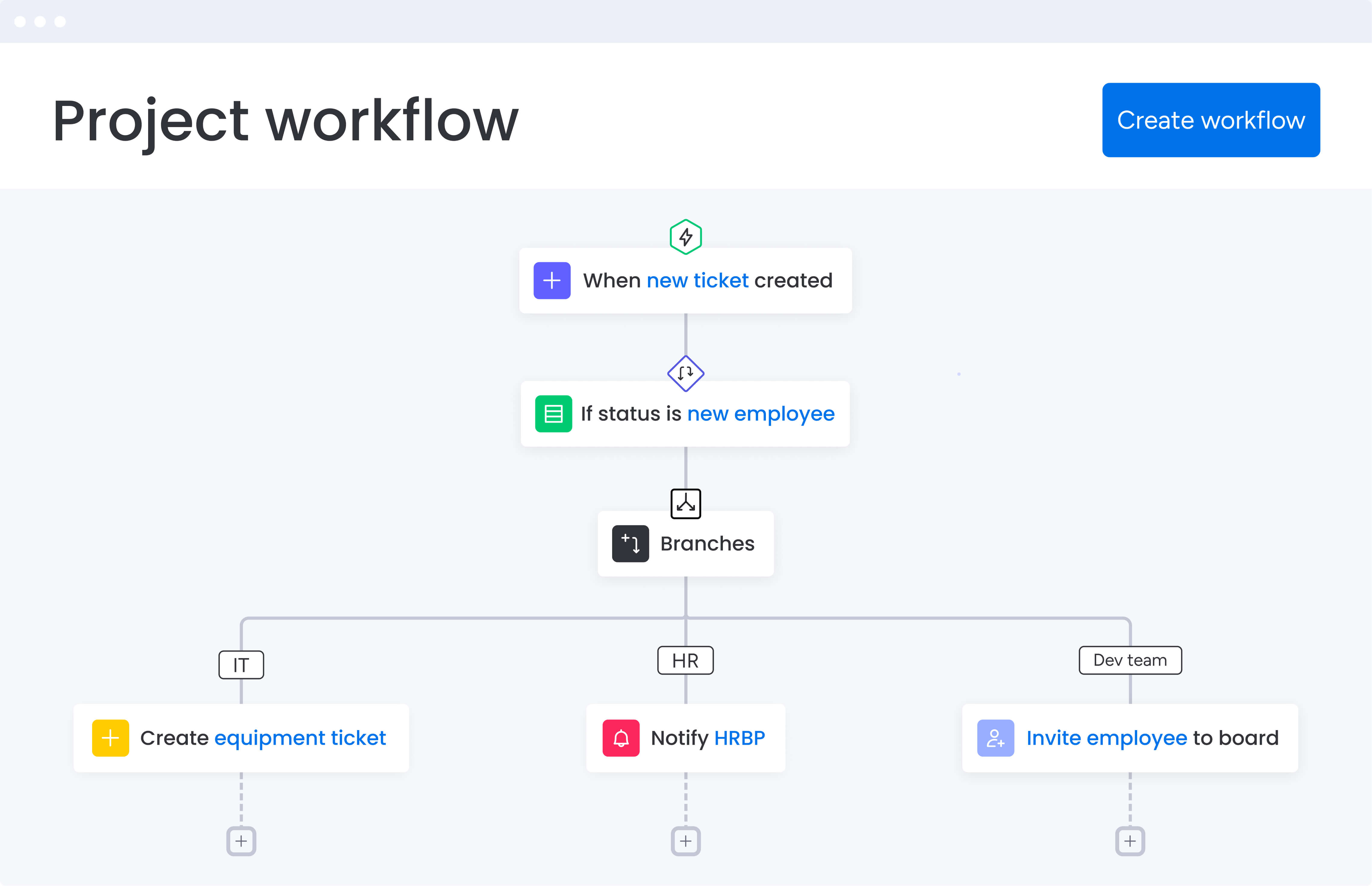
Project managers in tech operate at the intersection of strategy and execution. They need platforms that handle the complexity of software development while remaining accessible to non-technical stakeholders, as seen in the latest AI report.
The decision to adopt AI workflow software hinges on three critical factors that determine long-term success.
AI democratization changes everything
The best platforms build smart features right into your everyday tasks, allowing you to use AI without any coding knowledge. They build smart features right into your everyday tasks with pre-made AI tools that just work. Project managers can instantly categorize incoming requests, identify risks across portfolios, and optimize resource allocation without writing a single line of code.
High adoption rates speak to intuitive design
Teams actually use the platform from day one, ensuring data accuracy and creating the foundation for meaningful AI insights. When people actually like their tools, they use them consistently. That creates better data, which makes the AI smarter every day.
The three critical factors driving adoption include:
- Unified workflow capability: the ability to consolidate fragmented processes across departments.
- No-code automation power: ai features that work without technical expertise or coding requirements.
- Scalable flexibility: platforms that grow seamlessly from single teams to enterprise portfolios.
How to evaluate and adopt AI workflow software as a tech project manager
Choosing the right AI workflow platform isn’t about checking off features. It’s about understanding how those capabilities fit into your day-to-day work and scale as projects and teams grow.
The steps below walk through how tech project managers should assess AI workflow software — starting with the features that remove daily friction, and ending with how to unify scattered tools into a system that actually works.
Step 1: understand the top AI features for workflow automation
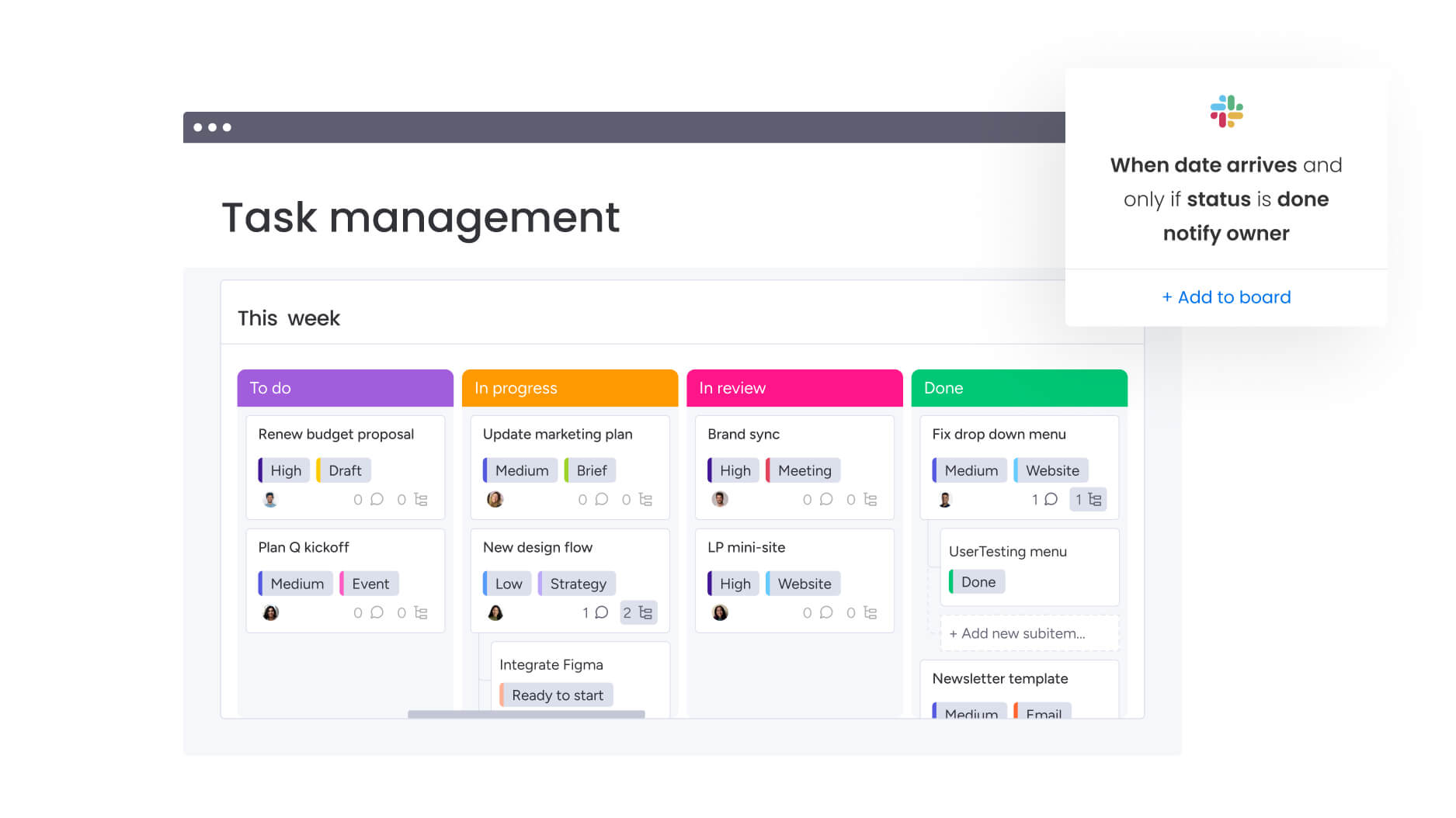
Top platforms use AI to eliminate the tasks that eat up a PM’s day. These AI tools talk to each other, study your patterns, and get noticeably better at helping you the longer you use them.
Understanding each component helps you evaluate which platform or AI project management tools deliver the most value for your specific needs.
AI Blocks for instant automation
Ready-made AI actions integrate directly into your boards and automations. Project managers use AI Blocks to automatically categorize project requests by urgency, extract key information from documents, and summarize complex meeting notes into actionable items. The Custom Block feature lets you describe any automation need in plain language, and AI creates the exact workflow you need.
Product Power-ups for complex challenges
AI-driven solutions tackle enterprise-wide challenges that traditionally required multiple tools and manual oversight. Key capabilities include:
- Risk Management Power-ups: analyze hundreds of projects simultaneously, flagging potential delays and resource conflicts before they impact delivery.
- Resource Allocation Power-ups: assign the right people to projects based on skills, availability, and workload.
- Portfolio optimization: balance resources across initiatives to maximize throughput.
Digital Workforce for continuous execution
Your AI team of specialists works around the clock, learning from interactions and proactively solving problems. The Project Analyzer monitors project health in real-time, while platform experts help optimize your workspace configuration. These Digital Workers handle routine tasks like status updates and report generation, freeing project managers for strategic decisions.
Portfolio-level intelligence
AI-powered portfolio dashboards provide instant visibility across all projects, with the ability to drill down into specific risks or dependencies. The platform generates executive-ready reports highlighting trends, bottlenecks, and opportunities for optimization across your entire project landscape.
Step 2: recognize how project managers in tech benefit from AI workflow platforms
Tech PMs operate in a dynamic environment with continuous release cycles, globally distributed team members, and executives who require immediate updates. AI workflow automation transforms these challenges into streamlined processes that accelerate delivery while maintaining quality and alignment. You’ll see immediate improvements in three areas that make or break projects.
Immediate time savings drive measurable results
Project managers save over three hours weekly on manual tasks like status collection, report generation, and resource scheduling, and an AI task manager further streamlines these efforts. AI Blocks automatically categorize and prioritize incoming requests, ensuring nothing falls through the cracks during sprint planning. With 200+ integrations, teams continue using their favorite development tools while gaining centralized visibility.
Cross-functional coordination becomes seamless
When all departments work on the same platform. Marketing, development, QA, and operations teams collaborate in real-time, with AI ensuring everyone has the context they need. Dependencies between teams are automatically tracked and flagged when at risk, preventing the cascading delays that plague complex tech projects.
Scalability happens effortlessly
As teams and project volume increase, manual coordination breaks down fast. AI workflow platforms prevent that by standardizing how work is set up and monitored across teams.
Managed Templates ensure every new project follows the same structure, automations, and reporting standards, even as dozens of teams spin up work in parallel. Resource optimization features give project managers a live view of workload and capacity across teams, making it easier to rebalance assignments before burnout or delivery risks appear.
Step 3: solve fragmented workflows systematically
When your work is scattered across a dozen tools, you’re bleeding time and money without even realizing it. Information gets lost between tools, teams duplicate effort, and project managers spend more time gathering updates than driving progress. The solution requires a systematic approach that addresses the root causes while maintaining team productivity during the transition.
Centralization forms the foundation
Teams bring scattered spreadsheets, task lists, and project plans into a single flexible workspace that adapts to how they work. Adoption happens fast, with most teams productive within two weeks.
This foundation enables:
- Faster onboarding: intuitive structure reduces training time and friction
- Automated organization: AI Blocks categorize work and extract key details from documents
- Connected workflows: related items link automatically, improving visibility across projects
Standardization follows naturally
When teams work on a common platform. Managed Templates ensure every project follows best practices while still allowing customization for unique needs. Cross-project dependencies become visible, helping project managers identify and resolve conflicts before they impact timelines. The Resource Directory provides a complete view of team capacity and skills, enabling smart allocation decisions that prevent bottlenecks.
Integration completes the transformation
Rather than forcing teams to abandon their specialized tools, the platform connects to existing systems through native integrations and APIs. Development teams keep using Jira for issue tracking, but project managers gain visibility through synchronized dashboards. Marketing continues with their creative tools while project timelines stay updated automatically. This connected ecosystem eliminates context switching and ensures everyone works from a single source of truth.
Try monday work managementComparison table: AI workflow platforms for tech teams
Understanding how different platforms approach AI workflow automation helps project managers make informed decisions. This comparison below highlights the key differentiators that matter most for tech teams seeking to unify their workflows and leverage AI effectively.
| Feature | monday work management | Asana | ClickUp | Smartsheet |
|---|---|---|---|---|
| AI implementation approach | Democratized AI Blocks accessible to all users | Limited AI features in premium tiers | AI available but requires setup | Basic automation, minimal AI |
| Time to value | Less than 4-month payback | 6-12 months typical | 3-6 months with customization | 6+ months for enterprise |
| User adoption rate | Highest adoption for enterprises | Moderate adoption, training required | Steep learning curve | Requires technical expertise |
| Scalability | 1,000+ projects with full visibility | Limited at scale | Performance issues with large datasets | Excel-like limits |
| Integration ecosystem | 200+ native integrations | 100+ integrations | 50+ integrations | Limited native options |
| Resource management | AI-powered allocation with skills matching | Basic workload views | Manual resource planning | Spreadsheet-based allocation |
| Risk identification | Proactive AI risk alerts across portfolios | Manual risk tracking | Rule-based alerts only | No automated risk detection |
| Customization approach | No-code with flexible building blocks | Template-based with limitations | Highly customizable but complex | Rigid structure |
| Enterprise security | SOC 2, ISO certified, BYOK available | Enterprise-grade security | Security compliance varies | Enterprise security available |
| Pricing transparency | Transparent tier structure with AI credits | Complex pricing model | Feature-gated pricing | Per-user enterprise pricing |
How Playtech's PMO transformed project delivery
Playtech’s transformation demonstrates the real-world impact of unified AI workflow management.
As a leading technology company in the gaming industry, the organization faced the challenge of coordinating complex digital projects across multiple departments and stakeholders. Their projects department needed a solution that could handle both internal coordination and external stakeholder communication without creating additional overhead.
The implementation revolutionized project management operations
By centralizing all project workflows on the platform, the PMO department achieved two× faster digital project delivery. The key to this acceleration was eliminating the friction between teams. Instead of chasing updates through emails and meetings, project managers gained real-time visibility into every project’s status through AI-powered dashboards.
AI automation played a crucial role in Playtech’s success
The team used AI Blocks to automatically categorize and prioritize incoming project requests, ensuring resources focus on high-impact initiatives. Risk identification features flag potential delays before they impact delivery timelines, allowing project managers to proactively adjust resources or scope. The result was faster delivery and improved stakeholder satisfaction, as everyone had visibility into project progress and challenges.
Universal adoption ensured sustainable results
The entire projects department adopted the platform, creating a single source of truth for project data and communication. With everyone working in the same system, collaboration improved across internal teams and external stakeholders.
This consistency ensured accurate, complete data, allowing AI capabilities to deliver increasingly valuable insights over time and support better decision-making at scale.
Transform your project management with monday work management
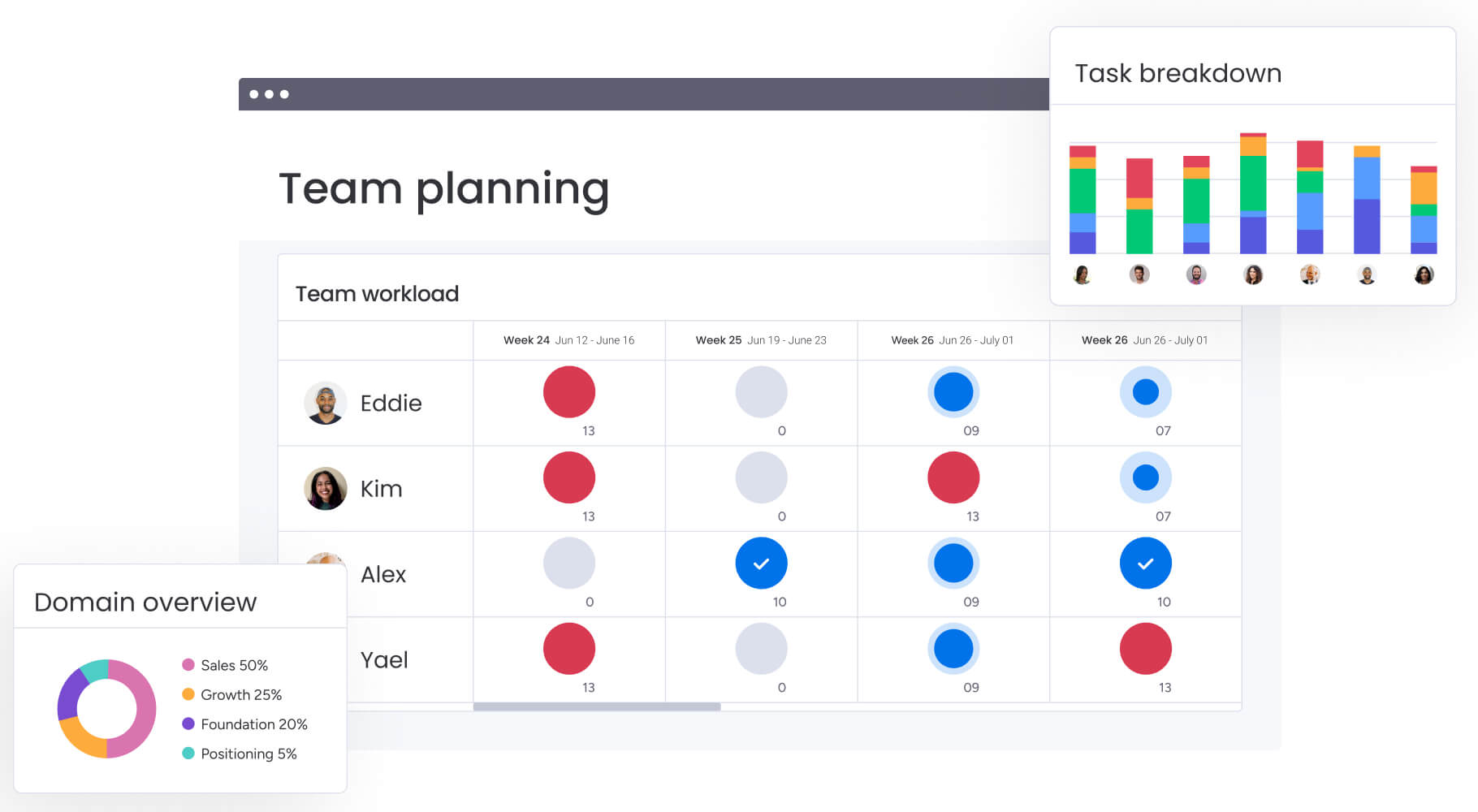
monday work management brings together AI-driven automation, enterprise-grade controls, and an intuitive interface designed for modern tech teams. Instead of layering AI on top of existing processes, the platform embeds intelligence directly into daily project work, helping project managers operate with more clarity, consistency, and control as complexity grows.
The platform delivers value through three core capabilities that scale with your organization:
- Actionable leadership visibility: AI-powered risk insights continuously scan project updates to surface issues early, complete with urgency indicators and mitigation signals. Portfolio dashboards provide real-time visibility across hundreds of projects, while AI-generated executive reports summarize trends, risks, and progress without manual effort.
- Standardization without rigidity: Managed Templates allow teams to standardize workflows, automations, and reporting across entire portfolios, while still giving teams the flexibility to adapt processes to specific project needs. Cross-project dependencies make relationships between initiatives visible, helping teams identify conflicts and resolve them before delivery is impacted.
- Intelligent resource optimization: The Resource Directory centralizes skills, roles, and availability across teams, while the Capacity Manager provides live insight into workload and utilization. AI-assisted allocation helps ensure the right people are assigned to the right work based on expertise and capacity, reducing burnout and improving delivery predictability.
These capabilities integrate seamlessly into existing tools and workflows. Teams continue working in Jira, Slack, and other systems they rely on, while project managers gain a unified layer of visibility, no-code automation, and AI-powered insights that support confident decision-making at scale.
The future of AI-powered project management
AI workflow automation represents a fundamental shift in how tech teams approach project management. The most successful organizations recognize that scattered systems and manual processes create invisible friction that compounds over time. By unifying work on an intelligent platform, project managers transform from coordinators chasing updates into strategic leaders driving results.
The evidence is compelling: teams using AI workflow platforms like monday work management achieve two× faster project delivery while saving over three hours weekly on manual tasks. This acceleration comes from eliminating the friction between tools, automating routine decisions, and providing real-time visibility across complex portfolios.
When teams work on a unified platform with embedded AI, data flows naturally and insights become more valuable with every interaction.
Your next step is to experience this transformation firsthand. The most successful implementations begin with a clear understanding of current pain points and a commitment to unified workflows. Start by identifying your biggest coordination challenges, then explore how AI automation can eliminate the manual work that prevents your team from focusing on strategic initiatives.
The content in this article is provided for informational purposes only and, to the best of monday.com’s knowledge, the information provided in this article is accurate and up-to-date at the time of publication. That said, monday.com encourages readers to verify all information directly.
Frequently asked questions
What makes monday work management different from other project management platforms for tech teams?
monday work management stands out through its democratized AI approach that requires no coding skills, combined with the highest user adoption rate for enterprises, ensuring your team actually uses the platform and benefits from its AI capabilities.
How quickly can a tech team implement monday work management and see results?
Most teams become productive within two weeks, with organizations achieving full ROI in less than four months through improved efficiency and reduced manual work.
Can monday work management handle complex technical projects with multiple dependencies?
Yes, the platform excels at managing complex projects through features like cross-project dependencies, AI-powered risk identification, and portfolio dashboards that scale to handle 1,000+ projects simultaneously while maintaining real-time visibility.
How does the AI in monday work management save time for project managers?
AI Blocks automate repetitive work like categorizing requests, extracting information from documents, and generating reports, while Digital Workers continuously monitor project health and flag risks, saving project managers an average of three + hours weekly on manual tasks.
What integrations does monday work management offer for existing tech stacks?
The platform provides 200+ native integrations including Jira, GitHub, Slack, Microsoft Teams, and Google Workspace, allowing teams to maintain their preferred tools while gaining centralized visibility and AI-powered insights through monday work management.
Is monday work management secure enough for enterprise tech companies?
The platform offers enterprise-grade security with SOC two and ISO certifications, multi-level permissions, BYOK encryption, and advanced admin controls that meet the strictest compliance requirements.

 Get started