


Building a startup budget sounds straightforward until the numbers stop making sense. Early estimates often feel like guesswork, unexpected costs creep in, and suddenly the runway looks shorter than planned. Even strong ideas can stall when finances aren’t clearly mapped, because uncertainty quietly builds with every decision.
That’s why budgeting, especially at the early stage, carries more weight than most founders expect. Clarity is provided by a well-structured startup budget template where things usually feel scattered. It connects assumptions to actual numbers, helping teams understand where money goes and how long it will last.
In the sections below, we break down practical ways to build a flexible budget, plan for uncertainty, and create a system that keeps pace with growth rather than falling behind it. By establishing these financial foundations early, you can move from reactive spending to proactive scaling with total confidence in your numbers.
Key takeaways
- Separate one-time and recurring costs clearly: Upfront investments and ongoing expenses impact cash flow differently, so structuring them correctly ensures accurate runway calculations and better financial planning.
- Plan for uncertainty with multiple budget scenarios: Building conservative, base, and aggressive projections helps teams stay prepared when actual performance doesn’t match expectations.
- Track cash runway and burn rate consistently: Regularly monitoring these metrics gives a clear view of financial health and supports timely decisions on hiring, spending, or fundraising.
- Connect budgets to real operations for better visibility: Linking planned budgets with actual spending through platforms like monday.com keeps financial data current and aligned with execution.
- Use dynamic systems instead of static spreadsheets: Real-time dashboards, automated tracking, and collaborative workflows improve accuracy, reduce manual effort, and support faster decision-making.
Download your free startup budget template
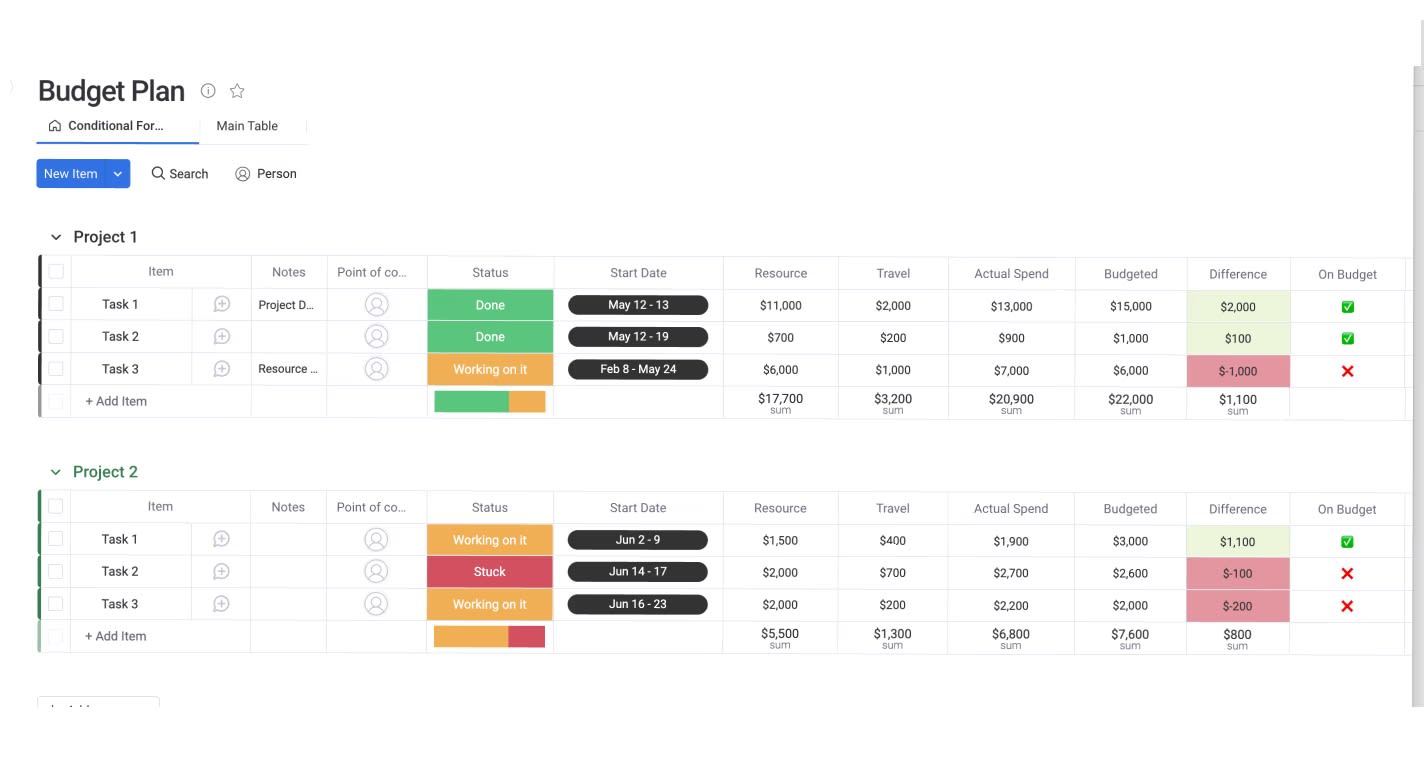
Tracking expenses alone won’t give you control over your finances. You need a budget that anticipates cash gaps before they become problems. Additionally, early-stage businesses face constant shifts, so your framework should adapt as things change. A well-built template, therefore, gives you a clearer view of how long your cash lasts and where it’s going.
Each resource below fits a different working style. Whether you’re managing everything solo or coordinating across teams, there’s an option that keeps your planning simple and structured. Plus, these formats help you move from rough estimates to numbers you can actually rely on.
- Excel budget template: Includes built-in formulas to calculate burn rate and runway automatically. It works offline, so you can adjust data freely without depending on an internet connection.
- Google Sheets template: Ideal for remote collaboration. Your team can update numbers in real time, ensuring everyone works from the same, up-to-date version.
- Interactive budget calculator: Lets you adjust variables like hiring or marketing spend and instantly see the impact. As a result, decision-making becomes quicker during planning discussions.
- Five-minute setup video tutorial: Walks you through how the template works and how to customize it. You can quickly understand key metrics and start using it without delays.
Templates give you a strong starting point. However, as your startup grows, spreadsheets alone start to fall behind. That’s where dynamic dashboards come in, connecting your budget to daily work and keeping your financial data current through automation.
Map all essential startup expense categories

Many founders underestimate how many expenses show up early on. As a result, budgets often miss critical costs that quietly drain cash. A complete breakdown helps you stay in control and avoid last-minute surprises that disrupt planning.
Each category highlights where your money actually goes. In addition, proper grouping makes it easier to compare planned spending with real outcomes. This clarity helps you adjust faster when things don’t go as expected.
- Office space and equipment investments: Include co-working fees, remote setup stipends, and essential hardware. Also, don’t overlook shipping equipment to remote hires or insuring those assets.
- Technology stack and software subscriptions: These costs add up quickly. Track platforms like CRM, communication, and cloud storage, and factor in integrations and per-user pricing as your team grows.
- Marketing and customer acquisition budget: Break spending into clear channels instead of lump sums. For example, track paid ads, content, and events separately to understand what actually drives results.
- Professional services and legal requirements: Cover incorporation, contracts, IP protection, and accounting. Investing here early reduces risk and strengthens your position for funding later.
- Initial inventory and materials: Physical products require manufacturing and storage, while digital products rely on hosting and API costs that scale with usage.
With monday.com, these categories connect directly to real work. Dashboards link each expense to projects, so you can clearly see how spending supports execution across teams.
Each category highlights where your money actually goes. In addition, proper grouping makes it easier to compare planned spending with real outcomes. This clarity helps you adjust faster when things don’t go as expected.
Separate one-time startup costs
Mixing one-time costs with monthly expenses can distort your entire financial picture. Because of this, your runway may look longer than it actually is. Separating them properly gives you a more realistic view of how your cash will behave over time.
A clear structure helps you plan both upfront investments and ongoing spending. In addition, it influences how much funding you need and how you pace your growth in the early stages.
The table below outlines how different expense types impact your cash flow:
| Expense type | Examples | Timing | Cash flow impact |
|---|---|---|---|
| One-time (CapEx) | Laptops, incorporation, web design, office furniture | Pre-launch / Day 0 | High immediate impact; zero recurring impact |
| Recurring (OpEx) | SaaS subscriptions, payroll, rent, AWS/cloud hosting | Monthly / Annual | Moderate immediate impact; cumulative long-term impact |
| Variable | Ad spend, freelance support, shipping costs | Ongoing / Fluctuating | Scalable impact based on business activity |
- Launch and setup investments: These are upfront costs like website development or equipment. They may be high initially, but they don’t affect your monthly burn after they’re paid.
- Monthly operating expenses: Salaries, rent, and subscriptions define your ongoing burn. Getting these right is critical because they directly determine how long your cash lasts.
- Tax-deductible startup expenses: Some costs, such as research or training, can be written off or spread over time. As a result, you free up cash for other priorities.
Manual tracking often leads to errors. On the other hand, automated workflows provided by monday.com categorize expenses in real time, giving you a clearer view of spending patterns without extra effort.
Calculate working capital and cash runway
Working capital keeps your daily operations running, while cash runway tells you how long you can sustain them. Together, these metrics give you a grounded view of your financial position. Without them, decisions around hiring or spending become risky.
Each calculation connects to your overall strategy. When numbers are accurate, you can confidently decide where to invest and when to slow down. That’s why consistent tracking matters from day one.
- Determine your monthly burn rate: Combine all fixed and variable expenses. Also, account for seasonal changes, such as higher marketing spend during peak periods.
- Plan your revenue timeline: Revenue rarely arrives immediately. So, consider delays between making a sale and receiving cash, especially in the early months.
- Add contingency buffers: Unexpected costs are inevitable. Including a buffer of 10–20% helps you stay prepared when things don’t go as planned.
Your runway can be calculated using this formula:
(Current cash balance – one-time reserves) / monthly burn rate = months of runway
For example, ($500,000 – $50,000) divided by $45,000 gives roughly ten months of runway.
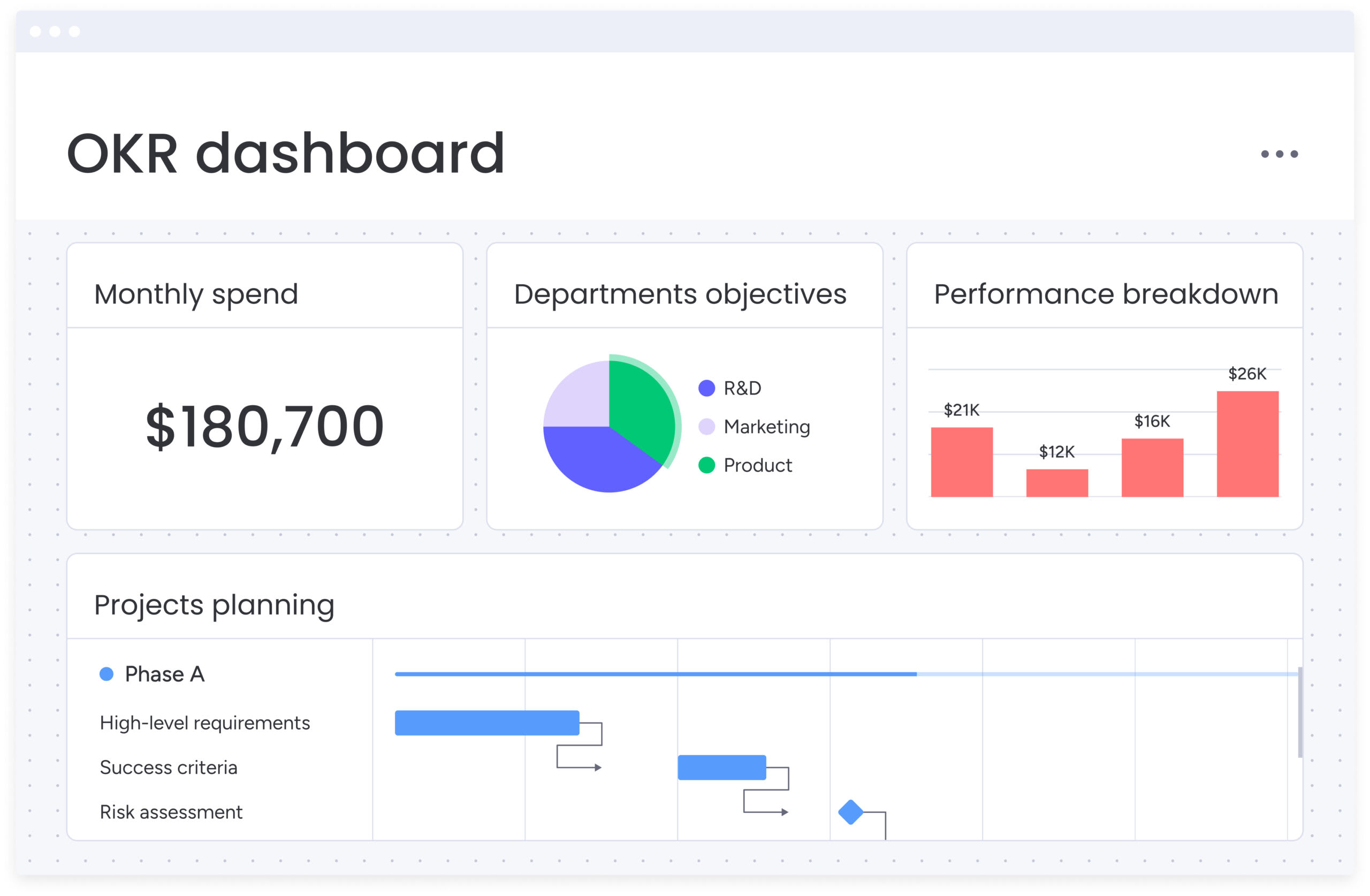
Specifically, real-time visibility makes a major difference here. Automated alerts highlight spending spikes or declining runway early, so adjustments can be made before issues escalate.
Furthermore, monday.com provides this visibility through connected dashboards that keep financial data current and actionable instantly.
Build financial projections in 5 steps
Financial projections often feel intimidating at first, especially when assumptions are still evolving. However, breaking the process into clear steps makes it far more manageable. Instead of guessing, this approach helps connect ideas to numbers in a way that actually holds up over time.
Step 1: define your revenue streams
Start by clearly mapping where income will come from. This could include subscriptions, one-time sales, licensing, or service retainers. At the same time, estimate realistic sales volume based on market size and team capacity, not just ambition.
Step 2: identify fixed and variable costs
Next, separate costs that stay consistent from those that grow with revenue. For instance, rent and salaries remain stable, while server costs or transaction fees increase as the business scales. This distinction matters because it directly impacts margins and long-term planning.
Step 3: create monthly cash flow forecasts
Then, map cash inflows and outflows month by month for the next twelve to eighteen months. Profitability on paper does not guarantee available cash, so this step highlights potential gaps early. As a result, it becomes easier to plan ahead rather than react under pressure.
Step 4: find your break-even point
After that, calculate the sales volume required to cover all expenses. This gives a clear picture of how long it may take to reach stability. Additionally, it helps estimate how much funding is needed to sustain operations until that point.
Step 5: benchmark against your industry
Finally, compare projections with industry benchmarks like gross margin, CAC, and burn multiple. This step adds context and helps identify whether assumptions are realistic. If numbers feel off, it is often a signal to revisit the model before moving forward.
AI has made this process faster and more precise. Many finance teams now rely on automation to categorize expenses and pull data from documents, which reduces manual effort. Within monday.com, these capabilities help keep projections accurate while allowing teams to adjust quickly as new data comes in.
Learn more: AI budget overrun agent
Design multiple scenario budget plans
No startup operates exactly as planned, which is why relying on a single budget rarely works. Scenario planning creates flexibility by preparing for different outcomes instead of reacting to surprises later. It brings a sense of control, even when conditions shift unexpectedly.
Below is a simple comparison of how different scenarios can look across key metrics.
| Metric | Conservative scenario | Base case scenario | Aggressive growth scenario |
|---|---|---|---|
| Revenue growth | 5% MoM | 10% MoM | 20% MoM |
| Hiring plan | Critical roles only | Planned roadmap | Accelerated hiring |
| Marketing spend | Organic focus | Balanced mix | Aggressive paid acquisition |
| Cash runway | 18+ months | 12-15 months | 9-12 months (requires Series A) |
Each scenario serves a different purpose and helps guide decision-making in real time.
- Best-case growth projections: Model aggressive but realistic growth based on strong market adoption and efficient operations. Plan how to use extra cash for faster hiring or more ad spend to grab market share without breaking your operations.
- Conservative revenue estimates: This assumes slower adoption, longer sales cycles, and tougher market conditions. Focus on cutting costs to extend runway and prioritize survival over growth. This serves as your “safe” plan for ensuring longevity.
- Pivot points and decision triggers: Good planning sets specific numbers that trigger strategy changes. If you miss revenue targets three months in a row or your CAC gets too high, it’s time to cut costs or raise more money.
You can switch between different financial scenarios instantly. Automated reports track actual performance against your scenarios, warning you early when things shift. monday.com’s dashboards and workflows give you this flexibility.
Turn static budgets into dynamic financial dashboards
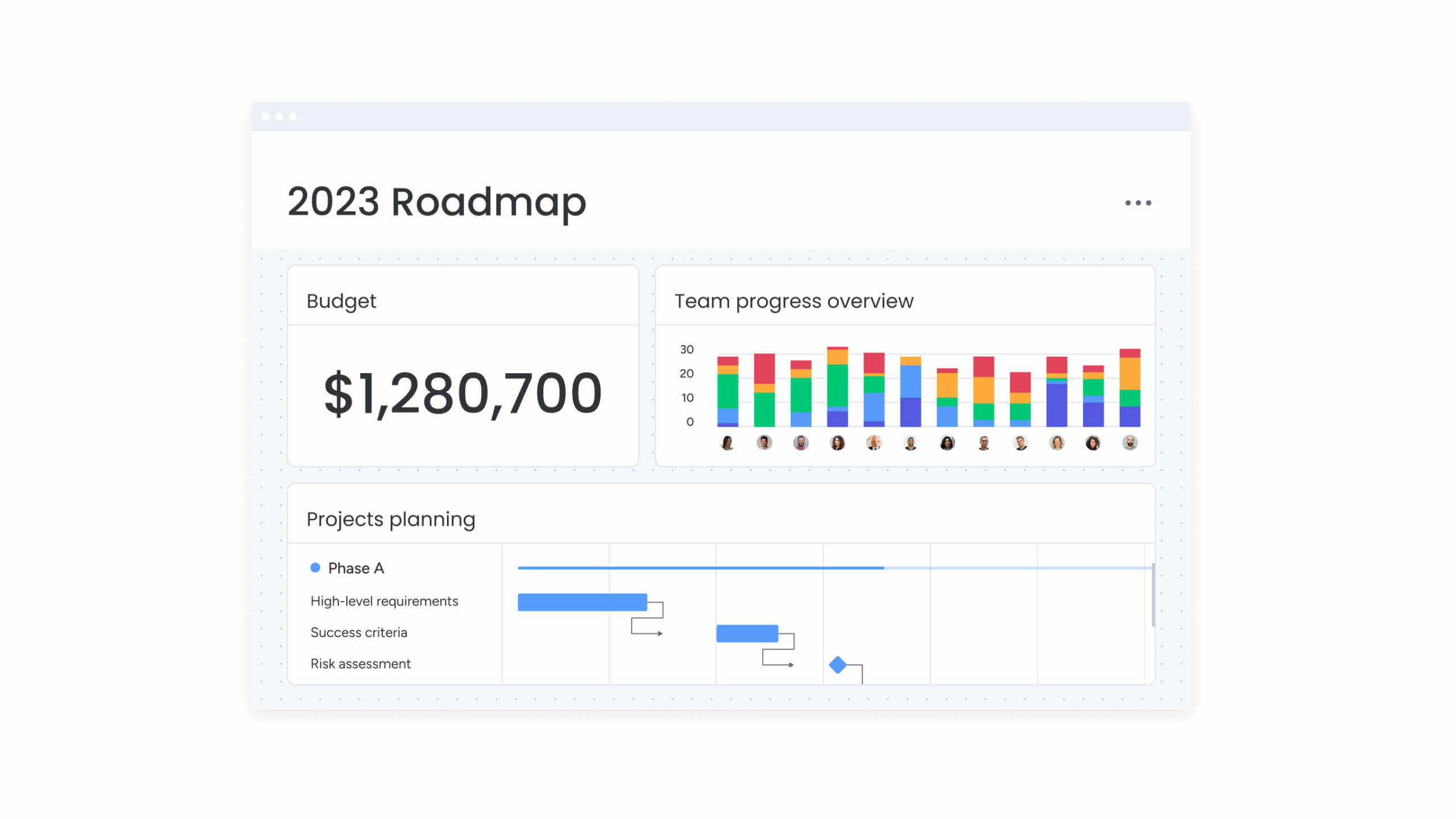
Traditional spreadsheets often fall behind as soon as the business starts moving faster. By the time reports are reviewed, the data already feels outdated. That gap makes it harder to make timely decisions when it matters most.
In contrast, dynamic dashboards solve this by connecting budgets directly to real activity. Instead of waiting for updates, financial data reflects what is happening in real time. This shift makes budgeting more actionable and less reactive.
Three core capabilities make this approach effective:
- Connect budgets to real spending: Budget plans link directly with expense systems and project activity. As a result, every transaction reflects instantly against planned numbers without manual updates.
- Track variance automatically: Dashboards highlight the gap between planned and actual spending as it happens. This makes it easier to catch overspending early rather than at the end of the month.
- Share live updates with stakeholders: Instead of preparing reports manually, stakeholders can access live financial data anytime. This not only saves time but also improves transparency across teams.
Overall, moving beyond static spreadsheets creates a clearer and more reliable view of financial health. With monday.com, this connection between planning and execution happens within the same platform, making it easier to stay aligned as the business grows.
Instead of waiting for updates, financial data reflects what is happening in real time. This shift makes budgeting more actionable and less reactive.
Automate your startup's financial workflows
As operations expand, manual financial processes quickly become overwhelming. Repetitive tasks take up time that could be better spent on strategic decisions. That is where automation starts to make a noticeable difference.
Rather than handling everything manually, focus on areas that benefit most from consistency and speed. This ensures accuracy while also reducing unnecessary workload as transaction volumes increase.
Key areas where automation adds immediate value are:
- Set intelligent spending alerts: Notifications trigger automatically when budgets reach certain thresholds, like fifty, eighty, or one hundred percent. This prevents unexpected overspending and keeps teams aware of limits.
- Build structured approval workflows: Expense approvals follow predefined rules based on amount or category. This keeps spending controlled without slowing down day-to-day operations.
- Generate board-ready reports: Financial data from multiple sources comes together automatically into clear reports. This significantly reduces the time spent preparing updates for stakeholders.
In addition, automation ensures processes stay consistent even as the business scales. Within monday.com, these workflows are built directly into the platform, allowing teams to manage finances with more clarity and less manual effort.

“monday.com has been a life-changer. It gives us transparency, accountability, and a centralized place to manage projects across the globe".
Kendra Seier | Project Manager
“monday.com is the link that holds our business together — connecting our support office and stores with the visibility to move fast, stay consistent, and understand the impact on revenue.”
Duncan McHugh | Chief Operations OfficerSimplify startup budgeting with monday.com
Early-stage budgeting often breaks down when plans and execution drift apart. Numbers may look solid on paper, yet day-to-day decisions slowly pull spending in a different direction. That disconnect makes it harder to track progress, adjust quickly, and stay aligned with long-term goals.
This is where monday.com brings clarity by connecting financial planning directly to daily work. Instead of managing budgets separately, teams can see how every task, project, and expense ties back to overall financial performance. As a result, decisions become more grounded and easier to act on.
- Real-time visibility into budget performance: Financial data updates alongside ongoing work, so teams always see where spending stands against plans.
- Automated tracking and alerts: Budget thresholds and spending changes trigger notifications, helping teams stay on track without constant manual checks.
- Connected workflows across teams: Marketing, product, and operations contribute to the same financial view, reducing silos and improving alignment.
- Scenario planning with live data: Teams can adjust assumptions and immediately understand how changes impact runway and growth plans.
- Streamlined reporting for stakeholders: Dashboards provide clear, up-to-date insights without the need for time-consuming manual reports.
In the end, bringing budgeting and execution into one place helps teams move faster with fewer surprises. With better visibility, smoother collaboration, and less manual effort, startups can manage their finances with confidence while staying focused on growth.
Frequently asked questions
How often should I update my startup budget template?
To know how often you should update your startup budget, you should plan for monthly reviews to adjust for actual burn rate and revenue, with comprehensive re-forecasts every quarter to align with strategic pivots.
What percentage of my startup budget should go to marketing?
The percentage of your startup budget that should go to marketing depends on your business model. Early-stage B2B startups typically allocate 10-15%, while B2C companies often spend 20-40% to drive aggressive customer acquisition.
Can I use a startup budget template for investor presentations?
Yes, you can use a startup budget template for investor presentations, but you should provide a summarized version. Investors expect to see key metrics like burn rate, CAC, and runway rather than the granular line-item detail used for internal operations.
What's the difference between a startup budget and a business plan?
A business plan outlines strategic vision, market analysis, and operational goals, while a budget is the quantitative roadmap allocating specific financial resources to achieve those goals.
How do I budget for founder salaries in early stages?
Founder salaries should cover personal living expenses to prevent financial stress but remain modest to preserve cash runway, often scaling up only after securing Series A funding or profitability.
What are typical startup costs for an online business?
Typical costs include domain and hosting fees ($100-$500/year), software subscriptions ($200-$1,000/month), incorporation fees ($500-$2,000), and initial digital marketing spend.
How does monday.com handle startup budget tracking?
The platform tracks budgets by connecting planned spend to actual project execution, using dashboards to visualize variance and automations to alert teams of overspending in real-time.
Can monday.com integrate with my existing accounting software?
Yes, monday.com integrates with platforms like QuickBooks, Xero, and Stripe, allowing financial data to flow automatically into project boards for unified visibility.

 Get started