

Your leadership team spent months crafting the perfect five-year plan. The vision is clear, the goals are ambitious, and everyone left the boardroom energized. Six months later, you’re watching projects drift, priorities shift weekly, and teams work in different directions. Sound familiar?
The gap between strategic vision and daily execution has never been wider. Organizations today face rapid market changes, distributed teams, and stakeholder demands that traditional planning cycles can’t accommodate. Success requires organizational strategies that connect high-level goals to ground-level work, ensuring every department and individual understands how their efforts drive broader objectives.
Let’s break down the organizational strategies that create real impact in 2026. Read on below and discover the core strategy types, a practical 6-step framework for building your approach, and how a flexible work management platform can connect boardroom vision to what actually happens on the ground.
Key takeaways
- Connect daily work to long-term vision: Build strategy that links every team member’s projects to broader company goals, creating alignment that drives real results across departments.
- Focus on execution, not just planning: Most strategies fail because organizations can’t bridge the gap between boardroom vision and ground-level work that actually moves the needle.
- Choose your competitive advantage wisely: Pick one primary strategy — cost leadership, differentiation, or focus — and commit resources fully rather than spreading efforts thin across multiple approaches.
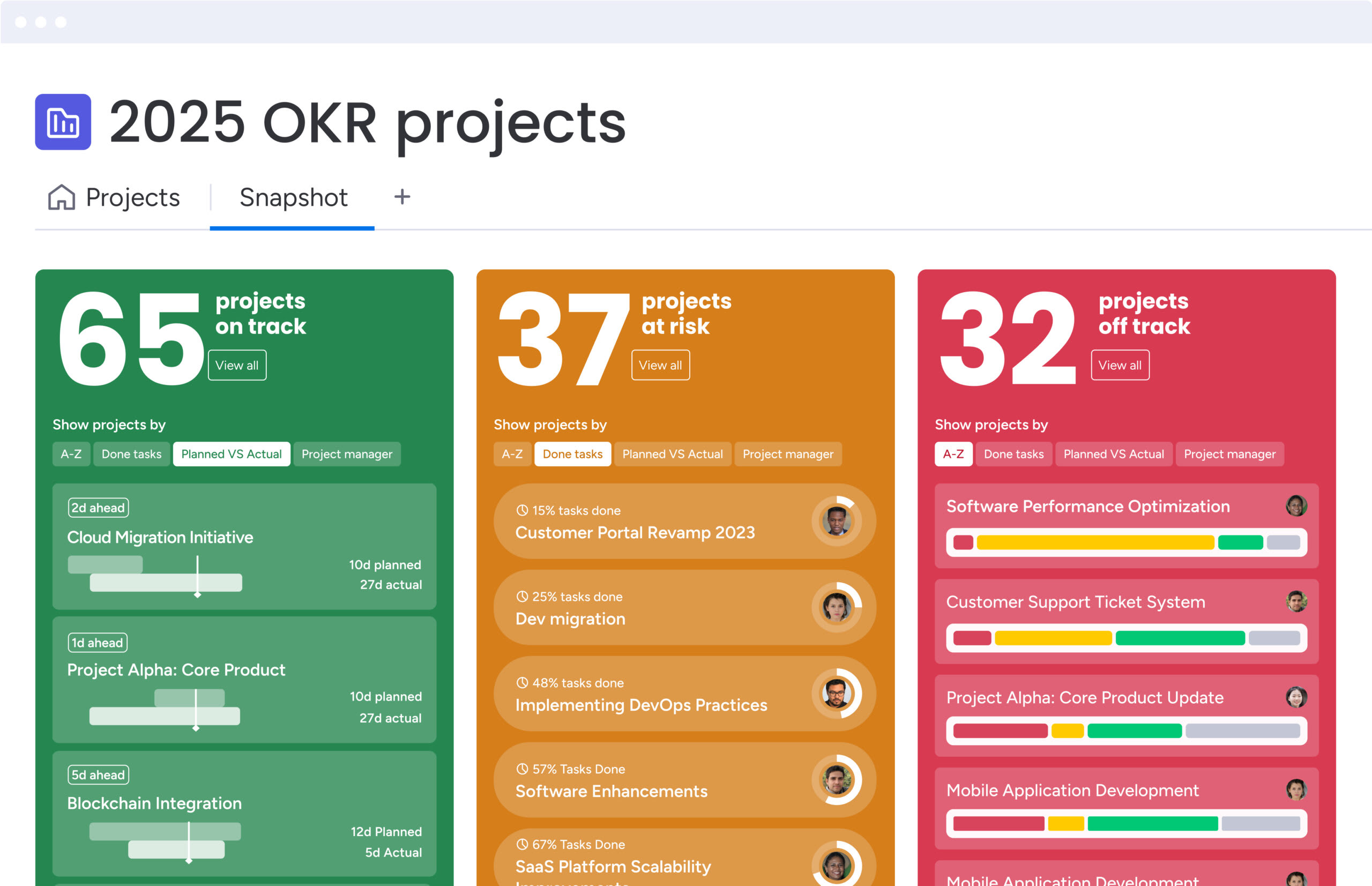
- Turn strategy into action with a Work OS: Use portfolio management views and goal-tracking features to connect high-level objectives directly to individual work items, ensuring strategic progress happens daily.
- Measure what matters with leading indicators: Track forward-looking metrics like employee engagement and pipeline strength to predict success, not just backward-looking financial results that come too late to fix problems.
What is organizational strategy?
Organizational strategy is your company’s game plan — it connects what you do every day to where you want to be in five years. Think of it as your business’s operating system — it decides where you’ll compete and how you’ll win.
Unlike tactical planning that focuses on the “how,” organizational strategy addresses the “what” and “why.” It connects daily work to bigger goals, so every project moves you toward where you’re headed.
Strong organizational strategy has three core components that turn vision into action:
- Vision alignment: Links daily work to long-term goals, ensuring every activity drives toward shared outcomes.
- Resource allocation: Distributes budget, talent, and technology to high-priority initiatives rather than spreading resources thin.
- Competitive positioning: Defines how your organization differentiates itself through cost leadership, innovation, or customer intimacy.
Why organizational strategy matters more than ever
The business landscape moves faster than traditional five-year plans can keep up with. Companies without adaptable strategies risk falling behind as faster competitors take their market share.
Four major shifts make strategy more important than it’s ever been:
- Market volatility: Rapid technological shifts and economic fluctuations require strategic agility to pivot quickly without losing sight of core missions.
- Digital transformation pressure: Adopting tools piecemeal creates technical debt, while strategic integration of AI and automation creates cohesive ecosystems.
- Talent evolution: Remote and hybrid work demands strategic workforce planning to address skills gaps and maintain culture across distributed teams.
- Stakeholder expectations: Investors, employees, and customers demand transparency on sustainability and social responsibility, requiring these elements in core strategy.
Organizations gain the visibility and alignment needed to navigate these complexities when they connect strategy to execution through unified platforms. The right Work OS connects high-level vision to daily work, so teams can turn strategy into workflows that adapt when things change.
The 3 core levels of organizational strategy
Organizational strategy works as a hierarchy — alignment has to flow from the boardroom down to individual departments. Each level answers different questions and needs its own decision-making approach.
| Strategy level | Key question | Primary focus | Example decision |
|---|---|---|---|
| Corporate level | What businesses should we be in? | Portfolio management, M&A, diversification | Technology company expanding into healthcare AI |
| Business level | How do we compete in this market? | Target markets, value propositions, competitive advantages | Software company choosing premium pricing vs. mass adoption |
| Functional level | How do departments support business goals? | Operational plans within marketing, HR, IT, operations | IT department executing cloud migration for scalability |
Corporate level strategy
Corporate-level strategy represents the highest tier of decision-making, answering “What businesses should we be in?” At this level, you’re managing your portfolio of business units and deciding on diversification, mergers, acquisitions, and divestitures.
A technology conglomerate expanding into healthcare AI makes a corporate-level strategic move. Similarly, a manufacturing giant selling off non-core logistics divisions to focus on R&D operates at this level. These decisions set boundaries and resource limits that flow down through the entire organization.
Business level strategy
Business-level strategy focuses on how you compete in specific markets. Once corporate strategy picks a market, business strategy figures out how to win — choosing target customers, building your value proposition, and establishing competitive advantage.
A software company might pursue rapid development with premium pricing, while competitors focus on reliability and cost-effectiveness for mass adoption. This level turns broad corporate vision into specific competitive approaches for different customer segments.
Functional level strategy
Functional-level strategy is how specific departments create operational plans that support business goals. These strategies drive execution — they’re not isolated silos.
Here’s how different departments align their strategies to support broader goals:
- IT strategy: Cloud migration supporting scalability and remote work enablement.
- HR strategy: Global remote hiring supporting international market entry.
- Marketing strategy: Educational content establishing thought leadership in new niches.
7 types of organizational strategies that create value
Organizations create value in different ways depending on their strengths, market conditions, and long-term ambitions. Some compete on efficiency, others on innovation or specialization. The most effective strategies build on what an organization already does well while positioning it to adapt as markets evolve.
The following approaches highlight the primary ways organizations structure competitive advantage, helping leaders choose a direction that aligns with their capabilities and growth priorities.
1. Cost leadership strategy
Cost leadership means becoming the lowest-cost producer in your industry, so you can compete on price or enjoy higher margins. This takes real efficiency across your entire system — not just budget cuts.
Key elements include:
- Process optimization: Streamlining operations to eliminate waste and redundancy.
- Scale advantages: Leveraging production volumes for favorable supplier terms.
- Technology automation: Using AI and robotics to reduce labor costs and errors.
Walmart is a well-known example of this strategy in practice. Its investment in advanced logistics networks, supplier relationships, and operational efficiency allows the company to maintain consistently low prices while preserving service levels and product availability.
2. Differentiation strategy
Differentiation means creating products or services customers see as unique across your industry. When customers value what makes you different, price matters less.
Success factors include:
- Product development: Creating features competitors cannot easily match.
- Service excellence: Providing customer support that becomes a primary purchase reason.
- Brand positioning: Building emotional connections transcending functional utility.
Apple and Tesla are widely recognized examples of this approach. Both companies differentiate through design, technology, and customer experience, allowing them to command premium pricing while continuously investing in research, development, and brand positioning to maintain their competitive edge.
3. Focus strategy
Focus strategy means concentrating on narrow segments where you can win on cost or differentiation. You avoid competing head-to-head with major players by serving specific groups more effectively than anyone else.
Smaller companies can dominate niches where bigger generalists can’t compete — either with budget offerings for specific groups or specialized value for select customers.
4. Innovation strategy
Innovation strategy means creating new products, services, or business models — accepting higher risk for the chance to lead your market and earn bigger returns.
You can innovate in three ways:
- Incremental improvements: Enhancing existing product lines with new features.
- Disruptive innovations: Creating entirely new markets or business models.
- Open collaboration: Partnering with external partners, startups, and universities to accelerate development.
5. Digital transformation strategy
Digital transformation focuses on embedding technology across every part of the organization, improving how work gets done and how customers interact with your business. It involves modernizing legacy systems, automating repetitive processes, and using data to deliver more responsive, personalized experiences.
Organizations adopting this strategy often move core infrastructure to the cloud, streamline manual workflows, and introduce digital services that better match evolving customer expectations. For example, traditional banks launch mobile-first offerings to improve accessibility, while manufacturers use IoT-enabled equipment to anticipate maintenance needs and reduce downtime.
6. Platform strategy
Platform strategy builds ecosystems that connect different groups — usually producers and consumers — so they can transact and interact. The value comes from network effects — platforms get more valuable as more people use them.
Salesforce and Amazon Marketplace illustrate how powerful network effects can become. Salesforce connects businesses, developers, and partners through its ecosystem of integrations and apps, creating added value beyond the core product. Similarly, Amazon Marketplace links millions of sellers with global buyers, making the platform more useful as participation grows.
7. Ecosystem strategy
Ecosystem strategy means building networks of connected organizations — suppliers, distributors, partners, even competitors — that evolve capabilities together. This includes:
- Formal alliances: Expanding reach without capital-heavy acquisitions.
- Deep supplier collaboration: Creating integrated value chains.
- Joint ventures: Partnering with research institutions to solve complex problems.
The most effective strategies build on what an organization already does well while positioning it to adapt as markets evolve.
5 essential elements every organizational strategy needs
Effective strategies combine clear direction with practical structure. Without the right foundations in place, priorities become diluted and execution loses momentum. These five elements ensure strategy remains focused, actionable, and closely connected to measurable outcomes.
- Vision and mission alignment: Keeps strategy anchored to long-term direction, helping guide decisions when priorities compete or conditions change.
- Situational analysis: Grounds strategy in reality by assessing internal capabilities alongside market conditions and competitive positioning.
- Measurable objectives: Converts ambition into clear targets with defined timelines and success metrics so teams understand what progress looks like.
- Resource allocation framework: Directs budget, talent, and technology toward the highest-impact initiatives, ensuring priorities receive adequate support.
- Execution and monitoring systems: Connect planning to daily work through clear ownership, structured workflows, and real-time visibility into progress.
How to build your organizational strategy
Clear strategy comes from clear thinking. Rather than jumping straight into goal setting, effective organizations take time to understand where they stand, what they do best, and where real opportunities exist. A structured approach helps turn broad ambition into focused direction, making it easier to align teams and commit resources with confidence.
Step 1: analyze your current position and capabilities
Start by taking a hard look at where your organization stands today. Audit your internal capabilities to identify core strengths, resource limits, and cultural advantages. Look externally at market trends, what competitors are doing, and what stakeholders expect.
Frameworks like Porter’s Five Forces help structure this data, showing where you stand in the market and the gaps between where you are and where you want to be.
Step 2: define your vision and strategic objectives
Once you understand where you’re starting, define where you’re going with a long-term vision that inspires your team. Break that vision into specific, measurable goals that are ambitious but realistic.
Your goals should push your organization hard enough to drive innovation, but not so hard that operations fall apart.
Step 3: identify your organizational superpowers
Differentiation comes from unique capabilities: the things your organization does better than anyone else. Like:
- Proprietary technology: Exclusive access to advanced systems or processes.
- Unique service culture: Exceptional customer experience capabilities.
- Exclusive supply chain access: Preferential relationships with key suppliers.
Build your strategy around sustainable competitive advantages so you’re playing to strengths, not defending weaknesses.
Step 4: create your strategic action plan
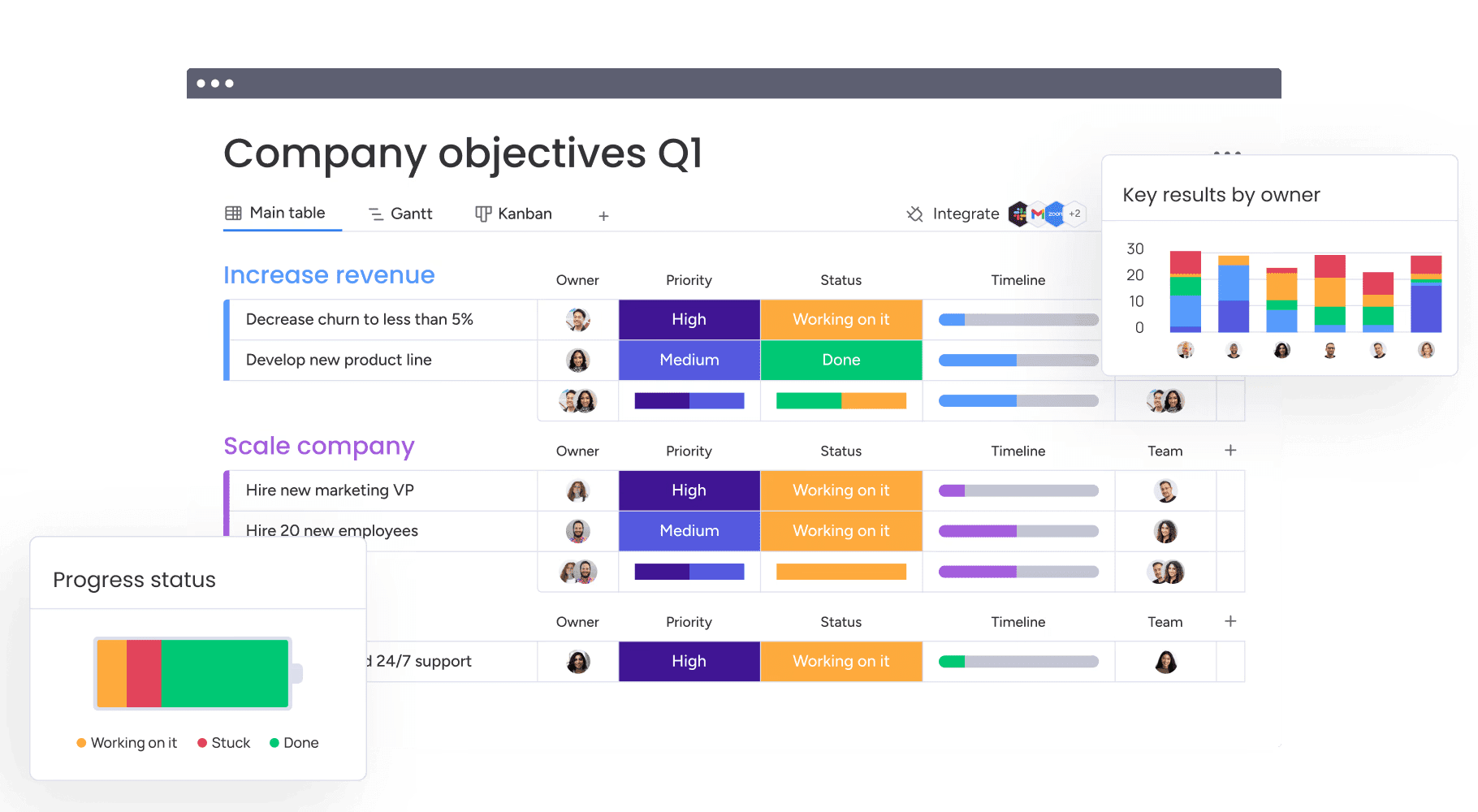
Turn strategy into planning by prioritizing initiatives based on impact and feasibility. Assign budget, people, and technology to these initiatives. Build timelines with clear milestones and owners.
Your plan should connect across functions so marketing, product, and operations all move toward the same goals.
Step 5: build your strategy execution tech stack
Strategy depends on more than planning too — it requires systems that keep initiatives visible, connected, and measurable as work progresses. The right technology helps teams track priorities, collaborate effectively, and respond quickly when conditions change.
The categories below highlight the core capabilities organizations rely on to support consistent execution:
| Tech category | Role in strategy execution |
|---|---|
| Project and portfolio management | Tracks initiatives against strategic goals and timelines |
| Data and analytics | Provides real-time feedback on performance metrics |
| Collaboration platforms | Breaks down silos and enables cross-team communication |
| Automation capabilities | Removes administrative burden so teams focus on strategic work |
A comprehensive Work OS like monday work management also brings these categories together, keeping data unified and giving you visibility across all strategic initiatives.
Step 6: deploy with continuous adaptation
Launch isn’t the end — it’s when adaptation begins. Roll out in phases or run pilot programs to test your assumptions before going all-in. Use change management to help your team adapt to new directions.
Build feedback loops and monitoring systems so your strategy can evolve based on what the market tells you, not just stick to the original plan.
Try monday work management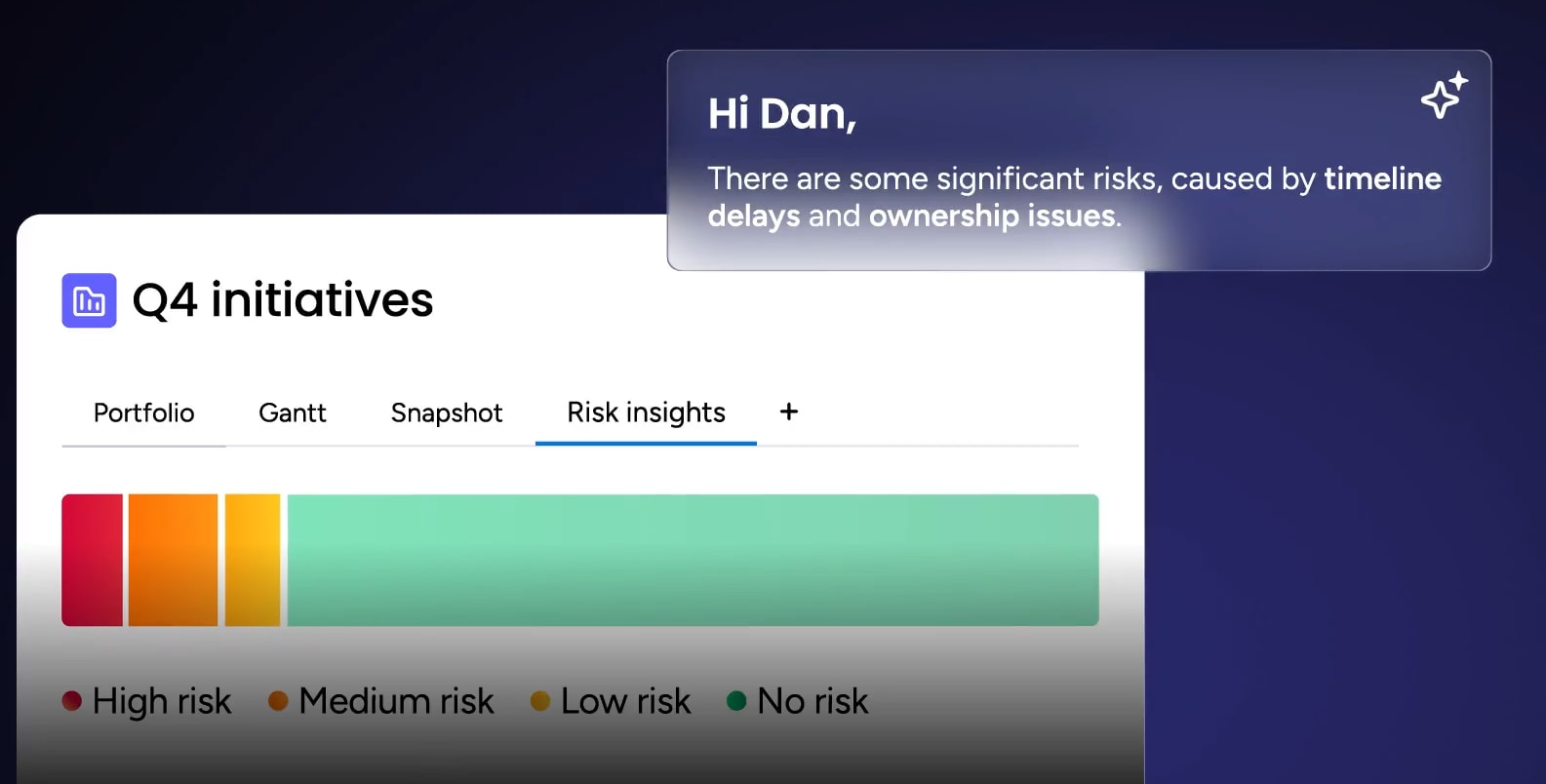
Transform strategy into results with AI and automation
AI and automation change how you manage strategy. When you integrate AI into strategy execution, you get faster, more accurate, and more adaptable.
AI-powered risk management
AI shifts risk management from reactive to predictive. It analyzes market trends, supplier stability, and geopolitical developments to spot strategic risks before they hit.
AI can spot supply chain bottlenecks weeks before they affect production, giving you time to activate backup plans. This capability shifts organizations from fighting fires to preventing them entirely. With Portfolio Risk Insights on modern platforms like monday work management, you can scan project boards continuously to flag potential risks by severity so teams spot critical issues without manual data review.
Automated resource allocation
Static budgets no longer suffice in dynamic markets. Automation enables resource optimization based on real-time performance data, flagging outperforming initiatives for increased investment while reallocating resources from stalled projects to higher-impact areas.
This ensures talent and budget flow to maximum value generation, removing political bias from allocation decisions and creating objective, data-driven resource management.
Real-time strategy tracking
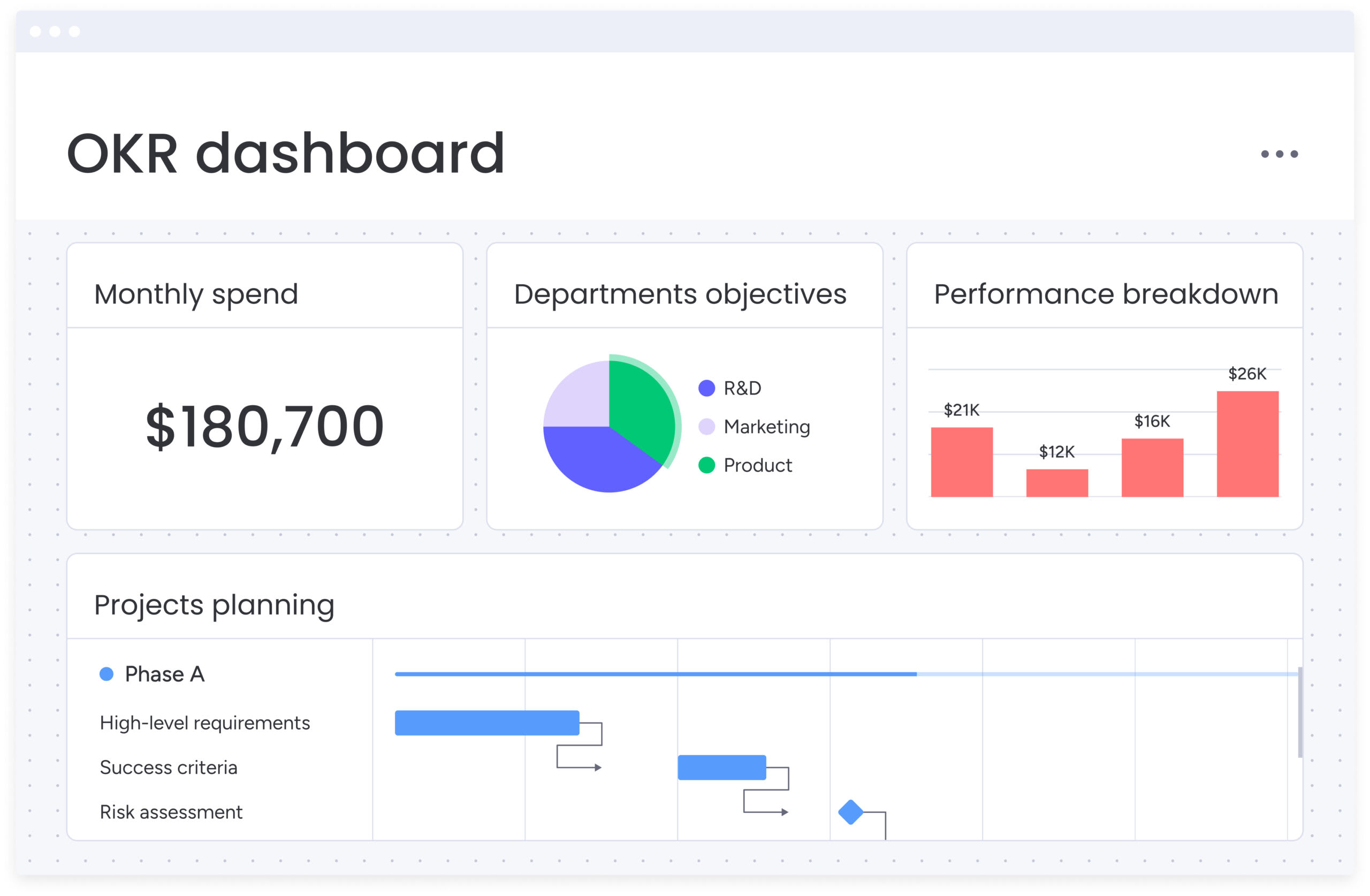
Technology eliminates lag between execution and evaluation through automated data collection feeding real-time dashboards. Leadership gains instant visibility into strategic health while predictive analytics forecast whether current trajectories meet year-end goals.
This continuous visibility enables course corrections early rather than scrambling in final quarters, maintaining strategic agility throughout execution cycles.
AI shifts risk management from reactive to predictive. It analyzes market trends, supplier stability, and geopolitical developments to spot strategic risks before they hit.
How to measure organizational strategy ROI
Measuring strategy requires balanced approaches mixing forward-looking and backward-looking metrics to provide comprehensive performance understanding.
| Metric type | Purpose | Examples |
|---|---|---|
| Leading indicators | Predict future success; early warning system | Pipeline strength, employee engagement scores, adoption rates |
| Lagging indicators | Validate past actions; proof of results | Revenue growth, profit margins, market share, retention rates |
| Strategic health | Assess organization's execution capability | Time-to-market speed, collaboration scores, initiative success rate |
- Leading indicators: Reveal whether you’re on the right path. For innovation strategies, R&D spending and patent applications serve as leading indicators — if these drop, future revenue likely suffers despite strong current sales.
- Lagging indicators: Confirm whether strategy worked through financial outcomes and market position changes. While critical for stakeholder reporting, they appear too late for fixing ongoing execution problems.
- Strategic health metrics: Measure organizational fitness including strategic agility and cross-functional collaboration strength, suggesting whether organizations can pivot when necessary.
Align strategy and execution with monday work management
Organizational strategy creates direction, but real impact comes from connecting that direction to the work teams complete every day. monday work management provides the structure and visibility needed to keep strategic priorities active, measurable, and consistently moving forward across departments.
By linking planning, collaboration, and reporting in one workspace, teams can maintain alignment from high-level objectives down to individual initiatives.
Connect goals directly to execution
Strategic priorities stay visible when they are connected to real work. monday work management links goals to projects, workflows, and deliverables, helping teams understand how daily efforts contribute to broader objectives. This clarity strengthens accountability and keeps initiatives aligned with long-term direction.
Gain portfolio-level visibility
Portfolio views provide leaders with a clear picture of progress across initiatives, departments, and timelines. Real-time dashboards surface key metrics and highlight performance trends, making it easier to assess whether strategic initiatives are advancing as planned.
Identify risks early with real-time insights
Portfolio Risk Insights highlight potential delays, resource constraints, or budget risks before they escalate. Early visibility allows teams to adjust timelines, rebalance workloads, or reprioritize initiatives while there is still time to respond effectively.
Improve collaboration across teams
Strategy often requires coordination between multiple departments. monday work management creates a shared workspace where updates, communication, and decisions stay connected to the work itself, reducing fragmentation across tools and improving transparency.
Allocate resources with greater clarity
Resource management views help organizations understand where capacity is stretched and where support is needed. Leaders can allocate people and budget more intentionally, ensuring strategic initiatives receive the attention required to succeed.

“monday.com has been a life-changer. It gives us transparency, accountability, and a centralized place to manage projects across the globe".
Kendra Seier | Project Manager
“monday.com is the link that holds our business together — connecting our support office and stores with the visibility to move fast, stay consistent, and understand the impact on revenue.”
Duncan McHugh | Chief Operations OfficerBuild strategy that delivers real results now
Strong organizational strategies create clarity long before results appear. They provide direction when priorities compete, guide resource decisions, and help teams focus on work that creates meaningful impact. The real advantage comes when strategy becomes part of everyday decision-making rather than a document revisited once a year.
Organizations that execute well maintain a clear link between long-term objectives and daily work. Teams understand why priorities matter, leaders can adjust direction with confidence, and progress becomes easier to measure across departments. This consistency builds momentum over time, allowing organizations to respond to change without losing focus.
Platforms like monday work management support this connection by helping teams keep goals visible, coordinate initiatives, and track progress as work evolves. With the right structure in place, strategy becomes a practical framework for guiding decisions, aligning teams, and sustaining growth over time.
Try monday work managementFrequently asked questions
What is the difference between organizational strategy and business strategy?
Organizational strategy defines the overall direction of the company, including long-term priorities, resource allocation, and how different business units work together to achieve shared goals. Business strategy focuses more narrowly on how a specific product line, division, or market segment competes. In short, organizational strategy sets the broader direction, while business strategy determines how individual areas contribute to that direction.
How often should organizations update their organizational strategies?
Most organizations review strategy annually to confirm long-term priorities still reflect market conditions and company goals. Quarterly check-ins help assess progress, identify risks, and adjust initiatives based on new information. This balance keeps strategy stable enough to guide decision-making, while remaining flexible enough to respond to change.
Who owns organizational strategy development in a company?
Executive leadership typically defines strategic direction, with the CEO and senior leaders responsible for setting priorities and allocating resources. However, strategy becomes effective only when leaders across departments translate those priorities into operational plans. Strong strategies rely on shared ownership, where managers and teams actively contribute to execution and continuous improvement.
How do you know if your organizational strategy is working?
Progress can be evaluated through a combination of leading and lagging indicators. Leading indicators, such as employee engagement, innovation output, or pipeline strength, show whether the organization is building future momentum. Lagging indicators, including revenue growth, customer retention, or market share, confirm whether strategic decisions are producing measurable results over time.
Can small businesses benefit from organizational strategies?
Smaller organizations often benefit significantly from clear strategy because resources are more limited and priorities must stay focused. A well-defined direction helps teams concentrate effort on the initiatives most likely to drive growth, avoid distractions, and compete effectively against larger companies with greater scale.
What causes organizational strategies to fail most often?
Strategies most often fall short during execution rather than planning. Common challenges include unclear priorities, limited visibility across initiatives, misaligned resources, and lack of connection between long-term goals and day-to-day work. When teams understand how their work contributes to strategic objectives and progress is tracked consistently, strategies are far more likely to succeed.

 Get started