


Most email newsletters get opened once and forgotten. But a few? They get saved, shared, and studied. What separates high-performing newsletters from ones that quietly lose subscribers? Focused content strategy, smart structure, and personalization that doesn’t feel robotic. These aren’t abstract concepts. They show up in specific, repeatable decisions any marketing team can steal.
Below are 20 of the best email newsletter examples across B2B, B2C, e-commerce, media, and SaaS. For each one, you’ll see what makes it work and why: not surface-level praise, but the specific tactics driving real results. Then we’ll cover the core conversion principles behind high-performing newsletters, how to measure what actually matters, and how tools like monday campaigns turn newsletter performance into pipeline by connecting email to CRM data.
Key takeaways
- Great newsletters earn attention by delivering real value: The best ones solve a specific problem for their readers and make the next action obvious every single time.
- Design for how people actually read email: Short paragraphs, bold key phrases, and a single-column layout make your newsletter easy to scan on any device.
- One CTA beats five every time: Newsletters with a single, focused call to action consistently outperform those with multiple competing links.
- Open rates don’t tell the full story: Track click rate, click-to-open rate, and revenue impact to understand what’s actually working.
- monday campaigns connects email performance to real business outcomes: Built-in CRM integration means you can see which newsletters drive pipeline.Try monday campaigns
20 best email newsletter examples to inspire your next campaign
The best email newsletters share three qualities: immediate value, respect for the reader’s time, and an obvious next action. These newsletters each got clicked, shared, and remembered for a reason. Studying them reveals patterns any marketer can adapt, no matter the industry or audience size.
The 20 examples below span different industries, formats, and strategic approaches. Each one demonstrates specific tactics that drive measurable results.
1. The Hustle
The Hustle’s newsletter reads like a text from a smart friend who happens to follow business news obsessively. Their conversational tone creates a distinct voice that subscribers recognize instantly. This is a deliberate strategy that builds habit and loyalty.
Every issue follows the same pattern:
- Main story is a single, well-reported business or tech story
- Quick hits are bite-sized news items for fast scanning
- Sponsored content is strategically placed but styled to match the editorial flow
Key takeaway: A distinctive, consistent voice builds subscriber habit faster than any design element.
2. Morning Brew
Morning Brew makes dense business news feel light. Their visual hierarchy transforms what could be overwhelming into something digestible. Each topic gets its own defined block with consistent iconography, making scanning effortless.
Their sponsorship integration deserves attention:
- Sponsored content is labeled but styled to match editorial content
- Reading flow is maintained while revenue is generated
- The experience never feels like an interruption
Key takeaway: Balancing content and monetization requires design consistency.
3. TheSkimm
TheSkimm built a media empire by designing for how people actually read email: on phones, while distracted, in 30-second bursts. Their mobile-first approach consists of borg a responsive design and a content philosophy that prioritizes scannability over depth.
- Bolded key phrases let readers skim and still catch the main points
- Single-column layouts eliminate the multi-column formats that break on mobile
- Short, punchy sentences respect the reader’s limited attention window
Key takeaway: Design for the way people actually read emails — distracted, on mobile, in short bursts.
4. Buffer
Buffer’s newsletter proves that the best product marketing doesn’t feel like marketing at all. Every issue leads with educational value (original research, tactical guides, industry analysis) and only mentions their product when it’s genuinely relevant.
- They share failures alongside successes, building trust through honesty
- Product features appear as examples within educational content, not as promotional blocks
- The result is a newsletter subscribers look forward to, not one they tolerate
Key takeaway: Building trust through value-first content creates more conversions than promotional emails ever could.
5. NYT Cooking
NYT Cooking gets it: in visual categories like food, the image does the selling. Their newsletters are essentially curated galleries where high-quality food photography creates desire before a single word is read.
- Large, professionally shot photography dominates above the fold
- Minimal copy lets the visuals do the heavy lifting
- Timely content aligns with what readers are likely cooking right now, increasing immediate utility
Key takeaway: In visual categories, invest in imagery first.
6. Quartz Daily Brief
Quartz knows its readers are busy executives who need dense information without overload. Their bullet-point-heavy format delivers maximum insight per minute spent reading.
- Nearly every section uses bullets, making scanning effortless
- Content is organized by what readers need to know now versus what can wait
- Ruthless editing keeps every line earning its place
Key takeaway: Respecting subscriber time means ruthless editing.
7. Moz Top 10
Moz’s newsletter succeeds by focusing entirely on expert curation. Instead, they’re expert curators, filtering the overwhelming volume of SEO content into the 10 most valuable pieces each month.
- Each link includes Moz’s perspective on why it matters, adding value beyond simple aggregation
- Monthly delivery sets expectations and creates anticipation
- The format is repeatable, scalable, and genuinely useful
Key takeaway: Curation is a value proposition.
8. Ahrefs Digest
Ahrefs stands out by sharing data and insights you literally can’t find anywhere else. Their access to massive SEO datasets allows them to publish original research that competitors can’t replicate.
- Proprietary insights drawn from their own datasets create unique value
- Data is always connected to what readers should do differently
- The newsletter becomes a reason to stay subscribed, not just a touchpoint
Key takeaway: Differentiation through proprietary content creates newsletters that can’t be replicated.
9. Litmus Weekly
Litmus practices what they preach. Their email marketing newsletter is itself an example of excellent email marketing. The meta approach builds credibility while demonstrating their expertise in real time.
- Every issue showcases best practices in layout, accessibility, and responsiveness
- Concepts are illustrated with real email examples, not abstract theory
- The newsletter is both the message and the proof
Key takeaway: Practice what you preach.
10. Why We Buy
Katelyn Bourgoin’s newsletter turns complex behavioral psychology into actionable marketing insights. Her storytelling approach (start with a relatable scenario, introduce the psychology, then show the application) makes dense academic concepts accessible.
- Each issue tells a story that illustrates the psychological principle
- Research citations add authority without making content dry
- The narrative structure keeps readers engaged from open to click
Key takeaway: Education through narrative makes complex concepts stick.
11. Atlas Obscura
Atlas Obscura’s newsletter builds anticipation by consistently delivering content that surprises. Their focus on the world’s hidden wonders means every issue contains something readers have never heard of.
- Every story promises the discovery of something unknown
- Writing style is warm, wonder-filled, and unmistakably theirs
- Readers open it not out of obligation, but genuine curiosity
Key takeaway: Building a distinctive brand voice creates anticipation.
12. Marketing Brew
Marketing Brew succeeds by speaking the language of marketing professionals: insider terminology, shared experiences, and stories that matter specifically to their niche.
- Industry-specific language assumes reader expertise, creating an insider feeling
- Reader submissions and references create two-way engagement
- The newsletter feels like a community, not a broadcast
Key takeaway: Speaking directly to your niche creates community and loyalty.
13. The Marginalian
Maria Popova’s newsletter succeeds by intentionally defying conventional rules. Issues are long, dense, and require focused attention, yet she maintains devoted readership. Proof that rules exist to serve strategy, not the other way around.
- Essays reward careful reading, not skimming
- Writing feels like a letter from a thoughtful friend
- The format works because the audience expects and values depth
Key takeaway: Breaking rules intentionally works when you understand why the rules exist.
14. Penguin Random House
Penguin Random House nails personalization that feels helpful rather than intrusive. By using reading preferences and purchase history to recommend books, they create newsletters that feel curated specifically for each reader.
- Suggestions align with stated interests and past behavior
- Recommendations feel like advice from a knowledgeable friend, not a sales pitch
- Data serves the reader’s experience, not just the brand’s revenue goals
Key takeaway: Personalization that feels helpful requires using data to serve the reader’s interests.
15. Tracksmith
Tracksmith sells running gear. Their newsletter sells the running lifestyle. By focusing on stories of runners, training philosophy, and the culture of the sport, they create an emotional connection that transcends product features.
- Athlete profiles and running culture content dominate over product promotion
- Photography captures the feeling of running, not just the gear
- The newsletter builds identity, not just awareness
Key takeaway: Creating emotional connection means selling the lifestyle, not just the product.
16. Apartment Therapy
Apartment Therapy blends editorial and commercial content seamlessly. Their shoppable newsletters feel like helpful recommendations from a design-savvy friend, not a catalog.
- Products appear within helpful content, not as separate promotional blocks
- Products are presented as solutions to design challenges readers face
- The line between editorial and commerce is intentionally blurred in the best way
Key takeaway: Seamless content-commerce integration requires editorial context.
17. Bloomscape
Bloomscape cuts purchase anxiety by leading with education. Their newsletters teach plant care before promoting plants, building confidence that leads to conversion.
- Care guides and tips precede product promotion
- Content addresses common fears directly
- Education removes the barrier to purchase without a single discount
Key takeaway: Education as conversion strategy works especially well for products with high buyer uncertainty.
18. Canva Design Updates
Canva turns boring product updates into compelling content by showing the value, not just describing it. Every new feature is demonstrated visually, making the value immediately obvious.
- New features are shown in action, not just described
- Updates are positioned in terms of what users can now accomplish
- The newsletter makes subscribers feel like they’re getting more from a product they already own
Key takeaway: Making product updates compelling requires showing the value visually.
19. Spotify Wrapped Recap
Spotify Wrapped nails personalization at scale: millions of unique emails, each feeling individually crafted. The genius is turning user data into shareable content, transforming a marketing email into a social moment.
- Personal listening data becomes entertaining content, not just statistics
- Design encourages social sharing, extending reach beyond email
- The campaign turns passive data into active engagement
Key takeaway: Turning data into delight means presenting user information in ways that surprise and entertain.
20. Netflix Picks for You
Netflix’s recommendation emails feel personal despite being algorithmically generated. The key is combining data-driven suggestions with a human-feeling presentation.
- Recommendations align with actual viewing behavior
- Show thumbnails dominate, letting content sell itself
- The email feels like a suggestion from someone who knows your taste
Key takeaway: Algorithmic personalization that feels human requires thoughtful presentation.
What makes a good email newsletter convert
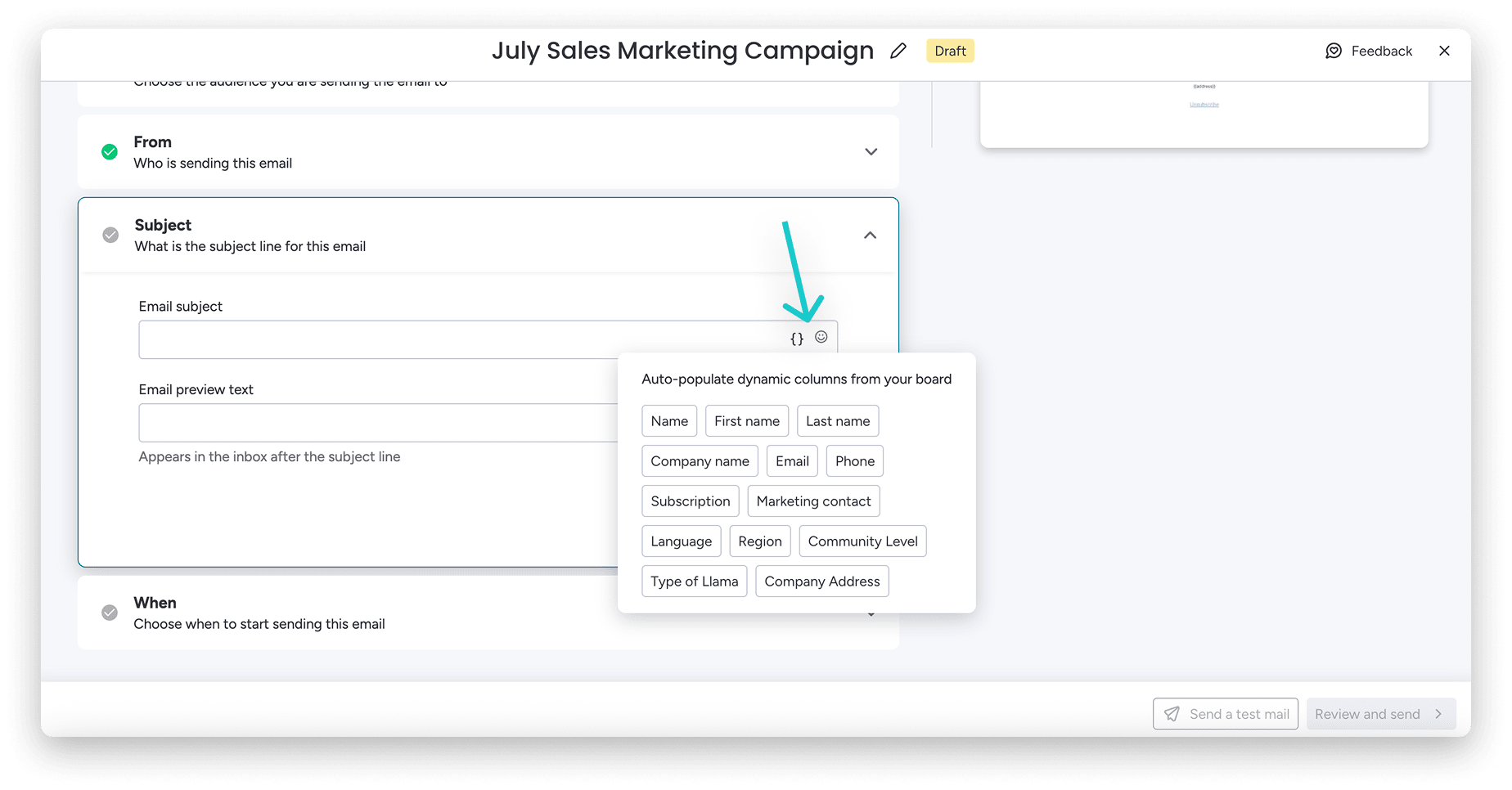
Successful newsletters share core conversion principles, no matter the industry, audience, or format. Understanding these principles instead of copying tactics helps marketers build newsletters that perform consistently over time.
What separates newsletters that look good from those that actually drive results? Strategic alignment between content, audience, and business goals. Four principles show up in every high-performing newsletter.
Principle 1: Define a focused job to be done
Every successful newsletter solves one specific problem for its audience. The Hustle saves time by curating business news. Why We Buy teaches psychology that improves marketing. Tracksmith builds community around running culture.
Identifying your newsletter’s job means answering one question: what does the subscriber get from reading this that they can’t get elsewhere? Your answer needs to be specific and defensible.
Principle 2: Build skimmable structure and visual hierarchy
Most newsletter readers scan instead of reading deeply. According to Microsoft’s 2025 Work Trend Index, the average worker receives 117 emails per day and skims most in under a minute, which is why eye-tracking studies consistently show that email readers follow an F-pattern, scanning headlines, reading the first few words of paragraphs, and jumping to visual elements.
| Element | Best practice | Why it works |
|---|---|---|
| Paragraph length | 2–3 sentences maximum | Prevents wall-of-text fatigue |
| Subheadings | Every 150–200 words | Creates entry points for scanners |
| Bold text | Key phrases only | Guides eyes to important information |
| White space | Generous margins and padding | Reduces cognitive load |
Mobile-first design isn’t optional. Over 60% of email opens occur on mobile devices, where multi-column layouts break and small fonts become unreadable.
Principle 3: Tie personalization to real customer data
Superficial personalization, like placing a recipient’s first name in the subject line, is a gimmick. Meaningful personalization, such as creating content based on behavior, implementing personalized preferences, and tailoring strategy to lifecycle stage is what makes a difference.
Meaningful personalization requires access to real customer data, not just email engagement metrics. Deloitte’s 2026 Retail Industry Outlook found that 67% of retail executives expect to deploy AI-driven personalization capabilities within the next year, signaling that behavior- and transaction-based targeting has moved from competitive advantage to baseline expectation.
That includes:
- Behavioral data: Pages visited, products viewed, content consumed
- Transactional data: Purchase history, order value, product usage
- Lifecycle data: Days since signup, customer status, renewal dates
With monday campaigns, segments update automatically as CRM data changes. When a deal moves to a new stage, when an engagement score updates, or when a customer’s renewal date approaches, your targeting stays accurate without manual list management.
Try monday campaignsPrinciple 4: Choose one focused call to action
Decision fatigue kills conversions. When newsletters include multiple CTAs competing for attention, click-through rates drop everywhere. The most effective newsletters choose one primary action per send and design everything to support that action.
6 email newsletter examples by campaign type

Different newsletters serve different stages of the customer journey. The most effective email programs use multiple campaign types strategically. Each one meets subscribers where they are and moves them forward.
- Welcome newsletter examples: These set the tone for everything that follows, with the highest open rates and the biggest impact on long-term engagement.
- Nurture and lifecycle newsletter examples: These move subscribers through awareness, consideration, and decision stages by adapting content to each subscriber’s stage.
- Promotional and product launch newsletter examples: These drive immediate action by creating urgency without manipulation while balancing promotional content with relationship building.
- Event invitation and recap newsletter examples: These serve dual purposes—driving registration before the event and extending value after by treating the event as content, not just a calendar item.
- Win-back and re-engagement newsletter examples: These target subscribers who’ve stopped engaging with one goal: reactivation.
- Customer update and retention newsletter examples: These keep existing customers engaged, informed, and expanding their usage with a content mix that differs significantly from acquisition newsletters.
For a deeper look at these and other newsletter types, have a look at our post about email marketing examples.
How to measure newsletter performance beyond open rates
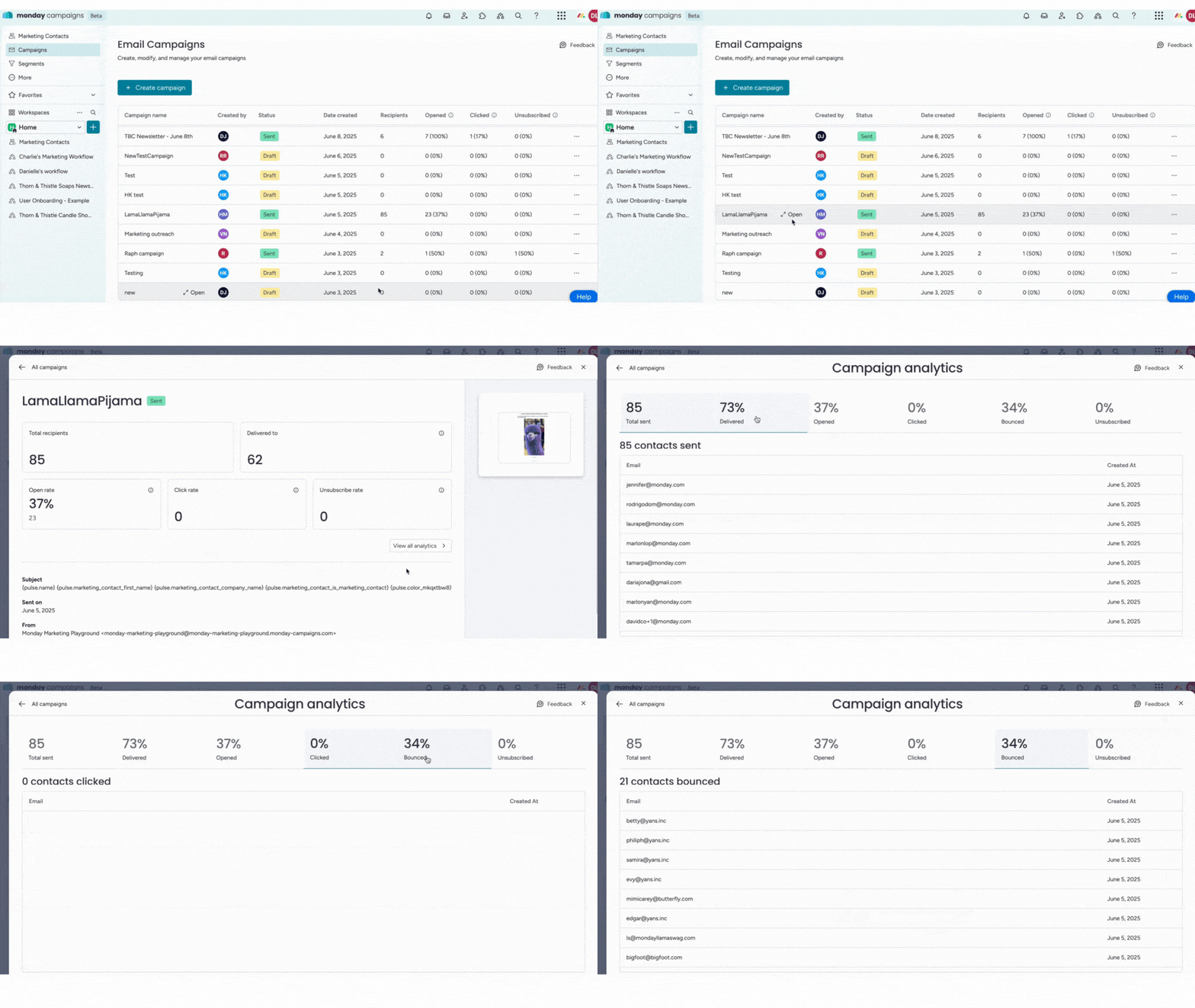
Privacy changes made open rates less reliable as a primary metric. Apple Mail Privacy Protection pre-loads tracking pixels to see whether subscribers actually open emails or not. The metrics that matter are tied to behavior and revenue.
| Metric | What it measures | Why it matters |
|---|---|---|
| Click rate | Clicks divided by delivered | Actual engagement with content |
| Click-to-open rate | Clicks divided by opens | Content relevance for those who opened |
| Unsubscribe rate | Unsubscribes divided by delivered | Content-audience fit |
| List growth rate | New minus unsubscribes divided by total | List health over time |
Newsletter success comes down to revenue impact, not just engagement. Connecting email engagement to pipeline, opportunities, and closed deals turns newsletters into revenue drivers, not cost centers.
monday campaigns connects email engagement directly to CRM outcomes. Marketers can see which newsletters drive pipeline, not just clicks. Sales and marketing teams share the same revenue view and stay aligned on what’s actually working.
monday campaigns: Turn newsletter insights into revenue
Building newsletters that convert requires more than good content. You need to connect email performance to actual business outcomes, understand which campaigns drive pipeline, and personalize at scale without manual list management. That’s where monday campaigns changes the game.
With built-in CRM integration and AI-powered capabilities, monday campaigns helps you create newsletters that don’t just get opened but drive measurable revenue. Here’s how it works for newsletter marketers who need to prove ROI.
AI-powered content generation and optimization
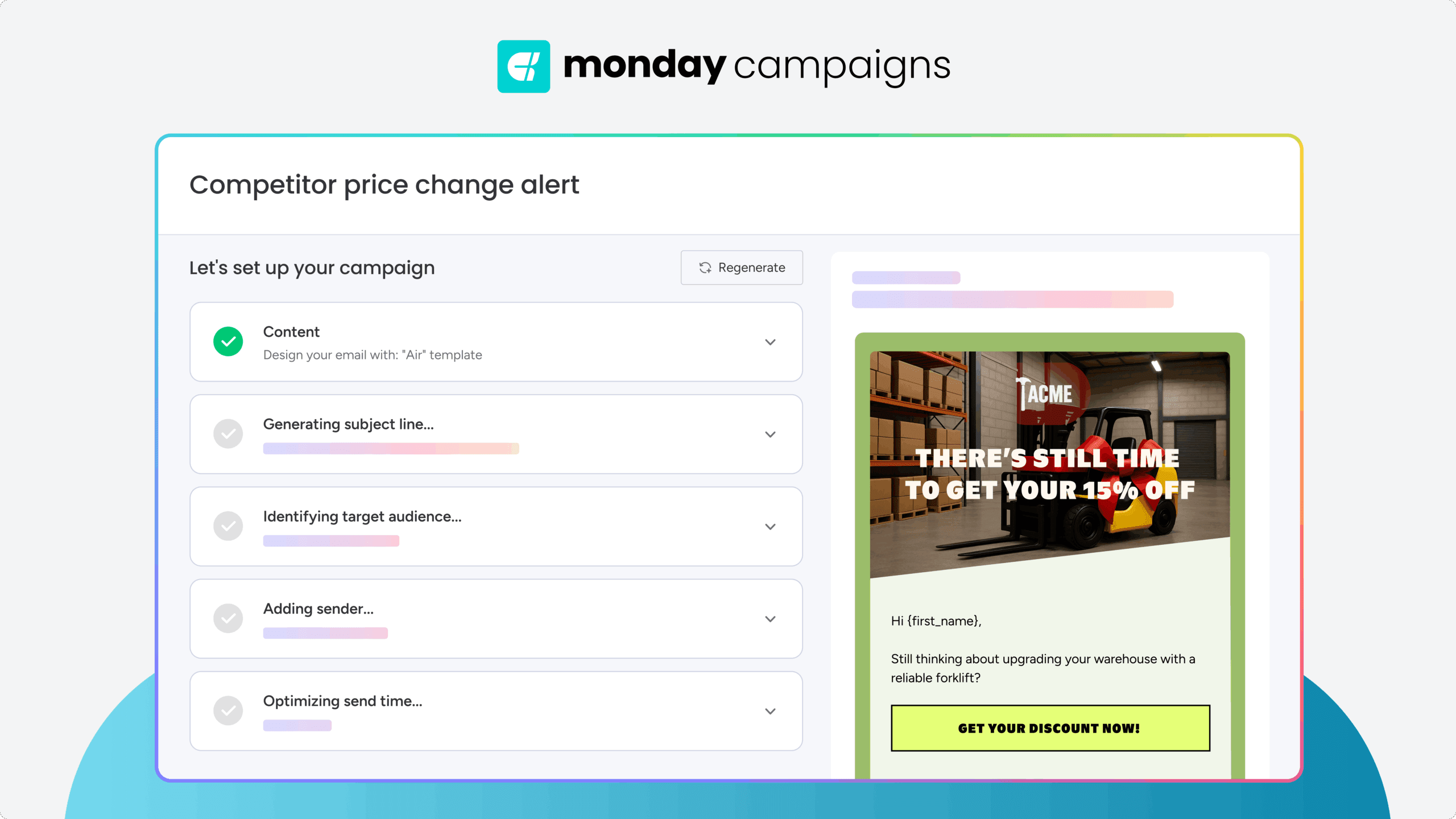
Create compelling newsletter content faster with AI assistance that learns your brand voice. The AI content generator helps you write subject lines, body copy, and CTAs that align with your tone while optimizing for engagement. You can test multiple variations, refine messaging based on performance data, and maintain consistency across every send without starting from scratch each time.
Dynamic segmentation connected to your CRM
Segment your audience based on real customer data, not just email behavior. Because monday campaigns integrates directly with your CRM, you can target subscribers based on deal stage, customer lifecycle, engagement scores, and purchase history. Segments update automatically as your CRM data changes, so your targeting stays accurate without manual list updates.
Revenue attribution that connects emails to pipeline
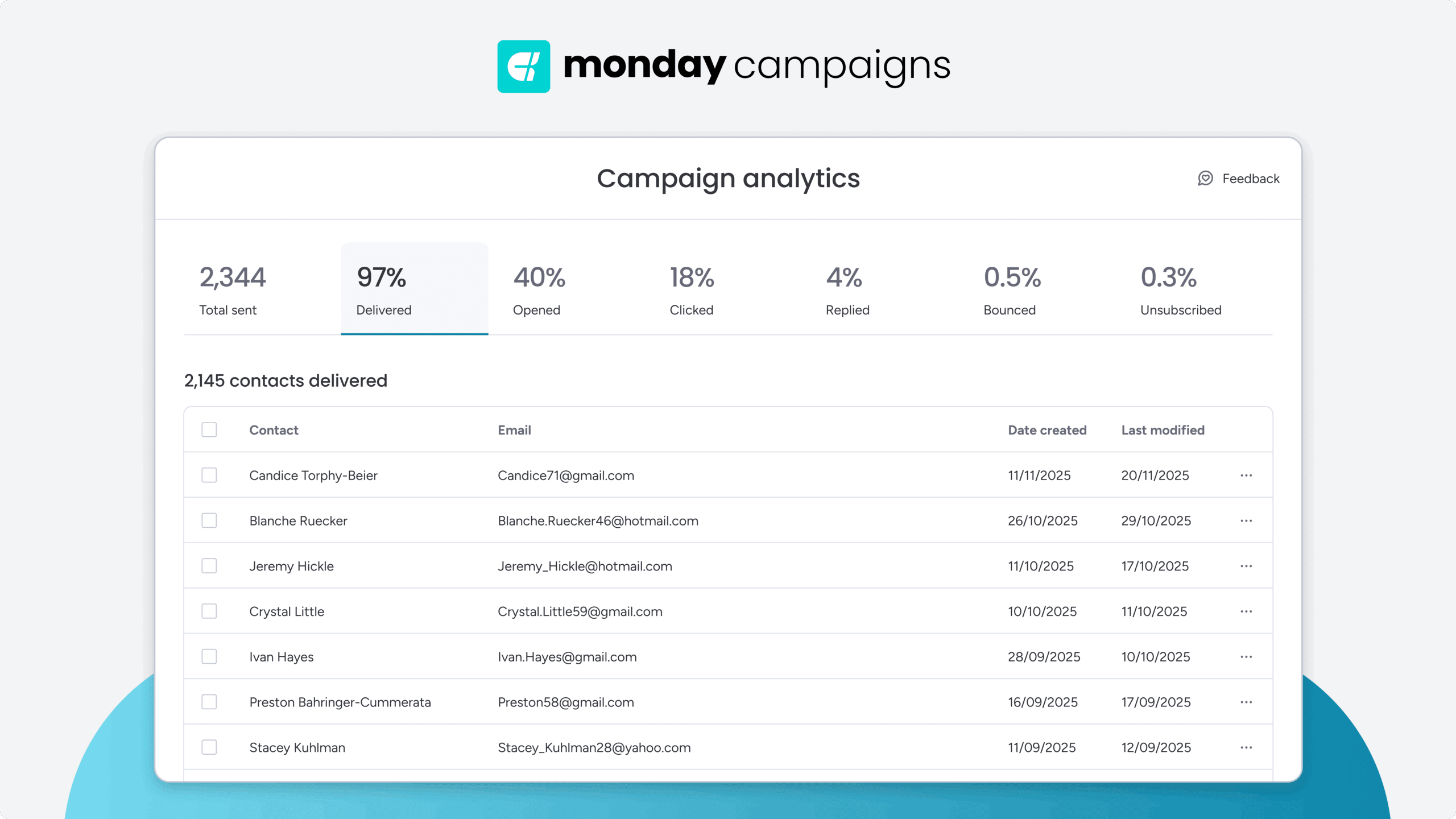
See exactly which newsletters drive opportunities, not just clicks. Track email engagement alongside deal progression, pipeline value, and closed revenue. Sales and marketing teams share the same view of how newsletters contribute to business outcomes, making it easy to optimize for what actually matters and prove the value of your email program.
AI-driven send time optimization
Let AI determine the optimal send time for each subscriber based on their individual engagement patterns. Instead of choosing one send time for your entire list, the system analyzes when each person is most likely to open and click, then delivers your newsletter at that personalized moment. This increases engagement without any additional effort on your part.
Put these newsletter lessons to work
The 20 examples in this article share one thing: clear purpose. Whether it’s curating news, building community, or driving conversions, every design and content decision serves that purpose.
The conversion principles aren’t tactics to copy once. They’re a framework to apply consistently, then refine based on what your audience actually responds to. With monday campaigns, you can test these principles systematically, track what drives real engagement, and optimize your newsletters based on data that connects directly to revenue outcomes.
Try monday campaignsFAQs
What is the best format for an email newsletter?
The best format for an email newsletter is a single-column, mobile-responsive layout with visual hierarchy. This format works because over 60% of email opens occur on mobile devices. Effective newsletters use short paragraphs, subheadings, and strategic bold text to guide scanning.
How often should I send an email newsletter?
Email newsletter frequency depends on your audience's expectations, content quality, and resources. Most successful newsletters send weekly or bi-weekly. The key is consistency; subscribers should know when to expect your newsletter.
What makes a newsletter subject line effective?
Effective newsletter subject lines create curiosity, promise specific value, or establish urgency, ideally in under 50 characters. The most effective subject lines use formulas like curiosity gaps, benefit statements, or specific lists.
How do I measure email newsletter success beyond open rates?
Measuring email newsletter success beyond open rates requires focusing on engagement and revenue metrics. Click rate measures actual content engagement. Revenue metrics like pipeline generated and opportunity influence connect newsletter performance to business outcomes.
How can I improve my email newsletter click-through rate?
Improving email newsletter click-through rate requires optimizing content relevance, CTA design, and overall structure. Use a single, prominent call-to-action rather than multiple competing links. Design CTAs as buttons with high contrast and action-oriented copy.
What's the difference between a newsletter and an email campaign?
A newsletter is a specific type of email campaign focused on regular, ongoing communication with subscribers. Email campaigns is a broader term encompassing all email marketing efforts, including promotional emails, welcome sequences, and transactional messages.

 Get started