

Here’s the truth: Most email campaigns fail because they’re built on guesswork instead of data. The brands winning right now aren’t sending more emails — they’re sending smarter ones. They’ve connected their email strategy directly to their CRM, turning every campaign into a revenue-generating machine that knows exactly what each customer needs and when they need it.
This guide breaks down the exact email campaigns that convert subscribers into repeat buyers. You’ll see proven examples across the entire customer journey plus how to optimize email subject lines, CTAs, and timing using AI. Most importantly, you’ll learn how to attribute real revenue to your marketing efforts by connecting campaigns to sales activities for complete visibility into what’s actually working.
Try monday campaignsKey takeaways
- Welcome email series are believed to generate more clicks than single emails by building relationships gradually over multiple touchpoints rather than asking new subscribers to absorb everything at once.
- AI-powered personalization and real-time behavioral triggers create campaigns that deliver the right message at the perfect moment for each subscriber.
- Cart abandonment sequences recover lost sales by sending timely reminders within one hour, adding social proof, and offering strategic incentives to hesitant buyers.
- Successful campaigns focus on revenue attribution rather than vanity metrics, measuring actual sales impact to optimize future marketing investments.
- Using software like monday campaigns connects email marketing directly to your CRM, enabling smart targeting based on actual customer behavior and tracking campaigns to real revenue impact.
What makes email marketing campaigns successful
The most effective email marketing campaigns are those that deliver the right message to the right person at the right time. This means understanding your audience’s needs, personalizing content based on their behavior, and timing your emails when they’re most likely to engage in your email marketing strategy.
Successful campaigns share three core elements. First, they use data to create relevant experiences — not just inserting a first name, but tailoring content based on purchase history and browsing behavior. Second, they leverage automation to respond instantly to customer actions. Third, they connect to broader business goals, tracking real revenue impact rather than just open rates.
15 revenue-driving email campaign examples
Email campaigns work best when each type serves a specific purpose in the customer journey. From welcoming new subscribers to winning back lost customers, every campaign should guide recipients toward a specific action.
1. Welcome series
A welcome series is a sequence of emails sent to new subscribers over several days or weeks. These emails introduce your brand, set expectations, and often include a special offer to encourage that first purchase.
Welcome series outperform single emails because they build relationships gradually. Instead of overwhelming new subscribers with everything at once, you can share your story across multiple touchpoints. Here’s what makes them effective:
- Email 1 (immediately): Warm greeting with a discount code or free resource
- Email 2 (day 3): Your brand story and what makes you different
- Email 3 (day 5): Customer testimonials and social proof
- Email 4 (day 7): Clear next step, like browsing bestsellers
2. Flash sale campaigns
Flash sales create urgency through limited-time offers. These campaigns typically last 24-48 hours and feature significant discounts or exclusive deals.
The key is making the deadline unmistakable. Use countdown timers in your emails and subject lines like “Ends at midnight” to drive immediate action.
3. Abandoned cart recovery sequences
Cart abandonment emails target shoppers who added items but didn’t complete checkout. Send the first reminder within an hour while their interest is fresh.
A three-email sequence works best. Start with a gentle reminder, add social proof in the second email, and offer an incentive like free shipping in the final message.
4. Re-engagement campaigns
Re-engagement campaigns wake up dormant subscribers who haven’t opened emails or purchased recently. These campaigns acknowledge the gap and offer something valuable to bring them back.
Try exclusive discounts, early access to new products, or simply asking if they want to update their preferences. If they still don’t respond, it’s time to clean your list.
5. Post-purchase loyalty builders
Post-purchase emails thank customers and encourage repeat business. These emails consistently earn some of the highest engagement rates because customers are actively thinking about your brand right after a purchase.
Include order confirmations, shipping updates, and personalized product recommendations based on their purchase. monday campaigns automates these sequences using CRM data to ensure timely, relevant follow-ups.
6. Product launch announcements
Product launches build excitement through anticipation. Start teasing the launch a week early with sneak peeks or VIP waitlists.
On launch day, send a clear announcement with compelling visuals. Follow up with anyone who didn’t purchase, highlighting early reviews or limited availability.
7. Educational nurture series
Educational emails provide value without selling. Share how-to guides, tips, and resources that help subscribers succeed with your products.
Focus on solving real problems. If you sell running shoes, share training plans. If you offer software, provide workflow templates.
8. Birthday and milestone campaigns
Birthday emails celebrate personal moments with special offers. These campaigns feel personal because they acknowledge individual customers.
Don’t stop at birthdays. Celebrate customer anniversaries, loyalty milestones, or seasonal moments relevant to your audience.
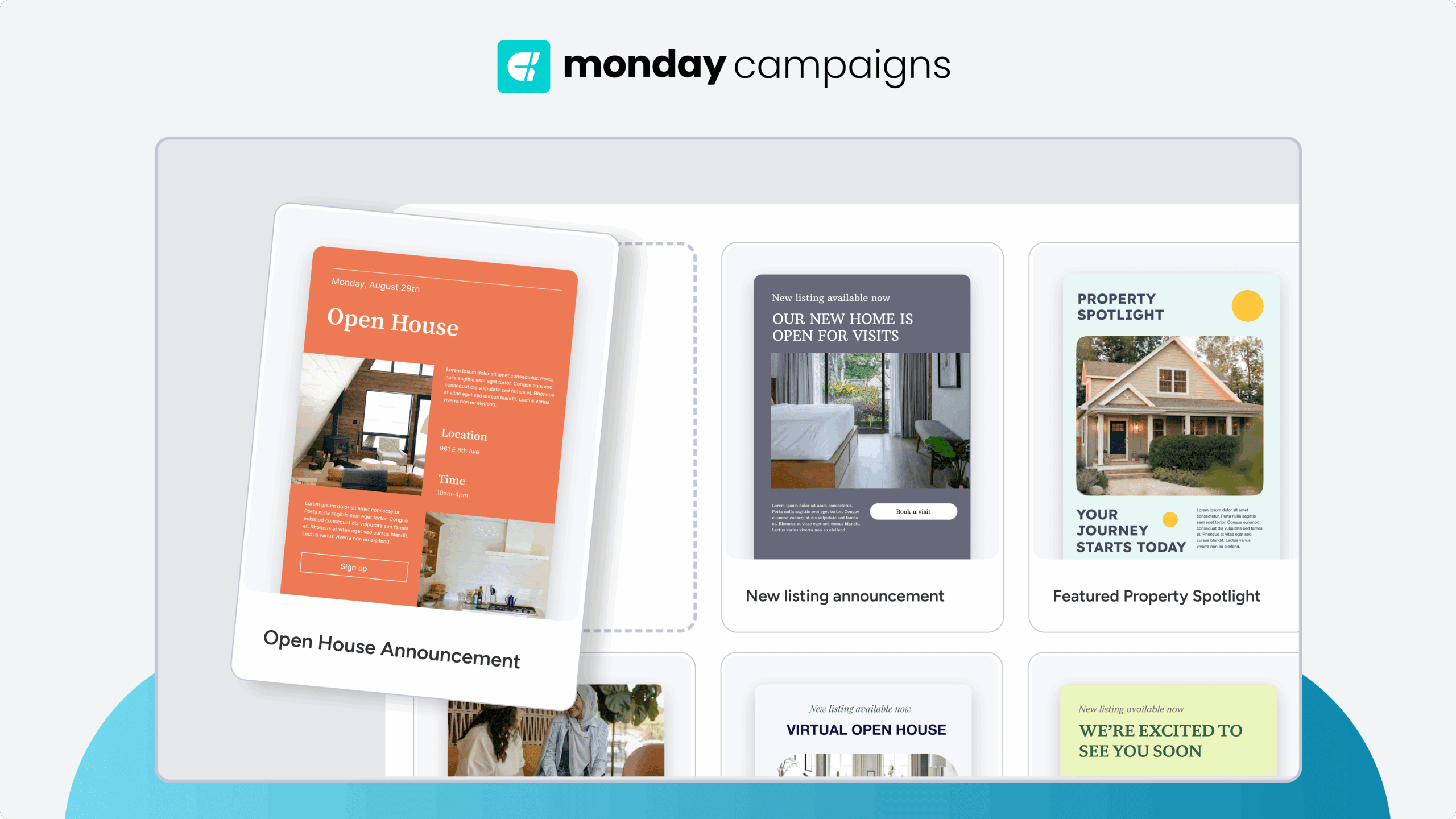
9. Seasonal promotions
Seasonal campaigns align with natural buying cycles. The trick is timing — too early feels pushy, too late misses the opportunity.
Think beyond major holidays. Back-to-school works for office supplies, spring cleaning for home organization, and tax season for financial services.
10. Exclusive VIP offers
VIP campaigns reward your best customers with special perks. This might include early access to sales, exclusive products, or higher discounts.
Define VIP status based on purchase frequency, total spend, or engagement levels. Make these customers feel valued with messaging that acknowledges their loyalty.
11. Referral program invitations
Referral campaigns turn happy customers into advocates. Offer rewards for both the referrer and new customer to maximize participation.
Keep the process simple with one-click sharing and clear incentives. Track results to identify your most effective advocates.
12. Event and webinar invites
Event invitations drive registrations by highlighting value and urgency. Include what attendees will learn, who’s speaking, and why it matters to them.
Send reminders as the event approaches and follow up with recordings for those who couldn’t attend live.
13. Customer feedback requests
Feedback emails gather insights while showing customers you value their opinion. Time these 3-5 days after delivery when the experience is fresh.
Keep surveys short and consider offering a small incentive for completion. Use the insights to improve both products and future campaigns.
14. Win-back campaigns
Win-back campaigns target customers who haven’t purchased in an extended period. Acknowledge the time gap and offer a compelling reason to return.
Highlight what’s new since they last engaged and include a special “welcome back” offer to overcome hesitation.
15. Browse abandonment reminders
Browse abandonment emails reach visitors who viewed products without adding to cart. These require sophisticated tracking but can recover early-stage interest.
Include images of viewed products and related recommendations. Send within 24 hours while the products are still relevant.
Now, let’s take a deeper look at some of the highest-performing campaign types, starting with welcome emails, which are consistently cited as the strongest driver of early engagement and first purchases.
Welcome email examples that convert subscribers into buyers
Welcome emails set expectations for your brand and shape a subscriber’s first impression. They consistently earn the highest open rates of any email type because people expect them — making them one of your biggest opportunities to turn new subscribers into customers. Here are 3 examples:
The single welcome email
Use this when your product line is simple or your audience prefers fewer messages. A great single welcome email includes:
- A warm introduction to your brand
- What subscribers can expect next
- A clear CTA (shop now, explore features, book a demo)
- Optional incentive (discount, free resource, onboarding guide)
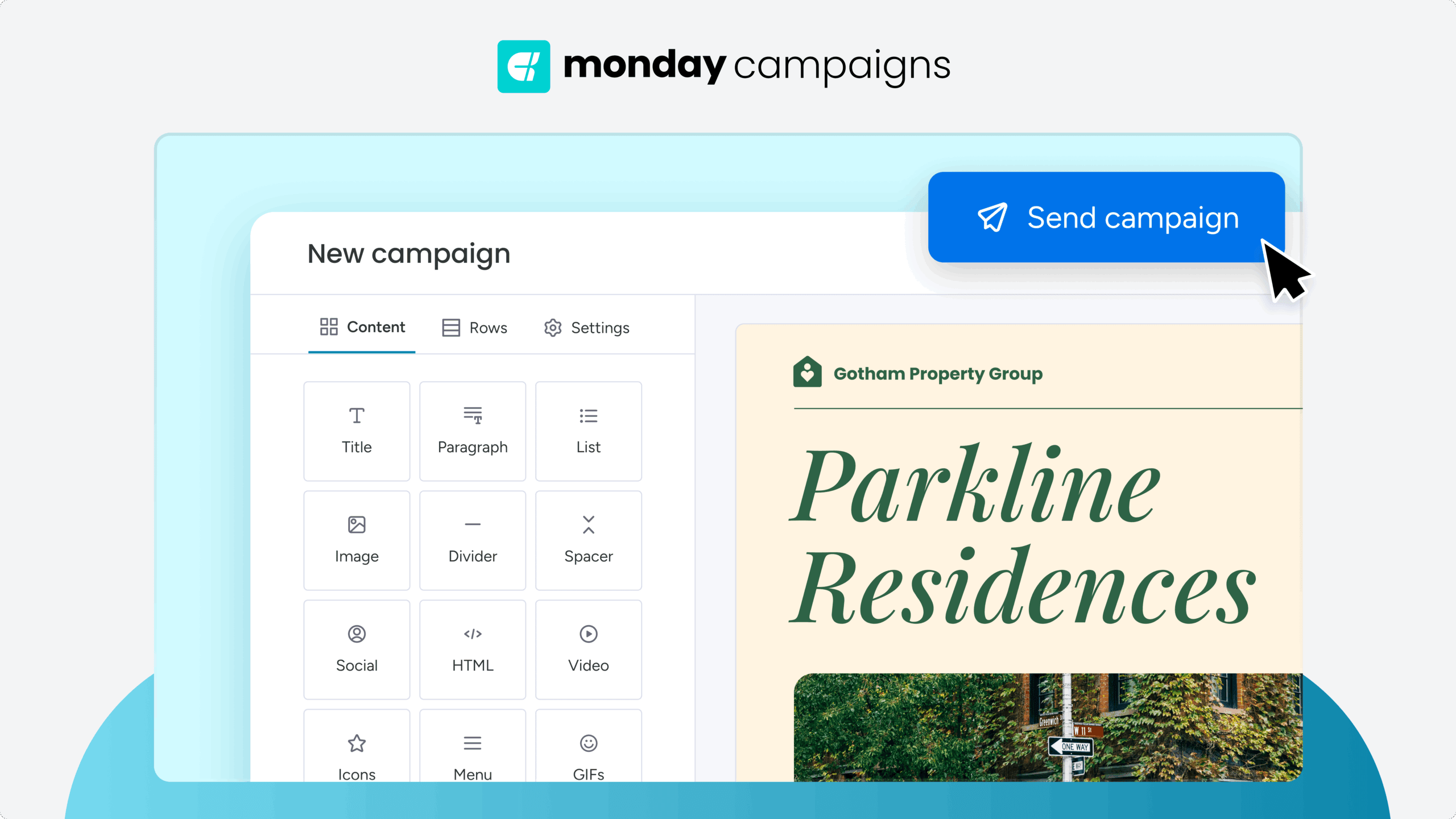
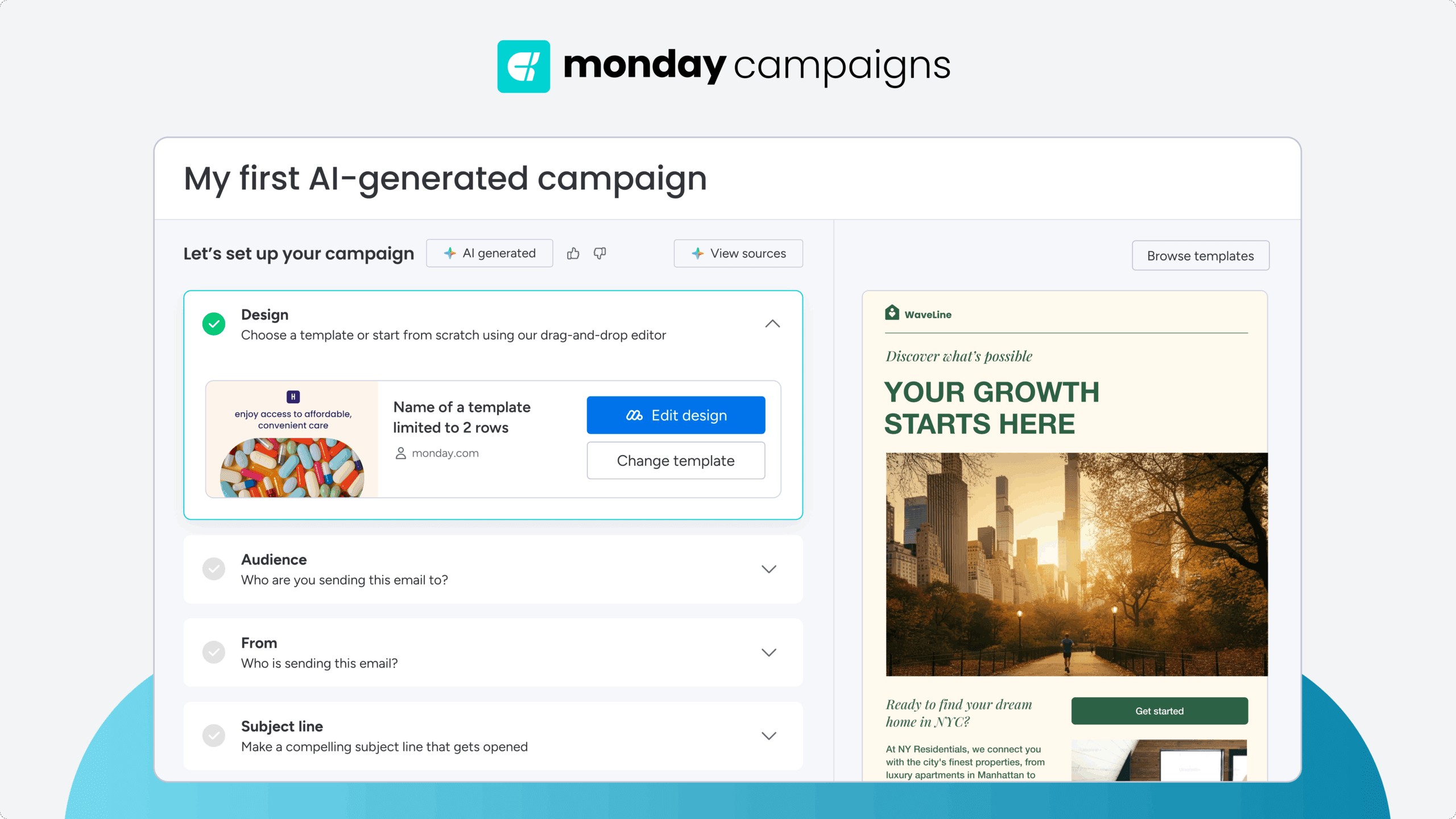
Teams can build an email like this quickly in monday campaigns using the drag-and-drop editor and AI to recommend subject lines and send-time optimization.
A 3–5 email welcome series
A multi-email series lets you introduce your brand in stages and create multiple opportunities for engagement. Typical structure:
- Email 1: Warm welcome + promise of what’s next
- Email 2: Brand story or value proposition
- Email 3: Product highlight or social proof
- Email 4: Offer or incentive
- Email 5: Onboarding tips/next steps
With monday campaigns, teams can automate timing, segment audiences based on CRM data, and use AI suggestions to tailor each message to subscriber behavior.
Story-driven welcome email
Brands often use storytelling to build emotional connection. Share:
- Why the company exists
- What problem you solve
- A quick customer win or founder insight
AI in monday campaigns can help generate story drafts and optimize message length based on your brand tone and audience preferences.
Try monday campaignsPromotional email campaign examples that drive sales
Promotional emails balance value delivery with sales goals, and well-designed HTML emails can help highlight offers and brand identity. The best campaigns solve customer problems while presenting offers that feel like opportunities, not pressure.
Limited-time offer templates
Urgency drives action when done authentically. Limited-time offers work because they tap into loss aversion — people hate missing opportunities more than they love gaining benefits.
Effective urgency tactics include countdown timers, stock indicators, and specific deadlines. Avoid fake scarcity, which damages trust and long-term relationships.
Exclusive access campaigns
Exclusivity makes subscribers feel special. Early access to sales, member-only products, or invitation-only events create perceived value beyond the actual offer.
Structure exclusive campaigns around customer segments. Your most engaged subscribers might get 24-hour early access, while VIP customers receive deeper discounts or unique products.
Bundle deal promotions
Bundles increase order value by packaging complementary products at a discount. Customers perceive savings while you boost revenue per transaction.
Create bundles that make sense together — starter kits for new customers, seasonal collections, or complementary products that enhance each other’s value.
Cart abandonment email examples that recover revenue
Cart abandonment affects most online purchases. These shoppers showed clear intent but hit a barrier — maybe shipping costs, comparison shopping, or simple distraction.
1-hour recovery email templates
Speed matters in cart recovery. Send your first email within an hour to catch shoppers while they’re still in buying mode.
Include product images, a direct link to their cart, and a compelling call-to-action. Address common objections like shipping costs or return policies upfront.
3-email abandonment series
Space your abandonment emails strategically. Send the first within an hour, the second after 24 hours with added social proof, and the third after 72 hours with an incentive.
Each email should add new information or value. Don’t just repeat the same message three times.
Incentive strategies that convert abandoners
Different incentives work for different situations. Free shipping removes a common barrier, percentage discounts work for high-margin products, and bonus loyalty points engage existing customers.
Test incentives carefully to find what motivates your audience without training them to abandon carts for discounts.
Re-engagement campaign examples that win back customers
Every email list naturally includes inactive subscribers. Re-engagement campaigns can recover dormant revenue while improving your sender reputation by maintaining a clean, engaged list.
Identifying inactive subscribers with CRM data
Define inactivity based on your typical customer cycle. For daily dealers, 30 days might signal disengagement. For annual purchases, you might wait six months.
Track email opens, clicks, website visits, and purchase history. monday campaigns automatically segments inactive subscribers using CRM data, making targeting effortless.
Win-back offer templates
Win-back offers should acknowledge the relationship gap. ‘We miss you’ discounts feel more personal than generic promotions.
Consider exclusive comeback deals, extended trials, or loyalty point bonuses that reward their history with your brand.
Final notice campaigns that work
Final notice emails give subscribers control. Offer options to adjust email frequency, choose specific content types, or pause rather than unsubscribe completely.
Make it clear this is their last email unless they take action. This creates urgency while respecting their preferences.
Post-purchase email examples that build loyalty
The period immediately after purchase is when customers pay closest attention to your brand. Use this window to deepen relationships and encourage repeat business.
Order confirmation templates that upsell
Order confirmations have near-perfect open rates. Add complementary product suggestions that enhance their purchase without feeling pushy.
Focus on genuine value — accessories that improve their experience, warranties for protection, or consumables they’ll need to reorder.
Product education email series
Help customers succeed with their purchase through educational content. Share setup guides, advanced tips, best practices, and community resources.
Education reduces returns, increases satisfaction, and positions your brand as a helpful partner rather than just a seller.
Review request timing and templates
Request reviews when customers have had time to experience your product but while impressions remain fresh. For most products, 3-7 days after delivery works best.
Make leaving reviews simple with direct links and mobile-friendly forms. Consider small incentives but ensure they comply with platform policies.
Try monday campaignsSubject lines and CTAs that boost email campaign performance
Subject lines determine whether emails get opened. CTAs determine whether opened emails drive action. Together, they’re the most important elements to optimize.
Effective subject line formulas
Different approaches work for different audiences, but these formats consistently perform well across industries:
- Questions: Create curiosity and encourage the open.
- Personalized lines: Reference a subscriber’s name, location, or interests to increase relevance.
- Value-led statements: Highlight a clear benefit or outcome.
- Time-sensitive messages: Useful for promotions or events with a deadline.
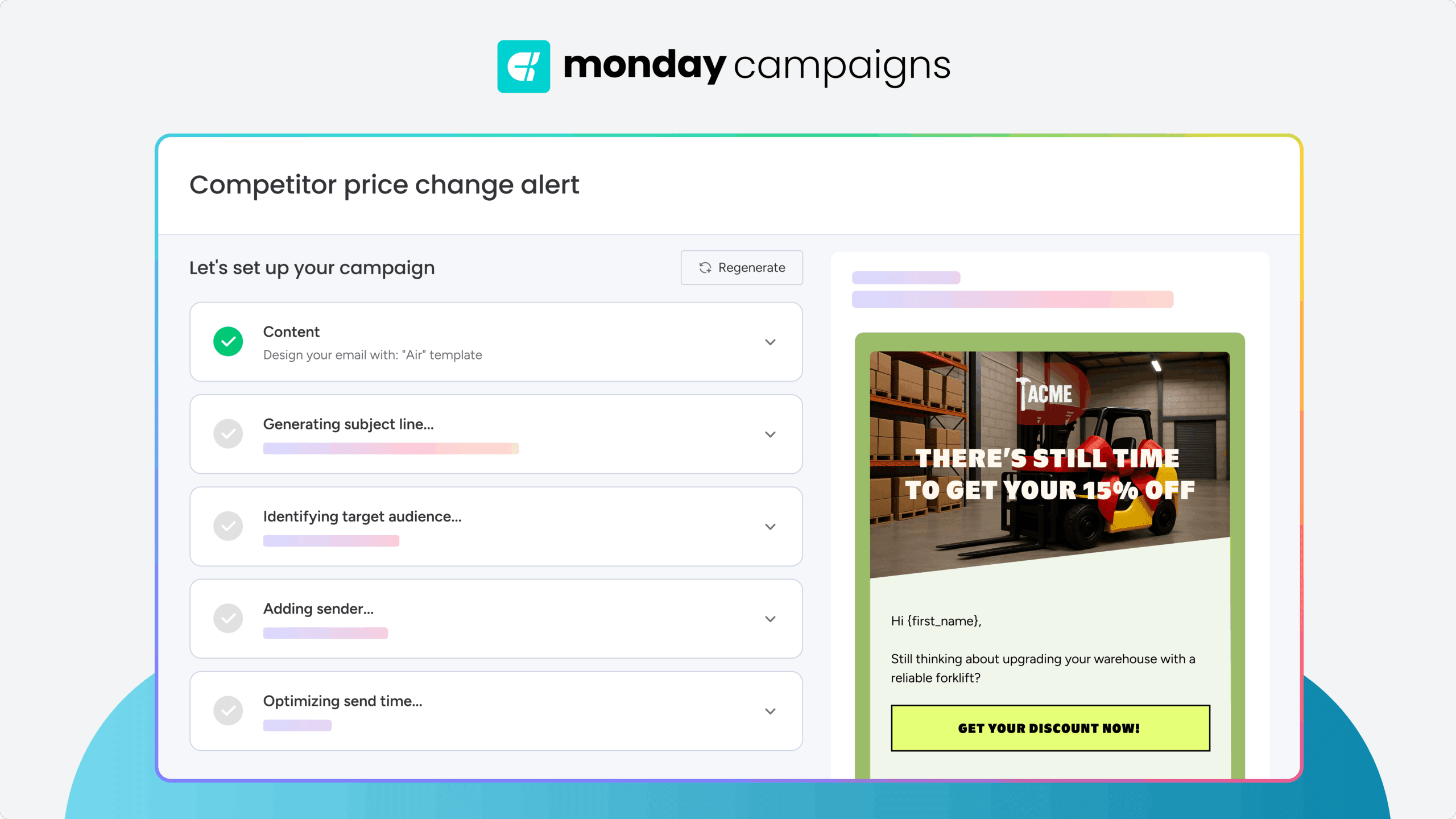
monday campaigns uses AI to generate subject line variations and recommend the best send time based on audience engagement patterns.
CTA button design and placement
Strong CTAs guide readers toward the next step. Effective CTAs typically include:
- Clear, action-focused language (e.g., “Get your discount,” “Book a demo,” “Read the guide”).
- High-contrast buttons that stand out visually across desktop and mobile.
- Responsive sizing with enough padding for easy tapping on smaller screens.
- Strategic placement, with the primary CTA above the fold and repeated after longer content sections.
A/B testing for continuous improvement
A/B testing helps you understand what resonates with your audience and refine campaigns over time. Start by testing one element at a time — subject lines, send times, CTA placement, or content variations.
You can automate A/B tests with tools like monday campaigns and then send the winning version to the rest of your audience, ensuring each campaign performs at its best.
How monday campaigns powers smarter, revenue-driven email marketing
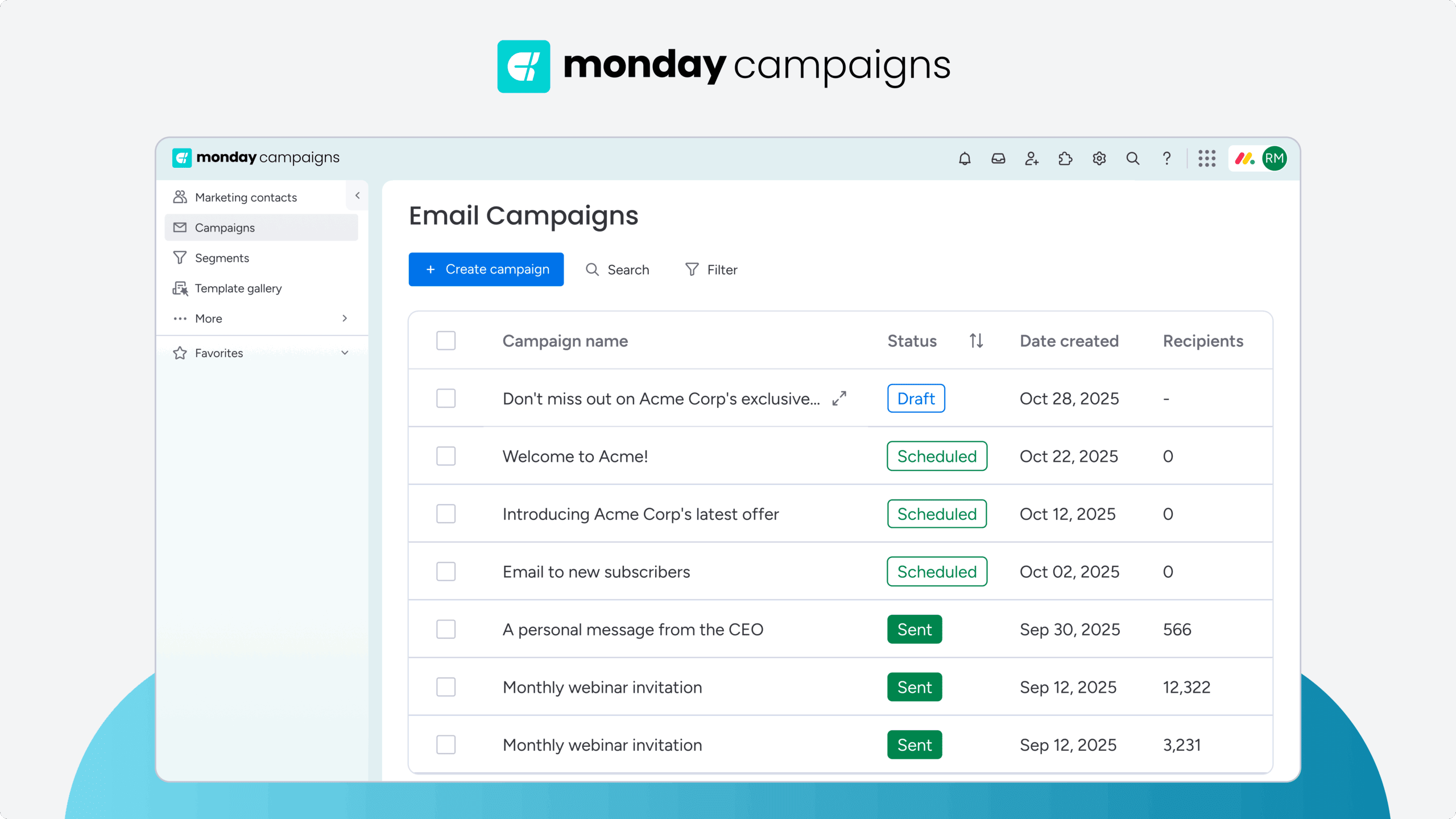
The email campaigns in this guide work even better when they’re powered by real customer data and automated workflows. Bringing AI, CRM integration, and performance insights together, monday campaigns ensures marketers can build and optimize the best email marketing campaigns with confidence.
Smart, real-time segmentation from your CRM
Target subscribers based on the data that actually predicts buying behavior — not just opens and clicks. With monday campaigns, your segments update automatically as customers browse, purchase, submit support tickets, or move through sales stages.
This ensures every welcome series, win-back message, and post-purchase flow is always relevant.
Measure email impact on real revenue
Instead of guessing which emails drive results, monday campaigns connects every message to sales activity. See:
- Which campaigns influenced deals
- How emails affect customer lifetime value
- Which flows consistently drive conversions
This ties marketing performance directly to business outcomes.
AI assistance at every step
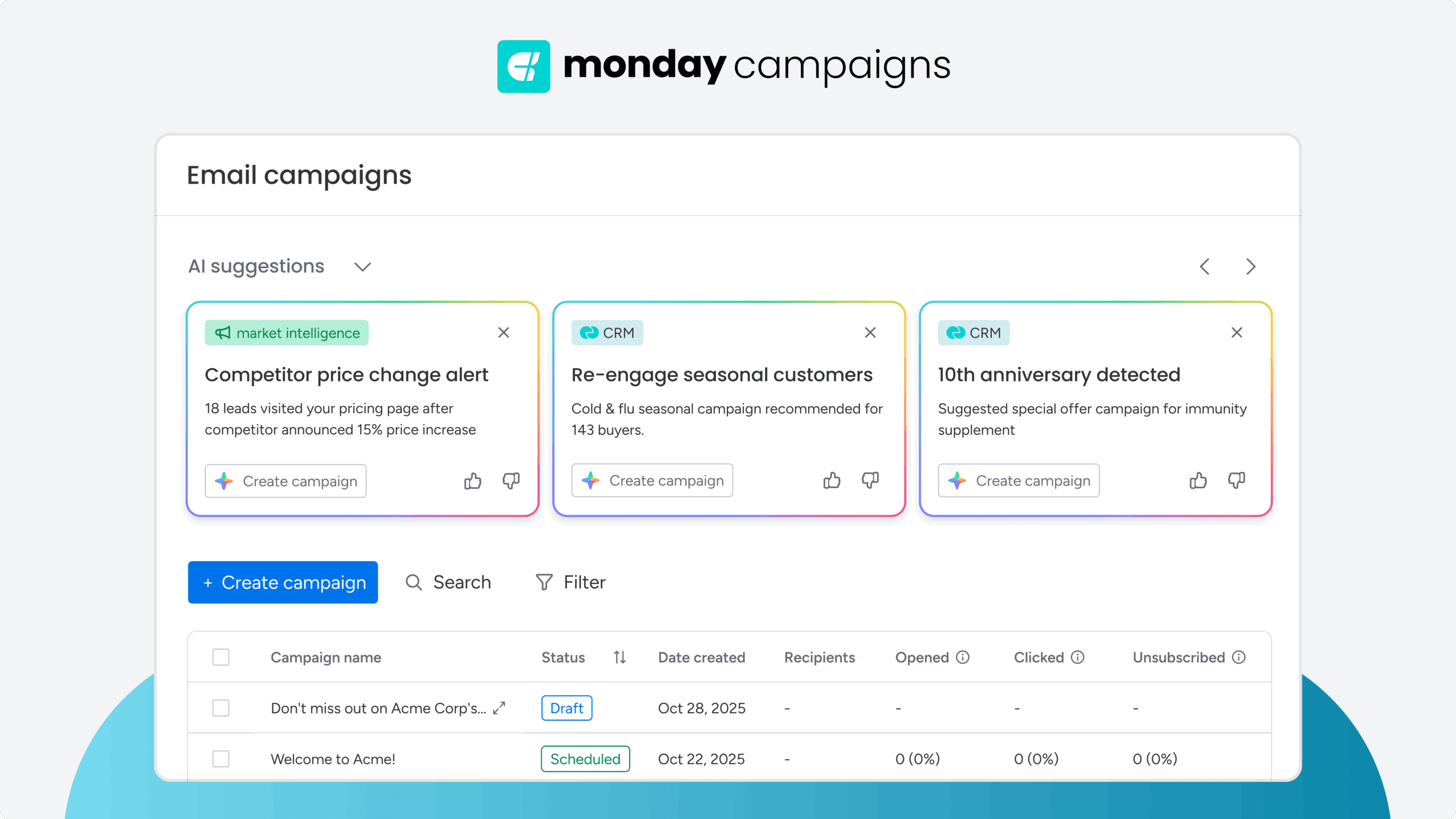
AI helps craft stronger campaigns faster. It suggests subject lines, refines copy, recommends send times, and surfaces opportunities to improve performance — turning brainstorms into send-ready campaigns in minutes.
Launch campaigns in less time
With CRM data built in, pre-built templates, and an intuitive drag-and-drop builder, teams can create personalized campaigns without switching tools, exporting lists, or relying on designers or developers.
From insight to inbox, campaigns stay accurate, up to date, and easy to optimize.
Build smarter email campaigns that drive revenue
The most successful email marketers aren’t sending more messages — they’re sending the right ones at the right time, backed by data, automation, and clear revenue attribution.
Use the examples in this guide to welcome new subscribers, recover lost sales, re-engage customers, and build long-term loyalty. With monday campaigns, every email becomes part of a connected customer journey that’s easier to build, measure, and scale.
Try monday campaignsFAQs
What is the most effective email marketing campaign?
The most effective email marketing campaign is the welcome series, which typically generates 4X more clicks than single emails. Welcome series work because they build relationships gradually through multiple touchpoints, introducing your brand story, values, and offers over several days rather than overwhelming new subscribers with everything at once.
What is the 60/40 rule in email?
The 60/40 rule in email recommends using 60% text and 40% images in your email design. This ratio ensures emails load quickly, display properly across devices, and avoid spam filters that flag image-heavy emails while still maintaining visual appeal and engagement.
What is the rule of 7 in email marketing?
The rule of 7 in email marketing states that prospects need to see your message at least 7 times before taking action. This principle emphasizes the importance of consistent, multi-touch campaigns rather than expecting immediate conversions from a single email.
What makes an email campaign successful?
Successful email campaigns combine AI-powered personalization, real-time behavioral triggers, and CRM integration to deliver relevant messages at optimal moments. The key is moving beyond basic metrics to track actual revenue impact and using intelligent automation to scale personalized experiences.
How do I improve email open rates?
Improve email open rates by personalizing subject lines, optimizing send times for each subscriber, and maintaining a clean, engaged email list. Test different subject line formulas, use preview text effectively, and ensure your sender name is recognizable and trustworthy to boost opens.

 Get started