

Marketing teams often publish three blog posts per week, developers push site updates monthly, and content calendars stretch across quarters. Yet six months later, some content may remain on page three while competitors occupy the targeted positions. The gap is not strategy or talent — it is execution.
A structured SEO workflow connects keyword research, content creation, technical optimization, and performance tracking into one coordinated system. Scattered activities are transformed into a repeatable process that produces consistent results. Standards are embedded directly into daily operations, ensuring nothing is overlooked as teams scale and turning SEO from reactive problem-solving into predictable growth.
This definitive guide provides a complete roadmap for building an SEO workflow that actually delivers results. It covers aligning keyword research with business objectives, creating structured content briefs, integrating technical SEO, coordinating cross-functional teams, and monitoring performance.
Following this framework and you will be able to accelerate content production, streamline operations, and achieve measurable business outcomes while maintaining high standards.
Key takeaways
- Structured workflows transform SEO operations: Systematic processes connect keyword research, content creation, technical optimization, and performance tracking into a repeatable system.
- Workflow standardization accelerates content production: Templates, automated handoffs, and defined approval gates reduce time-to-publish while maintaining quality.
- Cross-functional collaboration improves execution: Shared workflows align writers, designers, and developers, eliminating silos and ensuring coordinated contributions.
- Performance tracking drives continuous improvement: Monitoring time-to-publish, quality scores, and keyword rankings identifies bottlenecks and informs workflow optimization.
- Centralized platforms enhance workflow visibility: Solutions such as monday work management allow teams to visualize, automate, and coordinate SEO processes across all content stages.
What is an SEO workflow?
An SEO workflow is more than a process diagram, it’s the operating system behind consistent organic growth.
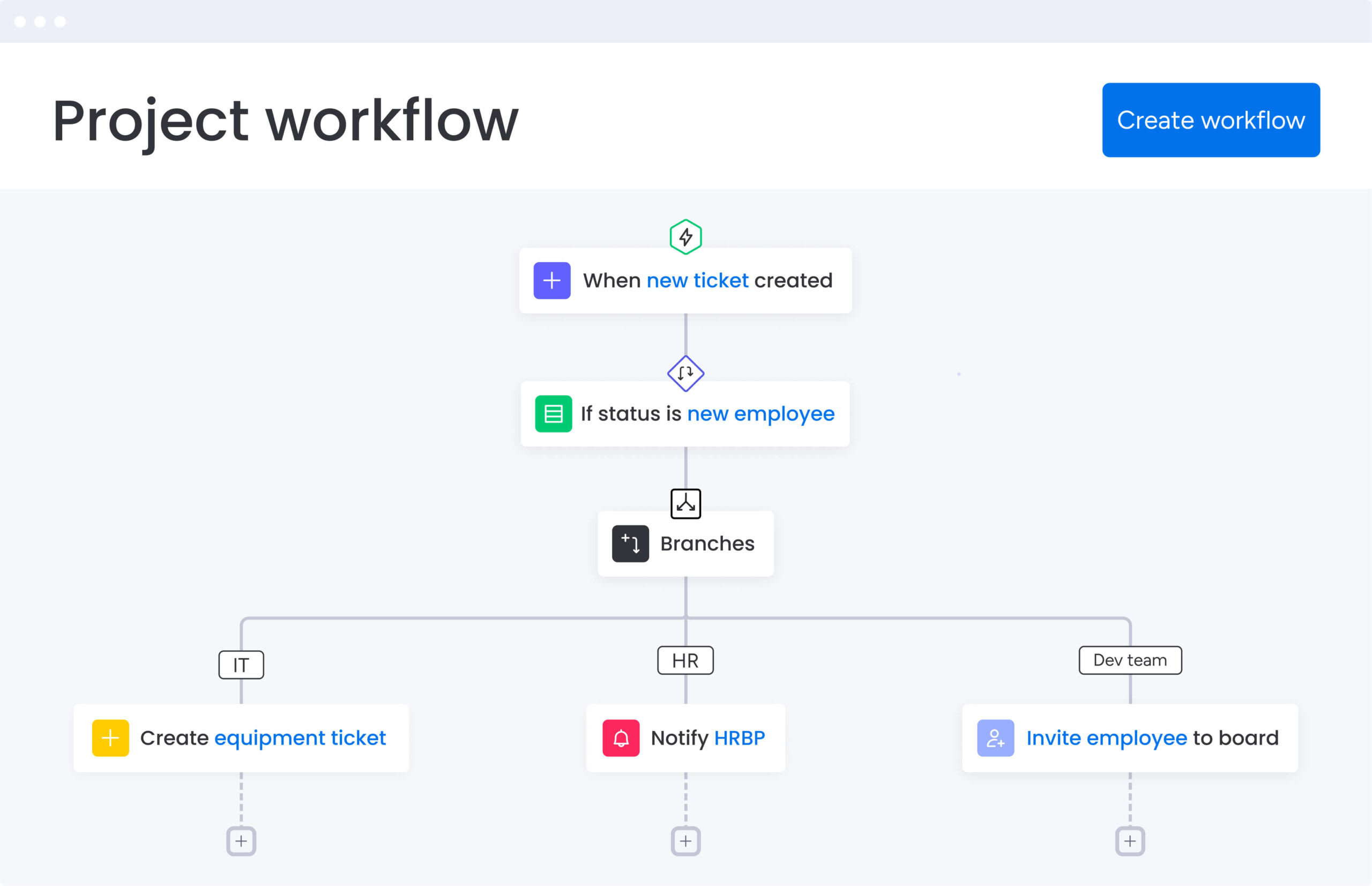
When keyword research sits in one spreadsheet, briefs live in another document, and technical updates happen “when there’s time,” performance becomes unpredictable. A structured SEO workflow connects research, creation, technical optimization, and tracking into one coordinated system. Every stage feeds the next. Nothing is left to chance.
As teams expand, informal processes start to crack. Deadlines slip. Metadata gets missed. Tracking is added weeks later. A defined workflow replaces guesswork with clarity. Ownership is visible. Standards are embedded. Dependencies are mapped before they slow production.
What matters most is not doing more SEO: it’s about building a system that makes high-quality SEO repeatable, measurable, and resilient at scale.
The difference between SEO tasks and workflow-driven SEO
Completing SEO tasks is tactical. Managing an SEO workflow is strategic.
In a task-based model, success depends on individual memory. A writer might remember to include internal links. A developer might add schema markup if prompted. An analyst might set up tracking after publication. It works for small volumes. It breaks under pressure.
Workflow-driven SEO builds those requirements into the production chain itself. The system defines what happens, when it happens, and who owns it.
The table below illustrates how the same activities shift in impact when they move from ad hoc execution to structured workflow management:
| Aspect | Task-based approach | Workflow-based approach |
|---|---|---|
| Brief creation | Content manager emails topic with minimal context | Keyword opportunity triggers automated brief with SEO requirements |
| Review process | SEO specialist reviews via scattered comments | Status updates trigger notifications for design and technical teams |
| Technical setup | Developer uploads content when available | Pre-publish checklist ensures schema implementation |
| Tracking | Analytics setup happens weeks later | Tracking configured as standard workflow step |
Instead of scattered emails, approvals become status-based triggers. Instead of retroactive fixes, technical requirements are part of pre-publish checks. Instead of delayed analytics, tracking is configured as a standard step.
The practical benefits are hard to ignore:
- Defined ownership: Every stage has a clear responsible party and visible progress.
- Embedded quality control: SEO standards are integrated into briefs and checklists, not left to memory.
- Reduced friction: Automated handoffs replace manual follow-ups and status chasing.
- Operational scalability: The process holds steady as output increases, protecting consistency.
This is where performance gains compound. Small process improvements across dozens or hundreds of assets create meaningful growth over time.
Core elements of a modern SEO workflow process
A strong SEO workflow connects distinct phases into one continuous cycle. Strategy informs execution. Execution feeds measurement. Measurement sharpens strategy again.
Each element plays a defined role in producing content that ranks and drives business impact:
- Strategic planning phase: Align Search data with business objectives through goal setting, topic clustering, and priority scoring.
- Content planning and creation: Translate Keyword insights into structured briefs, drafts, and assets built around intent.
- Technical implementation: Integrate On-page optimization, schema markup, and performance requirements directly into production timelines.
- Quality assurance gates: Enforce Multi-layer reviews that protect brand voice, compliance, and search standards.
- Performance tracking: Monitor Rankings, traffic, and conversions, then convert insights into actionable refresh plans.
- Cross-team coordination: Define Clear handoffs between marketing, product, engineering, and design to eliminate silos.
What matters most is not doing more SEO: it’s about building a system that makes high-quality SEO repeatable, measurable, and resilient at scale.
Why structured SEO workflows drive measurable ROI
Many organizations invest in premium SEO platforms and experienced talent, yet performance stalls. The missing piece is rarely strategy. It is operational clarity.
When production relies on scattered documents, manual handoffs, and inconsistent review cycles, friction quietly eats into ROI. Deadlines stretch. Revisions multiply. Technical elements slip through the cracks. A structured workflow closes the gap between potential and performance by solving the operational bottlenecks that slow marketing teams down.
For leadership, this shift is powerful. SEO stops feeling opaque and unpredictable. It becomes visible, trackable, and far easier to scale with confidence.
Accelerate content production without sacrificing quality
In search, speed matters. But speed without structure leads to rework.
Structured workflows reduce decision fatigue by standardizing how work moves from research to publication. Pre-built brief templates eliminate repetitive setup. Automated handoffs replace long email threads. Review stages are defined before drafting begins.
The table below highlights how production timelines change when standardization replaces ad hoc coordination:
| Production Stage | Ad-hoc process | Structured workflow |
|---|---|---|
| Brief creation | 2-3 hours researching from scratch | 30 minutes using data-populated templates |
| Review cycles | 3-5 days of email tag | 1-2 days with centralized comments |
| Technical setup | Done manually post-publication | Integrated into pre-publish checklist |
| Total time-to-publish | 2+ weeks per asset | 3-5 days per asset |
Instead of spending hours rebuilding context for every asset, teams reuse data-driven frameworks. Instead of chasing feedback across inboxes, status updates trigger reviews automatically. The result is not rushed content. It is streamlined execution with fewer delays.
- Faster brief creation: Templates centralize Keyword data, intent, and requirements from the start.
- Shorter review cycles: Status-based notifications reduce back-and-forth communication.
- Integrated technical setup: Pre-publish checklists prevent last-minute fixes.
- Reduced time-to-publish: Assets move from concept to live URL in days, not weeks.
Speed becomes a competitive advantage because quality controls are embedded, not bolted on.
Enable cross-team collaboration at scale
SEO does not belong to one department. Writers, designers, developers, analysts, and strategists all contribute to performance.
Without a shared workflow, teams operate in parallel rather than in sync. Priorities drift. Requirements get misinterpreted. Work gets “thrown over the wall.”
A structured system creates alignment across roles:
- Shared visibility: Every contributor sees timelines, dependencies, and expectations in one place.
- Defined requirements: Technical, design, and content standards are documented within each item.
- Coordinated handoffs: Clear stage transitions replace informal delegation.
When everyone works within the same framework, collaboration feels intentional rather than reactive.
Gain real-time visibility into SEO performance
One of the biggest challenges for decision-makers is understanding what is happening across dozens or hundreds of assets.
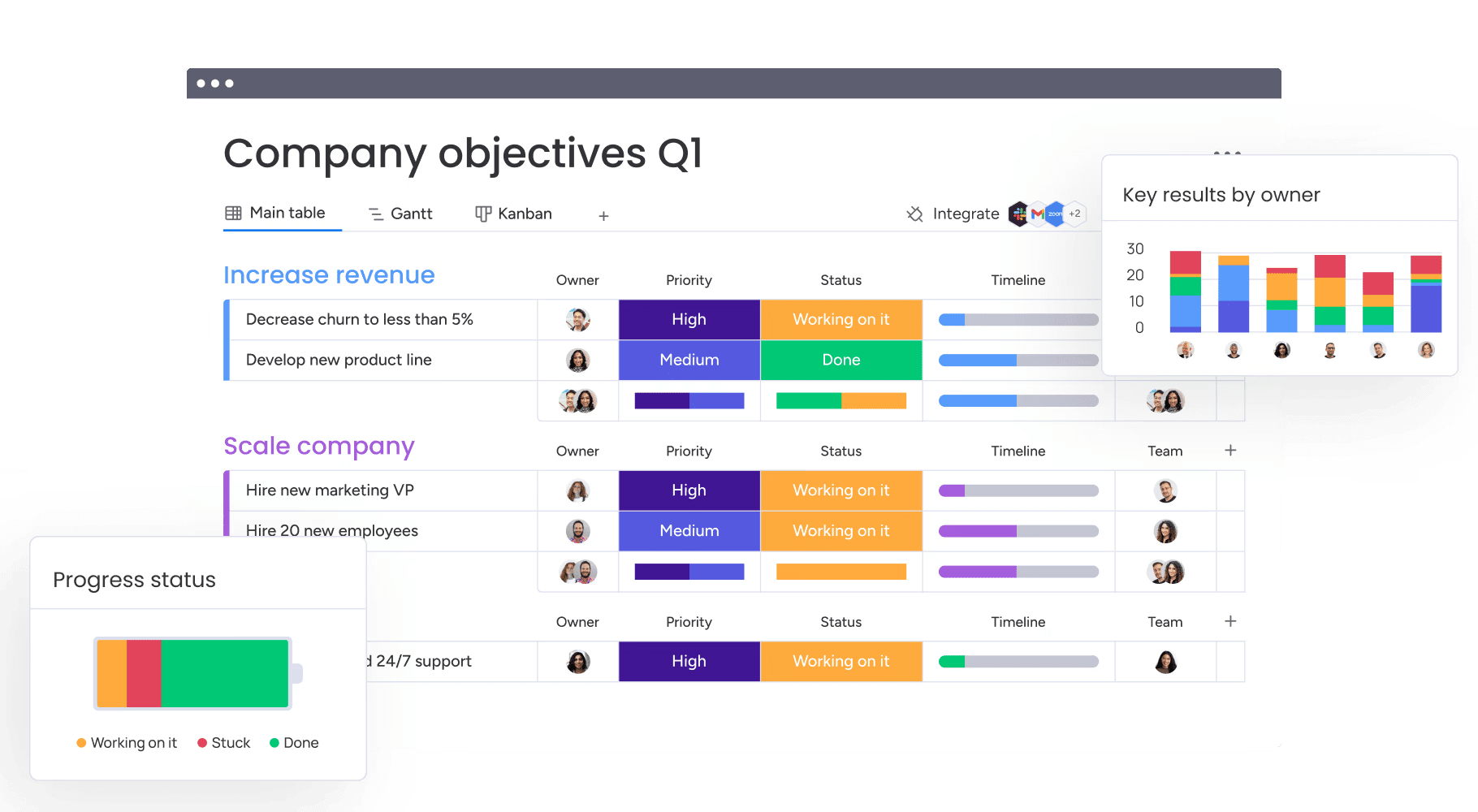
Workflow systems centralize that visibility. Dashboards surface progress, delays, and workload distribution instantly. Managers can identify bottlenecks before they escalate and rebalance resources proactively.
- Live status tracking: Asset progress updates automatically as stages change.
- Bottleneck detection: Stage duration metrics highlight process slowdowns.
- Unified reporting: Data from multiple initiatives rolls into a single executive view.
Instead of reacting to missed deadlines, teams anticipate them. Execution becomes proactive rather than corrective.
Reduce manual work through smart automation
A surprising amount of SEO time is spent on administrative coordination rather than optimization.
Automation reclaims that lost capacity by handling repetitive tasks behind the scenes:
- Automated categorization: Incoming content requests are sorted by cluster and priority.
- Intelligent assignment: Tasks route to writers based on expertise and availability.
- Deadline reminders: Notifications trigger automatically as milestones approach.
- AI-powered insights: Systems flag Keyword cannibalization and suggest internal linking opportunities.
SEO does not belong to one department. Writers, designers, developers, analysts, and strategists all contribute to performance. Without a shared workflow, teams operate in parallel rather than in sync. Priorities drift. Requirements get misinterpreted. Work gets “thrown over the wall.”
6 essential components of effective SEO workflow management
A comprehensive SEO workflow relies on six interconnected components. Each plays a specific role in the production chain, and a system is only as strong as how well these elements work together.
These components transform SEO from a set of scattered tasks into predictable, measurable results.
Strategic keyword research and entity planning
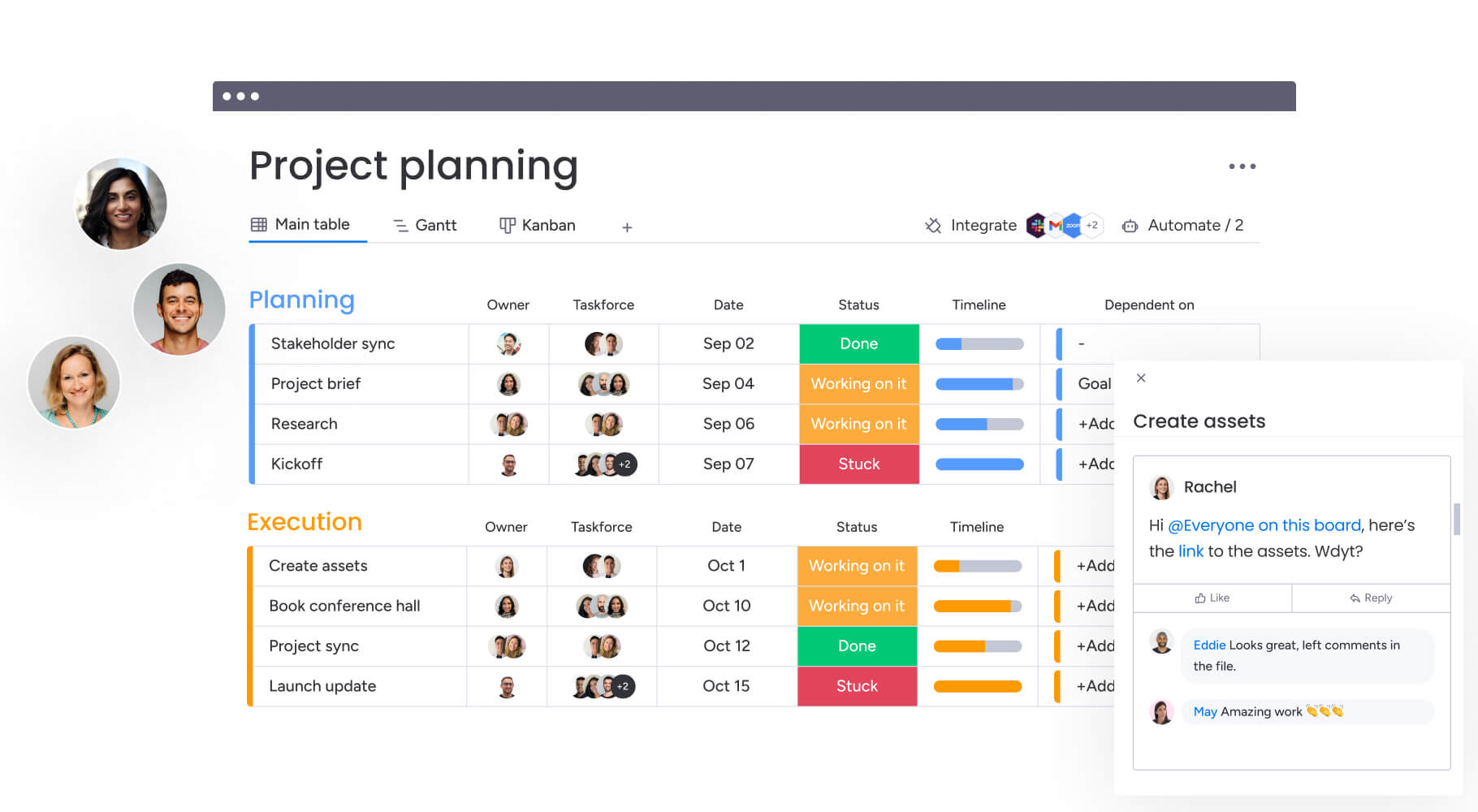
The workflow begins with structured data organization. This component moves keyword research out of isolated spreadsheets and onto boards that teams can actively use.
Keywords do more than indicate search volume — they connect to user intent and buyer journey stages. Each target keyword maps to a primary entity, secondary keywords, and a designated content format.
This ensures all subsequent activities tie back to the initial strategic insight and deliver measurable impact.
Content brief creation and team assignment
The content brief acts as the contract between strategy and execution. Effective workflows standardize this process using adaptable templates.
Required inputs include:
- Target keywords: Primary and secondary terms with search intent.
- Word count targets: Based on competitive analysis.
- Competitor analysis: Top-ranking URLs and content gaps.
- Required internal links: Supporting pages and topic clusters.
Once a brief is created, the workflow automatically assigns it to team members based on capacity and expertise. Modern platforms like monday work management use automations and templates to launch projects faster and reduce manual assignment bottlenecks.
Multi-platform content development
SEO extends beyond corporate blogs. This workflow component manages the adaptation of core content for different channels.
A single pillar page can break into social media snippets, YouTube scripts, and newsletter segments. The system maintains consistent messaging and keyword targeting across formats.
Platform-specific requirements — such as character limits for meta descriptions or hashtag strategies — are tracked alongside content production.
Technical SEO and schema implementation
Technical SEO is not a post-publication task. This component integrates technical requirements into the content timeline.
Running these activities in parallel allows developers to implement structured data, optimize page speed, and ensure mobile responsiveness while content is written. Treating technical implementation as a core step prevents high-quality content from underperforming due to technical issues.
Quality control and approval workflows
Quality assurance safeguards brand reputation and search performance. This component enforces a multi-stage review process.
A comprehensive approach includes:
- Editorial review: Checks tone, grammar, and flow.
- SEO review: Verifies keyword usage, internal linking, and header structure.
- Legal/compliance review: Ensures accuracy and regulatory adherence.
- Technical review: Validates meta tags, URL structure, and rendering.
Workflows track revisions and prevent content from going live until all approval gates are completed. Platforms like monday work management use multi-level permissions to manage access and maintain an audit trail for accountability.
Performance monitoring and optimization
The workflow concludes with analytics. This component integrates performance data directly into project boards.
Regular content audits are scheduled based on publication dates. Alerts trigger automatically if rankings decline or organic traffic drops, creating refresh items proactively.
7 steps to build your complete SEO workflow process
Building a scalable SEO workflow requires clearly defined logic, assigned responsibilities, and measurable standards. These seven steps establish a process that maintains quality while adapting to changing priorities.
Follow this sequence to create a workflow that scales with your team, drives consistent results, and aligns content production with business outcomes.
Step 1: Map your keyword research to business goals
Begin by connecting search data to revenue. Categorize keywords by business value (high, medium, low) and funnel stage (awareness, consideration, decision).
Route high-value money keywords to senior writers and place them through rigorous review cycles. Send long-tail informational queries through streamlined paths. This prioritization ensures resources focus on projects that deliver real business impact and measurable results.
Step 2: Create data-driven content briefs
Standardization starts here. Master brief templates capture every essential SEO data point.
Templates include fields for primary and secondary keywords, search intent, top-ranking competitor URLs, and required semantic entities. Briefs also specify technical requirements such as URL slugs and title tag structures.
Collecting this information upfront reduces the likelihood of major revisions later in the process.
Step 3: Assign work based on team expertise
Efficient resource management keeps projects moving. The workflow checks team attributes to match work effectively.
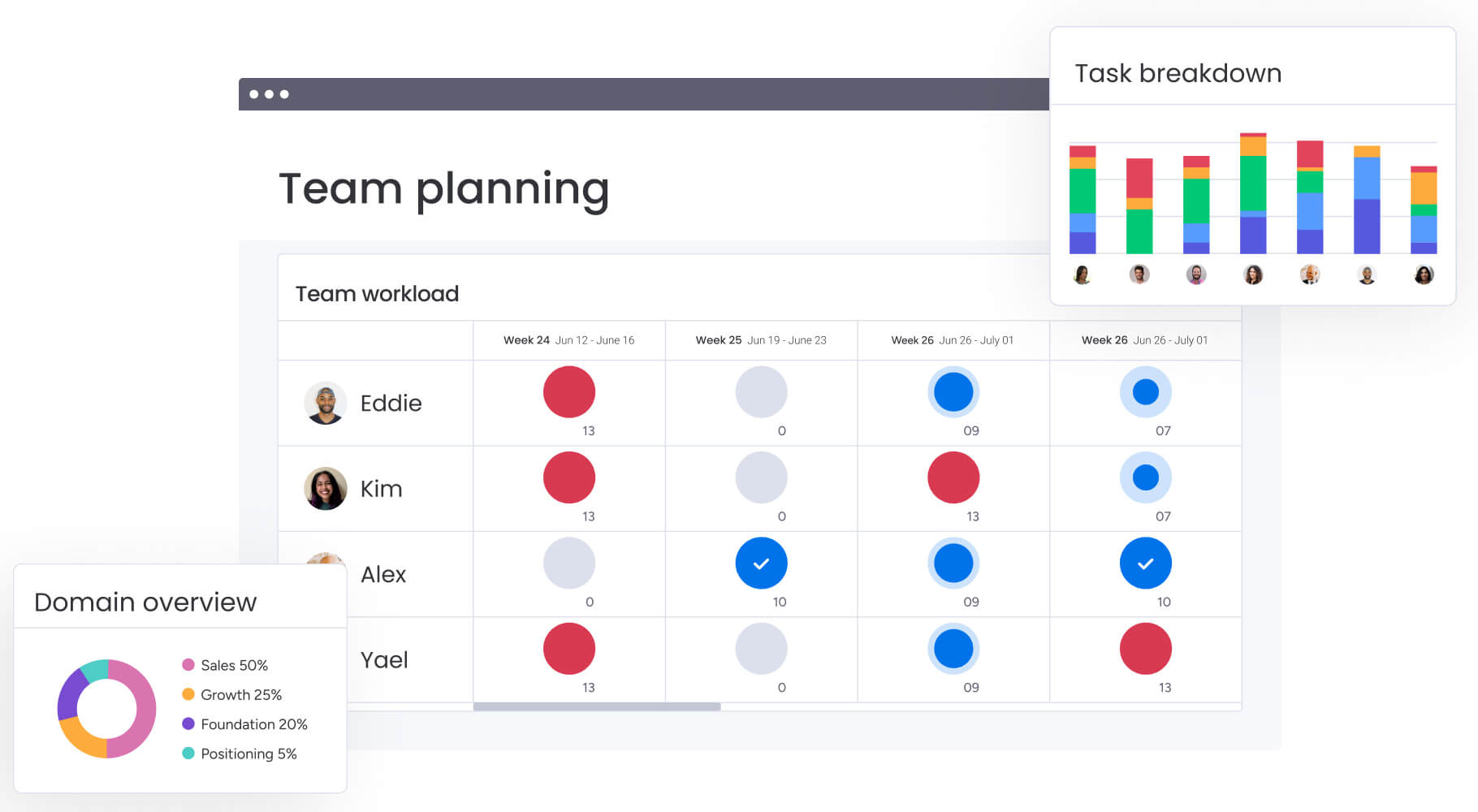
Tag writers and editors with their subject matter expertise. The assignment system connects incoming briefs with these tags while reviewing current workload capacity.
Modern and intuitive platforms like monday work management provide a Workload View to balance resources and adapt to changing priorities. This prevents burnout and ensures content is developed by team members with the right skills.
Step 4: Develop content with E-E-A-T principles
Trustworthiness is built into the process. The workflow integrates steps that demonstrate Experience, Expertise, Authoritativeness, and Trustworthiness (E-E-A-T).
Mandatory steps include:
- Author bio sourcing: Establishing credibility for content creators.
- External citation linking: Connecting to credible sources.
- Internal SME verification: Fact-checking with subject matter experts.
For Your Money or Your Life topics, workflows enforce additional review layers by qualified professionals to satisfy Google’s quality rater guidelines.
Step 5: Implement technical SEO requirements
Technical execution is systematized through checklists. Before content goes live, specific elements must be verified.
This includes generating XML sitemaps, implementing canonical tags, and testing page speed. The workflow ensures technical execution occurs alongside content staging to streamline production and reduce delays.
Step 6: Execute quality assurance checks
Formal QA protocols prevent errors. This step involves detailed checklists covering user experience and SEO factors.
Reviewers confirm images have descriptive alt text, links function correctly, and content formats for scannability. The workflow records who completed checks and when, creating an audit trail that reinforces accountability and quality control.
Step 7: Track rankings and iterate based on data
Automate your SEO workflow with AI integration
Once your workflow is structured, the next step is acceleration.
AI does not replace your strategy. It removes the operational drag that slows it down. When integrated thoughtfully, AI reduces friction in data-heavy stages of SEO while keeping creative and strategic control firmly in human hands.
Smart automation handles repetition. Your team focuses on judgment, narrative, and competitive positioning.
Which SEO activities benefit most from automation
Certain SEO lifecycle components are prime automation candidates because they involve pattern recognition and data sorting rather than subjective judgment.
Key automation opportunities include:
- Content categorization: AI algorithms instantly analyze topic requests and sort by cluster, priority, and required expertise.
- Keyword research: AI generates related keyword lists and semantic clusters from seed topics.
- Performance monitoring: Automated systems scan URLs daily detecting ranking shifts, traffic anomalies, or broken links.
- Content optimization: AI assistants analyze drafts against top competitors suggesting improvements for title tags and headers.
- Competitive analysis: Bots track competitor sitemaps alerting teams when rivals publish new content.
Implement AI while maintaining human oversight
Effective workflows position AI as a drafter, not a publisher. AI generates initial keyword lists, but strategists approve final selections. AI drafts meta descriptions, but copywriters refine the messaging.
Workflows must include explicit human-in-the-loop checkpoints where AI outputs are reviewed for accuracy, tone, and brand alignment.
Teams using monday work management leverage AI Blocks to categorize data at scale, summarize meeting notes instantly, and extract actionable insights from documents. Human approval gates ensure publication quality.
Set up intelligent alerts for workflow optimization
AI monitors workflows to identify inefficiencies. Intelligent alerts track time spent in each stage.
If legal review consistently takes four days longer than average, the system flags this bottleneck for operations managers. Alerts also identify optimization opportunities, highlighting high-performing posts losing traffic and automatically creating refresh items.
Balance AI efficiency with brand voice
AI models require governance to maintain brand integrity. Workflows incorporate brand guidelines directly into AI prompts for content generation and optimization.
Review processes include specific checks to ensure content reflects the brand, not a language model. This involves verifying tone consistency, terminology alignment with company standards, and perspective that communicates the organization’s unique value proposition.
4 types of SEO workflows for different business needs
Organizations often run multiple workflow types simultaneously to handle different aspects of search strategy. Understanding these variations helps teams select the right approach for each content initiative.
Each workflow type covered below addresses different operational challenges and content goals.
New content creation workflows
This pipeline for net-new assets is linear and research-heavy. The workflow prioritizes discovery, ensuring topic gaps are validated and keyword opportunities confirmed before allocating resources.
Coordination occurs between SEO strategists defining opportunities, writers executing content, and designers creating custom assets. The brief approval gate ensures alignment before production begins.
Content refresh and optimization workflows
Updating existing content follows a cyclical workflow triggered by data rather than new research. The process bypasses initial concept phases and focuses on gap analysis.
Teams identify missing elements on current pages compared to top-ranking results. The approval process is streamlined since core brand messaging already exists, enabling rapid iteration and re-indexing.
Multi-platform SEO orchestration workflows
Brands present across YouTube, TikTok, and Pinterest manage multichannel search complexity. This hub-and-spoke model centers on core content pieces with platform-specific adaptations.
The workflow ensures video teams optimize YouTube titles for search intent while social teams optimize LinkedIn posts for discovery, all connecting back to the central asset.
Enterprise SEO governance workflows
Large organizations require governance workflows to manage decentralized teams. This structure emphasizes compliance and standardization across business units or regions.
Workflows establish global SEO standards while allowing local flexibility for market-specific content. A central center of excellence reviews performance and compliance, ensuring no single unit compromises domain health.

Measure and optimize your SEO workflow performance
SEO workflows are living systems that require maintenance. Measuring process efficiency is as important as tracking keyword rankings.
Continuous improvement depends on monitoring the right metrics and using workflow data to eliminate bottlenecks.
Track workflow efficiency with key metrics
Operational health is measured through specific efficiency indicators. Are the right metrics tracked to evaluate workflow performance?
Essential metrics include:
- Time-to-publish: Total duration from brief creation to URL live.
- Quality scores: Percentage of content passing QA on first attempt.
- Resource utilization: How evenly work is distributed across team members.
- Bottleneck identification: Which workflow stage has the longest average duration.
- Approval cycle time: Average duration for stakeholder review and sign-off.
Monitor SEO impact across all channels
Workflow efficiency must align with business outcomes. Operational data should overlay performance data.
Teams analyze which content types move fastest through workflows and deliver the highest ROI. This analysis highlights workflow variations that generate the strongest results with the least operational friction.
Calculate ROI of workflow improvements
The business case for workflow optimization combines cost savings and revenue acceleration. ROI calculations quantify hours saved through automation and reduced revision cycles.
Faster time-to-market is monetized by estimating the additional traffic value gained by ranking earlier than the baseline. Presenting these figures shifts the conversation from process management to profit generation.
Identify and eliminate process bottlenecks
Continuous improvement relies on diligent bottleneck elimination. Workflow data reveals system constraints.
If 80% of delays occur during subject matter expert review, solutions might include batching reviews or reducing required approvers. If delays occur in image creation, pre-approved template libraries can accelerate production.
Teams using monday work management leverage Portfolio Risk Insights to scan project boards and flag risks by severity. This allows teams to address critical issues without manually combing through data. Systematic bottleneck removal steadily increases throughput.

How monday work management centralizes and scales your SEO workflow
Modern platforms like monday work management act as a central operating system for SEO teams, unifying strategy, execution, and analysis. Teams replace fragmented tools with a single workspace that scales SEO operations with confidence and precision.
The sophisticated platform reduces context switching and increases transparency across every stage of content production.
Visualize your entire SEO workflow process
Visibility drives execution. Teams can map the entire SEO pipeline on visual boards, making invisible work visible.
Whether using Gantt charts for technical timelines or Kanban boards for content status, every stakeholder sees the same reality. This transparency reduces status update meetings as dependencies and progress are instantly accessible.
Automate distribution and deadline management
Intelligent and intuitive, the platform removes manual friction that slows SEO production: automations route content briefs to specialists based on expertise.
When draft status changes to review, editors receive instant notifications. Approaching deadlines trigger automated reminders, keeping projects on track. AI Blocks can also categorize incoming requests and extract actionable insights from strategy documents, freeing creative time from administrative tasks.
Connect all your SEO platforms in one place
Context switching reduces productivity. Teams integrate SEMrush, Ahrefs, and Google Search Console directly into workflow boards. Writers view keyword difficulty without leaving the item card. Managers see live ranking updates alongside project status.
With over 200 integrations, data flows freely between SEO platforms and project management.
Scale content operations with AI-powered insights
Scaling SEO requires intelligence, not more hands. Portfolio Risk Insights analyzes multiple projects simultaneously, flagging potential risks like resource conflicts or timeline delays before they impact the roadmap.
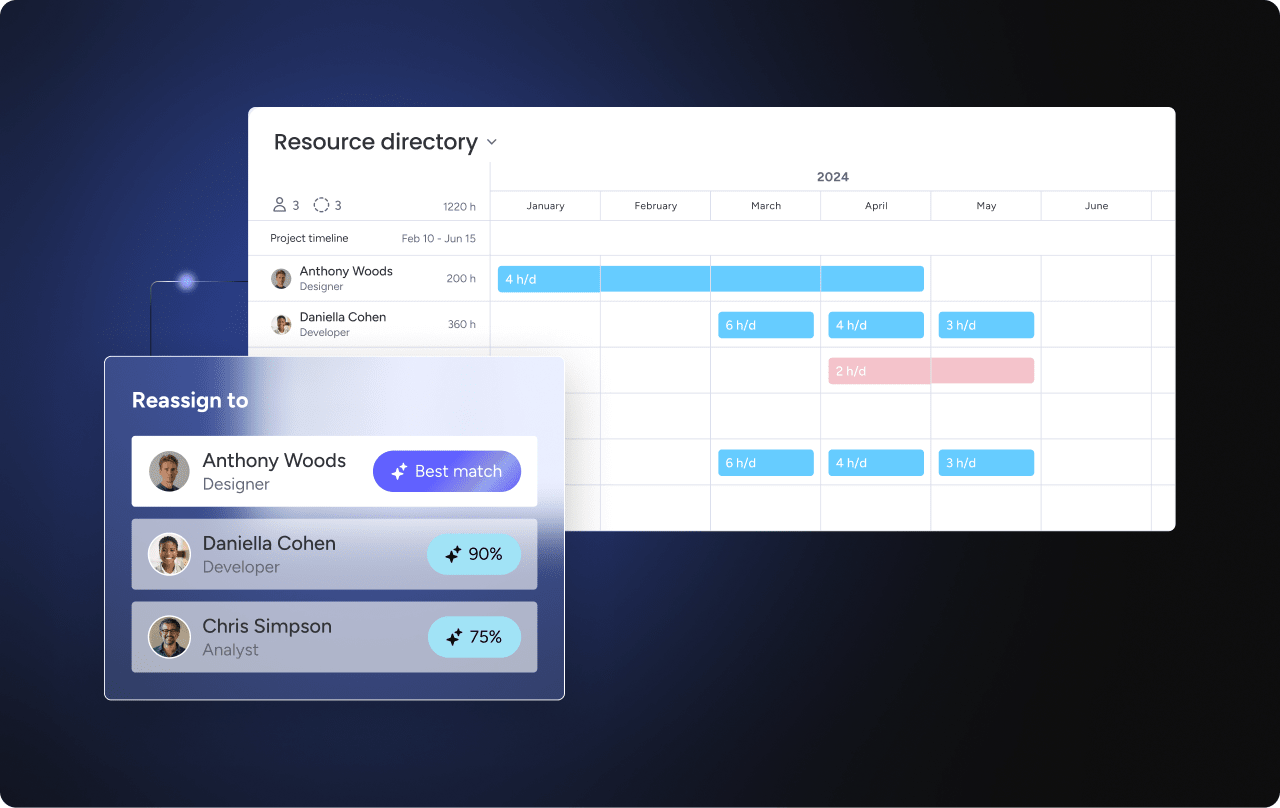
AI-powered resource management helps leaders visualize team capacity, ensuring high-priority keywords are assigned efficiently.
Enable real-time collaboration across teams
SEO only works when strategy and execution stay aligned: the problem is not collaboration itself, it’s fragmented collaboration.
monday work management keeps conversations, feedback, and decisions tied directly to each item. Strategists, writers, and developers work within the same context, so requirements are visible, revisions are traceable, and nothing gets lost in disconnected threads.
Instead of switching between inboxes, docs, and project trackers, collaboration happens where the work lives.
- Contextual discussions: Keep Feedback attached to the exact brief or asset.
- Shared documentation: Align Strategy and execution inside monday docs.
- Transparent ownership: See Who is responsible and what stage each asset is in.
- Centralized communication: Replace Scattered email chains with structured updates.
The table below illustrates how this centralized approach compares to traditional spreadsheet-driven coordination, especially as volume and complexity increase:
| Feature | Traditional spreadsheet management | monday work management |
|---|---|---|
| Workflow visualization | Static rows and columns | Dynamic Gantt, Kanban, Timeline views showing real-time status |
| Assignment | Manual email delegation | Automated routing based on expertise and capacity |
| Collaboration | Fragmented across email and docs | Contextual communication within items |
| Connectivity | Disconnected requiring tab-switching | Native integrations with SEO platforms |
| Scalability | Breaks down as volume increases | Built for enterprise scale |

“monday.com has been a life-changer. It gives us transparency, accountability, and a centralized place to manage projects across the globe".
Kendra Seier | Project Manager
“monday.com is the link that holds our business together — connecting our support office and stores with the visibility to move fast, stay consistent, and understand the impact on revenue.”
Duncan McHugh | Chief Operations OfficerTurn SEO workflow mastery into sustainable growth today
High-performing teams succeed not only with strong ideas but with strong execution. Structured SEO workflows provide the operational backbone needed to produce high-quality content at scale.
From strategic mapping to automated quality assurance, these systems transform SEO from chaotic tasks into a predictable revenue-generating engine. Teams can adapt quickly to algorithm changes, coordinate complex cross-functional initiatives, and maintain rigorous quality standards.
Mastering workflows allows organizations to operate with precision, turning search visibility into sustained business growth.
Try monday work managementFrequently asked questions
What is an SEO workflow process?
An SEO workflow process is a systematic framework that manages every stage of search engine optimization, from keyword research to performance tracking, ensuring consistent execution and measurable results.
How does SEO work step by step?
SEO follows a sequence: identifying keyword opportunities, creating user-focused content, implementing technical optimizations, publishing and promoting assets, and continuously monitoring data to refine rankings.
What are the 5 pillars of SEO workflow?
The five pillars are strategic planning for goal alignment, content development for creation and optimization, technical implementation for infrastructure and schema, quality assurance for review and approval, and performance monitoring for analytics and iteration.
How long does it take to implement an SEO workflow?
Basic workflows typically take two to four weeks to define and adopt, while enterprise-grade systems with automation and governance often take six to eight weeks, depending on organizational complexity.
What is the difference between SEO workflow and content marketing workflow?
SEO workflow focuses on optimizing assets for search visibility and technical compliance, while content marketing workflow encompasses broader brand storytelling, social distribution, and audience engagement.
How do you measure SEO workflow success?
Success combines operational efficiency metrics, including reduced time-to-publish and higher quality scores, with performance outcomes, such as improved rankings, increased organic traffic, and higher conversion rates.

 Get started