

Customer data is only useful when it leads to clearer decisions. Segmentation templates bring structure to scattered insights, helping teams group customers in ways that make targeting more precise and campaigns more relevant. When segments are clearly defined, it becomes easier to understand who to prioritize, what message will resonate, and where marketing effort will have the greatest impact.
This article explores practical segmentation templates that turn insight into direction. Learn the core types of segmentation, see examples of visual frameworks that support everyday decision-making, and discover how automation helps keep targeting aligned with changing customer behavior — so segmentation actively supports growth rather than sitting in a spreadsheet.
Key takeaways
- Match your template to your business model: B2B services need demographic + technographic data, while e-commerce thrives on behavioral + geographic insights to drive real results.
- Focus on predictive variables over descriptive ones: Prioritize behaviors that predict future purchases and churn, complementing them with foundational demographic data.
- Build visual frameworks that drive daily decisions: Create simple charts and matrices that help teams instantly understand which customers need what type of outreach and messaging.
- Connect segmentation directly to automated workflows: Use monday work management to trigger specific campaigns when customers enter new segments, eliminating manual work and ensuring immediate response to behavior changes.
- Start with 3-5 segments and validate with real testing: A/B test different messages to each group to prove they actually respond differently before adding complexity.
What is a marketing segmentation template?
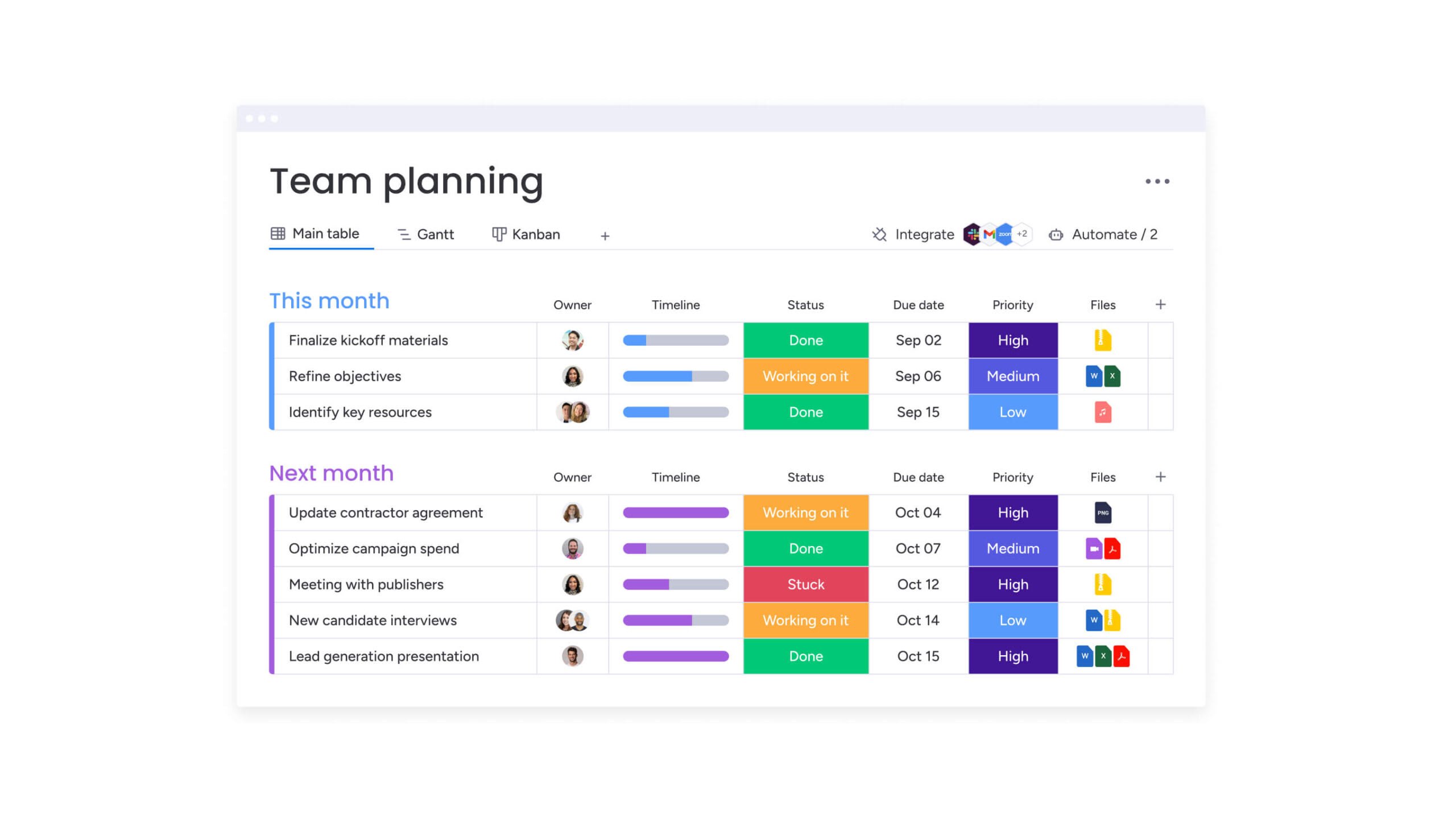
A marketing segmentation template organizes your customer data into groups you can target with specific campaigns. It’s a ready-made structure that pulls together demographics, behaviors, and psychographics in one place.
When everyone uses the same system, targeting gets easier. A robust template ensures every team member works from the same definition of a “high-value lead” or “at-risk customer.” It turns vague ideas into concrete profiles that guide your messaging, channels, and budget.
How templates transform random data into strategic insights
Templates turn data chaos into something you can actually use. Without structure, your customer data stays scattered across CRMs, analytics platforms, and spreadsheets. With a template, that same information becomes the foundation for coordinated action.
Here’s what changes when you start using segmentation templates:
- Organizing scattered data points: Templates pull scattered data from different tools into complete customer profiles.
- Standardizing team processes: Consistent frameworks ensure uniform segmentation criteria across campaigns and quarters.
- Creating scalable frameworks: Templates give you a system that works whether you have 100 customers or 10,000.
Without structure, your customer data stays scattered across CRMs, analytics platforms, and spreadsheets. With a template, that same information becomes the foundation for coordinated action.
Key components every segmentation template needs
Strong segmentation templates don’t just organize data — they clarify which customers to prioritize and how to engage them. Each component plays a specific role in turning raw information into decisions teams can act on quickly. Together, these elements create a consistent structure that keeps targeting aligned across campaigns and channels.
The table below outlines the core components that make segmentation useful in practice, along with examples of the data typically included in each category.
| Component | Purpose | Example data |
|---|---|---|
| Customer identifiers | Define who the segment is | Industry, company size, job role |
| Behavioral indicators | Reveal intent through actions | Purchase frequency, content downloads |
| Value metrics | Prioritize by financial impact | Customer lifetime value, acquisition cost |
| Channel preferences | Guide resource deployment | Email, LinkedIn, direct mail |
| Campaign triggers | Prompt targeted outreach | Inactive for 90 days," "visited pricing page" |
5 essential types of customer segmentation templates
Different goals need different ways to segment your customers. The right template helps you tackle specific problems — whether you’re positioning in a new market or keeping customers from churning.
1. Demographic segmentation templates
Demographic segmentation sorts customers by stats like age, location, and company size — the foundation for market analysis and traditional ads. Use this template when you’re finding your market fit, expanding to new regions, or running broad campaigns.
For B2B organizations, a demographic template categorizes prospects by quantifiable attributes:
- Company size: Enterprise vs. SMB classifications.
- Industry vertical: Fintech vs. healthcare distinctions.
- Annual revenue: Budget capacity indicators.
- Employee count: Organizational complexity markers.
- Headquarters location: Regional market considerations.
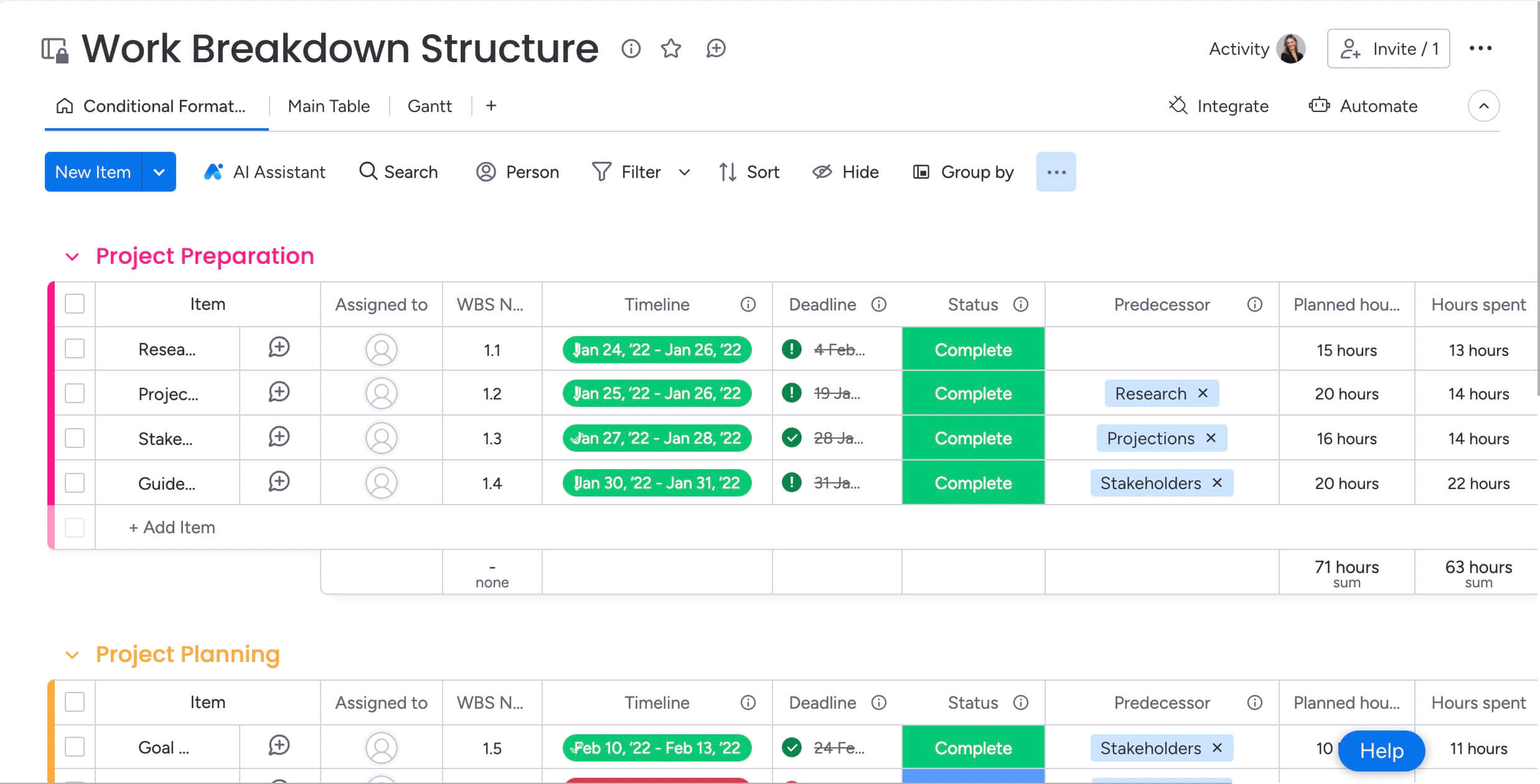
These factors don’t change much and they’re easy to find — perfect for your first pass at sorting leads. Teams using monday work management organize these demographic buckets through customizable boards that automatically tag and sort incoming leads at scale.
2. Behavioral segmentation templates
Behavioral segmentation groups customers based on actions such as purchase frequency, website activity, and engagement levels. While demographics show who someone is, behavior reveals how likely they are to convert, expand, or disengage.
The table below illustrates how common behavioral signals can be translated into clear customer segments, each indicating a different level of intent or risk. These patterns help teams decide when to prioritize conversion, nurture interest, or trigger re-engagement campaigns.
| Segment | Purchase frequency | Average order value | Key indicator |
|---|---|---|---|
| Whales | High (monthly+) | High ($200+) | Opens every email |
| Window shoppers | Low (0 purchases) | N/A | High product page views |
| Lapsed | Low (none in 6 months) | High (historically) | Stopped opening emails |
3. Psychographic segmentation templates
Psychographic segmentation groups people by what drives them — their values, interests, lifestyle, and personality. This works best when you’re positioning your brand, planning content, or launching new products.
For a fitness brand, a psychographic template distinguishes between segments by motivation:
- Health-focused: Preventative care priorities.
- Appearance-focused: Aesthetic goals.
- Performance-focused: Competition drivers.
Data for these templates comes through sentiment analysis, customer interviews, and survey responses. This data helps you write messages that actually connect with people.
4. Geographic segmentation templates
Geographic templates sort by location — country, region, city size, climate, and culture. Use this if you’re expanding internationally, running local services, or selling seasonal products.
A retail clothing company uses this template to adapt campaigns simultaneously across different zones. They promote winter coats to urban customers in New York while serving ads for swimwear to suburban customers in Miami. This template goes beyond basic location data to include:
- Time zone optimization: Email send times that match local business hours.
- Regulatory compliance: Local data privacy laws and advertising restrictions.
- Cultural adaptation: Visual design and messaging tone that resonates regionally.
5. Technographic segmentation templates
Technographic segmentation organizes customers based on their technology stack, software usage, and digital maturity. For B2B SaaS providers and digital agencies, this is often the most predictive template for sales success.
Common technographic variables include:
- CRM platform: Salesforce, HubSpot, Pipedrive (indicates budget and sales maturity).
- Marketing automation: Marketo, Mailchimp (indicates sophistication of marketing operations).
- Device preference: Mobile-first vs. desktop-heavy (influences UX design and ad placement).
This data helps predict technology adoption rates. A company already using enterprise-grade cloud storage is statistically more likely to adopt a complex project management platform than a company relying on local servers.
Try monday work management
Marketing segmentation chart examples that drive real campaigns
Segmentation becomes far more useful when teams can quickly see how different customer groups compare and where to focus effort. Visual charts translate complex datasets into simple frameworks that guide messaging, prioritization, and campaign planning across the funnel.
The following examples show how organizations structure segmentation visually to support specific goals — from prioritizing high-value B2B accounts to personalizing e-commerce journeys and guiding SaaS lifecycle engagement.
B2B customer segmentation matrix for account-based marketing
For B2B teams, segmentation often needs to reflect both company profile and revenue potential. A matrix that combines company size with industry helps prioritize which accounts deserve personalized outreach and which can move through scalable nurture campaigns.
The table below shows how organizations commonly structure account tiers based on commercial value and strategic fit. Each segment is paired with an outreach approach and content type that matches the level of opportunity, helping sales and marketing stay aligned on where to focus time and resources.
| Segment | Company size | Industry | Outreach strategy | Content focus |
|---|---|---|---|---|
| Tier 1 (strategic) | Enterprise (1000+) | Finance | 1:1 personal outreach, direct mail | Custom ROI analysis |
| Tier 2 (growth) | Mid-market (100-999) | Tech | Personalized email sequences | Case studies and webinars |
| Tier 3 (scale) | SMB (<100) | Retail | Automated nurture campaigns | General blog content |
With monday work management, teams can visualize this matrix dynamically, updating account segments as companies grow, change industry focus, or show stronger buying signals.
E-commerce behavioral segmentation template for personalization
This template segments customers using a 2×2 matrix based on purchase frequency and engagement level. This simple visual identifies four distinct customer types, each requiring a specific tactical approach:
- Loyal advocates (high frequency / high engagement): Receive VIP early access, referral bonuses, and exclusive content.
- At-risk customers (high frequency / low engagement): Get transactional updates and surprise offers to boost emotional connection.
- Potential converts (low frequency / high engagement): Targeted with first-time buyer discounts and social proof.
- Inactive users (low frequency / low engagement): Receive aggressive win-back campaigns or are eventually removed.
SaaS user journey segmentation framework
This framework segments users based on their position in the customer lifecycle and their feature adoption level. It guides product marketing and customer success teams in delivering the right education at the right time.
User segments include:
- Trial users: Focus on “aha!” moments and basic setup with getting started guides.
- New customers: Focus on habit formation with daily workflow highlights and integrations.
- Power users: Focus on advocacy and expansion with advanced features and beta programs.
- Expansion candidates: Focus on upsell with demonstrations of higher-tier plan value.
How to choose the right customer segmentation template
Selecting the correct template depends on business models and immediate goals. The right choice provides operational focus, while the wrong one adds unnecessary complexity. Understanding which template aligns with your specific situation also ensures maximum impact from your segmentation efforts.
Matching segmentation templates to your business model
The most effective segmentation templates reflect how a business actually creates value. Different business models generate different types of meaningful data, so choosing the right framework helps ensure segments lead to practical marketing decisions rather than unnecessary complexity.
The table below highlights which segmentation approaches typically deliver the strongest results across common business models, along with the reasoning behind each combination. This helps teams focus on the variables most likely to influence conversion, retention, and long-term growth.
| Business model | Recommended templates | Reason |
|---|---|---|
| B2B services | Demographic + technographic | Success depends on identifying the right company profile and technical fit |
| E-commerce | Behavioral + geographic | Success depends on understanding buying patterns and logistical location |
| SaaS | Behavioral + user journey | Success depends on driving product adoption and reducing churn through usage patterns |
| Content/media | Psychographic + behavioral | Success depends on audience engagement and content resonance |
| Local services | Geographic + demographic | Success depends on physical proximity and household characteristics |
Aligning your segmentation matrix with campaign goals
The objective of the campaign dictates the segmentation approach. A single company will switch templates depending on what they’re trying to achieve in a specific quarter. This flexibility ensures that segmentation serves the immediate business need rather than becoming a static exercise.
Campaign goals and their corresponding approaches:
- Brand awareness: Uses demographic and psychographic templates to cast a wide net over the right type of people.
- Lead generation: Uses behavioral and technographic templates to identify high-intent prospects ready to buy.
- Customer retention: Uses behavioral and user journey templates to spot churn risks and engagement drops.
- Market expansion: Uses geographic and demographic templates to identify new territories matching existing successful profiles.
- Product launches: Uses psychographic and behavioral templates to find early adopters who value new approaches.
7 steps to build an actionable marketing segment template
Building a template moves from broad objectives to specific, validated actions. Following these steps creates a framework that teams will actually use and that drives measurable business outcomes. Each step builds on the previous one to ensure your segmentation becomes an operational asset rather than a planning document.
Step 1: define segmentation objectives
Success begins with specific, measurable goals. Vague desires lead to cluttered templates that confuse rather than guide decision-making.
Objectives must be concrete, such as:
- Performance targets: “Increase email open rates by 25% through behavioral segmentation”.
- Quality improvements: “Improve lead quality scores by segmenting prospects by company size”.
- Revenue goals: “Drive 15% more upsells by identifying expansion-ready accounts”.
A solid objective includes target metrics, a timeline, and success criteria. Goal-tracking features within monday work management allow teams to pin these objectives to the top of their project boards, keeping the “why” visible throughout the build.
Step 2: gather data from multiple customer touchpoints
Comprehensive profiles require data from every interaction point. Relying on a single source creates a skewed view of the customer that leads to ineffective targeting.
Key data sources include:
- CRM systems: Contact details, deal stages, and interaction history.
- Website analytics: Browsing behavior, time on page, and content preferences.
- Email platforms: Engagement metrics like open rates and click-through data.
- Customer surveys: Direct feedback on preferences and satisfaction scores.
- Social media: Interests, community engagement, and brand sentiment.
- Support tickets: Pain points, feature requests, and product usage issues.
Step 3: select high-impact segmentation variables
Not all data drives difference in performance. Descriptive variables tell you what a customer looks like, while predictive variables indicate what they will do. Effective segmentation relies on testing variables to see which ones correlate with conversion and revenue outcomes.
Focus on variables that show statistical correlation with your key business metrics:
- Revenue predictors: Variables that correlate with deal size or purchase frequency.
- Conversion indicators: Behaviors that predict likelihood to buy or upgrade.
- Retention signals: Patterns that indicate long-term customer value.
AI capabilities analyze historical data to identify which variables have historically had the biggest impact on deal closure, preventing over-segmentation.
Step 4: create detailed customer segment profiles
Profiles bring data to life by transforming numbers into actionable insights. A segment profile goes beyond basic stats to include pain points, motivations, preferred channels, and revenue potential.
Example segment profile: “The Scaler”
- Characteristics: Series B funded, 50-200 employees, rapid hiring.
- Pain points: Process chaos, fragmented workflows, lack of visibility.
- Motivation: Speed and operational efficiency.
- Preferred channel: LinkedIn and peer review sites (G2).
- Revenue potential: High (enterprise tier candidate).
Step 5: design visual segmentation charts
Visuals make complex data accessible and actionable. A well-designed chart allows a marketer to understand the landscape in seconds and make quick decisions based on segment membership.
Effective visualization includes:
- Easy-to-read labels: Segment names that immediately convey the customer type.
- Limited complexity: 5-7 distinct groups to avoid cognitive overload.
- Key metrics: Revenue potential, conversion rates, or engagement scores displayed directly.
Matrices, flowcharts, and persona cards are standard formats. Visualization widgets within monday work management allow teams to build these views directly into their workspace, ensuring the map is always available where the work happens.
Step 6: validate segments with real customer behavior
Hypothetical segments must be tested against reality to ensure they drive different outcomes. Validation involves A/B testing different messages to the defined groups to see if they respond differently. If Segment A and Segment B respond identically to the same campaign, they are likely the same segment.
Key validation approaches include:
- A/B testing: Different messages to each segment to measure response variance.
- Conversion tracking: Monitoring how each segment performs through the funnel.
- Feedback loops: Input from sales and customer service teams on segment accuracy.
Validation metrics include conversion rates by segment and movement between segments. Feedback from sales and customer service teams provides a qualitative check on whether the segments match the people they talk to daily.
Step 7: map each segment to specific marketing actions
The final step connects the segment to the strategy. A template must link each group to preferred content types, optimal communication channels, messaging themes, and conversion strategies. This mapping ensures that segmentation drives actual marketing decisions and resource allocation.
Segment-to-action mapping examples:
- Segment A (price sensitive): Receives discount offers via email.
- Segment B (quality focused): Receives case studies via LinkedIn.
- Segment C (urgent need): Receives direct sales outreach via phone.
Transform market segmentation analysis into campaign execution
Segmentation only delivers value when it actively shapes how campaigns are planned, prioritized, and executed. Once clear customer groups are defined, the next step is connecting those insights to repeatable marketing actions that respond to real behavior.
The following sections explore how segmentation supports structured workflows, targeted messaging, and measurable performance improvements.
Building segment-specific campaign workflows
Standardized processes ensure the right message hits the right segment automatically. Workflows trigger specific actions based on segment membership, creating a responsive marketing system that adapts to customer behavior.
Campaign workflow examples include:
- New customer onboarding: Welcome sequences tailored to segment-specific pain points.
- Re-engagement campaigns: Win-back messaging that addresses why each segment typically churns.
- Upsell sequences: Expansion offers that match the segment’s growth trajectory and budget capacity.
Automation capabilities on monday work management execute these workflows without manual intervention, ensuring that as soon as a customer meets the criteria for a segment, the appropriate marketing machine springs into action.
Automating marketing actions based on segment movement
Dynamic segmentation responds to customer changes in real-time. When a customer moves from “lead” to “opportunity,” or from “active” to “at risk,” the system must adapt immediately to maintain relevance and maximize conversion potential.
This involves setting up data connections that trigger enrollment in new campaigns based on behavior:
- Usage threshold triggers: Customers who exceed usage limits get expansion offers.
- Engagement drops: Declining activity triggers retention campaigns.
- Behavioral shifts: Changes in product usage patterns prompt educational content.
This requires seamless integration between the segmentation database and the marketing execution platforms.
Tracking ROI for each customer segment
Measuring performance by segment reveals where to invest marketing resources for maximum return. Tracking metrics like revenue per segment, conversion rates, customer acquisition cost, and lifetime value allows for data-driven budgeting decisions.
Key performance indicators by segment include:
- Revenue attribution: Which segments generate the most revenue per marketing dollar spent.
- Conversion efficiency: Which segments move through the funnel fastest.
- Lifetime value: Which segments provide the highest long-term returns.
A simple reporting template tracks these KPIs over time, highlighting which segments are growing in value and which are draining resources. This visibility transforms marketing from a cost center to a revenue generator by focusing effort on the most profitable groups.
Try monday work managementAutomation capabilities on monday work management execute these workflows without manual intervention, ensuring that as soon as a customer meets the criteria for a segment, the appropriate marketing machine springs into action.
AI-powered enhancements for your marketing segmentation
Artificial intelligence enhances the speed, accuracy, and depth of segmentation beyond human capabilities. It acts as a force multiplier, processing data faster than humanly possible to support smarter decision-making and reveal patterns that would otherwise remain hidden.
Automated segment discovery using machine learning
Machine learning algorithms analyze vast datasets to find patterns humans miss. AI identifies clusters of customers who behave similarly in ways that aren’t obvious, such as customers who only buy on rainy days or those who engage heavily with video content but never read blogs.
AI-driven discovery reveals:
- Hidden micro-segments: Small but highly valuable customer groups with unique behaviors.
- Seasonal patterns: Time-based segments that emerge during specific periods.
- Cross-channel behaviors: Segments defined by how they move between different touchpoints.
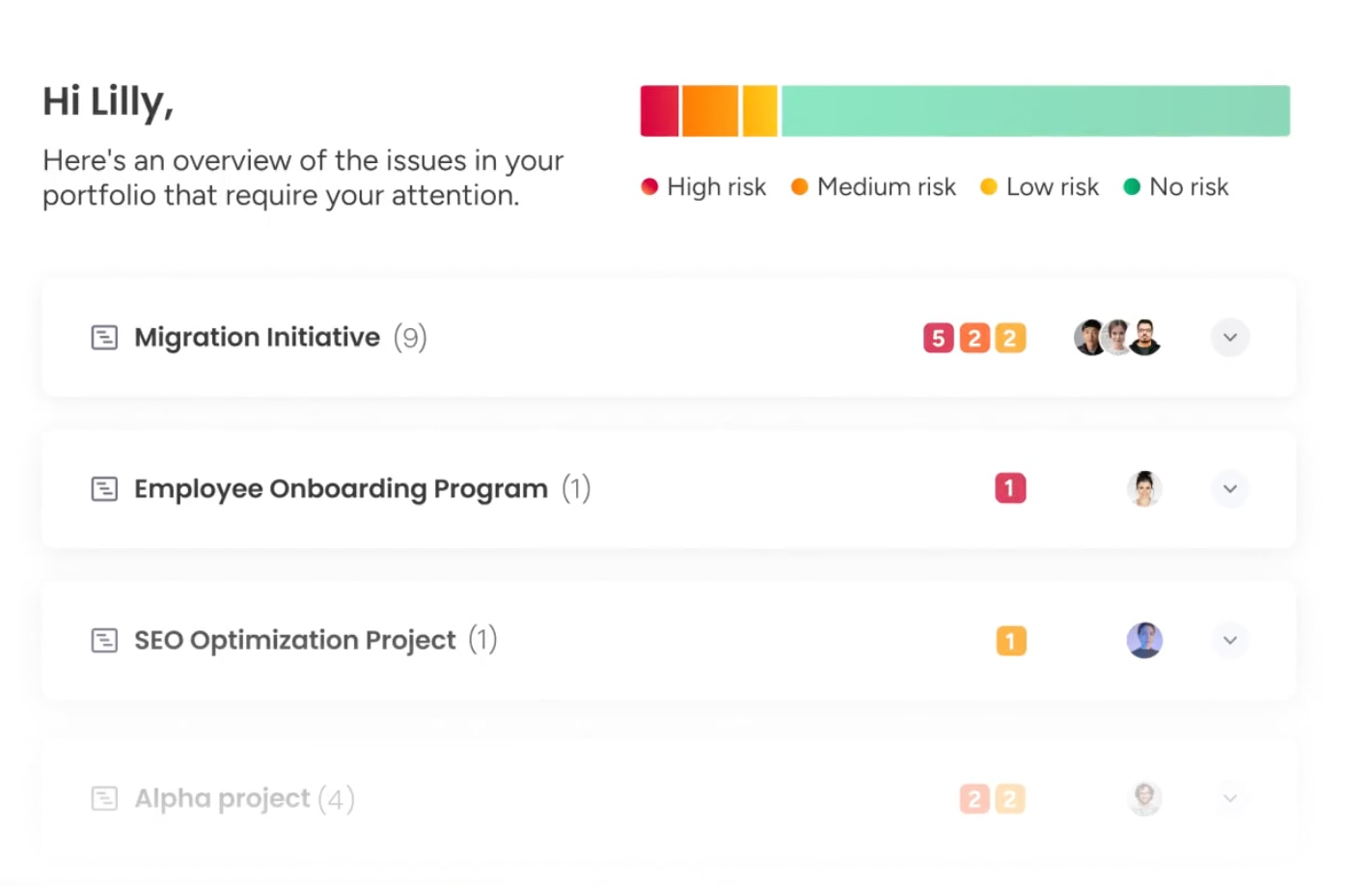
AI capabilities within monday work management automatically scan customer databases to suggest new segmentation variables or reveal hidden micro-segments that represent untapped revenue opportunities.
Real-time customer segmentation updates
AI enables segmentation to happen in the now rather than in quarterly reviews. Instead of waiting for a scheduled analysis, AI systems update segment membership the instant new data arrives. If a customer makes a purchase, they’re immediately re-segmented from “prospect” to “customer,” and their ad experience changes instantly.
Real-time capabilities include:
- Behavioral triggers: Immediate segment changes based on specific actions.
- Engagement scoring: Dynamic updates to engagement-based segments.
- Lifecycle progression: Automatic movement through customer journey segments.
This real-time capability ensures that personalization is always relevant to the customer’s current context, not their past history.
Predictive analytics for segment evolution
Predictive models forecast where customers are going rather than just describing where they’ve been. AI analyzes current trajectories to predict which customers are likely to churn, which are ready for an upsell, and which segments will grow in the next quarter.
Predictive insights enable:
- Churn prevention: Identifying at-risk customers before they disengage.
- Expansion opportunities: Spotting customers ready for premium offerings.
- Market trends: Predicting which segments will grow or shrink.
These insights allow marketers to be proactive rather than reactive, adjusting strategies to prevent churn before it happens or to capture demand before competitors do.

Build dynamic customer segmentation workflows with monday work management
monday work management approaches segmentation as a living, collaborative workflow rather than a static analysis exercise. By combining visual data management, cross-team collaboration, and powerful automation, it transforms segmentation from a planning exercise into an operational reality that drives daily marketing decisions.
Creating collaborative segmentation templates your team will actually use
The platform’s visual interface makes segmentation accessible to everyone, not just data analysts. Marketing, sales, and customer success teams work from the same customizable boards, ensuring a single source of truth that eliminates conflicting customer definitions.
Collaborative features include:
- Shared workspaces: Teams develop templates together with real-time input and feedback.
- Contextual comments: Add insights and observations directly to customer profiles.
- Visual dashboards: Segment performance becomes immediately visible to all stakeholders.
Visual dashboards make segment performance immediately visible to stakeholders, removing the need for complex report generation and ensuring everyone understands which segments are performing.
Connecting segments to automated campaign workflows
Integration with campaign execution is seamless, eliminating the gap between segmentation and action. Teams set up automations that trigger specific marketing actions when customers enter or leave segments, creating a responsive marketing system.
Automation examples include:
- Sales alignment: Automatically assign leads to specific sales reps based on geographic or industry segments.
- Email marketing: Trigger nurture sequences when a lead’s behavioral score changes.
- CRM updates: Automatically update CRM records when demographic data is enriched or modified.
Visualizing segment performance with real-time dashboards
Dashboard capabilities provide instant visibility into the health of the segmentation strategy. Customizable widgets track segment size, conversion rates, revenue attribution, and campaign effectiveness in real-time, enabling quick adjustments based on performance data.
Dashboard views include:
- Executive summaries: High-level segment ROI and growth trends.
- Operational metrics: Daily campaign performance by segment.
- Predictive indicators: Early warning signals for segment changes.
Executive dashboards show high-level segment ROI, while operational dashboards help marketing managers optimize daily activities based on which segments are engaging.
Integrating your marketing stack for seamless execution
Segmentation becomes far more effective when customer data flows consistently between the tools used to plan, launch, and measure campaigns. Connecting CRM data, email platforms, analytics tools, and campaign systems ensures every team works from the same definitions and insights.
The comparison below shows how different approaches support segmentation workflows in practice. While disconnected tools often store or analyze data in isolation, monday work management connects insights directly to execution, helping teams act on segment changes faster and with greater consistency.
| Feature | Spreadsheets | Standalone analytics | Basic crm | monday work management |
|---|---|---|---|---|
| Collaboration | Low (version control issues) | Low (siloed access) | Medium (sales focused) | High (cross-functional workspaces) |
| Automation | None | Low (alerts only) | Medium (email only) | High (cross-platform workflows) |
| Visual management | Low (static rows) | Medium (complex charts) | Medium (standard views) | High (customizable boards and dashboards) |
| Scalability | Low (breaks with data volume) | High (expensive) | Medium | High (enterprise-grade architecture) |
| Actionability | Low (data storage only) | Low (analysis only) | Medium (record keeping) | High (direct link to execution) |

“monday.com has been a life-changer. It gives us transparency, accountability, and a centralized place to manage projects across the globe".
Kendra Seier | Project Manager
“monday.com is the link that holds our business together — connecting our support office and stores with the visibility to move fast, stay consistent, and understand the impact on revenue.”
Duncan McHugh | Chief Operations OfficerTurn your customer insights into marketing impact today
Marketing segmentation templates are the difference between guessing and knowing. By moving from scattered data to structured frameworks, organizations unlock faster campaign development, improved targeting accuracy, and scalable operations. The right template turns overwhelming customer information into a strategic advantage, ensuring that every marketing dollar is spent on the right audience.
With a structure in place, teams can stop managing data chaos and start driving revenue. monday work management transforms segmentation from static analysis into dynamic operational systems that drive real-time campaign execution, cross-team collaboration, and automated workflows — all within a single, customizable platform.
Try monday work managementFrequently asked questions
What is the difference between market segmentation and customer segmentation?
Market segmentation divides the broader total addressable market into groups for targeting and acquisition, while customer segmentation organizes existing customers to drive retention, loyalty, and expansion strategies.
How often should marketing teams update their segmentation templates?
Most businesses benefit from a comprehensive quarterly review of their templates, with immediate updates required whenever major customer behavior shifts or new data sources are integrated.
Can one customer belong to multiple market segments?
Yes, customers frequently belong to multiple segments simultaneously, such as a demographic segment based on location and a behavioral segment based on purchase history, which allows for highly sophisticated, layered targeting strategies.
What tools help create effective segmentation matrices?
Effective segmentation relies on CRM platforms for data, analytics software for insights, and collaborative work management platforms like monday work management to visualize segments and automate the resulting workflows.
How many customer segments should a small business manage?
Small businesses should start with 3-5 distinct segments to maintain focus and operational efficiency, adding more complexity only as their marketing capabilities and data quality mature.
Which customer data is most important for behavioral segmentation?
Purchase history, website engagement patterns, email interaction rates, and product usage frequency serve as the most predictive indicators for effective behavioral segmentation.

 Get started