

A marketing campaign can look flawless in a strategy deck. The positioning is sharp. The creative is approved. The budget is signed off.
Then execution begins.
Timelines shift. Feedback multiplies. Dependencies surface. What felt simple turns into a web of revisions, approvals, and competing priorities.
This is where a marketing project manager earns their value.
A marketing project manager turns strategy into execution. They align creative, performance, leadership, and external partners around clear timelines and measurable outcomes. When plans change, they keep momentum steady and protect the launch.
In 2026, the role goes far beyond tracking deadlines. It demands operational leadership, financial oversight, cross-functional influence, and comfort with AI-powered workflows.
Ahead, you’ll get a clear breakdown of the responsibilities, the skills that define high performers, salary expectations across experience levels, and how the role is evolving as marketing becomes more data-driven and automated.
Key takeaways
- Marketing project managers bridge strategy and execution: They translate marketing goals into structured plans, aligning creative teams, stakeholders, budgets, and timelines to ensure campaigns launch effectively.
- The role requires a hybrid skill set: Success depends on combining project management fundamentals with marketing knowledge, creative workflow coordination, and data-driven decision-making.
- AI is reshaping how marketing projects are managed: Automation now handles routine coordination and reporting, allowing project managers to focus more on optimization, risk management, and strategic oversight.
- Career paths and compensation scale with specialization: Digital, product, enterprise, agency, and global marketing project managers develop distinct expertise that influences responsibility, impact, and earning potential.
- Unified work management platforms improve execution at scale: Solutions like monday work management centralize campaigns, resources, and performance tracking, helping teams stay aligned across complex, multi-channel initiatives.
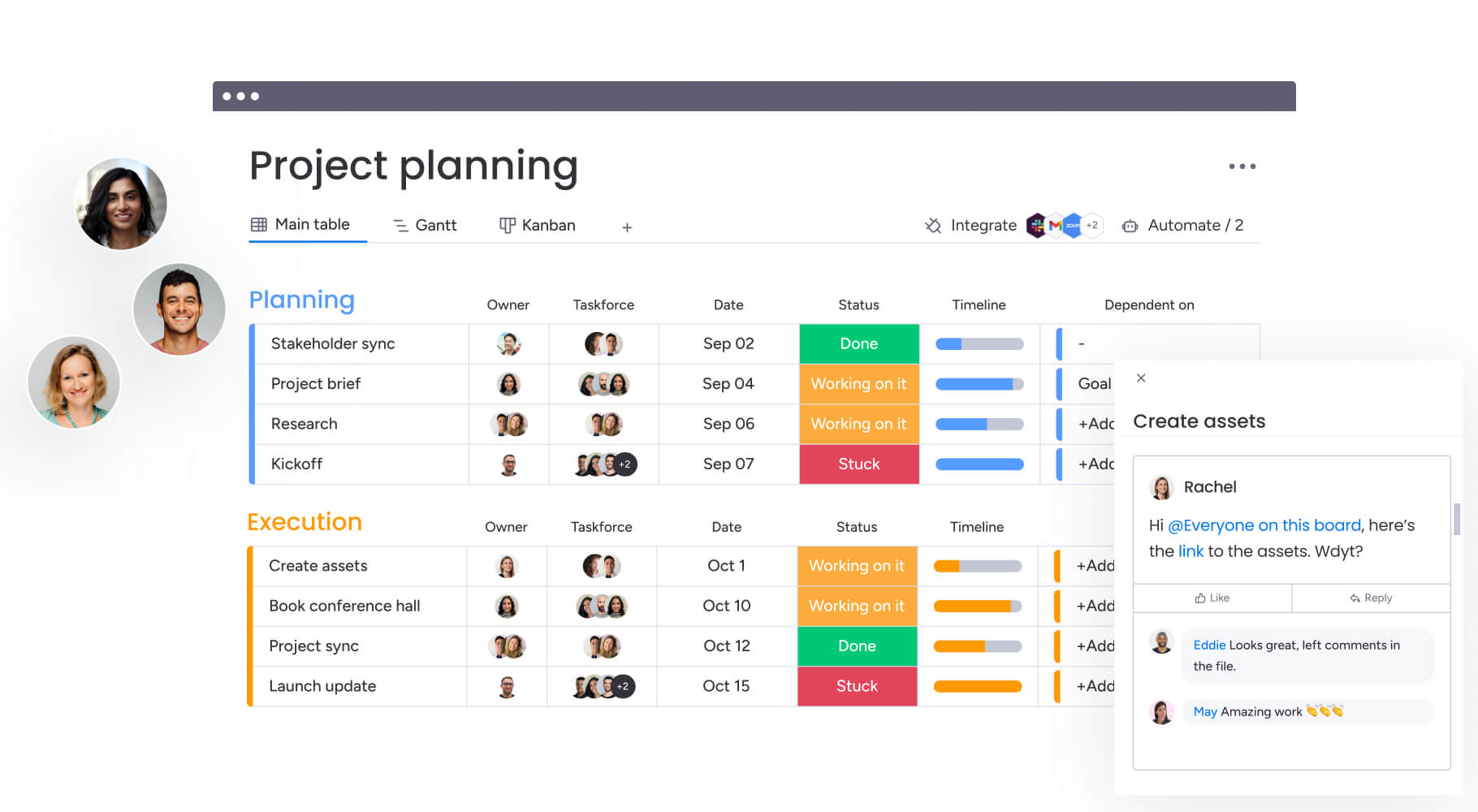
What is a marketing project manager?
A marketing project manager connects creative vision with business execution. They coordinate campaigns, manage resources, and ensure marketing initiatives deliver measurable results. Unlike general project managers who focus mainly on timelines and budgets, marketing project managers manage the added complexity of creative workflows, multichannel distribution, and performance tracking.
The role requires balancing structure with flexibility. One moment involves mapping dependencies and aligning stakeholders. The next requires resolving creative feedback, adjusting scope, or reallocating budget based on performance data.
In practice, the role often looks like this:
-
Campaign pivots: Reallocate budget and accelerate creative production to capitalize on emerging trends or performance signals.
-
Timeline negotiations: Adjust scope and manage stakeholder expectations when approvals threaten launch dates.
-
Cross-channel coordination: Synchronize updates across web, social, paid media, and events during major launches or rebrands.
Marketing project managers protect brand consistency while managing capacity, approvals, and competing priorities. They keep teams aligned when momentum slows and provide clarity when complexity increases.
Unlike general project managers who focus mainly on timelines and budgets, marketing project managers manage the added complexity of creative workflows, multichannel distribution, and performance tracking.
Core marketing project manager responsibilities
Marketing project managers balance five core responsibilities that combine process discipline with creative flexibility. Success depends on managing structure while allowing room for iteration, feedback, and change. Each responsibility requires a distinct set of skills to keep campaigns on track and effective.
Campaign planning and strategic execution
Marketing project managers translate high-level objectives into executable plans. They break annual strategies into quarterly roadmaps and campaign sprints, defining critical paths for complex initiatives such as product launches or seasonal campaigns.
This work goes beyond assigning deadlines and owners. Strong campaign planning establishes a framework that can adapt to shifting priorities and market conditions. Core elements of effective execution include:
- Timeline development: Creating detailed Gantt charts accounting for creative ideation, revision cycles, compliance reviews, and final asset delivery.
- Milestone setting: Establishing clear go or no-go checkpoints to prevent last-minute bottlenecks before launch.
- Channel coordination: Aligning email, social, paid media, and event timelines to deliver a cohesive market presence.
Cross-functional team orchestration
Marketing project managers act as the central point of coordination across teams with different goals and workflows. They ensure creative concepts align with data insights, product messaging, and revenue targets.
Collaboration typically spans several groups and working styles:
- Internal facilitation: Leading sprint planning sessions where designers, copywriters, and developers commit to shared deliverables.
- External partnerships: Serving as the primary contact for agencies and freelancers to ensure outputs meet brand standards and timelines.
- Departmental coordination: Translating input from product, sales, and legal teams into clear guidance for marketing execution teams.
Budget and resource optimization
Budget ownership involves more than expense tracking. Marketing project managers allocate time, talent, and spend based on performance, capacity, and business priorities.
By monitoring burn rates and workload distribution, they help maximize impact without overextending teams. This responsibility focuses on several critical areas:
- Resource balancing: Using capacity planning to prevent creative staff burnout during peak seasons while maximizing utilization during slower periods.
- Spend optimization: Tracking media spend against projected ROI and shifting investment toward higher-performing channels.
- Vendor negotiation: Managing contracts with software providers and freelance partners to control both fixed and variable costs.
Performance tracking and reporting
Marketing project managers measure both delivery health and marketing impact. They track whether work is on time and on budget, while also monitoring campaign outcomes such as conversion rates and return on investment.
Tracking systems are established before launch and refined throughout execution:
- Target definition: Setting clear, measurable goals for outputs, outcomes, and business impact.
- Real-time dashboards: Providing stakeholders with up-to-date visibility into progress, risks, and performance metrics.
- Post-mortem analysis: Leading retrospectives to document lessons learned and improve future planning and execution.
Stakeholder alignment and communication
Clear communication is essential to keeping initiatives moving forward. Marketing project managers tailor updates based on audience needs, translating complex project details into relevant insights.
This responsibility spans the full stakeholder landscape:
- Executive updates: Delivering concise summaries that focus on impact, risks, and required decisions.
- Cross-team coordination: Consolidating feedback from brand, legal, and product teams into actionable direction for creative teams.
- Change management: Communicating scope, priority, or timeline adjustments early to maintain trust and alignment.
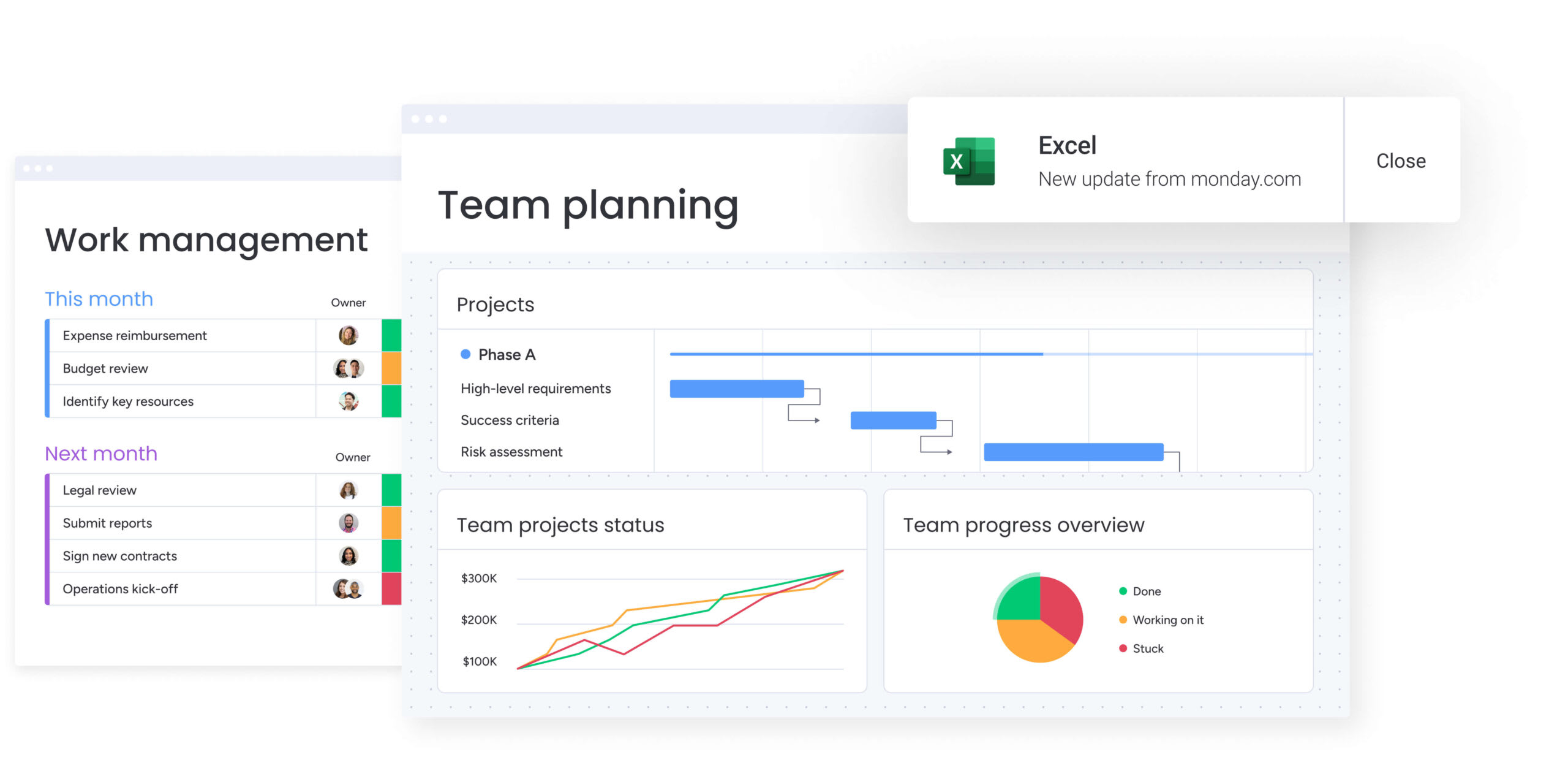
9 essential skills every marketing project manager needs
Marketing project managers rely on a hybrid skill set that combines technical project management expertise with strong marketing knowledge. This balance helps them manage creative workflows while maintaining operational discipline and business focus.
These skills are what separate high performing managers from those who struggle to keep pace with shifting priorities, cross functional demands, and performance expectations. Together, they define what success looks like in modern marketing environments.
The table below outlines the core skill areas, the competencies behind them, and the impact they have on business outcomes.
| Skill category | Core competency | Business impact |
|---|---|---|
| Strategic project planning | Anticipate market seasonality; build flexible plans | Reduces delays and missed opportunities |
| Cross-team leadership | Lead without formal authority; drive consensus | Improves alignment across departments |
| Budget management expertise | Forecast spend; adjust allocations dynamically | Maximizes ROI on marketing investments |
| Data analysis and reporting | Translate raw data into actionable insights | Enables data-driven decision-making |
| Marketing technology proficiency | Navigate CRM, automation, and content systems | Ensures seamless workflow integration |
| Agile methodology mastery | Run sprints, stand-ups, and Kanban boards | Accelerates iteration and delivery |
| Communication abilities | Translate subjective feedback into objective tasks | Minimizes revision cycles |
| Creative problem-solving | Pivot strategies instantly when plans change | Maintains execution momentum |
| AI and automation skills | Leverage AI for workflow automation and analytics | Frees time for strategic work |
Each skill plays a key role in daily execution and long term impact.
- Strategic planning: Anticipates seasonality and builds flexibility to support creative iteration and shifting priorities.
- Cross team leadership: Motivates creative teams while aligning stakeholders with competing goals and deadlines.
- Budget expertise: Manages media buying, agency retainers, and production costs while reallocating spend based on performance.
- Data analysis: Connects marketing analytics with project metrics to improve both output quality and delivery efficiency.
- Technology proficiency: Ensures workflows stay connected across execution platforms and reporting systems.
- Agile mastery: Supports faster iteration through structured sprints and well maintained Kanban boards.
- Communication skills: Reduce rework by converting subjective feedback into clear, objective deliverables.
- Problem solving: Enables rapid adjustments when campaigns require changes mid execution.
- AI skills: Automate routine updates and support predictive resource planning to reduce manual effort.
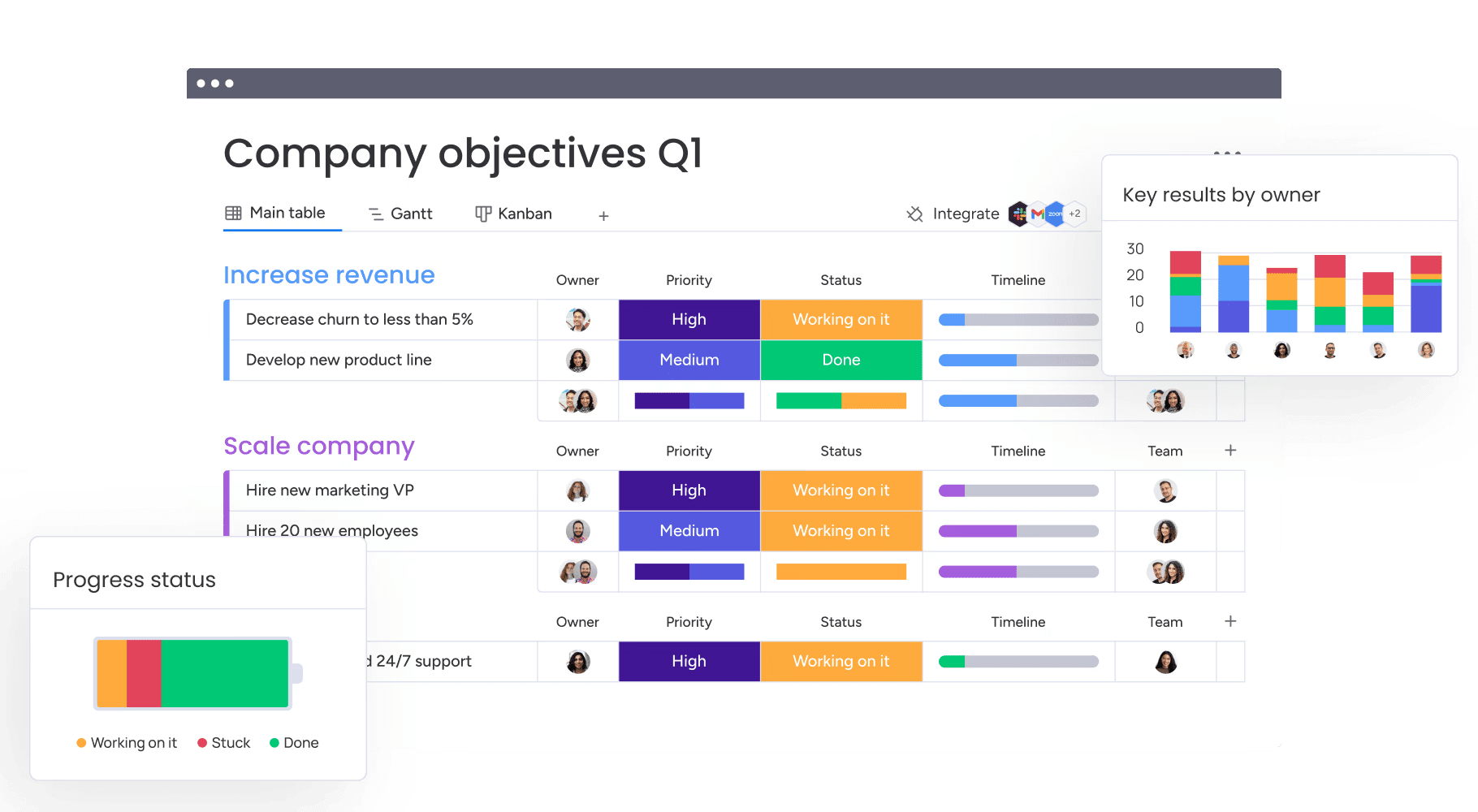
Marketing project manager salary expectations
Salary for a marketing project manager reflects more than tenure. Scope of ownership, budget responsibility, team leadership, and industry context all influence earning potential. A coordinator supporting campaigns will sit in a very different bracket than a senior leader overseeing a full marketing portfolio.
Understanding how compensation scales helps you benchmark your role accurately and negotiate from a position of clarity.
The ranges below outline projected 2026 salaries based on experience level and responsibility.
| Experience level | Typical salary range (USD) | Key compensation factors |
| Entry-level (0-2 years) | $55,000-$75,000 | Foundational skills; marketing familiarity; supporting senior managers |
| Mid-career (3-7 years) | $80,000-$115,000 | Independent campaign management; budget responsibility; agency management |
| Senior-level (8+ years) | $120,000-$160,000+ | Portfolio management; team leadership; performance bonuses and equity |
Entry-level compensation ranges
Professionals early in their careers often begin as coordinators or junior project managers. Salaries depend on familiarity with work management platforms and hands on marketing experience through internships or entry level roles.
Mid-career earning potential
With three to seven years of experience, managers oversee larger budgets and multichannel campaigns. Compensation often includes performance bonuses tied to campaign results, with Agile marketing expertise increasing earning potential.
Senior-level salary benchmarks
Senior marketing project managers and directors oversee full marketing portfolios and lead teams of managers. Total compensation frequently includes equity, profit sharing, and performance based incentives.
Industry and location factors
Industry has a significant effect on salary ceilings. Technology, finance, and pharmaceutical organizations typically pay 20% to 30% more than retail, nonprofit, or agency roles. While major cities still offer higher pay, remote work has narrowed geographic gaps.
Your path to becoming a marketing project manager
Moving into marketing project management requires a mix of education, hands on experience, and credibility across creative and operational disciplines. Professionals often transition from marketing roles or from general project management backgrounds.
Educational foundations
Degrees in marketing, business administration, or communications provide a strong base, though diverse academic paths are common. Practical problem solving and marketing literacy often matter more than a specific major.
Building marketing experience
Understanding the full marketing life cycle helps build trust with creative teams and stakeholders.
- Campaign coordination: Manage social calendars or small campaigns for nonprofits or local businesses.
- Cross functional projects: Lead marketing adjacent initiatives to understand workflow complexity.
- Marketing vocabulary: Learn key concepts such as funnels, conversion rates, and brand guidelines.
Developing project management skills
Focus on mastering methodologies that work in marketing environments. Learning to structure Kanban boards for creative requests or run Scrum sprints for website launches provides immediate value. Proficiency with work management platforms is essential.
Certifications that accelerate your career
Credentials help validate expertise and support faster advancement.
- Project Management Professional (PMP): Demonstrates advanced process and risk management knowledge.
- Certified Associate in Project Management (CAPM): Supports entry level professionals building credentials.
- Agile marketing certification: Shows the ability to apply iterative frameworks in marketing contexts.
- Platform specific certifications: Signal readiness to contribute quickly with specific tools.
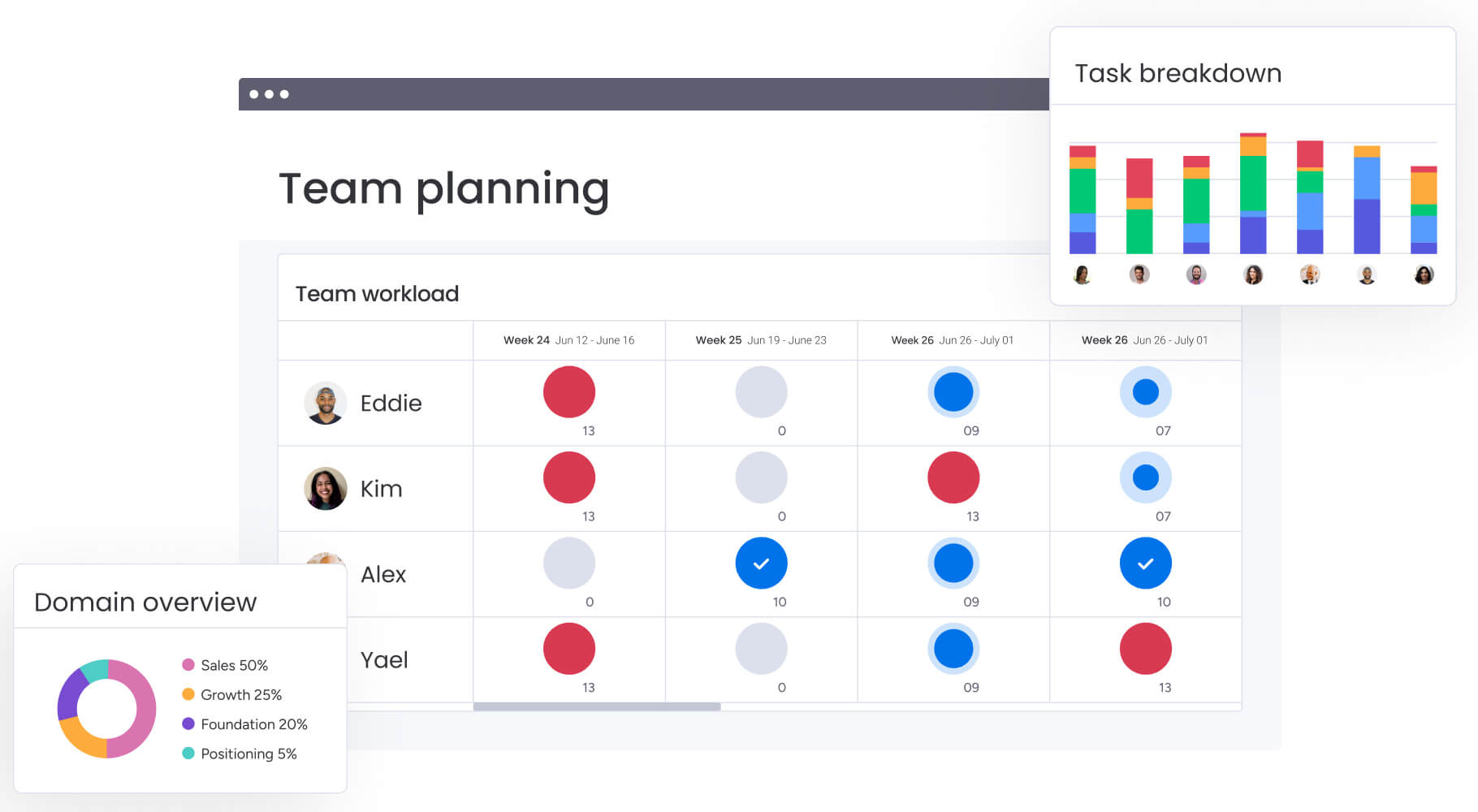
5 types of marketing project managers
Marketing project management has evolved into specialized roles, each addressing different organizational needs. Understanding these paths helps professionals focus skill development and career planning.
| MPM type | Primary focus | Key challenge |
|---|---|---|
| Digital MPM | Online channels, SEO/SEM, web development | Rapid technological changes and algorithm updates |
| Agency MPM | Client services, billable hours | Balancing client demands with internal profitability |
| Enterprise MPM | Internal alignment, compliance | Navigating bureaucracy and siloed departments |
| Product MPM | Go-to-market, sales enablement | Synchronizing product development with marketing launches |
| Global MPM | International markets, localization | Cultural nuance and time zone logistics |
Digital marketing project manager
These managers work across fast moving digital channels, coordinating web builds, automation, and paid media. Their work relies heavily on analytics and close collaboration with developers and data teams.
Agency marketing project manager
Agency based managers oversee multiple client accounts at once. They protect internal teams from scope creep while ensuring deadlines, budgets, and profitability stay on track.
Enterprise marketing project manager
In large organizations, enterprise roles involve long term initiatives with many stakeholders. Success depends on governance, communication, and alignment with broader business strategy.
Product marketing project manager
This role focuses on launch readiness. Managers align development timelines with messaging, sales materials, and campaign execution to ensure market preparedness.
Global marketing project manager
Global managers coordinate campaigns across regions and languages. They oversee localization workflows and ensure brand consistency while respecting cultural differences.
Solutions like monday work management help support these varied roles by keeping teams aligned, work visible, and execution consistent across marketing organizations.
The marketing project management process
Modern marketing project management continues to move away from rigid Waterfall models toward flexible, iterative frameworks that better match the pace of digital marketing. This shift reflects the need to respond quickly to market changes while maintaining quality, consistency, and brand standards.
The framework below outlines how marketing teams execute campaigns successfully from planning through optimization, while keeping stakeholders aligned and work moving forward.
Step 1: Strategic planning and goal alignment
Effective marketing projects begin by translating high-level business objectives into clear, measurable campaign goals. Marketing project managers collaborate closely with leadership to define the purpose and desired outcomes before determining execution details.
This planning phase establishes scope, budget, timelines, and success metrics. These guardrails guide decision-making throughout the campaign and ensure every team member understands how their work connects to business impact.
Step 2: Resource allocation and team assembly
Once goals are defined, managers determine which people, skills, and platforms are required. This includes assembling cross-functional teams such as designers, copywriters, and analysts, while balancing availability against competing priorities.
When internal capacity is limited, this phase also includes onboarding external freelancers or agencies. Securing resources early helps prevent bottlenecks later in the campaign life cycle.
Step 3: Campaign execution and monitoring
Execution focuses on coordinating workflows and maintaining momentum. Marketing project managers rely on digital workspaces to track progress, manage dependencies, and uphold quality standards across teams.
Regular check-ins and status updates keep everyone aligned, while automated notifications ensure smooth handoffs between contributors. This structure supports speed without sacrificing visibility or accountability.
Step 4: Real-time optimization
Marketing projects rarely follow a static plan. Managers continuously monitor performance data during execution to identify opportunities for improvement.
When assets underperform, teams can adjust creative, messaging, or targeting quickly without stopping the broader campaign. This ability to iterate in real time helps maximize results while minimizing disruption.
Step 5: Performance analysis and reporting
After a campaign concludes, attention shifts to evaluation. Managers analyze both operational efficiency and market impact, reviewing what worked and where improvements are needed.
This planning phase establishes scope, budget, timelines, and success metrics. These guardrails guide decision-making throughout the campaign and ensure every team member understands how their work connects to business impact.

The tech foundation for scalable marketing operations
Modern marketing projects move fast and span multiple channels, teams, and tools. Managing that complexity requires technology that supports the full campaign life cycle, from planning and production to reporting and optimization.
High-performing platforms connect strategy, workflows, and performance data in one structured environment. That visibility keeps teams aligned and execution consistent across every campaign.
Unified work management systems
Centralized platforms replace fragmented spreadsheets and email threads with a single source of truth. Teams using unified work management can oversee strategic roadmaps and daily execution in one digital workspace.
Different views support different roles, including Kanban for creative teams, Gantt for leadership planning, and calendar views for content scheduling.
Marketing automation integration
Effective platforms integrate directly with the broader marketing technology stack. Connections to CRM systems, email platforms, and analytics tools ensure project updates trigger relevant marketing actions automatically.
This integration reduces manual data entry and keeps project status aligned with real campaign activity.
Analytics and visualization capabilities
Advanced reporting allows managers to visualize complex data at a glance. Custom dashboards track resource allocation, budget usage, and campaign performance side by side.
This visibility supports data-driven decisions and helps teams identify risks or trends before they escalate.
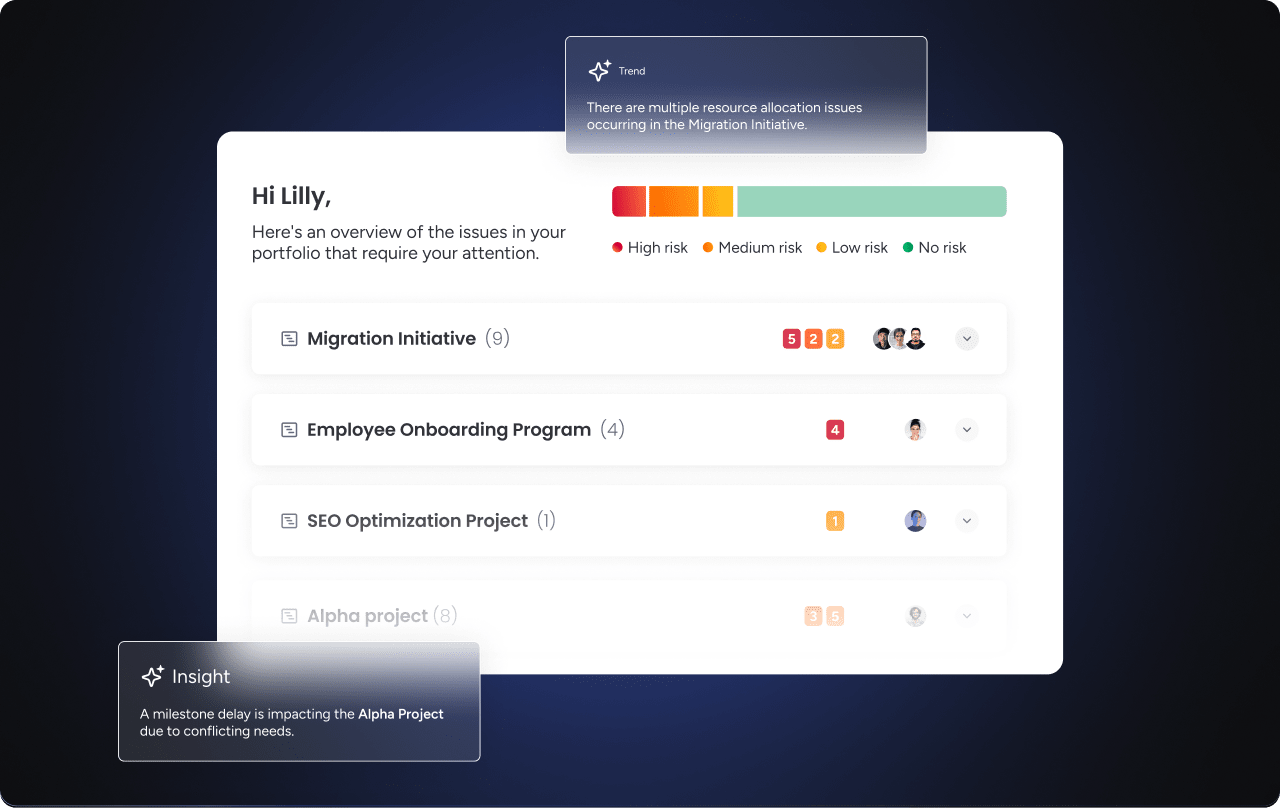
AI-powered project insights
AI capabilities add predictive intelligence to project management. By analyzing historical data, AI can suggest realistic timelines, highlight resource conflicts, and flag potential risks early.
How AI transforms marketing project management
Artificial intelligence is reshaping the role of the marketing project manager from administrative coordinator to strategic analyst. By automating routine work and surfacing insights, AI increases both efficiency and decision quality.
The following areas show where AI delivers the greatest impact.
Automated workflow optimization
AI analyzes workflow patterns and team behavior to recommend process improvements. Work is routed automatically based on availability and past performance, and next steps trigger as soon as dependencies are completed.
This reduces the overhead of manual coordination and follow-up.
Predictive resource planning
Machine learning models forecast future resource needs using historical campaign data. Managers gain early visibility into potential design bottlenecks or budget constraints.
With this foresight, resource planning becomes proactive rather than reactive.
AI-driven risk detection
AI continuously monitors indicators such as timelines, scope changes, and budget consumption. It identifies risks that may not be immediately visible to human managers.
Early detection allows corrective action while adjustments remain cost-effective.
Digital workers for campaign tasks
AI-powered digital workers handle routine operational tasks, including generating status updates, scheduling meetings, drafting stakeholder communications, and creating initial project structures from briefs.
The Digital Workforce on advanced platforms like monday work management supports repetitive actions, allowing managers to focus on strategy and collaboration.

“monday.com has been a life-changer. It gives us transparency, accountability, and a centralized place to manage projects across the globe".
Kendra Seier | Project Manager
“monday.com is the link that holds our business together — connecting our support office and stores with the visibility to move fast, stay consistent, and understand the impact on revenue.”
Duncan McHugh | Chief Operations OfficerElevate your marketing operations with the right platform
Strong marketing project management depends on systems that adapt to creative workflows while maintaining operational discipline. Platforms must support speed, flexibility, and visibility as teams scale.
Designed for the pace and variety of marketing work, monday work management operates on the powerful monday Work OS and supports organizations beyond basic tracking. It provides a connected environment for managing campaigns, teams, and assets across the organization.
Key advantages include:
- Unified fragmented workflows: Consolidate creative requests, campaign roadmaps, and asset libraries into a single digital workspace that improves coordination and clarity.
- Automate repetitive tasks: Use if-this-then-that rules to automate status updates, reminders, and notifications, while AI Blocks support content generation and update summaries.
- Gain real-time visibility: Dashboards aggregate data across boards to show campaign health instantly, reducing reliance on delayed reports.
- Scale with AI insights: Product Power-ups add advanced capabilities, with AI analyzing project trajectories and flagging potential delays early.
By combining flexible workflows, intelligent automation, and real-time visibility, marketing teams can focus more on strategy and collaboration and less on administrative effort.
Try monday work managementFrequently asked questions
What is the difference between a marketing manager and a marketing project manager?
A marketing manager focuses on strategy, audience definition, and messaging. A marketing project manager focuses on execution, coordinating timelines, budgets, and resources to deliver that strategy efficiently.
Can you transition to marketing project management from other fields?
Many transition from general project management, event planning, or creative roles. Success depends on transferable skills such as organization, communication, and stakeholder coordination, combined with learning marketing-specific workflows.
How many projects does a marketing project manager typically handle?
Workload varies by organization and complexity, but most managers oversee between five and ten active initiatives at once, balancing large strategic campaigns with recurring operational work.
Which certifications advance marketing project management careers?
The Project Management Professional certification is widely recognized. Agile certifications and platform-specific credentials are also increasingly valuable for practical application.
What qualities define a successful marketing project manager?
Top performers balance structure with creative flexibility. They anticipate bottlenecks, communicate across disciplines, and remain focused on business outcomes rather than activity alone.
How is AI changing marketing project management roles?
AI automates scheduling, forecasting, and reporting, allowing managers to focus on strategic analysis, optimization, and relationship management while improving execution quality.

 Get started