


Marketing teams don’t struggle with data volume. They struggle with data fragmentation.
Campaign metrics live in Meta Ads Manager. Customer feedback sits inside support tickets. Budgets hide in spreadsheets. Website analytics stay isolated in Google Analytics. When leadership asks for performance insights, someone manually stitches together numbers that should already be connected.
The real cost isn’t just time. It’s hesitation. Optimization slows down. Budget shifts happen too late. Strategy gets built on partial visibility.
Marketing information management changes that dynamic. Instead of collecting reports, teams operate from unified, actionable data. Insights don’t sit in dashboards. They trigger work, ownership, and measurable outcomes.
This definitive guide breaks down how to build a marketing information management system that connects data to execution, scales with your team, and turns visibility into real revenue impact.
Key takeaways
- Marketing information management connects data to action: Insights are embedded directly into workflows so performance changes trigger immediate, accountable next steps.
- Centralized data eliminates cross-team blind spots: Unifying performance, customer, and market data creates a single source of truth for faster, aligned decision-making.
- Automation reduces manual reporting and analysis: Routine data collection, categorization, and alerts free teams to focus on strategy and optimization.
- Scalable systems prevent operational breakdowns: Structured workflows allow marketing operations to grow without adding unnecessary headcount or complexity.
- intuitive solutions like monday.com support execution at scale: Integrated dashboards, automations, and AI features help teams operationalize insights without heavy technical overhead.
What is marketing information management?
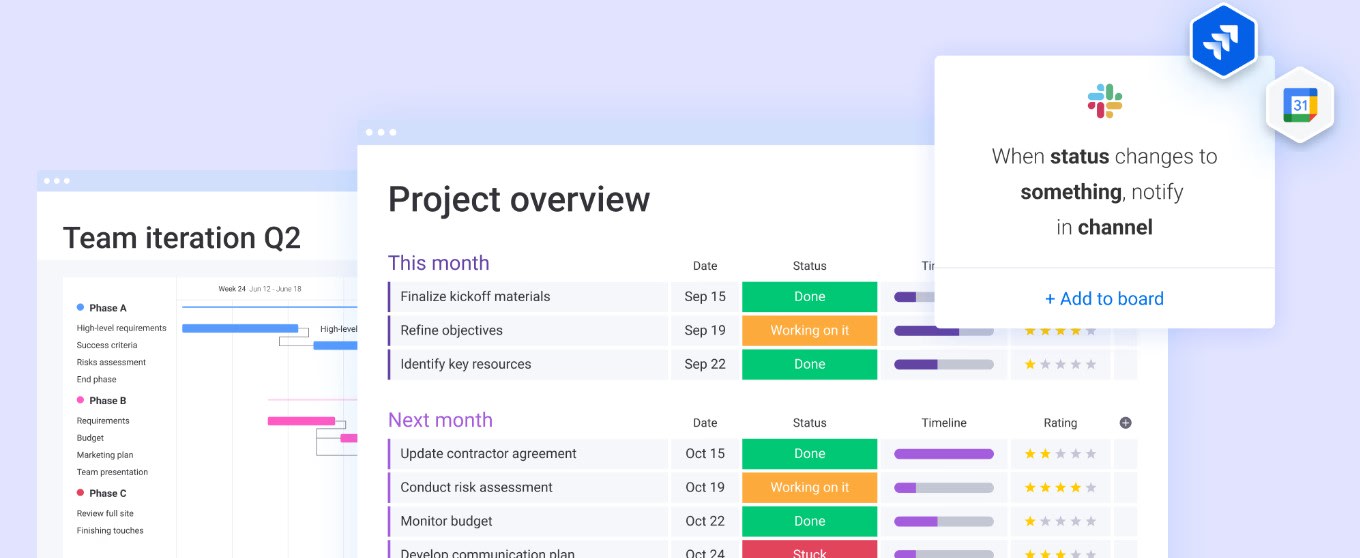
Marketing information management (MIM) means collecting, organizing, and using marketing data to make better decisions and get work done faster. It transforms scattered marketing insights (campaign metrics, customer feedback) into workflows that connect strategy to execution in real time.
Unlike traditional data warehousing, which just stores information, MIM focuses on actually using it. When a metric changes, your team takes action immediately: no waiting, no manual checks. MIM covers customer sentiment, competitor tracking, resource allocation, and budget performance, everything that affects your marketing results.
Here’s what separates effective MIM from traditional approaches:
- Operational focus: Data is organized by how you use it in daily work, not just how it’s stored technically.
- Speed to insight: The system prioritizes real-time access for stakeholders over static, retrospective reporting.
- Integration: It connects disparate sources: CRM, social platforms, ad networks, into a single operational view.
Marketing information management vs marketing information systems
Marketing information management and marketing information systems sound similar, but they solve very different problems.
One focuses on collecting and storing data. The other focuses on activating that data inside real workflows so teams can act on it.
The comparison below highlights how their purpose, users, and outcomes differ — and why that difference really matters when it comes to choosing the right approach.
| Feature | Marketing information system (MIS) | Marketing information management (MIM) |
|---|---|---|
| Primary function | Data collection, storage, and processing | Strategic application and workflow integration |
| Outcome | Generates reports and dashboards | Triggers actions, decisions, and assigned work |
| User focus | Data analysts and IT specialists | Marketing managers, creatives, and executives |
| Flexibility | Rigid structure based on database architecture | Agile structure based on changing team needs |
| Success metric | Data accuracy and system uptime | Campaign performance and operational efficiency |
Who needs marketing information management?
MIM works for anyone responsible for growth, budget, or brand reputation. As organizations scale, manually connecting data gaps doesn’t work anymore. That’s when MIM becomes critical.
Here’s what each stakeholder needs:
- Marketing operations managers: These professionals need MIM to unify the tech stack, ensuring platforms communicate and data flows seamlessly into project management workflows without manual entry.
- Chief marketing officers: Executives rely on MIM for accurate ROI visibility across all channels, allowing rapid budget reallocation based on real-time performance.
- Cross-functional product teams: product marketers access customer feedback and usage data directly, aligning launch strategies with actual market needs.
- Creative directors: Creative teams see which assets perform best in real-time, allowing them to iterate on designs based on data.
Why marketing information management drives speed and impact
Teams that implement structured MIM operate with greater speed and confidence than competitors. The primary advantage is operational agility, which allows insights to become completed work before opportunities fade.
Understanding the impact of MIM helps marketing leaders prioritize investment and align stakeholders around a shared approach to data-driven execution.
The real cost of fragmented marketing data
Fragmentation kills marketing productivity. When data lives across email systems, CRMs, ad managers, spreadsheets, and project boards, you lose hours and miss revenue.
Consider a campaign underperforming on social media but overperforming on search. Without unified visibility, a marketing manager might spend three days gathering reports from different specialists. By the time budgets shift, the trend has passed. You waste ad spend, burn salary hours on manual work, and miss optimization opportunities.
Teams using intelligent platforms like monday.com address this by presenting data alongside the work itself. Dashboards pull real-time information from multiple boards, allowing managers to see campaign health, budget burn, and team capacity in one view.
Turning marketing insights into business impact
Data becomes valuable when you turn observations into measurable results. That means closing the gap between spotting an insight and acting on it.
Here’s how insights translate into action:
- Customer churn risk: Analysis identifies declining engagement segments; MIM triggers automated notifications for email teams to deploy re-engagement sequences.
- High-performing creative: Performance data shows video A driving double the conversions; MIM automatically notifies media buyers to reallocate budget.
- Regional demand spike: Sales data indicates interest surge from specific regions; MIM alerts content teams to prioritize localization.
Meeting compliance requirements across markets
Data governance isn’t optional anymore. With regulations like GDPR and CCPA, marketing teams must know exactly what data they hold, where it came from, and who has access. Recent enforcement actions demonstrate the financial stakes, with regulators seeking at least $52.9 million in consumer relief for compliance violations.
Effective MIM builds compliance into workflows. It ensures consent data travels with customer records and deletion requests are processed systematically across all storage points.
Modern platforms like monday.com support this by creating audit trails of data access, turning compliance from a scramble into standard operating procedure.

The 4 core components of marketing information management
Marketing information management only works when every part of the system connects. Collecting data is not enough. Analyzing it is not enough. Even visualizing it is not enough.
To drive real results, data has to move through a complete cycle — from collection to activation — without breaking.
These four components form the backbone of a strong MIM system. When one is weak, insights stall. When all four work together, data turns into measurable action.
1. Data collection and integration
This foundation means gathering both numbers and feedback, going beyond basic website analytics.
These categories are the foundation:
- First-party data: Direct interactions from your website, CRM, and email marketing constitute your most valuable assets; integration ensures real-time updates across platforms
- Third-party sources: Social media platforms, ad networks, and syndicated research provide market context; automated connectors prevent manual CSV exports
- Customer feedback loops: Qualitative data from support tickets and surveys must be digitized and categorized; AI-powered extraction pulls sentiment and keywords from unstructured text automatically
2. Data storage and organization
Storage in MIM is about making data easy to find and use. You need naming conventions and structure that marketers understand, not just database admins.
Cloud-based storage gives distributed teams access to a single source of truth, eliminating version control issues and outdated spreadsheets. Marketing data stays structured and easy to navigate with customizable boards that track ownership, data sensitivity, risk levels, and potential impact — all within platforms like monday.com.
3. Data analysis and insight generation
Raw data needs translation before it’s useful. This component identifies patterns, trends, and anomalies, from basic analytics to predictive insights.
AI capabilities surface insights automatically, flagging sudden conversion rate drops without manual review. AI Blocks on monday.com categorize data at scale, summarize complex topics, and extract key information from documents, turning qualitative feedback into quantitative insights instantly.
4. Data distribution and activation
Distribution is what separates traditional management from MIM. It’s not about sending PDF reports. It’s about putting data directly into workflows. Insights must route to specific people who can act on them.
A drop in Net Promoter Score shouldn’t just appear on dashboards but should create assigned items for Customer Success leads. Automations convert data signals directly into assigned work within the project management interface, ensuring insights always lead to action.
5 types of marketing information every team should manage
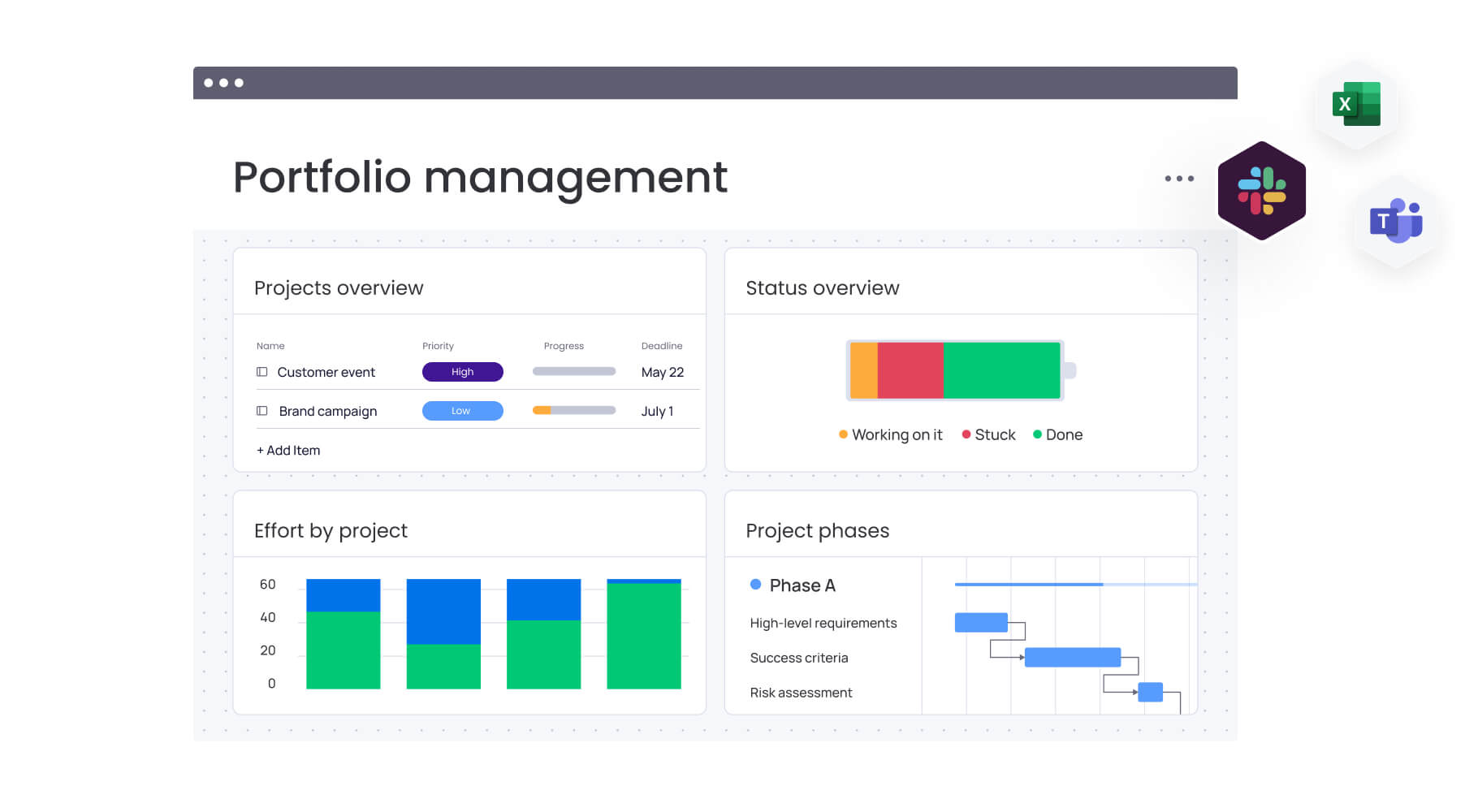
Comprehensive MIM requires seeing the full business picture. Relying only on campaign metrics leaves you blind to competitor moves and market shifts. These five categories below form the foundation for smart marketing decisions.
1. Internal marketing performance data
This data tracks how well your current efforts are working.
Internal performance data includes several key areas:
- Campaign metrics: Click-through rates, conversion rates, and cost-per-acquisition organized by channel and campaign.
- Resource utilization: Hours spent versus output produced helps optimize team capacity and budget allocation.
- Content performance: Understanding which blog posts, whitepapers, or videos drive pipeline refines content strategy.
2. Customer and audience intelligence
Understanding your audience means building detailed profiles of target segments. This includes demographic data, behavioral triggers, and customer journey mapping.
When managed well, this data helps teams personalize content based on where customers are in the funnel.
3. Competitive intelligence data
Your competitors matter. Competitive intelligence involves monitoring competitor pricing, messaging changes, and campaign launches.
Organizing this data allows strategic counter-moves. If competitors drop pricing, historical data on similar events guides whether to match prices or emphasize value messaging.
4. Market research and trends
External factors shape your success. This category includes industry reports, economic indicators, and search trend analysis.
Managing this information helps teams tell the difference between bad campaigns and bad market conditions. It also helps you spot emerging opportunities.
5. Cross-channel campaign data
Attribution across touchpoints requires unifying disparate streams. Managing cross-channel data solves the attribution puzzle, helping teams understand how LinkedIn, Google search, and website interactions influence final conversions.
Learn more: Marketing trends

7 game-changing benefits of marketing information management
tructured marketing information management changes how marketing operates.
Instead of reacting to reports after the fact, teams act on live signals. Budgets shift faster. Campaigns improve mid-flight. Decisions rely on shared data instead of assumptions.
The result is not just better reporting. It is better execution. These benefits show how MIM strengthens performance, alignment, and long-term growth across the organization.
1. Make smarter decisions with real-time data
Real-time visibility allows evidence-based choices instantly. If product launches fail to gain traction on launch day, real-time data enables immediate messaging pivots rather than waiting for post-campaign analysis. This capability is increasingly critical as businesses now collect data every two weeks rather than relying on static annual snapshots.
2. Maximize marketing ROI and budget impact
MIM eliminates guesswork budgeting. By connecting spend to specific outcomes, teams see exactly which dollars work, cutting waste and improving efficiency.
3. Optimize campaigns while they run
Real-time optimization replaces set-and-forget approaches. Automated alerts notify campaign managers when performance deviates from benchmarks, prompting immediate adjustments to bid strategies, creative rotation, or audience targeting.
4. Unite teams around shared data truth
Discrepancies create distrust. When Sales and Marketing report different lead numbers, the culprit is usually different data sources.
MIM creates one source of truth, so meetings focus on solutions instead of arguing about data.
5. Ensure data security and compliance
Centralizing data access and establishing governance minimizes breach likelihood and unauthorized access. Organizations remain compliant with privacy laws, protecting brand reputation and avoiding fines.
6. Scale marketing operations without adding headcount
Efficiency scales. Chaos doesn’t. MIM allows teams to handle increased complexity without linear staff increases.
Automation handles repetitive data collection and reporting, freeing team members for more campaigns and complex strategies.
7. Predict customer behavior before it happens
Advanced MIM leverages historical data to forecast future trends. Predictive analytics allow teams to launch preemptive promotions, shifting from reactive firefighting to proactive market shaping.
How to build your marketing information management system
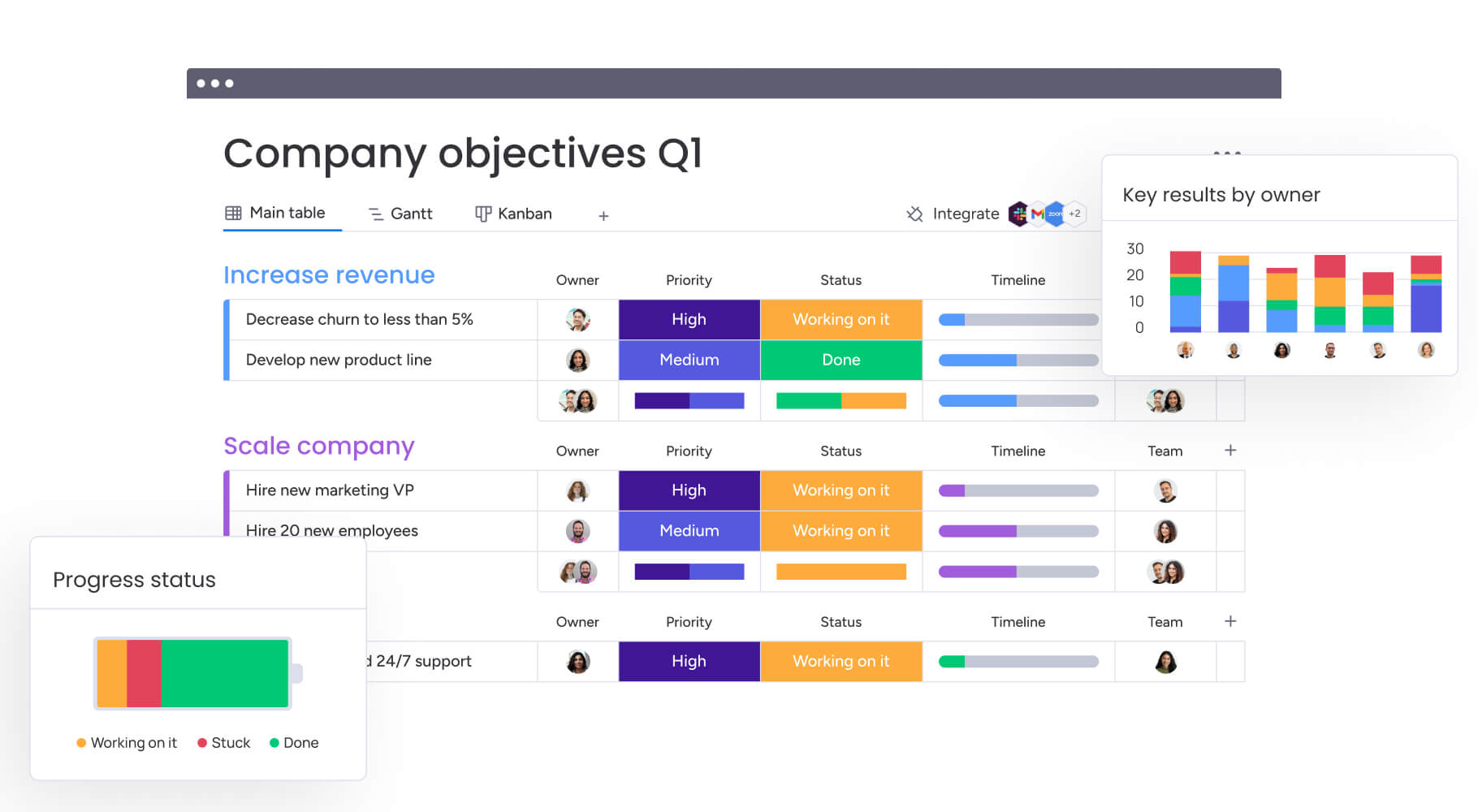
Building an effective MIM system is not a one-time setup. It is a structured rollout.
The goal is to secure quick wins that prove value early, while laying the foundation for long-term integration and scale. This step-by-step approach helps teams move forward without overwhelming people or disrupting active campaigns.
Step 1: Map your current marketing data ecosystem
Map out every platform that collects or stores data. Identify shadow IT, spreadsheets and personal boards outside official stacks.
This inventory reveals trapped data and missing integrations.
Step 2: Set MIM goals and success metrics
Define system achievements with operational goals like “reduce weekly reporting time by 50%” and business goals like “improve attribution accuracy to 95%.”
Specific metrics keep you focused on value.
Step 3: Select technology that teams will actually use
Getting people to actually use the system? That’s the biggest hurdle. Select platforms offering intuitive, visual interfaces that integrate with existing platforms.
monday.com serves as a central hub, offering database structure with consumer app usability. Teams customize automations, reports, and processes without compromising governance. The platform integrates with 200+ apps to run projects without tab switching.
Step 4: Create data governance everyone understands
Next, establish simple naming conventions (YYYY-MM-Channel-CampaignName) and define edit versus view access. Good governance makes finding things easier without creating bottlenecks.
Step 5: Design workflows that connect data to work
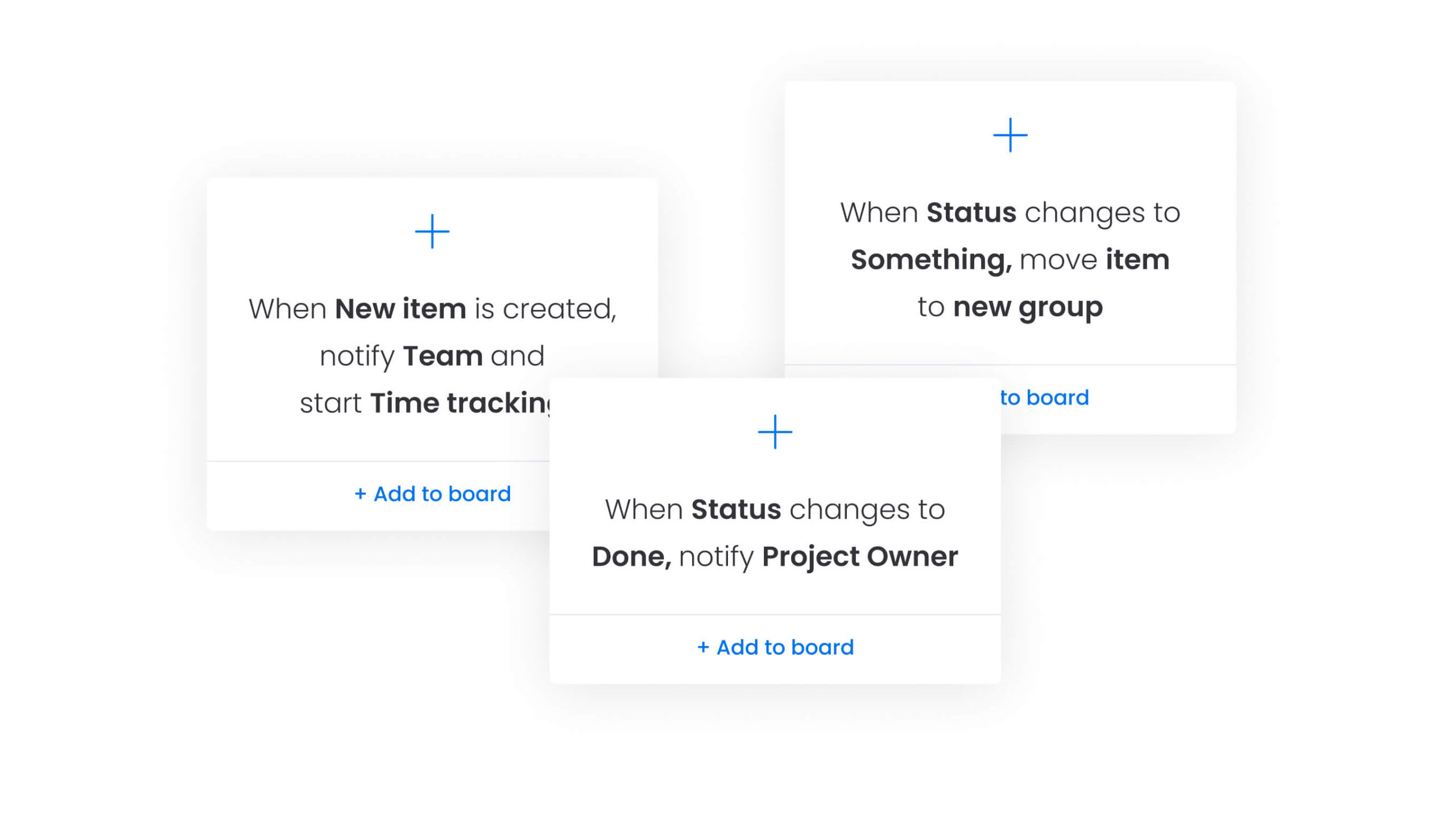
Configure systems so data inputs trigger workflow outputs. If lead scores hit 90, items are created for sales outreach.
Teams can build if-this-then-that logic using automations that move work forward based on data triggers with solutions like monday.com.
Step 6: Continuously improve with feedback loops
Finally, schedule quarterly reviews assessing data relevance. Ask teams where friction exists.
How to turn MIM challenges into competitive advantages
Data challenges are inevitable. The difference is how teams respond to them.
Some accept silos, messy reporting, and delayed action as normal. Others treat those friction points as signals that systems need to improve. When addressed deliberately, these obstacles become big advantages that competitors struggle to replicate.
Breaking down data silos between teams
Silos happen when departments keep data to themselves. Democratizing access through unified platforms turns isolated insights into organizational knowledge.
When social teams see support tickets, they write improved FAQs. When product teams see marketing feedback, they build improved features.
monday.com enables cross-functional collaboration with one workspace bringing teams together. Executives gain full visibility while teams seamlessly connect every item to strategic objectives.
Maintaining data quality at scale
As data volume grows, quality usually drops. Automated validation rules prevent this.
Simple constraints like standardized date formats or dropdown selections prevent dirty data entry. Upfront rigor saves cleaning time later.
Balancing data projects with campaign execution
Teams feel too busy running campaigns to fix infrastructure. Phased implementation solves this.
Start fixing one workflow, demonstrate time savings, then use wins to buy time for next improvements.
Converting insights into completed work
The gap between insight and action kills good ideas. Assign ownership to every metric.
If metrics go red, systems should know exactly who fixes them. Accountability driven by automated assignment ensures insights lead to action.
Marketing information management examples in action
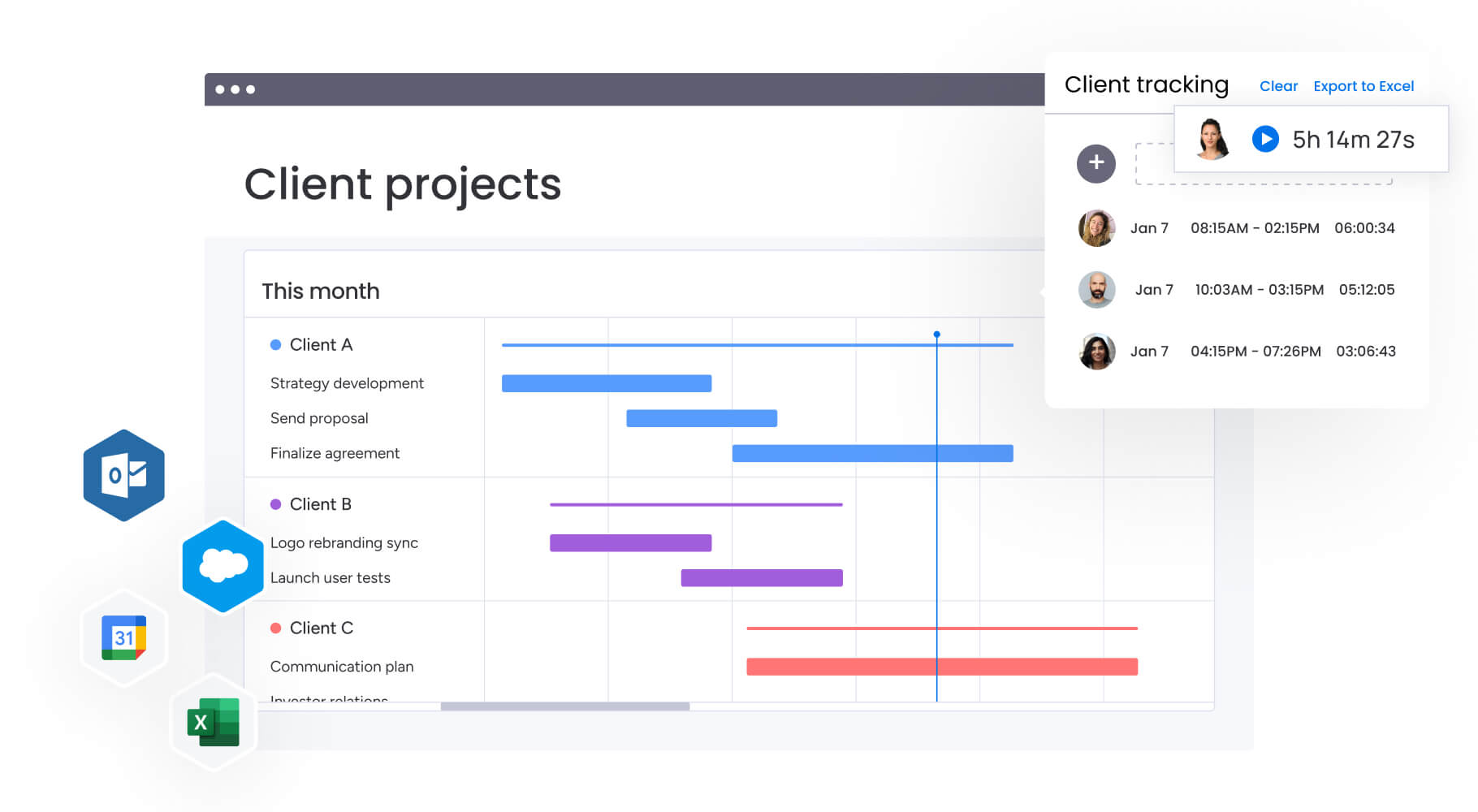
Marketing information management is not theoretical. Its impact shows up in daily decisions, faster execution, and measurable performance gains.
These examples illustrate how different types of teams use structured MIM to solve practical challenges and improve results.
B2B marketing teams: lead scoring and attribution
B2B software companies connect LinkedIn ad data with Salesforce pipeline data. Analysis reveals whitepapers generate more leads, but webinars generate leads closing 40% faster.
Teams adjust strategy prioritizing webinar spend, directly shortening sales cycles.
E-commerce brands: multi-channel performance tracking
Online retailers aggregate data from Shopify, Facebook Ads, and Google Analytics into central dashboards. Automation pauses ad spend when inventory drops below ten units, preventing wasted budget on out-of-stock items.
Global enterprises: unified regional marketing data
Centralized asset management systems allow global headquarters to upload approved templates while regional teams customize for local markets.
Systems track asset usage, showing adoption rates and brand consistency.
Digital agencies: client campaign visibility
Digital agencies replace weekly email reports with live client portals. Clients log in seeing real-time performance against budget.
The future of MIM: AI and automation
I is changing how marketing teams interact with data.
Instead of manually sorting, tagging, and reviewing reports, teams can focus on strategy and execution. Advanced analysis becomes part of daily workflows, not a specialized skill reserved for analysts.
These capabilities are redefining how MIM systems collect, interpret, and act on marketing data.
AI-powered data collection and categorization
AI sits between data sources and databases, automatically tagging images, categorizing support tickets by sentiment, and standardizing inconsistent naming from different platforms. Data becomes searchable immediately upon entry.
AI Blocks within monday.com let teams categorize data at scale, summarize meeting notes instantly, and extract actionable insights from documents. The Detect Sentiment block identifies emotional cues, categorizing sentiment as positive, negative, or neutral.
Automated insight discovery and alerts
Machine learning monitors data streams continuously, catching anomalies humans might miss (subtle demographic shifts, gradual CPC increases). Systems flag trends early so you can act before problems grow.
Predictive analytics for proactive marketing
MIM systems use historical data to predict future outcomes, like conversion rates for new campaigns or inventory needs for holiday sales. Teams allocate resources more confidently.
Digital workers who execute data work
Digital Workers refer to AI agents executing multi-step work. Campaign Manager digital workers monitor campaigns, identify low-performing ad sets, pause them, and draft explanatory reports without human intervention, freeing marketers for creative strategy.
AI Blocks within monday.com let teams categorize data at scale, summarize meeting notes instantly, and extract actionable insights from documents.
How to scale marketing information management across your organization
When MIM proves its value in marketing, it rarely stays there.
The same principles that improve campaign performance can strengthen Sales, Product, and Customer Success. Scaling, however, is not just a technical rollout. It requires shared standards, cultural alignment, and clear proof of impact.
These next steps focus on expanding MIM from a marketing initiative into an organization-wide capability.
Building a data-driven marketing culture
Success requires cultural shifts replacing “I think” with “the data shows.” Leaders foster this by requesting data behind proposals.
Training programs ensure team members from copywriters to designers navigate MIM systems comfortably.
Creating cross-functional data workflows
Marketing data feeds Sales, Product, and Customer Success. Unified platforms allow departments building workflows on same data foundations.
Sales gets alerts when high-value prospects engage; Product accesses feature requests logged by Marketing.
Measuring and sharing MIM success
To keep getting investment, you need to quantify MIM’s value. Metrics like “reduction in campaign launch time,” “budget saved through optimization,” and “increase in team capacity” demonstrate ROI to C-suite.

“monday.com has been a life-changer. It gives us transparency, accountability, and a centralized place to manage projects across the globe".
Kendra Seier | Project Manager
“monday.com is the link that holds our business together — connecting our support office and stores with the visibility to move fast, stay consistent, and understand the impact on revenue.”
Duncan McHugh | Chief Operations OfficerUnify your marketing data and execution with monday.com
Modern marketing teams struggle with fragmented data, delayed insights, and too much manual effort just to understand performance. When information lives across disconnected tools, it slows decision-making, weakens accountability, and makes it harder to link daily execution to strategic goals.
monday.com helps solve these challenges by turning marketing information into structured, actionable workflows that teams can actually operate from.
- Disconnected data slows execution: Centralized dashboards bring campaign performance, budgets, customer signals, and workload into one operational view, reducing reporting delays and blind spots.
- Insights fail to translate into action: Automations and item-level triggers ensure performance changes create clear ownership, next steps, and deadlines inside active workflows.
- Manual reporting drains team capacity: Integrations and no-code automations eliminate repetitive data pulling, freeing time for optimization and strategy.
- Scaling increases complexity and risk: Standardized boards, permissions, and governance rules allow teams to grow without losing data quality or control.
- Strategy feels disconnected from daily work: Role-based views link executive goals, campaign metrics, and individual tasks to the same source of truth.
By embedding data directly into how work gets planned, executed, and reviewed, monday.com enables marketing teams to move faster, stay aligned, and make decisions with confidence, delivering measurable impact without adding unnecessary complexity to their operations.
Frequently asked questions
What is the difference between marketing information management and CRM?
Marketing information management encompasses all marketing-related data including market trends, competitor intelligence, and campaign performance across channels. CRM focuses strictly on customer interactions and sales pipeline management, often feeding into the broader MIM system.
How long does it take to implement a marketing information management system?
Initial setup and data mapping typically take two to four weeks for immediate efficiency gains in workflow management and reporting. Full implementation including advanced automations and complete team adoption generally requires two to three months of iterative refinement.
What skills do marketing teams need for effective MIM?
Teams need basic data literacy to interpret metrics and foundational understanding of operational workflows. No-code platforms have removed needs for advanced technical skills like SQL, making MIM accessible to generalist marketers.
How much does marketing information management cost?
Costs vary based on user numbers, data volume, and platform complexity. Investment typically offsets within first quarter through reduced wasted ad spend, eliminated redundant subscriptions, and recovered employee hours.
Can small marketing teams benefit from MIM?
Small teams often see highest relative impact because they have fewer resources and cannot afford inefficiency. Scalable platforms allow small teams automating routine work and managing complex data sets without additional headcount.
How does AI improve marketing information management?
AI enhances MIM by automating tedious collection and categorization, ensuring higher accuracy and speed. It provides predictive capabilities identifying patterns and trends human analysts might miss, allowing proactive rather than reactive approaches.

 Get started