


Marketing teams study other brands’ campaigns to find ideas worth repeating. The strongest marketing examples win on disciplined execution: tight cross-team coordination and data that reaches the right people at the right moment.
The 22 real marketing examples below cover nine campaign types: content, viral, email, B2B, AI, product launch, community, video, and influencer. Each entry explains what the brand did and the operational reason it worked, so your team can adapt the underlying system instead of copying a single idea.
Key takeaways
- Build systems, not one-off campaigns: Focus on creating structured content and marketing frameworks that generate consistent, measurable results over time.
- Coordinate cross-functional teams: Align marketing, product, sales, and data teams with defined roles and shared timelines to ensure flawless execution.
- Use data for personalization: Use behavioral insights and predictive analytics to deliver relevant experiences that increase engagement and conversion.
- Sustain momentum beyond launch: Maintain post-launch campaigns through education, community engagement, and consistent messaging to drive long-term impact.
- Centralize workflows with a single platform: Use monday.com’s AI Workspace to consolidate assets, approvals, feedback, and performance tracking so campaigns run efficiently at scale.
Content marketing examples that generated quality leads
Content marketing examples are campaigns that attract and convert audiences by publishing genuinely useful material, such as free courses and transparency reports. Content marketing builds authority long before a sales conversation begins. When brands consistently educate, solve real problems, and deliver genuine value, they earn trust and trust converts.
Unlike short-term campaigns, strong content strategies compound over time. A well-built content library continues attracting traffic and generating leads years after publication. As more content connects to core themes and customer pain points, the entire system becomes stronger and more efficient.
The examples below show how leading brands turned content into structured, repeatable growth engines.
1. The Ordinary’s Periodic Fable
The Ordinary turned consumer education into a campaign when it launched The Periodic Fable in October 2025. Working with scientists, the skincare brand identified 49 widely used beauty terms that have no scientific or regulated basis, then swapped them in for the elements of the periodic table. Words such as “Poreless” and “Medical Grade” became fictional elements labeled with zero science. An interactive version on the brand’s site lets visitors click any term to read a plain explanation of what it really means.
The Ordinary reports that website traffic rose 11.8x and engagement rose 4.6x. The campaign won the Health & Wellness Grand Prix at Cannes Lions 2026.
Behind the launch, four groups each carried a piece of the work:
- Scientists: Check each of the 49 terms.
- Creative and production teams: Build the launch film and the interactive table.
- PR and creator teams: Send press and influencer kits with printed posters and index books.
- Out-of-home teams: Paint murals in New York and Los Angeles.
Honest education builds trust: a brand that explains its own category plainly gives people a reason to listen.
2. Salesforce’s Trailhead platform
Salesforce took content marketing further by turning education into a growth engine. Trailhead gamifies learning, offering free, structured training that builds product expertise while generating millions of qualified leads.
Participants who complete courses are more likely to influence purchase decisions and remain engaged long term. The platform positions Salesforce not just as a vendor, but as an enabler of career development.
Execution depends on alignment between marketing, product, and education teams. Training content launches alongside new features, reinforcing product adoption and accelerating sales conversations. The lesson is clear: when education solves real industry challenges, it creates both loyalty and sales pipeline.
3. Buffer’s transparency reports
Buffer built differentiation through radical transparency. By publishing detailed reports on salaries, revenue, and internal challenges, the company transformed operational data into a trust-building content strategy.
Each transparency report drives traffic spikes and meaningful social engagement, often lifting trial sign-ups noticeably. The impact comes from credibility, readers see a brand willing to share both wins and struggles.
Delivering that level of openness requires structured cross-functional collaboration:
- Finance teams: provide accurate revenue and budget data.
- HR departments: share salary and culture metrics.
- Marketing teams: transform raw data into compelling narratives.
- Legal teams: review sensitive information for compliance.
Unlike short-term campaigns, strong content strategies compound over time. A well-built content library continues attracting traffic and generating leads years after publication.
Viral marketing examples that captured global attention
Viral campaigns might look spontaneous from the outside, but the reality is far more intentional. The brands that consistently break through understand timing, platform behavior, and audience psychology. They move fast, trust their teams, and build systems that allow creativity to respond in real time.
Going viral is not about luck. It is about preparation meeting opportunity.
Here are three marketing examples that turned cultural moments into measurable growth.
4. KitKat’s stolen-chocolate tracker
Days before Easter 2026, thieves hijacked a truck carrying 413,793 KitKat bars, roughly 12 tonnes of chocolate. KitKat announced the theft in its own playful brand voice instead of a defensive corporate statement, then launched the Stolen KitKat Tracker, which lets people enter the batch code on their bar to check whether it came from the stolen shipment.
The tracker drew more than 2.2 million engagements, and KitKat captured 44% of Meta views over Easter, nearly three times its closest competitor. The work earned $224 million in earned media value and won the PR Grand Prix at Cannes Lions 2026.
VML created the campaign and Burson executed it, and the two agencies combined creative and PR work in real time. Real-time response works when the teams involved move as one unit.
5. Spotify Wrapped’s annual user campaign
Every December, Spotify turns listening data into a global social event. Spotify Wrapped transforms personal streaming history into highly shareable, visually compelling stories that dominate feeds across platforms.
The campaign generates billions of impressions and drives waves of downloads and reactivations. But behind the colorful graphics is serious coordination. Data science teams process massive datasets, engineering teams automate millions of personalized outputs, and design teams craft assets built specifically for sharing.
Wrapped proves that personalization at scale can feel emotional, not mechanical. When utility data becomes something people are proud to share, marketing turns customers into distribution channels.
6. Dove’s Real Beauty campaign evolution
Dove’s Real Beauty campaign shows that viral relevance does not have to fade after one cycle. Since 2004, the brand has consistently revisited its core message, adapting it for new platforms and cultural conversations while staying grounded in its original mission.
By challenging beauty standards and addressing real social tensions, Dove built long-term brand equity and measurable growth. Global teams localize messaging thoughtfully, ensuring relevance across markets while preserving the campaign’s identity.
Longevity requires discipline. When brands commit to a clear value stance and evolve it over time, they create cultural resonance that lasts far beyond just a single trend.

Email marketing examples with proven conversion rates
Email marketing remains one of the most profitable channels in marketing, but only when it moves beyond one-size-fits-all campaigns. The real gains come from precision.
The table below highlights the core strategies driving stronger open rates, higher conversions, and measurable revenue impact along with the operational requirements behind each approach.
| Strategy | Key metric | Execution requirement |
|---|---|---|
| Advanced segmentation | Notably higher open rates | Integration of CRM data with behavioral triggers |
| Behavioral automation | Meaningful recovery of lost revenue | Real-time sync between e-commerce and email platforms |
| Hyper-personalization | Measurable increase in sales | Dynamic content blocks based on user history |
Behavioral automation like this is easier to run when campaign and customer data live together, which is why teams use automations on monday AI Workspace to trigger sequences from real behavior. For email specifically, monday campaigns sits within monday CRM and lets teams build and send campaigns from CRM data.
Each strategy depends on tight alignment between data, technology, and creative teams. The following examples show what happens when that coordination is done right.
7. Airbnb’s targeted segmentation
Airbnb uses advanced segmentation to deliver relevant travel recommendations based on search history, location, and past bookings. Instead of generic newsletters, users receive emails featuring properties they have actively explored.
Targeted emails achieve higher click-through and booking conversion rates compared to general broadcasts. Marketing teams work with data analysts to define segment criteria. Automated workflows trigger emails when users display specific behaviors, such as repeated listing views without booking.
Relevance drives conversion: segmentation strategies must go beyond demographics to behavioral insights that indicate intent.
8. Grammarly’s automation sequences
Grammarly, now part of the Superhuman suite, sends a weekly writing update that exemplifies automation mastery. The insights email gamifies usage by showing words checked and accuracy rankings, re-engaging users and reinforcing product value without hard selling.
These automated sequences increase open rates and reduce churn by reminding users of the product’s benefits. Success requires strong data pipelines to feed metrics into email templates. Marketing and product teams collaborate to determine which metrics deliver the greatest psychological reward.
Remember, effective automation reinforces value, not just sales. The best sequences make users feel like they are winning.
9. Amazon’s personalization strategies
Amazon sets the standard for email personalization. By analyzing purchase history and browsing behavior, it sends item-to-item recommendations that anticipate customer needs.
These emails generate a significant portion of revenue, reaching shoppers ready to buy. This approach requires tight integration between the recommendation algorithm and email system. Quality checks prevent irrelevant or insensitive suggestions.
B2B marketing examples that accelerated sales cycles
B2B marketing can directly shorten the time from prospect to customer. Successful campaigns (like the ones highlighted below) align marketing messages with sales goals, creating a unified system that accelerates the buying journey.
10. SKF’s Faroe Islands Space Program
Industrial bearings maker SKF built a space program that never leaves Earth. Working with tidal energy developer Minesto and the Faroese utility SEV, SKF launched The Faroe Islands Space Program to draw attention to its role in a tidal energy project. The campaign centers on Luna, an underwater kite that harvests energy from tidal streams driven by the moon, and it supports the Faroe Islands’ goal of running entirely on renewable energy by 2030.
Minesto reports more than 800 million impressions to date. The campaign won the Creative B2B Grand Prix at Cannes Lions 2026, where the jury praised SKF for setting aside the usual spec-sheet playbook.
Four organizations shared the work:
- SKF: Initiated the campaign and supplied the engineering story.
- Minesto: Contributed the tidal energy technology at the center of the story.
- SEV: Gave the campaign a Faroese utility partner.
- Nord: Developed the creative concept.
Story carries technical products: SKF built attention around an idea instead of a spec sheet.
11. Gong’s data-driven content strategy
Gong uses proprietary insights from millions of sales conversations to create content through Gong Labs that teaches sales teams effectiveness. This strategy establishes Gong as a thought leader in revenue intelligence.
Articles backed by unique data generate high engagement and qualified inbound leads. Data science teams extract insights, which content teams translate into compelling narratives. Sales teams use this content as collateral to validate expertise during deals.
Proprietary data creates defensible advantages: mine operational data for insights competitors cannot replicate.
AI-powered marketing examples creating personalized experiences
AI marketing moves beyond automation. It gives teams the ability to predict behavior, personalize at scale, and make decisions in real time all without multiplying manual effort. Despite 75% of marketers adopting AI, 84% still run generic campaigns (Salesforce, State of Marketing, 2026), so the edge goes to teams that operationalize it.
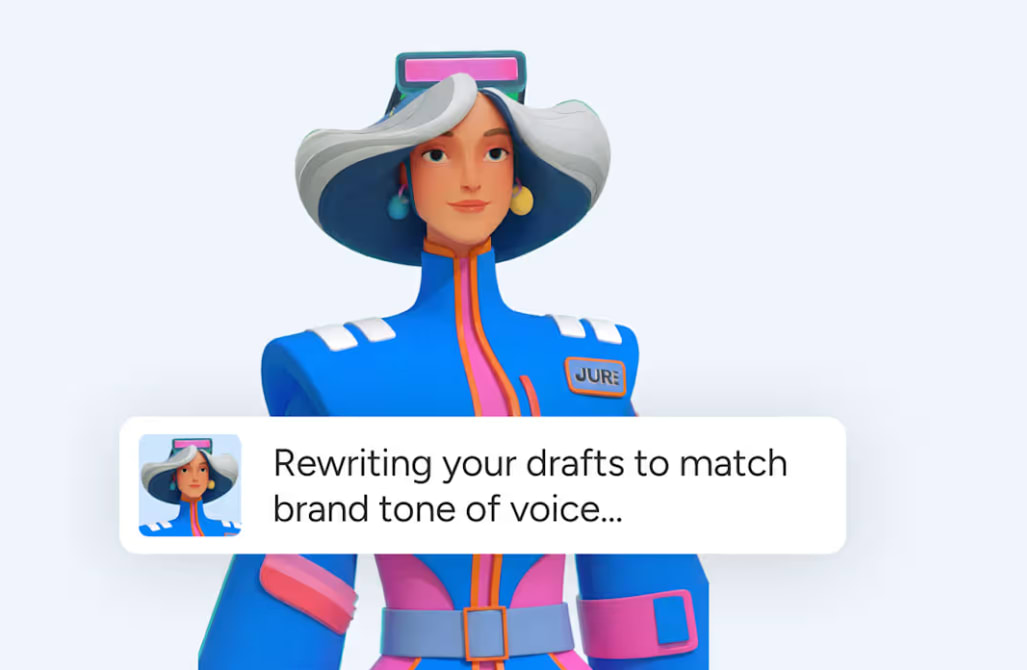
The real advantage is not just smarter algorithms. It is coordinated execution. When data science, engineering, operations, and marketing teams align around shared goals, AI becomes embedded into everyday workflows. In practice that can look like monday agents, such as the Content Writer Agent, which drafts on-brand copy and messaging variations, or the Ad Creative Generator, which turns a campaign brief into ready-to-test ads, taking on repetitive work so the team can focus on strategy.
The following examples show how leading brands use AI to anticipate customer needs and deliver experiences that would be impossible to manage manually.
12. Netflix’s recommendation algorithm success
Netflix’s marketing strategy is built entirely on its recommendation algorithm, which drives the majority of viewing choices. The platform personalizes not only movie suggestions but also the artwork displayed for each title based on viewing history.
Recommendation accuracy reduces churn: users feel understood, which enhances perceived subscription value. Maintaining this level of personalization requires continuous feedback loops between:
- Content tagging teams: Categorize and label content attributes.
- Algorithm developers: Refine recommendation models.
- User experience designers: Optimize interface presentation.
A/B testing runs continuously and automatically. Personalization extends to visual presentation, allowing the platform to display the same content differently to individual users and maximize engagement.
13. Starbucks’ predictive analytics campaign
Starbucks uses Deep Brew AI to deliver personalized marketing offers through its mobile app: the system considers weather, time of day, and purchase history to suggest drinks and food items.
Personalized offers encourage higher spending per visit and increase return frequency. The app contributes significantly to overall store transactions. This approach integrates inventory data, store locations, and customer profiles. Marketing, operations, and data science teams align to ensure offers are both relevant and operationally feasible.
Context drives relevance: AI enables marketing that is specific not just to the person but to their precise moment and location.

Product launch marketing examples that captured market share
Product launches rarely succeed because of a single announcement. They succeed because momentum is engineered in stages before, during, and long after release day.
The strongest brands treat launches as structured campaigns with distinct phases: building anticipation, coordinating a synchronized rollout, and sustaining engagement once the initial buzz fades. When those phases align, launches capture attention and convert it into lasting growth.
Here is how leading companies execute each stage.
14. Apple and Tesla build pre-launch anticipation
Apple and Tesla excel at the pre-launch phase by using secrecy and strategic leaks to create anticipation. They control narratives through selective information releases, fueling speculation and media coverage.
Pre-orders and media attention often peak before shipping. Marketing works closely with product and legal teams to prevent leaks while strategically releasing teasers. Influencer outreach begins months in advance under strict embargoes.
The launch begins long before the release: building tension creates a market vacuum that the product fills.
15. Uber Eats executes multi-channel launch
Uber Eats coordinated its Super Bowl ad with the product itself. The week before the 2026 game, the app added Build Your Own Super Bowl Commercial, which let people assemble their own version of the spot from more than 1,000 combinations of scenes and celebrity cameos, then unlocked Game Day food deals.
Uber Eats reports that sales beat the previous record by more than $36 million and that the week brought 3.7 million incremental app visits. People redeemed the deal at a 38% rate, ten times the conversion of past promotions, and more than 40% of participants were not regular users. The campaign won the Media Grand Prix at Cannes Lions 2026.
Agency Special built the campaign with PHD on media and Biscuit Filmworks on production, and the team crafted the 1,000-plus combinations to play as complete spots.
Product and media worked as one channel: when the commercial lives inside the app, attention converts to orders on the same screen.
16. Zoom and Canva sustain post-launch momentum
Zoom and Canva sustain momentum by shifting focus immediately from launch to education. Post-launch campaigns highlight user success stories, tutorials, and community engagement to reduce typical drop-offs.
Retention and feature adoption are key success metrics. Content teams prepare how-to resources in advance and release them strategically to maintain engagement. Customer success teams provide feedback to marketing to remove adoption barriers.
The launch is only the starting point: consistent education converts trial users into power users.

Community-driven marketing examples: building brand advocates
Community marketing turns attention into belonging. When customers feel heard, represented, and involved, they move from passive buyers to active advocates. That kind of loyalty cannot be bought with ads alone.
The brands that build strong communities do not treat engagement as a side initiative. They embed it into product development, brand positioning, and long-term strategy. When community, marketing, and product teams align, engagement becomes a growth engine.
17. Clash Royale’s Copycats Welcome
Clone games kept copying Clash Royale’s gameplay and characters. Rather than sue, the brand posted a film in the online communities where clone players gather, then invited those players to a microsite where they could trade progress and currency from the clones for Clash Royale rewards. The offer credited the time players had already invested in other games.
More than 2.3 million players exchanged progress within five days, and over 7 million additional players have joined the game since launch. The campaign won the Gaming Grand Prix at Cannes Lions 2026, where the jury president described a fair value exchange that lets the community spread the word itself.
Reward the people you want to reach: a fair exchange gave players a reason to switch and a reason to tell others.
18. Patagonia’s environmental activism
Patagonia integrates activism into marketing campaigns: initiatives like “Don’t Buy This Jacket” emphasize sustainability, driving loyalty while reinforcing brand values.
Customers demonstrate high lifetime value and actively defend the brand. Marketing, CSR, and executive teams ensure campaigns are backed by genuine corporate action.

Video marketing examples that maximized engagement
Video blends storytelling with information density. High-performing video marketing requires distribution strategies that match format to platform, ensuring maximum engagement and shareability.
These examples demonstrate how teams coordinate production, distribution, and measurement across multiple channels.
19. Apple’s “The Day the World Danced”
Bad Bunny’s Super Bowl LX halftime show drew a reported 128.2 million U.S. viewers on February 8, 2026. Four days later, Apple Music released a Shot on iPhone film that captured fans’ reactions to the show. Twenty-three photographers and cinematographers shot it on iPhone 17 Pro across 15 locations in 11 time zones, and Apple’s in-house team created the film. The film won a Gold Lion in Film at Cannes Lions 2026.
Coordinating 23 photographers across 15 locations and 11 time zones, then finishing the film in four days, took disciplined production planning.
Timing carries the story: a film released days after the moment rides the conversation while it is still live.
20. GoPro’s user-generated content strategy
GoPro’s marketing engine relies on customer-created content. The brand curates the best user footage to showcase camera capabilities, demonstrating product value through authentic, adrenaline-filled experiences.
GoPro’s YouTube channel has become a top brand destination, driven largely by curated UGC. This approach builds a massive content library at a fraction of professional production costs:
- Legal teams: Manage rights and creator compensation.
- Marketing teams: Curate and distribute content.
- Community managers: Encourage high-quality submissions.
Streamlined submission processes motivate users to upload premium footage. Let customers be the heroes products serve as tools that enable their stories.
Influencer partnership examples that delivered ROI
Influencer marketing has evolved from vanity metrics to performance-driven channels. Success depends on long-term partnerships and authentic alignment, rather than one-off sponsored posts. These examples highlight how teams coordinate relationship management, content creation, and performance tracking at scale.
21. Creator co-development: Vaseline Originals
Vaseline turned years of community-created hacks into a product line with Vaseline Originals, launched in April 2026. Ogilvy Singapore traced viral hacks back to the creators who started them and certified those creators as Vaseline OGs, with the brand sharing the line’s success with them. The launch builds on Vaseline Verified, the Titanium-winning campaign that tested community hacks in lab-style videos. Vaseline Originals won a Gold Lion in Creator Collaboration at Cannes Lions 2026.
Teams traced where each hack began and set up a way to share the product’s success with the creators behind it.
Creators stay when they share in the outcome: naming the people behind a trend turns a one-off post into a partnership.
22. Nike and Adobe as long-term brand ambassadors
Nike and Adobe foster multi-year relationships with athletes and creatives. These ambassadors serve as authentic brand faces, integrating products into their daily routines.
Long-term association builds deep trust audiences perceive endorsements as genuine partnerships rather than paid promotions. Teams manage relationships like key accounts, negotiating contracts, content calendars, and exclusivity clauses with support from legal and marketing partnerships teams.
Consistency breeds credibility long-term partners gradually embody brand values.
Performance-based partnerships
Modern influencer programs employ performance-based pay models that align incentives. Creators focus on driving conversions rather than likes alone.
Attribution becomes precise brands pay only for results, safeguarding marketing budgets from underperforming campaigns. Marketing teams collaborate with data analysts to implement tracking pixels and unique promo codes, with dispute resolution processes handling attribution conflicts.
Aligned incentives elevate content quality when creators succeed only when brands succeed, everyone focuses on outcomes.
How the AI Workspace turns marketing examples into repeatable systems
Across every example above, one theme repeats: execution excellence. Bold ideas need structure behind them to scale, and 63% of marketing teams say manual tasks crowd out high-impact work (Sprout Social, 2025). monday AI Workspace gives marketing teams that structure in one connected workspace:
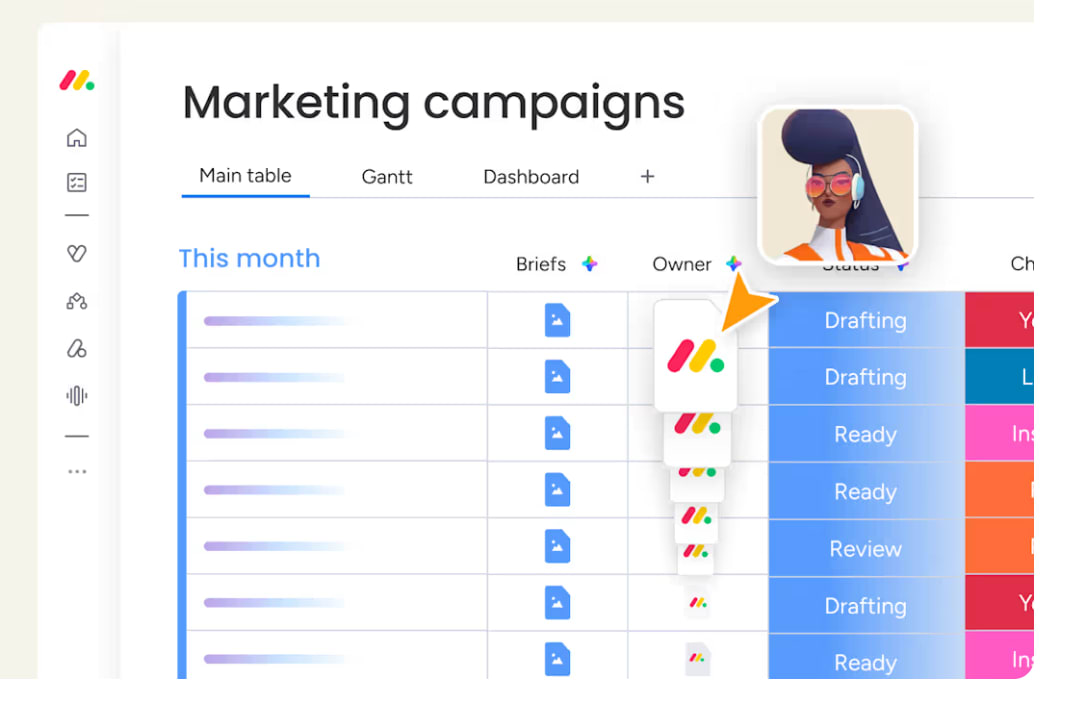
- Campaign planning in one place: Content calendars, campaign timelines, creative-request intake, and resource and bandwidth visibility live together, so teams spot a copy delay early and keep design and distribution on track.
- One source of truth: Briefs, assets, feedback, and approvals sit in one place.
- Real-time dashboards: Dashboards connect daily activity to campaign performance, so teams see budget and lead results in one view.
- Risk alerts: AI-powered alerts flag slipping timelines early, which gives teams time to adjust before a launch date is at risk.
- Marketing agents: Agents take on the groundwork so people can focus on strategy and creative, and they operate within clear permissions. Ready-made marketing agents include:
- Creative Brief Agent: turns messy notes and half-formed ideas into a creative brief ready for your team.
- Brand Voice Writer: rewrites drafts to match your brand voice.
- Content Gap Agent: identifies topics your named competitors cover that you do not, so your team knows what to create next.
- Landing Page Wireframes: shapes a brief into a conversion-ready landing page layout your team can build on.
- SEO Health Agent: checks your site’s technical SEO health and documents what needs fixing.
- Custom apps with no code: When a team needs a purpose-built view, monday vibe turns a plain-language prompt into a working app inside monday.com. Describe a campaign-health tracker or a customer segmentation dashboard, and Vibe builds it connected to your data, which puts custom reporting within reach without waiting on engineering.
- Outside AI assistants: monday MCP connects assistants such as Claude and ChatGPT so they can act securely on campaign data within your existing permissions. Ask an assistant to update items and summarize campaign status, all inside the access controls your admins already set.
- Reusable templates: As processes prove successful, they become templates. Product launches and webinars follow structured workflows that reduce setup time and protect quality, so teams scale by repeating what works with greater speed and confidence.
Turning great marketing examples into your operating advantage
The marketing examples that scale share one pattern: they pair bold ideas with disciplined execution. Chasing a single viral hit is not a strategy. The real lever is building systems that turn each campaign into a repeatable process, so the next launch starts stronger than the last.
As AI and agents move into everyday marketing workflows, the teams that win are the ones whose people and AI work from the same connected data. Shared context, clear ownership, and grounded insights are what let a smart idea become consistent, measurable growth.
Get startedFrequently asked questions
What makes a marketing campaign example worth studying?
A marketing campaign example is worth studying when it pairs crfeative strategy with measurable business results. The strongest examples reveal the execution processes, team structures, and frameworks behind the outcome, so you can adapt what worked to your own industry and resources.
How do you measure the success of marketing campaign examples?
You measure the success of marketing campaign examples with clear KPIs: conversion rates, customer acquisition cost, brand awareness lift, and revenue attribution. Tracking them through consistent measurement frameworks keeps results comparable across campaigns and channels.
What role does team coordination play in successful marketing examples?
Team coordination plays a decisive role in successful marketing examples. Execution excellence and timing often matter more than the creative concept alone, so aligned roles, shared timelines, and fast handoffs are what turn a smart idea into measurable results.
How can small marketing teams implement strategies from large company examples?
Small marketing teams can implement strategies from large company examples by focusing on core principles rather than budgets. Apply segmentation, transparency, and consistent messaging through simplified workflows and scalable platforms, then expand as results prove out.
What are the key success factors for a high-performing marketing campaign?
The key success factors for a high-performing marketing campaign are strong cross-functional communication, detailed pre-launch planning, consistent messaging across channels, and real-time performance tracking. Together they enable rapid adjustments and measurable results.
How do successful marketing teams coordinate complex multi-channel campaigns?
Successful marketing teams coordinate complex multi-channel campaigns on centralized platforms. They synchronize timelines, automate handoffs, and maintain a single source of truth across channels and stakeholders, which keeps every asset aligned and on schedule.
How does the AI Workspace help teams run marketing campaigns?
The AI Workspace helps teams run marketing campaigns by centralizing campaigns, assets, approvals, and performance in one workspace. Dashboards, automations, and marketing agents handle the groundwork, so people can focus on strategy and creative.
What are examples of digital marketing?
Examples of digital marketing include SEO and content marketing, email segmentation, social media campaigns, influencer partnerships, and AI-driven personalization. Several of these appear among the marketing examples above, each paired with the operational discipline that made it work.

 Get started