


Sales and marketing teams often struggle not because leads are scarce, but because qualification is unclear. When interest, readiness, and intent get lumped together, prospects are handed off too early, followed up too late, or worked by the wrong team altogether. The result is wasted time, stalled deals, and friction across the revenue funnel.
Clarifying the difference between Marketing Qualified Leads and Sales Qualified Leads brings order to that chaos. It defines what signals matter at each stage, who owns the relationship, and how prospects should move from research to evaluation to purchase. This article breaks down how MQLs and SQLs differ, what behaviors and criteria actually separate them, and how teams use automation and AI to manage the handoff without losing momentum.
When qualification is consistent and visible, revenue teams focus on the right prospects at the right time and build a pipeline they can trust.
Key takeaways
- MQLs signal interest, SQLs signal readiness: MQLs are researching and learning, while SQLs have confirmed intent, budget, and timeline to support active sales conversations.
- Behavior matters more than single actions: repeated engagement across content, events, and pricing pages is a stronger indicator of qualification than one-off interactions.
- Account-level signals improve B2B qualification: tracking engagement across multiple stakeholders reveals buying groups forming before individual leads convert.
- Clear MQL to SQL criteria prevent wasted effort: defined thresholds and ownership reduce friction between marketing and sales and improve follow-up speed.
- Automate qualification with monday CRM: AI-powered scoring and visual pipelines surface sales-ready prospects in real time without manual review.
What is an MQL?
A Marketing Qualified Lead (MQL) is a prospect who has shown enough interest in your company through specific behaviors to warrant marketing nurture, but isn’t ready for direct sales contact yet. Think of MQLs as prospects who’ve raised their hand to say “I’m interested” through actions like downloading multiple resources, attending webinars, or repeatedly visiting your pricing pages.
Why does this matter? It separates tire-kickers from genuine prospects. Anyone can stumble onto your website and download a whitepaper. MQLs show repeated engagement that proves they’re actively researching solutions.
Understanding marketing qualified lead
An MQL represents a prospect who has crossed the threshold from passive awareness to active interest, meeting specific criteria that indicate readiness for targeted marketing campaigns. The “marketing” part means these leads need education and relationship-building before sales gets involved. The “qualified” component shows they’ve met predetermined standards based on both their engagement patterns and how well they match your ideal customer profile.
MQLs sit in that crucial middle ground where prospects have shown genuine interest but haven’t demonstrated buying intent. Someone who downloads one blog post isn’t an MQL. But a director at a mid-market company who downloads three case studies, attends a webinar, and visits your integrations page multiple times in two weeks? That’s an MQL worth nurturing.
Understanding these distinctions helps prevents revenue teams from wasting time on prospects who aren’t ready. Instead, they can focus their energy on leads who have a higher probability of converting, driving more predictable growth.
Here’s what separates MQLs from random contacts:
- Sustained engagement patterns: MQLs interact with your brand repeatedly over days or weeks, not just once.
- Content progression signals: they move from awareness content to consideration resources like case studies and comparison guides.
- Demographic alignment: they match your target customer profile in company size, industry, and role.
- Behavioral scoring thresholds: they accumulate enough points through various actions to cross your qualification threshold.
Breaking down what MQL stands for
Each letter in MQL matters for how your revenue team operates. Here’s what each letter means for handling these prospects:
- Marketing: specifies ownership—these leads stay with marketing for nurturing rather than going straight to sales. Marketing continues building relationships through targeted campaigns and educational content designed to advance their journey.
- Qualified: means they’ve met specific criteria separating them from random website visitors. This qualification combines interest signals (like content downloads and email engagement) with fit indicators (like company size and industry).
- Lead: Defines them as potential customers who’ve expressed interest by providing contact information and engaging with your brand. They’re not opportunities or deals yet, they’re prospects in research mode who need continued nurturing before sales engagement makes sense.
Key MQL characteristics
MQLs share specific traits that distinguish them from both unqualified leads and sales-ready prospects. Spotting these patterns helps teams qualify leads faster and stop chasing dead ends.
Engagement frequency and depth set MQLs apart from casual browsers. These prospects don’t just visit once and disappear. They return multiple times, consume substantial content, and show coordinated research behavior across channels.
Look for these behaviors:
- Multi-channel presence: engaging across website, email, social media, and events.
- Content depth: consuming resources that require time investment like webinars and comprehensive guides.
- Ideal customer profile alignment: matching your target market in size, industry, and geography.
- Timing signals: viewing pricing pages, downloading ROI calculators, or requesting comparisons.
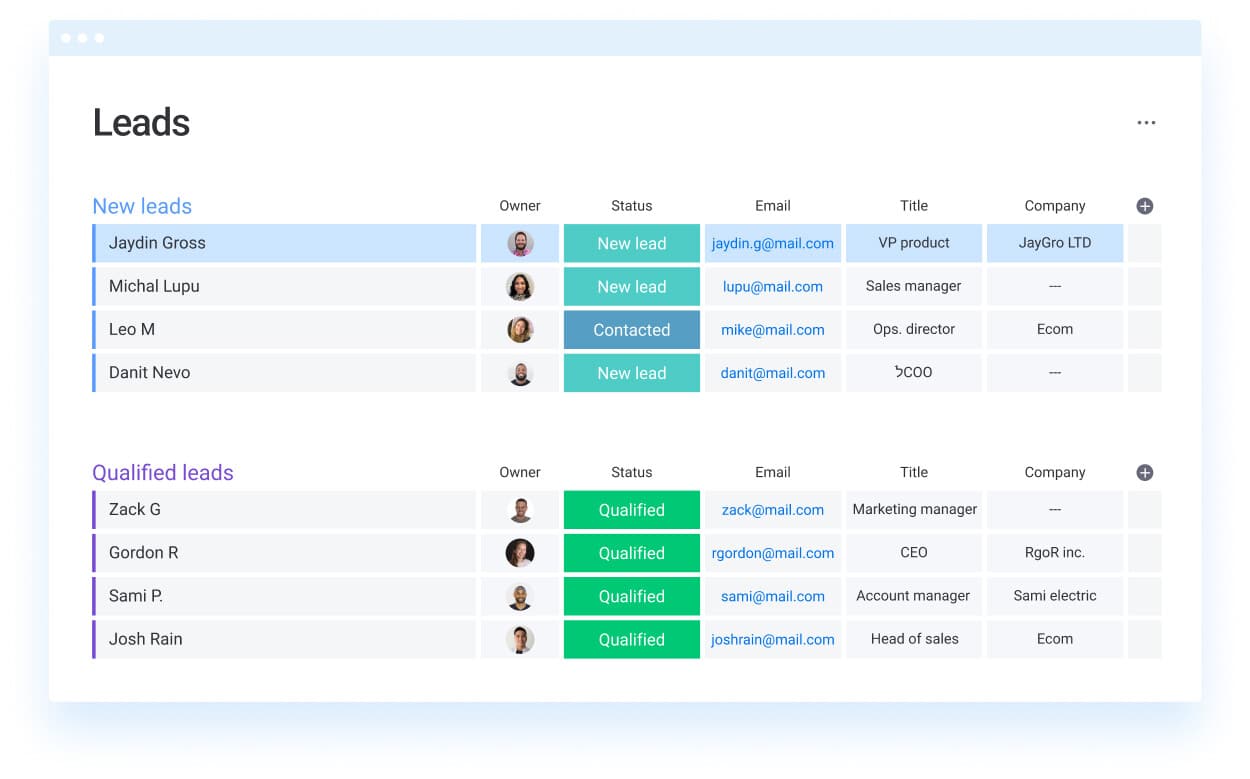
Visual pipeline management makes these patterns obvious at a glance. When engagement is tracked across all touchpoints, high-scoring prospects surface automatically without manual review.
What is an SQL?
A Sales Qualified Lead (SQL) is a prospect that sales has accepted for direct outreach after confirming they meet specific criteria indicating genuine purchase intent and readiness to buy. SQLs have moved past research into buying mode. They’re ready for demos, proposals, and pricing conversations.
The shift from MQL to SQL happens when prospects exhibit buying signals like requesting demos, asking about implementation timelines, or inquiring about specific pricing tiers. Sales evaluates these leads against frameworks like BANT (Budget, Authority, Need, Timeline) to qualify sales leads and ensure they’re worth pursuing.
Sales qualified lead definition
An SQL represents a prospect who has demonstrated both interest and readiness for sales engagement, with confirmed budget availability, decision-making authority, defined business needs, and a specific purchase timeline. These factors separate SQLs from MQLs who might be interested but can’t actually buy yet.
Qualifying SQLs requires more than tracking clicks. Sales teams verify that prospects have real problems your solution addresses, budget to invest, and timeline pressure driving them toward a decision.
The role of SQLs in revenue generation
SQLs drive predictable revenue because both marketing and sales have vetted them. They move through the pipeline faster. When sales accepts an MQL as an SQL, they’re committing resources to active pursuit, which means these leads receive immediate attention and move toward closed-won status faster.
The SQL classification creates accountability across the revenue team:
- Sales ownership: SQL conversion rates and deal progression.
- Marketing ownership: MQL generation and MQL-to-SQL conversion.
- Shared responsibility: lead quality and handoff processes.
This accountability helps both teams improve their stages and spot what’s slowing growth.
Try monday CRM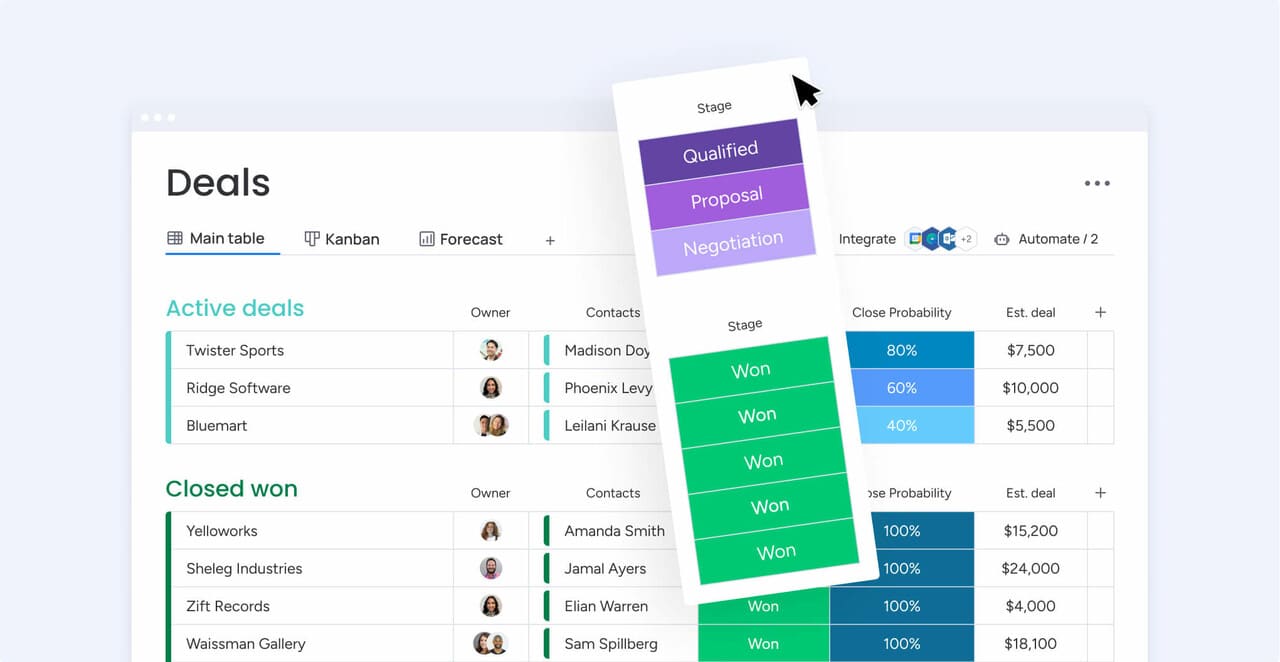
MQL vs SQL: understanding the core differences
The core difference between MQLs and SQLs? Purchase readiness. Get this distinction right and your team stops wasting time on bad outreach or slow follow-up.
Lead intent and readiness
MQLs are researching and learning. They’re downloading guides, attending webinars, and building knowledge about potential solutions. Their engagement centers on educational content and thought leadership. They’ve identified a problem but aren’t ready to evaluate specific vendors or make purchasing decisions.
SQLs have crossed into active evaluation mode. They’re comparing vendors, requesting demos, asking about pricing, and discussing specific use cases. These behaviors and consumer insights show they’re not just researching — they’re preparing to buy.
Key timing distinction: MQLs might be exploring solutions for next year’s budget, while SQLs have immediate needs and defined timelines. That urgency gap changes everything about how you engage them.
Engagement depth
MQL engagement stays relatively passive and self-service. They consume content independently, attend webinars without requiring personal interaction, and explore resources at their own pace. Their questions stay general — capabilities and benefits, not implementation details.
SQL engagement means real back-and-forth conversations. They want personalized demos, custom proposals, and answers to specific questions about their situation. They’re no longer satisfied with generic content—they need to know exactly how your solution fits their unique requirements.
Position in the sales funnel
Where a lead sits in the sales funnel determines how teams should engage, message, and prioritize follow-up. MQLs and SQLs occupy different stages of the buyer journey, which affects ownership, goals, and the type of outreach that makes sense. The table below shows how their roles differ across the funnel.
| Aspect | MQL | SQL |
|---|---|---|
| Funnel stage | Middle of funnel (consideration) | Bottom of funnel (decision) |
| Primary goal | Education and evaluation | Purchase decision |
| Typical actions | Content downloads, webinar attendance | Demo requests, pricing inquiries |
| Sales readiness | Not ready for direct contact | Ready for active engagement |
| Ownership | Marketing team | Sales team |
| Next step | Continued nurturing | Sales conversations |
Why MQL and SQL clarity matters for scalable revenue
Revenue teams perform best when qualification is clear, shared, and consistently applied. When MQLs and SQLs are defined properly, sales knows where to focus, marketing knows what success looks like, and leadership gains confidence in forecasts. Without that clarity, effort gets wasted and pipeline becomes unreliable.
Clear qualification creates a single revenue system instead of separate sales and marketing motions.
Sales team efficiency
Clear MQL/SQL definitions prevent sales reps from chasing prospects who aren’t ready to buy and help them focus on sales qualified leads. Instead of spending hours educating early-stage leads, reps focus exclusively on prospects with budget, authority, and urgency.
When qualification is imprecise, it creates significant costs for the business that go beyond wasted time. These inefficiencies directly impact revenue potential and team morale in several key ways:
- Lost opportunity: every hour spent with unqualified leads represents missed time with sales-ready prospects.
- Resource waste: teams with weak frameworks and sales methodologies spend significantly less time on high-value activities.
- Reduced conversion: premature outreach often damages relationships with prospects who need more nurturing.
Teams can utilize platforms like monday CRM to see qualified leads instantly through visual pipeline boards. Reps see exactly which prospects meet SQL criteria and can prioritize accordingly, ensuring hot leads get immediate attention while MQLs continue nurturing.
Marketing activity connects directly to qualified revenue
Clear MQL definitions also close the loop between marketing activity and revenue outcomes. When marketing tracks qualification consistently, campaigns can be evaluated based on the quality of pipeline they generate, not just surface-level engagement.
Instead of guessing which initiatives matter, teams can see exactly how different efforts perform. When webinars convert to SQLs at 30% and whitepapers at 5%, budget decisions become grounded in data rather than assumptions.
This clarity eliminates vanity metrics and replaces them with meaningful indicators:
-
Quality focus: measuring qualified leads generated instead of raw download volume.
-
Funnel progression: tracking how leads move from MQL to SQL and beyond.
-
Channel effectiveness: identifying which sources consistently produce sales-ready prospects.
Predictable pipeline growth
Once qualification is consistent, forecasting stops being guesswork. Conversion patterns stabilize, making it easier to plan and scale. If 100 MQLs typically produce 30 SQLs and 10 closed deals, future pipeline can be projected with confidence based on current volume.
Clear MQL and SQL tracking also surfaces bottlenecks early:
-
MQL quality gaps: strong volume but weak SQL conversion signals scoring issues.
-
Nurture effectiveness: identifying which campaigns move leads closer to sales readiness.
-
Sales process friction: monitoring SQL-to-opportunity conversion for breakdowns.

The complete lead qualification journey
Lead qualification works best as a clear progression. Each stage exists to answer a specific question about readiness and to prepare the prospect for the next step. When teams align on this journey, handoffs become smoother and leads receive the right level of engagement at the right time.
1. Information qualified lead (IQL)
An information qualified lead is the earliest signal of interest. The prospect has exchanged basic contact details for content but has not shown sustained engagement or buying intent.
At this stage:
-
The goal is awareness and education.
-
Marketing owns communication and nurture.
-
Engagement data determines whether the lead advances.
2. Marketing qualified lead (MQL)
An MQL has demonstrated repeated engagement and aligns with your ideal customer profile. These prospects are actively researching solutions but are not yet ready for direct sales outreach.
At this stage:
-
Marketing continues targeted nurturing.
-
Engagement patterns and fit drive scoring.
-
Leads are prepared for potential sales handoff.
3. Sales accepted lead (SAL)
A sales accepted lead is an MQL that sales has reviewed and agreed to pursue. This step creates accountability and ensures sales only engages leads that meet shared qualification standards.
At this stage:
-
Sales commits to timely outreach.
-
Marketing pauses active nurture.
-
Feedback improves future qualification criteria.
4. Sales qualified lead (SQL)
An SQL meets all criteria for active sales engagement. Budget, authority, need, and timeline (BANT) have been validated through discovery.
At this stage:
-
Sales leads the conversation.
-
The lead converts into an opportunity.
-
Focus shifts to evaluation and closing.
Each stage exists to answer a specific question and prepare the prospect for the next step.
How to identify and score MQLs
Effective marketing qualified lead identification requires analyzing patterns across multiple data points to spot prospects demonstrating genuine interest. Smart scoring combines behavior with company fit to qualify leads automatically.
Step 1: track behavioral scoring signals
Website engagement reveals prospect interest through visit frequency, page depth, and content consumption patterns. High-intent pages like pricing and case studies carry more weight than blog posts. Time on site and return visits within compressed timeframes indicate active research.
Content consumption depth matters more than volume. Downloading one awareness-stage blog post shows minimal interest. But consuming a buyer’s guide, ROI calculator, and customer case studies within a week demonstrates serious evaluation.
Email and event engagement provide additional qualification signals:
- Email patterns: opening and clicking through multiple nurture emails shows sustained interest.
- Webinar participation: live attendance and staying for Q&A indicates higher intent than passive registration.
- Social engagement: following your company and engaging with posts strengthens the overall profile.
Step 2: evaluate firmographic fit factors
Company characteristics determine whether engaged prospects represent viable opportunities. These factors separate real prospects from time-wasters:
- Company size and revenue: prospects matching your target range score higher.
- Industry alignment: leads from proven verticals with relevant case studies show stronger fit.
- Geographic location: regional presence and support availability affect qualification.
- Technology compatibility: existing tech stack alignment indicates easier implementation.
Negative scoring keeps unqualified leads out, no matter how much they engage. Students, competitors, and companies far outside your target profile receive negative points that offset engagement scores.
Step 3: build your lead scoring model
Start by analyzing historical data to identify which behaviors and characteristics correlate with closed-won deals and inform how you generate sales leads. If prospects who attend webinars and view pricing convert at 5x the average rate, weight those behaviors heavily in your model.
Set threshold scores based on actual conversion patterns. Set your MQL threshold where conversion rates jump. Most B2B companies use 60/40 or 70/30 splits (behavioral/firmographic) because engagement proves interest while demographics just show fit.
Test and refine regularly by analyzing conversion rates across scoring segments. Teams leveraging monday CRM benefit from AI that learns from conversion data and adjusts scoring in real-time.
Try monday CRM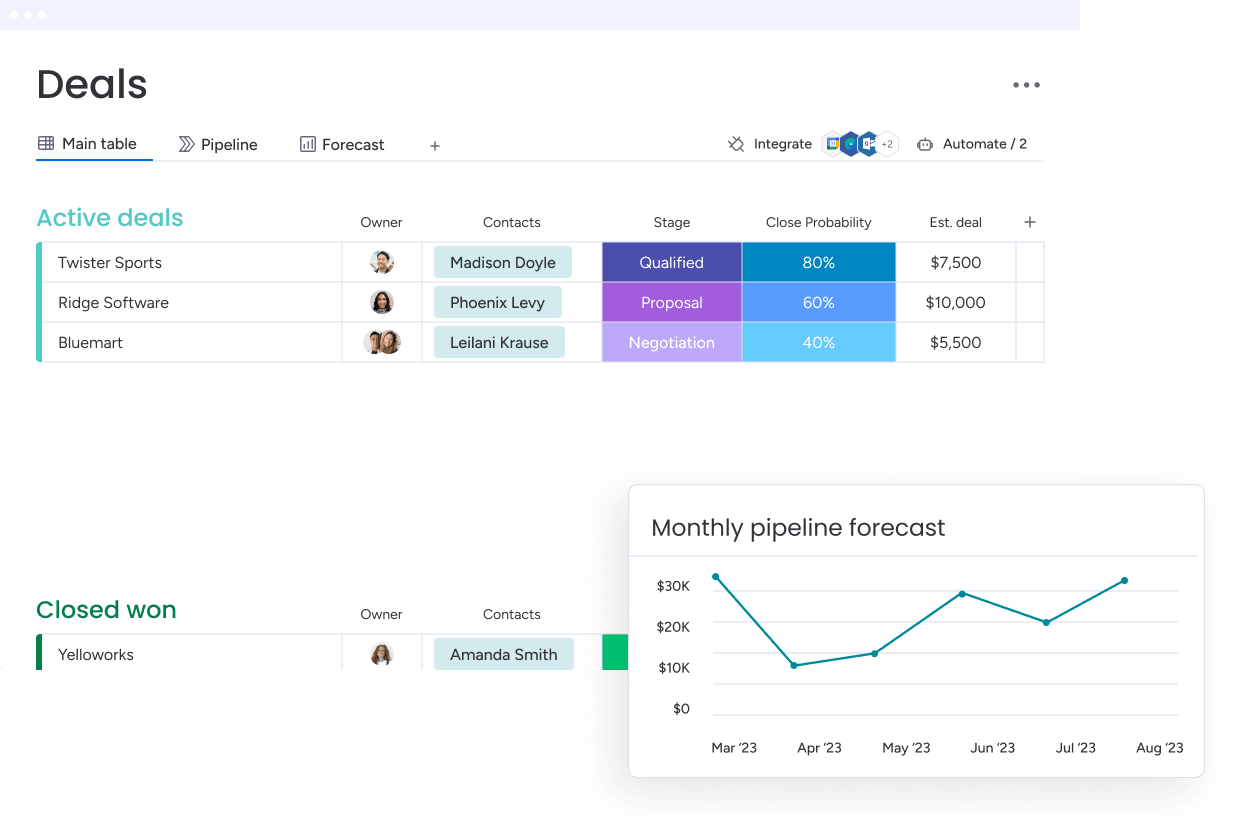
5 MQL criteria that actually matter in 2026
These criteria are the best signs someone’s ready to buy, so teams can focus on prospects who’ll actually convert.
1. Engagement frequency and depth
Repeated engagement over time is a more reliable signal of real interest than one-off actions. Prospects engaging repeatedly across multiple weeks demonstrate they’re actively working through a buying decision, not just casually browsing.
Look for patterns like:
- Visiting your website five times in two weeks.
- Downloading multiple resources across different content types.
- Opening every nurture email and clicking through to additional content.
2. Ideal customer profile alignment
Smart targeting means MQLs look like your best customers. Strong ICP alignment predicts not just purchase likelihood but also long-term success and expansion potential.
Prospects matching your sweet spot in size, industry, and use case typically move through sales faster and achieve value more quickly.
3. Content journey progression
Prospects advancing from awareness to consideration content demonstrate movement through their buying journey. Someone who starts with industry guides, attends product webinars, then downloads customer case studies shows systematic evaluation.
This progression shows they’re moving toward a decision, not just browsing.
4. Budget and decision authority
Identifying prospects with purchasing power prevents wasted nurture on leads who can’t buy. Budget availability doesn’t mean allocated funds. It means they can secure funding if your solution proves valuable.
Decision authority might involve multiple stakeholders, but identifying buying committee members qualifies leads for continued investment.
5. Problem-solution fit indicators
Genuine need separates interested prospects from those who will actually buy. Strong fit indicators include:
- Prospects describing specific challenges your solution addresses.
- Expressing urgency to solve identified problems.
- Asking detailed questions about implementation and outcomes.
Repeated engagement over time is a more reliable signal of real interest than one-off actions. Prospects engaging repeatedly across multiple weeks demonstrate they’re actively working through a buying decision.
From individual MQLs to buying group intelligence
B2B decisions now typically involve six to ten stakeholders. So, how can you understand the real opportunity if you only qualify individual leads? Modern qualification has to track multiple decision-makers and their collective readiness.
Why B2B decisions involve multiple stakeholders
Purchase decisions require input from end users, department leaders, IT teams, procurement, finance, and executives. Each stakeholder evaluates different criteria and concerns. This complexity drags out sales cycles and breaks old qualification methods built for individual contacts.
A single engaged MQL might lack support from other stakeholders or ability to navigate approval processes. Conversely, an account with three moderately engaged contacts might represent stronger opportunity than one highly engaged individual.
Tracking account-level engagement
Account-based qualification aggregates engagement across all contacts to assess organizational readiness. If three contacts from different departments engage with your content simultaneously, it suggests coordinated evaluation and internal momentum.
Cross-stakeholder patterns reveal buying group formation. When marketing, sales, and IT contacts from the same company engage within the same timeframe, they’re likely building consensus.
Visual dashboards in platforms like monday CRM make these account-level patterns immediately visible, helping teams identify accounts with multiple engaged stakeholders.
Scoring multiple decision makers
Different stakeholder types carry different weights in purchase decisions. Economic buyers controlling budget typically influence decisions more than individual contributors. Technical evaluators might have veto power over functionality. Champions who advocate internally drive momentum even without formal authority.
Weight engagement based on role influence:
- Executive engagement might receive 2x scoring weight compared to individual contributors.
- Technical stakeholders get higher scores for product-focused content consumption.
- End users receive credit for usage-related engagement.
This ensures high-level interest receives appropriate attention while still valuing end-user engagement.
Try monday CRM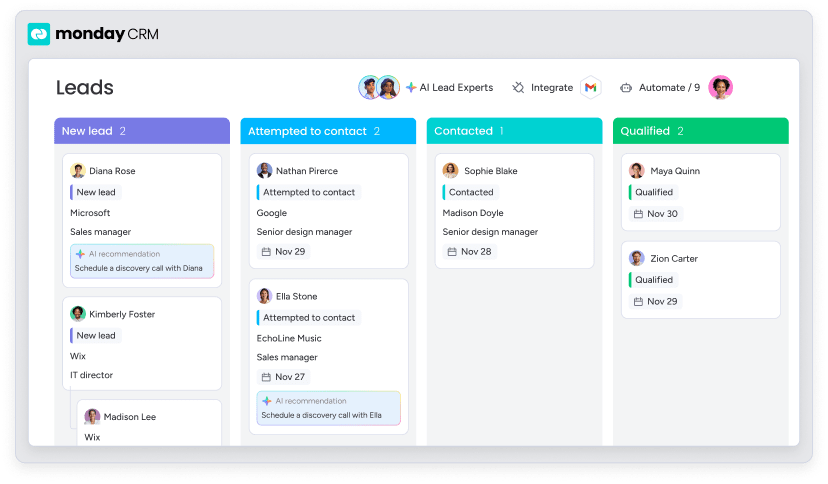
How AI transforms MQL identification
Machine learning changes lead scoring by finding patterns humans miss and adapting to buyer behavior automatically.
Predictive lead scoring models
AI analyzes thousands of data points across historical leads to identify conversion patterns. The technology finds that prospects who view pricing three times, attend webinars, and work at companies using specific tech convert at exceptional rates. Manual analysis misses this.
These models continuously improve as they process more data:
- Each closed deal teaches the system which early behaviors predict success.
- Unlike static scoring requiring manual updates, AI models evolve automatically.
- Market changes and buyer behavior shifts get incorporated without human intervention.
Real-time behavioral analysis
AI processes engagement across all channels simultaneously, updating scores instantly as prospects interact with your brand. When someone attends a webinar then immediately visits pricing pages, AI recognizes this high-intent pattern and can trigger immediate follow-up.
Real-time analysis captures temporal patterns invisible in batch processing:
- A prospect researching intensively over 30 minutes shows different intent than someone with similar actions spread over months.
- AI-powered platforms detect these nuances automatically.
- Scoring updates happen instantly rather than in daily or weekly batches.
Pattern recognition at scale
Machine learning identifies complex multi-factor patterns beyond simple correlation. AI might discover that mid-market companies in specific industries who engage with certain content sequences convert at exceptional rates — patterns too nuanced for rule-based scoring.
Historical analysis distinguishes meaningful behaviors from noise:
- If blog readers rarely convert while whitepaper downloaders frequently do, AI adjusts scoring accordingly.
- This evidence-based approach prevents overvaluing low-quality engagement.
- Complex interaction effects between multiple variables become visible.
MQL to SQL conversion mastery
Nail the handoff from marketing to sales and you’ll close deals faster with less wasted effort. Know your benchmarks and build smooth processes so qualified leads move through your funnel without friction.
Benchmark conversion rates by industry
MQL to SQL conversion varies significantly across industries and sales models. Know these patterns and you’ll set realistic targets while spotting what to fix:
- B2B SaaS companies: typically see 20-30% conversion.
- Complex enterprise sales: might achieve 15-20% due to longer evaluation cycles.
- Transactional businesses: often reach 35-40% but with lower deal values.
If similar companies hit 30% and you’re at 20%, you’ve got room to improve. Beat the benchmarks? You’ve got a competitive edge worth protecting.
Create seamless handoff processes
Good handoffs need complete context and clear accountability. Sales needs complete engagement history, firmographic data, and behavioral signals to personalize outreach. Marketing needs feedback on lead quality to refine qualification criteria.
Successful handoffs need:
- Complete lead context: full engagement history and content consumed.
- Recommended actions: suggested next steps based on lead behavior.
- Service level agreements: 24-48 hour follow-up commitments with tracking.
- Communication protocols: automated alerts and assignment rules.
Visual pipeline management makes handoffs transparent. Both teams see lead status, ownership, and progression in real-time, eliminating confusion about responsibility.
Step 2: eliminate conversion bottlenecks
Common bottlenecks? Poor lead quality, weak nurture, slow follow-up, and mismatched qualification criteria. Find where leads stall and you know what to fix.
If MQLs consistently fail sales review, qualification criteria need adjustment. If qualified leads sit uncontacted for days, follow-up processes need automation. Regular alignment meetings between marketing and sales ensure both teams agree on definitions and continuously improve the handoff process.

“With monday CRM, we’re finally able to adapt the platform to our needs — not the other way around. It gives us the flexibility to work smarter, cut costs, save time, and scale with confidence.”
Samuel Lobao | Contract Administrator & Special Projects, Strategix
“Now we have a lot less data, but it’s quality data. That change allows us to use AI confidently, without second-guessing the outputs.”
Elizabeth Gerbel | CEO
“Without monday CRM, we’d be chasing updates and fixing errors. Now we’re focused on growing the program — not just keeping up with it."
Quentin Williams | Head of Dropship, Freedom Furniture
“There’s probably about a 70% increase in efficiency in regards to the admin tasks that were removed and automated, which is a huge win for us.“
Kyle Dorman | Department Manager - Operations, Ray White
"monday CRM helps us make sure the right people have immediate visibility into the information they need so we're not wasting time."
Luca Pope | Global Client Solutions Manager at Black Mountain
“In a couple of weeks, all of the team members were using monday CRM fully. The automations and the many integrations, make monday CRM the best CRM in the market right now.”
Nuno Godinho | CIO at VelvBuild a revenue engine that runs itself with monday CRM
Manual tracking and disconnected tools can’t keep up with modern buying behavior. Revenue teams need a system that surfaces qualified prospects automatically, tracks engagement as it happens, and keeps deals moving without constant oversight.
monday CRM brings that clarity to the entire funnel. Visual pipelines make qualification status instantly clear, so teams know exactly where to focus and what needs action next. No more digging through reports or chasing stale leads — bottlenecks surface early and momentum stays high.
AI-powered scoring takes it further. Instead of relying on static point systems, monday CRM learns from real conversion data, spotting patterns humans miss and adapting as buyer behavior changes. The more deals you work, the smarter qualification becomes.
The payoff is a pipeline you can trust.
Try monday CRMFrequently asked questions
How long should a lead stay in MQL status before moving to SQL?
A lead typically remains in MQL status for 30-90 days depending on your sales cycle length and buyer journey complexity. High-intent actions like demo requests can accelerate progression to SQL status within days, while prospects researching for future initiatives might stay in MQL status longer.
What's considered a healthy MQL to SQL conversion rate?
Healthy MQL to SQL conversion rates typically range from 20-40% depending on industry, sales model, and qualification criteria strictness. B2B SaaS companies often target 25-30%, while enterprise sales might see 15-20% due to longer, more complex buying processes.
What happens if an SQL is not ready to buy?
Yes, leads can move backward from SQL to MQL if sales determines they're not yet ready for active pursuit. This might happen due to budget delays, changing priorities, or incomplete buying group formation requiring additional nurture before sales re-engagement.
How many touchpoints should an MQL have before qualifying?
Most B2B companies require three to seven meaningful touchpoints before MQL qualification, though this varies by business model and sales cycle. The key is engagement quality and progression rather than raw touchpoint count: three high-intent actions might qualify a lead faster than ten low-value interactions.
Should all MQLs go to sales immediately?
Not all MQLs should go to sales immediately—only those meeting SQL criteria deserve direct outreach. Many MQLs benefit from continued marketing nurture to build readiness before sales engagement, preventing premature outreach that could damage relationships.
How often should MQL criteria be reviewed and updated?
MQL criteria should be reviewed quarterly to ensure alignment with changing market conditions and buyer behavior. Monthly conversion analysis helps identify needed adjustments, while major changes like new product launches or market shifts might require immediate criteria updates.

 Get started