


Consistency in hitting SDR targets is an impressive achievement, but it often triggers the same question: “What comes next?” The daily cycle of cold calls and outreach, while essential, is often a stepping stone toward roles with higher strategic influence and greater earning potential.
In 2026, the career path for an SDR is no longer a single track toward becoming an Account Executive. Organizations now recognize that the “front-line” experience gained in prospecting is the ultimate training ground for the entire revenue department. The ability to handle rejection, understand buyer pain points, and master sales technology makes SDRs prime candidates for roles in operations, marketing, and customer success that didn’t exist a few years ago.
The guide below outlines six realistic career trajectories for SDRs ready to move to the next level. By analyzing timelines, compensation, and the specific skills required for each, professionals can transition from “hitting a number” to architecting a long-term career in the modern revenue ecosystem.
Key takeaways
- Master your current role before advancing: stay 12-18 months as an SDR and hit 90%+ quota for two straight quarters to build a strong promotion case.
- Four main career paths emerge from SDR experience: account Executive, Customer Success Manager, Revenue Operations, and marketing roles all value your prospecting and buyer behavior insights.
- AI and CRM mastery accelerate every career path: teams using monday CRM gain advantages through automated data entry, AI-assisted email composition, and unified visibility that builds technical skills for any revenue role.
- Document wins with data, not just activity metrics: track quota performance, pipeline generation, and business impact to build compelling cases for advancement.
- Cross-functional collaboration opens more doors: build relationships with marketing, customer success, and RevOps teams to gain visibility and understand different career options.
What career paths open up after SDR?
SDR experience creates multiple career opportunities beyond cold calling. Your prospecting, communication, and relationship skills transfer across revenue functions: opening doors to AE, customer success, RevOps, and marketing roles.
The traditional SDR-to-AE path is just one option. Revenue organizations value SDR experience because you understand buyer behavior, pipeline mechanics, and process inefficiencies firsthand. That knowledge makes you valuable in customer success, ops, marketing, and enablement.
Four main paths open up for SDRs ready to advance:
- Account Executive roles: move from lead generation to deal ownership, managing full sales cycles and revenue targets.
- Customer Success positions: focus on retention and expansion rather than new customer acquisition.
- Revenue Operations roles: optimize processes and analyze data with a focus on strategic team performance.
- Marketing and Demand Generation: apply your understanding of what resonates with prospects at scale.
Move into account executive roles
The SDR-to-AE transition remains the most common career progression. This move represents a shift from generating leads to owning full sales cycles and taking direct responsibility for revenue outcomes.
Most SDRs transition into AE roles within 12 to 18 months, with high performers sometimes advancing in ten to twelve months. Companies evaluate several key indicators to determine readiness for this progression:
- Performance metrics: consistent quota attainment above 90% for at least two consecutive quarters.
- Qualification skills: strong ability to identify and progress qualified opportunities.
- Pipeline management: demonstrated ability to move deals through the sales process.
While prospecting, qualification, and objection-handling skills transfer directly, the transition involves a learning curve centered on longer sales cycles, multiple stakeholders, complex pricing, and strategic account planning.
- Compensation structure: AEs typically earn higher base salaries ($60,000 to $80,000) with significantly larger variable compensation potential ($120,000 to $180,000 OTE for mid-market AEs).
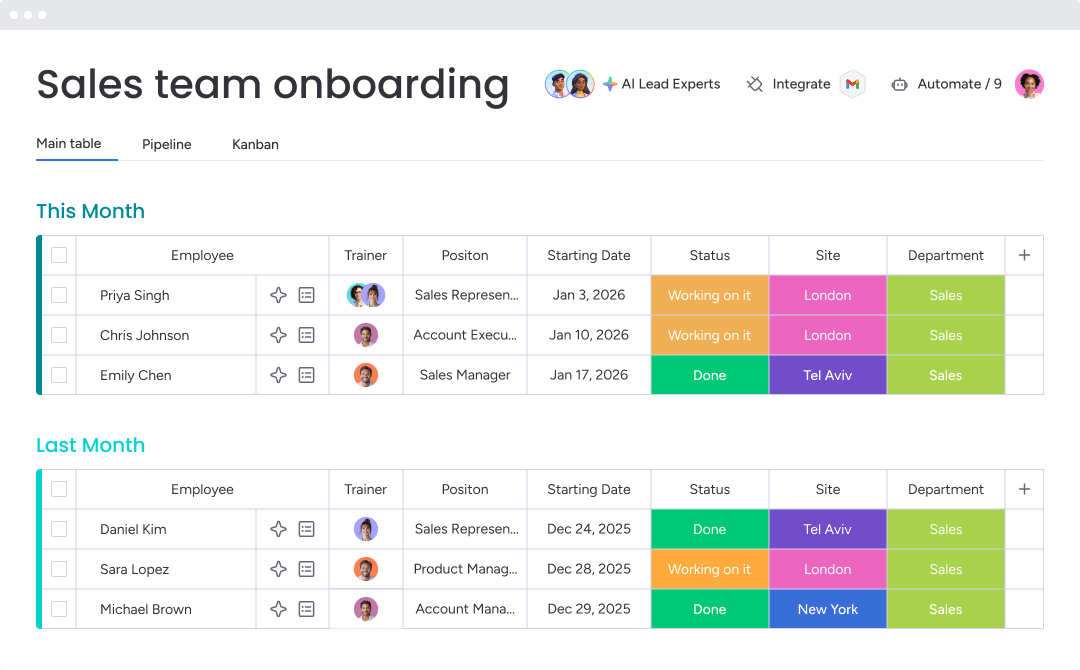
CRM skills matter even more as an AE. You’ll manage complex opportunity records, track stakeholders, forecast accurately, and keep detailed activity logs. SDRs who master their CRM transition more smoothly, freeing up time for strategic selling.
Transition to customer success
Customer success works well for SDRs who prefer consultative selling over aggressive outbound. CSMs focus on keeping and growing existing customers, not landing new ones.
Most CSM transitions happen after fifteen to 20 months as an SDR. Companies want CSM candidates with deep product knowledge and strong relationship skills. The role covers:
- Customer onboarding: guide new customers through implementation and setup.
- Product adoption: drive usage and feature adoption across customer accounts.
- Renewal management: manage contract renewals and prevent churn.
- Expansion identification: identify opportunities for account growth.
- Advocacy building: develop long-term customer relationships and references.
Your communication, problem-solving, and relationship skills transfer well. You’ll need deep product knowledge, renewal management, expansion spotting, technical troubleshooting, and customer advocacy skills.
- Compensation models: base salaries range from $55,000 to $75,000 with total compensation of $80,000 to $110,000, including bonuses tied to retention and expansion metrics rather than new bookings.
Build a career in RevOps
Revenue Operations is well-suited for SDRs who identify process inefficiencies and system limitations in their daily work. RevOps professionals operate across sales, marketing, and customer success functions.
Most transitions to RevOps occur after 18 to 24 months in an SDR role. RevOps positions require strong analytical capabilities and comprehensive sales process knowledge. Responsibilities include:
- Process optimization: identify and eliminate workflow inefficiencies.
- Data analysis and reporting: create insights from revenue data.
- CRM administration: manage system configurations and user access.
- Forecasting support: provide analytical support for revenue predictions.
- Territory planning: design and optimize sales territory assignments.
Your firsthand experience with sales processes, data quality issues, and workflow gaps provides strong preparation for RevOps roles. This operational perspective establishes credibility for former SDRs, as you understand both strategic objectives and day-to-day execution challenges.
- Compensation structure: RevOps pays well without the direct quota pressure. Salaries range from $65,000 to $85,000 base with total compensation of $90,000 to $130,000, often including bonuses tied to team performance rather than individual sales targets.
Explore marketing and demand generation
Marketing and demand gen roles work well for SDRs who know what messaging lands with prospects. These roles use your insights into buyer behavior, pain points, and what outreach actually works.
Three main marketing paths for SDRs:
- Marketing Development Representative (MDR): bridge sales and marketing, focusing on inbound lead qualification and campaign support.
- Demand Generation Specialist: design and execute campaigns to generate qualified leads at scale.
- Content Marketing: create educational content that attracts and engages prospects.
Most marketing moves happen after 15-20 months. Companies want SDRs with strong buyer persona knowledge, messaging instincts, and campaign performance understanding. You’ll shift from one-to-one prospecting to one-to-many marketing and from tactical work to strategic campaign planning.

6 strategic SDR career path options worth pursuing
These six paths are realistic, with clear timelines, salary ranges, and skill requirements. Skills from one path often transfer to others. Many pros combine elements from multiple paths over time. Each path has unique advantages based on your interests, strengths, and career goals.
1. Senior SDR or team lead
Senior SDR roles are a natural first step for high performers who want to stay close to prospecting while building leadership skills. You’ll keep prospecting while leading the team and improving processes.
Most senior SDR promotions happen after 18 to 24 months. Companies promote top performers who show leadership potential. You’ll handle:
- Mentoring junior team members: guide new SDRs through onboarding and skill development.
- Optimizing prospecting workflows: identify and implement process improvements.
- Managing team performance: coach struggling reps and share best practices.
- Contributing to hiring: participate in interviews and onboarding programs.
This role provides a stepping stone to broader leadership opportunities without requiring you to master full-cycle sales first.
- Compensation increase: typically increases 20% to 30% over standard SDR packages, with base salaries of $55,000 to $70,000 and total compensation of $85,000 to $110,000. It’s a solid path to sales management, enablement, or ops roles.
2. Account executive
The AE move requires hitting specific metrics and showing you’re ready. Companies promote SDRs who hit quota consistently, generate strong pipeline, qualify well, and move deals forward.
Common challenges:
- Sales cycle adjustment: adapting to longer, more complex sales processes.
- Stakeholder management: managing multiple decision-makers simultaneously.
- Negotiation skills: developing advanced closing and pricing negotiation abilities.
- Deal motivation: maintaining momentum through deal slippage and longer cycles.
- Territory management: strategic account planning, competitive analysis, and smart resource allocation across deals.
- CRM mastery: managing complex records, tracking stakeholders, forecasting accurately, and logging activities.
The AE role demands a broader strategic skillset beyond prospecting fundamentals.
- Compensation structure: base salaries of $60,000 to $80,000 and variable compensation creating total packages of $120,000 to $180,000.
3. Customer success manager
Customer success works for reps who prefer consultative selling. CSMs own the post-sale relationship, focusing on keeping customers, growing accounts, and building advocates.
Daily work includes:
- Customer onboarding: ensure smooth implementation and early value realization.
- Product adoption: drive feature usage and maximize customer value.
- Renewal conversations: manage contract renewals and prevent churn.
- Expansion opportunities: identify upsell and cross-sell possibilities.
- Advocacy programs: build customer references and case studies.
Your SDR experience in handling objections, understanding customer pain points, and building rapport translates directly into customer success competencies.
- Career progression: leads to Senior CSM roles, CSM Manager positions, Director of Customer Success, and VP of Customer Success.
- Compensation models: $55,000 to $75,000 base salaries with total compensation of $80,000 to $110,000. It fits SDRs who prefer long-term relationships over transactional deals.
4. Revenue operations specialist
Revenue Operations offers a strategic career path for analytically-minded SDRs. RevOps specialists optimize the entire revenue engine across sales, marketing, and customer success.
Typical responsibilities include:
- Process optimization: streamline workflows across revenue functions.
- Data analysis: create insights from sales, marketing, and customer data.
- CRM administration: manage system configurations and integrations.
- Forecasting support: provide analytical backing for revenue predictions.
- Territory planning: design optimal sales territory structures.
Your SDR experience with CRM systems, data quality issues, and workflow bottlenecks provides a strong foundation for developing these technical capabilities.
- Required technical skills: CRM customization, data analysis capabilities, automation platform expertise, integration management, and reporting creation.
SDRs can start building these skills by volunteering for process improvement projects, learning CRM administration basics, and understanding sales technology stacks.
- Career progression: senior RevOps Analyst, RevOps Manager, Director of Revenue Operations, and VP of Revenue Operations roles.
- Compensation: $65,000 to $85,000 base with total packages of $90,000 to $130,000.
5. Sales enablement manager
Sales enablement suits SDRs who enjoy training and helping others succeed. Enablement managers design training programs, create sales content, optimize onboarding processes, and analyze performance to identify improvement opportunities.
SDR experience provides valuable credibility when training other reps. Enablement managers who have carried quota understand the challenges and design more effective programs.
Required skills include:
- Instructional design: develop effective training programs and learning materials.
- Content creation: produce sales collateral, playbooks, and enablement resources.
- Presentation and facilitation: deliver engaging training sessions and workshops.
- Project management: coordinate cross-functional enablement initiatives.
Sales enablement professionals often become experts in CRM optimization, sales technology, and process design.
- Compensation: $70,000 to $90,000 base with total packages of $95,000 to $130,000.
6. Marketing development representative
MDR roles bridge sales and marketing for SDRs who want to stay in lead generation with a marketing focus. They work on inbound leads, qualify based on campaign engagement, support marketing program execution, and provide feedback on campaign effectiveness.
The role differs from traditional SDR work through:
- Inbound focus: work primarily with leads generated by marketing campaigns.
- Marketing collaboration: close partnership with marketing teams on campaign execution.
- Lead nurturing: emphasis on developing leads over time rather than immediate conversion.
- Campaign metrics: measurement through campaign performance rather than individual quotas.
The MDR role serves as a strategic entry point into marketing functions, offering clear advancement opportunities as you develop campaign expertise and marketing acumen.
- Career progression: demand Generation Specialist, Marketing Operations, Field Marketing, or Product Marketing positions.
- Compensation: $50,000 to $65,000 base with total packages of $75,000 to $100,000.
Essential skills every SDR needs today
The SDR role evolves rapidly with technology advancement and changing buyer behavior. Therefore, skills that were optional three years ago are now essential competencies for career advancement. Developing these capabilities while in your SDR role positions you for faster advancement and broader career opportunities.
AI and sales automation mastery
AI literacy has become a career differentiator. SDRs who master AI become more strategic and productive, spending less time on manual work and more time on relationship building and strategic prospecting.
AI applications relevant to SDRs include:
- Email personalization: scale personalized outreach across large prospect lists.
- Lead scoring: prioritize prospects based on engagement and fit.
- Conversation intelligence: analyze call recordings for coaching insights.
- Prospecting automation: identify and research prospects automatically.
- Predictive analytics: forecast which leads are most likely to convert.
These AI skills transfer directly to other roles:
- Account Executives: use AI for deal intelligence and competitive analysis.
- RevOps professionals: leverage AI for process optimization and forecasting.
- Marketing teams: apply AI for campaign optimization and lead scoring.
- Customer success managers: use AI for health scoring and churn prediction.
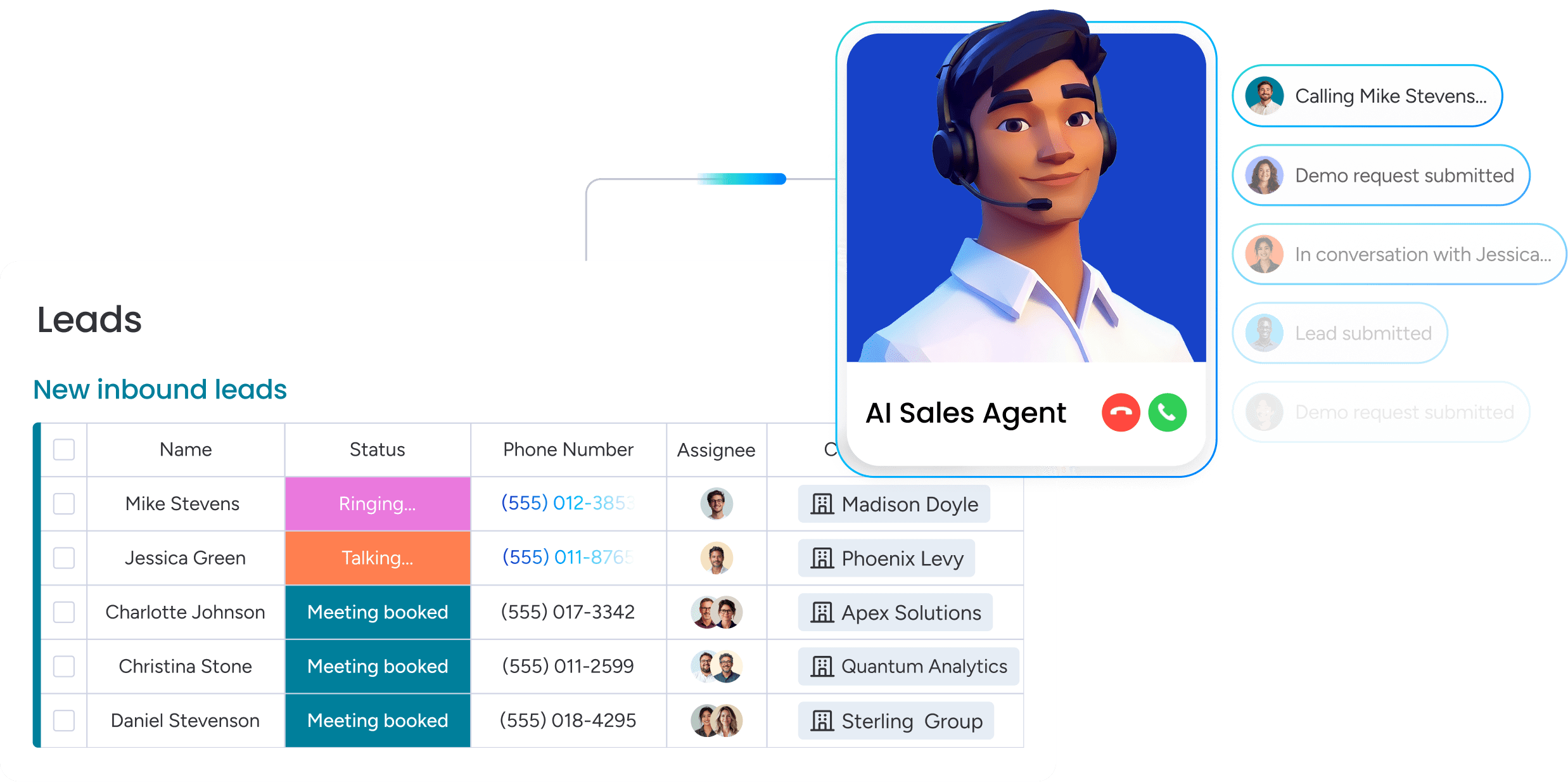
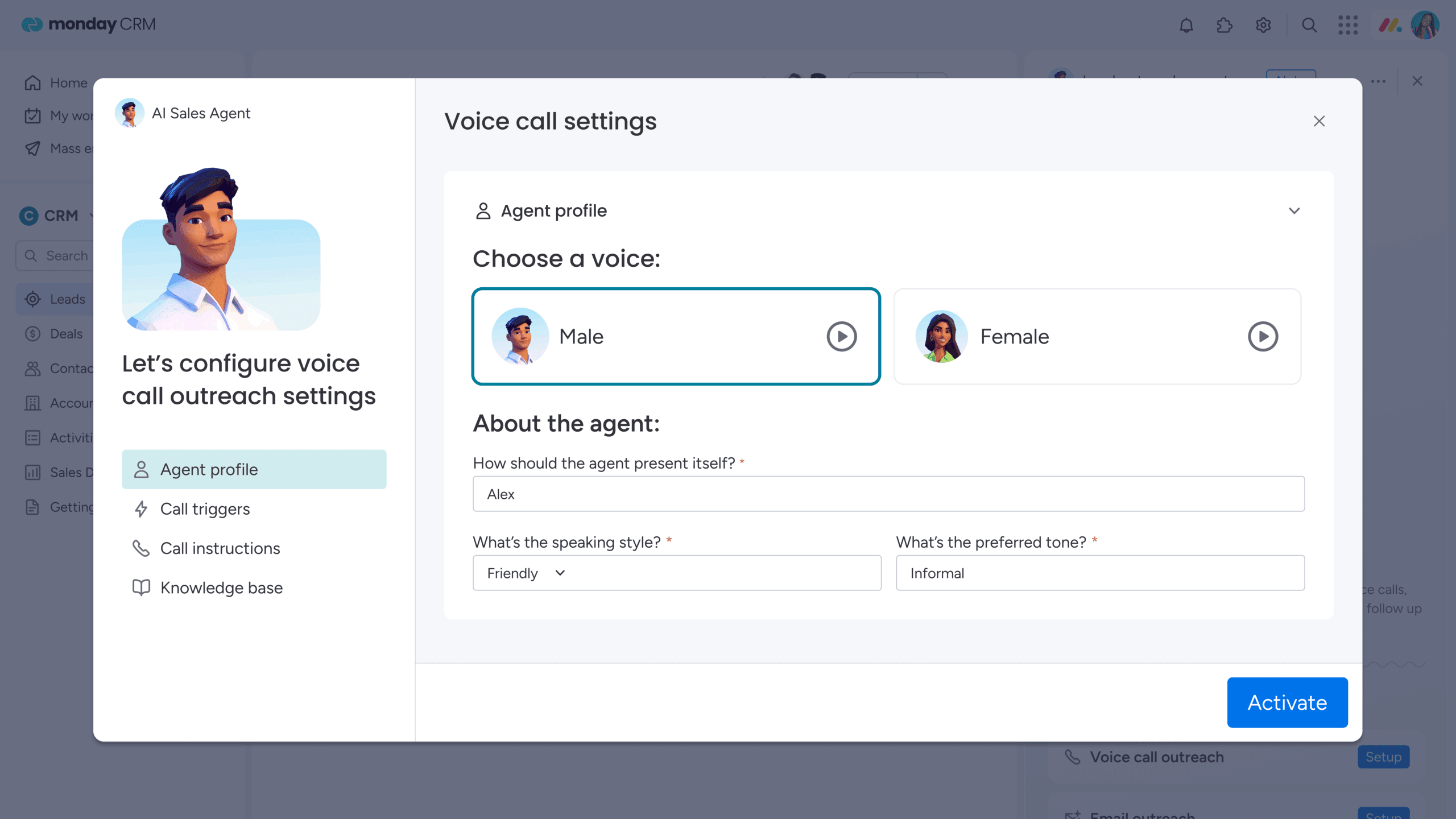
Teams using a unified CRM leverage AI capabilities daily through automated data entry, intelligent lead scoring, AI-assisted email composition, and timeline summaries that create readable overviews of all client communication. These features help reps develop AI literacy naturally while saving time on research and documentation.
Social selling and digital engagement
Buyers research extensively before engaging with sales reps, making social selling essential. SDRs who master social selling build relationships earlier, establish credibility through thought leadership, and generate warmer leads with higher conversion rates.
Specific social selling tactics include:
- LinkedIn optimization: create compelling profiles that attract prospects.
- Content sharing: share industry insights and valuable content regularly.
- Social listening: monitor for trigger events and buying signals.
- Relationship building: engage with prospects before making sales outreach.
These skills translate directly to marketing positions, customer success engagement, and RevOps effectiveness analysis.
Data analysis and revenue intelligence
Data literacy also proves crucial for advancement in any revenue role. SDRs who understand metrics and analyze their own performance stand out to hiring managers and promotion committees.
Key metrics to track include:
- Activity metrics: calls, emails, and social touches per day.
- Conversion metrics: lead-to-opportunity and opportunity-to-closed won rates.
- Pipeline metrics: generation by time period and average deal size.
- Quality metrics: lead quality scores and qualification rates.
Use data for personal improvement by:
- Identifying effective activities: understand which actions drive the best results.
- Testing messaging: analyze which outreach approaches resonate most.
- Recognizing patterns: spot trends in successful deals and replicate them.
- Adjusting strategies: make data-driven changes to improve performance.
Visual dashboards in platforms like monday CRM show performance trends, highlight key metrics, and benchmark performance against team averages. Customizable dashboards enable SDRs to track personally relevant metrics and build data-backed cases for advancement.
Cross-functional team collaboration
Revenue teams operate collaboratively, making cross-functional skills essential for advancement. SDRs who build strong relationships with marketing, customer success, and RevOps teams gain broader business understanding and visibility with leaders across the organization.
Marketing collaboration involves:
- Lead quality feedback: provide insights on campaign effectiveness and lead quality.
- Buyer insights: share pain points and messaging that resonates with prospects.
- Campaign planning: contribute to campaign strategy based on prospect interactions.
Customer success collaboration includes:
- Smooth handoffs: ensure seamless transitions from sales to customer success.
- Customer insights: share prospect expectations and implementation requirements.
- Expansion opportunities: identify potential upsell opportunities during the sales process.
Centralized communication platforms facilitate cross-functional collaboration by providing shared visibility into customer data, enabling seamless handoffs between teams, and supporting collaborative workflows across functions.
How long to stay in your SDR role for maximum growth?
Timing your advancement requires strategic thinking. Leaving too early means missing skill development opportunities but staying too long can signal lack of ambition or inability to advance.
Industry tenure benchmarks
Average SDR tenure ranges from twelve to 18 months, with variation based on company size and individual performance. High-growth startups often see faster progression (ten to fourteen months), while enterprise companies typically require longer tenure (18 to 24 months).
| Target role | Recommended SDR tenure | Key readiness indicators |
|---|---|---|
| Account executive | 12-18 months | Consistent quota attainment (90%+), strong pipeline generation |
| Customer success manager | 15-20 months | Product knowledge depth, relationship management success |
| Revenue operations | 18-24 months | Process improvement contributions, analytical capabilities |
| Marketing/demand gen | 15-20 months | Campaign insights, messaging effectiveness understanding |
| Sales enablement | 18-24 months | Training experience, content creation skills |
| Senior SDR/team lead | 18-24 months | Consistent top performance, leadership demonstration |
Staying beyond 24 to 30 months may create perception challenges around advancement capability, reduced motivation, and limited skill development opportunities.
Indicators of readiness for advancement
Readiness involves both quantitative performance metrics and qualitative skill development. Performance metrics that indicate readiness include:
- Quota performance: consistent quota attainment at 90% or higher for two consecutive quarters.
- Peer comparison: top quartile performance relative to team members.
- Pipeline generation: strong pipeline creation exceeding team averages.
- Conversion rates: high conversion rates from lead to opportunity.
Skill development indicators include:
- Technology mastery: proficiency with CRM systems and sales technology.
- AI proficiency: comfort with automation platforms and AI tools.
- Data analysis: strong analytical capabilities and metrics understanding.
- Cross-functional collaboration: effective relationships across departments.
- Process improvement: contributions to workflow optimization and efficiency.
Behavioral indicators include:
- Mentoring others: helping junior team members develop skills.
- Strategic contribution: contributing to team strategy and planning.
- Initiative taking: leading projects and improvement initiatives.
- Strategic thinking: demonstrating thinking beyond tactical execution.
Building your promotion case
Documenting achievements requires systematic tracking and strategic presentation. Focus on demonstrating business impact, not just activity metrics.
Track these key areas:
- Quantitative performance: track quota attainment, pipeline generation, and conversion rates.
- Qualitative achievements: document process improvements, mentoring contributions, and cross-functional projects.
- Skill development: record training completed, certifications earned, and new competencies developed.
- Recognition and feedback: collect manager feedback, peer recognition, and customer testimonials.
- Business impact: measure revenue generated, process efficiencies created, and team contributions.
Visual representations of performance trends, comparative analytics showing top-quartile results, and documented business impact through pipeline reports create more persuasive cases than anecdotal claims.
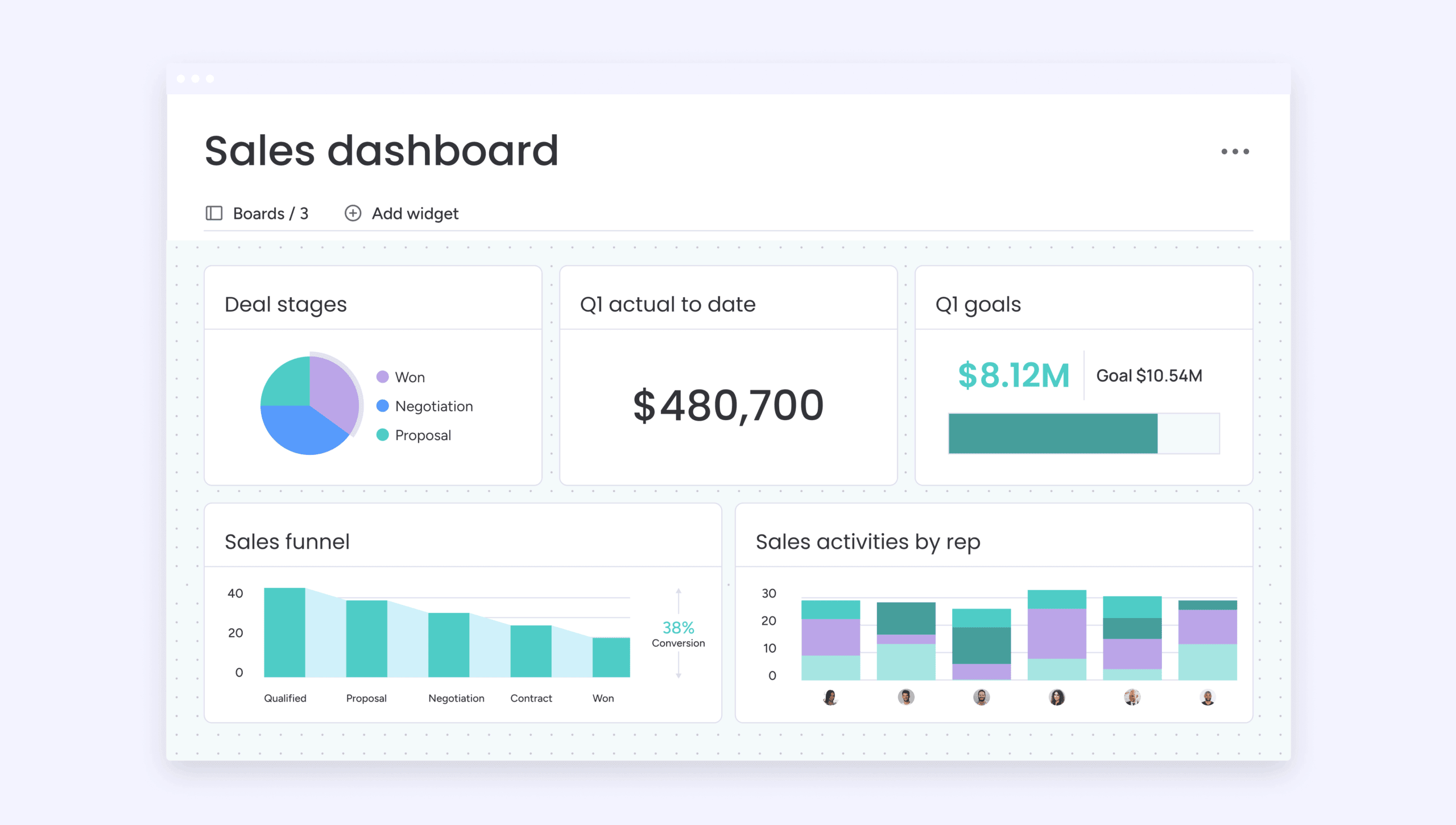
Building your SDR career foundation for long-term success
Technology skills are now a key differentiator. SDRs who know how to work confidently with CRM platforms like monday CRM — managing pipelines, automations, and activity data — open up more career options across sales, revenue operations, and customer-facing roles. These skills transfer well and continue to pay off as responsibilities grow.
Performance data plays a bigger role in advancement too. When your activity and results are tracked in real time, it’s easier to spot gaps, improve quickly, and build a clear promotion case. Collaboration with other teams increases visibility and helps leadership see your broader contribution.
AI isn’t replacing SDRs, but it is raising expectations. Those who use AI to work more efficiently can focus on higher-value tasks and move into more strategic roles. The ability to combine AI-driven efficiency with strong human judgment is what shapes long-term growth.
Your next step isn’t defined by tenure. Focus on building transferable platform skills, documenting measurable wins, and increasing cross-functional visibility and start doing it well before you’re ready to move up.
Frequently asked questions
How much do SDRs typically earn at each career level?
SDR base salaries typically range from $45,000 to $60,000 with total compensation of $70,000 to $95,000 including commissions. Account Executives earn $60,000 to $80,000 base with $120,000 to $180,000 total compensation for mid-market roles. Customer Success Managers receive $55,000 to $75,000 base with $80,000 to $110,000 total. Revenue Operations Specialists command $65,000 to $85,000 base with $90,000 to $130,000 total compensation.
What is the typical career path for an SDR?
The typical SDR career path spans twelve to 18 months before advancement. The most common progression moves from SDR to Account Executive, though SDRs increasingly pursue Customer Success Manager, Revenue Operations Specialist, Sales Enablement Manager, Marketing Development Representative, or Senior SDR roles.
Can I skip the AE role and move directly to management?
To answer if you can skip the AE role and move directly to management: yes, it is possible but uncommon. Some SDRs transition to SDR team lead or manager roles without AE experience, particularly in high-growth companies. This path works best for SDRs with strong leadership demonstration, proven process improvement contributions, and excellent coaching abilities.
What skills help SDRs get promoted faster?
Skills that accelerate SDR advancement include AI and automation proficiency, data analysis capabilities, social selling expertise, cross-functional collaboration abilities, and CRM platform mastery. Technical skills in automation, reporting, and process optimization increasingly differentiate candidates across all career paths.
How is AI changing SDR career opportunities?
AI reshapes SDR careers by automating routine work and creating opportunities for strategic, relationship-focused activities. SDRs who develop AI literacy gain advantages across all career paths. AI proficiency opens doors to RevOps, Enablement, and strategic roles while making SDRs more productive in their current positions.
Should I stay at my current company or switch jobs for a promotion?
Internal promotions offer established relationships, proven track records, and understanding of company culture. External opportunities provide potentially faster advancement, higher compensation increases, and exposure to different methodologies. Consider company growth trajectory, relationship quality with management, compensation differences, and learning opportunities in each scenario.

 Get started