

The traditional sales playbook once demanded brute force and endless spreadsheets, trapping top-performing reps in exhausting cycles of manual data entry. Instead of allowing them to focus on what they do best, closing deals, this outdated approach creates bottlenecks, kills momentum, and transforms a potentially streamlined sales process into a heavy administrative burden.
In contrast, a modern approach to lead management builds a predictable pipeline that energizes sales teams and accelerates the journey from prospect to customer. High-performing teams now leverage sales lead generation software to automate repetitive tasks and eliminate manual friction. By doing so, they transform scattered, disorganized leads into a high-velocity revenue machine that delivers consistent results quarter after quarter.
This comprehensive guide evaluates the best sales lead generation software in 2026, providing the strategic framework you need to select a platform that doesn’t just manage leads, but actively powers your organization’s growth trajectory.
Key takeaways
- Sales lead generation software automates the entire process: of finding, capturing, and qualifying leads, eliminating manual data entry and freeing your team to focus on closing deals instead of administrative tasks.
- The right platform transforms scattered leads into predictable revenue: by providing a single source of truth for your pipeline, intelligent lead scoring, and automated workflows that keep deals moving forward.
- AI-powered features are no longer optional: they’re essential for prioritizing high-intent prospects, personalizing outreach at scale, and surfacing buying signals that manual processes would miss.
- Implementation speed matters as much as features: platforms like monday CRM offer no-code setup that gets your team productive in days rather than months, with intuitive interfaces that drive adoption naturally.
- Total cost of ownership extends beyond the subscription fee: encompassing implementation, training, integrations, and scalability, so evaluate platforms based on long-term value rather than just upfront pricing.
What are sales lead generation software platforms?
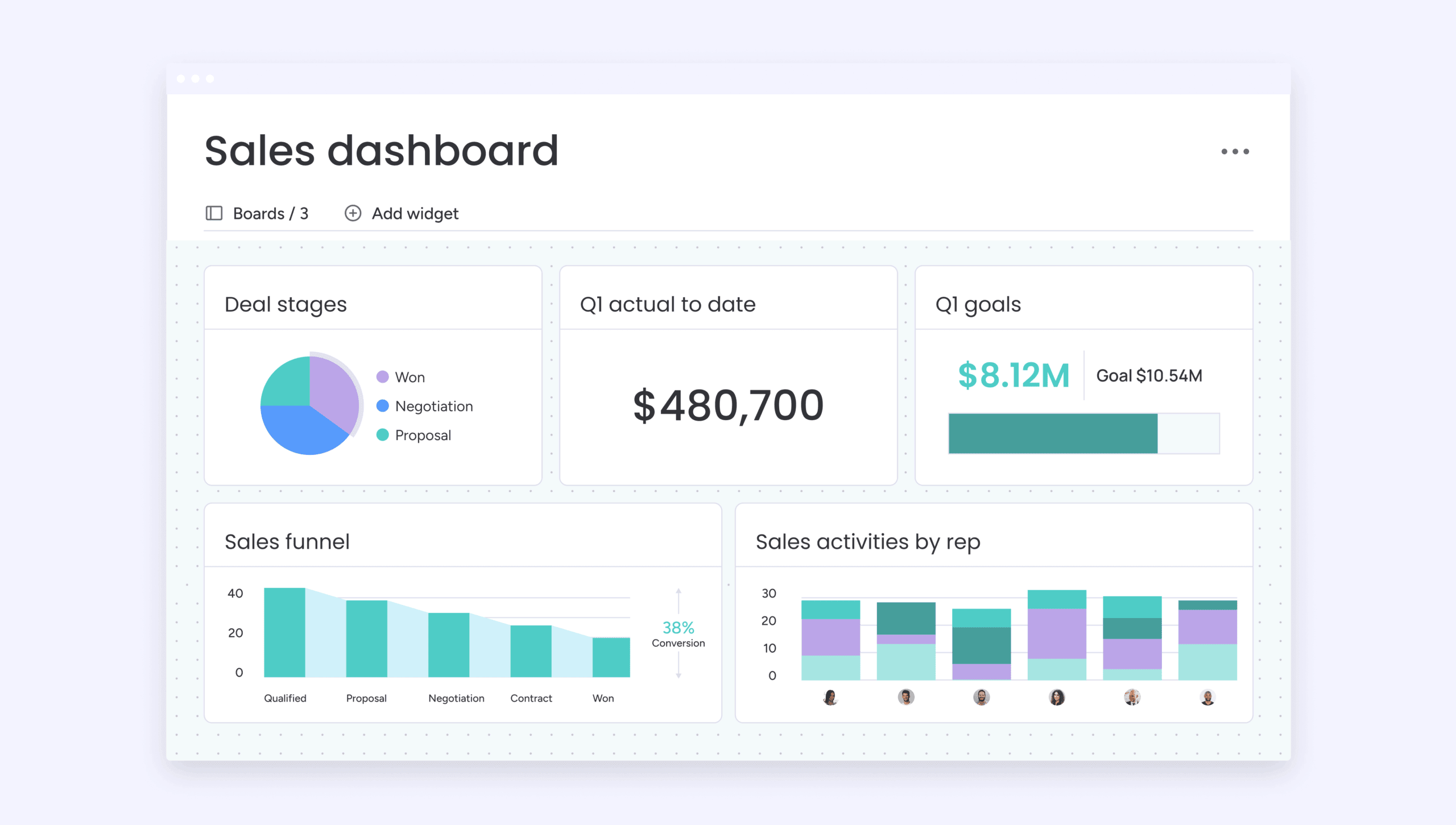
The main role of this software is automating the entire process of finding, capturing, and qualifying leads for your sales team. It means that it replaces the chaos of spreadsheets and manual tracking, freeing your reps from the drudgery of data entry so they can focus on closing deals.
Furthermore, these platforms act as a central hub by pulling leads from every channel (including web forms, social media, and email campaigns) into one organized view. The software can intelligently prioritize the hottest opportunities, ensuring your team engages the right prospects at exactly the right moment.
Where manual tracking creates messy data and kills sales momentum, unified platforms like monday CRM provide a single source of truth. Consequently, this builds a pipeline you can trust and ensures every lead is handled with precision. Rather than forcing you into a rigid framework, these modern tools adapt to your specific process, allowing your team to maintain momentum as you scale.

“With monday CRM, we’re finally able to adapt the platform to our needs — not the other way around. It gives us the flexibility to work smarter, cut costs, save time, and scale with confidence.”
Samuel Lobao | Contract Administrator & Special Projects, Strategix
“Now we have a lot less data, but it’s quality data. That change allows us to use AI confidently, without second-guessing the outputs.”
Elizabeth Gerbel | CEO
“Without monday CRM, we’d be chasing updates and fixing errors. Now we’re focused on growing the program — not just keeping up with it."
Quentin Williams | Head of Dropship, Freedom Furniture
“There’s probably about a 70% increase in efficiency in regards to the admin tasks that were removed and automated, which is a huge win for us.“
Kyle Dorman | Department Manager - Operations, Ray White
"monday CRM helps us make sure the right people have immediate visibility into the information they need so we're not wasting time."
Luca Pope | Global Client Solutions Manager at Black Mountain
“In a couple of weeks, all of the team members were using monday CRM fully. The automations and the many integrations, make monday CRM the best CRM in the market right now.”
Nuno Godinho | CIO at VelvTop sales lead generation software platforms for 2026
The lead generation landscape has evolved significantly. Modern buyers are more informed and selective, requiring sales teams to work with platforms that enhance efficiency rather than create additional complexity.
To meet these demands, an effective platform delivers comprehensive visibility across the entire sales pipeline, from initial contact through deal closure, while automating routine administrative tasks. This enables sales representatives to focus their efforts on high-value activities that drive revenue.
Advanced solutions like monday CRM address these requirements by establishing a unified system of record for all lead data and automating repetitive processes that can slow sales velocity. The result is improved team alignment and more consistent deal execution.
1. monday CRM
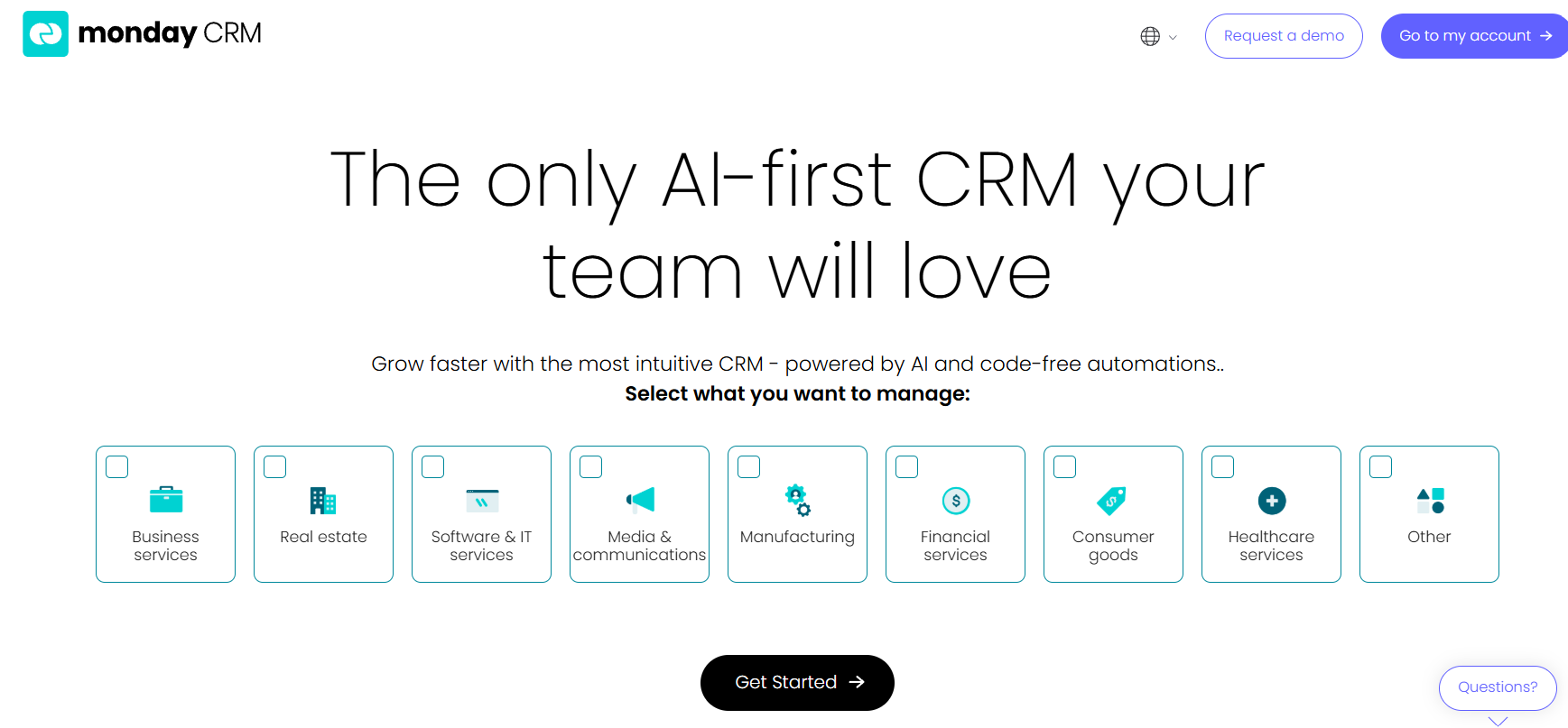
For mid-market revenue teams needing more than basic contact management, monday CRM engineers a predictable pipeline machine out of scattered chaos. It merges visual workflow automation with AI lead scoring, turning prospects into deals with greater speed and precision, no coding required, just results.
Example:
Centralize lead capture from websites, Meta Lead Ads, and email outreach while automating qualification and routing, allowing your team to spend its time closing deals, not chasing data.
Key features:
- WorkForms by monday: create branded web forms that automatically populate lead boards with zero manual data entry.
- Meta Lead Ads sync: import Facebook and Instagram leads directly into your pipeline with automatic campaign optimization tracking.
- AI-powered lead scoring: enterprise-tier AI analyzes lead data to prioritize outreach and identify your hottest prospects.
Pricing:
- Basic: $12/seat/month (billed annually, minimum three seats).
- Standard: $17/seat/month (includes 250 automation actions monthly).
- Pro: $28/seat/month (includes mass email, sequences, and 25k automation actions monthly).
- Enterprise: custom pricing (includes lead scoring, 250k automation actions monthly).
- Annual billing: saves 18%.
- Campaigns (email marketing): priced separately.
Why it stands out:
- Visual pipeline management: drag-and-drop lead boards give you instant visibility into where every prospect stands:no spreadsheets, no guesswork, just a clear path from first contact to closed deal.
- No-code automation: build sophisticated lead routing and follow-up sequences without waiting on IT, make changes in minutes and watch your team move faster immediately.
- AI-powered intelligence: let AI handle lead scoring, generate personalized outreach, analyze email sentiment for buying signals, and surface upsell opportunities so your reps focus on the conversations that close.
- Smart automations and integrations: automatically route leads to the right rep, trigger personalized email sequences at the perfect moment, detect duplicates, and connect seamlessly with 200+ tools including Gmail, Outlook, Zoom, and Slack, plus API access for custom workflows.
- Complete lead lifecycle management: capture leads from every channel in one visual dashboard, convert qualified prospects into active deals with one click while preserving full context, and track which campaigns actually drive revenue to optimize your marketing spend.
2. Salesforce Marketing Cloud
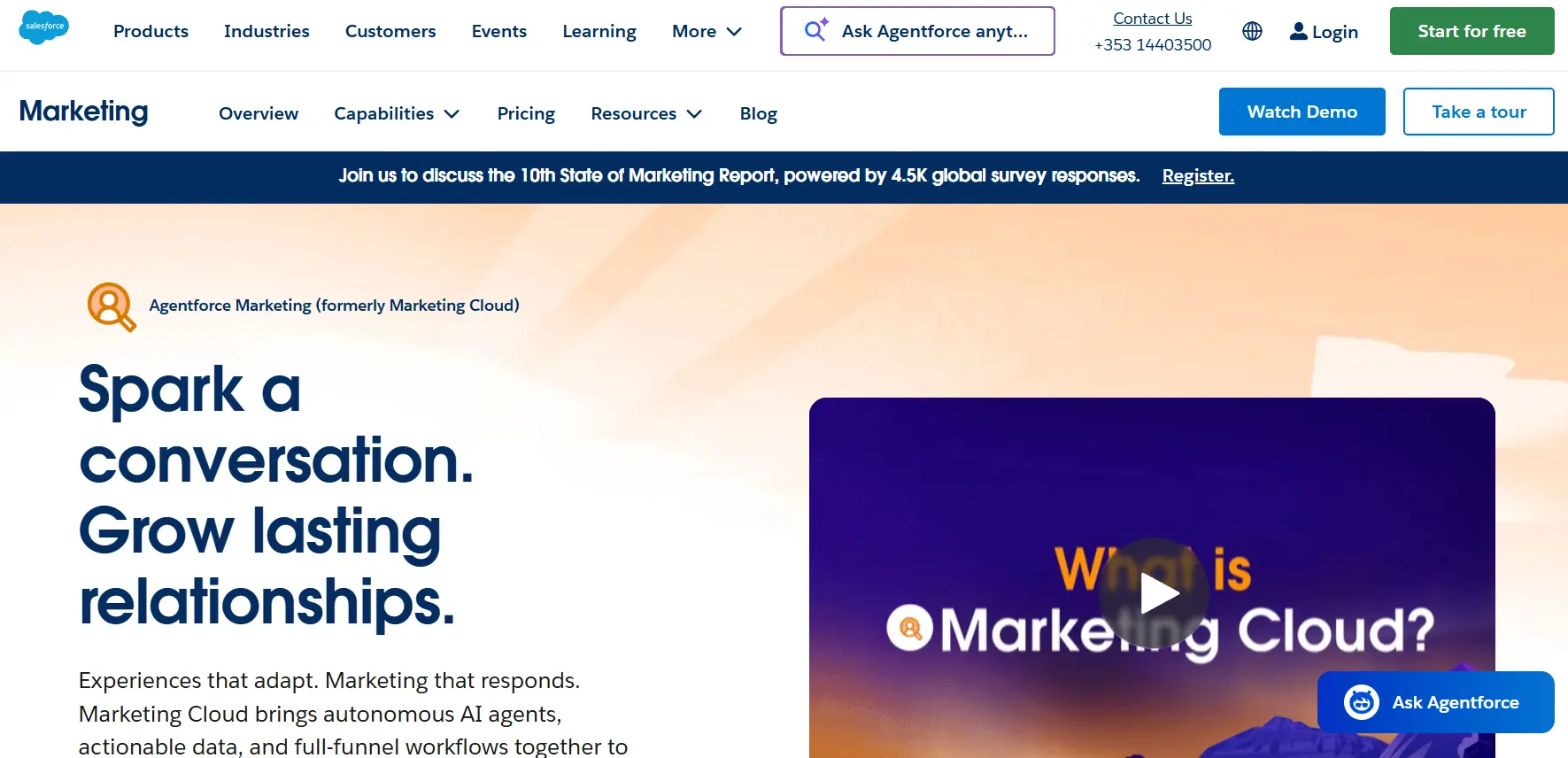
As the go-to choice for large organizations managing intricate sales funnels, Salesforce Marketing Cloud delivers enterprise-grade lead generation through its unified data and AI-powered automation. The platform orchestrates multi-channel campaigns, real-time personalization, and seamless CRM integration.
Example:
This platform is engineered for managing end-to-end lead lifecycles within enterprise teams that demand unified data capture, AI-driven qualification, and automated handoffs to sales.
Key features:
- Multi-channel journey orchestration: build campaigns across email, mobile, web, and paid media with drag-and-drop builders that simplify complex workflows.
- AI-powered lead scoring and qualification: leverage Einstein Scoring and new Agentforce agents to automate lead capture and nurture sequences without manual intervention.
- Native integration with Sales Cloud and Data 360: create unified customer profiles and enable seamless lead handoff between marketing and sales teams.
Pricing:
- Salesforce Starter: $25/user/month (includes basic marketing email and lead routing).
- Marketing Cloud Growth Edition: $1,500/org/month (billed annually).
- Marketing Cloud Advanced Edition: $3,250/org/month (billed annually).
- Account Engagement Growth: $1,250/month for up to 10k contacts (billed annually).
- Account Engagement Plus: $2,750/month (billed annually).
- Account Engagement Advanced: $4,400/month (billed annually).
- Marketing Cloud Engagement Pro+: $2,000/org/month (billed annually).
- Marketing Cloud Engagement Corporate+: $5,500/org/month (billed annually).
- Marketing Cloud Engagement Enterprise+: $30,000/org/month (billed annually).
- Additional costs: for SMS/WhatsApp add-ons, extra contacts, and Premier Success Plan (30% of net license fees).
Considerations:
- Edition quotas and contact limits: can constrain early deployments, often requiring add-ons or higher tiers to scale.
- Complex pricing structure: with multiple products and quote-based enterprise features makes total cost forecasting challenging.
3. HubSpot Marketing Hub
Built on an inbound-first philosophy, HubSpot Marketing Hub transforms how teams capture and nurture leads by combining content marketing with intelligent automation. It is designed for growing businesses aiming to attract high-intent visitors and convert them into qualified prospects without significant technical overhead.
 Example:
 Example:
Marketing Hub is most effective for teams generating leads through content-driven strategies, using automated workflows and integrated CRM data to attract prospects organically rather than chasing them.
Key features:
- Smart forms and landing pages: capture more data over time with progressive profiling that builds richer prospect profiles with each interaction.
- AI-powered lead scoring and qualification: leverage Breeze Customer Agent to automate qualification across chat, WhatsApp, and email without manual intervention.
- Multi-touch attribution and journey analytics: reveal which channels actually drive revenue so you can optimize spend and double down on what works.
Pricing:
- Free: $0/month with basic forms, landing pages, and chatbots.
- Starter: $15/month per seat with email marketing and simple automation.
- Professional: $800/month (includes three seats) with advanced automation and A/B testing.
- Enterprise: $3,600/month (includes five seats) with custom reporting and advanced personalization.
- Professional and Enterprise plans: require onboarding fees ($3,000 and $7,000 respectively).
- Additional costs: for marketing contacts, dedicated IP ($300/month), and other add-ons.
Considerations:
- Legacy pop-up forms and CTA tools: are being phased out, requiring migration to newer systems.
- Advanced features: like progressive fields and detailed analytics are locked behind Pro and Enterprise tiers.
4. Apollo.io
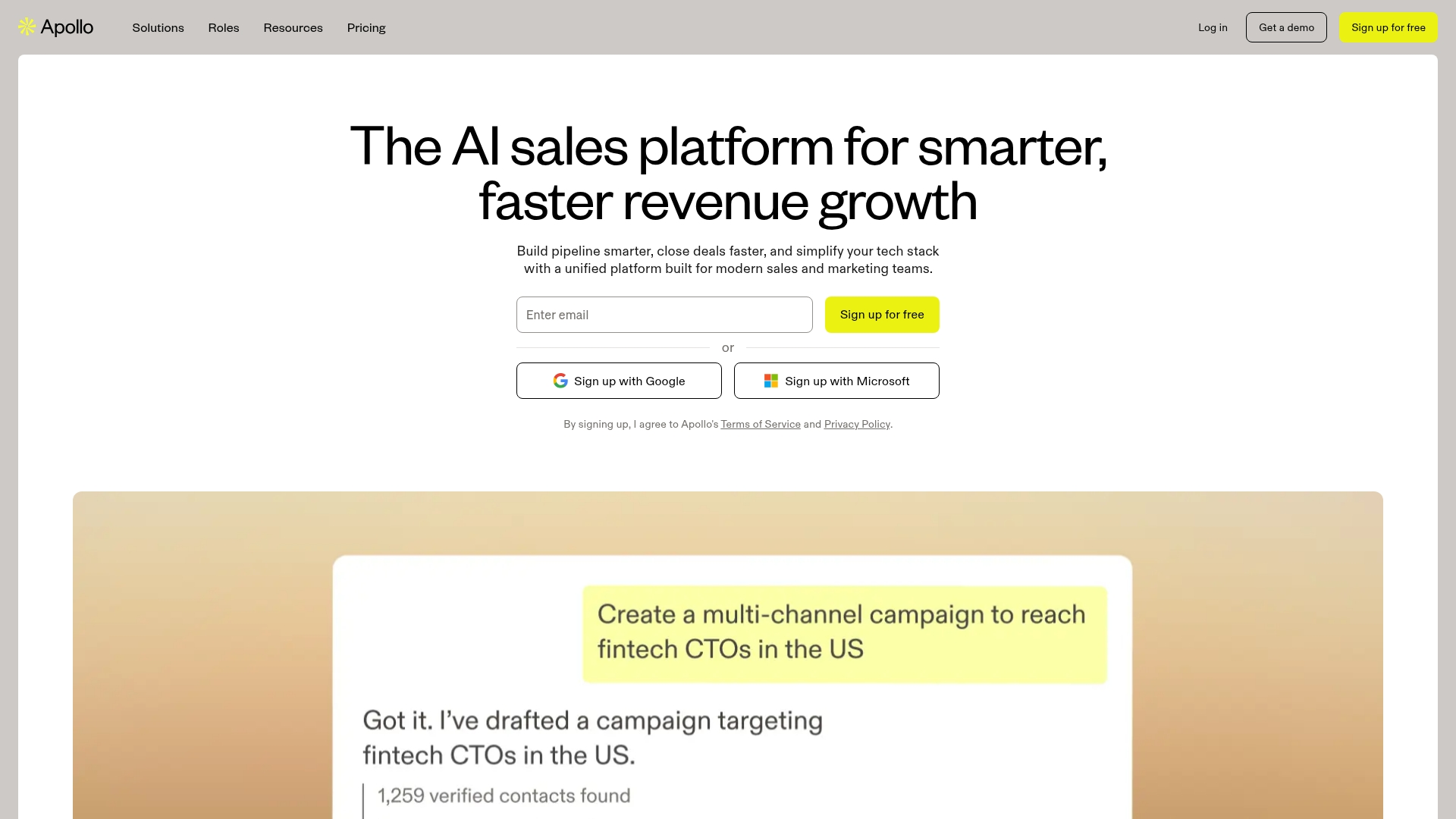
Apollo.io consolidates sales intelligence, prospecting, and engagement into a single, all-in-one workspace. Specializing in data-driven outbound sales, the platform is ideal for teams that need verified contact information and automated outreach sequences. With a database of over 275 million contacts and built-in buying intent signals, Apollo.io empowers sales teams to find, prioritize, and engage prospects without juggling multiple tools.
 Example:
 Example:
The platform is optimized for outbound sales teams that need a unified solution to discover prospects, verify contact details, and execute multi-channel sequences.
Key features:
- Massive contact database: access to 275+ million verified contacts and 73 million companies with 65+ search filters.
- Chrome extension prospecting: find and verify emails directly on LinkedIn, company websites, and CRM platforms.
- Multi-channel sequences: combine email, phone calls, and LinkedIn outreach with AI-powered automation.
Pricing:
- Free: basic access with limited credits and features.
- Basic: starting around $39–49/user/month with expanded contact access.
- Professional: higher-tier plan with advanced features and more credits.
- Custom/Organization: enterprise pricing available on request.
- Usage-based credits: apply for email verification, enrichment, and dialer features.
- Annual billing: typically offers discounts.
Considerations:
- Data accuracy: can vary by region and industry, with some users reporting outdated contacts.
- Credit-based system: means “unlimited” plans still have usage caps that may limit high-volume teams.
5. ZoomInfo
Precision targeting is the core of ZoomInfo, a platform that weaponizes comprehensive B2B data and market intelligence. By combining massive company databases with real-time intent signals, it has become the definitive choice for enterprise sales teams needing to identify and engage high-value accounts at scale.

Example:
Sales teams leverage ZoomInfo to pinpoint in-market prospects using intent data and comprehensive company profiles, which enables faster pipeline creation and more strategic account targeting.
Key features:
- Real-time buyer intent signals: with predictive scoring to prioritize accounts most likely to purchase.
- Comprehensive B2B database: with 300+ company and contact attributes plus organizational hierarchies.
- Embedded sales engagement tools (ZoomInfo Engage): for seamless outreach without app-switching.
Pricing:
- Custom quote-based pricing: tailored by product bundle, seats, and usage credits.
- Packages: typically start in the mid-five figures annually for multi-user deployments.
- Additional costs: for add-ons like Intent data, Web visitor identification, and AI Copilot features.
- Average reported discount: of 15% with negotiation leverage at quarter/year-end.
Considerations:
- High cost structure: with credit-based consumption can lead to unexpected overages and complex total cost calculations.
- Data accuracy: varies by segment, with some users reporting mixed results in lead quality and direct-dial phone number reliability.
6. Leadfeeder
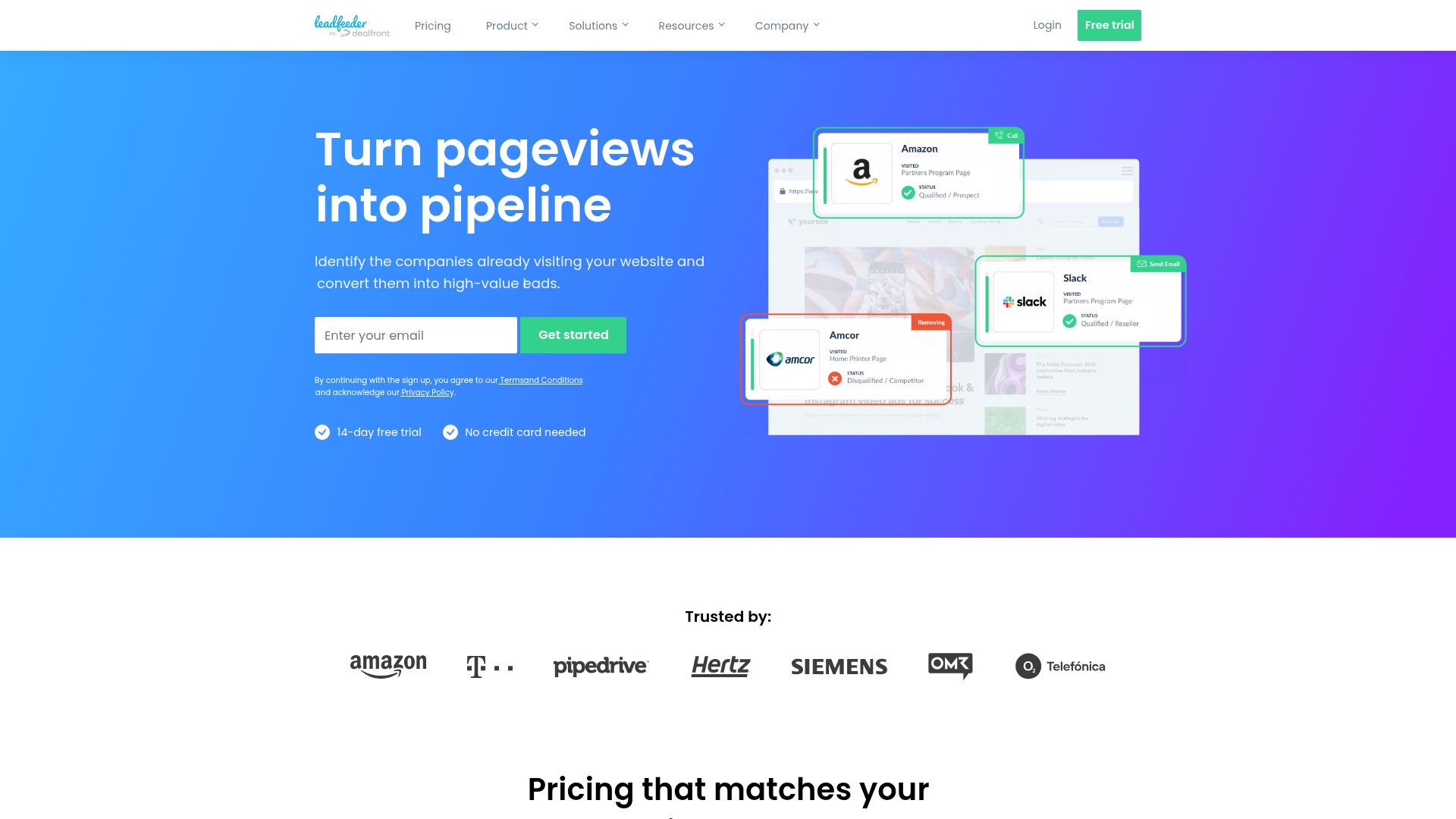
According to Source, Year, up to 98% of website visitors never fill out a form. What if you could identify them? Leadfeeder’s reverse IP technology makes that possible, turning anonymous traffic into actionable sales leads. The platform is ideal for B2B teams looking to convert latent interest by identifying which companies visit their site and what content they engage with.
Example:
 Example:
By identifying and prioritizing companies that show genuine interest by visiting their website, Leadfeeder enables sales teams to follow up faster on warm prospects.
Key features:
- Real-time company identification: from website traffic with daily-updated IP database.
- Behavioral lead scoring: based on pages viewed, time spent, and engagement patterns.
- Native CRM integrations: with automatic lead sync and instant notifications via email or Slack.
Pricing:
- Free plan: unlimited users, last seven days of data, up to 100 identified companies.
- Paid plans: starting at $99/month (annual billing) for 50 identified companies.
- Enterprise tiers: scale up to $1,199/month for 40,000 identified companies.
- 14-day free trial: available with no credit card required.
- Annual billing: saves 30% compared to monthly plans.
Considerations:
- Company-level identification: rather than individual visitor tracking may limit personalization opportunities.
- Data accuracy: can vary depending on visitor network setup, particularly for mobile users or VPN connections.
7. Seamless.AI
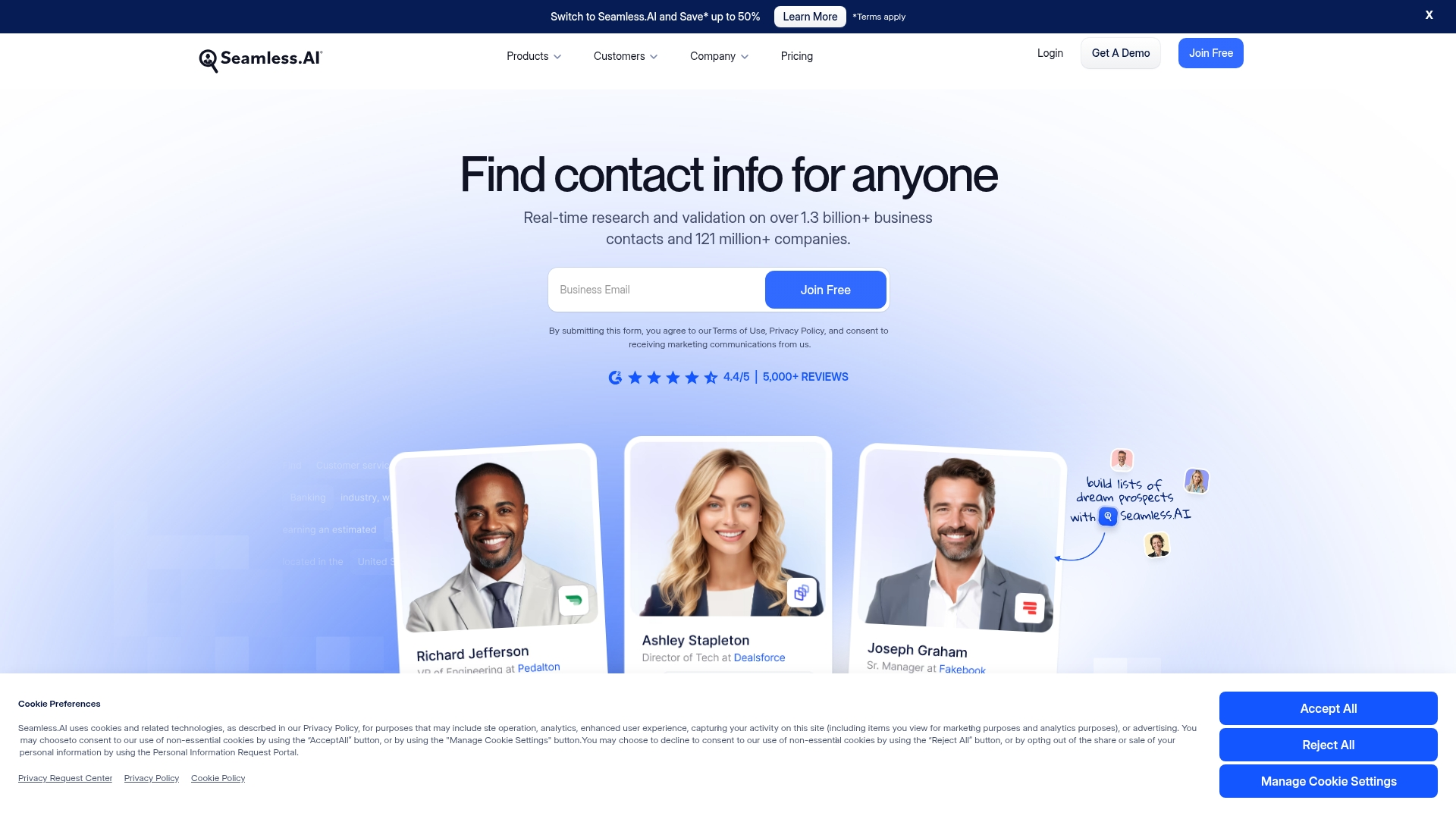
You can now find fresh, accurate prospect data in real time. Seamless.AI leverages AI-powered, real-time contact discovery and automated list building, making it perfect for sales teams who need to eliminate the manual research that slows them down.
Example:
 Example:
This tool empowers sales teams to discover verified contact information and construct highly targeted prospect lists through its AI-powered search and automated data enrichment capabilities.
Key features:
- Real-time contact search with 100+ filters: build targeted prospect lists and reveal AI-validated emails and phone numbers.
- Chrome extension: captures contact data from LinkedIn and any website, pushing information directly to your CRM.
- Autopilot automation: bulk-builds thousands of contacts from your criteria and auto-imports them to CRMs and engagement tools.
Pricing:
- Free: one user, 50 credits, core contact search.
- Basic/Single-user: 250 credits/month (pricing available upon request).
- Pro (teams): 1,000 credits/day for 5+ license tiers (pricing available upon request).
- Enterprise/Custom: quote-only with advanced admin and success resources.
- Add-ons available: Data Enrichment, Autopilot, Job Changes, Buyer Intent Data, API.
- Annual billing: discounts offered.
Considerations:
- Data accuracy: can vary despite validation claims, with users reporting bounce issues especially for smaller businesses.
- Credit-based pricing model: creates unpredictability for high-volume prospecting teams, and many advanced features require additional add-on purchases.
8. Intercom
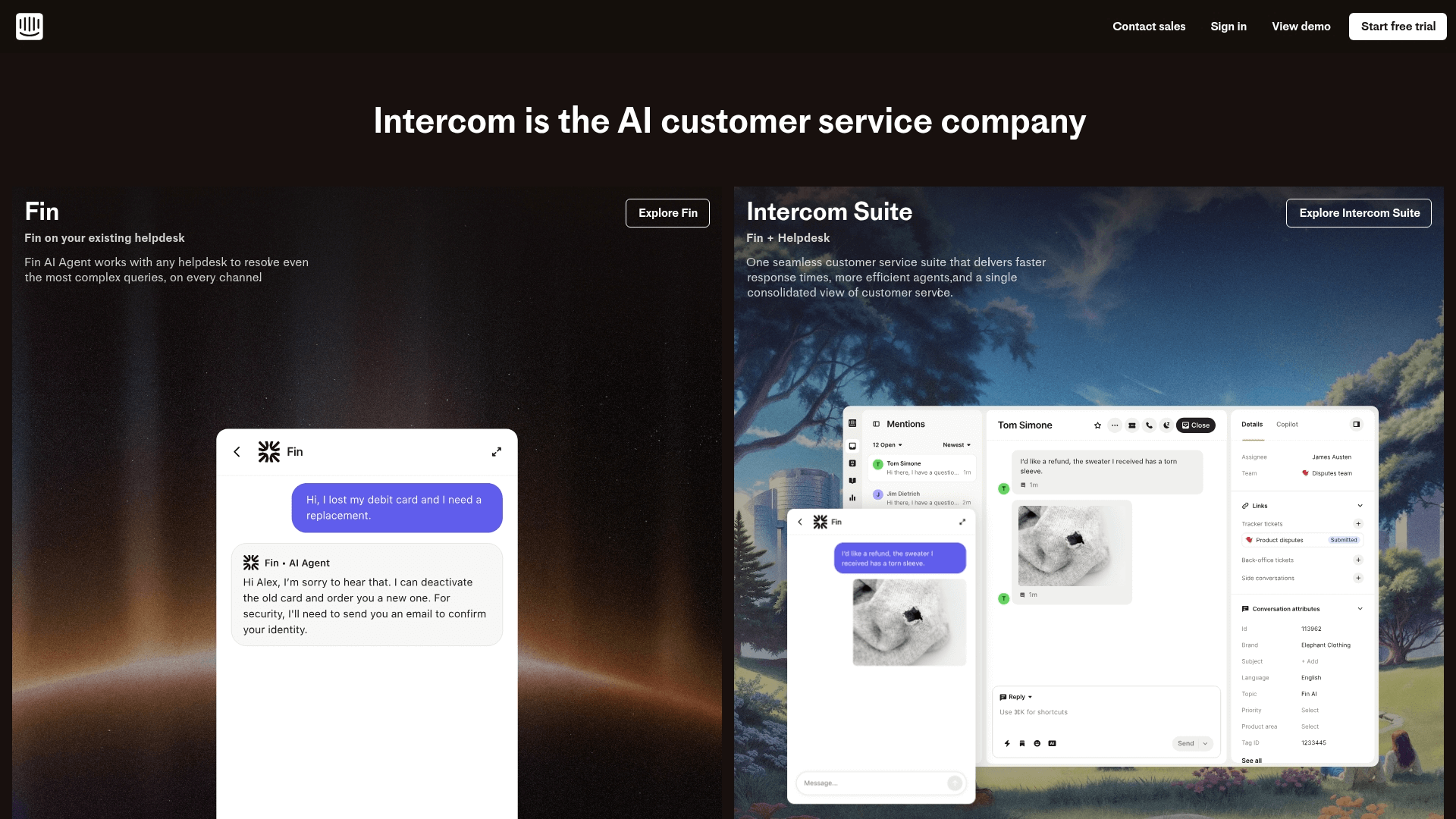
By placing conversation at the heart of the sales process, Intercom’s AI-powered chat platform turns website visitors into qualified leads in real time. It combines live chat, intelligent chatbots, and automated messaging to capture high-intent prospects directly on your website or app, allowing teams to engage opportunities the moment they arise.
Example:
 Example:
The platform excels at conversational lead generation, employing AI-powered chat and proactive messaging to capture, qualify, and route leads instantly while they are actively engaged on your site.
Key features:
- Custom chatbots with A/B testing: engage high-intent visitors from pricing pages, demo buttons, and key conversion points.
- Automatic lead qualification and routing: with CRM sync to Salesforce and HubSpot for seamless handoffs.
- Proactive messaging campaigns: across multiple channels including SMS, WhatsApp, email, and in-app notifications.
Pricing:
- Essential: $29/seat/month (billed annually).
- Advanced: $85/seat/month (billed annually).
- Expert: $132/seat/month (billed annually).
- Fin AI Agent: $0.99 per resolution (50-resolution monthly minimum).
- Proactive Support Plus: $99/month base fee plus usage-based messaging.
- Early Stage Program: offers up to 93% first-year discounts for qualifying startups.
Considerations:
- Advanced features like product tours, surveys, and multi-channel campaigns: require the Proactive Support Plus add-on, which adds $99/month plus usage fees.
- Costs can scale quickly: with high-volume outbound messaging across SMS, WhatsApp, and phone channels, making it potentially expensive for large-scale campaigns.
The case for a more efficient approach to lead management
Sales representatives spend a significant portion of their workday on administrative tasks rather than selling activities. Time allocated to manual data entry and contact research creates bottlenecks that slow pipeline velocity and reduce forecast accuracy. As a result, when high-performing team members are occupied with administrative work, deal progression stalls and revenue predictability diminishes.
To solve this, modern lead generation software automates these routine tasks, returning valuable time to sales representatives while transforming disorganized lead data into a structured, predictable revenue pipeline. The platform eliminates uncertainty by providing comprehensive visibility into every lead and opportunity throughout the sales cycle.
This unified approach aligns sales and marketing teams around shared data and objectives, resolving ongoing challenges related to lead quality and handoff processes. With complete pipeline visibility, teams can accelerate deal velocity, improve cross-functional collaboration, and achieve revenue targets with greater consistency.

Fueling your pipeline, not your busywork
What distinguishes a basic contact list from a high-velocity pipeline? Effective lead generation solutions do more than collect contact information: they connect every touchpoint from initial engagement to closed deal, transforming prospect interest into measurable revenue opportunities. The distinction lies in features that enable teams to operate more efficiently, rather than adding complexity to existing lead generation workflows.
This requires capturing leads from multiple channels while maintaining data integrity. It involves leveraging AI to identify the most promising opportunities, eliminating guesswork, and utilizing dashboards that provide real-time performance insights. When systems are properly integrated, teams can focus on qualified prospects and close more substantial deals.
Intuition alone does not drive results, but real-time data does.
How does AI transform lead generation?
In today’s high-velocity market, manual tasks create operational friction that causes high-value leads to lose momentum. To combat this, AI has transitioned from a futuristic concept to a strategic necessity, functioning as a tool that enhances productivity without adding unnecessary complexity.
By integrating AI into your lead generation framework, you can transform your sales operation in three key ways:
-
Predictive lead intelligence: rather than relying on intuition, AI analyzes historical deal data and real-time behavioral signals to predict purchase readiness. Consequently, it automatically routes qualified prospects to the right representatives at exactly the right time.
-
Personalization at scale: this approach goes far beyond simply increasing email volume. Instead, it leverages data to deliver targeted, personalized outreach that resonates with individual prospects’ unique pain points.
-
Strategic resource allocation: by delegating repetitive tasks (such as data entry, scheduling, and routine follow-ups) to AI, your reps reclaim their workday. As a result, they can stop managing spreadsheets and start focusing on their core strength: closing deals.
Ultimately, equipping your team with these actionable insights ensures that every minute spent is a minute moving closer to a conversion.
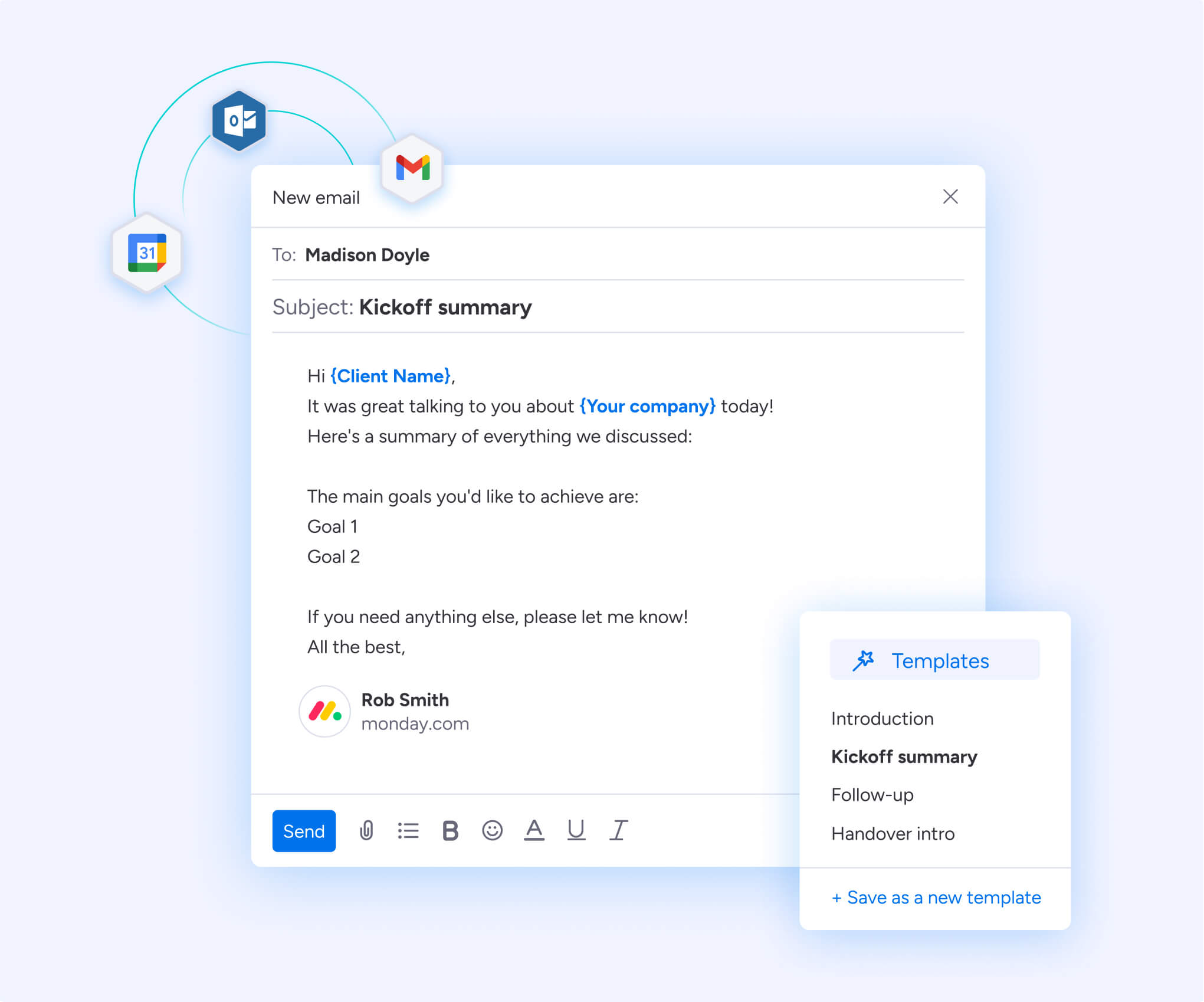
B2B vs. B2C lead generation
Selling to a business differs fundamentally from selling to an individual consumer. B2B sales typically involve extended sales cycles and multiple decision-makers, while B2C transactions focus on faster purchasing decisions made by individual buyers.
To be effective, your lead generation software should align with your specific sales approach. B2B teams require comprehensive account visibility to navigate complex deal structures. In contrast, B2C teams benefit from automation that efficiently converts high-volume leads into customers.
An effective platform adapts to your sales methodology rather than constraining it. Whether you’re cultivating long-term account relationships or executing rapid individual sales, modern solutions like monday CRM provide the visibility and automation needed to execute your strategy effectively.
| Dimension | B2B Lead Generation | B2C Lead Generation |
|---|---|---|
| Sales cycle | Longer cycles, team decisions | Short cycles, individual buyers |
| Buyer type | Entire accounts, buying committees | Individual consumers |
| Tooling focus | Deep CRM & account-level data | E-commerce & high-volume automation |
| Data needs | Company and intent data | Customer behavior & purchase data |
| Compliance | Business data regulations | Consumer privacy laws (GDPR, CCPA) |
7 steps to choose your lead generation platform
Choosing the right lead platform is a critical decision that accelerates wins and reduces manual work. Your team deserves a tool that actually helps them sell. The main goal is to find the right platform for your team.
Therefore, follow these seven steps to cut through the marketing noise. This framework gives you a clear path to evaluate platforms based on what really matters: your goals, your team, and your bottom line. Zero guesswork, just a straightforward plan.
Step 1: audit your current tech stack
Firstly, map out the tools your team uses every day. See where data gets stuck, where reps waste time copying and pasting, and where your reports fail to connect the dots. These gaps aren’t minor annoyances, but rather the momentum killers.
This audit is your evidence for what needs to change. It creates a clear baseline so you can measure exactly how much a new platform improves your workflow. No more patching together broken systems.
Step 2: define clear lead generation goals
Once the audit is complete, you must move away from vague objectives, as they rarely lead to measurable results. It is essential to get specific: determine exactly how many qualified leads you need each month and identify your target conversion rates. Because these numbers act as your compass for success, the right platform should make tracking them feel effortless.
As a result, clear dashboards will provide real-time answers on pipeline health, allowing you to know instantly what is working and what requires adjustment.
Step 3: evaluate implementation requirements
While a “quick setup” is often promised, these projects can easily spiral into months of technical headaches if not vetted properly. Therefore, you must ask hard questions: What internal resources do we need? How much training will the team require? What’s the real timeline to get this thing running?
Remember, a tool no one uses is just expensive shelfware. The best platform is one your team actually wants to use. Prioritize a clean interface and great support that makes adoption feel easy.
Step 4: calculate total cost of ownership
It is critical to remember that the subscription fee is just the beginning of your investment. To avoid the hidden fees that act as a budget’s worst enemy, you must factor in the total cost of implementation, training, and maintenance.
Furthermore, you should consider how these costs will evolve as you grow. Since a platform that is affordable for ten users might become unsustainable for fifty, you should run the numbers against your long-term growth plans to ensure there are no surprises down the road.
Step 5: test for team adoption
The trial period tells you everything. Is the platform intuitive? Does it solve real, daily problems for your reps? If your team finds workarounds instead of using the tool, that’s a red flag.
Because, adoption is essential to platform success, even the most advanced features deliver no value if they remain unused. Gather feedback from your team throughout the evaluation process, as their engagement and buy-in will determine whether the implementation succeeds.
Step 6: verify integration capabilities
Your tools must talk to each other. Period. Faulty integrations guarantee manual work, messy data, and frustrated teams. Verify that the platform connects seamlessly to the tools you already rely on.
Instead of simply checking a box for API availability, you should verify that the platform connects smoothly to your existing ecosystem. A good integration makes your entire sales process feel connected and smooth. A bad one just creates another silo.
Step 7: confirm scalability
Finally, you must ensure the platform can keep pace with your business as it scales. You should investigate whether the system will maintain its speed as users and data volume increase.
Since you are choosing a partner for the long haul rather than a temporary fix, it is essential to look for a flexible solution built to evolve. In the end, you should select the platform that supports where your organization is going, not just where it stands today.
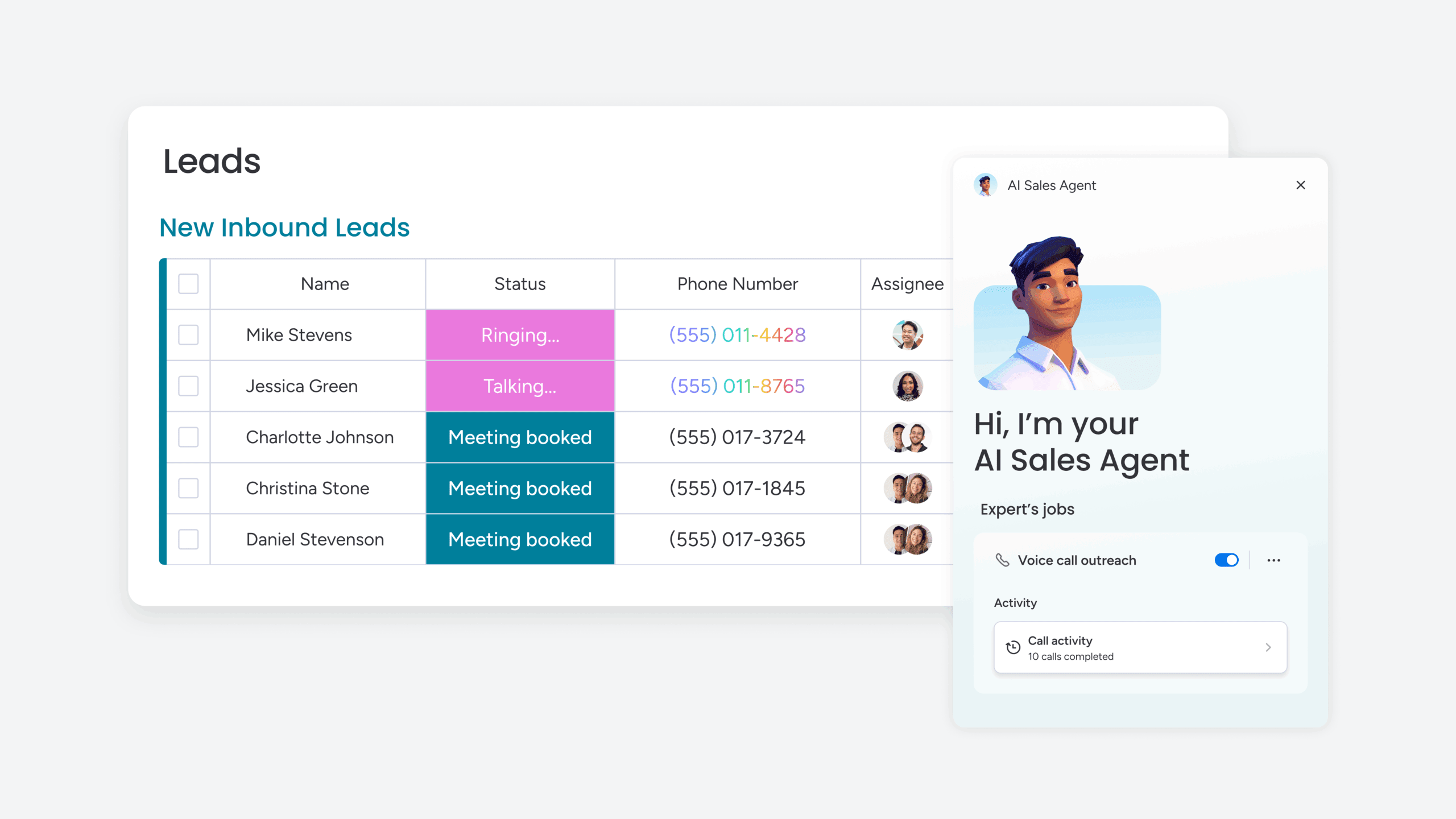
Rapid implementation with minimal technical overhead
Sales teams require solutions that can be deployed quickly without disrupting ongoing operations. For this reason, platforms like monday CRM are designed for rapid implementation, enabling teams to become operational within days rather than months, without requiring extensive IT resources or external consultants.
The platform features a no-code architecture with intuitive drag-and-drop functionality, allowing teams to customize workflows and configure pipelines efficiently. This approach eliminates technical barriers and accelerates time-to-value.
User adoption is critical to platform success. Modern solutions drive natural adoption by delivering immediate, tangible value through workflow automation and actionable insights that directly support sales activities and improve outcomes.
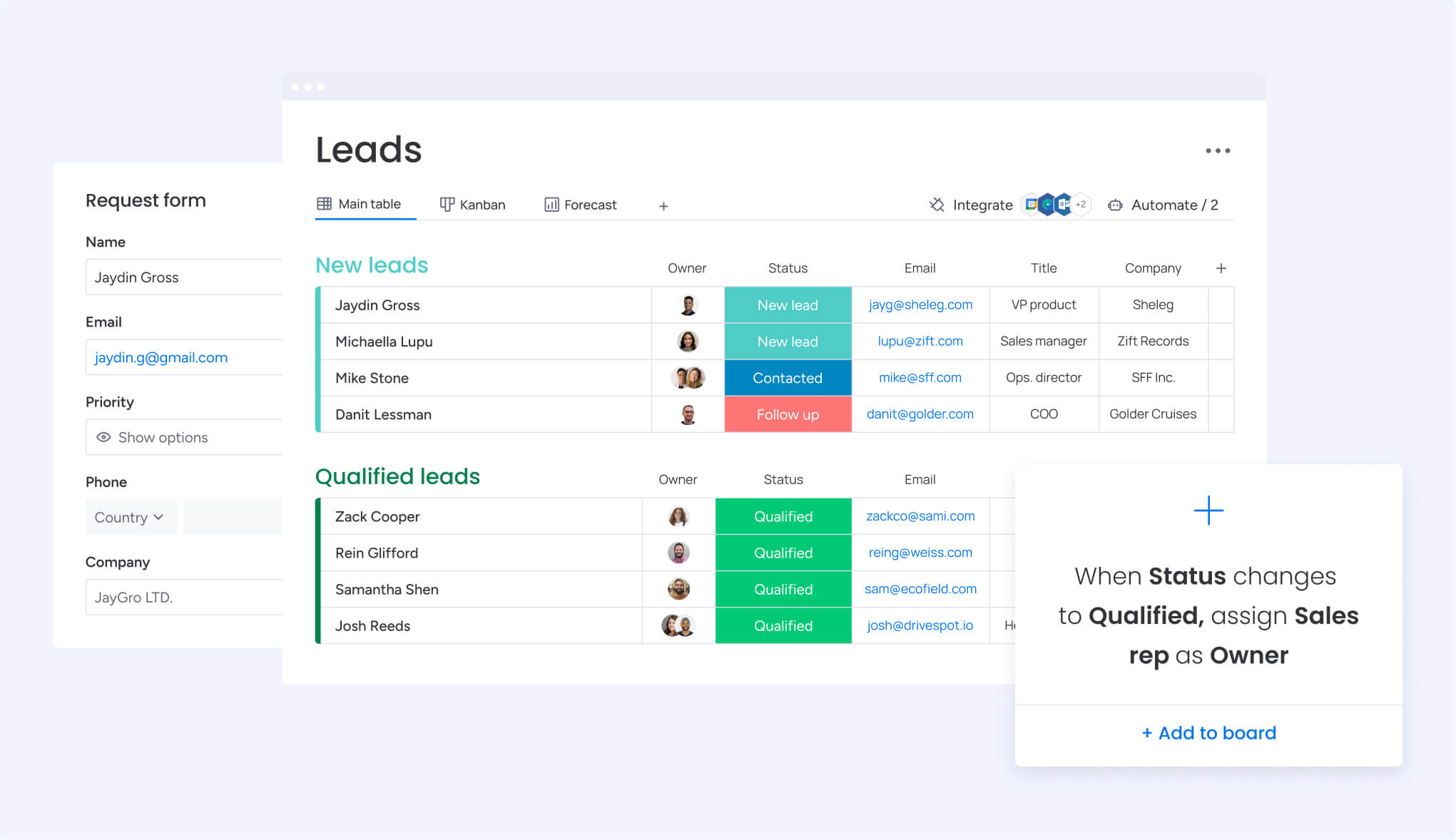
Maximizing ROI from lead generation platforms
It is a common misconception that more leads automatically equal more revenue. In reality, the true win comes from tracking the metrics that actually drive growth: lead quality, deal velocity, and conversion rates. The goal is to fill your pipeline with future customers rather than simply accumulating a list of stagnant contacts.
To achieve this, you must stop chasing vanity metrics. High-value data like customer lifetime value and true revenue attribution show you what’s really working. Get all your insights on one clear dashboard to make faster, smarter decisions.
Let automation handle the repetitive work so your team can focus on what they do best: closing deals. With the right workflows in place, you can grow revenue and handle more leads without adding headcount. That’s how you scale without the chaos.
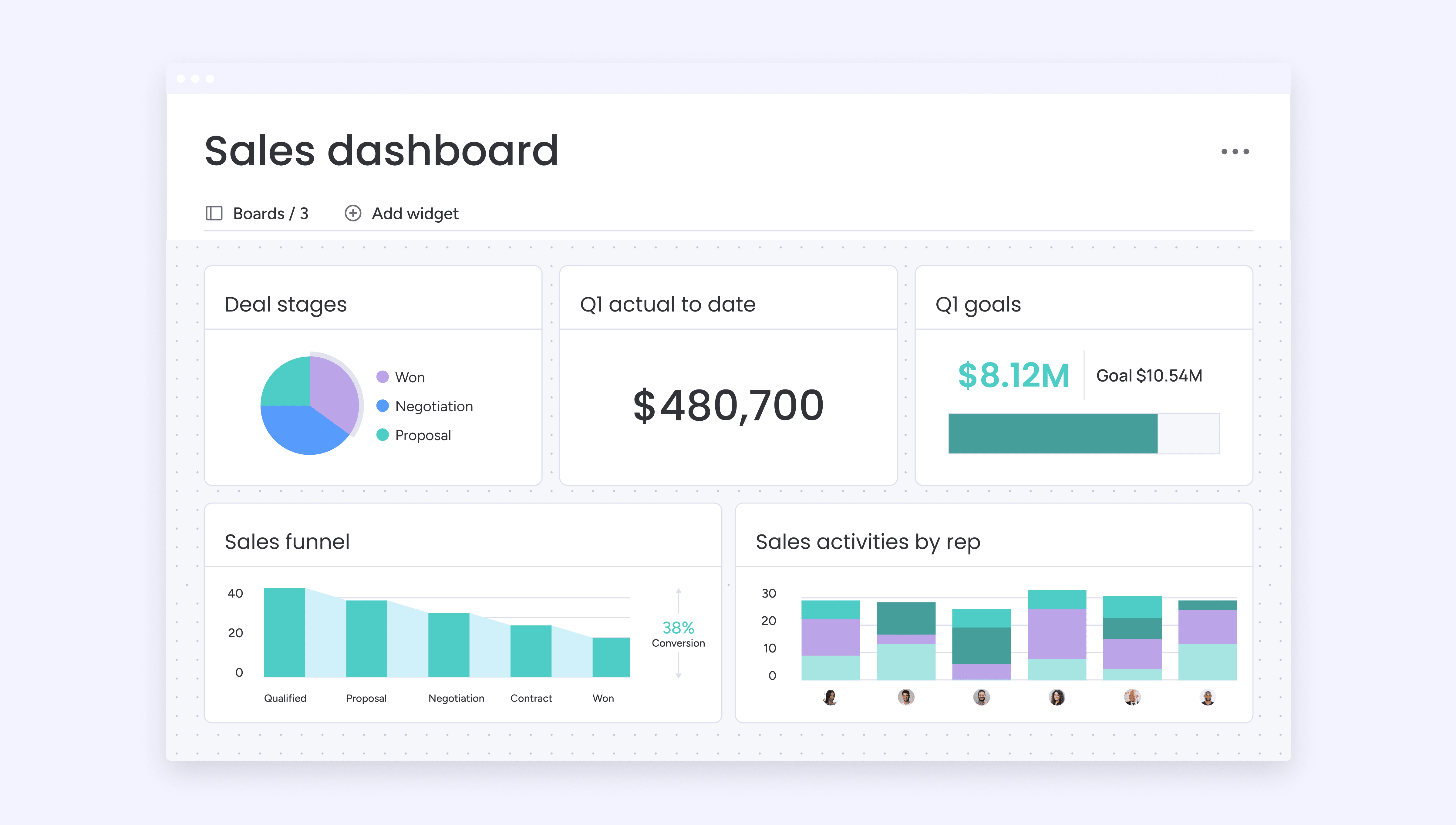
Change lead generation with monday CRM
When clunky software forces your team to fight the system instead of selling, momentum dies and deals stall. In contrast, monday CRM brings your entire sales process together in one cohesive, intuitive workspace. By doing so, it ensures that handoffs are seamless and high-value leads never fall through the cracks again.
Furthermore, you can finally let AI handle the tedious tasks your team hates. By automating lead scoring, follow-ups, and scheduling, you give your reps hours back to focus on building relationships. The system works right alongside your team, identifying the best opportunities in real-time without forcing you to change how you work.
Ultimately, you can forget about waiting months to see a return on your investment. With our no-code platform, you can build and launch your ideal workflows in days, not quarters. As a result, your team puts wins on the board immediately, building the confidence and momentum you need to scale.
The content in this article is provided for informational purposes only and, to the best of monday.com’s knowledge, the information provided in this article is accurate and up-to-date at the time of publication. That said, monday.com encourages readers to verify all information directly.
Frequently asked questions
How quickly can sales lead generation software be implemented?
The implementation timeline for sales lead generation software depends on the platform. With a no-code platform, your team can be live in days, while more complex systems can take weeks or months to configure.
Do I need technical skills to use lead generation platforms?
No technical skills needed. Modern platforms like monday use intuitive, drag-and-drop interfaces so your team can start working immediately.
What's the average ROI timeline for lead generation software?
Expect to see ROI in one to three months, but only if your team fully adopts the platform. The software works when your team does.
How do lead generation platforms integrate with existing CRM systems?
Good platforms connect directly to your other tools to sync data automatically. Your systems talk to each other so your team can focus on selling, not data entry.
Should I use different platforms for B2B and B2C lead generation?
Not if the platform is flexible enough for both. Choose the software that best fits your primary sales model, whether B2B or B2C.
What separates lead generation software frommarketing automation platforms?
Lead gen software captures and qualifies prospects for sales. Marketing automation handles broader campaigns and nurturing — they're partners, not rivals.

 Get started