


Most sales teams don’t lose deals because they lack talent. They lose them because good leads go cold, follow-ups get missed, and reps spend half their day on admin instead of actually selling. The problem isn’t your people, but friction that’s slowing them down.
The opportunity isn’t in hiring more people. It’s in removing the bottlenecks that keep your existing team from closing deals. In this article, we’ll cover 10 strategies to help your team convert more leads, shorten deal cycles, and grow revenue with the team you already have.You’ll also find the three metrics that reveal where your pipeline leaks, plus how a centralized platform like monday CRM makes these strategies easier to execute.
Key takeaways
- Focus on the leads most likely to close: Score leads by fit, intent, and engagement so reps spend time on deals that actually move forward.
- Automate the repetitive stuff: Triggered follow-ups and lead routing keep deals moving without reps lifting a finger.
- Use AI to do more with the same team: AI agents qualify leads, book meetings, and handle routine outreach around the clock.
- Track the metrics that predict revenue: Conversion rate, win rate, and sales cycle length tell you exactly where your process needs work.
- Centralize workflows in one platform: Unified lead scoring, AI agents, and dashboards eliminate scattered information and missed opportunities.
What it means to maximize sales opportunities
Sales opportunity management means converting more leads, shortening deal cycles, increasing average deal value, and reducing the number of opportunities that slip through the cracks. Every qualified lead gets followed up on time. Deals move through the pipeline without delays. Reps spend their time on work that actually drives revenue.
For sales teams facing rising quotas and flat budgets, this is how you hit targets instead of falling short.
The “without adding headcount” constraint reflects reality for most revenue teams. Budgets are tight, ramp time is long, and adding bodies doesn’t solve underlying process problems. The alternative? Work smarter. Use automation to kill manual tasks, AI to handle high-volume work, and repeatable processes so nothing slips away.
Teams that nail this close more deals with the same headcount. Instead of relying on individual heroics, they build repeatable processes, use tech to scale, and let data drive faster decisions.
10 ways to maximize sales opportunities without adding headcount
The strategies below cover the full sales cycle, from lead prioritization to post-sale expansion. Each one helps your team do more with what they already have. Use them together and the results compound.
1. Prioritize leads using fit, intent, and engagement data
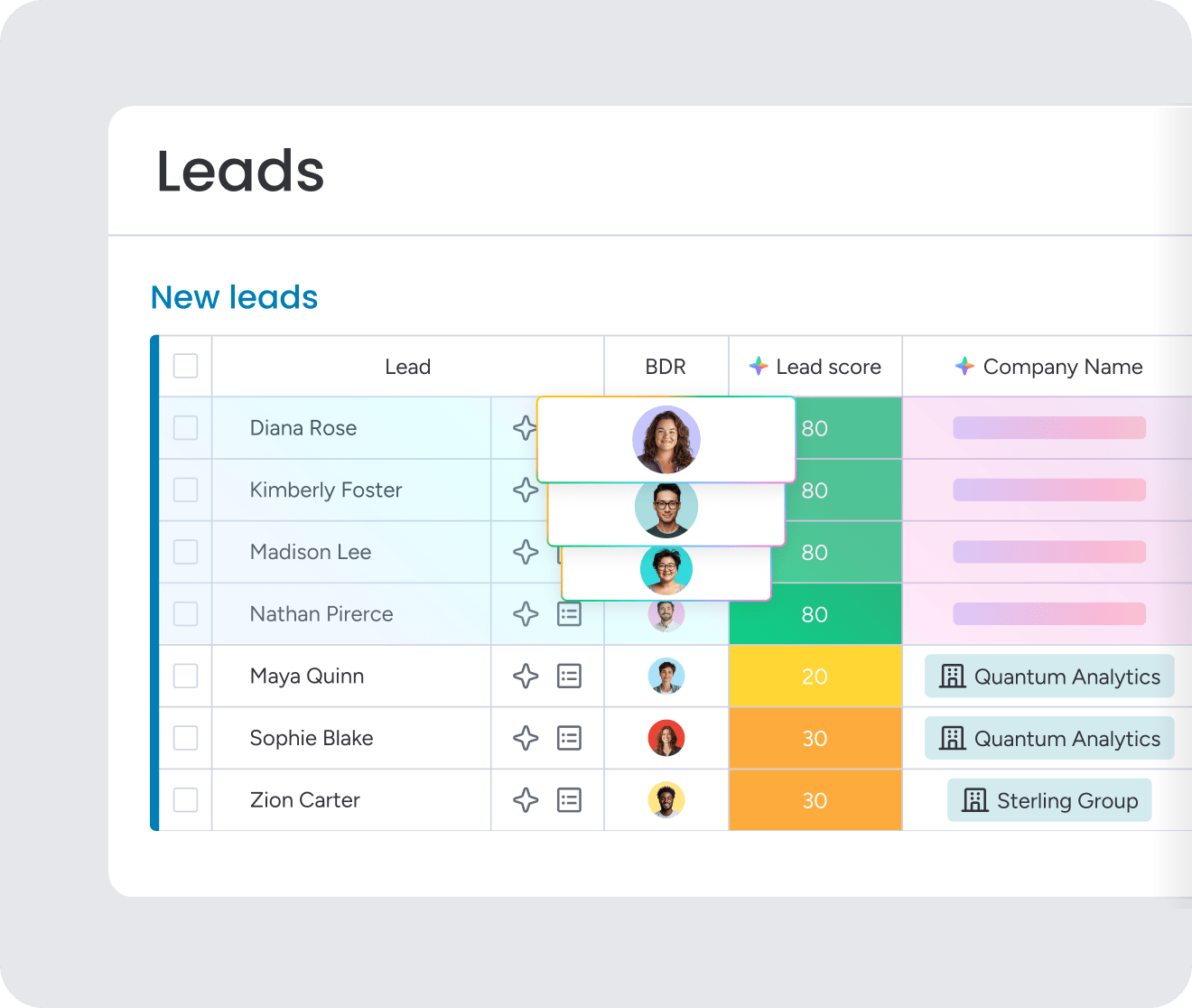
Not all leads deserve equal attention. The fastest way to increase conversion without adding reps is to focus on the opportunities most likely to close and deprioritize the rest.
Three things determine lead priority. Know them, and reps spend time where it counts:
- Fit: The lead matches your ideal customer profile based on industry, company size, role, and budget signals.
- Intent: The lead actively researches solutions through website visits, content downloads, pricing page views, and demo requests.
- Engagement: The lead responds to outreach through email opens, replies, meeting acceptances, and call-backs.
What this looks like in practice: A rep receives 50 new leads on Monday. Without prioritization, they work them randomly and book one meeting by Friday. With scoring based on fit, intent, and engagement, they focus on the 12 high-priority leads first and book three meetings by Tuesday.
Revenue teams using monday CRM automatically score and route leads to the right rep. The platform’s AI analyzes all three at once, so your best opportunities never sit waiting.
2. Automate follow-ups so no lead goes cold
Manual follow-up is the biggest reason leads go cold. Reps juggle competing priorities, making it hard to time every touchpoint perfectly. Deals stall less because prospects lose interest and more because the next touchpoint never happens.
Automation fixes this. Every lead gets followed up on time, every time. Here’s what effective automation looks like:
- Triggered emails: Follow-ups send automatically two days after a demo, one week after a proposal, or whenever a lead takes a specific action.
- Workflow reminders: Reps receive notifications when a lead goes cold, a deal stalls, or a follow-up is overdue.
- Multi-touch sequences: Leads enroll in cadences that combine email, phone, and LinkedIn touches without manual tracking.
What this looks like in practice: A lead downloads a pricing guide but doesn’t book a call. An automated sequence sends a follow-up email the next day, a relevant case study three days later, and a calendar link one week later. The rep doesn’t lift a finger until the lead responds.
3. Use AI sales agents to qualify leads and book meetings around the clock
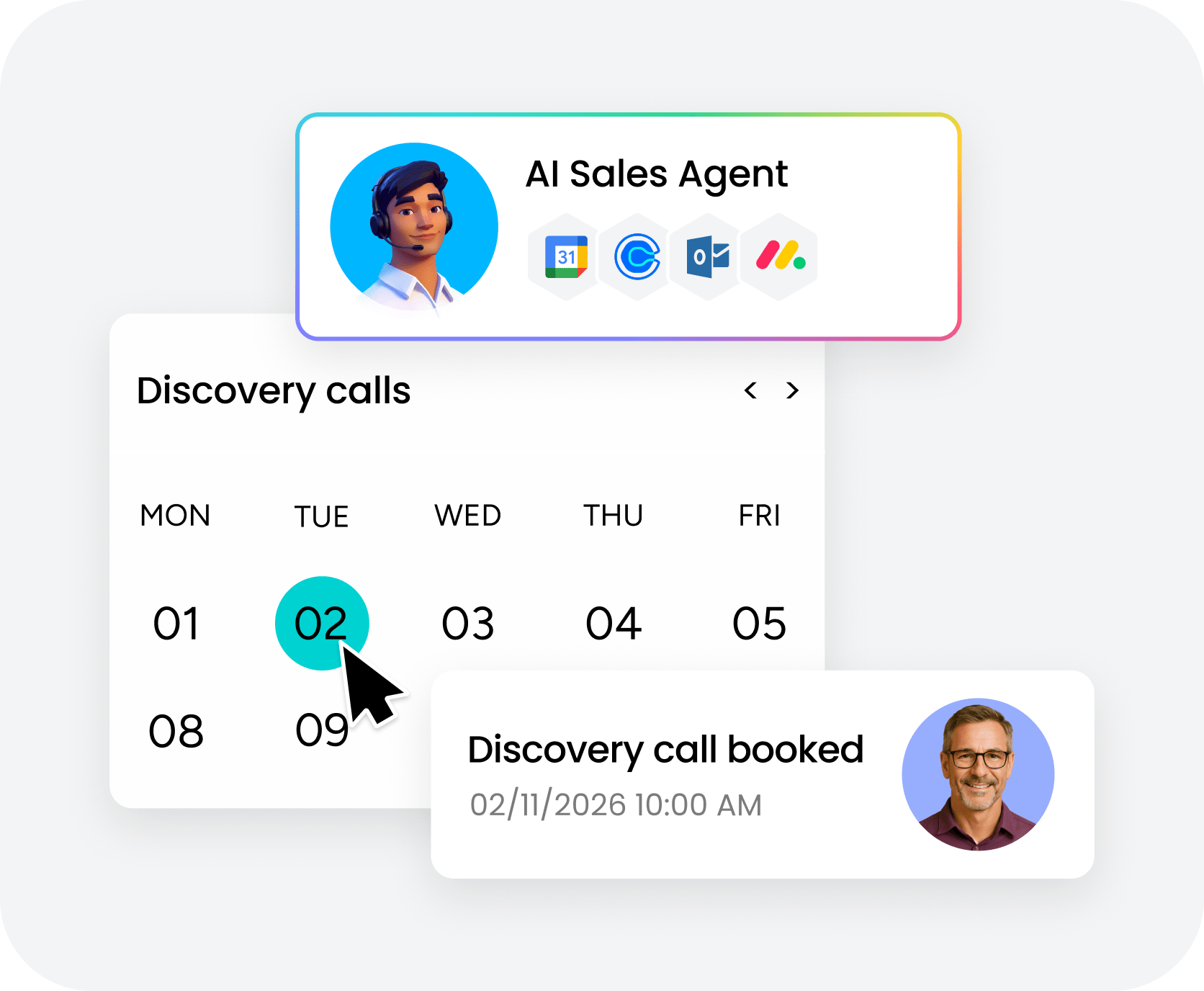
Agentic AI in sales handles high-volume, repetitive tasks that don’t require human judgment, freeing reps to focus on conversations that close deals. So where do AI agents add the most value? These three areas deliver the biggest impact.
AI agents work best in these areas:
- Qualify inbound leads: Ask discovery questions, assess fit against your criteria, and route qualified leads to the right rep.
- Book meetings: Sync with calendars, confirm availability, and schedule demos without back-and-forth emails.
- Provide instant responses: Answer common questions, share resources, and keep leads engaged 24/7, even when reps are offline.
What this looks like in practice: An inbound lead fills out a form at 9 PM. An AI agent asks three qualifying questions, confirms they’re a good fit, and books a demo for the next morning. By the time the rep logs in, the meeting is already on the calendar.
4. Build a sales pipeline your team will actually use
A poorly designed pipeline slows reps down, confuses the team, and kills deals. Reps avoid updating it, deals sit in the wrong stage, and forecasts become unreliable. A good pipeline is simple and visual. It matches how your team actually sells.
An effective pipeline has three things:
- Defined stages: Each stage represents a real milestone in the sales process — “Discovery Completed,” not vague labels like “Interested.”
- Consistent definitions: Everyone agrees on what qualifies a deal for each stage, preventing inconsistent usage and unreliable forecasts.
- Easy to update: Reps can move deals with a click, not a 10-field form, reducing friction and improving data accuracy.
What this looks like in practice: If reps avoid updating the CRM because it’s clunky, deals stall in the wrong stage and managers can’t spot risks. A visual, drag-and-drop pipeline makes updates effortless, so forecasts stay accurate and problems surface early.
5. Personalize outreach at scale using customer context
Generic outreach gets ignored. Personalization based on what you know about the lead gets responses. But manual personalization breaks down when reps juggle dozens of deals.
Personalization at scale needs three things:
- CRM data: Reference the lead’s industry, role, company size, or recent activity in your outreach to signal you’ve done your homework.
- Templates with dynamic fields: Insert personalized details automatically — name, company, pain point, recent interaction — so every email feels tailored without manual effort.
- Relevant content: Send case studies, resources, or examples that match the lead’s specific situation, not generic marketing materials.
What this looks like in practice:
Instead of: “Hi [Name], I wanted to reach out about our product,”
Try: “Hi [Name], I saw [Company] recently expanded into [Region]. We helped a similar company in [Industry] reduce onboarding time by 40% during their expansion. Would it make sense to explore how we could support your growth?”
6. Align sales and marketing around a shared definition of qualified leads
When sales and marketing aren’t aligned, leads slip away. Marketing generates leads, but sales doesn’t follow up, or sales complains the leads are low-quality. Both teams point fingers instead of collaborating, and revenue opportunities go unrealized.
Alignment needs three things:
- Shared lead definitions: Marketing and sales agree on what “qualified” means, with documented fit, intent, and engagement thresholds.
- Defined handoff process: Leads move from marketing to sales automatically when they hit qualification criteria, eliminating manual handoffs and delays.
- Closed-loop feedback: Sales tells marketing which leads convert, so marketing can optimize targeting and spend based on actual results.
What this looks like in practice: Marketing runs a webinar and generates 200 leads. Without alignment, sales cherry-picks a few and ignores the rest. With alignment, leads are scored automatically, and high-intent attendees are routed to reps within an hour.
By connecting marketing and sales workflows in one system, monday CRM ensures both teams see the same data and work from one pipeline. This replaces finger-pointing with shared accountability that grows revenue.
7. Turn existing customers into upsell and cross-sell opportunities
Customers who already trust you are easier to sell to, yet most teams focus exclusively on new business instead of cross-selling and upselling and leave expansion revenue on the table.
Spotting and acting on expansion opportunities means watching three things:
- Customer health tracking: Monitor usage, engagement, and satisfaction to spot signals that a customer is ready for more.
- Expansion triggers: New team members, budget cycles, feature requests, or contract renewals signal the right moment to reach out.
- Proactive outreach: Suggest upgrades or add-ons based on customer needs before they start shopping alternatives.
What this looks like in practice: A customer using your basic plan adds five new users. That’s a signal they’re growing. A rep reaches out to discuss upgrading to a plan with more features and support, closing the upsell in one call.
Learn more: AI account signal agent
8. Use real-time sales dashboards to coach reps and spot pipeline risks
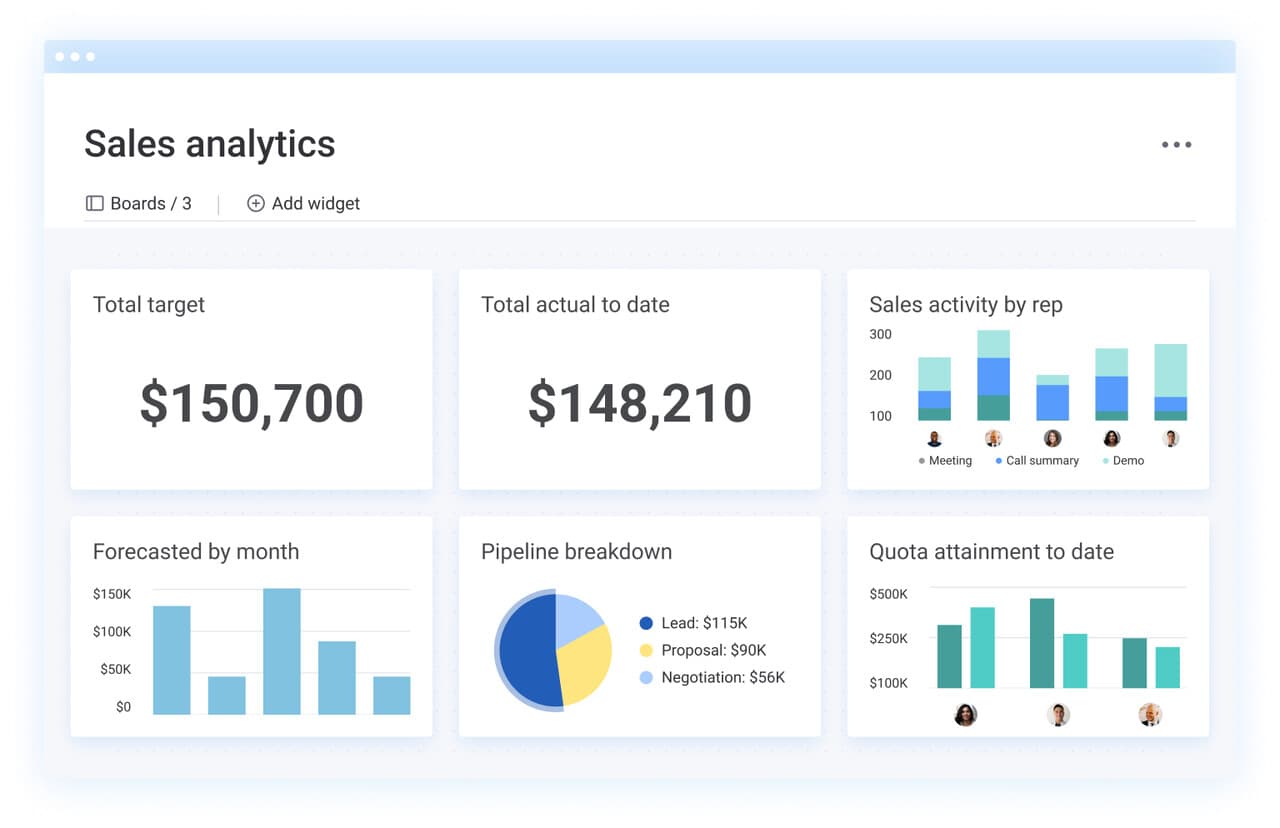
Sales analytics software turns raw CRM data into actionable insights. Without them, managers rely on gut feel or spend hours building manual reports. With dashboards, they spot trends, risks, and opportunities in real time.
Effective dashboards show three things:
- Pipeline health: With sales funnel analysis, managers can see how many deals are in each stage, total pipeline value, and where deals are stalling to identify bottlenecks.
- Rep performance: Who’s hitting quota, who’s falling behind, and what activities correlate with success for targeted coaching.
- Leading indicators: Activity metrics like calls made, emails sent, and meetings booked that predict future revenue.
What this looks like in practice: A manager notices deals in the “Proposal Sent” stage are sitting for three or more weeks. They coach reps to follow up faster and with a different approach, and the average deal cycle drops by 10 days.
monday CRM’s real-time dashboards show pipeline health and rep performance instantly, so managers coach proactively and keep momentum high. Customizable widgets let teams track exactly what matters for their business.
9. Shorten deal cycles by reducing friction at every handoff
Deals slow down when information gets lost between handoffs. From SDR to AE, from AE to solutions engineer, from sales to customer success: each handoff is a friction point where context disappears and momentum stalls.
Smooth handoffs need three things:
- Centralized context: All notes, emails, call recordings, and deal history live in one place so the next person doesn’t start from scratch.
- Defined next steps: Each handoff includes a summary of what’s been done, what the customer needs, and what action comes next.
- Automated notifications: The next person in the process is alerted immediately when a deal moves forward, eliminating waiting time.
What this looks like in practice: An SDR qualifies a lead and books a demo. The AE logs in and sees the SDR’s notes, the lead’s pain points, and the discovery call recording. The demo is personalized from the first minute, and the deal moves to proposal in one meeting.
10. Coach reps at scale using AI-generated call notes and deal summaries
Coaching improves rep performance, but managers don’t have time to listen to every call or review every deal. AI-generated summaries and insights make coaching scalable.
AI supports coaching in three ways:
- Call summaries: AI transcribes calls and highlights key moments, like objections raised, commitments made, and next steps agreed, so managers review summaries instead of listening to full recordings.
- Deal summaries: AI analyzes deal activity and flags risks like “No contact in 14 days” or “Decision-maker not engaged” to surface deals that need attention.
- Performance insights: AI identifies patterns across the team, such as “Reps who send follow-ups within 24 hours close 30% more deals,” for actionable coaching guidance.
What this looks like in practice: A manager reviews an AI-generated call summary and notices a rep struggled to handle a pricing objection. They schedule a quick coaching session to practice objection handling, and the rep closes the next deal. In platforms like monday CRM, AI insights surface coaching opportunities automatically, freeing managers to focus on the conversations that grow rep performance.
Try monday CRMHow to increase sales with the metrics that matter
To maximize sales opportunities, measure the right things. Vanity metrics like total leads generated or total calls made don’t predict revenue. The three sales metrics below actually drive results and tell you where to focus your energy.
Lead to opportunity conversion rate
This percentage shows how many leads become qualified opportunities. A low conversion rate means time wasted on bad-fit leads. A high rate means targeting and qualification are working.
To improve this metric:
- Tighten lead qualification criteria: Only pass leads that meet fit, intent, and engagement thresholds.
- Improve lead nurturing: Use automated sequences to warm up cold leads before handing them to sales.
- Align sales and marketing: Ensure both teams agree on what “qualified” means to reduce friction.
Opportunity to win rate
This percentage reveals how effective your sales process is. A low win rate means deals are stalling, objections aren’t being handled, or the team is pursuing the wrong opportunities.
To improve this metric:
- Focus on high-fit opportunities: Don’t chase deals you’re unlikely to win.
- Improve discovery: Understand customer pain points deeply before proposing solutions.
- Shorten deal cycles: The longer a deal drags, the more likely it stalls or goes to a competitor.
Sales cycle length
This is the average time from first contact to closed deal. Higher sales velocity means faster revenue and more deals closed per rep. Long cycles tie up resources and increase the risk of deals falling through.
To improve this metric:
- Automate follow-ups: Keep deals moving without waiting on manual outreach.
- Reduce handoff friction: Minimize delays between SDRs, AEs, and other stakeholders.
- Remove bottlenecks: Identify stages where deals stall and address the root causes.
How monday CRM helps teams maximize sales opportunities
monday CRM brings all the strategies in this article together in one intuitive platform. Teams execute faster, close more deals, and grow without adding headcount. Here’s how each capability connects to the strategies above.
Centralize every customer interaction in one workspace

The platform consolidates all customer data, like emails, calls, notes, deals, and workflows, in one place. Every interaction appears in a single timeline, so reps never lose context and handoffs are seamless. Emails, calendar events, and call recordings integrate directly into the CRM, no switching between tools or digging through inboxes.
monday CRM is intuitive and flexible, so teams can customize it without heavy IT involvement. Teams customize it to match their sales process without technical support so adoption happens naturally.
Customize pipelines without waiting on IT or admins
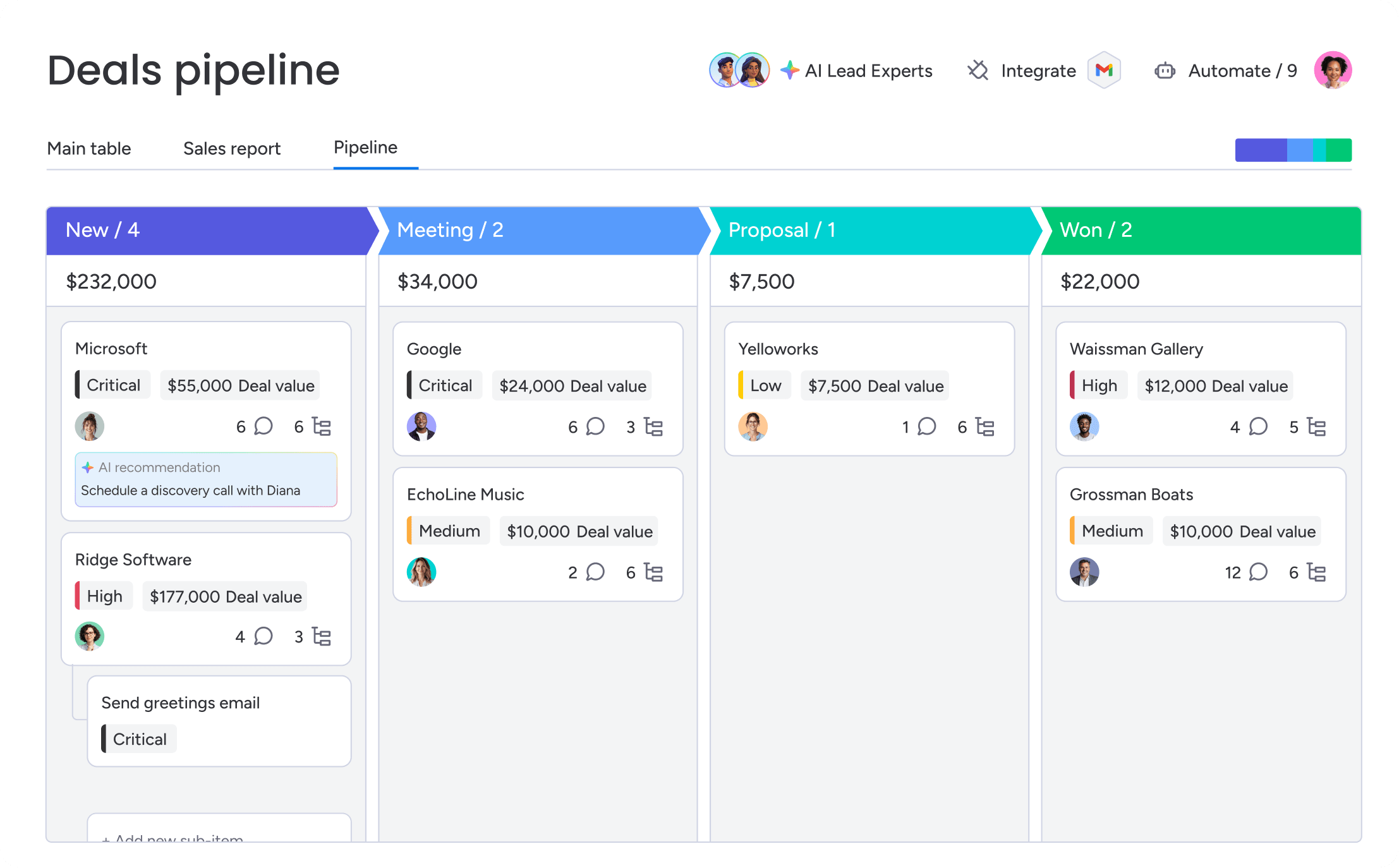
monday CRM’s visual, drag-and-drop pipeline builder lets sales teams design stages, fields, and workflows that match how they actually sell. No waiting for IT or admins. Customizable deal stages and fields adapt to any sales process, while visual pipeline views let teams see their work in ways that make sense for them.
Use AI sales agents to keep every opportunity moving forward
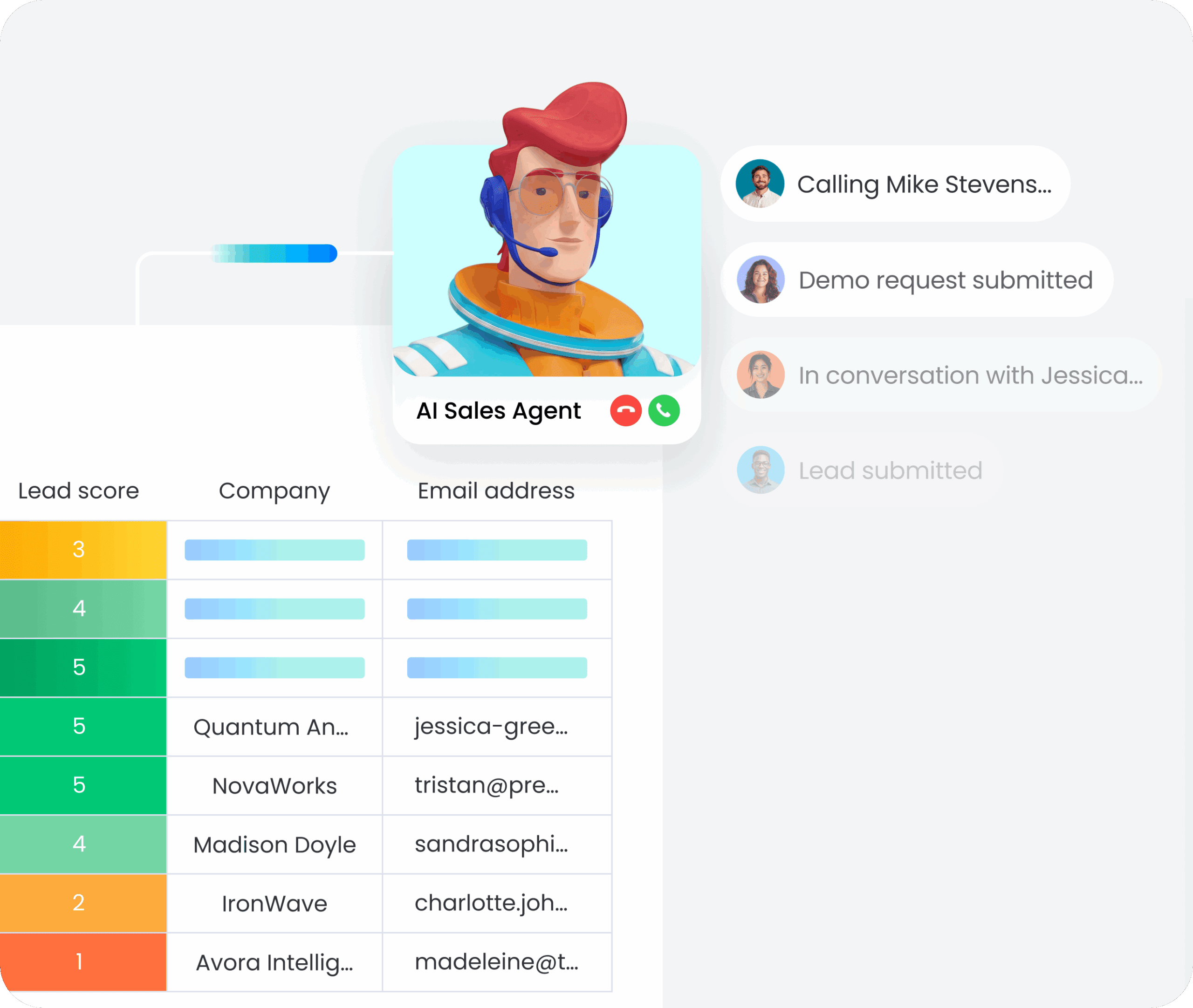
AI agents in monday CRM handle repetitive tasks, qualify leads, and flag risks so reps focus on closing deals. These capabilities include:
- Sales Advisor: Identifies skill gaps, predicts deal blockers, and provides coaching tips based on deal activity and rep behavior.
- Deal Facilitator: Keeps deals moving with timely updates, follow-ups, and action plans while monitoring deal health.
- AI-powered lead scoring and routing: Leads are scored automatically and routed to the right rep based on fit, intent, and engagement signals.
These AI agents work directly within workflows with full context, ready to go from day one. They support lead prioritization, automated follow-ups, and coaching.
Track sales performance with real-time dashboards that update automatically
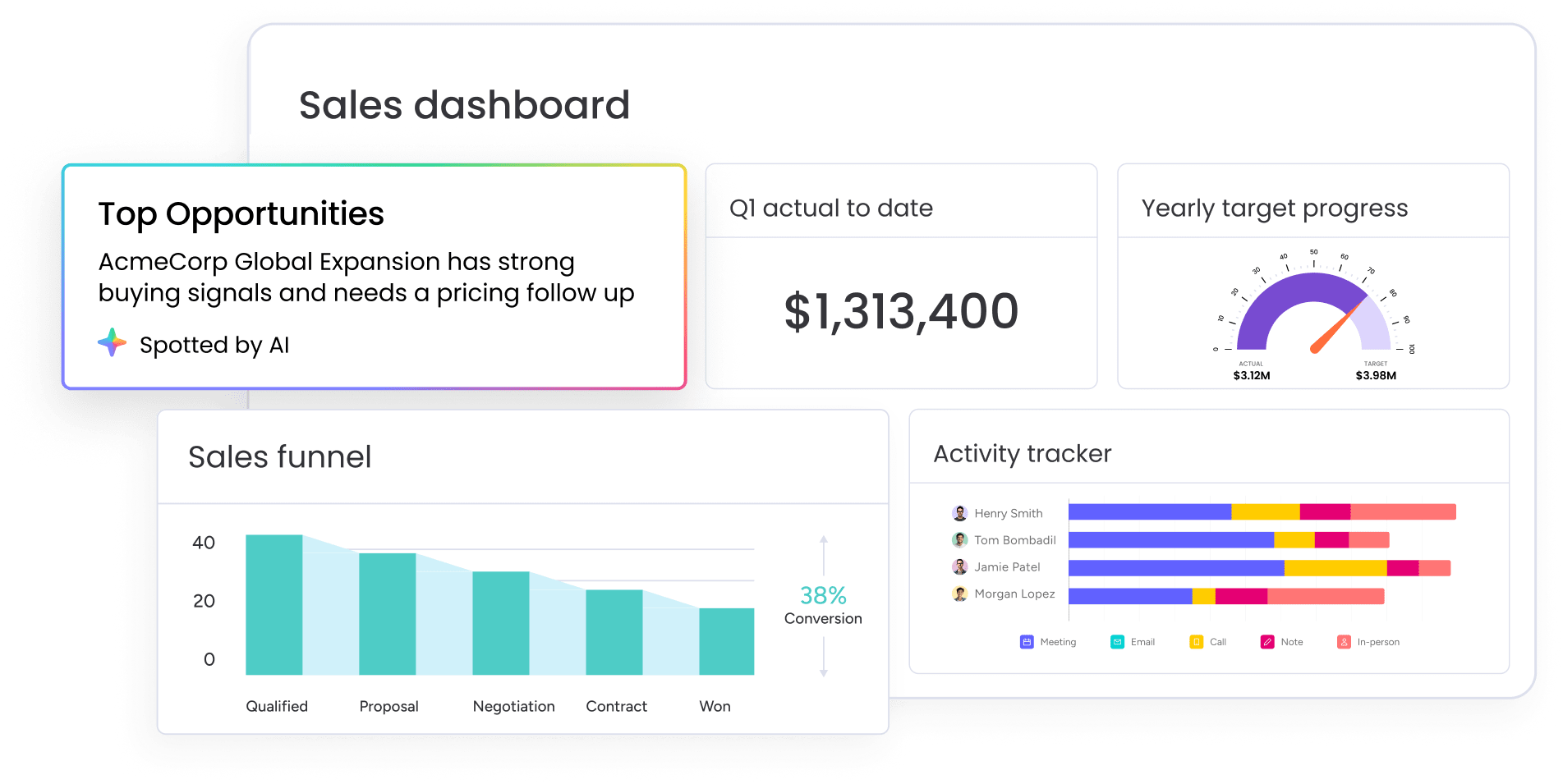
Dashboards in monday CRM turn pipeline data into insights you can act on. Managers spot risks, coach reps, and forecast accurately without waiting for reports or manual exports. Real-time visibility into pipeline health, rep performance, and deal velocity is built in. Customizable widgets display the metrics that matter: conversion rates, cycle length, and activity levels.
These visual, intuitive dashboards update in real time so that teams track performance and measure what matters most.
Connect sales, marketing, and post-sale teams in one shared system

The platform breaks down silos by connecting sales, marketing, and customer success in one system. Leads don’t fall through the cracks, and customers get a seamless experience from first touch to renewal. Shared visibility into leads, deals, and customer health keeps everyone on the same page. Automated handoffs between teams kill manual coordination.
This supports sales and marketing alignment while turning existing customers into expansion opportunities. monday CRM is built for cross-team collaboration from day one, with sales, marketing, and customer success connected out of the box.
Make every sales opportunity count
Closing more deals without adding headcount isn’t about working harder, it’s about removing the friction that slows teams down. Prioritizing the right leads, automating repetitive tasks, and using AI to scale outreach gives reps the time and focus they need to close deals that actually matter.
The metrics tell you where to improve. The strategies in this article show you how. When lead prioritization, automated follow-ups, pipeline visibility, and cross-team alignment work together, the results compound quickly. monday CRM brings all of it into one place with fast setup, simple adoption, and an intuitive experience your team will embrace from day one.
Try monday CRMFAQs
What is the 3-3-3 rule in sales?
The 3-3-3 rule in sales is a follow-up cadence where you contact a lead three times, over three weeks, using three different channels like email, phone, and LinkedIn. This approach increases engagement chances without overwhelming the prospect.
How do you maximize sales opportunities?
Maximizing sales opportunities involves prioritizing high-intent leads, automating repetitive tasks like follow-ups, using AI to qualify and route leads, and tracking performance with real-time dashboards. Focus on closing more deals with your existing team by working smarter.
What are the 5 C's of sales?
The 5 C's of sales are Customer (understand their needs), Context (know their situation), Content (provide relevant information), Conversation (engage meaningfully), and Close (ask for the sale). These principles guide effective selling at every stage.
What is the 30-60-90 rule in sales?
The 30-60-90 rule in sales is a planning framework for new reps where they spend the first 30 days learning the product and process, the next 30 days applying what they've learned, and the final 30 days executing independently and hitting targets.
What is the best way to increase sales without hiring more reps?
The best way to increase sales without hiring is to automate repetitive tasks like follow-ups and lead routing, prioritize high-value opportunities using fit and intent data, and use AI to qualify leads and surface insights. This lets your existing team focus on closing deals.
How does monday CRM help teams maximize sales opportunities?
By combining lead prioritization, automated workflows, AI sales agents, and real-time dashboards in one platform, monday CRM helps teams maximize sales opportunities. Teams implement and customize the system quickly without heavy IT involvement, ensuring rapid adoption and results.
