A team receives hundreds of new leads each week. Many lack budget, authority, or immediate intent, while a smaller group is ready to engage within the next few months. The challenge lies in identifying those high-priority prospect leads early, before opportunities are delayed or missed.
As lead volume increases, manual qualification becomes difficult to sustain. Sales representatives spend time researching low-fit prospects, while high-intent leads remain untouched in the pipeline. This imbalance slows follow-up and reduces overall conversion efficiency.
This step-by-step guide explains how to qualify sales leads with AI in 2026 using data enrichment, predictive scoring, and real-time intent signals. It will also review qualification frameworks that work really well with AI, and show how automation and human judgment work together to improve lead prioritization at scale.
Key takeaways
- AI makes lead qualification scalable and fast: Automated evaluation can handle 15,000+ leads per month and reduce follow-up delays that appear when manual processes exceed roughly 1,000 leads.
- Predictive scoring improves prioritization accuracy over time: By learning from historical wins and losses, AI can raise qualification accuracy from around 60% to as high as 75–90% by detecting patterns humans often miss.
- A structured, seven-step workflow turns AI into a repeatable qualification system: Define an AI-enhanced ideal customer profile, enrich data, score leads, optimize questions, track behavior, automate routing, and continuously improve with analytics.
- Traditional qualification frameworks become more effective with AI support: Models like BANT, CHAMP, and MEDDIC are strengthened by automated signal collection for budget, authority, need, and timeline indicators earlier in the process.
- CRM automation helps operationalize hybrid human and AI qualification: Platforms like monday CRM centralize lead data and use built-in AI capabilities to support routing and prioritization while keeping reps focused on conversations and relationship building.
What is AI-powered lead qualification?
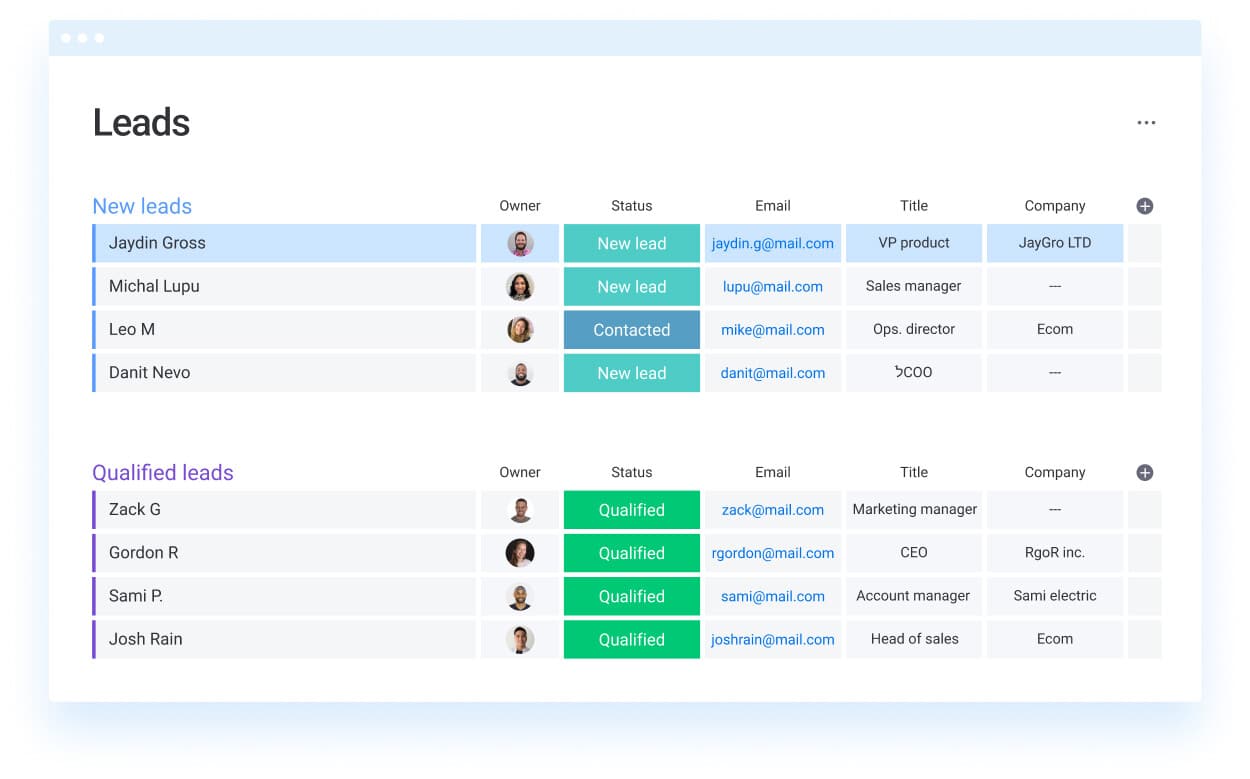
AI-powered lead qualification automatically scores prospects based on defined criteria like company data, behavior, and engagement signals. This removes much of the manual research from early-stage assessment and helps sales teams quickly see which leads deserve immediate attention versus ongoing nurturing.
The main benefit is focus. Teams spend less time chasing low-intent prospects and more time engaging leads that are likely to convert. This shift toward data-driven prioritization is reflected in outcomes: a 2025 McKinsey report found that 67% of organizations using AI in marketing and sales saw revenue growth over the previous 12 months, often driven by faster follow-up and better lead prioritization.
Consistent qualification also improves forecasting. When leads are evaluated in real time against the same criteria, high-intent opportunities surface sooner, follow-up speeds up, and sales effort aligns more closely with revenue potential.
AI-based qualification systems evaluate prospects through several connected processes:
- Data analysis: AI processes thousands of data points across multiple sources to build comprehensive prospect profiles.
- Pattern recognition: Machine learning algorithms identify subtle buying signals that human reviewers might miss.
- Predictive scoring: AI assigns numerical scores representing each lead’s likelihood to buy based on historical patterns.
- Real-time processing: The system qualifies leads instantly as they enter your pipeline.
Traditional vs AI-enhanced lead qualification process
The shift from manual to AI-enhanced qualification changes how teams manage growing lead volumes. Understanding these differences helps organizations assess where automation can improve consistency and speed.
| Aspect | Traditional manual qualification | AI-enhanced qualification |
|---|---|---|
| Time investment | 15-20 minutes per lead for research and assessment | Processes hundreds of leads in seconds |
| Accuracy rates | 60-70% accuracy due to human error | 75-90% accuracy through consistent analysis |
| Scalability | Limited by team capacity | Handles 15,000+ leads monthly |
| Human resources | Requires dedicated SDR time for every lead | Reduces manual workload and supports prioritization |
As the table above indicates, annual qualification relies on individual review by sales development representatives. While effective at lower volumes, this approach can become difficult to sustain as pipelines grow, often resulting in slower response times and inconsistent assessments.
AI-enhanced qualification applies the same criteria across all leads, regardless of volume. It doesn’t replace human judgment, but supports it by automating repetitive evaluation tasks and surfacing clearer prioritization signals.
Core components of AI qualification systems
AI qualification systems combine several technologies to support automated and consistent lead evaluation. Together, these components form a structured qualification engine:
- Machine learning algorithms: Analyze historical outcomes to identify attributes associated with successful conversions.
- Data integration: Connects multiple internal and external sources to enrich lead profiles.
- Scoring models: Weight demographic, behavioral, and intent signals based on predictive value.
- Behavioral tracking: Monitors engagement across digital touchpoints.
- Automated workflows: route qualified leads based on score thresholds and predefined rules.
Why AI makes lead qualification 5x faster
AI accelerates lead qualification through three core capabilities: rapid data processing, pattern recognition at scale, and automation of repetitive tasks. Combined, these capabilities allow teams to manage higher lead volumes without sacrificing consistency or accuracy.
Scale from 500 to 15,000 leads per month
Manual qualification processes break down predictably as lead volume increases. A sales team that effectively qualifies 500 leads monthly hits capacity constraints around 800-1,000 leads.
Key breakdown points include:
- Response delays: Times slow from hours to days.
- Inconsistent standards: Reps rush through assessments.
- Lost opportunities: High-potential prospects get buried in backlogs.
AI removes these constraints by applying the same qualification logic across all incoming leads. The criteria used for smaller pipelines scale without additional staffing or configuration, supporting organizations during periods of growth or seasonal volume changes.
This scalability reduces the need to expand sales development teams solely to manage lead intake. Instead, qualification capacity adjusts automatically as volume increases.
Eliminate manual tasks with intelligent automation
AI-powered qualification removes the repetitive, time-consuming work that consumes 60–70% of sales development representatives’ time. By automating these workflows, teams can redirect their focus toward activities that directly impact revenue.
Key tasks that AI automates include:
- Lead research: Automatically gathers company information and contact details from multiple sources.
- Initial scoring: Assigns qualification scores instantly as leads enter the pipeline.
- Data enrichment: Appends missing information from external sources automatically.
- Follow-up scheduling: Qualified leads automatically receive meeting invitations.
- Lead routing: Directs qualified leads to appropriate sales representatives.
By automating these steps, teams spend less time maintaining pipelines and more time advancing opportunities. For example, instead of spending hours on research and data entry, sales teams gain space to build relationships, uncover needs, and close deals through effective lead management.
This shift is already delivering measurable results, with 49% of organizations using AI in marketing and sales reported cost decreases, including 7% achieving savings of 20% or more.
Boost accuracy with predictive lead insights
Beyond efficiency, AI significantly improves qualification accuracy. Machine learning models analyze thousands of historical conversions to uncover patterns and correlations that manual reviews cannot reliably detect.
These models continuously learn from outcomes, refining how they predict sales success. As a result, accuracy improves over time, strengthening pipeline quality with every win or loss.
High-conversion patterns AI discovers:
- Behavioral sequences: Prospects who visit pricing pages three times, download case studies, and attend webinars have 85% conversion rates.
- Timing indicators: Leads from companies with recent funding announcements convert 40% faster than similar prospects without funding news.
- Engagement combinations: Specific content consumption patterns that predict enterprise deals.
The accuracy advantage compounds with every deal. Each outcome, whether a win or a loss, provides new insight that continuously sharpens the model’s predictions.
For more context, a newly implemented AI qualification system may reach 75% accuracy at first, then improve to 85–90% within six months as machine learning algorithms refine their understanding.
This improvement trajectory is reinforced by research showing that access to a generative AI assistant increased productivity by 15% in large-scale studies, with the largest gains among less-experienced workers.
Understanding types of qualified leads
Lead qualification operates on a spectrum, with prospects moving through distinct stages as they demonstrate stronger purchase intent and sales readiness.
Understanding the differences explored in more detail below helps sales teams prioritize outreach and tailor their approach to each lead type more effectively.
Marketing qualified leads (MQLs)
Marketing qualified leads have demonstrated interest through marketing engagement but are not yet ready for direct sales outreach. These prospects typically interact with top-of-funnel content, signaling curiosity and problem awareness rather than immediate buying intent
Common MQL behaviors:
- Content engagement: Email opens, whitepaper downloads, website visits to educational pages.
- Social interaction: Social media engagement, event attendance.
- Research activities: Multiple touchpoints over extended periods.
Typical MQL scoring models emphasize engagement frequency and content depth. For example, a prospect who downloads three whitepapers, attends two webinars, and visits the website five times over two weeks ranks higher than a prospect with a single interaction.
Sales qualified leads (SQLs)
Sales qualified leads have been reviewed by sales teams and meet clearly defined criteria for direct engagement. These prospects demonstrate clear purchase intent, have budget authority, face specific challenges the solution addresses, and operate within a reasonable decision-making timeline.
SQL qualification generally requires direct interaction. Sales representatives validate budget availability, decision-making authority, identified pain points, and purchase timing. This human confirmation separates SQLs from MQLs, ensuring prospects are actively evaluating solutions rather than passively researching options.
Product qualified leads (PQLs)
Product qualified leads have experienced tangible value through product usage, most often in freemium or trial environments. These prospects move beyond theoretical interest, showing engagement by completing meaningful actions within the product.
PQLs frequently represent the highest-converting lead type because value has already been demonstrated. Strong signals include completing core workflows, integrating with other platforms, inviting teammates, or expanding usage across departments.
AI-qualified leads (AQLs)
Finally, AI-qualified leads represent a category enabled by predictive intelligence. These prospects are identified through analysis of behavioral patterns, engagement signals, and historical outcomes that indicate high conversion potential.
AQLs surface when machine learning models detect correlations human reviewers often overlook. For example, the system may identify that prospects from specific industries who engage with particular content combinations convert at high rates, even when they fall outside traditional company size or revenue benchmarks.
7 steps to qualify sales leads with AI
AI-powered lead qualification works best when it follows a clear, structured process. Each step builds on the one before it, creating a system that combines strong data foundations, intelligent scoring, behavioral insights, and ongoing optimization.
The seven steps below outline how to design a scalable qualification framework that improves accuracy, speeds up follow-up, and helps sales teams focus on the right opportunities.
Step 1: Create your AI-enhanced ideal customer profile
An AI-enhanced ideal customer profile goes beyond basic demographics. It includes behavioral patterns, engagement signals, and intent indicators that help predict conversion likelihood. This profile becomes the foundation for every scoring and qualification decision that follows.
Start by analyzing your highest-converting customers across several dimensions to identify what truly drives success.
Key profile dimensions to analyze include:
- Firmographic criteria: Company size ranges, industry verticals, geographic locations.
- Behavioral indicators: Content consumption patterns, engagement frequency.
- Technographic data: Current technology stacks, integration requirements.
- Intent signals: research behaviors, buying committee involvement.
This enhanced profile provides AI systems with parameters for evaluating new prospects. Instead of simple yes/no qualification decisions, AI can assess partial matches and weight different criteria based on their predictive value.
Step 2: Set up automated lead enrichment
Automated lead enrichment uses AI to gather additional information about prospects automatically, improving qualification accuracy by filling data gaps without manual research.
When leads enter your system through the lead management process, AI enrichment immediately appends company size, revenue range, industry classification, technology stack, recent funding announcements, and key decision-makers’ contact information.
The enrichment process operates in real time. A prospect submits a form with basic contact information, and AI enrichment immediately enhances the record with the additional context needed for accurate scoring and routing.
Step 3: Build AI-powered lead scoring
AI-powered lead scoring uses mathematical models to evaluate lead quality by analyzing multiple factors at once. These models consider demographic fit, behavioral engagement, intent signals, and timing factors to generate numerical scores that reflect conversion likelihood.
The scoring framework should balance different qualification dimensions based on their predictive value for your specific market:
| Scoring category | Weight | Example signals |
|---|---|---|
| Demographic fit | 30% | Enterprise company in target vertical |
| Behavioral engagement | 25% | Opened 5 emails, downloaded 3 resources |
| Intent signals | 35% | Pricing page 3x, requested demo |
| Timing factors | 10% | Fiscal year starting, contract expiring |
AI continuously adjusts scoring weights based on which signals correlate most strongly with conversions. Scores update dynamically as prospects take new actions.
Step 4: Deploy smart qualification questions
AI optimizes qualification questions by identifying which information most strongly predicts sales success. This adaptive approach collects critical data efficiently while avoiding long or overwhelming forms.
Questions adjust based on each prospect’s context, including company size, industry, and existing data. AI also evaluates response quality, with detailed and specific answers often indicating higher intent than vague or generic responses.
Step 5: Track real-time behavioral signals
Real-time behavioral tracking monitors prospect activity across multiple touchpoints to surface qualification signals. AI correlates these actions with historical conversion patterns, helping teams prioritize follow-up based on behaviors that indicate purchase readiness.
Behavioral tracking extends beyond basic website analytics to comprehensive engagement monitoring:
- Website behavior: Page visits, content consumption, navigation patterns.
- Content engagement: Resource downloads, video views, content sharing.
- Email interactions: Open rates, click patterns, response timing.
- Social signals: Profile views, connection requests, content engagement.
AI identifies behavior sequences that consistently predict conversions. For example, pricing page visits followed by case study downloads and demo requests signal stronger intent than scattered engagement.
Step 6: Automate lead routing and assignment
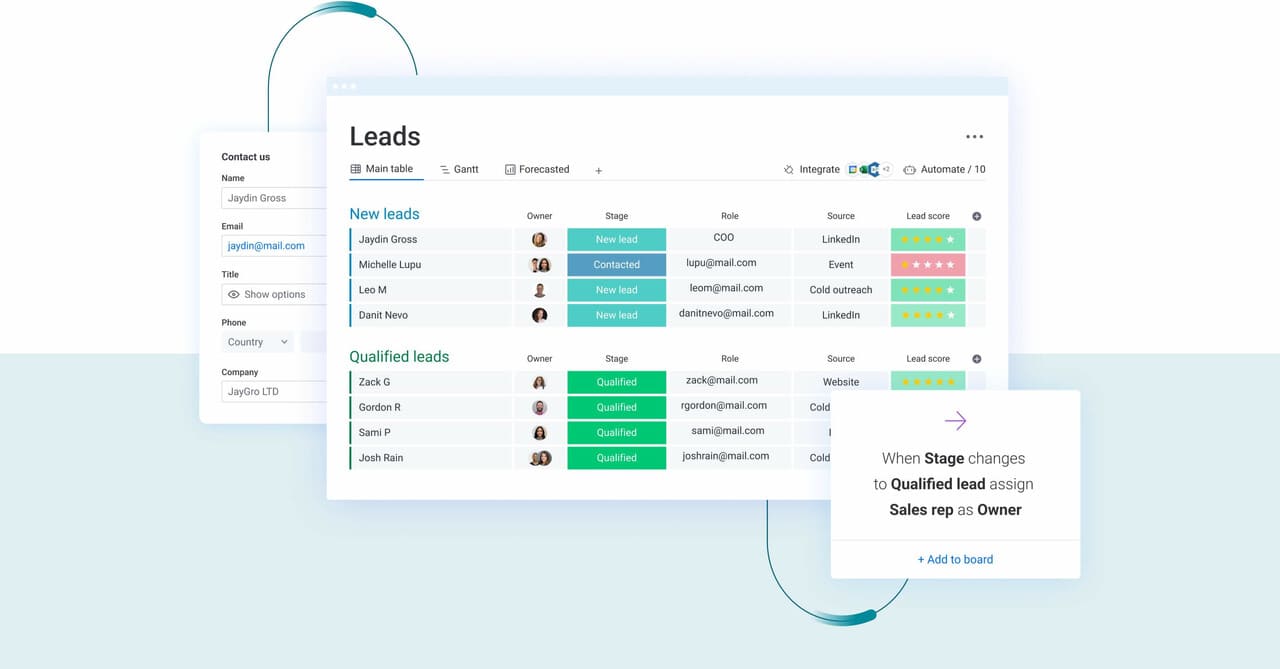
Automated lead routing assigns qualified leads to the appropriate sales representatives based on multiple factors. AI evaluates geographic alignment, industry expertise, account size, workload distribution, and performance matching when making routing decisions.
This automation removes manual assignment delays. Qualified leads receive immediate routing notifications, allowing sales teams to follow up within minutes.
Step 7: Optimize with AI analytics
AI analytics provide insights that continuously improve qualification processes. These insights support data-driven optimization, increasing both accuracy and efficiency over time.
AI delivers several critical analytics categories that inform ongoing improvements:
- Conversion rate analysis: Identifies which marketing channels produce highest-quality prospects.
- Time-to-conversion patterns: Enables more accurate forecasting.
- Sales team performance metrics: Informs routing decisions and coaching opportunities.
- Qualification accuracy measurements: Tracks how often qualified leads actually convert.
These insights create continuous improvement loops. Monthly reviews prompt scoring adjustments, while quarterly analysis highlights behavioral patterns that predict enterprise deals and guide future tracking priorities.
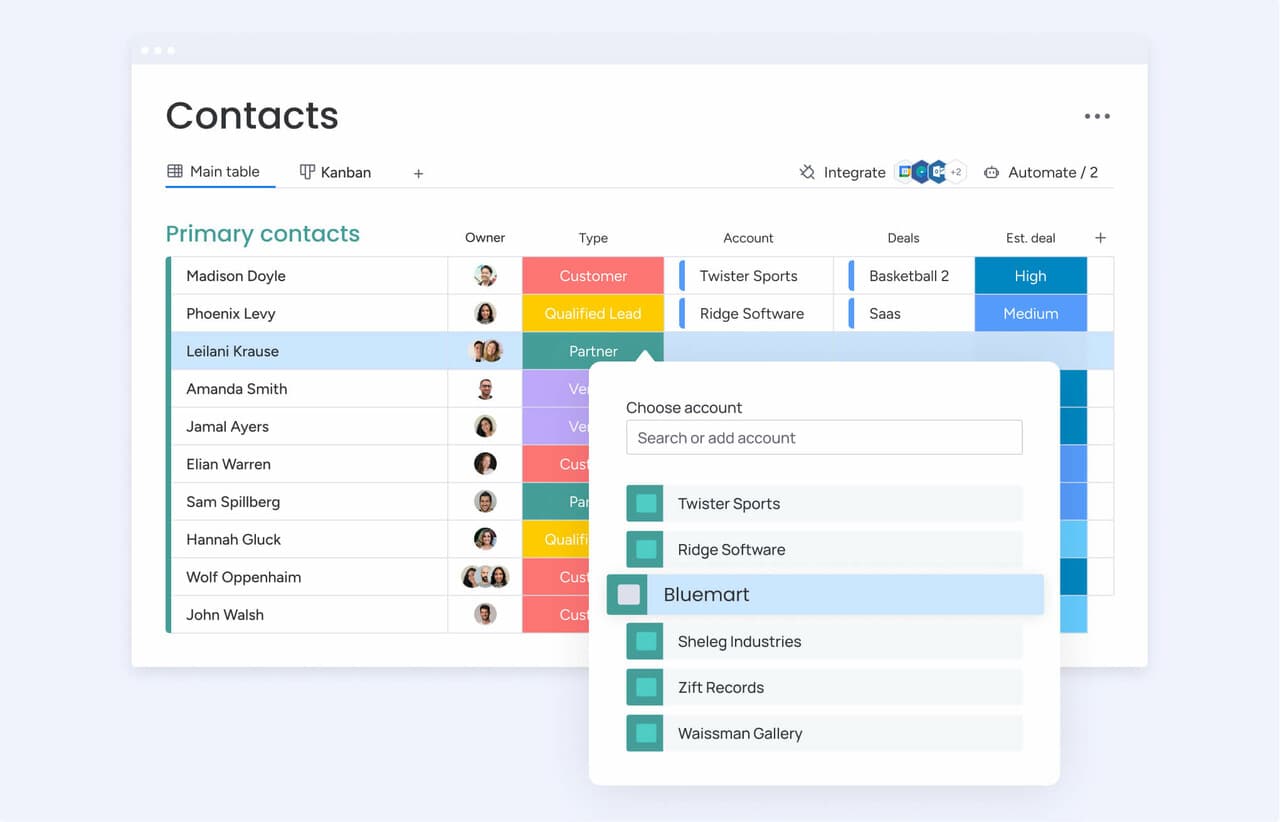
Lead qualification frameworks for AI implementation
Established qualification frameworks provide a structured way to evaluate prospect fit and readiness. AI does not replace these proven methods. Instead, it improves speed, consistency, and accuracy by automating data collection, analysis, and scoring.
When applied correctly, AI reduces manual discovery work while giving sales teams clearer context earlier in the process.
BANT framework with AI enhancement
BANT (budget, authority, need, timeline) remains one of the most widely used qualification frameworks. AI enhances BANT by gathering and analyzing signals automatically, turning what once required multiple discovery calls into early-stage insights.
Rather than relying on direct questioning, AI assembles qualification indicators using public data, behavioral signals, and engagement patterns. This approach delivers a more complete picture without requiring prospects to share sensitive details too early.
AI-enhanced BANT evaluation includes:
- Budget detection: AI analyzes company financials and industry benchmarks to estimate budget availability.
- Authority identification: AI maps organizational structures through LinkedIn analysis.
- Need assessment: AI tracks problem-indicating behaviors to understand specific needs.
- Timeline prediction: AI uses industry buying cycle data to estimate purchase timeline.
With AI-supported BANT scoring, sales teams receive a clear qualification snapshot as soon as leads enter the pipeline, improving first-contact relevance and efficiency.
CHAMP method for complex B2B sales
CHAMP (challenges, authority, money, prioritization) shifts the focus from early budget discussions to understanding prospect pain points. This approach is especially effective in complex B2B environments where urgency and relevance drive decisions.
AI strengthens CHAMP by continuously monitoring signals tied to challenges and prioritization. Rather than relying on static assessments, qualification evolves as prospects engage.
AI-powered CHAMP analysis:
- Challenge identification: Content consumption patterns reveal specific pain points.
- Authority verification: Organizational mapping through social and professional networks.
- Money assessment: Financial data analysis and industry benchmarking.
- Prioritization tracking: Engagement intensity monitoring.
AI makes CHAMP more effective by continuously monitoring these factors. A prospect’s prioritization score increases as engagement intensifies, automatically triggering more aggressive sales follow-up.
MEDDIC for enterprise lead qualification
MEDDIC (metrics, economic buyer, decision criteria, decision process, identify pain, champion) provides comprehensive qualification for enterprise sales. AI supports each MEDDIC element through automated research and behavioral analysis.
It’s worth noting that MEDDIC traditionally requires multiple discovery calls and extensive research. AI provides preliminary MEDDIC assessments immediately, allowing sales teams to enter conversations with comprehensive context.
How to build your AI lead scoring system
Effective AI lead scoring depends on strong data foundations and continuous optimization. The most successful systems combine historical analysis with real-time behavioral insights to refine accuracy over time.
Rather than relying on static point systems, AI models adapt as new data emerges, ensuring scores remain aligned with actual conversion outcomes. Here’s how to build an effective system in 2026:
Design scoring models from historical data
Historical conversion data reveals which attributes and behaviors most strongly predict success. Reviewing past wins helps identify patterns that AI can apply to new leads.
Start by analyzing top-performing customers across key dimensions:
Critical analysis areas:
- Demographic characteristics: Company profiles that convert most frequently.
- Behavioral patterns: Engagement sequences that preceded conversions.
- Timeline patterns: Duration from first touch to close.
- Objection patterns: common concerns and resolution methods.
This analysis identifies the characteristics and behaviors AI should prioritize when scoring new leads. If analysis reveals that prospects who attend webinars convert 3x more frequently, the scoring model weights webinar attendance heavily.
Configure behavioral tracking points
Behavioral tracking supplies the engagement data AI needs to identify high-intent prospects. Effective tracking focuses on meaningful actions, not surface-level metrics.
Key tracking categories:
- High-intent actions: Demo requests, pricing inquiries, trial signups.
- Research behaviors: Competitor comparisons, feature investigations.
- Engagement depth: Time spent on key pages, content completion rates.
- Social proof seeking: Customer reference requests, case study downloads.
This data enables more accurate scoring and clearer prioritization.
Enable dynamic score adjustments
AI lead scores should evolve as prospect behavior changes. Dynamic adjustments ensure scores reflect current intent, not outdated activity.
- Positive actions: Increase scores based on high-intent behaviors.
- Negative signals: Decrease scores for disengagement patterns.
- Time-based decay: Reduce scores for leads that don’t progress.
- Seasonal adjustments: Account for industry-specific buying cycles.
These mechanisms help sales teams focus on leads that are most likely to convert now.
Add predictive analytics layers
Advanced AI models go beyond scoring by forecasting future outcomes. Predictive analytics help sales teams anticipate behavior and act proactively.
Predictive capabilities often include:
- Conversion probability forecasting: Statistical likelihood of deal closure.
- Optimal engagement timing: Best times for outreach based on behavior patterns.
- Content preference predictions: Most effective messaging for specific prospects.
- Churn risk identification: Early warning signals for disengaging leads.
Together, these insights support smarter prioritization and more relevant sales conversations.
Try monday CRM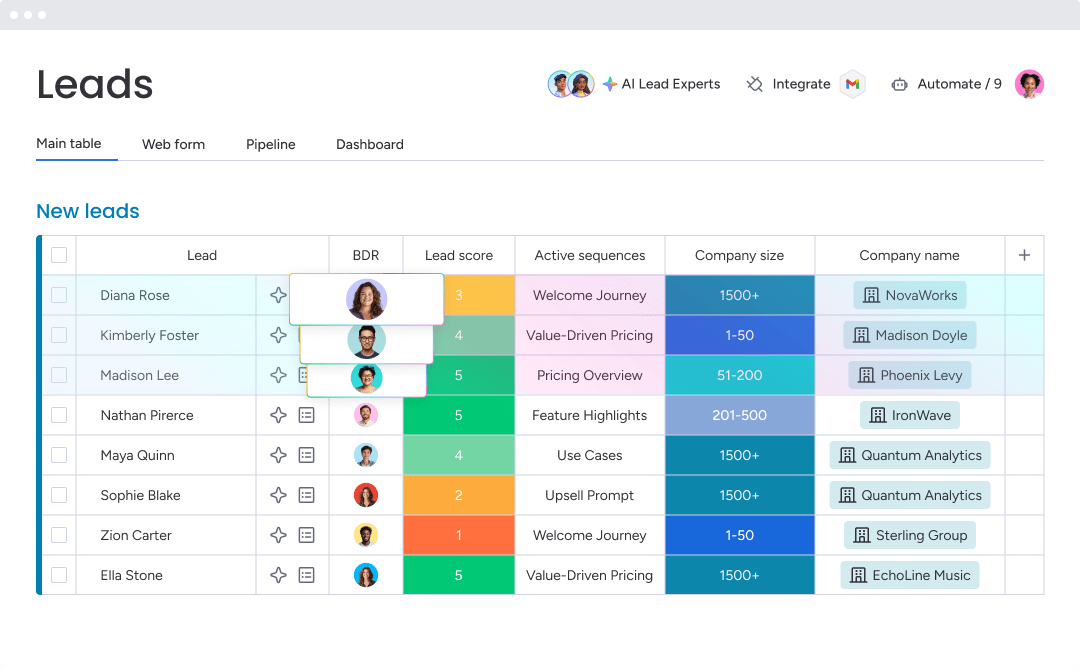
Identifying high-potential leads with AI
AI pattern recognition helps identify leads that traditional qualification methods often overlook. These prospects may not fit standard criteria, but they show high conversion potential based on subtle behavioral patterns and characteristic combinations.
AI-detected qualification signals
AI identifies signals that human reviewers typically miss by analyzing combinations of behaviors and characteristics across thousands of data points at once. These signals often involve complex patterns that only become visible through machine learning analysis.
AI-detected signals include:
- Engagement pattern anomalies: Unusual but positive interaction sequences.
- Network effect indicators: Connections to existing customers or partners.
- Timing correlations: Behavioral patterns that align with buying cycles.
- Technology adoption patterns: Early adopter characteristics that predict openness to new solutions.
These insights help sales teams surface opportunities that conventional qualification criteria alone would miss.
Reviving dormant leads at scale
AI can identify previously qualified leads that have gone inactive but still show strong reactivation potential. Traditional sales processes struggle to monitor dormant leads consistently, while AI can evaluate thousands of inactive records simultaneously.
Reactivation indicators AI monitors:
- Company circumstance changes: New funding, leadership changes, expansion signals.
- Renewed engagement: Return visits after periods of inactivity.
- Competitive intelligence: Signals suggesting renewed evaluation needs.
- Industry trends: Market changes that create new urgency.
Prioritizing resources for maximum impact
AI helps sales teams focus limited time on leads with the highest conversion potential by considering both likelihood to convert and potential deal size. This approach ensures resources are directed toward opportunities with the greatest revenue impact.
Prioritization factors AI evaluates:
- Conversion probability scores: Statistical likelihood of successful closure.
- Potential deal size estimates: Revenue projections based on company characteristics.
- Sales cycle length predictions: Time investment requirements.
- Resource requirements: Effort needed for different lead types.
Creating hybrid human-AI qualification
The most effective qualification systems combine AI automation with human judgment. AI manages routine tasks that require speed and consistency, while sales teams focus on relationship building and complex decision-making.
Where AI agents excel
AI provides superior performance for specific qualification tasks where speed, consistency, and data processing capabilities create advantages over human efforts:
- Data processing: Analyzing large volumes of information instantly.
- Pattern recognition: Identifying subtle correlations across multiple data points.
- Consistency: Applying qualification criteria uniformly across all leads.
- 24/7 availability: Processing leads and updating scores continuously.
- Scalability: Handling increasing lead volumes without additional resources.
When human insight matters most
Certain sales scenarios require judgment and interpersonal skills that AI cannot replicate. These situations benefit from empathy, creativity, and strategic thinking.
Human-required scenarios:
- Complex stakeholder dynamics: Political considerations requiring emotional intelligence.
- Nuanced objection handling: Relationship building demanding human flexibility.
- Strategic account planning: Long-term relationship development requiring strategic thinking.
- Custom solution design: Consultative selling approaches extending beyond AI capabilities.
Designing seamless handoff workflows
Clear transitions between AI qualification and human engagement help sales representatives act quickly with full context. Well-designed handoff workflows ensure insight is shared without overwhelming teams.
Essential handoff components:
- Comprehensive lead summaries: AI insights with supporting evidence.
- Qualification scores: Numerical ratings with detailed explanations.
- Conversation starters: Suggested talking points based on prospect interests.
- Recommended next steps: Optimal contact timing and approach strategies.
- CRM integration: Seamless information flow between systems.
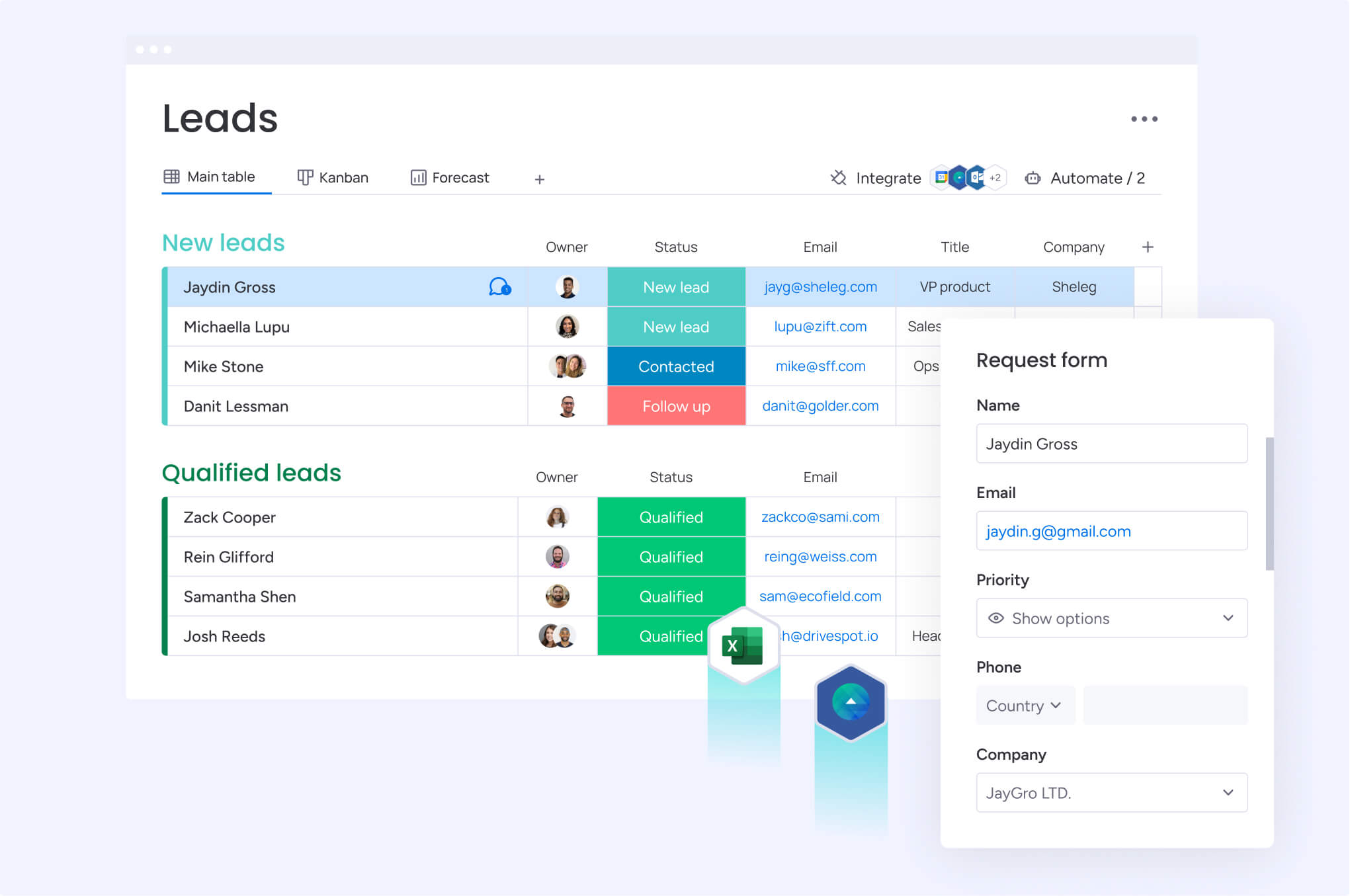
Accelerate qualification with an AI-powered CRM
With the right platform, implementing AI-powered qualification becomes straightforward and scalable, without requiring dedicated IT resources or complex setup. Modern CRM solutions like monday CRM integrate AI capabilities directly into existing workflows, allowing teams to enhance qualification processes without disrupting how they already work.
This approach makes advanced lead qualification accessible to teams of all sizes, enabling faster adoption and quicker time to value. Instead of relying on custom development or external tools, revenue teams can activate AI-driven insights within their core systems.
Successful AI qualification depends on choosing platforms that balance powerful AI capabilities with intuitive design. Teams need systems that can manage complex qualification logic while remaining easy to use in day-to-day sales activities. When the technology stays in the background, sales representatives can focus on selling rather than managing systems.
Transform qualification workflows with AI Blocks
AI Blocks in monday CRM allow teams to add advanced qualification capabilities without technical expertise. These ready-made actions support specific qualification tasks through simple configuration, enabling teams to tailor workflows to their processes.
Relevant AI Blocks for lead qualification:
- Categorize: Automatic lead sorting based on multiple criteria.
- Extract info: Pulling key qualification details from forms and emails.
- Detect sentiment: Analyzing communication tone to gauge interest levels.
- Summarize: Creating concise lead summaries for sales handoffs.
- Custom Block: Building unique AI capabilities tailored to specific qualification requirements.
These AI Blocks integrate directly into qualification workflows, triggering automatically based on lead actions or status changes. Teams can create sophisticated qualification sequences without writing code or managing complex integrations.
Build qualification automation without coding
Visual workflow builders make it easy to create advanced qualification automation using drag-and-drop configuration. Complex sequences translate into clear if-then logic that teams can adjust as processes evolve.
Workflow capabilities include:
- Multi-criteria scoring: Automated lead scoring based on demographic, behavioral, and intent signals.
- Dynamic routing: Intelligent lead assignment to appropriate team members.
- Triggered sequences: Follow-up automation based on qualification status changes.
- External integrations: Connections to data sources for lead enrichment.
- Custom stages: Qualification progression rules tailored to specific sales processes.
Gain real-time qualification insights
Real-time dashboards provide visibility into qualification performance and trends. Visual analytics make it easier to identify opportunities and improve outcomes without requiring data expertise.
Analytics capabilities include:
- Qualification funnel analysis: Conversion rates at each qualification stage.
- Source performance tracking: Lead quality metrics by marketing channel.
- Team performance metrics: Individual and team qualification effectiveness.
- Pipeline forecasting: Revenue predictions based on qualification data.
- ROI analysis: Return on investment for different lead sources and qualification methods.
| Dimension | Traditional CRM systems | monday CRM approach |
|---|---|---|
| Setup complexity | requires months of implementation with technical consultants | visual, no-code configuration enables setup in days |
| Customization flexibility | rigid structures require developer work for modifications | drag-and-drop customization allows instant workflow adjustments |
| AI integration | requires expensive add-ons or custom development | built-in AI Blocks provide ready-made capabilities |
| User experience | complex interfaces require extensive training | intuitive, visual design enables immediate productivity |
Get started with AI-powered lead qualification
AI-powered lead qualification represents a huge shift in how revenue teams identify, evaluate, and prioritize prospects. By removing manual bottlenecks, the technology improves accuracy and enables teams to manage higher lead volumes without sacrificing quality or speed.
The most effective implementations combine proven qualification frameworks with AI automation. This approach allows systems to scale efficiently while preserving the human insight required for complex B2B sales. Teams that adopt this hybrid model typically see faster response times, more accurate qualification, and stronger overall sales efficiency.
Today’s leading platforms make AI-powered qualification accessible to organizations of all sizes through no-code interfaces and built-in AI capabilities. As adoption barriers continue to fall, the potential impact on sales performance grows alongside ongoing advances in AI technology.
Try monday CRMFrequently asked questions
How long does AI lead qualification setup take?
AI lead qualification setup typically takes two to four weeks, depending on data complexity and integration requirements. This timeframe usually includes connecting relevant data sources, configuring scoring models, and training the AI on historical conversion patterns so it can identify meaningful qualification signals accurately.
What is the ROI of AI qualification platforms?
AI qualification platforms commonly deliver 3–5x ROI within the first year. Returns are driven by increased lead processing capacity, higher conversion rates, and reduced manual effort. Faster response times and better resource prioritization also contribute to measurable revenue impact over time.
Can small businesses use AI for lead qualification?
Small businesses can use AI lead qualification through cloud-based platforms that do not require large upfront investments or dedicated technical teams. Scalable pricing models and simplified setup processes make AI qualification practical even for teams handling 100 or more leads per month.
How accurate is AI at qualifying leads?
AI lead qualification accuracy generally ranges from 75–90%, depending on data quality, volume, and model training. Early implementations often start around 75% accuracy, with performance improving to 85–90% within several months as machine learning models continue learning from new outcomes.
What happens to initially unqualified leads?
Leads that are not initially qualified enter automated nurturing workflows, where AI continues to monitor engagement, behavior, and contextual changes. As new qualification signals emerge, AI can automatically reassess and elevate these leads when they meet updated criteria.
How do you customize AI for your specific sales process?
AI qualification systems are customized using configurable scoring criteria, tailored qualification questions, and flexible workflow rules. No-code configuration options allow revenue operations teams to adjust scoring weights and logic over time, without requiring technical expertise or developer support.