


When an SDR team makes 100 calls a day and still misses quota, the issue is focus, not effort. High-intent leads often sit untouched in the pipeline while competitors close deals faster. The primary challenge is that teams often work without visibility, spending valuable hours on prospects who are not ready to purchase.
Generative AI analyzes prospect behavior, company signals, and engagement patterns in seconds to identify leads ready for immediate engagement. Instead of SDRs manually sifting through hundreds of contacts, AI processes multiple data streams to surface prospects with the highest conversion probability. This shift allows a sales team to move away from chasing cold leads and focus on prospects actively seeking solutions.
Reading the following sections you will learn the key differences between AI-powered and traditional lead scoring, the necessary implementation steps, and how the right technology makes these capabilities accessible to any sales organization.
Key takeaways
- Focus on conversations, not research: AI analyzes hundreds of data points in seconds, freeing SDRs to focus on actual conversations instead of spreadsheet hunting.
- Target prospects when they’re ready to buy: AI detects buying intent signals across multiple channels, so you reach out at the perfect moment instead of playing guessing games.
- Get AI-powered insights without the complexity: AI capabilities provided by solutions like monday CRM detect sentiment, extract key information, and create timeline summaries that give you instant lead context in one platform.
- Boost conversion rates by 20-40% with smarter prioritization: AI identifies which leads are most likely to convert, so your team spends time on prospects who actually want to talk.
- Cut sales cycles short with intelligent lead sequencing: contact high-intent prospects first while they’re actively researching, preventing competitors from swooping in during long nurture cycles.
Why does manual lead prioritization fail SDR teams?
Sales development representatives face a fundamental problem: they can’t manually process the volume and complexity of data needed to identify which leads deserve immediate attention. Traditional lead prioritization creates three major problems that kill revenue and slow your team down.
How to improve response rates and boost productivity
Manual lead prioritization forces SDRs to contact prospects without understanding their current buying intent or readiness to engage. When SDRs work from static lists or basic demographic filters, they reach out to leads at the wrong moment.
This timing mismatch creates a vicious cycle: talented SDRs burn time on calls that go nowhere while high-intent prospects slip through the cracks. Sales managers watch their best performers burn out from low conversion rates, not because they lack skill, but because they’re working with incomplete information about which prospects are actually ready to have a conversation.
It results in wasted effort, missed deals, and a team that’s exhausted but not hitting quota.
Inefficient targeting wastes selling time
SDRs using spreadsheets or basic CRM filters spend hours researching leads that aren’t ready to buy. They manually check LinkedIn profiles, company websites, news articles, and funding announcements to build context before reaching out, only to discover that many of these prospects aren’t in-market for their solution.
Excessive research time directly reduces the capacity for high-quality engagement with qualified prospects. When an SDR allocates three to four hours daily to manual research, the resulting output is often limited to only two or three meaningful conversations.
This lack of data-driven prioritization prevents sales managers from generating accurate forecasts. Without clarity on which leads are likely to convert, pipeline planning becomes speculative rather than strategic.
Long sales cycles from poor prioritization
Contacting leads in the wrong sequence extends deal cycles unnecessarily and creates compounding problems throughout the sales organization. When SDRs reach out to prospects who aren’t ready to buy, those leads enter long nurture cycles that consume resources without progressing toward close.
Meanwhile, high-intent prospects who should receive immediate attention wait in the queue, giving competitors time to engage first. The consequences are:
- Fewer deals per quarter: longer cycles mean fewer closed deals, making it harder to hit revenue targets.
- Missed quotas: team quotas become more difficult to achieve when deals take longer to close.
- Unreliable forecasting: extended sales cycles make revenue forecasting a guessing game for sales managers.
- Inconsistent pipeline: VP Sales and RevOps leaders lose the consistent pipeline flow they need to hit strategic targets.
What is AI lead prioritization for SDRs?
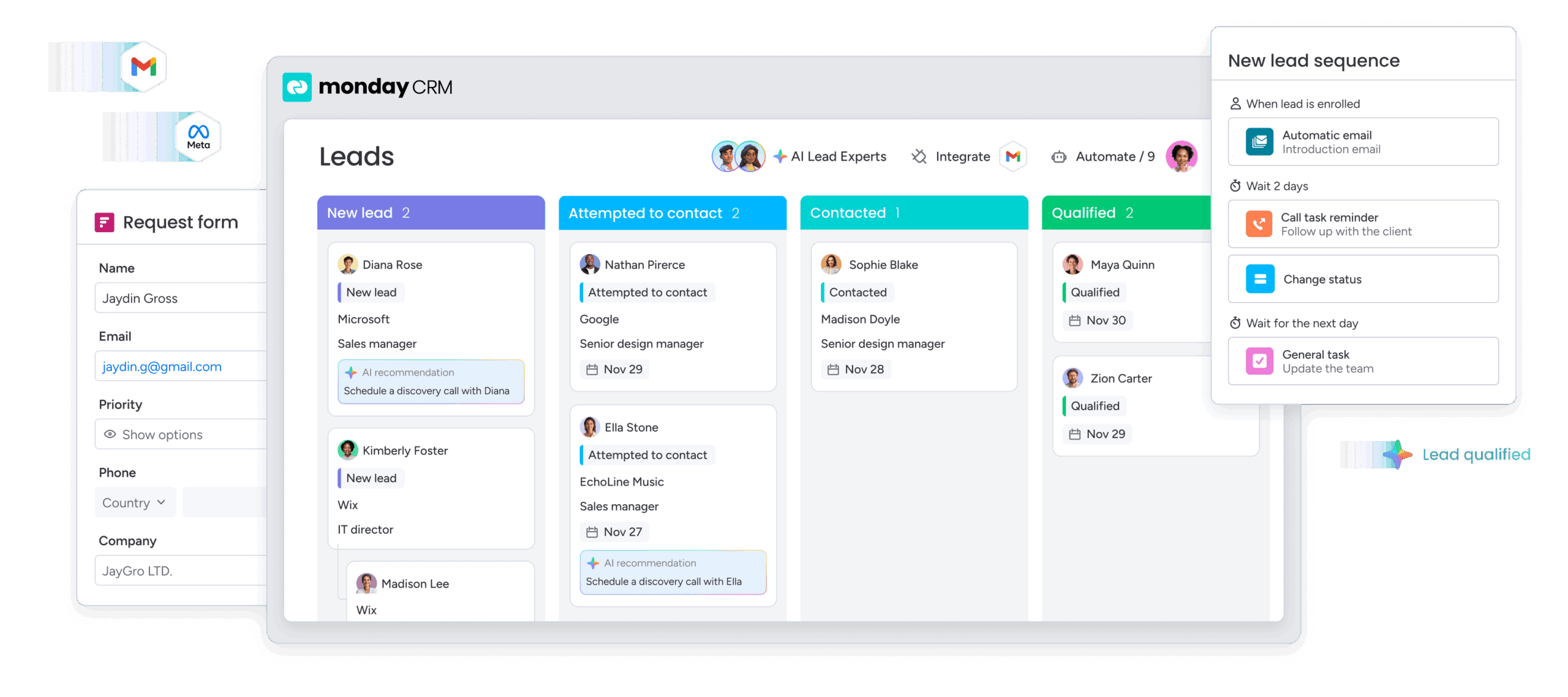
AI lead prioritization transforms prospect engagement by automatically analyzing diverse data sets to rank leads based on their conversion probability. The system processes demographic profiles, behavioral signals, engagement history, and situational context — complex variables that are impossible for sales development representatives to evaluate manually at scale.
Rather than relying on limited information and intuition to evaluate individual leads, organizations leverage AI processes hundreds of variables simultaneously. This identifies which prospects require immediate attention and which should be funneled into nurture tracks or deprioritized.
Consequently, SDRs gain a clear understanding of contact hierarchy and the underlying data points that will make their outreach resonate with the prospect’s specific situation.
How does AI identify high-value leads?
AI identifies high-value leads through pattern recognition. It analyzes characteristics and behaviors of deals that successfully closed in the past, then finds current prospects who exhibit similar patterns.
AI examines your historical sales data to understand what your best customers looked like before buying:
- Content consumption patterns: analysis of the specific resources or documentation high-value leads utilized during their research phase.
- Website engagement metrics: evaluation of the depth and frequency of interactions with digital assets, such as pricing pages or product demos.
- Firmographic indicators: identification of organizational characteristics, including company size, industry, and growth stage, that define a successful lead profile.
- Outreach receptivity: examination of historical response patterns and engagement levels demonstrated during previous sales communications.
When new leads enter your system, the AI analyzes signals like content downloads, pricing page visits, and email engagement. By comparing these actions against historical success patterns, it instantly identifies prospects who mirror the profile of buyers ready to convert.
The technology behind smart lead scoring
Machine learning algorithms power AI lead prioritization by analyzing organization-specific sales data rather than relying on generic industry benchmarks. The process begins with an evaluation of historical deal data to identify the precise variables that correlate with successful conversions.
As the sales organization executes more deals and engages with new prospects, the AI continuously processes this incoming data to refine its understanding of lead value.
Unlike traditional methods, this system eliminates the need for manual rule updates or constant recalibration. It automatically adjusts scoring models in response to shifting market conditions, evolving buyer behaviors, or changes in product positioning.
Key components of AI prioritization systems
AI lead prioritization systems comprise several interconnected elements that work together to deliver accurate, actionable recommendations. Here’s what matters for your sales process:
- Data integration layer: connects to your CRM, marketing automation platform, website analytics, email systems, and third-party data sources to create a unified view of each lead’s profile and behavior across all touchpoints.
- Scoring algorithms: analyze historical patterns and current lead attributes to calculate conversion probability scores, typically ranging from 0-100, with higher scores indicating leads more likely to convert based on your specific sales history.
- Real-time processing engine: continuously monitors lead activity and updates scores as new information becomes available, ensuring SDRs always work with current prioritization rather than outdated rankings.
- User interface and workflow integration: presents prioritized lead lists directly within existing sales workflows, showing not just scores but the specific factors driving each lead’s ranking so SDRs understand why certain prospects deserve immediate attention.

What is AI lead prioritization for SDRs?
AI lead prioritization functions continuously, processing incoming information to adjust lead rankings based on the most recent signals. This real-time capability provides a competitive advantage by allowing sales development teams to engage high-intent prospects at the optimal moment of readiness.
The effectiveness of this system lies in its ability to aggregate and analyze multiple data streams simultaneously. By identifying complex patterns across thousands of leads (insights that often remain undetected during manual review) AI ensures that prioritization remains accurate and dynamic.
Data sources AI uses for lead analysis
AI lead prioritization systems pull info from multiple sources to show you exactly how ready each prospect is to buy. The real power? Combining these sources instead of looking at them separately:
- CRM data: historical interaction records, deal stage progression, previous conversations, and relationship history provide context about existing engagement and help identify patterns in how similar leads have converted.
- Website behavior: page visits, time spent on specific content, return frequency, and navigation patterns reveal what prospects are researching and how seriously they’re evaluating solutions.
- Email engagement: open rates, click-through behavior, response timing, and content preferences show which prospects are actively consuming your messaging.
- Social media activity: LinkedIn profile changes, company posts, job transitions, and engagement with industry content signal organizational changes that might create buying opportunities.
- Company news and events: funding announcements, executive changes, expansion plans, and industry developments indicate when organizations might have budget, urgency, or strategic priorities that align with your solution.
- Technographic data: current technology stack, recent software purchases, and usage patterns help identify prospects whose existing systems create natural fit or pain points your product addresses.
A prospect who visits your pricing page once might not be high-priority. But that same visit plus recent funding, multiple team members engaging with content, and tech stack gaps? That’s a strong buy signal AI spots instantly.
Intent signals and behavioral scoring
Intent signals represent specific actions indicating that a prospect is actively researching solutions and progressing toward a purchase decision. The significance of these signals varies based on context and timing because not all engagement points carry equal weight in a professional sales cycle.
While a single resource download indicates general interest, the convergence of multiple signals suggests an accelerated buying cycle. Examples include several whitepaper downloads within a single week paired with webinar attendance and pricing page visits. AI evaluates these indicators by analyzing both the individual action and broader behavioral patterns over time to distinguish casual research from serious purchase intent.
This analytical approach allows the system to identify critical momentum shifts such as a prospect suddenly increasing engagement after a period of inactivity. Such behavioral changes often correlate with new organizational priorities or budget availability.
Conversely, AI identifies negative signals including email unsubscribes or extended periods of non responsiveness. This ensures that these leads are deprioritized to maintain focus on high probability opportunities.
Real-time updates and continuous prioritization
AI lead prioritization operates on a continuous feedback loop, ensuring that rankings reflect immediate behavioral shifts rather than historical data. This automated adjustment process maintains pipeline accuracy without requiring manual intervention from sales development representatives.
The system dynamically recalibrates lead scores based on a variety of real-time indicators:
- Competitive research activity: lead scores may increase when intent data providers detect a prospect visiting competitor websites, signaling an active buying cycle.
- Organizational shifts: scores may decrease following public announcements such as hiring freezes or budget reallocations, which reduce the likelihood of a near-term purchase.
- Engagement decay: priority levels drop automatically if a prospect fails to interact with recent outreach, allowing teams to pivot away from unresponsive leads.
- Growth and expansion signals: prospects may surge to the top of the priority list after announcing expansion plans or exhibiting high-intent behaviors like visiting a pricing page.
This continuous synchronization ensures that an SDR’s daily contact list remains optimized. A lead identified as a top priority in the morning may be superseded by mid-day if another prospect exhibits stronger, more immediate buying signals.
AI-powered vs traditional lead scoring: key differences
AI-powered lead scoring isn’t just a small upgrade over traditional methods. It’s a complete shift in how sales teams identify and prioritize opportunities. The table below demonstrates how these approaches differ:
| Dimension | Traditional lead scoring | AI-powered lead scoring |
|---|---|---|
| Speed of analysis | Hours to days for manual research and scoring updates | Seconds to process hundreds of data points and update scores continuously |
| Data sources used | Limited to CRM fields and basic demographic data | Integrates behavioral signals, intent data, technographics, and real-time activity across multiple platforms |
| Accuracy over time | Degrades as market conditions change and scoring rules become outdated | Improves continuously by learning from actual conversion outcomes and adapting to new patterns |
| Manual maintenance required | Constant rule adjustments and threshold updates needed to maintain relevance | Self-optimizing system requires minimal human intervention once properly configured |
| Adaptability to change | Requires manual reconfiguration when buyer behavior or market dynamics shift | Automatically detects and responds to changing patterns without explicit reprogramming |
Speed and scale of analysis
AI processes in seconds what would take humans hours to review manually. A single SDR might spend 15-20 minutes researching one lead. With a list of 100 leads, that’s 25-33 hours of research time before making a single contact.
AI analyzes those same 100 leads in under a minute, evaluating hundreds of variables for each prospect simultaneously. This speed advantage translates directly to SDR productivity. Instead of spending most of their day researching, SDRs can focus on having conversations with the qualified prospects AI has already identified and prioritized.
Accuracy and predictive power
AI’s pattern recognition capabilities improve prediction accuracy over time by continuously learning from actual conversion outcomes. Traditional scoring relies on static criteria that may or may not correlate with actual buying behavior in your specific market.
If the AI predicts a lead has 75% conversion probability but that lead doesn’t convert, the system analyzes why its prediction was wrong and adjusts future scoring accordingly. This feedback loop means AI accuracy improves with every deal, while traditional scoring accuracy degrades unless someone manually updates the rules.
Adaptability to market changes
AI automatically adjusts to new trends, seasonal patterns, and industry shifts without requiring manual rule updates. When buyer behavior changes, AI detects these shifts in the data and adjusts its scoring criteria accordingly.
In contrast, traditional scoring would continue using outdated rules until someone notices the pattern change and manually reconfigures the system. Sales leaders who’ve experienced the frustration of outdated lead scoring criteria recognize this adaptability as a critical operational advantage.
5 steps to implement AI lead prioritization for your SDR team
Implementing AI lead prioritization follows a proven process that balances technical setup with organizational change management. These steps reflect real-world implementations across hundreds of sales organizations, addressing both the system configuration and the human factors that determine success.
Step 1: define your ideal customer profile
AI needs parameters about what constitutes a good lead for your specific business before it can accurately prioritize prospects. Start by analyzing your best customers: the accounts that closed quickly, implemented successfully, and generated strong ROI.
Identify the characteristics these customers share:
- Company size ranges: the employee count or revenue brackets of the most successful accounts.
- Industry verticals: the specific sectors or sub-verticals where the product shows the highest product-market fit.
- Technology stacks: the existing software environments that create a natural integration point or need.
- Organizational structures: the specific department hierarchies and decision-making roles involved in past deals.
- Growth stages: the maturity level of the target organization, such as early-stage expansion or established enterprise.
Go beyond basic demographics to include behavioral patterns. How did these customers engage during the sales process? What content did they consume? Which pain points drove their purchase decision?
Document these patterns in detail because they form the foundation for AI accuracy. This definition work typically takes 1-2 weeks and involves collaboration between sales, marketing, and customer success teams.
Step 2: set up data integration and enrichment
AI lead prioritization requires connecting all relevant data sources to create a complete view of each prospect’s profile and behavior. Focus on integrating these core pillars::
- Customer Relationship Management (CRM): the primary source for relationship history and historical deal data.
- Marketing automation platforms: data regarding email engagement and high-value content consumption.
- Website analytics: behavioral signals captured during the digital research phase.
- Intent data providers: external signals that indicate active market research beyond owned channels.
Address data quality issues before connecting systems to AI. Clean up duplicate records, standardize field formats, and establish governance processes for ongoing data hygiene.
Organizations using solutions like monday CRM benefit from pre-built integrations to major marketing and sales platforms, plus native enrichment capabilities that automatically enhance lead records without manual data entry.
Step 3: configure AI scoring parameters
Setting up the AI system involves training it on your historical deal data and establishing thresholds for different priority levels. Upload at least 12-24 months of closed deals so the AI has sufficient examples to identify patterns.
Establish score ranges that map to priority levels:
- 80-100: “Contact immediately”.
- 60-79: “High priority this week”.
- 40-59: “Standard follow-up”.
- Below 40: “Nurture or disqualify”.
These thresholds should align with your team’s capacity. If SDRs can only handle 20 high-priority leads daily, calibrate scoring so approximately that number falls into the top tier.
Step 4: train your team on AI workflows
Change management determines whether AI implementation succeeds or fails, regardless of technical sophistication. SDRs need to understand how AI recommendations work, when to trust the system, and how to provide feedback that improves accuracy over time.
Therefore, start training by explaining the data sources and logic behind AI scoring. Show SDRs how to interpret lead scores and the specific factors driving each ranking.
Address the common concern that AI will replace human judgment by emphasizing that AI handles data analysis while SDRs provide relationship intelligence and strategic thinking that machines can’t replicate.
Step 5: monitor and optimize performance
AI implementation is iterative, not set-and-forget. Track metrics that indicate AI effectiveness:
- Lead conversion rates: the percentage of prioritized leads that progress to the next stage.
- Time to first meeting: the speed at which high-intent leads are converted into active conversations.
- SDR productivity: the volume of meaningful interactions generated per representative.
- Forecast accuracy: the reliability of pipeline projections based on AI-scored opportunities.
Compare these metrics to pre-AI baselines to quantify impact and review AI recommendations weekly during the first month to identify patterns in scoring accuracy.
Gather SDR feedback about which recommendations proved accurate and which missed the mark. Most organizations see initial results within 30 days and reach optimal performance after 90 days of continuous optimization.
7 ways SDRs use generative AI to prioritize leads
Generative AI transforms lead prioritization from a manual research task into an automated intelligence system that continuously identifies opportunities and recommends actions. These seven applications demonstrate how AI creates measurable productivity gains and conversion improvements for SDR teams.
1. Analyze buying intent signals across multiple channels
AI monitors prospect behavior across websites, social media, email, and other touchpoints to identify when someone transitions from passive research to active buying mode. The system tracks:
- Content downloads: the acquisition of technical papers, case studies, or specialized resources.
- Pricing page visits: multiple views of cost structures or subscription models.
- Product comparison research: engagement with documentation that compares different solution providers.
- Webinar attendance: participation in live or on-demand educational sessions.
- Competitor website visits: external signals indicating active evaluation of the broader market.
When a prospect downloads three case studies in one week, attends a product demo webinar, and visits your pricing page twice, AI recognizes this pattern as strong buying intent and immediately elevates that lead’s priority.
Teams using platforms like monday CRM can leverage AI capabilities to detect sentiment across communications and extract key information automatically, helping SDRs spot high-intent signals without sifting through long activity logs.
2. Generate personalized outreach at scale
AI uses lead intelligence to suggest personalized messaging approaches for each prospect based on their specific profile, behaviors, and demonstrated interests. Instead of generic templates that only insert the prospect’s name, AI-powered personalization references:
- Recent organizational developments: publicly available news regarding company expansions, mergers, or leadership changes.
- Specific pain points: critical challenges identified through an analysis of the prospect’s content consumption patterns.
- Relevant industry benchmarks: success stories or case studies from organizations with similar firmographic profiles.
The system can generate these personalized suggestions for hundreds of leads simultaneously, giving SDRs the efficiency of mass outreach with the effectiveness of one-to-one customization.
The AI email assistant feature within solutions like monday CRM helps compose emails directly within the platform, using context from the lead’s activity timeline.
3. Identify optimal contact timing
AI analyzes patterns to determine the best time to reach each prospect based on their behavior, industry, role, and historical response data. The system learns that prospects in financial services respond to morning calls while technology executives prefer afternoon outreach.
Beyond these general patterns, AI identifies individual timing preferences by tracking when specific prospects have engaged with previous outreach. If a lead consistently opens emails within an hour of receiving them on Wednesday mornings, AI recommends scheduling future messages for that window.
4. Predict lead conversion probability
AI assigns probability scores that help SDRs focus their limited time on leads most likely to convert into customers. These predictions go beyond simple “hot, warm, cold” classifications by calculating specific conversion likelihood percentages based on how closely each lead matches historical patterns of successful deals.
SDRs use these scores for territory planning and time allocation. Sales managers gain forecast accuracy because they can weight pipeline based on AI-predicted conversion probabilities rather than relying solely on SDR intuition or arbitrary stage-based percentages.
5. Automate lead research and enrichment
AI automatically gathers and organizes prospect information from multiple sources, eliminating the hours SDRs traditionally spend on manual research before making contact. The system pulls data from:
- Professional profiles: information regarding roles, responsibilities, and career history.
- Corporate websites: data on product offerings, company mission, and headquarters location.
- Public news sources: recent press releases or articles regarding the organization.
- Financial and growth databases: information concerning funding rounds and technology stack identifiers.
The AI Timeline Summary feature on monday CRM creates a short, readable summary of all communication events, including emails, calls, meetings, and notes. This helps sales teams save valuable time by seeing the full story in seconds rather than scrolling through months of activity.
6. Create dynamic lead segments
AI automatically groups leads into segments based on shared characteristics, buying stage, or likelihood to convert. These segments update continuously as new information becomes available.
While traditional segmentation requires manual list building and becomes outdated quickly, AI-powered segments remain current as leads automatically enter the segment when they meet the criteria.
This enables sophisticated targeting strategies. Create a segment of high-intent prospects in the technology industry with 100-500 employees who have engaged with content about a specific pain point in the last week. AI maintains this segment automatically.
7. Get real-time next best action recommendations
AI provides specific guidance on what action to take with each lead based on the prospect’s current engagement level, previous interactions, and optimal next steps according to historical patterns. When an SDR opens a lead record, they see recommendations:
- Immediate outreach triggers: notifications to call a prospect who has repeatedly visited high intent pages.
- Specific content suggestions: guidance to send a particular case study based on a recent whitepaper download.
The autofill capabilities in advanced platforms like monday CRM can assign labels, detect sentiment, and extract information automatically, giving SDRs actionable context without manual data entry. The system also recommends when to stop pursuing a lead, helping SDRs make decisions faster.
Building your AI-human hybrid SDR team
Sales organizations face strategic decisions about how AI fits into their go-to-market structure and where human SDRs add the most value. The most effective approach combines AI’s data processing capabilities with human relationship-building skills, creating a hybrid model that outperforms either pure automation or traditional manual processes.
Choosing between AI copilots and autonomous agents
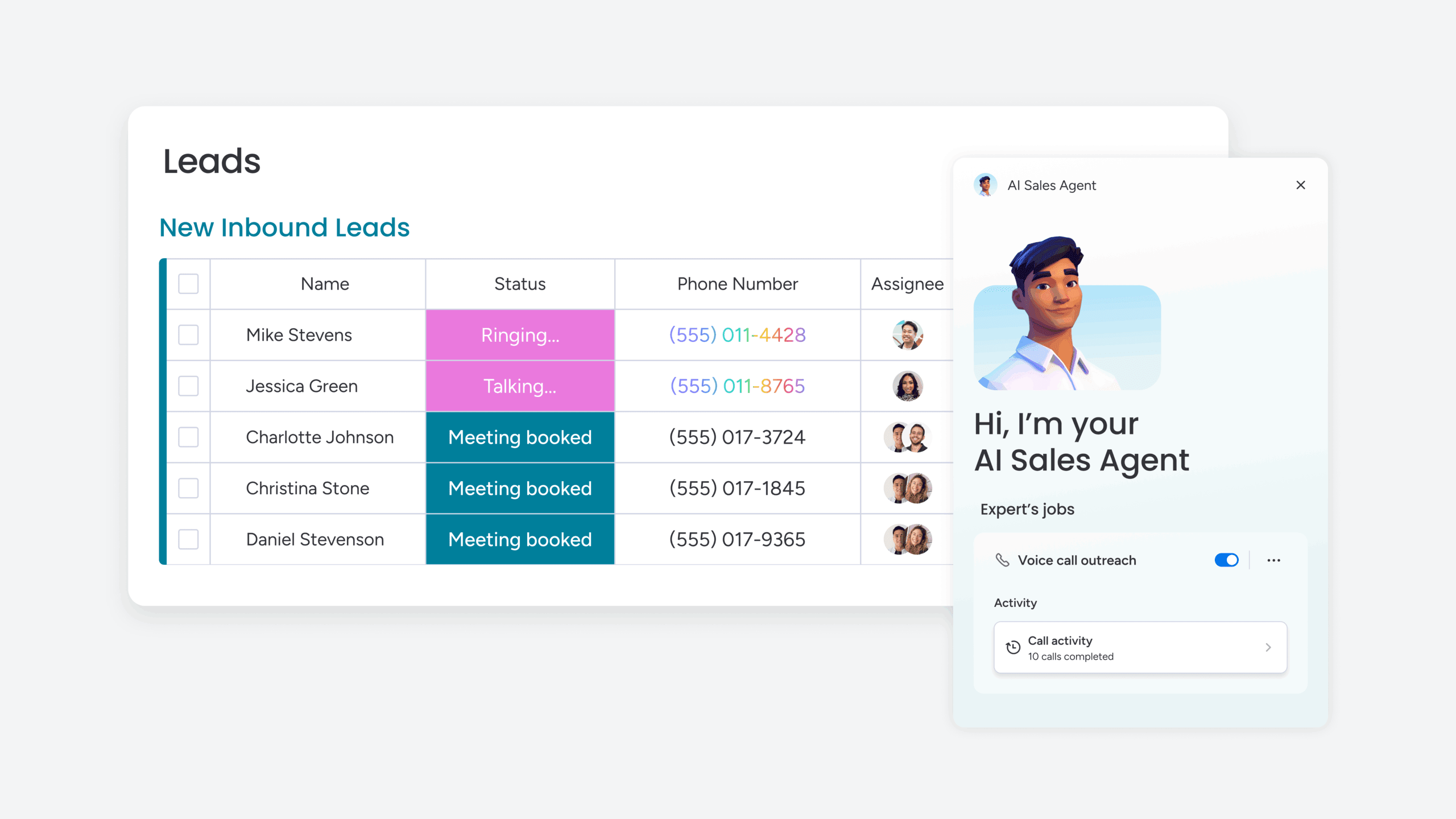
AI copilot approaches assist SDRs by providing recommendations, automating research, and suggesting actions, but humans make final decisions and execute outreach. In contrast, autonomous AI agents work independently, handling specific workflows without human intervention.
The copilot model makes sense for complex sales processes where relationship nuance matters, deal sizes justify human attention, and prospects expect personalized interaction throughout the journey. Autonomous agents work well for high-volume, lower-complexity scenarios like initial qualification, meeting scheduling, or routine follow-up.
Most organizations use a hybrid approach: autonomous agents handle repetitive workflows like lead enrichment and initial contact, while human SDRs focus on qualified conversations and relationship development.
Defining human vs AI responsibilities
Successful AI implementation requires clear delineation of which workflows AI handles and where human expertise remains essential. This division allows SDRs to focus on high-value activities that leverage uniquely human capabilities:
AI responsibilities:
- Initial lead research and data gathering: the system automatically collects and organizes information from multiple sources, creating comprehensive lead profiles without human effort.
- Lead scoring and prioritization: algorithms analyze hundreds of variables to rank leads by conversion probability, updating scores continuously.
- Routine follow-up and meeting scheduling: automated systems handle calendar coordination and send reminder emails more efficiently than manual processes.
Human responsibilities:
- Relationship building and rapport development: SDRs excel at reading emotional cues, adapting communication style, and building trust through authentic conversation.
- Objection handling and negotiation: addressing prospect concerns requires empathy, creative problem-solving, and strategic thinking.
Shared responsibilities:
- Performance analysis and forecasting: AI processes data to identify trends and predict outcomes, while humans interpret these insights within broader business context.
Creating feedback loops for continuous improvement
AI implementation succeeds when SDRs and the AI system collaborate in an ongoing learning cycle. SDR feedback on lead quality and conversion outcomes helps the AI learn and improve its recommendations over time.
Establish structured processes for capturing this feedback. When an AI-prioritized lead converts, the system reinforces the patterns that led to that prediction. When a high-scored lead doesn’t convert, SDRs provide context about why so the AI can refine its model.
Create regular review sessions where sales leadership examines AI performance metrics alongside SDR input to identify systematic issues or opportunities for optimization.
Common mistakes when implementing AI lead prioritization
Organizations often encounter predictable pitfalls when deploying AI lead prioritization. Avoiding expensive delays and suboptimal results requires understanding those mistakes.
Over-relying on AI without human oversight
AI provides powerful recommendations, but treating those suggestions as infallible leads to missed opportunities and poor prospect experiences. The system might score a lead highly based on behavioral signals without understanding that the prospect is researching for a future project, not an immediate purchase.
Therefore, successful implementation maintains human judgment in the lead prioritization process. SDRs should understand the factors driving each AI recommendation and feel empowered to override when they have information the system doesn’t capture.
Ignoring data quality and governance
AI accuracy depends entirely on the quality of data it analyzes. Organizations that implement AI without first addressing data quality issues struggle with inaccurate recommendations that undermine team trust in the system.
Common problems include:
- Duplicate records: inflate engagement metrics.
- Incomplete contact information: prevents proper lead matching.
- Inconsistent field formatting: confuses pattern recognition.
Before deploying AI, establish data governance practices: regular deduplication processes, standardized field formats, and automated enrichment to fill data gaps.
Failing to align AI with your sales process
AI implementation must correspond with the existing sales methodology and buyer journey rather than forcing a sales organization to adapt to generic workflows. Discrepancies occur when AI scoring criteria fail to reflect the actual sales motion or the specific indicators of customer value.
Before configuring the system, the current sales process should be documented to identify how leads typically progress from awareness to purchase. The insights allow for the customization of AI parameters so that recommendations support and reinforce a proven sales approach rather than creating conflict with established strategies.
Neglecting team training and adoption
Technology alone is insufficient to drive organizational results. Inadequate training often leads to poor adoption because sales development representatives may lack an understanding of how to apply AI recommendations, distrust the system’s logic, or fail to see how the technology integrates into their daily workflow.
Effective training programs must go beyond basic feature demonstrations to address the strategic objectives of the AI implementation. Highlighting how the system assists in achieving quotas and resolving specific operational bottlenecks is essential for long-term success.
Identifying and empowering internal champions who embrace the technology early can facilitate peer mentorship and accelerate adoption across the broader team.
How does monday CRM transform lead prioritization with AI?
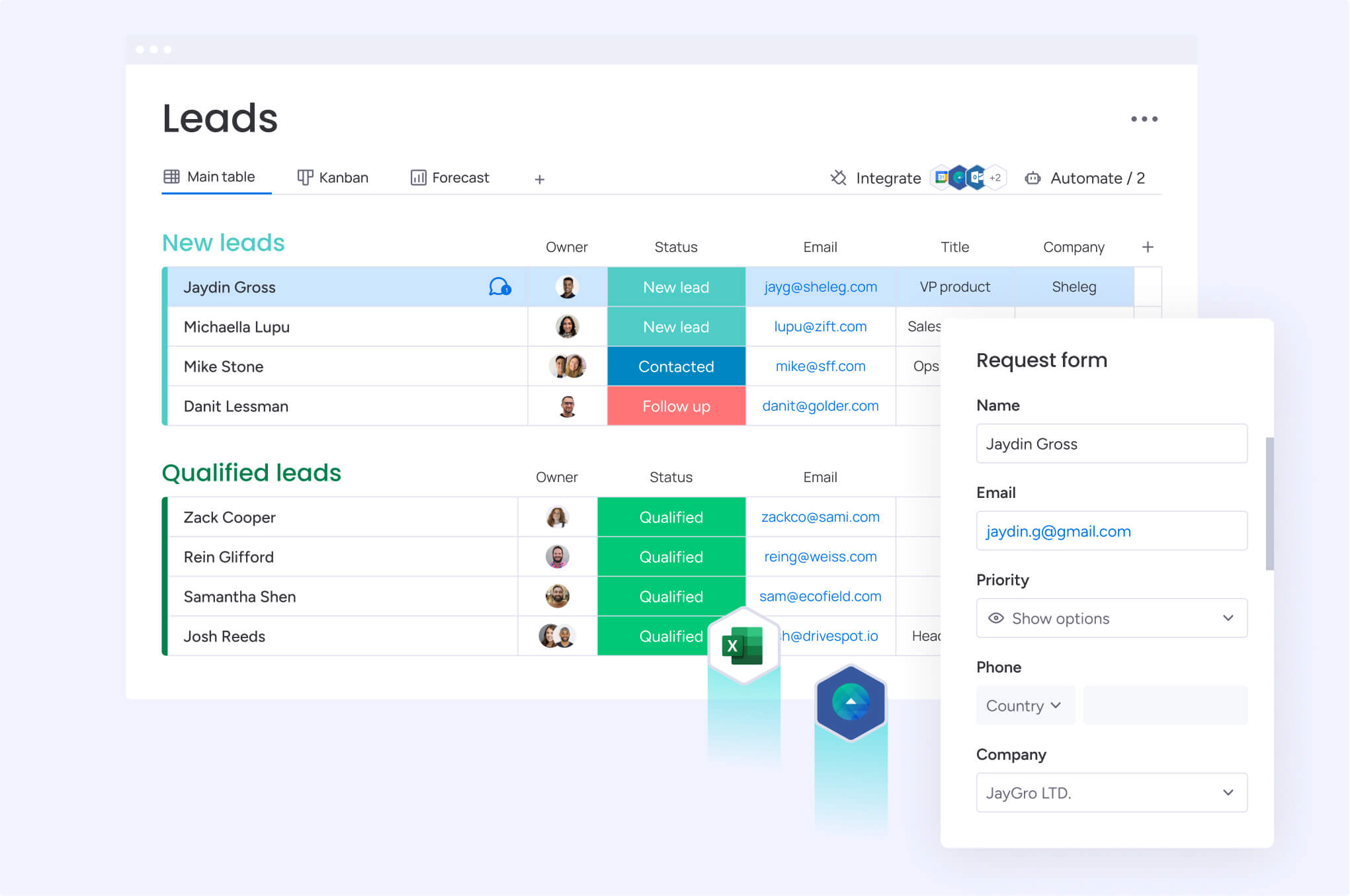
Revenue teams using monday CRM gain access to AI-powered lead prioritization through an intuitive platform that combines ready-to-use AI capabilities with flexible customization. The system addresses the core challenges SDR teams face by automating intelligence gathering and surfacing actionable insights directly within existing workflows.
AI capabilities that simplify SDR workflows
The platform’s AI capabilities enable SDRs to add sophisticated functionality to their lead management process without technical expertise or IT support. These pre-built AI components integrate directly into boards where teams already work, making AI functionality accessible through simple point-and-click configuration.
The solution offers several AI actions that SDRs can apply to any column on their boards. These capabilities work together within a single platform to transform how teams prioritize and engage with leads:
- Detect sentiment: determines whether text input can be categorized as positive, negative, or neutral, helping SDRs prioritize follow-up based on prospect receptiveness.
- Extract information: automatically extracts and organizes key information from files like invoices, resumes, or contracts, eliminating manual data entry.
- Assign label: analyzes source text and assigns appropriate labels to Status or Dropdown columns based on your defined criteria.
- Assign person: chooses the best teammate for each lead based on defined roles and skills, ensuring optimal assignment.
- Custom action: allows you to give specific instructions to AI, referencing any column on your board for input.
Timeline summary for instant lead context
The AI Timeline Summary simplifies the research process that many sales reps and managers have to take to gain a complete understanding of their team’s history with a client. It creates a short, readable summary of all communication events, including emails, calls, meetings, and notes.
This helps sales and support teams save valuable time. Instead of scrolling through months of activity logs, SDRs see the full story in seconds. They know exactly where each lead stands and what to say next.
Seamless integration with your sales stack
The platform connects with existing platforms and data sources to create a unified view of lead information, eliminating the data silos that typically hamper lead prioritization efforts. Native integrations with major marketing automation platforms, email systems, calendar applications, and data enrichment services ensure comprehensive data collection.
When a prospect engages with marketing content tracked in your automation platform, that engagement data immediately appears in monday CRM and influences AI lead scoring. This connectivity means SDRs work from a single interface with complete information rather than switching between multiple platforms.
Real results: save 15 hours per week
SDR teams achieve measurable productivity improvements and conversion rate increases through AI-powered lead prioritization. The time savings come from multiple sources:
- Automated lead research: eliminates hours that SDRs previously spent manually gathering prospect information
- AI-powered prioritization: reduces time wasted on low-quality leads, allowing SDRs to focus conversations on prospects most likely to convert
Organizations also see improved forecast accuracy because AI conversion predictions provide more reliable pipeline assessment than subjective SDR estimates. Sales leaders gain confidence in their numbers, can allocate resources more effectively, and identify coaching opportunities when individual SDR performance diverges from AI-predicted outcomes.

“With monday CRM, we’re finally able to adapt the platform to our needs — not the other way around. It gives us the flexibility to work smarter, cut costs, save time, and scale with confidence.”
Samuel Lobao | Contract Administrator & Special Projects, Strategix
“Now we have a lot less data, but it’s quality data. That change allows us to use AI confidently, without second-guessing the outputs.”
Elizabeth Gerbel | CEO
“Without monday CRM, we’d be chasing updates and fixing errors. Now we’re focused on growing the program — not just keeping up with it."
Quentin Williams | Head of Dropship, Freedom Furniture
“There’s probably about a 70% increase in efficiency in regards to the admin tasks that were removed and automated, which is a huge win for us.“
Kyle Dorman | Department Manager - Operations, Ray White
"monday CRM helps us make sure the right people have immediate visibility into the information they need so we're not wasting time."
Luca Pope | Global Client Solutions Manager at Black Mountain
“In a couple of weeks, all of the team members were using monday CRM fully. The automations and the many integrations, make monday CRM the best CRM in the market right now.”
Nuno Godinho | CIO at VelvUpgrade your SDR team with AI lead prioritization
AI lead prioritization represents a fundamental shift in how sales teams identify and engage prospects. SDR teams that embrace AI-powered workflows gain significant competitive advantages through improved conversion rates, reduced research time, and more accurate forecasting.
The technology has matured beyond experimental phase into proven business impact. Organizations implementing AI lead prioritization typically see 20-40% improvement in lead conversion rates and save 15-25 hours per SDR per week within 90 days.
Success requires more than technology deployment. Teams must address data quality, align AI with existing sales processes, and invest in proper training to ensure adoption. The most effective implementations combine AI’s analytical power with human relationship intelligence, creating hybrid workflows that outperform either pure automation or traditional manual processes.
Frequently asked questions
How long does it take to implement AI lead prioritization?
Most AI lead prioritization systems can be set up within two to four weeks, including data integration, initial configuration, and team training. The timeline depends on your data quality, number of integrations needed, and team size.
What's the average ROI of AI lead prioritization?
Organizations typically see 20-40% improvement in lead conversion rates and 15-25 hours saved per SDR per week within 90 days of implementation. ROI varies based on current processes, data quality, and adoption rates.
Can AI lead prioritization work with my existing CRM?
Most AI lead prioritization solutions integrate with popular CRMs through native connections or APIs. Data quality determines how well the AI performs, so clean, comprehensive data is essential regardless of your CRM choice.
How accurate is AI at predicting lead quality?
AI lead scoring typically achieves 70-85% accuracy in predicting conversion likelihood. Accuracy improves over time as the system learns from your specific sales data and refines its models based on actual outcomes.
Do SDRs need technical skills to use AI prioritization?
SDRs need basic training on interpreting AI recommendations and providing feedback to improve system accuracy. No coding or technical expertise is required for daily use, as most platforms offer intuitive interfaces designed for non-technical users.
What happens when AI and SDR opinions differ on lead quality?
SDRs should investigate AI recommendations that differ from their intuition, as both perspectives provide value. The best approach combines AI data insights with human relationship intelligence, allowing SDRs to override AI when they have context the system lacks.

 Get started