


Healthcare sales face a reality that standard B2B playbooks can’t address. Unlike traditional industries, healthcare navigates strict HIPAA requirements, complex stakeholder chains, and sales cycles lasting 12–24 months. A lead qualified in January may vanish during budget planning, only to resurface months later for regulatory review.
The stakes are equally high because technology decisions directly impact patient care. Consequently, healthcare professionals demand peer-reviewed evidence and rigorous security audits before committing. Sales teams must maintain engagement over these extended periods while forecasting revenue amidst unpredictable timelines.
This roadmap navigates the medical market by analyzing core challenges, from stakeholder mapping to building clinical trust. We establish ten strategies to nurture leads through the 24-month marathon, ultimately helping you build a specialized tech stack and AI framework to prioritize opportunities while maintaining strict compliance.
Key takeaways
- Map your complex stakeholder network early: healthcare decisions involve 6-10 people across departments, so identify all decision-makers upfront to avoid wasting months on the wrong contacts.
- Plan for 12-24 month sales cycles: healthcare organizations take extensive time to evaluate solutions, requiring consistent touchpoints and realistic revenue forecasting over extended periods.
- Build HIPAA-compliant processes from day one: every email, form, and database must meet strict healthcare regulations — retrofitting compliance later creates costly delays and legal risks.
- Centralize your healthcare pipeline in one platform: track multiple stakeholders, extended timelines, and complex approval processes using solutions like monday CRM that are designed to handle healthcare’s unique sales complexity.
- Create role-specific content for each stakeholder: clinical staff need peer-reviewed studies while executives want ROI data: generic content fails when each person evaluates different criteria.
What makes healthcare lead generation different?
Forget everything you know about typical B2B sales. In healthcare, you’re not just selling: you’re navigating a regulatory maze, convincing six to ten stakeholders, and staying persistent through sales cycles that can stretch well beyond a year. When you’re trying to reach hospitals, medical device companies, or healthcare IT providers, the standard B2B playbook falls short.
What is more, healthcare doesn’t just operate differently; it plays by entirely different rules. When you recognize these industry-specific constraints, you’ll stop forcing standard B2B tactics where they don’t fit and start building strategies that actually move the needle.
- Regulatory compliance shapes everything: HIPAA governs how you collect, store, and use prospect data. You need encrypted communication channels, documented consent processes, and secure data storage. These requirements change how you contact leads, what information you request, and how your team handles prospect data, which is why using a HIPAA-compliant CRM can streamline secure communications.
- Multiple stakeholders control decisions: healthcare purchases involve 6-10 people across different departments. Clinical staff evaluate functionality, IT assesses technical requirements, procurement negotiates contracts, and executives approve budgets. Each person brings different priorities and concerns to the table.
- Extended evaluation periods: healthcare organizations take 12-24 months to make purchasing decisions. Annual budget cycles, regulatory reviews, pilot testing, and implementation planning all extend timelines. You need to maintain engagement over these long periods while accurately forecasting revenue.
- Trust barriers run deep: healthcare professionals approach vendors with justified skepticism. Poor vendor decisions directly impact patient care, so leads demand peer-reviewed studies, reference calls, detailed security audits, and pilot programs before committing.
Understanding the 5 key healthcare lead generation challenges
Healthcare sales teams face a perfect storm of challenges that multiply each other’s impact. When regulatory hurdles meet multi-stakeholder decisions and extended timelines, your standard lead gen playbook isn’t just ineffective, but obsolete.
Challenge 1: reaching the right decision-makers
Healthcare organizations hide their decision-making structures behind layers of departments and titles. For instance, a hospital evaluating patient monitoring solutions might involve the Chief Medical Officer, Director of Nursing, IT Director, and CFO, each with veto power but none with sole approval authority.
As a result, you spend months engaging stakeholders who lack budget authority or implementation influence. Large healthcare systems add another layer of complexity, with regional facilities having different decision-makers than corporate headquarters.
Clinical departments maintain separate evaluation processes from administrative functions, making it nearly impossible to identify who actually drives decisions.
Challenge 2: managing long sales cycles
The 12-24 month healthcare sales cycle creates constant challenges in maintaining engagement and forecasting revenue. A qualified lead in January might go silent during budget planning, reemerge for pilot discussions, then disappear during regulatory review.
This unpredictability makes it difficult to determine whether leads are progressing or stalled indefinitely. Your team must maintain touchpoints over extended periods without appearing pushy, while executives demand accurate forecasts despite the uncertainty.
Organizations frequently lose qualified leads simply because they fail to maintain engagement during these lengthy evaluation periods, but implementing lead management software can help nurture leads more consistently.
Challenge 3: ensuring HIPAA compliance
Moreover, every interaction with healthcare leads must comply with HIPAA regulations. Marketing teams can’t use standard tracking pixels that might capture protected information. Email campaigns require encrypted channels. Lead databases need specific security controls and access logging.
Sending a follow-up email after a conference requires verification that your communication method meets HIPAA standards. Sales representatives need training on appropriate discovery questions, handling inadvertently shared patient information, and compliant documentation practices. These requirements add complexity and cost to every lead generation activity.
Challenge 4: building trust in a low-trust environment
Healthcare professionals are often skeptical due to past experiences with vendors who overpromised and underdelivered. Just ask any hospital that implemented the wrong EHR; they’re still dealing with operational chaos and patient safety concerns years later.
This high-stakes environment means leads require extensive validation before engaging seriously. They demand references from similar institutions, detailed security audit results, and lengthy pilot programs.
Your team must invest significant resources building credibility before leads will even agree to discovery conversations, extending the time and cost required to generate qualified opportunities.
Challenge 5: proving ROI to multiple stakeholders
Finally, different healthcare stakeholders evaluate ROI through completely different lenses. Building multiple business cases for the same solution becomes essential when addressing diverse priorities:
- Clinical staff: focus on patient outcomes and workflow efficiency metrics.
- Financial executives: prioritize cost reduction and revenue enhancement.
- IT departments: evaluate technical debt and integration costs.
- Compliance officers: assess risk mitigation and regulatory adherence.
A telemedicine platform needs to demonstrate improved patient satisfaction for clinicians, reduced emergency department utilization for finance, seamless EHR integration for IT, and HIPAA-compliant data handling for compliance. Building these diverse ROI cases requires deep understanding of each stakeholder’s priorities and the ability to quantify benefits in their specific terms.
10 proven healthcare lead generation strategies
These field-tested strategies have transformed healthcare sales pipelines across dozens of organizations — from scrappy medical device startups to enterprise healthcare IT companies. They’re specifically designed to tackle the regulatory hurdles, stakeholder complexity, and marathon sales cycles that make healthcare different.
1. Map your ideal healthcare customer profile
Move beyond basic buyer personas to succeed in healthcare. You need to map out exactly who influences decisions, what keeps them up at night, and how budget approvals actually flow through the organization.
Because generic profiles lead to pitching the wrong people for months, a comprehensive profile should include patient populations, existing technology, and regulatory pressures.
A hospital implementing value-based care contracts becomes a qualified lead for population health platforms. A clinic network expanding telehealth following regulatory changes represents a prime prospect for virtual care solutions.
2. Create targeted content for each stakeholder
Healthcare stakeholders consume fundamentally different content based on their evaluation role. Your content strategy needs to address each audience with the right format and focus:
- Clinical staff: peer-reviewed studies, workflow demonstrations, patient outcome data.
- Financial executives: ROI calculators, total cost analyses, reimbursement assessments.
- IT departments: technical architecture documents, security audits, integration specifications.
- Compliance officers: regulatory guides, risk assessments, audit trail documentation.
Developing four to five content pieces for each stakeholder type ensures leads receive information aligned with their evaluation criteria and decision-making authority throughout the nurturing process.
3. Implement account-based marketing for healthcare organizations
Healthcare sales benefit from ABM approaches that target specific systems with personalized campaigns. Research target accounts to understand their strategic initiatives, leadership changes, and technology investments. Then develop customized outreach addressing their specific situation.
An ABM campaign targeting a hospital system announcing expansion might focus on solution scalability across facilities. Targeting a system facing quality measure penalties would emphasize clinical outcome improvements.
The extended sales cycles and high deal values in healthcare justify the investment in personalized engagement, while complex stakeholder networks require coordinated outreach across multiple decision-makers.
4. Launch HIPAA-compliant email campaigns
Email remains highly effective for healthcare lead generation when campaigns meet regulatory requirements while maintaining engagement. HIPAA-compliant campaigns require specific elements:
- Technical requirements: encrypted communication platforms and proper consent mechanisms.
- Content guidelines: avoid requesting or discussing protected health information.
- Documentation: maintain detailed audit logs of all communications.
- Segmentation: organize audiences by role and organization type.
Effective campaigns personalize content based on recipient challenges and use educational approaches rather than aggressive sales messaging. A compliant nurturing sequence might begin with industry trend whitepapers, progress to role-specific case studies, then offer personalized consultations, maintaining encryption and consent documentation throughout.
5. Master LinkedIn for healthcare professional outreach
LinkedIn provides unique advantages because healthcare professionals actively use the platform for professional development and networking. Rather than immediately pitching solutions, you should build relationships through value-added interactions.
Optimize your profile to highlight healthcare industry experience and relevant credentials. Join healthcare-specific groups where prospects congregate. Use advanced search to identify decision-makers at target accounts.
Engage with their content through thoughtful comments and share educational content demonstrating expertise without being promotional.
6. Host educational webinars and virtual events
Since healthcare professionals value continuing education, they respond well to webinars providing genuine clinical insights. Successful healthcare webinars feature respected clinicians or executives as speakers, address pressing challenges with actionable guidance, and position your solution as one component of a broader approach.
Topics might include navigating CMS regulations, implementing evidence-based protocols, or optimizing revenue cycle operations. These events generate qualified leads because attendees self-select based on relevant challenges, provide detailed registration information, and demonstrate engagement through attendance and participation.
7. Develop strategic healthcare partnerships
Healthcare lead generation accelerates through partnerships with complementary vendors, consultants, and industry associations. Consider these partnership opportunities:
- Implementation consultants: recommend your solution during technology assessments.
- Healthcare architecture firms: specify technology requirements for new facilities.
- Industry associations: provide member directories and speaking opportunities.
These partnerships provide warm introductions to qualified leads who trust the referring partner, significantly reducing the time required to establish credibility and begin sales conversations.
8. Optimize for healthcare SEO and intent data
Healthcare buyers conduct extensive research before engaging vendors. Target specific keywords decision-makers use when researching solutions, such as “HIPAA-compliant patient engagement platform” or “hospital supply chain optimization software.”
Content should address questions buyers ask during different evaluation stages, from early educational queries to late-stage vendor comparisons. Intent data providers track when target accounts visit industry websites, download content, or search solution-related terms, enabling outreach when prospects are actively researching.
9. Build hybrid sales models for healthcare
Healthcare sales complexity requires coordinated approaches combining multiple channels. This hybrid model optimizes resource allocation while maintaining the personal touch healthcare professionals value:
- Inside sales: handle initial qualification, schedule meetings, maintain consistent communication.
- Field sales: conduct on-site demonstrations, meet clinical staff, build personal relationships.
- Digital touchpoints: maintain engagement between interactions through email, webinars, and online resources.
Inside sales efficiently manages high-volume activities while field resources focus on high-value relationship building and closing activities.
10. Create referral programs that drive medical leads
Healthcare professionals trust peer recommendations above all other information sources. Effective referral programs incentivize customers to introduce vendors to colleagues, provide references during evaluations, and share success stories through case studies or presentations.
Incentives might include service credits, charitable donations, or recognition through advisory boards and speaking opportunities. Make referrals easy through simple forms, provide talking points for introductions, and ensure rapid follow-up when referrals are submitted.
Healthcare referrals come pre-qualified — the referring customer has already validated that the prospect faces similar challenges and would benefit from the solution.

“With monday CRM, we’re finally able to adapt the platform to our needs — not the other way around. It gives us the flexibility to work smarter, cut costs, save time, and scale with confidence.”
Samuel Lobao | Contract Administrator & Special Projects, Strategix
“Now we have a lot less data, but it’s quality data. That change allows us to use AI confidently, without second-guessing the outputs.”
Elizabeth Gerbel | CEO
“Without monday CRM, we’d be chasing updates and fixing errors. Now we’re focused on growing the program — not just keeping up with it."
Quentin Williams | Head of Dropship, Freedom Furniture
“There’s probably about a 70% increase in efficiency in regards to the admin tasks that were removed and automated, which is a huge win for us.“
Kyle Dorman | Department Manager - Operations, Ray White
"monday CRM helps us make sure the right people have immediate visibility into the information they need so we're not wasting time."
Luca Pope | Global Client Solutions Manager at Black Mountain
“In a couple of weeks, all of the team members were using monday CRM fully. The automations and the many integrations, make monday CRM the best CRM in the market right now.”
Nuno Godinho | CIO at VelvBuild your healthcare lead scoring framework
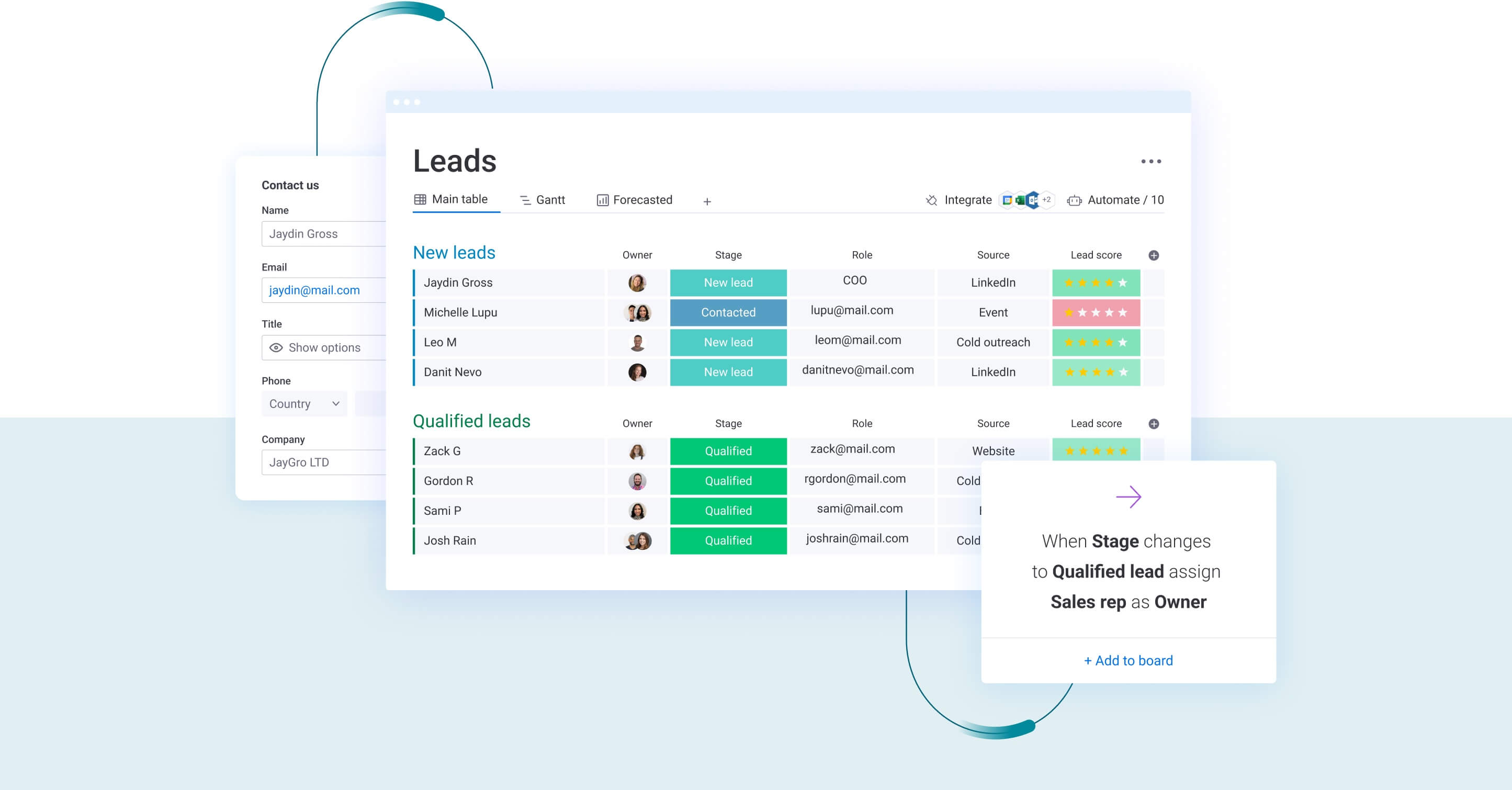
Your standard lead scoring model will mislead you in healthcare sales. You need a framework that recognizes when a Director of Nursing has more decision power than a VP, spots the difference between serious evaluation and casual research, and accounts for those marathon 12-24 month sales cycles.
Define healthcare-specific scoring criteria
Healthcare lead scoring prioritizes factors indicating both organizational fit and genuine purchasing authority. Clinical role receives higher weighting because clinicians often drive evaluation and can veto solutions regardless of executive support.
Budget authority assessment goes beyond job title to understand approval processes. A Director at a community hospital may have more authority than a VP at an academic medical center requiring committee approval. Regulatory compliance needs receive explicit scoring because leads facing compliance deadlines convert faster than those with general interest.
Specific scoring weights might include:
- C-suite clinical roles (CMO, CNO): 25 points.
- Department directors with budget authority: 20 points.
- Organizations facing compliance deadlines: 15 points.
- Organizations in technology planning cycles: 10 points.
Implement behavioral lead scoring models
Healthcare behaviors provide stronger conversion signals than general engagement metrics. Downloading HIPAA compliance documentation indicates serious evaluation. Attending clinical evidence webinars signals internal support building among stakeholders requiring peer-reviewed validation.
Behavioral scoring should assign higher points to late-stage activities:
- Requesting pricing information: 30 points.
- Scheduling demonstrations with multiple stakeholders: 25 points.
- Downloading implementation guides: 20 points.
- Attending outcome or ROI webinars: 15 points.
- General content consumption: 10 points.
Frequency and recency matter significantly. Weekly engagement over three months scores higher than the same interactions spread over twelve months, indicating active rather than passive interest.
Select the right technology for medical lead generation
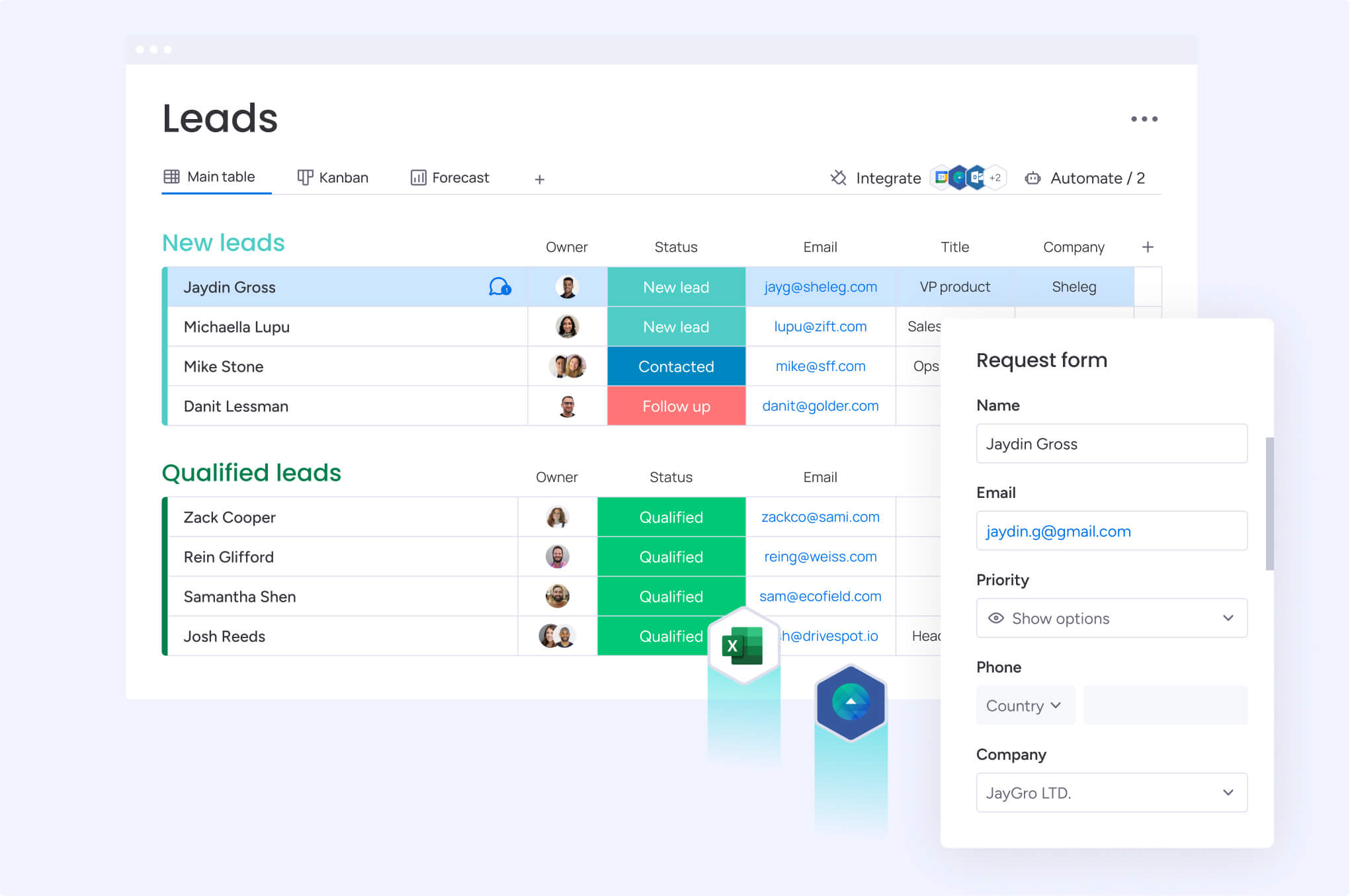
Standard B2B platforms are not equipped for healthcare lead generation. Your tech stack needs military-grade security, bulletproof compliance features, and the ability to track complex stakeholder networks; or you’ll create more problems than you solve.
The technology stack must support HIPAA-compliant data handling, track multiple stakeholders across extended cycles, integrate with healthcare systems, and provide automation for consistent engagement over 12-24 months.
- Essential CRM features: healthcare CRMs must offer HIPAA-compliant encryption, audit logging, and role-based access. They require sophisticated contact management for multiple stakeholders per account and custom fields for clinical data like bed counts and patient populations.
- Integration requirements: your ecosystem must connect with HIPAA-compliant email providers like Paubox or Virtru. Integrating with healthcare databases like Definitive Healthcare provides automatic enrichment with patient volumes and executive contacts, while EHR integration helps teams understand existing clinical workflows.
How does monday CRM address healthcare lead generation challenges?
Healthcare lead management presents distinct operational challenges that require specialized CRM capabilities. Organizations need systems designed to accommodate extended evaluation cycles, coordinate communication across multiple stakeholders, and maintain compliance with healthcare regulations through centralized data management.
Here’s how monday CRM tackles healthcare’s toughest lead generation challenges:
- HIPAA-compliant infrastructure: built-in security features including encryption, audit logging, and role-based access controls ensure your lead data meets healthcare regulatory standards from day one.
- Multi-stakeholder tracking: visualize and manage all six to ten decision-makers per account with relationship mapping, interaction history, and stakeholder-specific communication tracking that prevents anyone from falling through the cracks.
- Extended cycle management: custom pipeline views and automated reminders keep your team engaged with leads over 12-24 month sales cycles, with visual indicators showing exactly where each opportunity stands.
- Healthcare-specific customization: create custom fields to capture bed counts, patient populations, technology infrastructure, regulatory pressures, and other healthcare-specific data points that inform your sales strategy.
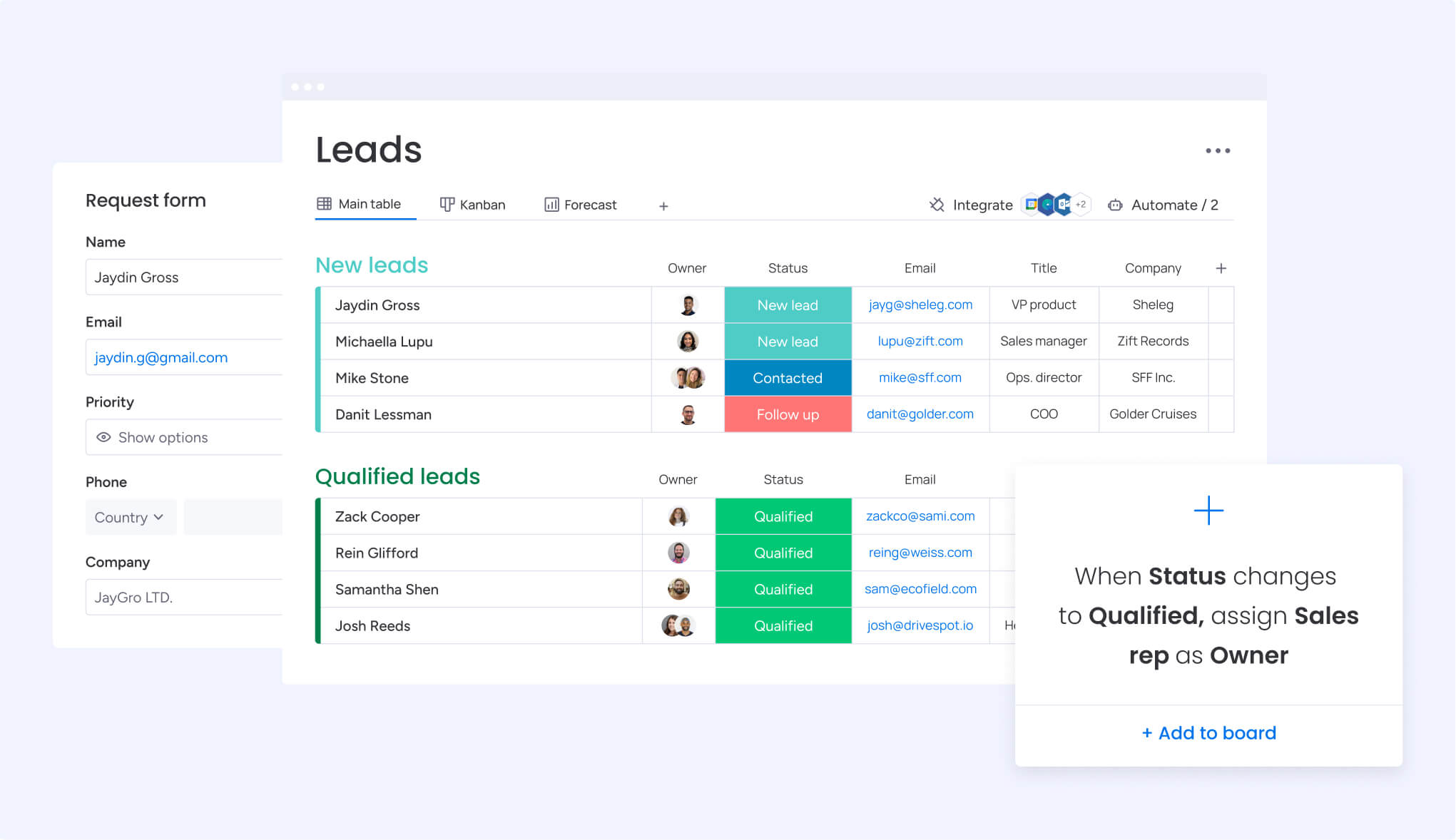
- Automated lead nurturing: set up automated workflows that maintain consistent touchpoints with prospects over extended evaluation periods, ensuring leads receive the right content at the right time without manual intervention.
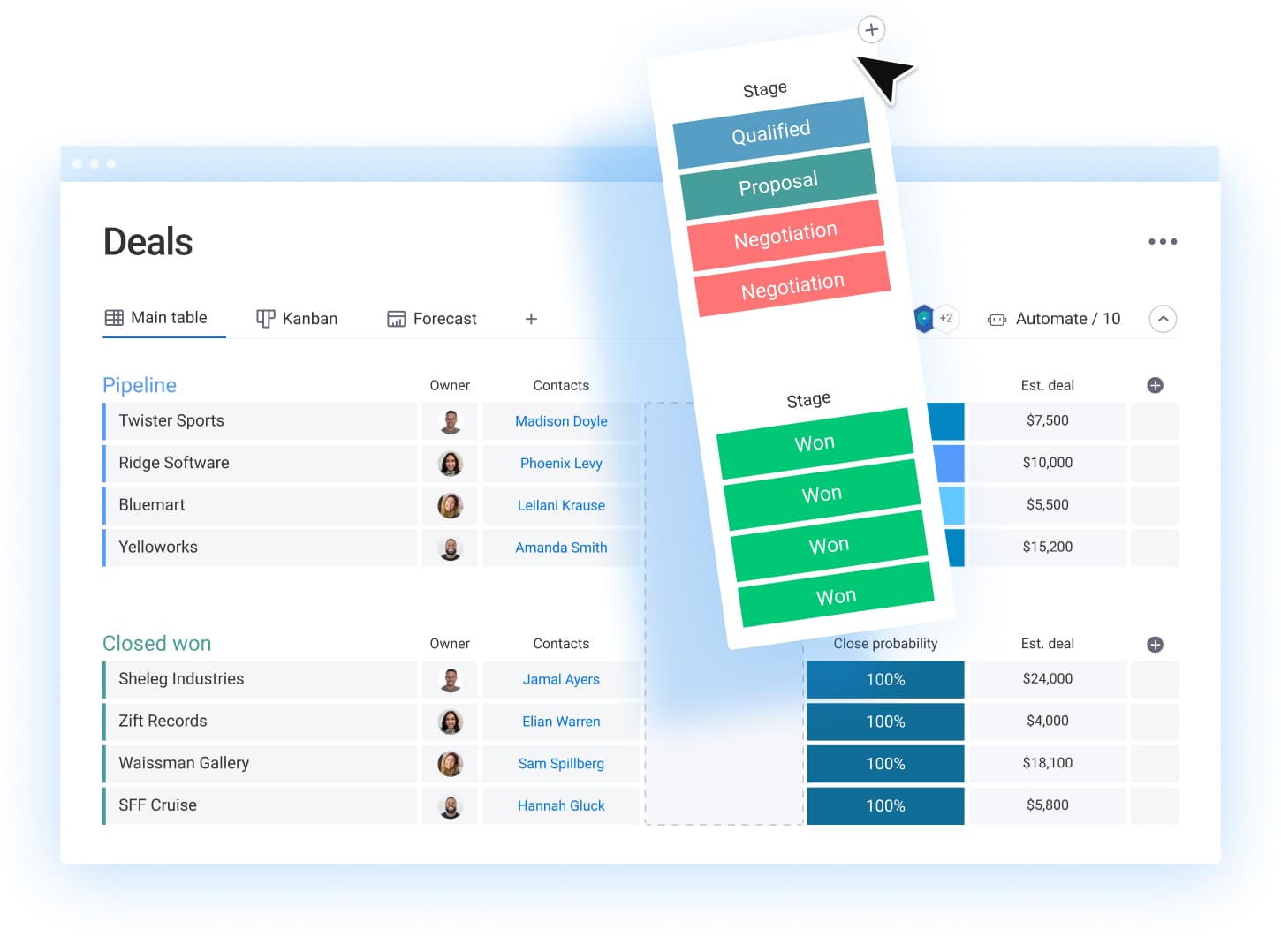
- Advanced reporting and forecasting: generate dashboards that account for healthcare’s unique conversion timelines, providing executives with accurate pipeline visibility and revenue forecasts despite unpredictable evaluation processes.
The platform integrates seamlessly with your existing healthcare tech stack, connecting with email platforms, calendar systems, and healthcare databases to create a unified view of your lead generation efforts. This centralization becomes critical when managing the complex, multi-threaded conversations that define healthcare sales.
Use AI to transform healthcare lead qualification
Smart teams are using AI to tackle the overwhelming complexity of healthcare lead qualification. Let the algorithms handle data gathering and initial scoring while your reps focus on what they do best: building relationships and crafting strategic approaches to complex sales.
AI-powered enrichment automatically aggregates information from disparate sources, creating comprehensive profiles without manual research. The system monitors news feeds for target account mentions, tracking expansions, leadership changes, and regulatory actions creating buying opportunities.
For hospital system leads, AI enrichment might gather financial performance from bond reports, identify technology investments from press releases, map executive teams from LinkedIn, track quality measures from CMS databases, and flag expansion plans from news coverage. This enrichment happens continuously, ensuring representatives have current information for outreach.
In addition, AI-powered scoring analyzes hundreds of variables to predict conversion probability with greater accuracy than rule-based models. Machine learning identifies non-linear relationships humans would miss. The AI continuously learns from outcomes, automatically adjusting weights as it observes which factors correlate with conversion.
Measure and optimize healthcare lead generation ROI
Healthcare lead generation measurement requires different metrics and longer measurement periods due to extended cycles and complex dynamics. Organizations must track leading indicators predicting future success and lagging indicators measuring actual outcomes, accounting for the 12-24 month delay between activities and revenue.
Track volume metrics including total leads generated, marketing qualified leads meeting basic criteria, and sales qualified leads accepted for pursuit. Segment these by source channel and organization type to identify highest-performing channels and ensure you’re reaching target segments.
Quality metrics matter more than volume due to the high cost of pursuing unqualified leads through extended cycles. Lead-to-opportunity conversion rates typically range 15-25% in healthcare compared to 30-40% in general B2B, reflecting the higher qualification bar and longer evaluation processes.
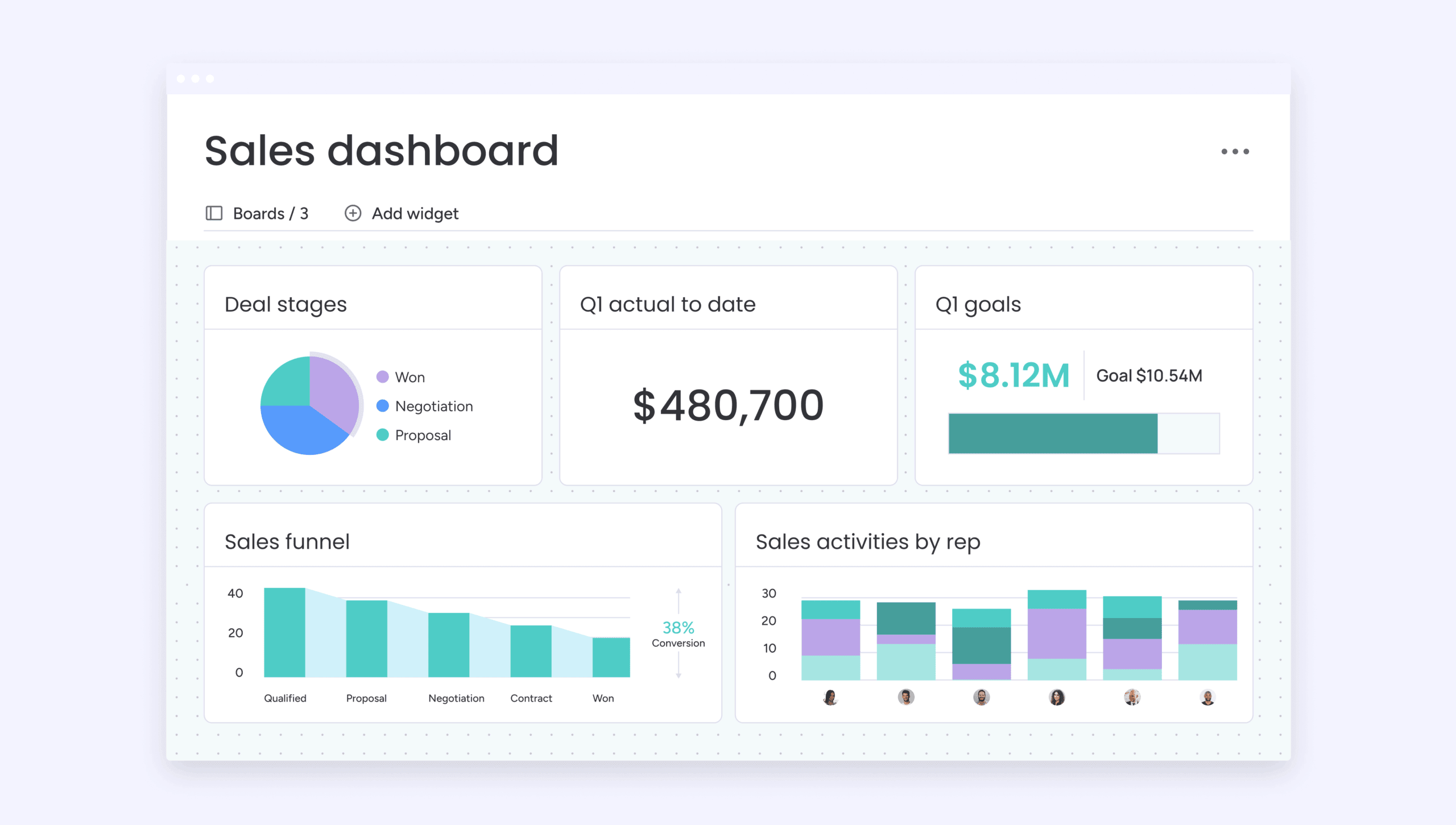
Healthcare dashboards must provide visibility into pipeline health across extended timelines while enabling analysis of specific channels, campaigns, and team performance. Executive dashboards display pipeline value, forecast accuracy, and conversion rates. Pipeline velocity charts reveal where leads spend time, suggesting optimization opportunities.
Frequently asked questions
How long does it take to see results from healthcare lead generation?
Typically, three to six months for initial qualified leads and 12–18 months for meaningful revenue impact, due to the extended sales cycles inherent in healthcare purchasing.
What's the average cost per lead in healthcare sales?
Healthcare lead costs typically range from $200-800 per lead, depending on solution complexity, target market, and lead generation channels employed.
How do you generate leads for medical device companies?
Medical device lead generation requires specialized approaches emphasizing clinical evidence, regulatory compliance, and peer validation through publishing peer-reviewed studies, exhibiting at medical conferences, and developing relationships with key opinion leaders.
What's the difference between healthcare and regular B2B lead generation?
Healthcare lead generation differs from general B2B in four critical ways: complex stakeholder networks involving six to ten decision-makers, extended sales cycles of 12-24 months, strict regulatory compliance requirements including HIPAA, and higher trust barriers requiring extensive proof.
How many touchpoints does it take to convert a healthcare lead?
Healthcare lead conversion typically requires 12-20 touchpoints over 12-24 months, significantly more than the six to eight touchpoints common in general B2B sales.
Can you automate healthcare lead generation while staying HIPAA compliant?
Healthcare lead generation can be extensively automated while maintaining HIPAA compliance through proper platform selection and workflow design using platforms with appropriate security controls including encryption, audit logging, and business associate agreements.

 Get started