


Many companies enter a new quarter with strong lead volume but uneven results. Pipelines look full, yet conversions stall. Follow-ups slip. Forecasts feel optimistic until the numbers fail to materialize. When acquisition lacks structure, growth becomes inconsistent and difficult to predict.
The problem is rarely effort. It is fragmentation. Leads arrive from multiple channels, messaging shifts from campaign to campaign, and handoffs between marketing and sales create friction. Momentum breaks down long before revenue is realized.
A clear customer acquisition strategy changes that dynamic. It connects audience research, channel selection, messaging, conversion paths, and measurement into one coordinated system. Instead of chasing isolated wins, teams build a repeatable engine that generates steady, scalable growth.
What follows breaks down seven proven acquisition tactics for 2026, how to select the right channels, and the metrics that turn activity into predictable revenue.
Key takeaways
- Customer acquisition works best as a system, not a set of tactics: Sustainable growth comes from aligning audience research, channel selection, messaging, and measurement into a repeatable acquisition engine.
- Focusing on fewer, well-chosen channels improves results: Prioritizing two to three acquisition channels allows teams to execute consistently, optimize performance, and avoid spreading resources too thin.
- Data-driven research determines acquisition success: Understanding how prospects research, evaluate, and make decisions ensures acquisition efforts target the right channels with relevant messaging.
- Measurement is essential for scaling acquisition predictably: Tracking metrics like customer acquisition cost, lifetime value, and channel-level ROI enables teams to optimize spend and forecast revenue with confidence.
- Centralized tools support scalable acquisition systems: Platforms like monday CRM help unify acquisition data, automate workflows, and maintain visibility across channels without adding manual complexity.
What is customer acquisition strategy?
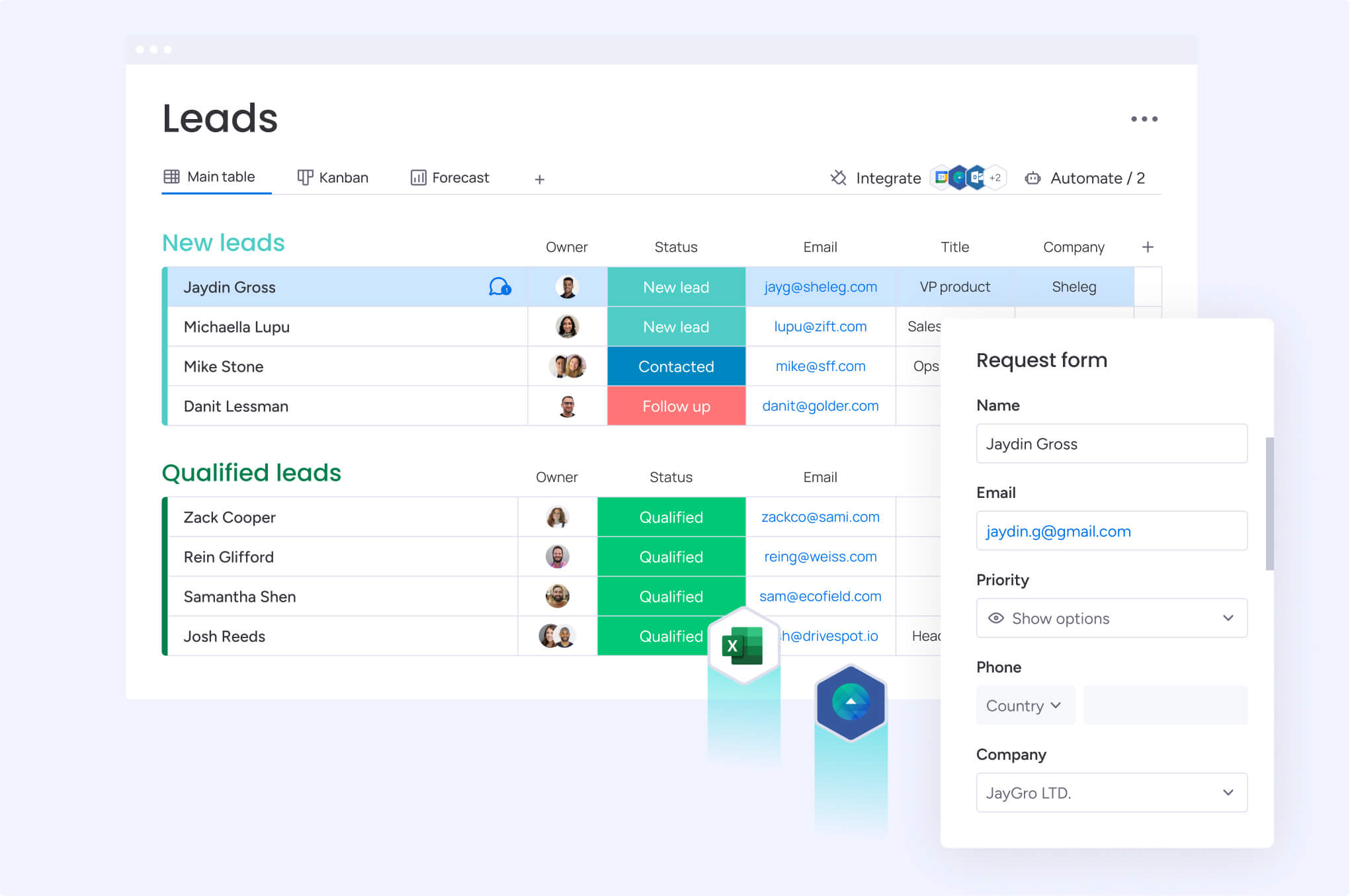
A customer acquisition strategy removes the guesswork from marketing efforts. Instead of relying on random campaigns to generate results, you create a clear system that converts the right prospects into paying customers. This produces a practical plan connecting audience insights, channels, and messaging to drive consistent growth.
It’s less about marketing tactics and more like engineering. You design a system with specific components: who needs your product, where they engage, what captures their attention, and how to guide them to purchase. When these elements work in harmony, you achieve predictable outcomes — reliable revenue without the usual chaos.
It’s important to remember that no two businesses acquire customers in the same way. For example, SaaS teams attract prospects with educational content and guide them through targeted email sequences until they are ready to try the product. Meanwhile, E-commerce brands capture attention with social ads and maintain engagement until shoppers make a purchase.
The core components that make acquisition strategies effective include:
- Target audience identification: Understanding who your ideal customers are by analyzing demographics, behavioral patterns, and pain points to create detailed buyer personas.
- Channel selection: Choosing the right platforms by evaluating where your audience spends time and how they prefer to consume content.
- Messaging and positioning: Crafting value propositions that clearly articulate how your solution solves specific problems using language that resonates.
- Conversion optimization: Eliminating friction points and clarifying next steps so interested prospects can take action easily.
Customer acquisition vs customer retention
Customer acquisition and customer retention serve different purposes, but both are essential for sustainable growth. Acquisition is about bringing new customers into the business. Retention is about keeping the ones you already have engaged, satisfied, and buying again.
Acquisition fills the pipeline with fresh opportunities. Retention protects the revenue you have already worked hard to earn. If too much focus goes into one and not the other, growth becomes unstable. Winning new customers will not compensate for high churn, and strong retention alone cannot fuel expansion.
The key differences become clearer when comparing the two side by side:
| Customer acquisition | Customer retention |
|---|---|
| Targets new prospects who haven't purchased | Focuses on existing customers who've already bought |
| Costs 5-25x more per customer on average, according to research from Bain & Company. | Costs significantly less to maintain relationships |
| Generates immediate revenue from new sales | Builds long-term revenue through repeat purchases |
| Uses broad marketing reach and awareness campaigns | Employs personalized engagement and loyalty programs |
| Measures conversion rates and cost per acquisition | Tracks satisfaction scores and customer lifetime value |
In practical terms, prioritize acquisition when product-market fit is strong, retention rates are healthy, and there is room to expand into new segments or geographies. Shift focus toward retention when churn begins to rise, acquisition costs climb, or growth depends heavily on maximizing value from an existing customer base.
Why customer acquisition strategy matters for revenue growth
A strong acquisition strategy does more than drive sales. It makes revenue predictable, accelerates market expansion, and positions your business ahead of competitors. Without it, growth often falls into feast-or-famine cycles that hinder scaling.
Predictable revenue comes from acquisition strategies that produce measurable pipelines. Sales leaders can forecast quarterly revenue accurately, allocate resources efficiently, and identify opportunities before competitors.
Market expansion is faster with systematic acquisition processes. Companies that refine these strategies know which tactics succeed, how to measure performance, and how to optimize results in new segments and geographies.
For CROs and VPs of sales, acquisition strategy lays the foundation for scalable operations:
- Improved forecast accuracy: Reduces the chaos of unpredictable pipelines.
- Shorter sales cycles: Accelerates revenue realization and improves cash flow.
- Higher conversion rates: Maximizes the return on marketing investments and sales team productivity.
7 proven customer acquisition tactics that drive results
These seven tactics reflect the most effective strategies for customer acquisition in 2026. Each includes practical steps and real-world applications that teams can implement immediately.
Successful acquisition strategies combine multiple tactics rather than relying on one approach alone, creating diversified systems that capture prospects at different stages and across multiple channels.
Tactic 1: Harness AI and automation for lead generation
For CROs and VPs of sales, a strong acquisition strategy lays the foundation for scaling operations. How do you scale in 2026? You need to leverage AI.
AI applications in lead generation operate across multiple dimensions to accelerate your acquisition efforts:
- Lead scoring automation: AI analyzes prospect behavior, including website visits, content downloads, and email engagement, to assign priority scores indicating purchase readiness.
- Prospect research: Automated systems gather and synthesize data from LinkedIn, company websites, and databases to build detailed prospect profiles.
- Personalized outreach: AI generates messaging tailored to prospect profiles, industry trends, and previous successful interactions.
- Optimal timing: Machine learning identifies the best times to contact prospects based on historical response patterns.
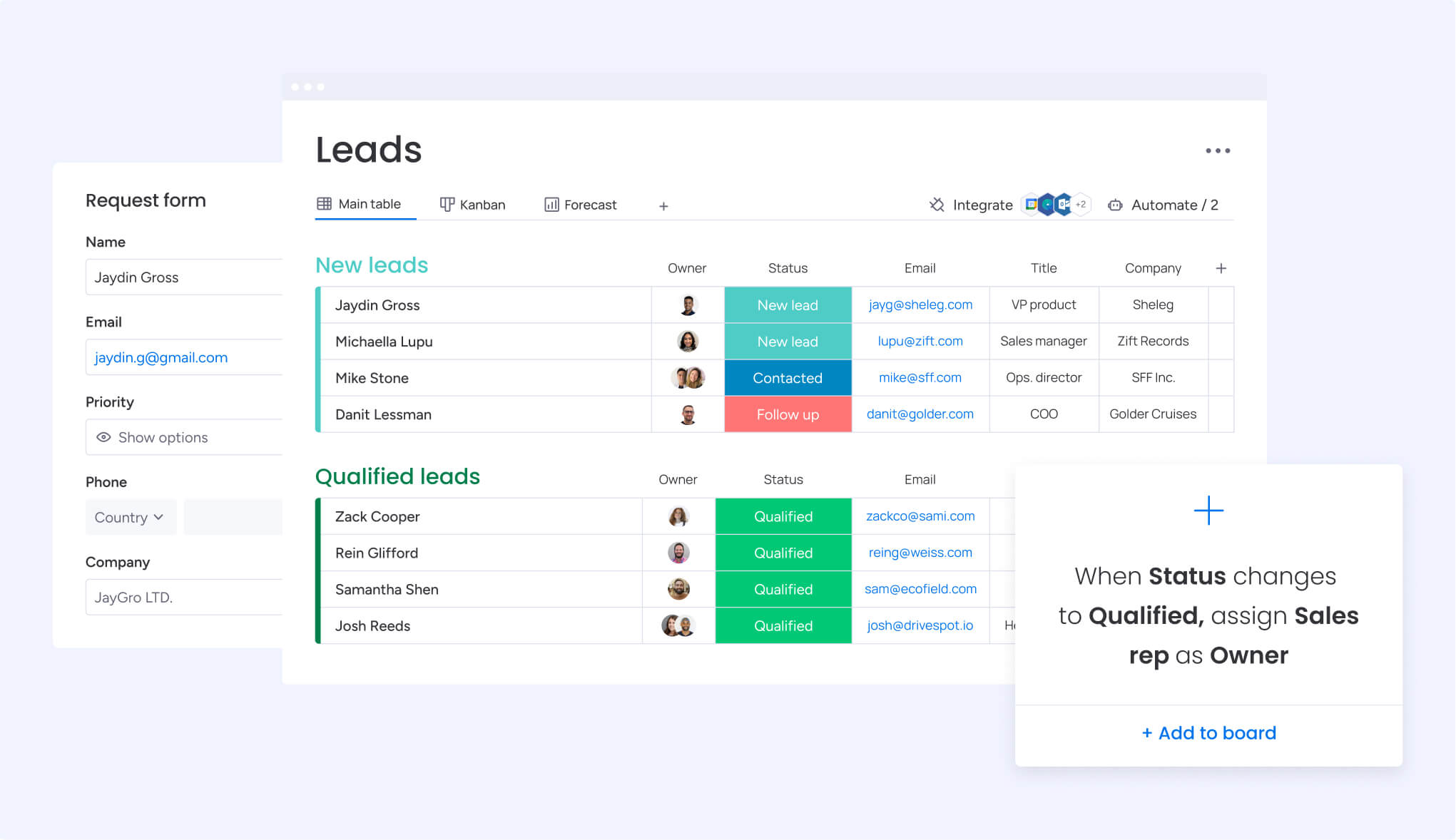
Revenue teams using monday CRM implement these AI capabilities directly in their workflow. AI Blocks automate lead categorization, extract key information from prospect communications, and provide actionable insights that guide next steps without requiring technical expertise or complex integrations.
Tactic 2: Execute data-driven customer research
Customer research goes beyond basic demographics to understand behavioral patterns, pain points, and decision-making processes that drive purchases. Shifting from assumption-based to evidence-based strategies eliminates guesswork and focuses resources on tactics that truly influence target customers.
The research process combines quantitative and qualitative approaches:
- Quantitative analysis: Surveys identify patterns in preferences, behaviors, and satisfaction levels, providing statistical confidence in findings.
- Qualitative insights: In-depth interviews reveal motivations and thought processes that numbers alone cannot capture.
- Behavioral tracking: Analytics platforms monitor how prospects interact with content and navigate websites.
- Competitive analysis: Studying how competitors attract similar customers exposes gaps and opportunities for differentiation.
To translate research into actionable acquisition strategies:
- Identify patterns: Pinpoint customer pain points and craft messaging that addresses them directly.
- Refine target personas: Recognize common characteristics among top customers and focus on similar prospects.
- Document insights: Present findings in formats that sales and marketing teams can use immediately.
Tactic 3: Optimize for organic search and SEO
SEO is a long-term acquisition channel that drives sustainable traffic and credibility without ongoing ad spend. Unlike paid channels, organic search maintains consistent prospect flow as long as content remains relevant.
Essential SEO components for customer acquisition work together to improve visibility:
- Keyword research: Identifying terms prospects use when searching for solutions reveals the language that resonates with target audiences.
- Content optimization: Creating valuable content that answers prospect questions establishes authority while satisfying search engine requirements.
- Technical SEO: Fast-loading websites that work seamlessly on mobile devices meet search engine standards for site quality.
- Local SEO: Optimizing for location-based searches captures prospects in specific geographic markets.
Step-by-step SEO implementation:
- Research keywords your ideal customers use and assess search volume and competition.
- Create comprehensive content that answers prospect questions in depth.
- Build authoritative backlinks through guest posting and partnerships.
- Monitor rankings and refine strategy based on performance data.
Tactic 4: Develop value-first content marketing
Value-first content marketing focuses on solving problems before introducing your product. By teaching instead of pitching, you become a trusted resource that prospects turn to when ready to buy.
The content marketing framework for customer acquisition operates across multiple content types:
- Educational content: Tutorials and guides teach valuable skills that prospects can implement immediately.
- Problem-solving content: Articles addressing specific challenges position your business as a helpful resource.
- Industry insights: Trend analysis and expert commentary establish thought leadership.
- Case studies: Detailed accounts of customer success demonstrate real-world value and provide social proof.
Content creation guidelines ensure quality and effectiveness:
- Start with prospect questions and pain points gathered through research and sales feedback.
- Focus on actionable advice rather than abstract concepts.
- Include examples that make concepts tangible.
Distribution strategy matters as much as content quality:
- Publish content on your website to build domain authority.
- Share across social media channels where your audience engages.
- Repurpose successful content into multiple formats to reach different segments.
Tactic 5: Build trust with strategic social proof
Social proof leverages the human tendency to follow others. When prospects see customers succeed with your product, they perceive less risk and feel more confident in saying yes.
Different types of social proof serve distinct purposes in the acquisition process:
- Customer testimonials: Specific stories about results achieved provide concrete evidence of value.
- Case studies: Detailed accounts of customer success show the complete journey prospects can relate to.
- Reviews and ratings: Third-party validation from review platforms provides unbiased perspectives.
- User-generated content: Customers sharing experiences organically creates authentic endorsements.
- Industry recognition: Awards and certifications signal credibility and quality.
- Usage statistics: Numbers like customer count or years in business provide scale indicators.
Implementation strategies for collecting and leveraging social proof require systematic processes:
- Set up feedback collection systems to request reviews automatically after success.
- Use case study templates that guide customers through their story.
- Display social proof prominently on key conversion pages.
Tactic 6: Launch targeted email marketing campaigns
Email marketing is a direct, measurable channel for nurturing prospects. Unlike social media, email provides access to those who have expressed interest.
Essential email marketing components work together to move prospects toward purchase:
- List building: Ethical methods include offering valuable content upgrades, creating useful templates, and hosting webinars.
- Segmentation: Grouping subscribers based on interests or behavior enables personalized messaging.
- Automation: Triggered email sequences based on prospect actions ensure timely follow-up.
- Personalization: Customizing content based on subscriber data goes beyond using names to include relevant examples.
Are your current email campaigns generating the engagement rates you expect? Specific campaign types serve different purposes in the prospect journey:
- Welcome series: Introduce your brand and deliver initial value.
- Educational courses: Provide structured learning experiences.
- Re-engagement campaigns: Target inactive prospects with compelling offers.
Platforms like monday CRM centralize communication, automate follow-ups, track interactions, and maintain consistent messaging across touchpoints.
Tactic 7: Create seamless cross-channel experiences
Cross-channel experiences unify every interaction with your brand. Social posts, website content, and email campaigns should feel like one coherent conversation, ensuring prospects never experience a disjointed handoff.
Key principles:
- Consistent messaging: Maintain the same value proposition across channels to prevent confusion.
- Progressive profiling: Gradually collect prospect information across touchpoints without overwhelming forms.
- Unified tracking: Monitor behavior across channels to gain complete journey visibility.
- Channel optimization: Tailor content formats to each channel’s strengths to maximize impact.
Implementation framework:
- Map the entire customer journey from awareness to purchase.
- Document experiences at each touchpoint and identify gaps.
- Implement tracking systems that connect data from multiple sources to monitor behavior.
How to choose the right customer acquisition channels
Channel selection can make or break a customer acquisition strategy. Resources are always limited, and not every channel delivers the same results for every business model. Spreading efforts too thin across every possible platform often leads to mediocre execution and unclear returns.
Stronger results come from focus. Prioritizing two or three high-impact channels and executing them consistently creates momentum, sharper messaging, and better optimization over time. The goal is not visibility everywhere, but measurable performance where it matters most.
The following framework outlines how to identify the channels that align with your audience behavior, internal capabilities, and revenue objectives.
Analyze your target audience behavior
Understanding where prospects spend time and how they prefer to consume information directly influences channel effectiveness. A channel that works brilliantly for one audience may fail entirely for another.
Research methods combine multiple data sources to provide actionable insights:
- Demographic analysis: Age, location, and job titles influence channel preferences.
- Behavioral patterns: Online habits and content interests reveal how prospects research solutions.
- Channel preferences: Where prospects look for information indicates which channels will reach them effectively.
- Decision-making process: Understanding how prospects evaluate solutions guides content strategy.
Practical research techniques help gather meaningful consumer insights without large budgets:
- Survey existing customers: Ask about their preferred information sources.
- Analyze website analytics: Review traffic sources and engagement metrics.
- Interview prospects: Learn about their research and evaluation processes.
Assess resources and budget constraints
Ambition is important, but execution determines results. Before committing to new acquisition channels, take a clear look at the time, skills, and budget available. Overextending teams across too many initiatives often leads to inconsistent output and underwhelming performance.
Strong acquisition strategies are built around realistic capacity. It is better to dominate a few well-supported channels than to maintain a scattered presence across many.
The comparison below highlights typical setup costs, ongoing time requirements, skill demands, and technology needs across common acquisition channels. Use it to evaluate where your team can realistically commit resources and where additional investment may be required.
| Channel | Setup cost | Monthly time | Skills needed | Technology required |
|---|---|---|---|---|
| Content marketing | Low ($500-2000) | 40-60 hours | Writing, SEO basics | CMS, Analytics platform |
| Paid advertising | Medium ($2000-5000) | 20-30 hours | Analytics, Creative design | Ad platforms, Tracking platforms |
| Email marketing | Low ($100-500) | 15-25 hours | Copywriting, Basic design | Email platform, CRM integration |
| Social media | Low ($200-1000) | 30-50 hours | Content creation, Community management | Social platforms, Scheduling platform |
| SEO | Medium ($1000-3000) | 25-40 hours | Technical SEO, Content optimization | SEO platforms, Analytics platform |
Test and scale what works
Customer acquisition is iterative, requiring continuous optimization. Start small, measure results, and gradually expand successful channels to minimize risk and maximize learning.
A testing framework balances experimentation with disciplined evaluation:
- Pilot programs: Start with small budgets to test channel effectiveness.
- Success metrics: Define KPIs for each channel to ensure objective evaluation.
- Testing duration: Allow sufficient time to gather meaningful data.
- Performance analysis: Review results regularly to identify successes and adjustments.
- Scaling decisions: Set clear criteria for increasing investment in effective channels.
Documenting and tracking acquisition experiments strengthens decision-making:
- Create testing calendars: Schedule experiments systematically.
- Record test parameters and results: Maintain historical data for reference.
- Define discontinuation criteria: Remove underperforming channels based on results.
Measuring and optimizing customer acquisition performance
Measurement allows teams to understand what works, optimize campaigns, and justify acquisition investments. Without tracking the right metrics, efforts operate without insight.
This section covers the essential metrics every revenue team needs to track and how to use data to continuously improve acquisition performance.
Calculate customer acquisition cost (CAC)
Customer acquisition cost represents the total expense of acquiring a new customer, including marketing and sales efforts, divided by the number of new customers.
Steps to calculate CAC:
- Include all acquisition costs: Combine marketing spend with sales salaries and overhead.
- Define the time period: Calculate monthly for agility and quarterly to smooth seasonality.
- Count new customers: Only include customers acquired during the period.
- Formula: total acquisition costs ÷ number of new customers = CAC.
Example: A company spends $10,000 on marketing and $15,000 on sales salaries in a month, acquiring 50 new customers. CAC = $25,000 ÷ 50 = $500 per customer.
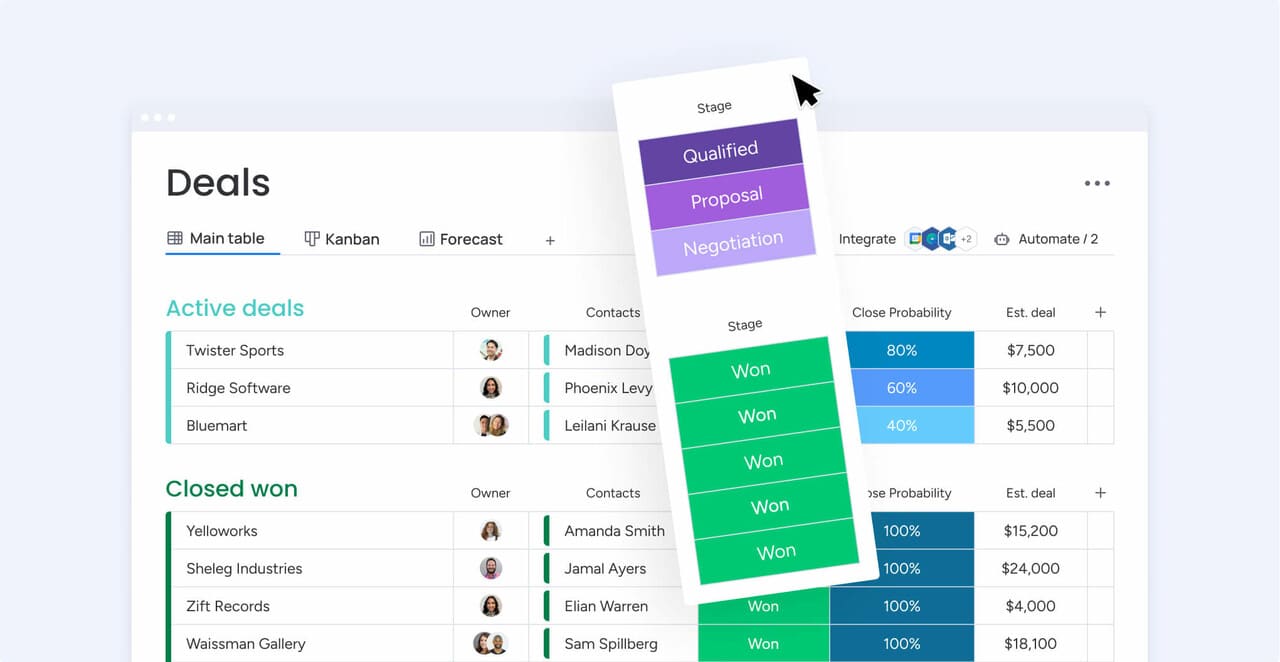
Modern platforms like monday CRM centralize acquisition data, providing real-time visibility into CAC across campaigns and channels.
Track customer lifetime value (CLV)
Customer lifetime value estimates the total revenue a customer generates throughout their relationship with your business. CLV serves as the counterpart to CAC, showing whether acquisition investments are profitable.
CLV calculation approaches include:
- Simple CLV: Average purchase value × purchase frequency × customer lifespan.
- Traditional CLV: Includes churn rates and profit margins.
- Predictive CLV: Machine learning models forecast future value based on early customer behavior.
The CLV:CAC ratio indicates acquisition profitability. A healthy benchmark typically exceeds 3:1, meaning customers generate at least three times their acquisition cost.
Monitor channel-specific ROI metrics
Each channel has unique performance indicators. Tracking generic metrics can obscure important differences in lead quality and conversion rates.
Content marketing metrics focus on organic growth:
- Organic traffic growth: Search engine visitor increases indicate visibility improvements.
- Content engagement: Time on page and social shares measure resonance.
- Lead generation: Content downloads and email signups show conversion effectiveness.
Paid advertising metrics emphasize efficiency:
- Cost per click: Shows the efficiency of ad spend.
- Conversion rate: The percentage of clicks that become customers.
- Return on ad spend: Revenue generated per dollar spent.
Setting up tracking systems requires connecting data sources and establishing reporting processes:
- Use UTM parameters: Track all marketing links systematically.
- Configure conversion tracking: Enable accurate measurement in ad platforms.
- Create reporting cadences: Review performance regularly to identify trends and improvements.
How to build a customer acquisition engine that scales
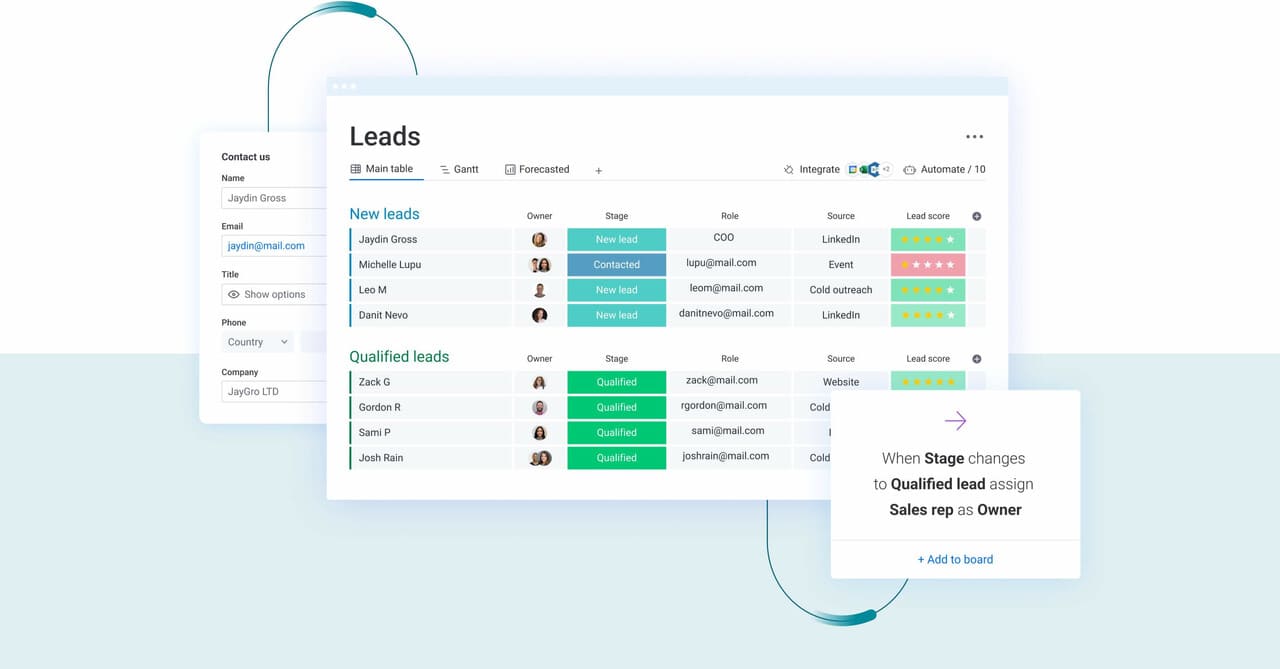
Customer acquisition performs best as a system, not a collection of disconnected tactics. Sustainable growth happens when audience research, channel selection, messaging, and measurement operate as one coordinated engine. Instead of chasing short-term spikes, revenue teams build processes that deliver consistent, repeatable results.
A true acquisition engine connects each component deliberately. Research informs where to invest. Channel data shapes messaging. Automation reduces manual effort while preserving personalization. Measurement closes the loop, showing what to refine and where to double down. When these elements align, performance becomes easier to predict and optimize.
Scalable growth depends on efficiency. The goal is not to increase output by simply adding more people or budget, but to improve how the system performs. Strong data improves targeting. Better targeting increases conversion rates. Higher conversion rates generate more revenue to reinvest. Over time, these gains compound.
Transform your customer acquisition with monday CRM
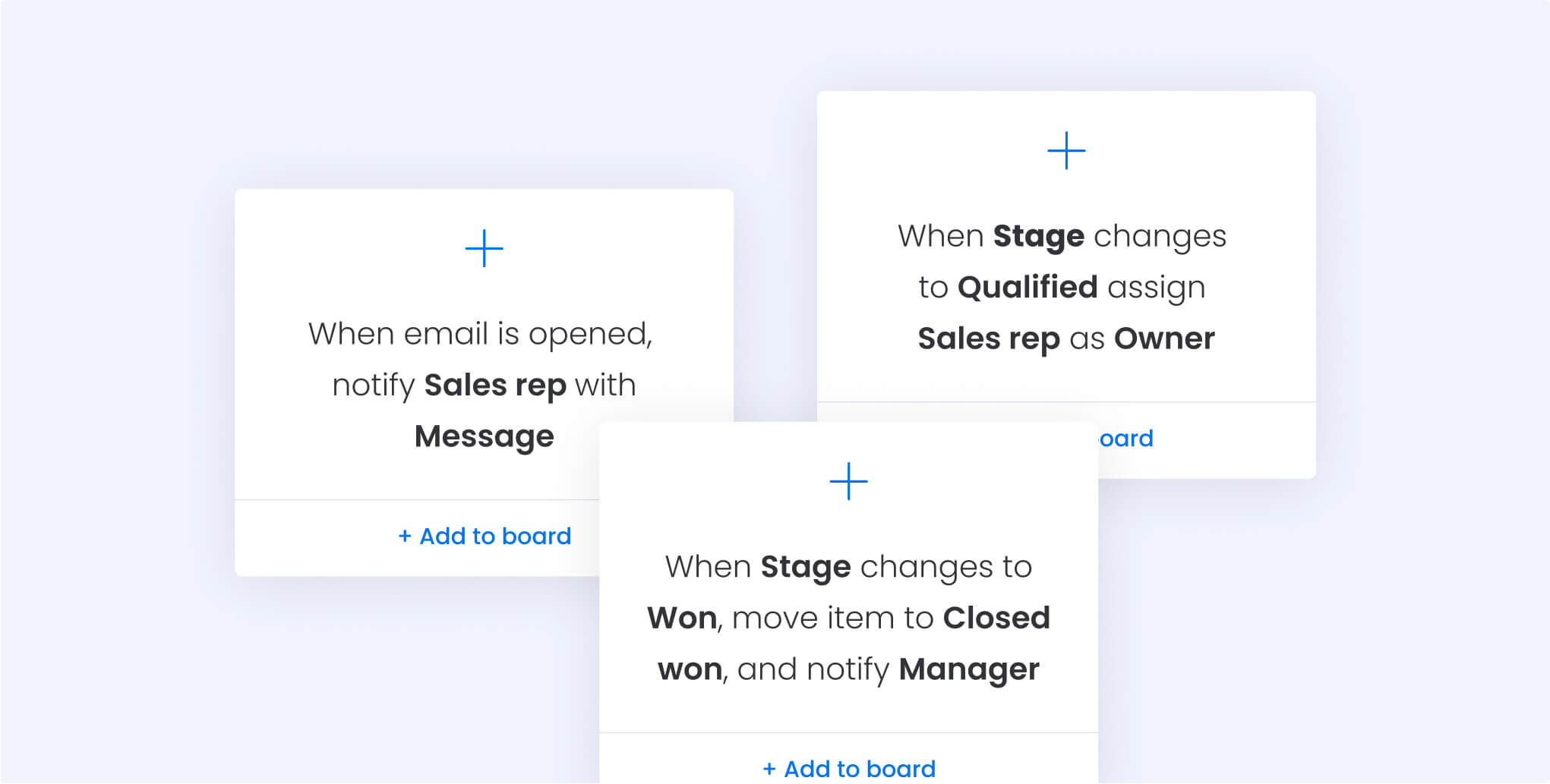
Turning acquisition strategy into predictable revenue requires more than planning. It demands a system that connects data, automates execution, and keeps every team aligned. monday CRM provides that foundation by bringing research, outreach, pipeline management, and performance tracking into one streamlined platform.
Designed for revenue teams that need speed without complexity, monday CRM makes it possible to implement advanced acquisition workflows without heavy technical lift. The result is a centralized, scalable engine that supports smarter decisions and faster growth
Centralize all customer data in one platform
Fragmented data across multiple tools creates blind spots in acquisition efforts. When prospect information is scattered across email, social media, marketing platforms, and spreadsheets, it is impossible to track complete customer journeys.
Centralizing data on a single platform provides complete visibility and removes silos:
- Multi-source data integration: Connects email, social media, and website interactions in one view.
- Automated data capture: Reduces manual entry while maintaining accuracy through automatic logging.
- Real-time synchronization: Ensures team members work with the most current information.
Centralized data drives measurable acquisition benefits:
- Complete prospect profiles: Understanding the full customer journey reveals patterns and opportunities.
- Improved lead qualification: Decisions based on complete prospect data reduce time spent on poor-fit opportunities.
- Faster response times: Instant access to information enables timely and informed decisions.
- Consistent team alignment: All members work from the same data, eliminating miscommunication.
Automate acquisition workflows with AI Blocks
AI Blocks transform repetitive acquisition tasks into automated workflows. Instead of spending hours on research or data entry, teams use AI to complete tasks instantly while generating actionable insights.
Key AI Blocks operate throughout the acquisition process:
- Lead categorization: Automatically sorts prospects by industry, company size, or custom parameters for proper routing.
- Sentiment analysis: Interprets prospect communication tone to guide response strategies.
- Content summarization: Extracts key insights from prospect interactions to save time.
- Information extraction: Pulls relevant data from emails and documents to populate CRM fields automatically.
Teams achieve measurable improvements with automation:
- Time savings: Freeing teams from manual research allows focus on relationship building.
- Improved accuracy: Reduces errors in data processing.
- Scalable personalization: Delivers tailored experiences to hundreds of prospects simultaneously.
Get real-time visibility into pipeline performance
Comprehensive pipeline visibility enables proactive acquisition management. Instead of waiting for weekly reports, teams access current performance instantly.
Key visibility features provide actionable insights:
- Live pipeline dashboards: See exactly where opportunities stand in real time.
- Predictive forecasting: AI-driven revenue predictions offer accurate projections.
- Channel performance tracking: Analyze which sources deliver the best-quality leads.
- Team productivity metrics: Monitor individual and team performance to identify coaching opportunities.
The business benefits of real-time visibility include:
- Faster decision making: Immediate access to results accelerates action.
- Improved forecast accuracy: AI-driven insights enable more reliable revenue projections.
- Enhanced team performance: Visibility into metrics supports coaching and accountability.
Frequently asked questions
What is the most effective customer acquisition channel for B2B companies?
The most effective B2B customer acquisition channel depends on the target audience and available resources, but content marketing combined with SEO generally delivers the highest long-term ROI. These channels establish authority and trust while generating qualified leads at lower costs than paid advertising, creating a sustainable path to growth.
How much should a startup budget for customer acquisition?
Startups should typically allocate 20–30% of revenue toward customer acquisition during early growth stages, though this varies by industry and business model. The key is maintaining a healthy LTV:CAC ratio above 3:1, ensuring that growth is both profitable and sustainable over time.
What's the difference between customer acquisition cost and customer lifetime value?
Customer acquisition cost (CAC) measures how much a company spends to acquire each new customer, while customer lifetime value (CLV) represents the total revenue a customer generates across their relationship with the business. The balance between these metrics indicates acquisition efficiency and overall profitability.
How can AI improve customer acquisition strategies?
AI enhances customer acquisition by automating lead scoring, personalizing outreach at scale, predicting the best times to engage, and extracting actionable insights from customer data. These capabilities reduce manual work and improve conversion rates by delivering more relevant, timely engagement to prospective customers.
What metrics should sales leaders track for customer acquisition?
Sales leaders should monitor CAC, CLV, conversion rates by channel, pipeline velocity, win rates, and channel-specific ROI. Tracking these metrics provides insight into acquisition efficiency, highlights profitable channels, and identifies opportunities for process optimization.
How do you create a customer acquisition strategy for a new market?
Developing a customer acquisition strategy for a new market requires thorough market research, competitive analysis, pilot testing of channels, and iterative improvement based on early results. Begin with small experiments, measure performance carefully, and scale initiatives that succeed while maintaining flexibility to adapt to evolving conditions.

 Get started