

Your sales team is overloaded with consumer data — website visits, email opens, demo requests, pricing page views — but still guesses which prospects to call first. This gap between having information and knowing what to do with it costs you deals every day.
This guide shows you how consumer insight marketing turns data into action: which prospects to prioritize, what messages will resonate, and when to reach out. You’ll learn the 5 insight types that close deals faster, accessible ways to gather intelligence without breaking the bank, and how to transform insights into predictable revenue with the right CRM platform.
Try monday CRMKey takeaways
- Consumer insight marketing predicts which prospects will buy and when to reach out, turning your CRM from a data warehouse into a revenue engine.
- Early detection of behavioral patterns like pricing page visits and content downloads gives your team first-mover advantage in competitive deals.
- Combine website activity, content engagement, and stakeholder involvement to identify which prospects deserve immediate attention from your best reps.
- Replace pipeline guesswork with data-backed projections by identifying which deal patterns historically lead to closed-won outcomes.
- Teams can leverage automated pattern recognition and sentiment detection in monday CRM to surface insights from existing customer data without technical expertise.
What is consumer insight marketing?
Consumer insight marketing is the practice of analyzing customer behaviors, preferences, and motivations to inform revenue-generating decisions. You go beyond collecting data, turning it into predictions about what customers will do and guidance on how to sell to them.
Think of it as the difference between knowing that 500 prospects visited your pricing page last month versus understanding which of those prospects are most likely to buy, what triggered their interest, and when your team should reach out. Consumer insight marketing shows you what happened and why it changes how you sell.
When a CRM shows that prospects who engage with pricing pages on mobile devices close 40% faster, that’s consumer insight marketing in action. You’re not just collecting data; you’re extracting patterns that drive real sales decisions.
Market research vs. consumer insight marketing
If you’re trying to understand the difference between market research and consumer insight marketing, this table captures it at a glance. In short, market research helps you decide what to build and how to position it, while consumer insight marketing helps revenue teams decide who to engage, when, and how. Using the wrong approach for the wrong decision leads to wasted effort.
| Characteristic | Market research | Consumer insight marketing |
|---|---|---|
| Time orientation | Backward-looking, analyzing historical data | Forward-looking, predicting future behaviors |
| Frequency | Periodic: quarterly surveys, annual studies | Continuous: analyzing data as behaviors occur |
| Scope | Broad understanding of markets and segments | Specific guidance on individual prospects |
| Primary use | Strategic decisions: product development, positioning | Tactical execution: prioritization, timing |
| Output | Reports, personas, market sizing | Alerts, scores, recommended actions |
Market research tells you what happened
Market research analyzes past behaviors and preferences to build foundational understanding. It’s critical for informing product strategy, positioning, and long-term direction.
For example, research might show that your target market prefers cloud-based solutions or that decision-makers value integration capabilities. That insight shapes strategy — but it doesn’t help a sales rep decide which prospect to call today or what message will move a deal forward right now.
Consumer insights predict what happens next
Consumer insight marketing works in real time, analyzing behaviors as they happen to forecast what prospects are likely to do next. It answers tactical questions revenue teams care about:
- Who is actively evaluating?
- Which deals are at risk?
- When will outreach have the biggest impact?
When a prospect visits your pricing page multiple times in a week and downloads a case study, those signals indicate active evaluation. By matching current behavior to historical patterns, consumer insights help teams prioritize the right opportunities at the right moment.
Why smart revenue teams use both
Market research and consumer insight marketing work best together. Market research defines who your ideal customer is and what they generally value. Consumer insights identify which specific prospects match that profile and when they’re ready to engage.
Used together, they create a feedback loop. If research shows customers value feature X, but consumer insights reveal that prospects who engage with feature Y content close faster, that intelligence should inform both strategy and day-to-day execution.
How consumer insight marketing works
Consumer insight marketing isn’t magic — it’s a systematic process that turns scattered customer data into clear action steps. Most teams already have the raw materials sitting in their CRM; they just need a framework to extract intelligence from it.
Here’s how the process works, from collecting data to making decisions that close deals.
Understand the evolution from data to actionable intelligence
Most revenue teams progress through 3 distinct stages (data collection, data organization, and actionable intelligence) in how they handle customer information. Figure out where you are, and you’ll know exactly what to do next.
- Data collection: In this stage, customer information flows into the CRM through form fills, website visits, and sales conversations. The data’s there, but nobody’s analyzing it. Teams know they have 500 leads but can’t distinguish which ones matter.
- Data organization: This stage emerges when teams begin structuring their information. Dashboards display pipeline metrics, reports track activity levels, and managers can see what’s happening. The catch? Someone still has to manually identify patterns and decide what they mean.
- Actionable intelligence: This stage is where consumer insight marketing operates. Data transforms into specific guidance: which 50 of those 500 leads are most likely to close this quarter, what content to send them, and when to reach out. The analysis happens automatically, and the output is action, not just information.
Example: A SaaS revenue team notices that deals close 2x faster when a second stakeholder from the same company views the pricing page within a week of the first visit. Instead of treating these visits as separate activities, consumer insight marketing flags the account as “buying committee forming” and alerts the assigned rep. The rep reaches out with a tailored message addressing multi-stakeholder concerns — accelerating the deal while competitors are still running generic cadences.
Identify key components of effective consumer insight marketing
These 5 building blocks make consumer insight marketing work for revenue teams:
- Data integration: Connecting information from multiple sources creates a complete picture of customer behavior
- Pattern recognition: Identifying recurring behaviors that signal intent, readiness, or risk
- Contextual analysis: Understanding why behaviors happen, not just that they happened
- Predictive capability: Using historical patterns to forecast future customer actions
- Action triggers: Converting insights into specific next steps for sales and marketing teams
A prospect visiting your pricing page might be ready to buy, comparing options, or simply curious. Context from other behaviors shows which interpretation applies. When past data shows that certain engagement sequences precede closed deals, teams can identify current prospects following similar paths.
Recognize how consumer insights drive revenue teams
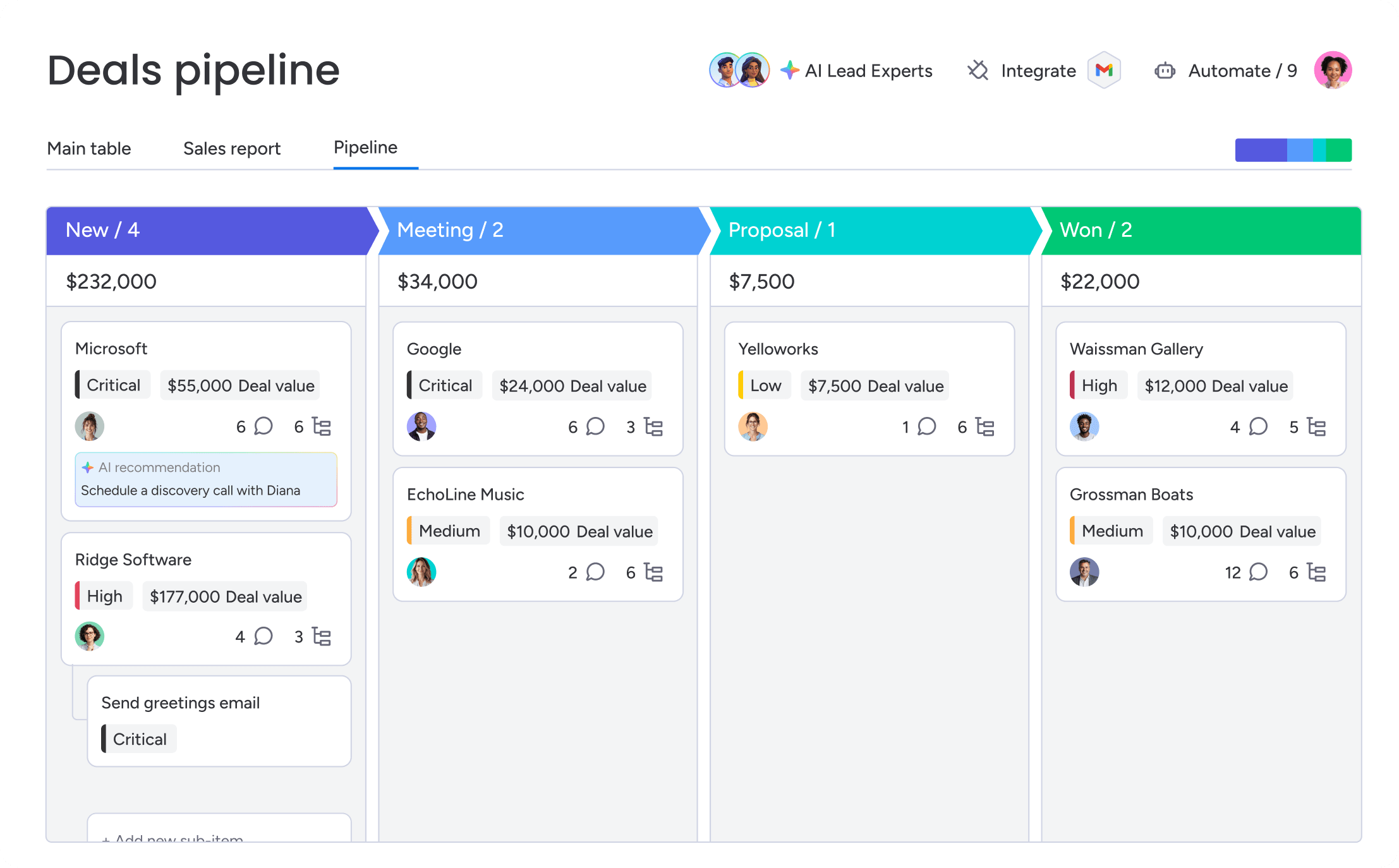
Consumer insights translate directly into the following outcomes that address core challenges revenue leaders face:
- Improved forecasting accuracy: When data shows that prospects who engage with 3 specific content pieces close at 3x the rate, sales leaders can forecast pipeline with confidence.
- Faster sales cycles: Teams engage when prospects signal readiness, compressing the path from first contact to closed deal.
- Better resource optimization: Sales reps spend time on deals that will close. Managers allocate top performers to high-probability opportunities rather than spreading talent evenly across the pipeline.
Why revenue teams need consumer insight marketing
Turning your data into action helps you secure more deals, optimize your team’s time, and build a predictable revenue engine. Consumer insight marketing closes that gap, turning information into actions that get results. Here’s how it solves the biggest problems revenue leaders deal with.
Spot buying signals before your competition
Consumer insights show you when prospects are ready before competitors catch on, giving you a timing edge that boosts win rates. Catch signals early, and you get to prospects first in competitive deals.
Early signal detection identifies subtle behavioral changes indicating a prospect is entering buying mode. These signals include:
- Increased website activity: Multiple visits in a short timeframe
- Specific content engagement patterns: Downloading case studies and ROI calculators
- Pricing page visits: Repeated views of pricing information
- Competitor comparison research: Searching for alternatives and comparisons
With 61% of B2B buyers now preferring a rep-free buying experience, according to a Gartner sales survey, digital signals and behavioral patterns are increasingly the primary source of actionable intent data for sales teams.
On their own, these behaviors don’t mean much. Together, they signal someone’s about to buy. Reaching prospects when they’re actively evaluating solutions, but before they’ve engaged competitors, dramatically improves win rates.
Example: Two prospects visit your pricing page multiple times. One downloads a case study and returns 4 times in 48 hours; the other visits once and disappears. Consumer insight marketing recognizes the first pattern as active evaluation and prioritizes that account for immediate outreach. Sales engages while the prospect is comparing options — before competitors even realize the deal is in play.
Unite sales and marketing with shared intelligence
Consumer insights give sales and marketing the same language and priorities — fixing the collaboration mess that slows most revenue teams. Shared visibility means marketing sees which campaigns generate qualified interest while sales sees which content prospects engage with before buying.
Instead of sales complaining that marketing’s leads aren’t qualified, both teams see that prospects who engage with specific content pieces have a higher close rate.
Build predictable revenue pipelines

Consumer insights turn pipeline management from guesswork into forecasting you can trust. When historical data shows that prospects who engage with pricing, schedule a demo, and involve a second stakeholder close at 85%, you can forecast with confidence when current deals exhibit those patterns. Early risk detection flags deals going off track before they’re officially lost — allowing intervention while there’s still time to save the deal.
Try monday CRM5 types of consumer insights that accelerate revenue
Consumer insights fall into distinct categories, each revealing different aspects of customer behavior and opportunity. Most revenue teams start with 2-3 insight types and add more as they get better at this. Know these categories, and you’ll figure out which insights matter most for your sales process.
1. Behavioral patterns that predict purchase intent
Behavioral patterns are actions that repeat when prospects get closer to buying. By identifying these patterns in historical data, teams recognize when current prospects are following the same path.
| Pattern type | What it reveals | Revenue application |
|---|---|---|
| Content engagement sequences | Prospects who view product pages, then pricing, then case studies within 7 days close at higher rates | Prioritize prospects exhibiting this sequence |
| Multi-channel signals | Prospects engaging via email, website, and webinar show higher intent than single-channel engagers | Score leads based on channel breadth |
| Stakeholder expansion | Second or third person from same company engaging signals deal progression | Identify buying committee formation |
| Frequency patterns | Prospects returning 5+ times in two weeks are actively evaluating | Flag high-frequency visitors for immediate outreach |
2. Preference shifts that create opportunities
Preference shifts happen when what customers care about changes. These shifts open doors for new solutions, upsells, or stealing customers from competitors. Spot these changes early, and you get the timing advantage.
- Feature interest changes: A customer who initially bought for basic functionality now researches advanced features
- Pain point evolution: Prospects who previously focused on cost now emphasize integration capabilities
- Competitive dissatisfaction: Existing customers of competitors begin researching alternatives
- Organizational changes: New leadership, company growth, or strategic pivots change solution requirements
3. Journey triggers that signal readiness
Journey triggers are events that show a prospect’s hit a decision point. These triggers show when prospects are ready for the next step — so you know exactly when to reach out.
- Budget approval signals: Questions about payment terms, contract length, or implementation timelines
- Technical validation completion: Involvement of technical team members or detailed integration questions
- Urgency indicators: Questions about implementation speed or “when can we start”
4. Sentiment changes that indicate risk
Sentiment changes show when customers or prospects start feeling differently about your solution, company, or sales process. AI-powered sentiment detection can automatically flag positive, negative, or neutral sentiment in emails and calls, helping teams identify risk before it becomes churn.
5. Competitive gaps you can exploit
Competitive gap insights show where competitors fail to meet customer expectations. These gaps are your chance to win new business or steal customers from vendors who can’t deliver on features, service, or pricing.
How to gather consumer insights without breaking the bank
Consumer insight marketing sounds expensive — like you need a complex platform, data scientists, or a massive budget. Truth is, most teams already have the data they need. You just need to know where to look and how to pull patterns from what you’ve got.
Step 1: Mine the gold in your CRM data
CRMs contain rich behavioral data: email opens, website visits, deal progression, communication history, and more. The hard part isn’t collecting data — it’s finding the patterns. Your CRM probably has months or years of behavioral data just sitting there.
Start by exporting closed-won deals from the past 6-12 months. Look for commonalities in deal progression, engagement levels, and activities. What do closed-won deals have in common? What behaviors or characteristics predict losses?
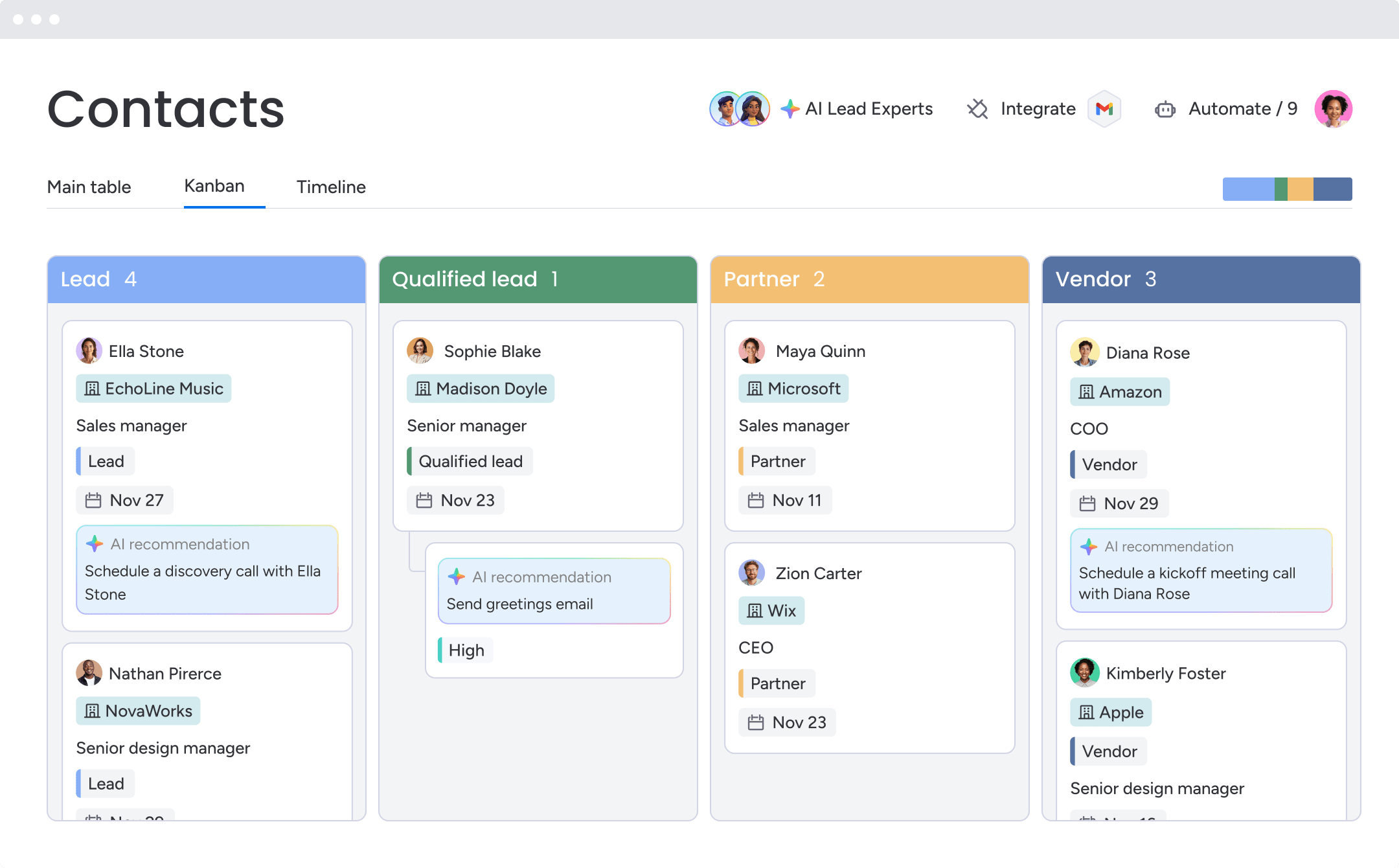
Teams using monday CRM can leverage AI capabilities that automatically surface patterns from customer data. The platform’s timeline summarization feature condenses months of customer interactions into actionable summaries, while sentiment detection flags emotional shifts in communications.
Step 2: Use AI to surface hidden patterns
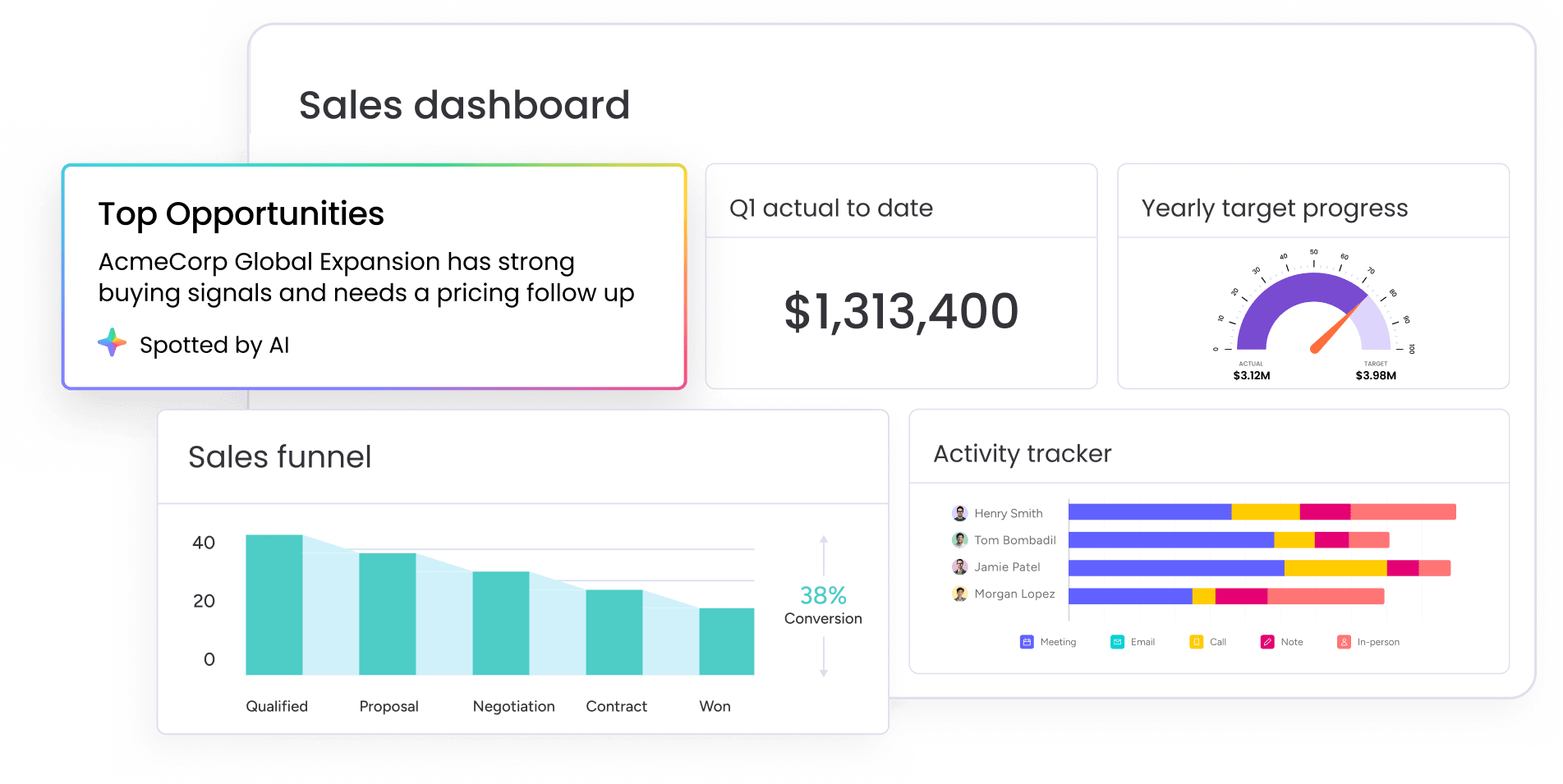
AI spots correlations, trends, and unique patterns in large datasets that you’d never catch manually. The right CRM gives you these features without needing technical skills or purchasing extra software.
The platform’s AI features should include:
- Information extraction: Automatically pulls key details like budget, timeline, and pain points from conversations
- Custom actions: Allows teams to give specific instructions to AI for analyzing any column data
- Assign person: Uses AI to match the right team member to opportunities based on skills and context
These features turn raw data into intelligence — no tech skills or extra tools needed.
Step 3: Run strategic voice of customer programs
Voice of customer programs pull direct feedback from interviews, surveys, or feedback sessions. Win/loss interviews with 5-10 recent prospects reveal decision factors that data alone can’t capture. This feedback adds context to what the behavioral data shows.
Teams can integrate survey tools directly with their CRM to capture this qualitative data alongside behavioral insights. Combine what customers do with what they say, and you get the full picture of what they need and why.
Try monday CRMHow to transform raw insights into revenue results

Insights only matter if they change how your team works. Here’s how to turn insights into activities that bring in revenue. Going from data to action means setting up processes and tools that get insights to your whole revenue team.
Step 1: Build behavioral buyer personas that drive action
Traditional personas usually feel useless for day-to-day sales work. Insight-driven personas come from real behavioral data and update as behaviors change. This gives you personas that tell you what to do, not just vague descriptions.
Instead of generic descriptions like “Marketing Mary values efficiency,” you have actionable profiles: “High-intent prospects visit pricing 3+ times, engage with case studies, and involve a technical stakeholder within 30 days of first contact.”
These behavioral personas guide specific actions. When a prospect matches the high-intent pattern, your team knows exactly how to engage them based on what’s worked with similar prospects.
Step 2: Personalize outreach based on behavioral triggers
Generic outreach wastes the intelligence consumer insights give you. Behavioral triggers let you personalize outreach so it feels relevant, not robotic. This boosts response rates and moves deals faster.
When insights show a prospect has viewed your implementation guide 5 times, your outreach can address implementation concerns directly. When they’ve compared you to competitors, you can highlight your differentiators. The platform’s automation capabilities can trigger these personalized messages automatically based on specific behaviors.
Step 3: Score and prioritize leads with precision

Lead scoring ranks prospects by how likely they are to close — so reps focus on the best opportunities. Good scoring systems pull from multiple data points to predict which deals will close.
Effective lead scoring combines multiple insight types:
- Behavioral signals: Website activity, content engagement, email interactions
- Fit indicators: Company size, industry, technology stack
- Engagement patterns: Response rates, meeting attendance, stakeholder involvement
- Timing factors: Budget cycles, contract renewals, organizational changes
The platform can automate lead scoring based on these factors, surfacing the highest-priority prospects without manual analysis. Custom dashboards display scored leads in real-time, ensuring teams always know where to focus their efforts.
Best practices for consumer insight marketing with monday CRM

Getting the most from consumer insight marketing means following proven practices that turn data into deals. Here’s how top revenue teams use monday CRM to extract intelligence and act on it:
- Centralize all customer touchpoints in one place: Buyers interact with more than 10 digital and human channels across a purchase journey, making real-time behavioral insights critical for timing outreach and prioritizing deals. Connect your website, email, chat, and sales activities so you see the complete customer journey — not just fragments scattered across tools.
- Set up automated lead scoring based on behavior: Configure scoring rules that automatically flag high-intent prospects when they hit specific engagement thresholds, so your team focuses on deals that will close.
- Use AI to surface patterns you’d miss manually: Let monday CRM’s AI analyze your historical deal data to identify which behaviors predict closed-won outcomes, then apply those patterns to current prospects.
- Create behavioral triggers for timely outreach: Build automations that alert reps when prospects exhibit buying signals — like multiple pricing page visits or case study downloads — so you reach out at the perfect moment.
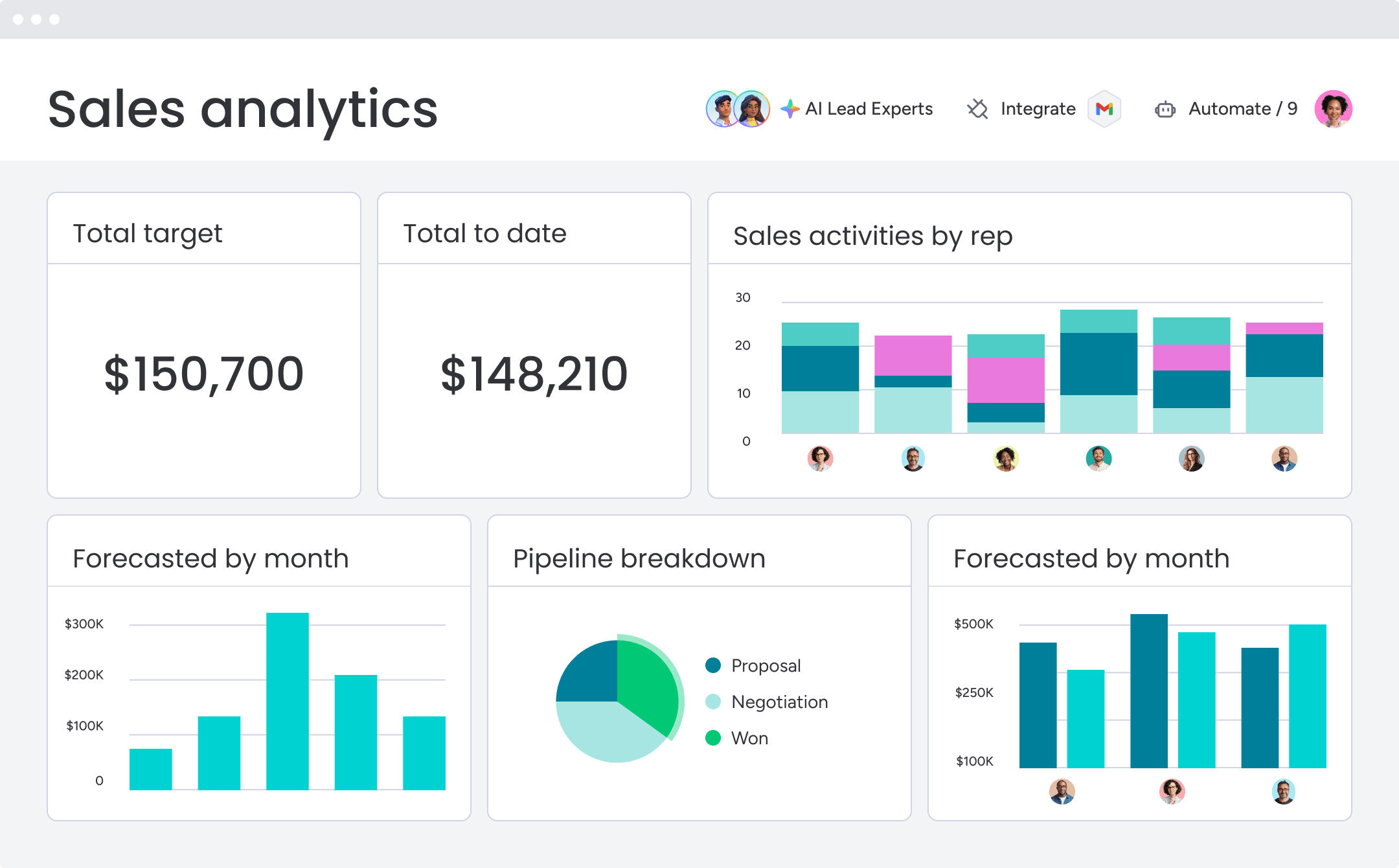
- Build custom dashboards that show what matters: Design views that display high-priority leads, at-risk deals, and pipeline health in real-time, giving your team instant visibility into where to focus their efforts.
- Run regular win/loss analysis to refine your insights: Review closed deals monthly to validate which patterns actually predict success, then adjust your scoring and prioritization accordingly.
Turn insights into your revenue advantage
Consumer insight marketing transforms raw customer data into actionable intelligence that drives revenue growth. By analyzing behavioral patterns, identifying buying signals, and predicting prospect actions, revenue teams can prioritize the right opportunities, personalize outreach at optimal moments, and build predictable pipelines that consistently hit targets.
Ready to turn your CRM data into a revenue engine? With monday CRM’s AI-powered insights, automated pattern recognition, and no-code workflows, advanced consumer intelligence is accessible to any team — no data scientists or complex integrations required.
Try monday CRMFAQs
What is the difference between consumer insights and market research?
Consumer insights and market research do different things. Market research looks backward to analyze past behaviors through surveys and studies. Consumer insights look forward, analyzing real-time data to predict what prospects will do next.
How do you gather consumer insights effectively?
Start gathering consumer insights with data you already have. CRM records contain behavioral patterns from past deals. AI-powered platforms spot patterns in this data that humans miss. Voice of customer programs add context through win/loss interviews and surveys.
What are examples of consumer insights in B2B sales?
Consumer insights in B2B sales include behavioral patterns that predict buying intent, preference shifts that open opportunities, journey triggers showing readiness, sentiment changes flagging risk, and competitive gaps you can exploit.
How can small teams implement consumer insight marketing?
Small teams can start by manually analyzing CRM data they already have. Look at your last 20 closed deals and find the common patterns. Write down these patterns and teach your team to spot them in current prospects.
Why is consumer insight marketing important for revenue teams?
Consumer insight marketing turns data into things you actually do. It solves the big problems revenue leaders deal with: unpredictable pipelines, efficiency issues, bad resource allocation, and inaccurate reports. You get faster sales cycles, better win rates, and forecasts you can trust.
How do CRM platforms support consumer insight marketing?
CRM platforms support consumer insight marketing by centralizing customer data, tracking behaviors, and automatically spotting insights. AI spots which prospect behaviors lead to closed deals, flags at-risk opportunities, and tells you when to reach out.

 Get started