


Your team just spent three weeks pulling together a proposal. Sales, legal, finance, and subject matter experts all contributed. You submitted on time. Then you lost. The feedback? The response felt generic and didn’t address the buyer’s priorities. That’s not a talent problem. That’s a process problem. A structured bid management process separates teams that win consistently from those scrambling through every RFP like it’s brand new. When roles are clear, deadlines are tracked, and content lives in one place, proposals get sharper and win rates climb.
Here’s the 5-step bid management process, from qualifying opportunities to tracking results after submission. You’ll also see role responsibilities, best practices for stronger proposals, where AI fits in, and which metrics actually matter. A platform like monday CRM keeps every stage connected so your team can focus on winning instead of coordinating.
Key takeaways
- Qualify before you commit: Not every RFP is worth pursuing. A clear bid/no-bid decision saves your team time and keeps everyone focused on deals you can actually win.
- Assign ownership before drafting starts: When bid managers, sales, legal, and finance each know exactly what they own, proposals come together faster with fewer gaps.
- Build a process your team repeats, not reinvents: A consistent 5-step framework, from qualification to post-bid review, turns one-off wins into a reliable pattern.
- Let automation run the coordination: Automate task assignments, deadline reminders, and approvals so your team writes winning proposals instead of chasing updates.
- Review every bid, win or lose: Tracking win rates, cycle times, and team feedback after each submission turns good bid teams into great ones.
What is bid management?
Bid management is how teams respond to formal requests, from initial qualification through final submission. This includes RFPs, RFQs, tenders, and competitive proposals, all of which need multiple stakeholders to create compliant, compelling responses.
Each bid type comes with its own demands, and understanding them shapes how you structure a response. Here’s what different bid contexts typically require:
- Enterprise software deals demand detailed technical specifications and security documentation.
- Construction projects need precise cost breakdowns and timeline commitments.
Effective bid management increases win rates. Proposals address every requirement, reflect a coherent strategy, and arrive on time.
It also reduces chaos from ad-hoc responses: missed deadlines, inconsistent messaging, unclear ownership, and last-minute scrambles that burn out teams.
Why the bid management process matters for revenue teams
Structured bid responses succeed for predictable reasons, and knowing them helps teams build a process that scales. Teams miss deadlines when no one owns the timeline. Quality suffers when different contributors work from conflicting assumptions. Compliance gaps emerge when requirements get overlooked.
A structured bid management process fixes these problems. Here’s what each benefit actually does:
- Higher win rates: Proposals that follow a consistent process are more compelling, compliant, and aligned with what buyers actually want.
- Faster response times: Defined workflows eliminate confusion about who owns what and when it’s due.
- Stronger resource allocation: Seeing bid workload prevents overcommitment.
- Improved compliance: Formal processes include checkpoints for legal review, regulatory requirements, and submission rules.
- Enhanced collaboration: When everyone sees the same information in one place, handoffs go smoothly.
5 steps in the bid management process
A repeatable bid management process separates teams that win consistently from those scrambling on every submission. This framework works whether you’re responding to a government RFP, an enterprise software tender, or a professional services proposal. The details vary, but the structure stays the same.
Step 1: Qualify the opportunity with a bid/no-bid decision
Not every RFP deserves a response. Pursuing bids you can’t win wastes resources, burns out teams, and pulls focus from better opportunities. The bid/no-bid decision forces you to evaluate honestly before committing time and effort.
Qualification criteria should be clear and applied consistently:
- Strategic fit: Does the opportunity align with company goals, target markets, and core capabilities?
- Win probability: Consider relationships with the buyer, past performance, and competitive positioning.
- Resource availability: The right people are available without hurting other priorities.
- Profitability: Does the deal meet margin requirements after delivery costs?
- Compliance capability: Can you meet all technical, legal, and regulatory requirements?
- Timeline feasibility: Is the deadline realistic given current workload and complexity?
Get input from sales leadership, finance, and delivery teams on the go/no-go decision. monday CRM helps teams evaluate multiple opportunities at once, so qualification decisions are based on complete pipeline visibility.
Step 2: Create a bid plan with owners, dates, and requirements
A bid plan is your roadmap for the entire response effort. It defines who does what, when each task is due, and how the pieces fit together.
A strong bid plan captures every dependency across the response effort. It gives contributors a shared reference point and helps managers spot conflicts early. Here’s what to include:
- Content deadlines: When each section is due for internal review.
- Review cycles: Scheduled checkpoints for quality checks and compliance verification.
- Approval gates: When legal, finance, or executive sign-off is required.
- Submission deadline: The final deadline, with buffer time built in.
- Contingency time: Extra time for unexpected delays or buyer clarifications.
Centralized bid boards in monday CRM show all active bids, so managers can spot conflicts and adjust plans before deadlines collide.
Step 3: Coordinate the bid team across sales, legal, and finance
Bid responses require input from multiple departments. Sales provides customer insights and win themes. Legal reviews contract terms and compliance requirements. Finance builds pricing models and validates margins. Each contributor has competing priorities. That’s most often why coordination fails.
Coordination often stalls around conflicting schedules, undefined handoffs, version control issues, and communication gaps. These practices fix those problems:
- Single source of truth: All bid documents, requirements, and communications live in one centralized location.
- Defined communication channels: Updates and approvals happen in designated spaces.
- Regular status updates: Brief check-ins surface blockers early.
- Defined escalation paths: When stakeholders disagree, everyone knows who resolves the conflict.
- Version control: Naming conventions and centralized storage ensure everyone works from the latest draft.
monday CRM keeps conversations, documents, and status updates in one place, so teams stay aligned from kickoff to submission.
Step 4: Build, review, and submit the proposal
This is execution: content gets created, reviewed, and finalized. Each stage has a clear focus and owner.
Building the proposal is a collaborative effort:
- Subject matter experts draft technical sections.
- Sales writes the executive summary.
- Finance prepares pricing tables.
- Legal contributes compliance language.
- The bid manager ensures all pieces align with the overall strategy.
Reviewing the proposal requires multiple passes:
- Compliance checklist: Every RFP requirement is addressed.
- Peer review: Someone outside the bid team reads for persuasiveness.
- Executive review: Leadership approves messaging and pricing.
- Formatting check: The proposal meets all submission guidelines.
Submitting the proposal demands attention to detail:
- Final quality checks catch last-minute errors.
- Proper formatting ensures the buyer can evaluate the response.
- On-time delivery prevents disqualification.
Automated reminders in monday CRM help teams stay on schedule by flagging upcoming deadlines before they become emergencies.
Step 5: Track the result and improve the next bid
Bid management doesn’t stop at submission. Tracking outcomes and learning from results turns a one-time process into a competitive advantage.
What to track after every bid:
- Win/loss outcome
- Reasons for the decision, drawn from buyer feedback
- Total time spent on the bid
- Team feedback on the process
Post-bid activities that make you better:
- Win/loss analysis: Document why you won or lost to identify patterns.
- Debrief meeting: Gather team feedback on process bottlenecks.
- Content library update: Save reusable sections for future bids.
- Process refinement: Adjust templates and workflows based on lessons learned.
- Metrics review: Analyze cycle time and resource allocation.
Bid performance dashboards in monday CRM show trends across multiple bids, so you can spot patterns and prioritize improvements.
Try monday CRMBid coordination roles and responsibilities
Successful bids need clear roles that eliminate confusion. When everyone knows what they own, you avoid duplication and dropped tasks. Here’s a breakdown of the key roles and what each one owns.
Bid manager
This role keeps the team on track, resolves blockers, and ensures quality standards are met throughout the bid lifecycle.
- Owns the bid plan: Creates and maintains the project timeline.
- Coordinates stakeholders: Ensures all contributors deliver on time.
- Manages reviews: Schedules and facilitates quality checks.
- Tracks progress: Monitors task completion and escalates issues early.
Sales owner
The sales owner understands the customer’s needs and competitive positioning. This role shapes bid strategy and writes customer-facing content.
- Defines win themes: Articulates why the customer should choose your solution.
- Writes executive summary: Crafts the high-level value proposition.
- Provides customer insights: Shares intelligence on decision-makers and priorities.
- Reviews messaging: Ensures alignment with previous customer conversations.
Legal reviewer
The legal reviewer ensures compliance with contract terms and regulatory requirements.
- Reviews contract terms: Identifies risky clauses related to liability and intellectual property.
- Ensures compliance: Confirms the proposal meets legal standards.
- Approves final language: Signs off on legal sections before submission.
Finance reviewer
The finance reviewer ensures pricing is accurate and margins are acceptable.
- Builds pricing models: Calculates costs and total contract value.
- Reviews financial terms: Ensures payment terms are acceptable.
- Assesses profitability: Confirms the deal meets margin requirements.
Subject matter experts
SMEs provide deep expertise on product capabilities and implementation methodology.
- Draft technical responses: Write sections on product features and service delivery.
- Answer detailed questions: Respond to technical RFP requirements.
- Review for accuracy: Ensure technical content reflects current capabilities.
7 bid planning best practices for stronger proposals
Process alone doesn’t win bids. How you run that process does. These practices separate high-performing bid teams from those stuck in last-minute chaos. They work regardless of deal size or industry.
1. Define the bid strategy before any drafting begins
Bid strategy is the narrative guiding all content decisions. Without a defined strategy, contributors write in different directions, and the proposal falls apart.
A bid strategy should include:
- Win themes
- Competitive differentiators
- Customer pain points
- Proof points
Hold a strategy session before drafting begins and document the outcome so every contributor can reference it.
2. Set decision gates to catch issues before they become problems
Decision gates are checkpoints where stakeholders review progress and approve next steps. They prevent rework by catching issues early, before they snowball.
Common gates include:
- Initial strategy approval
- Draft review
- Legal and finance sign-off
- Final executive approval
Schedule gates in advance and make attendance mandatory.
3. Keep all requirements and documents in one centralized location
Scattered information confuses everyone. When RFP documents live in email and drafts sit in shared drives, no one knows what’s current. Version conflicts slow everything down.
One source of truth means everyone sees the same information. monday CRM provides centralized bid workspaces where teams store documents, track requirements, and collaborate without switching platforms.
4. Build a reusable proposal content library to speed up future bids
Many RFP questions repeat across bids. Company overviews, security questionnaires, and case studies appear in nearly every response, yet teams often redraft them from scratch.
A content library stores pre-approved sections organized by topic. Keep it updated and assign someone to own each section. That way, content stays accurate and ready to use.
5. Connect bid deadlines to team workloads before committing
Bid teams often juggle multiple proposals simultaneously. Without seeing who’s working on what, managers overcommit contributors and quality drops.
Workload visibility shows who’s available and where bottlenecks exist. monday CRM’s workload views show capacity across all active bids, so teams avoid overcommitment.
6. Capture and distribute buyer questions and clarifications immediately
Buyers often issue clarifications during the bid process. These updates can change requirements or clarify ambiguous language. Missing them can cost you the bid.
Assign one person to monitor buyer communications and distribute updates immediately. Document all clarifications in the bid plan so nothing gets lost.
7. Review bid performance after every submission, not just the losses
Continuous improvement means analyzing what worked and what didn’t. Without retrospectives, teams repeat the same mistakes, even on bids they win.
Review the win/loss outcome, cycle time, and team feedback. Hold a brief retrospective within a week of submission while details are fresh.
How AI and automation improve bid management
AI and automation cut manual work, improve accuracy, and speed up bid cycles. These capabilities support human judgment by handling repetitive tasks and finding insights that would otherwise take hours. Here’s where they help most.
AI-powered RFP summaries that extract what actually matters
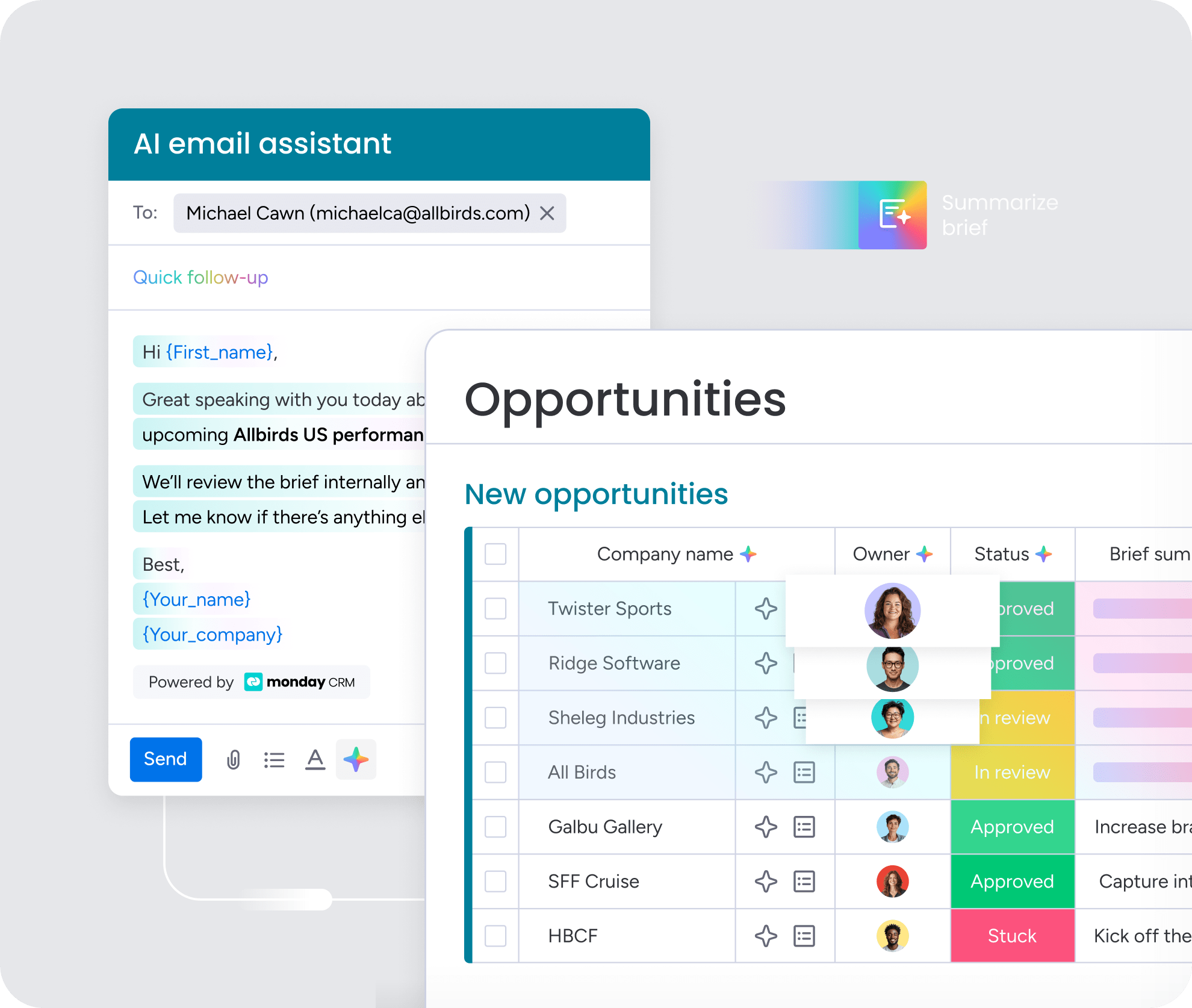
AI can quickly summarize lengthy RFP documents, extracting key requirements, deadlines, and evaluation criteria. A 100-page RFP turns into a structured summary of must-have requirements and critical compliance elements.
This saves hours of manual reading. Every requirement gets captured. Teams can prioritize high-weight requirements and allocate effort where it matters. monday CRM’s AI summarizes RFP content, so teams understand complex documents faster.
Automated task assignments and deadline reminders that keep bids moving
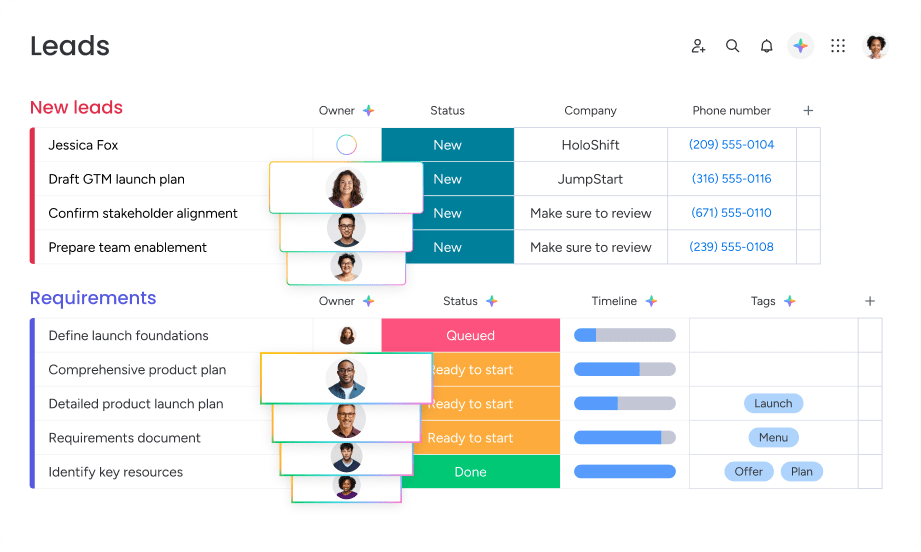
Automation assigns tasks to the right people based on bid type or expertise. When a new bid enters the system, legal review tasks go straight to the legal team.
Automated reminders keep teams on track:
- Notifications fire before deadlines.
- Escalations trigger when tasks go overdue.
AI writing support that accelerates proposal drafting and follow-ups
AI drafts boilerplate sections or generates follow-up emails. A company overview that used to take an hour now takes minutes. Contributors focus on sections that need real strategic thinking so that drafting gets faster without sacrificing quality.
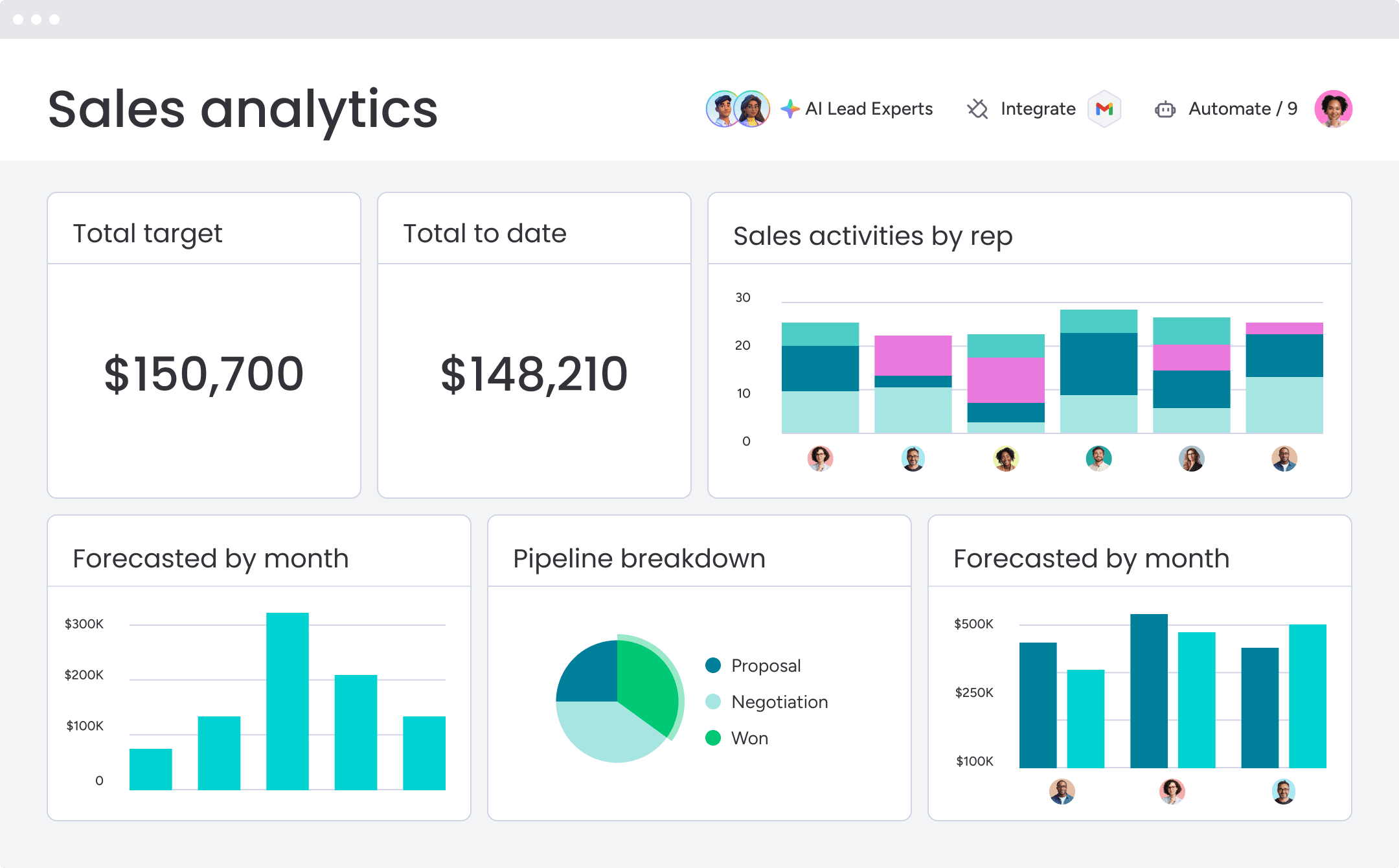
Real-time bid dashboards that surface progress and bottlenecks at a glance
Dashboards show all active bids, progress, and bottlenecks at a glance. Managers see which bids are on track and where resources are needed, no chasing status updates. Real-time visibility helps teams act on what matters:
- Tracking bid cycle time reveals process inefficiencies.
- Monitoring approval delays highlights stakeholders who need attention.
Human review as the final check on all AI-generated content
AI-generated content needs human review to stay accurate and aligned with strategy. A subject matter expert can spot factual errors and nuances that strengthen the final response.
Treat AI as a drafting assistant, not a final author. Every AI-generated section should be reviewed by a subject matter expert before it goes into the proposal.
Bid management software and bid management service options
Teams have three main approaches to managing bids: dedicated software, outsourced services, or CRM-based workflows. The right choice depends on bid volume, internal capacity, and how closely bid management connects to the broader sales process.
| Consideration | Dedicated bid software | Bid management service | CRM-based workflows |
|---|---|---|---|
| Best for | Organizations responding to 10+ bids per quarter | Organizations with low bid volume | Revenue teams managing bids as part of sales |
| Pros | Purpose-built features, strong compliance capabilities | Expert support, no internal resource drain | Unified visibility, no additional software |
| Cons | Additional software cost, learning curve | Higher cost per bid, less control | May lack specialized bid features |
| Examples | RFPIO, Loopio, Qvidian | Shipley Associates, Lohfeld Consulting | monday CRM |
Bid management metrics to track
Metrics tell you whether your bid process is working or where it’s quietly breaking down. Tracking the right numbers and sales metrics helps teams identify bottlenecks, justify investment, and demonstrate ROI. The key is choosing metrics that drive action, not just reporting.
Win rate: The headline measure of bid quality
Win rate is the percentage of submitted bids that result in wins. It’s the ultimate measure of bid quality and strategic alignment. Track win rate by bid type or customer segment to identify patterns. If win rates are low for a particular segment, qualification criteria may need adjustment.
Bid cycle time: How long it takes from kickoff to submission
Bid cycle time is the total time from bid kickoff to submission. Shorter cycles free up resources for more bids and signal a process that’s running well. Track cycle time to identify process inefficiencies. Automation and reusable content can significantly reduce cycle time.
Submission timeliness: The percentage of bids delivered on deadline
Submission timeliness is the percentage of bids submitted on or before the deadline. On-time submissions keep every bid eligible for evaluation, making this a foundational metric. Track how often teams miss deadlines and identify root causes. Poor planning and approval delays are common culprits.
Approval time: Where review bottlenecks slow the process down
Approval time is the duration between submitting content for review and receiving approval. Fast approvals keep momentum across the entire bid timeline. Track approval time by stakeholder to identify delays. Setting approval SLAs and using automated reminders can speed up reviews.
Revenue influenced by bids: The ROI case for bid management investment
Revenue influenced by bids is the total contract value of deals won through the bid process. This demonstrates the ROI of bid management efforts and makes the business case for continued investment. Track this metric to justify investment in capabilities, training, or headcount.
How monday CRM supports bid management from lead to close
monday CRM gives revenue teams a unified workspace where bid management happens alongside the rest of the sales process. Instead of juggling separate tools for proposals, approvals, and pipeline tracking, teams coordinate every stage of the bid lifecycle in one platform. That means fewer handoffs, less context switching, and complete visibility from opportunity qualification through contract close.
The platform adapts to how your team actually works. Whether you’re managing three enterprise bids or thirty mid-market proposals, workflows scale without adding complexity. Teams see what’s happening across all active bids, spot bottlenecks before they cause delays, and keep stakeholders aligned without constant status meetings.
AI-powered RFP analysis that surfaces requirements instantly
AI capabilities in monday CRM process lengthy RFP documents and extract what matters: key requirements, evaluation criteria, and compliance checkpoints. A 100-page tender becomes a structured summary in minutes, not hours. Teams identify high-weight requirements faster and allocate effort where it drives the most value. Every requirement gets captured, so nothing falls through the cracks during the response effort.
AI writing assistance that accelerates proposal content creation
The platform’s AI drafts boilerplate sections, generates follow-up emails, and helps contributors get past blank pages. Company overviews, security questionnaires, and standard responses that used to take an hour now take minutes. Contributors focus on strategic content that differentiates your bid while AI handles repetitive writing tasks. All AI-generated content stays in context with the rest of your bid materials for easy review and refinement.
Automated workflows that eliminate manual coordination

Automation in monday CRM assigns tasks based on bid type, sends deadline reminders, and routes approvals to the right stakeholders. When a draft is ready, legal review tasks auto-assign to the legal team. Sales gets notified when approvals are complete. Reminders fire before deadlines, and escalations trigger when tasks go overdue. Teams spend less time chasing updates and more time building winning proposals.
Real-time dashboards that show bid progress and bottlenecks at a glance
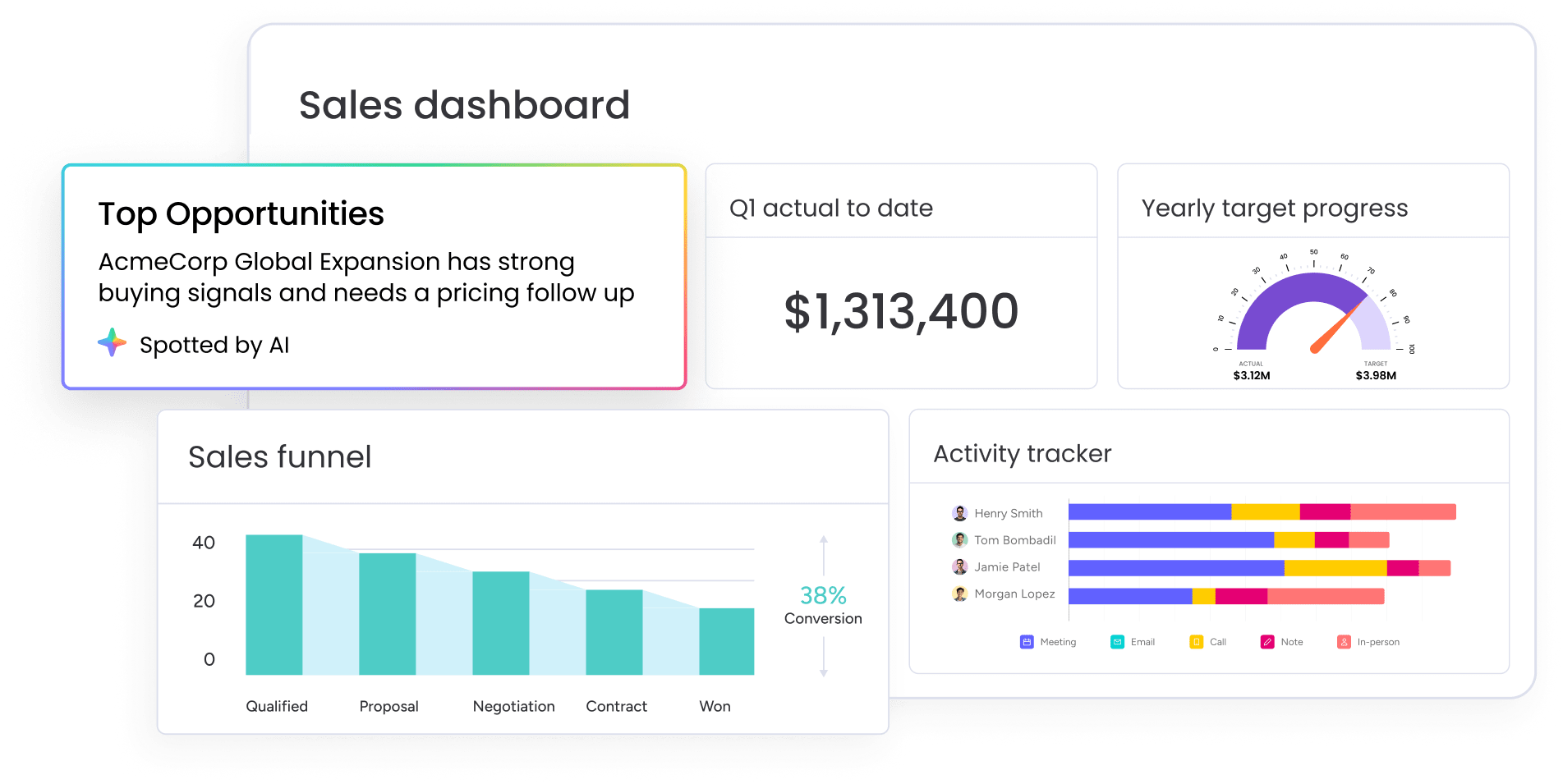
Custom dashboards provide visibility into all active bids without requiring status meetings. Track cycle time to identify process inefficiencies. Monitor approval delays to address bottlenecks before they threaten deadlines. Role-based permissions ensure sensitive pricing and strategy details are only visible to authorized team members. Managers see where resources are needed and which bids need attention, all from a single view.
Scale your bid management process for consistent wins
A structured bid management process gives revenue teams something most ad-hoc approaches can’t: predictability. Win rates improve, timelines hold, and teams spend less time reacting and more time executing with purpose.
AI and automation are making bid management faster and more effective for teams that use them well. Embracing these capabilities, while keeping human judgment at the center of strategy and quality decisions, is what separates teams that scale from those that stay stuck in manual work. monday CRM brings all of this together in one place, so your team can focus on winning, not on managing the process of winning.
Try monday CRMFAQs
What are the 5 steps in the bidding process?
The 5 steps in the bidding process are qualifying the opportunity with a bid/no-bid decision, creating a bid plan with owners and deadlines, coordinating the bid team across departments, building and submitting the proposal, and tracking results to improve future bids.
What is the process of bid management?
The process of bid management is the structured approach to responding to formal requests by coordinating stakeholders, creating compliant proposals, and tracking outcomes to continuously improve win rates.
What are the 7 stages of tendering?
The 7 stages of tendering typically include pre-qualification, RFP issuance by the buyer, bid preparation by respondents, submission, evaluation by the buyer, negotiation, and contract award.
What is the difference between bid management and bid coordination?
Bid management is the end-to-end process covering strategy, planning, execution, and tracking. Bid coordination focuses specifically on aligning stakeholders and managing handoffs during the response effort.
When should a team use a bid management service?
A team should use a bid management service when they have low bid volume, limited internal resources, or need specialized expertise for high-stakes proposals where the cost of expert support is justified by potential contract value.
