


AI agents do more than recommend what to do — they qualify leads, send follow-ups, book meetings, and update CRM records autonomously, shifting how companies price software from seat licenses to completed work.
This guide covers 7 proven AI agent business models: subscription, usage-based, outcome-based, Agent-as-a-Service, embedded agents, marketplaces, and managed AgentOps. You’ll learn how to measure ROI, match pricing structures to your team’s workflow, and start with high-impact use cases that deliver measurable results.
Key takeaways
- AI agent pricing has moved beyond flat subscriptions — you can now pay per meeting booked, per lead qualified, or per deal closed.
- Pick a single high-impact process like lead qualification or meeting booking, prove the ROI, then expand from there.
- Variable demand fits usage-based pricing; consistent daily use fits subscription; outcome-focused teams should explore performance-based models.
- Measure deal velocity, meetings booked, and forecast accuracy to know whether your AI agents are actually moving the needle.
- Embedded AI on platforms like monday CRM handles lead enrichment, follow-ups, and forecasting directly on your pipeline view — no extra integrations needed.
What are AI agent business models?
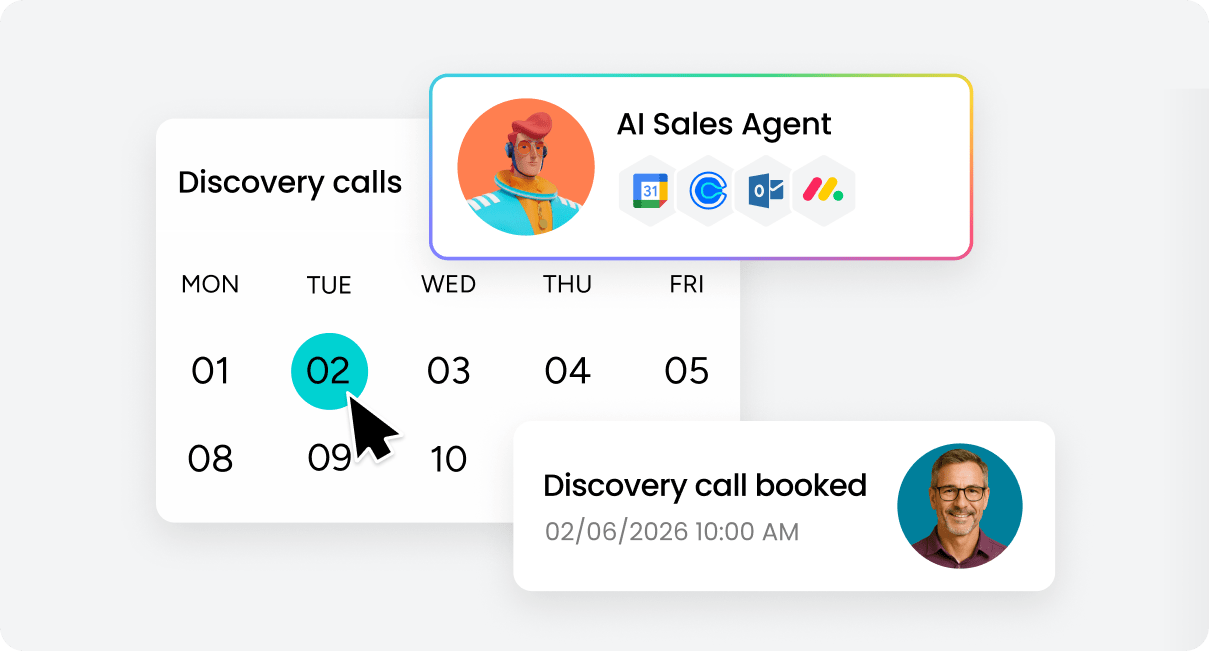
AI agent business models determine how companies price software that completes revenue work autonomously — qualifying leads, booking meetings, updating CRM records, and moving deals forward without manual intervention at every step.
| Function | Traditional sales tool | AI agent |
|---|---|---|
| Lead scoring | Tells your rep which prospects to prioritize | Scores the lead, routes it to the right rep, enriches the contact record, and sends a personalized follow-up — all before your rep even opens their inbox |
| Meeting booking | Scheduling link waits for prospects to pick a time | Engages the prospect in conversation, qualifies their interest, and books the demo directly on your calendar |
Traditional software recommends actions. AI agents execute them. A lead scoring tool tells reps which prospects to call. An AI agent scores the lead, routes it, enriches the record, and sends the first follow-up — all autonomously. That shift from recommendation to execution changes pricing because vendors can now charge for completed work instead of just platform access.
Because AI agents perform different types of work, vendors price them differently — from flat subscriptions to usage-based and outcome-based models.
Types of AI agents and how they're priced
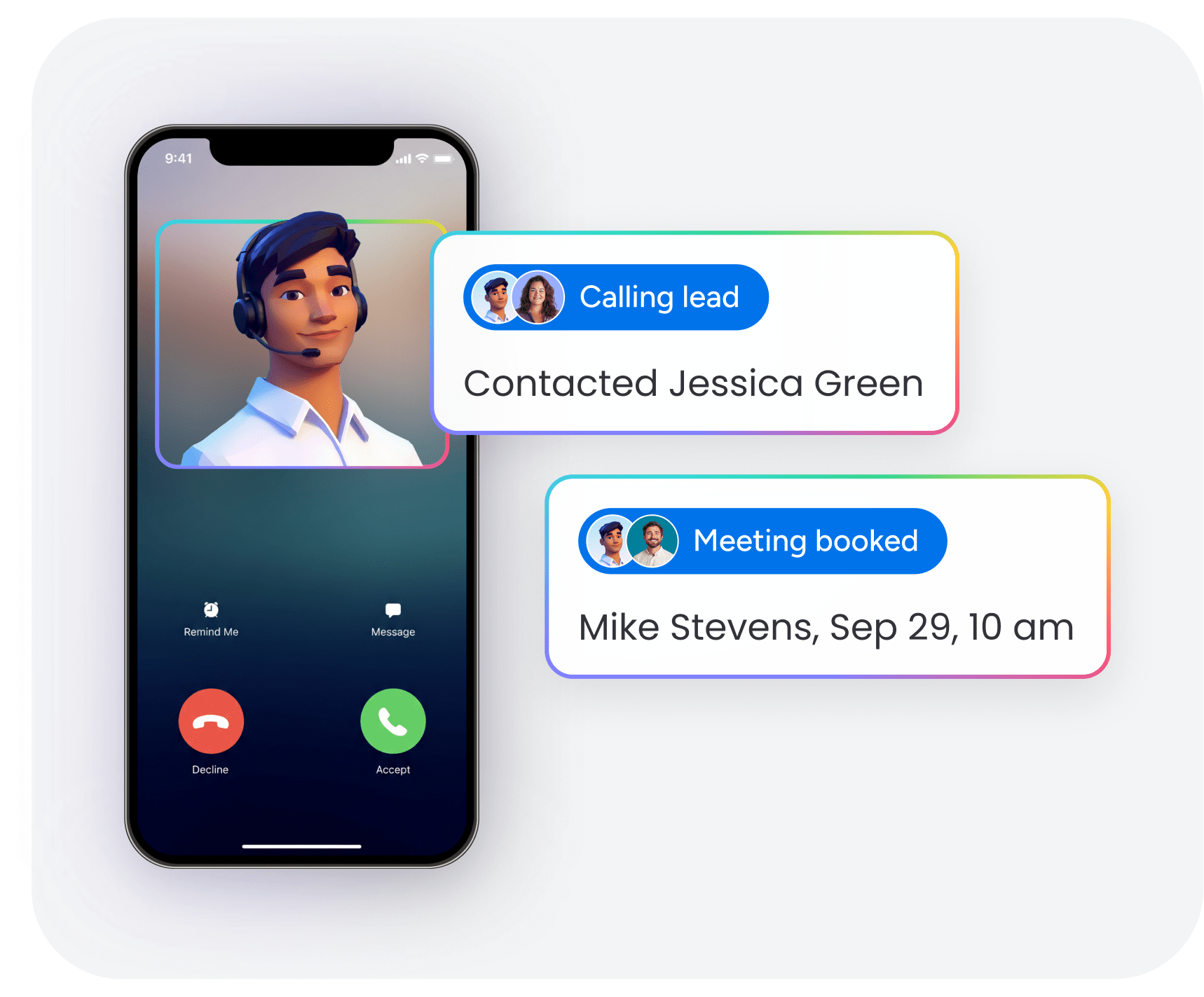
AI agent pricing models charge for work completed, outcomes hit, or value delivered — not just platform access. Traditional SaaS charges for seats. AI agents charge for what they contribute to revenue.
Revenue-generating AI agents create pipeline, move deals forward, and capture revenue without needing a human to trigger each action:
| Agent type | Primary function | Revenue impact |
|---|---|---|
| Lead qualification | Score leads, enrich data, route to reps | Increases MQL-to-SQL conversion |
| Meeting booking | Engage prospects and schedule demos | Accelerates top-of-funnel conversion |
| Deal progression | Monitor activity, send follow-ups, update stages | Improves deal velocity and reduces stalled deals |
| Lead sourcing | Identify and enrich new prospects | Expands addressable pipeline |
| Expansion | Identify upsell opportunities, trigger renewals | Increases customer lifetime value |
Different agent types fit different pricing models.
- Subscription pricing charges a flat monthly or annual fee for unlimited or capped usage — best for agents used daily in standard workflows like CRM-embedded qualification or deal intelligence.
- Usage-based pricing charges per action completed — per lead enriched, per email sent, per meeting booked — fitting teams with variable or seasonal demand.
- Outcome-based pricing charges only for measurable results like qualified meetings scheduled or deals closed, shifting risk from buyer to vendor.
High-volume agents handling single tasks — like lead enrichment — usually charge per use. Outcome-focused agents like meeting booking often use outcome-based pricing. The right model depends on the agent’s job and how buyers prefer to pay.
7 AI agent business models for driving revenue
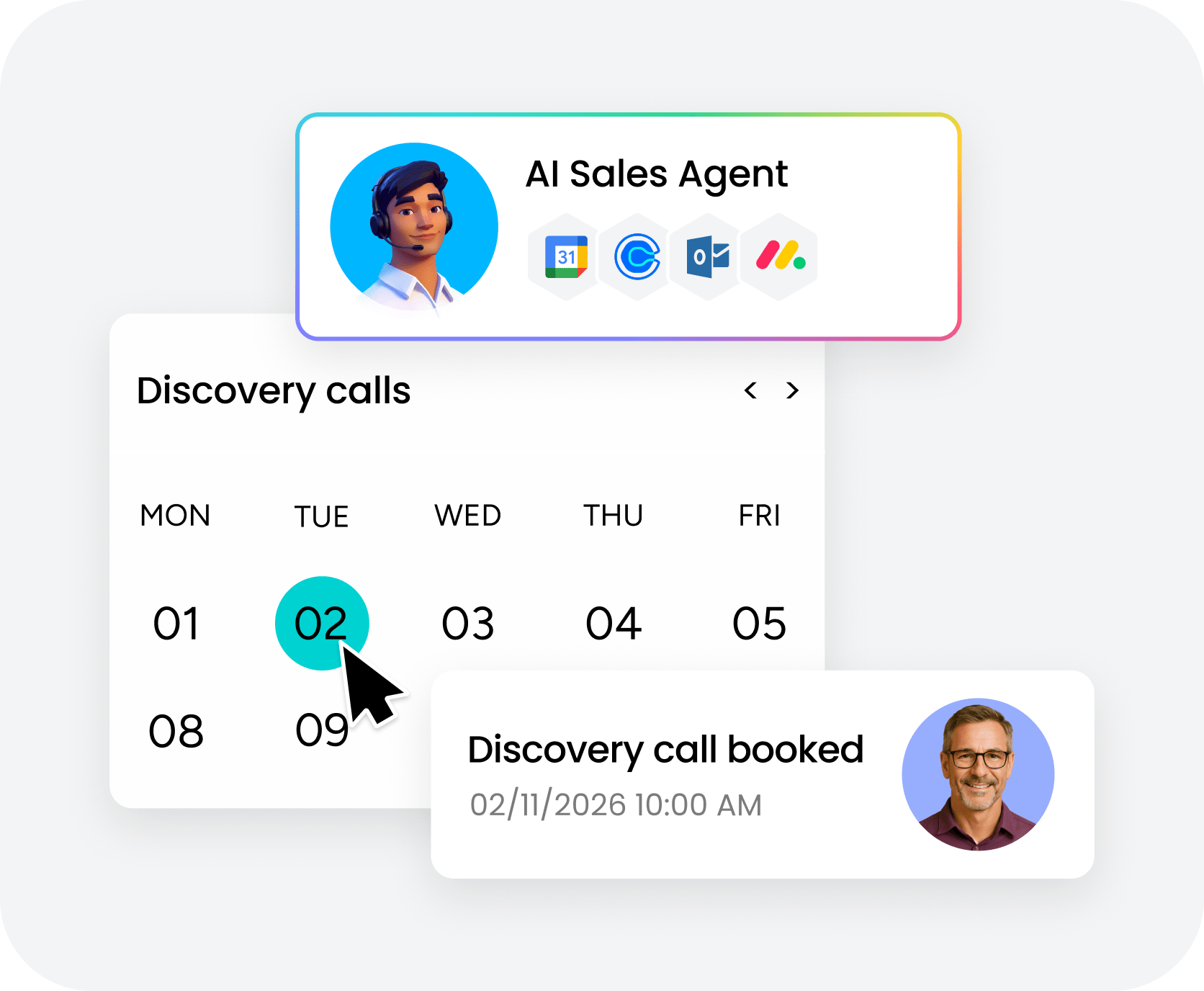
These 7 models are the most proven ways to charge for AI agents that move revenue. Each model fits different buyer priorities — predictability, flexibility, shared risk, or paying for results. No single model works everywhere. The right choice depends on what the agent does, how buyers want to pay, and who takes the risk.
| Model | How you pay | Best for | Typical use case |
|---|---|---|---|
| Subscription | Flat monthly/annual fee | Daily, consistent use | CRM-embedded qualification |
| Usage-based | Per action/task completed | Variable or seasonal demand | Campaign-driven outreach |
| Outcome-based | Per result delivered | Pay-for-performance buyers | Meeting booking, SQL generation |
| Agent-as-a-Service | Managed service fee | Teams without AI expertise | Fully managed lead qualification |
| Embedded agents | Included or add-on to platform | Existing CRM users | Deal stage updates, forecasting |
| Marketplace | Per-agent subscription or usage | Specialized workflows | Industry-specific qualification |
| Managed AgentOps | Retainer or project fee | Enterprise deployments | Multi-team agent deployment |
1. Subscription-based AI agents
Subscription-based pricing means customers pay a recurring fee (monthly or annual) for access to AI agents that do revenue work. The fee is typically flat per user, per team, or per account, with unlimited or capped usage within the subscription tier.
Teams pay the same amount every month, no matter how much they use it. Vendors don’t need to track every transaction to forecast revenue.
Subscription pricing fits agents used daily or weekly in standard workflows:
- CRM-embedded qualification agent: Included in a CRM subscription, this agent qualifies leads and books meetings as part of the platform’s core functionality.
- Deal intelligence add-on: Available as a monthly add-on to existing sales platforms, this agent monitors pipeline health, identifies at-risk deals, and suggests next actions.
- Outbound prospecting agent: Offered as a tiered subscription based on team size, this agent handles prospect research, email personalization, and initial outreach.
Potential drawback: Buyers may underutilize agents but still pay full price. A team that subscribes to a meeting booking agent but only uses it during quarterly campaigns pays the same as a team using it daily.
2. Usage-based AI agents
Usage-based pricing charges customers for what the agent does — actions taken, API calls made, leads processed, tasks completed. Buyers pay only for what they use, and costs scale with activity rather than headcount.
You get flexibility and control over costs. A team running a major campaign can scale agent usage without renegotiating contracts. A team in a slow quarter can scale down without paying for unused capacity.
| Pricing meter | Cost range | What it measures | Risk profile |
|---|---|---|---|
| Per lead enriched | $0.05–$0.15 | Completed enrichment tasks | Low risk, predictable per-unit cost |
| Per email sent | $0.03–$0.10 | Outreach activity | Medium risk, costs scale with volume |
| Per reply received | $0.25–$1.00 | Engagement generated | Lower risk, pays for results |
| Per meeting booked | $15–$75 | Qualified meetings scheduled | Lowest risk, pays only for outcomes |
Usage-based models work best for teams with variable or seasonal demand. A company launching a new product might triple outbound activity for 2 months, then return to normal levels. Usage-based pricing accommodates this without locking the team into a higher subscription tier year-round.
3. Outcome-based AI agents
Outcome-based pricing charges for measurable results: meetings booked, SQLs generated, deals closed. Payment ties directly to revenue impact, not activity or access.
Vendors only win when buyers win. If the agent doesn’t produce results, the vendor doesn’t get paid. Buyers minimize risk because they pay only for outcomes that matter to their business.
Here’s how it works:
- Sales development agent: Charges $50 per qualified meeting booked. The agent handles prospect identification, outreach, qualification, and scheduling. The buyer pays only when a qualified meeting appears on a rep’s calendar.
- Lead generation agent: Charges $200 per SQL delivered. The agent sources prospects, enriches data, scores leads, and hands off only those meeting SQL criteria.
- Deal acceleration agent: Charges 5% of closed-won revenue attributed to the agent. If the agent’s follow-ups, reminders, and deal updates contribute to a $100,000 deal, the vendor earns $5,000.
Potential drawback: Vendors assume more risk if agents underperform. Attribution can be complex for outcome-based models tied to closed revenue, requiring robust tracking and agreed-upon attribution rules.
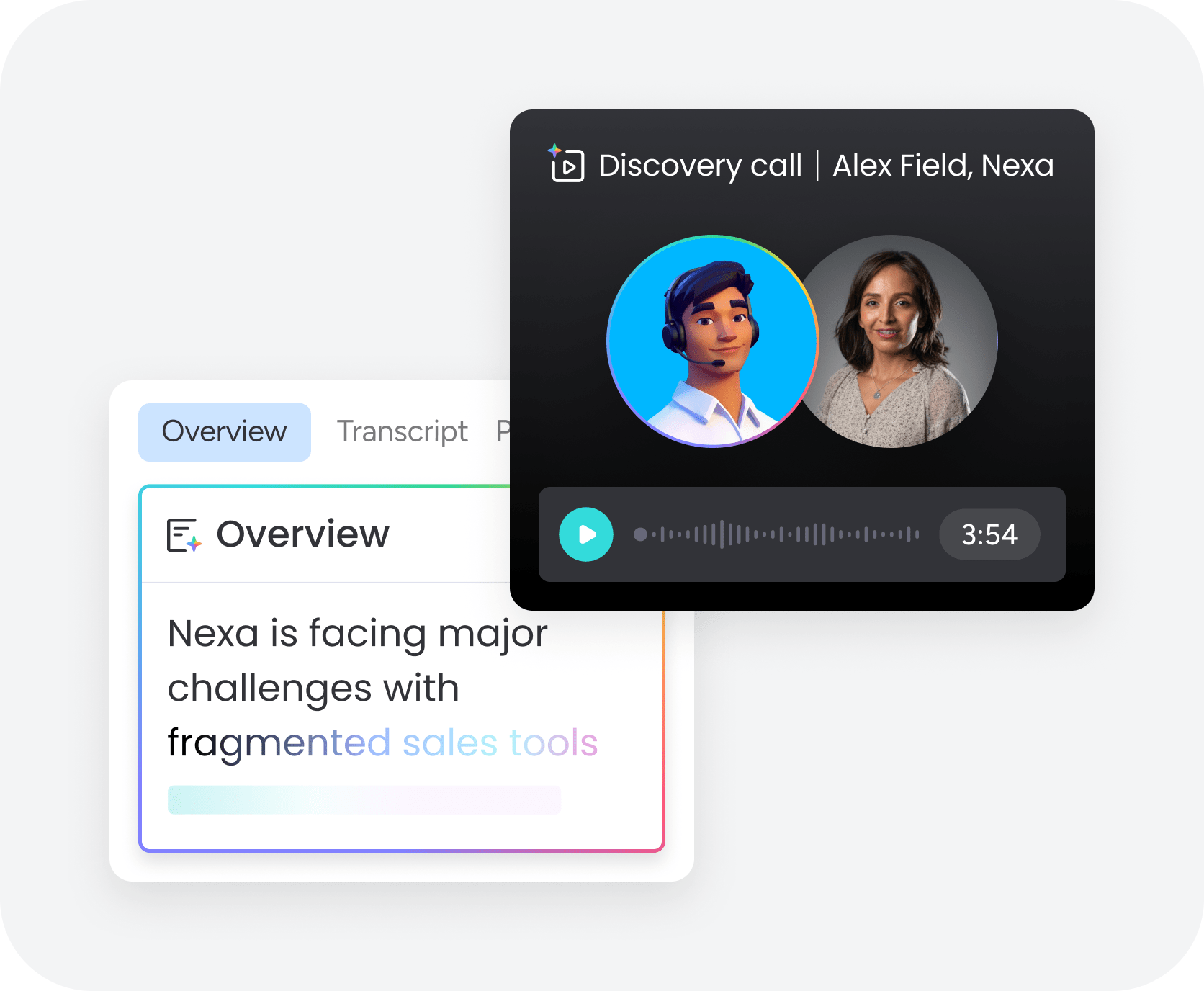
4. Agent-as-a-Service
Agent-as-a-Service (AaaS) means vendors offer AI agents as fully managed services. Vendors deploy, monitor, optimize, and maintain agents on behalf of customers. The buyer gets outcomes or usage without handling any technical operations.
You get results fast without dealing with complex setup. Buyers don’t need in-house AI expertise, data science teams, or engineering resources to benefit from AI agents — the vendor handles everything from initial configuration to ongoing optimization.
| Service component | Vendor responsibility | Buyer responsibility |
|---|---|---|
| Agent configuration | Full | Provide ICP, messaging guidelines |
| Workflow design | Full | Approve workflows |
| Performance monitoring | Full | Review reports |
| Model optimization | Full | Provide feedback |
| Data integration | Full | Grant system access |
Buyers who lack in-house AI expertise or resources to build and maintain agents benefit most from AaaS. A mid-market company without a data science team can still deploy sophisticated AI agents by outsourcing operations to a specialized vendor.
5. Embedded AI agents in CRM and SaaS platforms
Embedded AI agents live inside your CRM, sales engagement, or revenue ops platforms. They’re available as native features or premium add-ons, working within platforms revenue teams already use daily.
They work inside your existing workflows — no extra setup. Agents leverage platform data — including contacts, deals, activities, and email history — for context without requiring separate integrations or data pipelines.
Additional examples of embedded AI agents include:
- CRM-native deal stage agent: Auto-updates deal stages based on email activity, meeting notes, and engagement signals.
- Sales engagement personalization agent: Customizes outbound sequences based on prospect behavior tracked in the platform.
- Revenue intelligence agent: Analyzes call transcripts and CRM data to suggest next actions.
6. AI agent marketplace business models
AI agent marketplaces let third-party developers build, list, and sell agents to revenue teams. The model resembles app stores for SaaS — buyers browse available agents, purchase or subscribe, and deploy them within their existing platforms.
You get specialized agents built for niche workflows or industries. Instead of building custom agents, buyers can find pre-built solutions from developers who specialize in specific use cases.
| Marketplace type | Agent categories | Revenue model | Quality control |
|---|---|---|---|
| CRM-native | Lead scoring, deal intelligence, pipeline analysis | Revenue share (15–30%) | Platform review process |
| Sales enablement | Email writing, objection handling, content recommendation | Transaction fee per install | Developer certification |
| Industry vertical | Industry-specific qualification, compliance, outreach | Subscription + revenue share | User ratings and reviews |
Buyers who need specialized agents for niche workflows or industries benefit most from marketplaces. A real estate brokerage needs different lead qualification logic than a SaaS company — a marketplace offers agents built specifically for each context.
7. Managed AgentOps and governance services
Managed AgentOps services help revenue teams deploy, monitor, optimize, and govern AI agents at scale. Revenue comes from consulting fees, implementation retainers, or success-based pricing tied to agent performance.
You get expert help deploying agents across teams, regions, or use cases. It also addresses compliance and governance requirements that internal teams may lack the expertise to handle.
| Service tier | Scope | Typical engagement | Pricing model |
|---|---|---|---|
| Implementation | Design, configure, deploy agents | 4–12 weeks | Fixed project fee |
| Optimization | Monitor, tune, improve performance | Ongoing monthly | Monthly retainer |
| Governance | Compliance, audit, policy enforcement | Ongoing quarterly | Annual contract |
| Full-service | All of the above | Multi-year partnership | Success-based + retainer |
Enterprise buyers who need help scaling agents across multiple teams or regions benefit most from managed services. Buyers with compliance requirements like GDPR, HIPAA, or SOC 2 benefit from governance services that ensure agents handle data appropriately and maintain audit trails.
Learn more: AI models
Why AI agents create new revenue opportunities
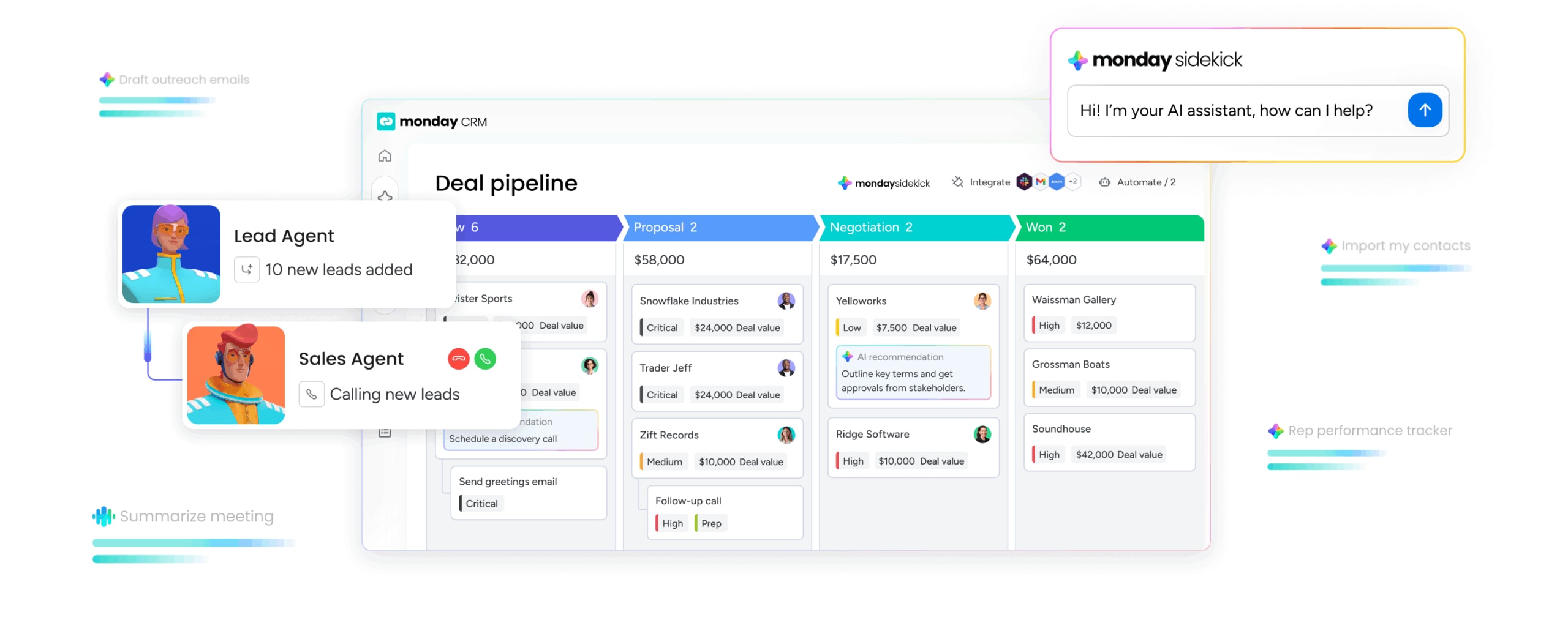
Agentic AI in sales doesn’t just automate tasks — it executes revenue-generating work autonomously. That opens up business models traditional software couldn’t support. The shift from “software that helps people work” to “software that does the work” unlocks monetization opportunities because agents deliver measurable outcomes like meetings booked, deals closed, and pipeline created, rather than just access to platforms.
AI agents move from answers to actions
Traditional AI gives recommendations. Humans still have to act on them. AI agents execute actions autonomously. A lead qualification agent doesn’t just score leads — it routes high-intent prospects to the right rep, enriches contact records, and sends personalized follow-ups without human intervention. The rep receives a qualified, enriched lead with context and a conversation already started. That matters because agents speed up sales cycles, boost rep productivity, and catch every lead before it slips away.
Embedded agents work inside existing systems
AI agents embedded on CRM, email, and sales engagement platforms leverage existing data and workflows. They’re more contextually aware than standalone platforms because they have access to the full history of interactions, deal data, and customer information. Embedded agents cut friction, boost adoption, and deliver results faster because they work where reps already spend their day.
Teams get better results when AI agents work inside the CRM, using contact and deal data to source leads, qualify prospects, and suggest next steps. The platform monitors deal health using CRM activity data, providing recommendations in context rather than requiring reps to check a separate platform.
Autonomous sales agents support the full revenue cycle
AI in B2B sales can support every stage of the revenue cycle, from lead generation and qualification to deal progression and post-sale expansion. That means full revenue automation, not just tools for single tasks.
Here’s how agents fit each revenue stage:
- Top of funnel: Lead sourcing agents identify prospects matching the ideal customer profile, enrich contact data with firmographic and intent signals, and hand off qualified leads to SDRs.
- Middle of funnel: Meeting booking agents engage prospects who’ve shown interest, qualify their needs through conversation, and schedule demos or discovery calls.
- Bottom of funnel: Deal acceleration agents identify at-risk deals, suggest interventions, and automate routine follow-ups.
- Post-sale: Expansion agents analyze customer usage data and support interactions to identify upsell opportunities.
This shift changes pricing, too, because you pay for work completed rather than seats. Depending on the model, you might pay per meeting booked, per lead enriched, or a percentage of closed revenue.
Each option makes different assumptions about risk, value, and how your team works. Pick the wrong one and you’ll overpay during slow months or get hit with surprise costs when campaigns scale.
People and agents work together with shared context
The best AI agent setups let people and agents work together. Agents handle repetitive, high-volume workflows while humans focus on strategy, relationship-building, and complex decision-making. Shared context ensures both work in sync.
Here’s how the work splits:
- Agents qualify and route leads; reps focus on high-value conversations with qualified prospects.
- Agents send follow-up emails and update CRM records; reps focus on closing deals and building relationships.
- Agents monitor pipeline health and flag risks; managers focus on coaching and strategic interventions.
Shared context means agents and people see the same information. When an agent sends a follow-up email, the rep sees it in the CRM. When a rep has a call, the agent incorporates that context into future actions.
How to choose the right AI agent revenue model
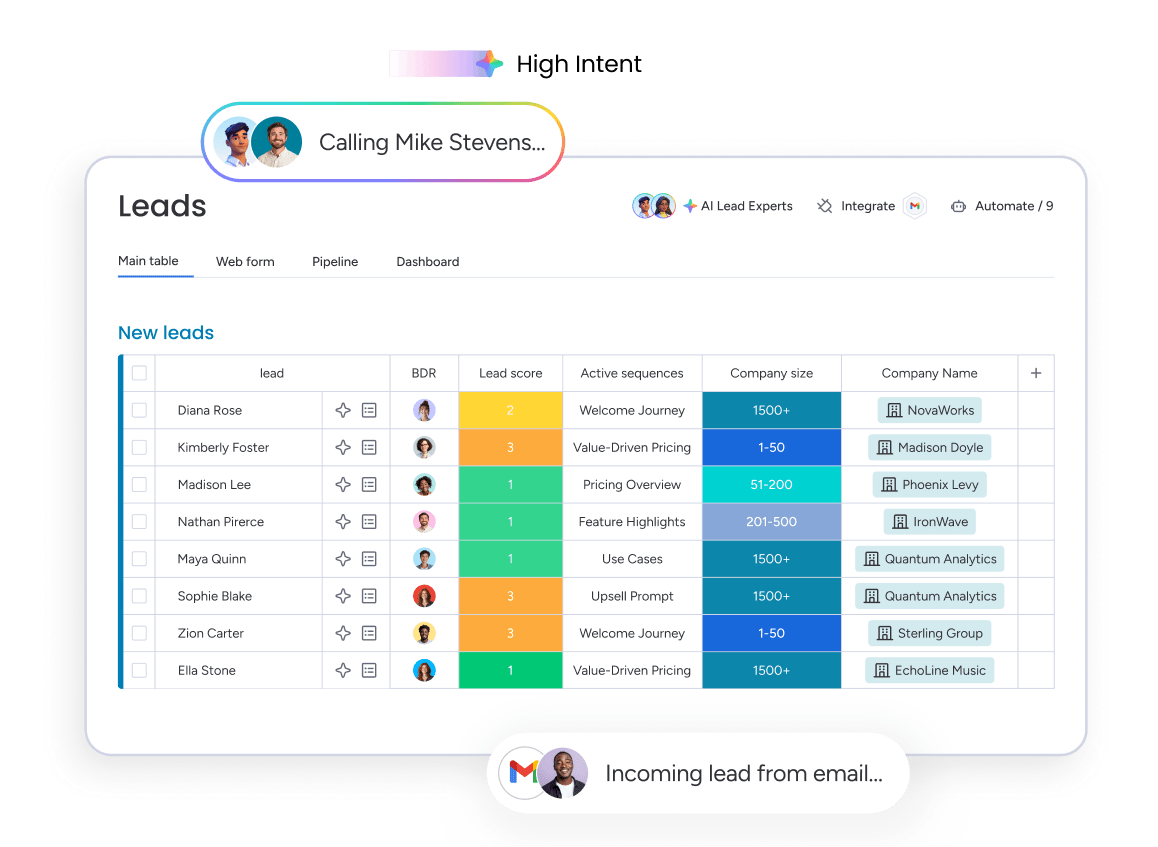
The right AI agent business model depends on 3 things: revenue goals, measurable impact, and risk tolerance. No single model works for everyone. Different teams prioritize different outcomes. Below: the key decisions that get the match right.
Match the model to the buyer’s revenue goal
The best model matches the buyer’s main revenue goal. A team focused on predictable budgeting has different needs than a team focused on paying only for results. Use this table to find your starting point:
| Buyer goal | Recommended model | Why it fits |
|---|---|---|
| Predictable costs | Subscription | Fixed monthly fee, no usage tracking |
| Pay for results | Outcome-based | Payment tied to measurable outcomes |
| Flexible scaling | Usage-based | Costs scale with activity |
| Fast deployment | Agent-as-a-Service | Vendor handles all operations |
| Seamless integration | Embedded agents | Works within existing platforms |
| Specialized needs | Marketplace | Access to niche, industry-specific agents |
| Enterprise scale | Managed AgentOps | Expert guidance for complex deployments |
Pick the wrong model and you’ll hit problems fast. A team with variable demand paying a flat subscription may overpay during slow months. A team with consistent, high-volume usage paying per action may face unpredictable costs.
Choose a pricing meter tied to completed work
Good pricing meters track completed work or outcomes — not just activity. Buyers want to pay for value delivered, not inputs consumed.
Effective pricing meters include:
- Per qualified meeting booked: Buyers pay for meetings that meet defined qualification criteria. Direct revenue impact, easy to measure.
- Per lead enriched: Buyers pay for completed enrichment tasks — contacts with updated firmographic data, verified emails, and intent signals.
- Per deal closed: Buyers pay a percentage of closed-won revenue attributed to the agent. Strongest alignment with revenue outcomes, but requires robust attribution.
Pricing meters tied to completed work align vendor incentives with buyer success. The vendor earns more when the agent delivers more value.
Start with one workflow before scaling
The best AI agent rollouts start with one high-impact workflow, then expand. You cut risk, get results faster, and measure ROI more easily.
Effective starter workflows include:
- Lead qualification: Deploy an agent to score and route inbound leads. Measure impact on MQL-to-SQL conversion rate and rep response time.
- Meeting booking: Start with an agent that schedules demos from inbound requests. Measure meetings booked and show rates.
- Deal follow-up: Begin with an agent that sends post-meeting emails and updates CRM records. Measure follow-up completion rate and deal velocity.
Once the initial workflow delivers measurable results, expand to adjacent workflows. Use the same measurement approach to validate each new use case before adding more.
Balance automation with human review
The best models keep humans in the loop. Agents handle repetitive tasks autonomously, but humans review high-stakes actions before they execute.
- Lead enrichment and meeting reminders: Full automation, no human review needed
- Standard follow-ups: Full automation with optional spot-check
- Personalized outreach: Agent drafts, rep approves before send
- Deal stage changes: Agent suggests, manager approves
- High-value account communication: Agent drafts, rep approves and customizes
Teams using monday CRM can configure AI actions to suggest changes that require approval before execution, maintaining human oversight while reducing manual work. The platform’s run history provides full visibility into what AI changed and why, enabling teams to audit agent actions and refine workflows over time.
Try monday CRMSubscription vs. usage-based AI pricing
Subscription and usage-based pricing dominate AI agent business models. Each fits different buyer needs and workflows. The right choice depends on usage patterns, cost predictability, and risk tolerance. Sometimes a hybrid works best.
| Pricing model | Best for | Use cases | Key benefits |
|---|---|---|---|
| Subscription | Predictable costs and daily/weekly agent use | Lead enrichment agents, deal intelligence agents, email personalization agents | Predictable monthly costs, no usage limits, encourages full utilization |
| Usage-based | Variable or seasonal demand | Campaign-driven outreach, lead sourcing for specific initiatives, high-volume prospecting periods | Pay only for completed work, costs scale with activity, not headcount |
| Hybrid | Predictable base usage with occasional spikes | Base + overage, tiered subscription, subscription + add-ons | Balances predictability with flexibility, reduces overpayment risk |
How to measure AI sales automation ROI
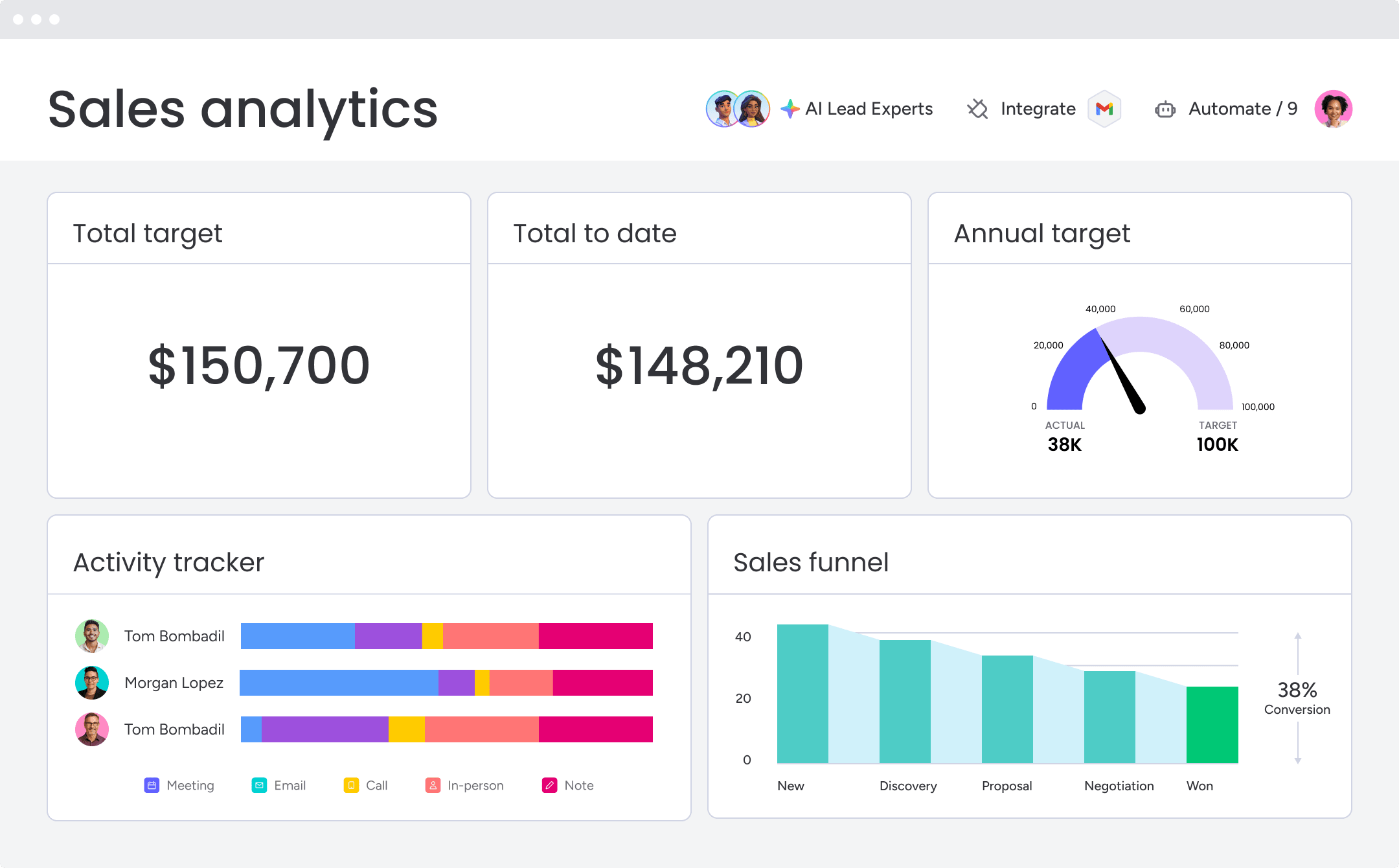
To measure AI sales automation ROI, track revenue metrics — not just activity like emails sent or leads enriched. These metrics show how AI agents affect pipeline creation, deal velocity, and forecast accuracy. Each one ties agent activity to outcomes executives care about.
The metrics that matter most:
- Pipeline created measures the total dollar value of new opportunities generated by AI agents. Track opportunities created by agent-sourced leads vs. manual prospecting and calculate cost per dollar of pipeline created.
- Meetings booked counts qualified sales meetings scheduled by AI agents. Track meetings booked by agents vs. manual outreach, calculate cost per meeting, and measure meeting-to-opportunity conversion rate.
- Follow-up completion rate measures the percentage of required follow-ups completed by AI agents without manual intervention. Compare completion rates before and after agent deployment and track time-to-follow-up.
- Deal velocity measures average time from opportunity creation to close. Track deal cycle length for agent-assisted deals vs. manual deals and calculate percentage reduction in cycle time.
- Forecast accuracy measures the percentage of forecasted revenue that actually closes. Better accuracy means agents update deal stages based on real activity, not what reps remember to log.
- Rep selling time measures the percentage of time reps spend on high-value selling activities vs. administrative work. Track time allocation before and after agent deployment to quantify eliminated admin work.
Putting AI agents to work for your revenue team
The right AI agent business model depends on your team’s workflow, your revenue goals, and how you want to share risk with vendors. Whether you choose subscription for predictable costs, usage-based for flexibility, or outcome-based to pay only for results, the key is matching the model to how your agents actually create pipeline, accelerate deals, and drive revenue.
monday CRM gives you embedded AI agents that work directly where your team already manages deals and pipeline — no separate platforms, no extra integrations, no context switching. AI-assisted lead enrichment, automated follow-ups, and real-time forecasting live inside the CRM your reps use every day, so you get faster adoption and measurable results from day one.
Try monday CRMFAQs
What is an AI agent business model?
An AI agent business model determines how companies price and sell software that autonomously completes revenue work — qualifying leads, booking meetings, updating CRM records, and moving deals forward without manual intervention. Unlike traditional SaaS that charges for platform access, AI agent business models charge for work completed, outcomes delivered, or value created. These models include subscription pricing, usage-based pricing, outcome-based pricing, agent-as-a-service, embedded agents, marketplaces, and managed AgentOps services.
What is the difference between usage-based and outcome-based AI pricing?
The difference between usage-based and outcome-based AI pricing is that usage-based pricing charges for agent activity like leads processed or emails sent, regardless of results, while outcome-based pricing charges only when the agent delivers specific results like qualified meetings booked or deals closed, shifting risk from buyer to vendor.
Which AI agent pricing model is best for small businesses?
Small businesses often benefit from subscription or usage-based models that provide predictable costs and scale with their needs. Embedded AI agents within existing CRM platforms offer fast time-to-value without requiring separate integrations or technical expertise.
How do embedded AI agents differ from standalone AI platforms?
Embedded AI agents differ from standalone AI platforms by working directly on CRM and sales platforms where revenue teams already manage their work. They leverage existing data, workflows, and permissions without requiring separate integrations.
What metrics should I track to measure AI agent ROI?
To measure AI agent ROI, track pipeline created, meetings booked, follow-up completion rate, deal velocity, forecast accuracy, and rep selling time. These metrics connect AI agent activity to revenue outcomes rather than just measuring activity volume like emails sent or leads enriched.
