


Sales teams often spend six months nurturing a promising lead. Multiple stakeholders engage with content, attend webinars, and download case studies. Then communication stops. Weeks later, a deal with a competitor is announced. This scenario occurs frequently in B2B organizations.
Most lead nurturing programs fail because they treat prospects as a single decision-maker with uniform needs. In reality, B2B purchases are complex, involving multiple stakeholders with different priorities, extended timelines, and formal approval processes. According to a 2023 Gartner report, the average B2B purchase involves 22 people and takes 6–18 months, yet many programs still rely on generic email sequences that do not address this complexity.
Effective B2B lead nurturing in 2026 requires a different approach. Success depends on understanding how buyers make decisions, delivering relevant content to the right stakeholders at the right time, and maintaining engagement throughout a long and multifaceted journey. This guide explores what works: the critical stages buyers move through, proven practices that drive revenue, strategies for engaging complex buying groups across multiple channels, and how AI can support scalable, personalized nurturing.
Key takeaways
- B2B lead nurturing requires understanding the full buyer journey: map out how multiple stakeholders make decisions and create content paths that match each stage.
- Behavioral segmentation drives relevance: prioritize lead behavior, engagement patterns, and intent signals over basic demographics for personalized nurturing.
- Progressive, role-specific content accelerates decisions: deliver education, case studies, and implementation guidance tailored to each stakeholder and buying stage.
- Multi-channel orchestration improves engagement: coordinate email, social media, video, and conversational AI to reach different stakeholders effectively.
- Integrated CRM platforms enhance efficiency and measurement: tools like monday CRM provide unified visibility, AI-powered personalization, and real-time tracking of nurturing impact on revenue.
B2B lead nurturing is the strategic process of building relationships with potential buyers throughout their decision-making journey. Unlike tactics focused on immediate conversions, nurturing emphasizes providing value and establishing trust before prospects are ready to purchase. For complex solutions, this process can span six to eighteen months and often involves multiple stakeholders across departments.
Think of it like cultivating a garden. You do not plant seeds and expect instant results. Consistent attention, the right resources at the right time, and protection against obstacles are essential. Each prospect requires unique engagement based on their stage, role, and challenges.
How B2B nurturing works in practice
B2B lead nurturing maintains meaningful engagement from initial awareness through the purchase decision. Targeted content and personalized communication guide buyers through each stage of evaluation. Unlike B2C tactics, this approach prioritizes education over promotion, reflecting the complexity of business purchases.
Key elements that make B2B nurturing unique include:
- Multiple content touchpoints: prospects interact with several pieces of content before initiating a sales conversation.
- Stakeholder complexity: buying decisions involve various stakeholders, each requiring distinct information.
- Extended timelines: enterprise software purchases often take twelve to eighteen months, while mid-market solutions average six to nine months.
Effective nurturing delivers relevant content to the right person at the right time, building knowledge and confidence. This accelerates decision-making through proper lead management and ensures prospects remain engaged throughout longer buying cycles.
Why B2B lead nurturing differs from B2C
B2B and B2C nurturing differ in decision complexity, stakeholder involvement, and relationship depth. Understanding these differences is crucial for designing programs that reflect how buyers actually make decisions.
Key distinctions include:
- Decision makers: B2B purchases involve multiple stakeholders across departments, each with distinct priorities.
- Timeline: B2B cycles span months or years, whereas B2C decisions often occur within days or weeks.
- Content needs: buyers require educational and technical content that builds understanding over time.
- Relationship type: B2B nurturing fosters long-term partnerships, while B2C relationships tend to be transactional.
- Approval process: B2B purchases demand formal approvals and ROI justification, unlike personal spending decisions.
Essential components of effective B2B lead nurturing systems
Successful B2B nurturing relies on integrated systems that guide prospects through complex journeys while remaining relevant and trustworthy. Without these elements, nurturing efforts can become disjointed and ineffective.
Key components include:
- Segmentation capabilities: categorize leads by industry, company size, role, behavior, and buying stage to deliver relevant content.
- Content progression paths: structure sequences that build knowledge progressively, assuming familiarity with earlier concepts.
- Behavioral tracking: monitor interactions with emails, websites, content, and other touchpoints.
- Multi-channel coordination: unify messaging across email, social media, websites, events, and direct outreach.
- Feedback loops between sales and marketing: ensure sales teams provide insights on lead quality and common objections.
Common B2B lead nurturing pitfalls and how to avoid them
Understanding why nurturing programs fail helps teams prevent costly mistakes. Most failures occur when nurturing is treated as a technical implementation rather than a strategic system for engaging buyers. Each misstep can create cascading issues that hurt both immediate results and long-term relationships.
Problem 1: over-reliance on generic email campaigns
Sending identical content to all B2B sales leads ignores differences in role, industry, stage, or interest. For example, a CFO evaluating budget impact may receive the same product feature email as a technical user concerned about implementation complexity.
Why this fails:
- Irrelevant content: campaigns do not answer stakeholder-specific questions.
- Declining engagement: open rates fall and unsubscribe rates rise.
- Lost opportunities: leads go cold due to unhelpful messaging.
- Weakened brand perception: shows a lack of understanding of buyer needs.
Problem 2: missing progression logic between stages
Treating each touchpoint as isolated prevents a cohesive buyer journey. Prospects may see a case study one week, a demo invitation the next, and an educational whitepaper later, with no clear sequence.
Why this fails:
- Confusing messaging: advanced content is delivered too early, or basic content is delivered too late.
- Ineffective guidance: buyers do not experience a coherent narrative that builds knowledge naturally.
Problem 3: misaligned timing with buyer readiness
Delivering sales-focused content too early damages trust, while continuing basic education when buyers are ready for evaluation wastes time. Behavioral signals are more accurate than fixed timelines for identifying intent.
Why this fails:
- Premature pressure: prospects may disengage or turn to competitors.
- Delayed engagement: timing mismatches slow the buying process and extend cycles.
Problem 4: ignoring critical buyer questions
Each stakeholder has unique concerns at every stage:
- Technical buyers: ask about integration complexity.
- Financial buyers: question ROI timelines.
- End users: worry about adoption difficulty.
- Procurement teams: focus on vendor evaluation.
Why this fails: generic content leaves stakeholders without the information they need to advocate internally, extending sales cycles as prospects search for answers elsewhere.

The true ROI of effective lead nurturing
Effective lead nurturing delivers measurable business impact that goes beyond standard marketing metrics. Its value becomes clear when tracking outcomes that matter most to revenue leaders: qualified pipeline generation, deal size, sales cycle length, and win rates.
Nurtured leads generate 50% more sales at a 33% lower cost (Forrester, 2022)
Proper nurturing also improves lead quality by ensuring that only genuinely interested and educated prospects reach sales teams for sales prospecting. Instead of passing every lead immediately to sales, nurturing qualifies prospects through engagement and educational content.
The cost efficiency comes from automating relationship-building that would otherwise require extensive sales outreach. A sales development representative typically makes fifty to sixty calls per day in B2B sales, while automated nurturing can engage thousands of prospects simultaneously.
Impact on deal size and sales velocity
Nurtured leads often result in larger deals: they understand the full value proposition. Educated buyers see how different features meet their needs, increasing the likelihood of purchasing complete solutions.
Sales velocity also improves because prospects arrive informed. By consuming content on challenges, solutions, and implementation requirements, deals progress faster as much of the research is already completed.
Revenue attribution that matters
Tracking nurturing impact beyond first-touch attribution reveals its influence on revenue. Multi-touch attribution demonstrates how nurturing activities contribute to closed deals.
Integrated systems make attribution possible by connecting marketing efforts with sales outcomes. Measuring influence on deal progression, win rates, and customer lifetime value helps organizations understand the true effect of nurturing.
Try monday CRMModern platforms like monday CRM support this approach by connecting marketing and sales workflows, enabling teams to track lead engagement, identify readiness, and prioritize prospects effectively.
3 critical stages of B2B lead nurturing
Smart lead nurturing mirrors actual buying behavior. B2B buyers follow a clear path: they recognize a problem, evaluate potential solutions, and select a vendor. Each stage requires tailored content that moves prospects to the next decision point.
Stage 1: awareness — education without selling
Awareness occurs when prospects know they have a problem but have not yet explored solutions. Content at this stage should focus on problem identification, industry trends, and educational insights, without pitching products. Build understanding first and sell later.
Effective awareness content includes:
- Industry reports and trend analysis: highlight shifts, opportunities, and challenges in the market.
- Problem-focused blog posts: provide insights into common pain points and best practices.
Stage 2: consideration — building trust through value
Consideration-stage prospects understand their problem and are evaluating potential approaches. They compare solution categories, establish evaluation criteria, and explore implementation considerations.
Effective consideration content includes:
- Comparison guides between solution types: outline benefits, limitations, and applications.
- ROI calculators and assessment tools: help prospects evaluate potential impact.
- Case studies showing outcomes: demonstrate real-world results.
- Best practice frameworks: guide adoption strategies and decision-making.
This stage deepens trust. Prospects assess not only solution capabilities but also vendor expertise and transparency.
Stage 3: decision — enabling your champions
Decision-stage prospects have chosen an approach and are evaluating specific vendors. They build business cases, address stakeholder concerns, and prepare for internal approvals.
Effective decision content includes:
- Implementation guides and timelines: clarify deployment steps and expectations.
- Security documentation: address compliance and risk considerations.
- Reference customer contacts: provide social proof and credibility.
- Customized ROI projections: quantify the benefits for their organization.
Your champion needs resources to convince technical evaluators, financial approvers, end users, and procurement teams. Decision-stage content equips them to navigate internal discussions confidently.
7 steps to building a B2B lead nurturing practice that drives revenue
These practices reflect what works in complex B2B environments. Each step builds on the previous, creating a system that generates qualified pipeline and improves win rates. Applied systematically, nurturing transforms from a cost center into a revenue driver.
Step 1: map your actual buyer journey
Understanding how your buyers research and make decisions matters more than generic templates. Each industry, product category, and company size has unique purchasing patterns.
Journey mapping requires multiple data sources:
- Customer interviews about their decision process: gain firsthand insights.
- Sales team insights from prospect conversations: understand objections and priorities.
- Behavioral data analysis from your platforms: reveal engagement patterns.
The goal is identifying key decision points, understanding stakeholder involvement, and recognizing content needs at each stage.
Step 2: segment by intent and behavior
Behavior-based segmentation improves relevance beyond demographics. While industry, company size, and role provide useful context through lead enrichment, behavioral signals reveal actual buying intent more accurately.
Intent signals include:
- Content consumption patterns: track downloads and page visits.
- Website behavior: analyze navigation and engagement.
- Engagement frequency and timing: identify high-interest prospects.
- Channel preferences: tailor messaging to preferred platforms.
Segmenting by behavior and role creates actionable groups for more precise nurturing.
Step 3: create progressive content paths
Content sequences should build knowledge and trust over time. Each piece should assume familiarity with previous materials while introducing new insights.
- Ensure each content piece logically follows prior interactions.
- Avoid sending decision-stage materials to a prospect in the awareness stage.
- Reinforce value gradually to guide prospects toward a purchase decision.
Step 4: implement multi-threaded engagement
B2B purchases involve multiple stakeholders who need different information. An average of 22 people influence B2B purchase decisions, each with distinct priorities and information needs.
Multi-threaded strategies include:
- Stakeholder identification and mapping: understand influence and decision power.
- Role-based content tracks: deliver content tailored to each stakeholder.
- Coordinated messaging across stakeholders: maintain consistent brand narrative.
- Account-level orchestration: ensure threads support collective engagement.
Maintaining coherence across multiple threads ensures everyone receives relevant, timely information.
Step 5: use behavioral triggers that matter
Not all actions indicate buying intent. Focus on behaviors historically linked to purchase readiness.
Triggers include:
- Specific content downloads: pricing guides and implementation docs.
- Pricing page visits: indicate high interest.
- Competitor comparison research: reveal decision-stage evaluation.
- Demo requests: show strong intent.
- Multiple stakeholder engagement from the same account: signals account-level readiness.
Step 6: build feedback loops between sales and marketing
Sales insights improve nurturing effectiveness. They provide direct information about prospects’ needs and concerns.
Effective feedback loops include:
- Regular feedback sessions between teams: share observations and refine approaches.
- Lead quality scoring and reporting: track engagement and intent.
- Closed-loop reporting on outcomes: tie nurturing activity to revenue impact.
- Win/loss analysis integration: identify patterns for continuous improvement.
Shared platforms enhance visibility and coordination between your B2B marketing strategy and sales.
Step 7: automate with purpose not just efficiency
Automation should enhance the buyer experience, not just streamline tasks. Purposeful automation delivers the right content at the right time.
Examples include:
- Triggered content delivery: based on engagement patterns.
- Personalized follow-up sequences: tailored to prospect behavior.
- Adaptive send times: aligned with individual activity.
- Dynamic content insertion: customized for profile data.
How to nurture B2B leads across complex buying groups
B2B deals involve multiple stakeholders, each with unique priorities. Effective nurturing engages all simultaneously, providing personalized content while maintaining a consistent message. Smart orchestration ensures that the CFO, end user, and IT lead all receive information relevant to their role.
Understanding the 22-stakeholder reality
Research shows B2B purchases involve an average of twenty-two stakeholders across departments. Key categories include economic buyers, technical evaluators, end users, influencers, and procurement.
Each category has distinct priorities:
- Economic buyers: need business case justification and ROI analysis.
- Technical evaluators: require specifications and integration details.
- End users: want to understand workflow changes and adoption impact.
- Influencers: focus on strategic alignment and competitive positioning.
- Procurement: evaluate vendor stability and contract terms.
Role-based nurturing paths
Creating parallel nurturing tracks for different stakeholder types ensures each person receives content relevant to their responsibilities. Role-based paths are coordinated sequences that deliver complementary information to different stakeholders within the same account.
The coordination between these tracks is as important as the content itself. When multiple stakeholders at one account receive nurturing, their messaging should complement each other and be delivered at the right times to reinforce engagement.
Account-based orchestration
Coordinating nurturing across an entire account requires visibility into account-level activity and orchestration capabilities. Account-based nurturing recognizes that stakeholders influence one another and that the organization collectively moves through buying stages.
Account-level orchestration includes:
- Account scoring: based on collective engagement across stakeholders.
- Coordinated messaging: ensuring consistent communication with all decision-makers.
- Stakeholder mapping: tracking influence and relationships within the account.
- Unified account views: providing sales teams with a complete understanding of account activity.
Multi-channel strategies to nurture B2B leads beyond email
B2B buyers expect engagement across multiple channels and touchpoints. While email remains important, it is only one part of a comprehensive nurturing strategy. Modern buyers research across various platforms and respond differently depending on their role and stage in the buying journey.
LinkedIn and social selling integration
Integrating LinkedIn outreach with email nurturing creates a seamless experience. Social selling complements email by offering conversational engagement opportunities that feel less formal.
Effective LinkedIn integration includes:
- Sharing relevant content: that supports email messaging and reinforces value.
- Engaging with prospect posts: to build trust and relationships over time.
- Building connections: through meaningful interactions that demonstrate expertise.
- Coordinating with email: to maintain consistent messaging across channels.
Conversational AI and chatbots
AI-powered chat provides instant responses to prospect inquiries while feeding insights into nurturing sequences. Chatbots handle routine questions, qualify leads, and route high-intent prospects to sales teams efficiently.
Best practices include:
- Qualifying questions: that segment prospects for targeted nurturing.
- Content recommendations: based on responses to improve engagement.
- Seamless handoffs: to human representatives when needed.
- Data capture: to enhance lead profiles and inform future nurturing.
Video nurturing strategies
Video content conveys complex information efficiently while creating personal connections. It works well for explaining technical concepts and building credibility with stakeholders.
Effective video types include:
- Educational content: explaining industry challenges and trends.
- Personalized messages: for high-value prospects to increase engagement.
- Product demonstrations: aimed at technical evaluators.
- Customer testimonials: providing social proof and credibility.
Smart retargeting for re-engagement
Retargeting ads re-engage prospects who have paused interaction or require additional touchpoints. Effective strategies prioritize value over promotion to encourage continued engagement.
Effective retargeting strategies include:
- Audience segmentation: based on engagement levels and interactions.
- Coordinated messaging: aligned with other channels and campaigns.
- Stage-appropriate content offers: tailored to the prospect’s buying journey.
- Frequency management: to prevent ad fatigue while maintaining visibility.
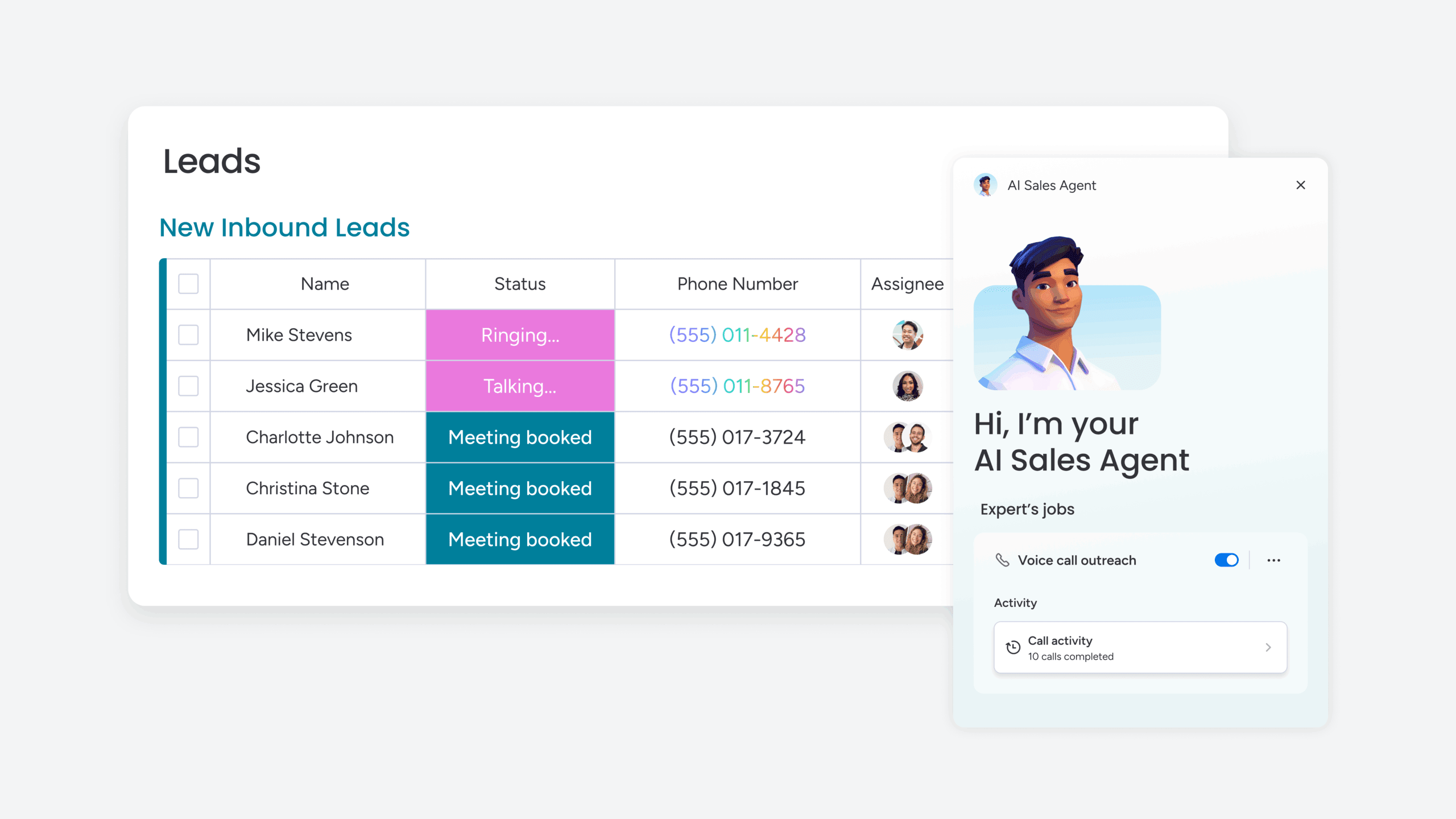
Modern platforms like monday CRM enable teams to implement account-based nurturing without complex setup. They provide visibility into stakeholder engagement, streamline multi-channel campaigns, and ensure messaging aligns across email, social, chat, and retargeting efforts.
AI Blocks for instant implementation
AI blocks offer ready-made capabilities that can be integrated directly into nurturing workflows. Revenue teams using monday CRM leverage specific applications for B2B CRM lead nurturing, transforming how they engage and qualify prospects.
Key AI capabilities include:
- Categorize: automatically segment leads based on content preferences and behavior patterns.
- Extract info: pull key details from form submissions and content interactions to personalize follow-up.
- Detect sentiment: analyze email responses and form submissions to identify buying intent and concerns.
- Summarize: create concise summaries of prospect interactions for sales team handoffs.
These blocks can be added to existing workflows without technical setup, making AI accessible to any marketing team.
Predictive lead scoring that works
AI analyzes behavioral patterns to predict which leads are most likely to convert. Predictive models uncover trends across thousands of data points that would be difficult for humans to process manually.
| Scoring approach | How it works | Best for |
|---|---|---|
| Traditional scoring | Assigns fixed points for specific actions | Simple sales cycles with predictable behaviors |
| Predictive scoring | Analyzes patterns across all behavioral data | Complex B2B sales with multiple touchpoints |
Automated personalization at scale
AI personalizes content and messaging based on individual prospect behavior at a scale impossible with manual approaches. This goes beyond inserting names into emails, delivering experiences that are genuinely relevant.
Personalization applications include:
- Dynamic content insertion: based on behavior.
- Personalized send times: for optimal engagement.
- Content recommendations: based on similar prospects.
- Adaptive messaging: based on engagement patterns.
Measuring lead nurturing B2B success in real time
Forget obsessing over open rates and clicks — measure what actually drives revenue. Real-time insights allow teams to tune nurturing daily instead of quarterly. Track metrics that show direct connections to closed deals and pipeline acceleration.
Pipeline velocity metrics
Measuring the impact of nurturing on deal progression speed reveals whether efforts accelerate revenue. These metrics show how prospects move through the sales process. Key metrics include:
- Time from lead to opportunity creation: measure the average time for leads to become opportunities.
- Stage progression rates: compare nurtured vs. non-nurtured leads.
- Sales cycle length comparison: identify whether nurturing shortens the cycle.
- Velocity through specific pipeline stages: monitor speed at each key stage.
Engagement quality scores
Measuring the depth and quality of prospect engagement predicts conversion likelihood more accurately. Quality scores weight different interactions based on their correlation with eventual purchase.
High-quality engagement includes multiple content downloads, extended website sessions, social media interactions, and webinar attendance. Quality scores help prioritize follow-up and identify prospects ready for sales engagement.
Revenue attribution models
Different attribution approaches measure nurturing impact on closed deals. Multi-touch attribution recognizes that multiple interactions influence buyer decisions across the journey. Models include:
- First-touch attribution: tracks initial awareness impact.
- Last-touch attribution: identifies influence on final conversion.
- Multi-touch attribution: assesses the entire buyer journey.
- Time-decay attribution: emphasizes recent interactions.

“With monday CRM, we’re finally able to adapt the platform to our needs — not the other way around. It gives us the flexibility to work smarter, cut costs, save time, and scale with confidence.”
Samuel Lobao | Contract Administrator & Special Projects, Strategix
“Now we have a lot less data, but it’s quality data. That change allows us to use AI confidently, without second-guessing the outputs.”
Elizabeth Gerbel | CEO
“Without monday CRM, we’d be chasing updates and fixing errors. Now we’re focused on growing the program — not just keeping up with it."
Quentin Williams | Head of Dropship, Freedom Furniture
“There’s probably about a 70% increase in efficiency in regards to the admin tasks that were removed and automated, which is a huge win for us.“
Kyle Dorman | Department Manager - Operations, Ray White
"monday CRM helps us make sure the right people have immediate visibility into the information they need so we're not wasting time."
Luca Pope | Global Client Solutions Manager at Black Mountain
“In a couple of weeks, all of the team members were using monday CRM fully. The automations and the many integrations, make monday CRM the best CRM in the market right now.”
Nuno Godinho | CIO at VelvRevenue teams know that effective lead nurturing requires more than marketing automation. It demands an integrated platform where sales and marketing share visibility and workflows adapt to real buyer behavior. monday CRM addresses the challenges that make traditional programs fail.
No-code nurturing workflows your team will use
The visual workflow builder enables marketing teams to create sophisticated nurturing sequences without technical expertise, functioning as comprehensive lead nurturing software. The drag-and-drop interface supports multi-step campaigns with conditional logic for different buyer paths.
The platform addresses common nurturing challenges through:
- Visual pipeline management: shows prospect progression.
- Automated task creation: triggers follow-up for sales.
- Custom field tracking: captures behavioral data.
- Integration with existing tools: syncs data across systems.
AI-powered insights without the complexity
AI capabilities enhance nurturing effectiveness without requiring technical setup. These features integrate seamlessly with existing workflows to deliver immediate value. AI functions include:
- Automatic lead categorization: based on behavior.
- Content personalization: tailored for individual prospects.
- Predictive scoring: indicates likelihood to convert.
- Sentiment analysis: evaluates prospect interactions.
Real-time visibility across your revenue team
Unified visibility into all nurturing activities and their impact allows sales and marketing teams to coordinate and optimize faster. The platform delivers:
- Lead progression tracking: across all touchpoints.
- Engagement analytics: predicts buying intent.
- Revenue attribution: measures impact of nurturing activities.
- Team collaboration tools: supports feedback loops.
| Feature | monday CRM | Traditional marketing automation |
|---|---|---|
| Setup complexity | Visual, no-code workflows | Technical implementation requiring IT support |
| AI integration | Built-in AI Blocks ready to use | Separate AI tools requiring integration |
| Sales-marketing alignment | Unified platform with shared visibility | Separate systems requiring complex integrations |
| Customization | Flexible workflows adaptable to any process | Template-based approaches with limited flexibility |
Effective B2B lead nurturing transforms marketing from a cost center into a predictable revenue driver. By understanding the buyer journey, deploying progressive content strategies, and measuring impact, teams generate consistent pipeline growth.
Success requires moving beyond generic campaigns to deliver personalized experiences for stakeholders at each buying stage. Platforms that combine workflow creation, AI insights, and real-time measurement make this complexity manageable.
Teams that implement these strategies see improvements in lead quality, sales velocity, and win rates. Key steps to begin include:
- Audit your current approach: identify gaps using common failure points.
- Map your buyer journey: interview customers and sales teams to understand actual decision-making.
- Choose the right platform: select a solution with integrated nurturing, AI capabilities, and sales-marketing alignment without technical barriers.
- Start with one segment: focus on your highest-value prospects and expand from there.
Frequently asked questions
How long does B2B lead nurturing typically take?
Typically six to eighteen months depending on deal complexity and industry, with enterprise software requiring longer nurturing periods than smaller business solutions.
What is the difference between lead nurturing and lead generation?
Lead generation attracts new prospects and captures contact information. Lead nurturing builds relationships with existing prospects through educational content to move them toward purchase.
How many touchpoints should a B2B lead nurturing campaign have?
Effective campaigns generally include seven to thirteen touchpoints across multiple channels and stages, adjusted for sales cycle length.
Can you nurture B2B leads without marketing automation?
It is possible but inefficient. Without automation, personalization at scale is limited, and tracking engagement and responding to triggers becomes difficult.
What types of content work best for nurturing B2B leads?
Educational resources such as industry reports, case studies, comparison guides, and implementation frameworks provide value while building trust.

 Get started