


Your sales reps spend most of their day on tasks that don’t close deals: logging calls, chasing follow-ups, researching prospects, and updating CRM records. AI sales agents change the equation by handling the high-volume, repetitive work that slows teams down: identifying high-intent prospects, sending personalized outreach, qualifying leads, and keeping CRM data current.
In this guide, you’ll learn what AI sales agents actually do, how they differ from AI assistants and traditional automation, and where they fit alongside your human SDRs. You’ll also find a practical 5-step implementation guide, the metrics that prove ROI, and what to look for in a platform that brings it all together.
Key takeaways
- AI sales agents independently qualify leads, book meetings, and update your CRM without waiting for a rep to step in, unlike basic automation that only assists.
- Responding to a lead within minutes versus hours can dramatically increase qualification rates, and AI agents make instant response the default.
- Pick one high-impact workflow like lead response or meeting booking, run a pilot with 50–100 leads, and expand once you see results.
- AI handles volume and repetition while your reps focus on discovery calls, objection handling, and executive relationships where human judgment matters most.
- Built-in AI agents, a Lead Scorer, Deal Facilitator, and real-time dashboards in monday CRM give revenue teams one place to run, track, and scale their pipeline.
What is an AI sales agent and how does it grow pipeline?
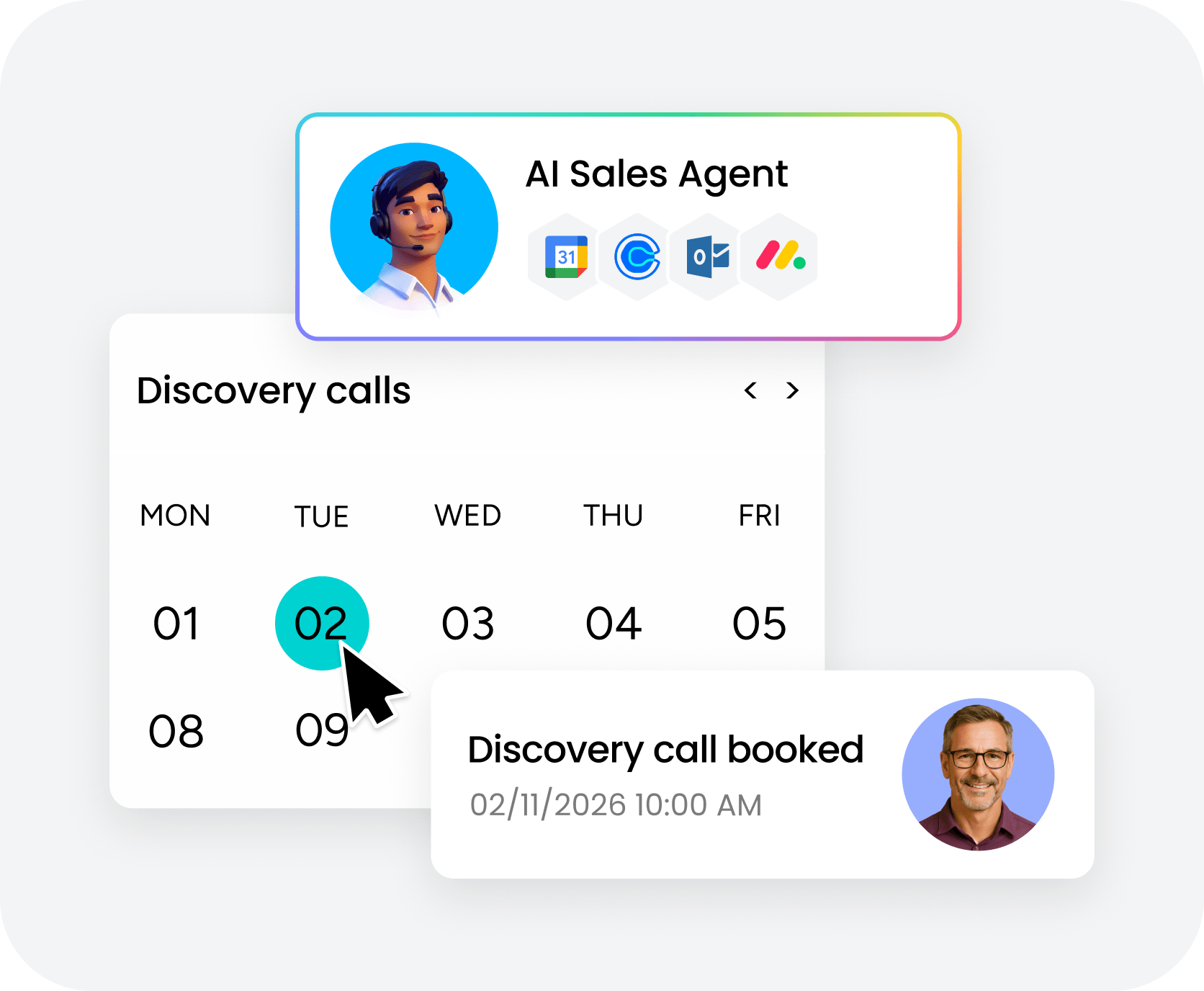
An AI sales agent is software that executes sales workflows with minimal human intervention. Instead of simply suggesting actions, it identifies prospects, qualifies leads, sends personalized outreach, books meetings, updates CRM records, and keeps deals moving automatically.
Unlike traditional automation, AI agents adapt based on customer behavior and historical data rather than following fixed rules. That means faster lead response, more qualified opportunities, and a stronger sales funnel because agents engage prospects immediately and at scale.
AI sales agents vs. AI sales assistants vs. human SDRs
AI sales agents sit alongside AI assistants, traditional automation, and human SDRs—not in place of them. Each serves a different purpose, and understanding where they fit helps revenue teams automate the right work without sacrificing the human relationships that close deals.
| Solution | Primary role | Excels at | Human involvement |
|---|---|---|---|
| AI sales agent | Executes end-to-end sales workflows | Qualifying leads, personalized outreach, meeting booking, CRM updates, follow-ups | Low (oversight only) |
| AI sales assistant | Helps reps complete tasks | Drafting emails, summarizing calls, suggesting next steps | High |
| Sales automation | Executes predefined rules | Notifications, task assignment, simple workflows | Medium (requires setup and maintenance) |
| Human SDR | Builds relationships and advances opportunities | Discovery calls, objection handling, negotiation, strategic accounts | Essential |
AI sales agents don’t replace assistants, automation, or human SDRs. Instead, they complement them. The strongest sales organizations combine all four. AI sales agents handle repetitive execution at scale, AI assistants help reps work more efficiently, automation keeps routine processes running, and human SDRs focus on the conversations that require trust, creativity, and strategic thinking.
7 ways AI sales agents grow pipeline
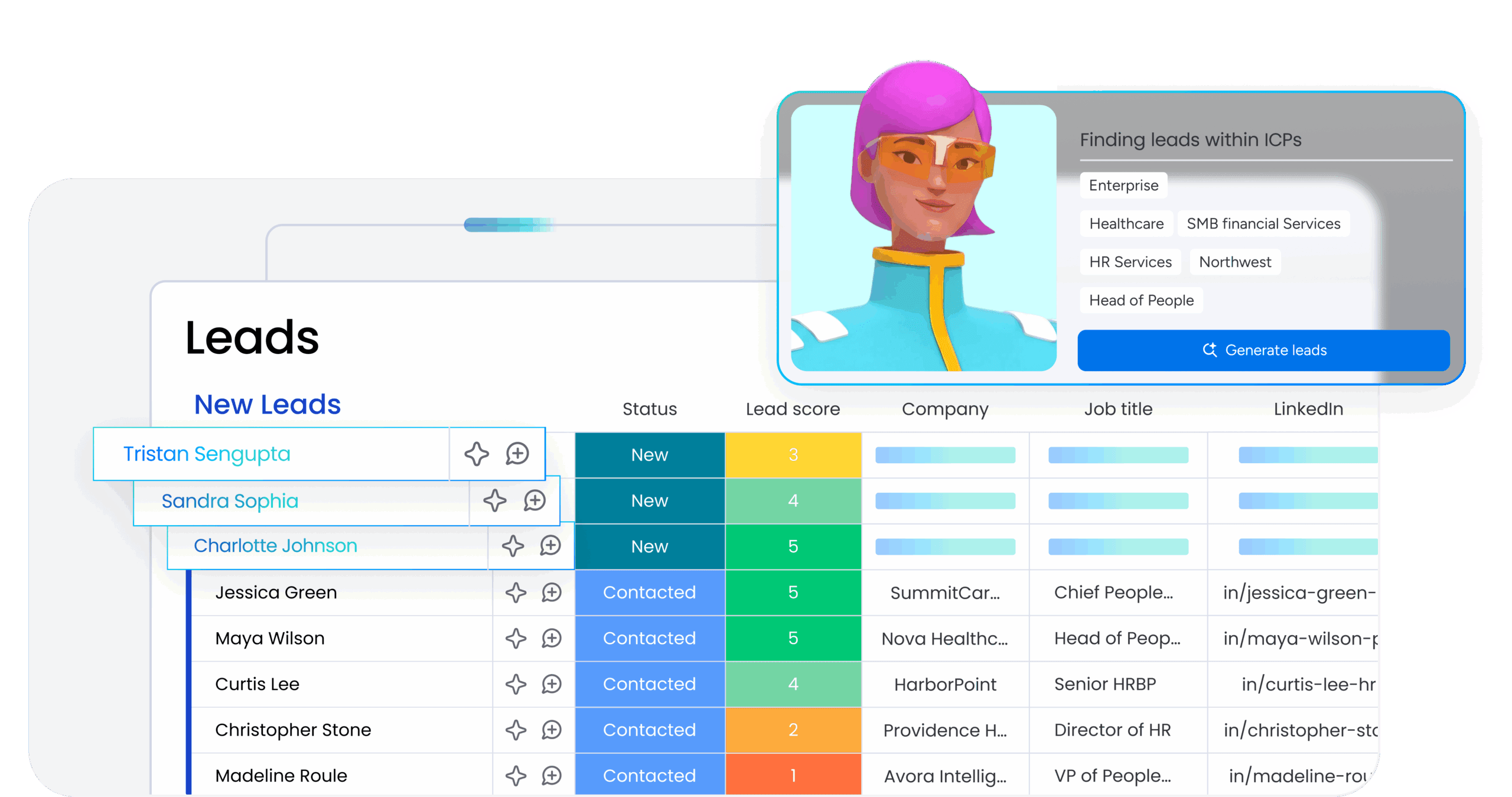
AI sales agents don’t just automate tasks. They change how revenue teams capture, qualify, and convert opportunities. Each capability below impacts pipeline volume, quality, or speed.
1. Capture intent signals before prospects raise their hand
AI sales agents monitor digital behavior across multiple channels to identify prospects showing buying intent before they contact you. When a prospect visits your pricing page 3 times in 1 week, the AI agent flags this behavior, and enriches the contact record with firmographic data. Then, the agent routes the lead to the appropriate rep with context about their browsing history.
This early detection creates a real pipeline advantage:
- Engage at peak interest: Instead of waiting for prospects to fill out a form or request a demo, sales teams connect at the moment intent is highest.
- Respond faster, convert more: Engaging a prospect within minutes rather than hours can double or triple the likelihood of qualification.
- Route with context: Reps receive leads already enriched with behavioral data, so every conversation starts informed.
2. Prioritize opportunities with predictive lead scoring
AI sales agents analyze historical deal data, engagement patterns, and firmographic attributes to score leads based on how likely they are to convert. Scoring happens automatically and updates in real time as new data arrives, so reps always focus on the highest-value opportunities.
Revenue teams use monday CRM’s AI-powered Lead Scorer to prioritize leads based on fit, intent, and engagement signals across the funnel. Scores update in real time as prospect behavior changes, ensuring no opportunity is overlooked when intent signals spike. Reps spend time on leads most likely to convert, improving win rates and pipeline quality.
3. Eliminate response delays with faster speed to lead
An AI SDR agent eliminates delays between lead capture and first contact by instantly routing leads, sending personalized outreach, and booking meetings without waiting for manual intervention.
Here’s how it works: a prospect submits a demo request at 8 PM. The AI agent:
- Immediately sends a personalized confirmation email.
- Checks the rep’s calendar availability.
- Offers 3 meeting slots, all without requiring rep involvement.
Speed-to-lead drives pipeline growth. Responding to leads within 5 minutes doubles or triples qualification rates compared to waiting 30 minutes. AI agents ensure every lead receives immediate attention, regardless of when they arrive or whether reps are available.
4. Qualify leads automatically before seller handoff
AI sales agents handle initial qualification. They ask discovery questions, assess fit, and gather context before passing leads to human reps. A lead qualification agent engages a new lead via email or chat. It asks qualifying questions about company size and current challenges, then determines whether the prospect meets ICP criteria.
Pre-qualification changes how reps spend their time:
- No more cold starts: Reps enter every conversation with context, not questions.
- Higher-quality pipeline: Only leads that meet minimum criteria advance to human review.
- Faster sales cycles: Removing unqualified leads early keeps the pipeline focused and moving.
5. Personalize outreach at scale without sacrificing relevance
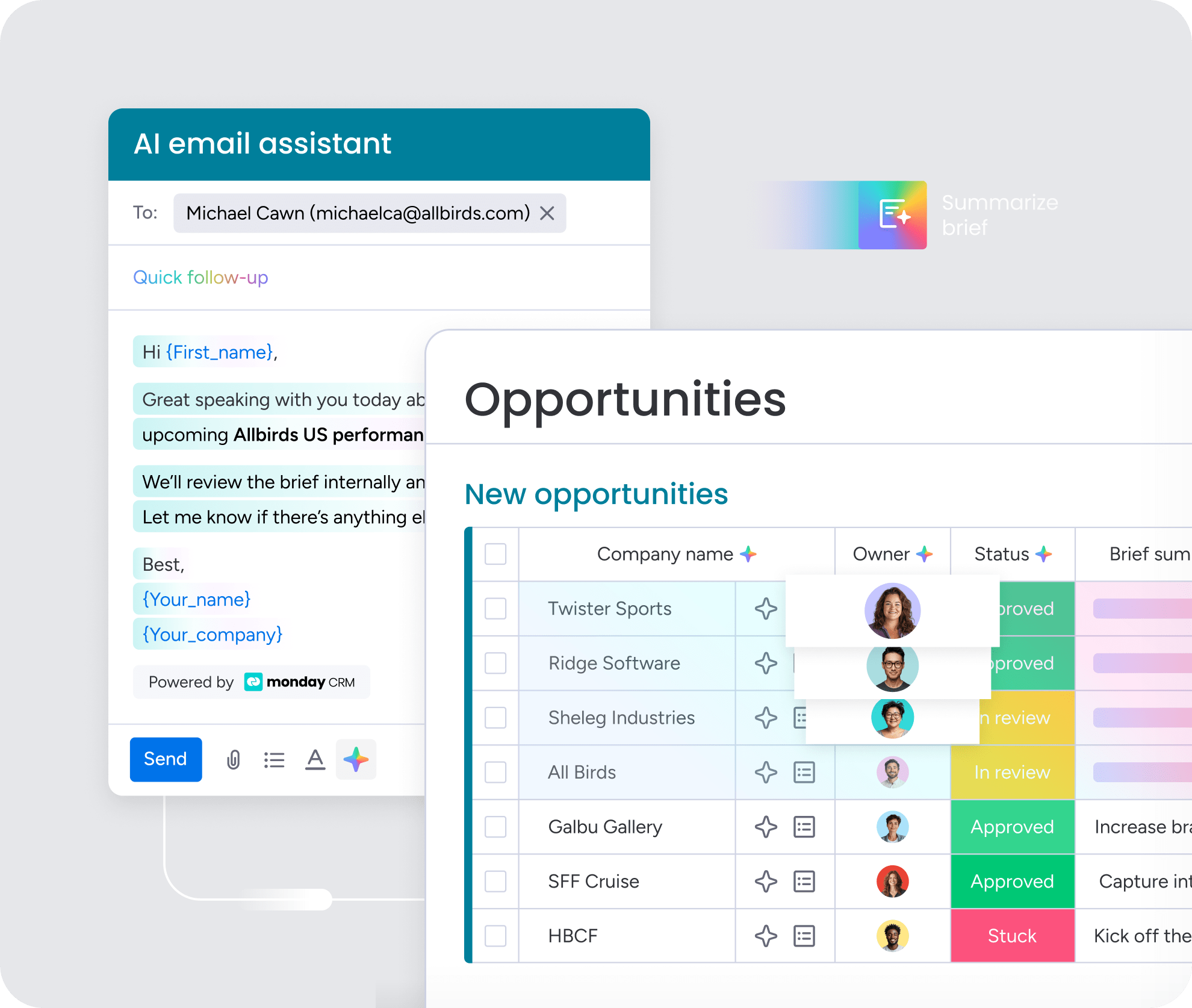
AI outreach agents generate personalized emails, messages, and follow-ups tailored to each prospect’s industry, role, pain points, and behavior. An AI agent can draft unique outreach emails for 500 prospects at once. Each email references the company’s recent funding round, industry trends, or specific pain points mentioned in their content downloads.
The AI personalizes outreach automatically across hundreds or thousands of prospects at once. The agent pulls data from CRM records, enrichment sources, and behavioral signals to craft messages that sound personal, not templated. Personalized outreach increases response rates and engagement, filling the pipeline with more qualified conversations.
6. Automate CRM activity capture to eliminate data gaps
AI sales agents automatically log emails, calls, meetings, and prospect interactions in the CRM. This eliminates manual data entry and ensures activity records stay complete. After every prospect email exchange, the AI agent logs the conversation. It updates the lead status and adds relevant notes to the CRM record.
This automation solves a real problem: reps often skip CRM updates because they’re time-consuming and feel like busywork. Teams using monday CRM’s AI Timeline Summary get a short summary of all communication events (emails, calls, meetings, and notes). Sales and support teams keep data clean across the pipeline without the manual effort.
7. Keep deals moving with AI-recommended next steps
AI sales agents analyze deal progress and identify stalled opportunities. Then they suggest specific actions to advance deals. Here’s a practical AI in sales example:
An AI agent detects that a deal has been in the “proposal sent” stage for 10 days with no activity. It alerts the rep and suggests a follow-up email with a case study relevant to the prospect’s industry. Recommendations are based on historical win patterns and current deal context.
The agent learns which actions typically move deals forward at each stage and suggests them before reps notice the stall.
How AI sales agents work across the revenue cycle
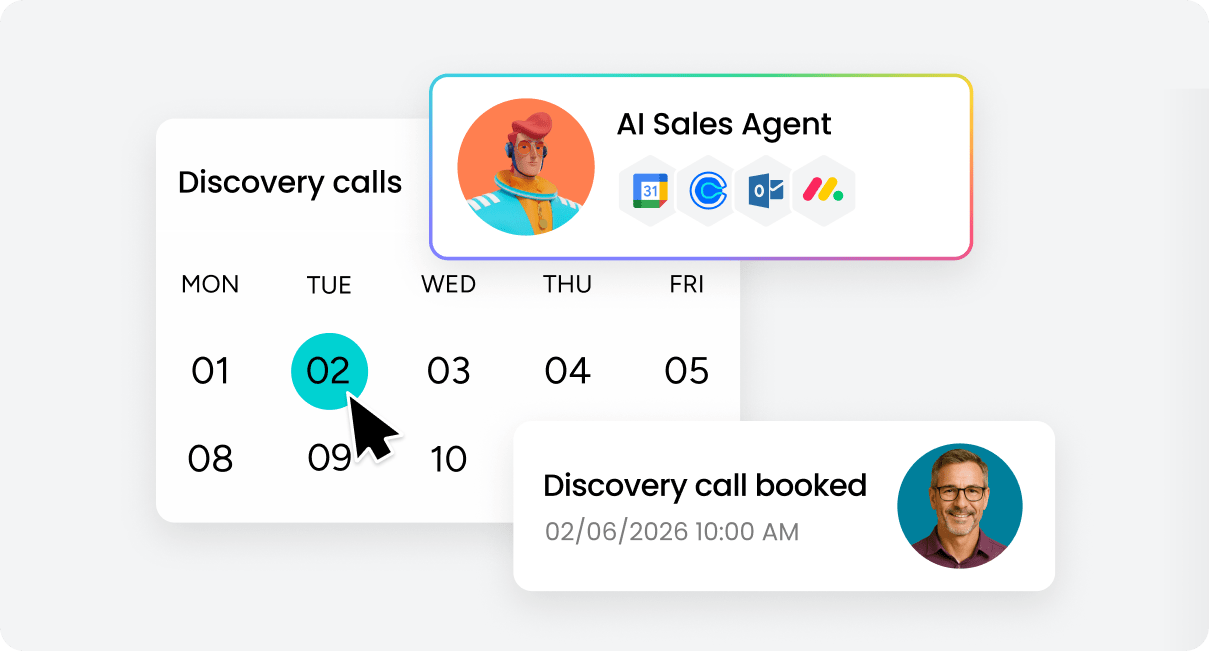
AI sales agents don’t work in isolation. They integrate across the entire revenue cycle, from marketing campaign execution to customer expansion. That cross-functional visibility separates them from tools that only address one stage of the buyer journey.
| Revenue cycle stage | AI sales agent function | Pipeline impact |
|---|---|---|
| Marketing campaign context | Connects campaign data to sales actions | Marketing efforts translate directly into pipeline activity |
| Lead scoring and routing | Scores leads and routes to appropriate reps | Right rep receives the right lead with full context |
| Sales engagement | Executes outreach sequences and books meetings | Scales engagement without additional headcount |
| Deal follow-up | Monitors progress and sends follow-up reminders | Keeps pipeline data accurate and deals moving |
| Customer expansion | Identifies upsell opportunities from usage data | Creates expansion pipeline from existing customers |
When a prospect attends a webinar on product features, the AI agent flags the engagement, enriches the contact record, and triggers a personalized follow-up email from the sales team within hours. Marketing efforts translate directly into pipeline activity without manual handoff.
5 steps to implement AI sales agents
Implementing AI sales agents doesn’t require a massive overhaul. Start small, prove value, and scale gradually. The key is choosing one high-impact workflow. Test carefully and iterate based on results.
Step 1: Pick one pipeline workflow to automate first
Pick one high-impact workflow to automate first. The right choice depends on where manual work creates bottlenecks or where speed matters most:
- Struggling with slow lead response? Start with an AI agent that automates initial outreach.
- Unqualified leads wasting rep time? Start with lead qualification.
- Deals stalling in mid-pipeline? Start with follow-up automation.
Step 2: Prepare CRM data and define sales criteria
AI sales agents need clean CRM data and qualification criteria to work well. Before deploying an agent:
- Audit CRM data quality and fix missing or outdated contact information.
- Define ICP attributes so the agent knows which companies and contacts to prioritize.
- Establish lead scoring rules that reflect your team’s qualification standards.
Step 3: Set human review rules and approval checkpoints
Define when you need human oversight before the agent acts. This protects quality without slowing things down:
- Require human approval for outreach to enterprise accounts.
- Flag any message that addresses sensitive topics for rep review.
- Log all agent actions for audit and ongoing quality control.
Step 4: Run a controlled pilot with a small lead set
Test the AI agent with a small subset of leads or accounts before going wide:
- Start with 50–100 leads to limit risk and gather meaningful data.
- Track metrics like response rate and qualification accuracy.
- Gather feedback from reps on lead quality and handoff experience.
- Adjust the agent’s behavior based on what you learn before scaling.
Step 5: Scale with dashboards, feedback loops, and ongoing optimization
Once the pilot works, scale the AI agent to more workflows, leads, or teams. Revenue teams using monday CRM get customizable dashboards for real-time tracking and reporting. They see immediate insights into pipeline status, team performance, and activity status. Review performance weekly and adjust the agent’s behavior as needed.
What to look for in an AI sales agent platform
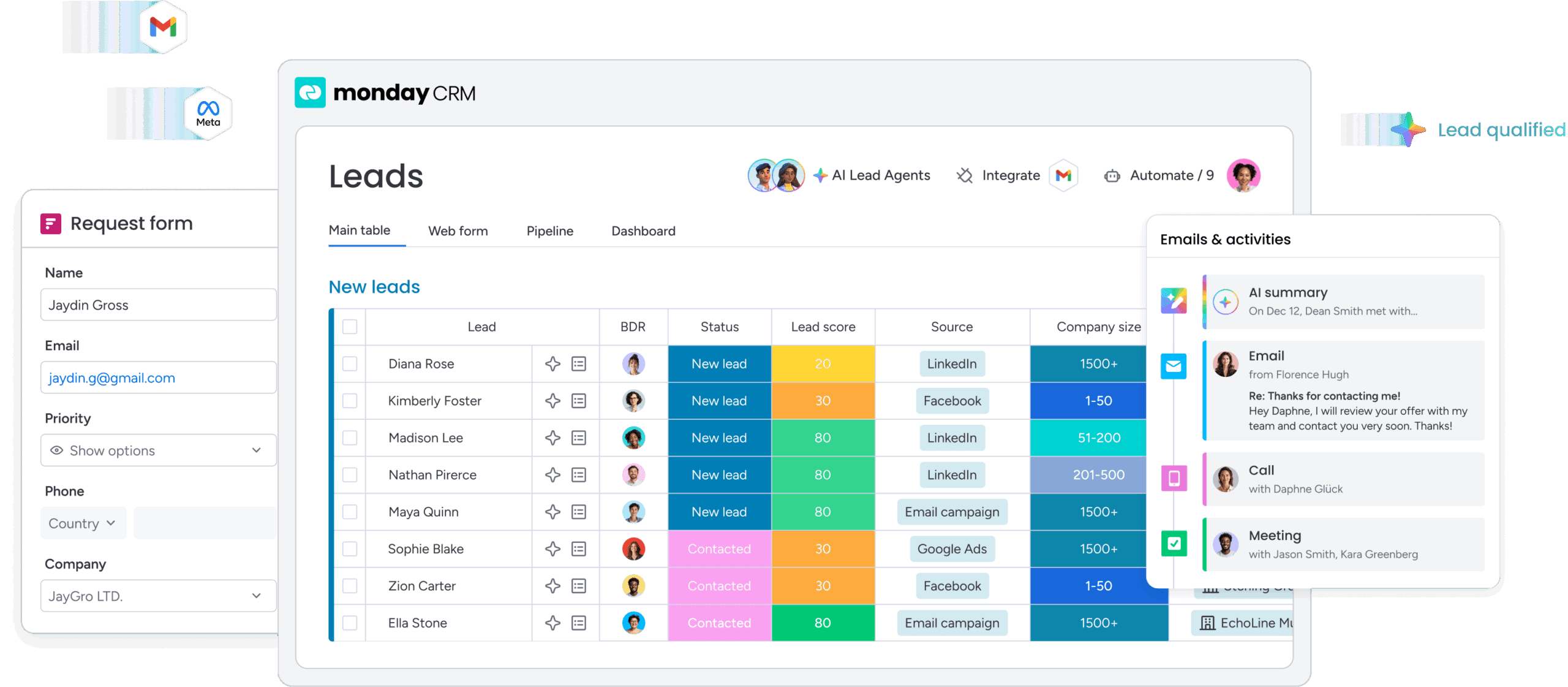
Not all AI sales agent platforms are the same. Teams should evaluate platforms based on integration depth, customization flexibility, governance controls, and ease of adoption. Here’s what each capability should include and why it matters:
| Capability | What to look for | Why it matters |
|---|---|---|
| CRM integration | Real-time data sync, bidirectional updates, custom field mapping | Agents need live data to prioritize leads and log activities |
| Data enrichment | Automatic firmographic, technographic, and intent data appending | Enriched data improves targeting and personalization |
| Workflow customization | Adjustable qualification questions, editable templates, custom routing rules | Generic workflows don't work for every team |
| Human oversight | Approval workflows, review checkpoints, audit trails | Ensures quality and prevents errors |
| Governance | Role-based permissions, data access controls, compliance features | Protects sensitive customer data |
| Pipeline reporting | Dashboards tracking meetings booked, qualified leads, conversion rates | Measures ROI and identifies optimization opportunities |
| No-code agent building | Drag-and-drop workflows, pre-built templates, natural language configuration | Enables sales teams to deploy agents without IT |
With monday CRM, AI sales agents, human reps, and sales workflows operate together on a unified platform. The AI capabilities are built directly into the CRM, making adoption seamless for revenue teams. monday vibe enables teams to build custom sales apps and dashboards using natural language prompts, while monday MCP connects external AI platforms to monday CRM, enabling seamless AI-powered workflows.
How to measure AI sales agent ROI
Measuring AI sales agent ROI requires tracking specific pipeline metrics, not just activity metrics. Teams should focus on outcomes rather than outputs — because the goal isn’t to count emails sent, it’s to count deals won.
The following metrics demonstrate real pipeline impact from AI sales agents:
- Qualified opportunities created: Count leads that meet ICP criteria and advance to the sales pipeline. Compare qualified opportunity volume before and after AI agent deployment to quantify impact.
- Meeting booking rate: Calculate the percentage of leads that convert to booked meetings by dividing meetings booked by total leads engaged. Higher meeting booking rates indicate effective outreach and qualification.
- Pipeline velocity: Measure average days from lead to closed-won, or average days in each pipeline stage. AI agents should reduce velocity by eliminating delays in lead response, qualification, and follow-up.
- Rep selling time: Track how much time reps spend on selling activities versus administrative tasks. AI agents should increase selling time by handling administrative work automatically.
- Handoff quality: Track conversion rates of AI-qualified leads and gather rep feedback on lead quality. High-quality handoffs ensure reps spend time on leads that are likely to convert.
- Forecast accuracy: Compare predicted vs. actual closed-won deals over time. Teams using monday CRM benefit from forecasting views and forecast-versus-actual reporting that help sales leaders allocate resources and plan for growth with confidence.
Build a pipeline that runs itself with monday CRM
AI sales agents are a practical, deployable advantage for revenue teams right now — available today, not somewhere in the future. The teams winning pipeline today are the ones that combine AI speed and scale with human judgment and relationship-building, using each where it creates the most value.
The implementation path is straightforward: start with one workflow, run a controlled pilot, measure what moves, and scale from there. You don’t need a 6-month rollout or a dedicated IT project. You need clean data, defined criteria, and the right platform to bring it all together.
monday CRM gives revenue teams a single place to run AI agents, manage pipeline, and track performance with a simple, modern experience. If your pipeline needs more qualified opportunities, faster response times, and fewer deals slipping through the cracks, that’s exactly where to start.
Try monday CRM
“With monday CRM, we’re finally able to adapt the platform to our needs — not the other way around. It gives us the flexibility to work smarter, cut costs, save time, and scale with confidence.”
Samuel Lobao | Contract Administrator & Special Projects, Strategix
“Now we have a lot less data, but it’s quality data. That change allows us to use AI confidently, without second-guessing the outputs.”
Elizabeth Gerbel | CEO
“Without monday CRM, we’d be chasing updates and fixing errors. Now we’re focused on growing the program — not just keeping up with it."
Quentin Williams | Head of Dropship, Freedom Furniture
“There’s probably about a 70% increase in efficiency in regards to the admin tasks that were removed and automated, which is a huge win for us.“
Kyle Dorman | Department Manager - Operations, Ray White
"monday CRM helps us make sure the right people have immediate visibility into the information they need so we're not wasting time."
Luca Pope | Global Client Solutions Manager at Black Mountain
“In a couple of weeks, all of the team members were using monday CRM fully. The automations and the many integrations, make monday CRM the best CRM in the market right now.”
Nuno Godinho | CIO at Velv
“monday.com provides developmental flexibility, operational efficiency, and data transparency — all in one place. We became a company that moved from chasing data to leading with it.”
Hyunghan Lee | Team Lead, Sandbox Network
"monday.com brought every part of our business into one connected space. The harmony between work management and CRM has become our operating system — giving us the clarity and confidence to scale.”
Jennifer Chinburg | Executive Vice President of Corporate Development & Brand, Chinburg Properties
“We just weren’t getting value from our old CRM. With monday.com, it's a thousand times better. Our sales teams are more informed, more consistent, and far more connected."
James Arnold | Chief Operating Officer, CenversaFAQs
Which sales workflows should AI handle first for measurable pipeline impact?
Start with workflows where speed matters most, such as lead response and meeting booking, or where manual work creates bottlenecks, such as lead qualification and CRM data entry. These workflows typically show measurable pipeline impact within weeks.
How do AI sales agents grow pipeline?
AI sales agents grow pipeline by capturing intent signals earlier, engaging prospects faster, qualifying leads before human handoff, and keeping deals moving with proactive follow-up. These actions directly increase qualified opportunities, improve conversion rates, and accelerate pipeline velocity.
How can an AI sales agent qualify, route, and prioritize leads inside a CRM?
To qualify, route, and prioritize leads inside a CRM, AI sales agents analyze firmographic data, engagement patterns, and behavioral signals to score leads and determine fit. They then route qualified leads to the appropriate rep based on territory, industry, or deal size, while lower-scoring leads receive automated nurture sequences.
What metrics should sales leaders track to prove AI is increasing pipeline and forecast confidence?
Sales leaders should track qualified opportunities created, meeting booking rate, pipeline velocity, rep selling time, handoff quality, and forecast accuracy to prove AI is increasing pipeline and forecast confidence. These metrics connect AI agent activity to revenue outcomes instead of just measuring task completion.
How quickly can a team implement AI sales agent workflows without heavy IT support?
Teams can implement AI sales agent workflows without heavy IT support in days rather than months when using platforms with no-code configuration and embedded AI. Start with one workflow, run a controlled pilot with 50–100 leads, and scale based on results.
Can AI sales agents work with my existing CRM and sales tools?
Yes, AI sales agents can work with your existing CRM and sales tools, and they work most effectively when integrated directly into your CRM, where pipeline data, communication history, and workflow rules already exist. Platforms like monday CRM offer 200+ integrations and MCP protocol support to connect external AI platforms while maintaining centralized data.
