


What if your sales team could qualify hundreds of leads daily, respond to prospects in seconds, and book meetings around the clock — without adding headcount? AI outbound calling agents make this possible by autonomously conducting sales conversations, handling objections, and scheduling demos while your human reps focus on closing high-value deals.
In this guide, you’ll discover 5 proven ways AI calling agents multiply your sales capacity, from instant lead response to running high-volume campaigns at scale. We’ll show you real cost comparisons versus human SDRs, walk through implementation in days (not months), and reveal the highest-ROI use cases that deliver immediate pipeline impact.
Key takeaways
- AI calling agents handle hundreds of calls daily at a lower cost than human SDR teams while maintaining consistent quality across every conversation.
- AI agents call new prospects within seconds of form submission, dramatically improving conversion rates since speed-to-lead directly impacts deal closure.
- AI handles repetitive qualification calls so experienced salespeople spend the majority of their time on meaningful prospect conversations instead of manual dialing.
- AI calling agents can be fully implemented within weeks including CRM integration and team training, delivering immediate capacity without lengthy ramp periods.
- Revenue teams using monday CRM connect AI calling capabilities directly to their pipeline management, automatically updating deal records and triggering next steps through unified workflows.
What are AI outbound calling agents?
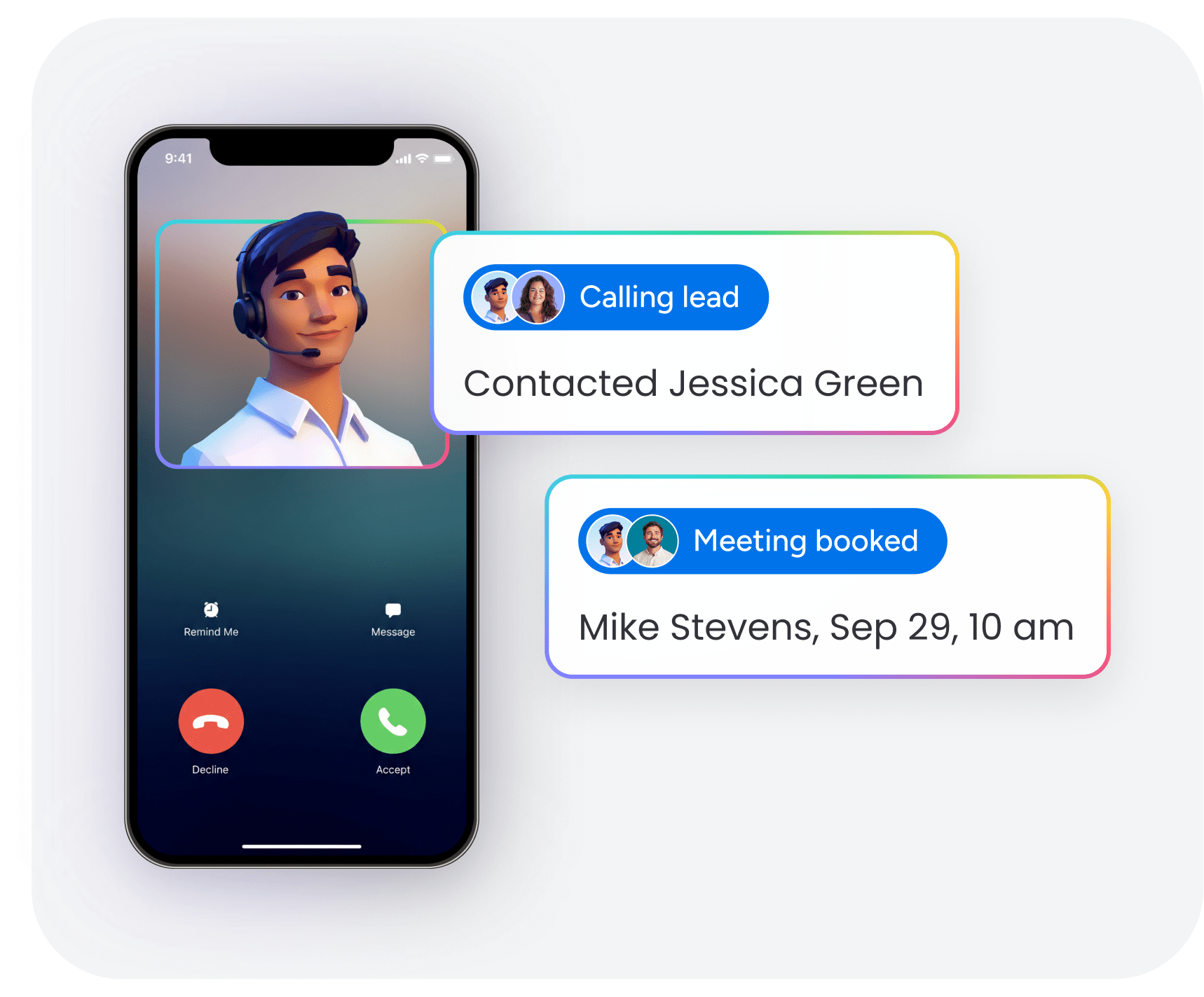
AI voice agents are voice-based systems that autonomously conduct sales conversations with prospects. They qualify leads, answer questions, handle objections, and book meetings without human intervention. These systems engage in real-time, 2-way conversations that adapt based on what prospects actually say.
AI calling agents solve multiple problems at once. A single AI agent can handle hundreds of calls per day depending on configuration, maintaining consistent messaging across every conversation while operating 24/7 without breaks, vacation time, or ramp periods. Your team can chase way more opportunities without hiring more people.
But it’s not just about making more calls. When human SDRs spend the majority of their time on manual dialing and initial qualification, their expertise in consultative selling goes underutilized. AI calling agents handle the repetitive stuff so your best reps can focus on qualified opportunities where relationships actually close deals.
AI voice agents that make real sales calls
To prospects, these calls sound natural. The agent introduces itself, asks discovery questions, listens to responses, and adapts follow-up questions based on what the prospect shares.
Consider a typical scenario: An AI agent calls a prospect to qualify them for a software demo. The conversation might unfold like this:
“Hi Sarah, this is Alex calling from Acme Software. I’m reaching out because you downloaded our sales automation guide last week. I’d love to learn about what prompted your interest. Are you currently evaluating solutions for your team?”
When Sarah mentions she’s frustrated with her current CRM’s reporting limitations, the agent recognizes this pain point and asks a relevant follow-up:
“That’s a common challenge we hear. How much time does your team currently spend pulling reports manually?”
Here’s what makes these conversations work:
- Context understanding: AI agents recognize when prospects ask clarifying questions, go off-topic, or express confusion, adjusting their responses accordingly.
- Conversation flow maintenance: Transitions between topics happen naturally, without robotic pivots or awkward silences.
- Automatic information capture: Call outcomes, sentiment indicators, and key details log directly to CRM systems without manual data entry.
How outbound AI agents handle full conversations
AI calling agents are different from any sales automation you’ve used before. These systems handle full sales conversations — from intro to close, including what happens next.
AI agents adjust their discovery questions based on previous answers. When a prospect mentions they manage a team of 50 salespeople, the agent automatically shifts to questions relevant to mid-market operations rather than small business concerns. This happens instantly, so conversations feel personal instead of robotic.
When prospects raise common objections like budget constraints, timing concerns, or satisfaction with current solutions, AI agents recognize these patterns and respond with relevant counterpoints. The agent might acknowledge the concern, provide a brief reframe, and offer an alternative path forward.
During the call, AI agents capture key details:
- Budget ranges: Captured through natural conversation flow
- Decision timelines: Identified based on prospect responses
- Current pain points: Documented without making prospects feel interrogated
- Stakeholder involvement: Mapped to understand decision-making process
AI agents read interest levels based on how prospects respond — tone, answer length, and engagement. A prospect giving short, dismissive answers triggers a different approach than one asking detailed follow-up questions.
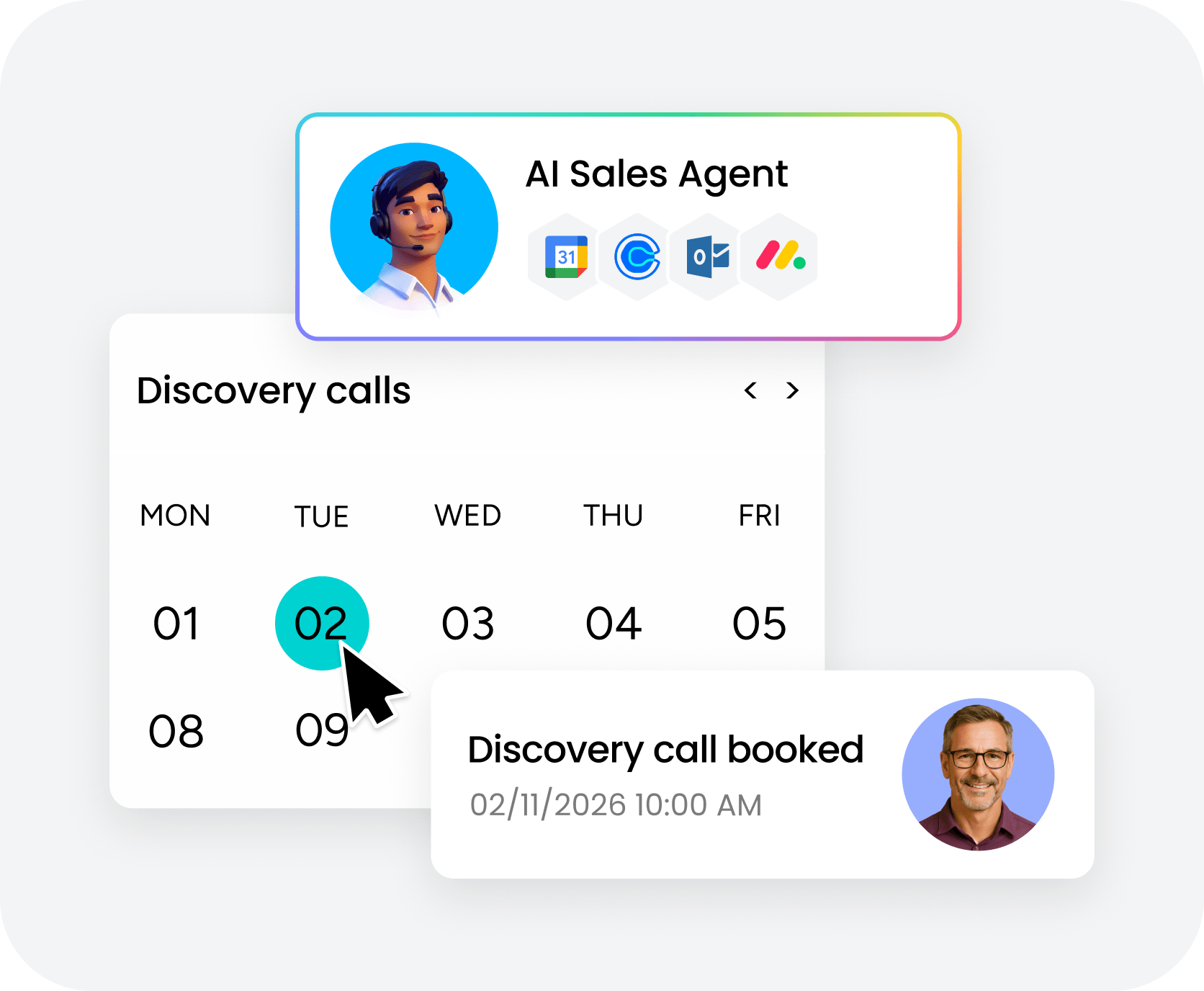
When conversations progress positively, AI agents access calendar systems to book meetings during the call itself. The prospect hears available time slots, selects their preference, and receives confirmation before hanging up.
The difference between AI calling and traditional auto-dialers
Many sales leaders have experience with automated outbound calling tools such as auto-dialers, predictive dialers, or robocall systems. Here’s why AI calling agents aren’t just a small upgrade — they’re a completely different type of platform.
| Capability | Traditional auto-dialers | AI calling agents |
|---|---|---|
| Conversation type | One-way pre-recorded messages or immediate transfer to human rep | 2-way conversations with real-time context awareness |
| Personalization | Generic scripted messages delivered identically to every prospect | Adapts messaging based on prospect responses, CRM data, and company research |
| Objection handling | Cannot respond to questions or concerns; requires human transfer | Recognizes and addresses objections with relevant counterpoints in real-time |
| Data capture | Basic call metrics only (connected, voicemail, no answer) | Captures conversation details, qualification responses, sentiment, and next steps |
| Human requirement | Requires immediate human availability for any meaningful conversation | Completes full conversations autonomously; escalates to humans when appropriate |
This difference matters when you’re planning headcount. Auto-dialers increase call volume by automating the dialing process, but they still require full sales teams standing by to handle every connected call. AI calling agents actually conduct the sales conversations themselves. They qualify prospects, answer questions, handle objections, and book meetings.
Legal and compliance considerations for AI outbound calling
AI outbound calling comes with legal requirements that vary by region, and your setup needs to account for them from day one.
Most regulations focus on consent, identification, and call practices. In many jurisdictions, you can’t place automated or AI-assisted calls without prior opt-in from the recipient. This is especially important for cold outbound campaigns, where restrictions are typically stricter than for inbound lead follow-up.
AI agents should also clearly identify themselves at the start of the call. Transparency builds trust with prospects and helps ensure compliance with evolving regulations around AI use in customer communications.
Other common requirements include:
- Calling hours: Restrictions on when calls can be placed
- Do-not-call (DNC) lists: Mandatory suppression of opted-out contacts
- Call recording disclosures: Informing prospects if conversations are recorded
- Data handling: Proper storage and use of conversation data
The specifics depend on where you operate — for example, regulations like TCPA in the U.S. or GDPR in the UK and Europe set different standards for consent and data use.
AI calling works best when it’s built on compliant data and clear processes. Most modern platforms include tools to manage consent, suppression lists, and disclosures, but your team is still responsible for configuring them correctly.
When done right, compliance doesn’t slow you down — it ensures your outreach scales sustainably without risking penalties or damaging your brand.
5 ways AI calling agents scale your sales team
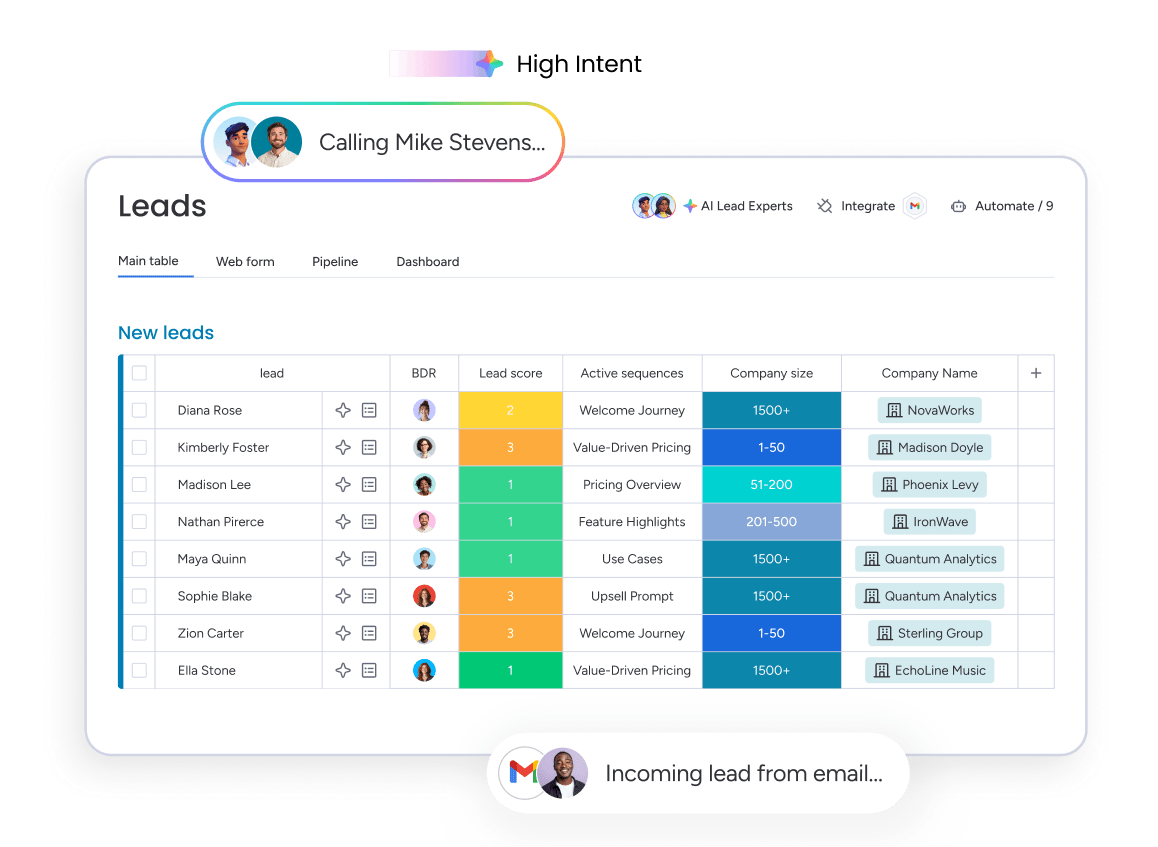
AI calling agents scale your sales team in several ways. These 5 approaches work together to multiply your sales capacity without hiring more people.
1. Qualify more leads without adding headcount
Lead qualification eats up SDR time, and hiring more people doesn’t make financial sense. A typical SDR costs $60,000-80,000 annually in base compensation alone, plus benefits, training, management overhead, and technology costs. Each SDR might qualify 20-30 leads per day, creating a direct relationship between headcount and qualification capacity.
AI calling agents change this completely. A single AI agent can simultaneously handle hundreds of qualification calls, working 24/7 without breaks, vacation, or the 3-6 month ramp time new hires require.
The qualification process works like this:
- Initial outreach: AI agents call inbound leads or outbound prospect lists
- Discovery questions: Ask specific questions based on your qualification criteria
- Lead scoring: Score leads based on responses and defined parameters
- Routing: Route qualified opportunities to appropriate sales reps
AI agents also follow consistent qualification frameworks across every single call, completing a thorough discovery process and reliably capturing all critical data points.
2. Book meetings through instant lead response
Speed-to-lead is one of the biggest competitive advantages in sales. Yet most sales teams average 4+ hours for initial response, with weekend and evening leads often waiting until the next business day.
AI calling agents remove response time as a bottleneck:
- Immediate response: Agents call new leads within seconds of form submission or list upload.
- 24/7 availability: A prospect who just downloaded your whitepaper receives a call while they’re still thinking about the topic.
- Consistent coverage: Leads that come in at 9 PM on Saturday receive the same immediate response as those arriving at 10 AM on Tuesday.
Every lead receives immediate attention regardless of how many other leads arrived simultaneously. When prospects express interest, agents book meetings directly into rep calendars during the initial call.
The impact grows throughout your funnel. Faster response times mean higher contact rates, more conversations with engaged prospects, and ultimately more booked meetings from the same lead volume.
3. Run high-volume outbound sales campaigns
Traditional outbound campaigns hit a wall: you can only make as many calls as you have SDRs. Entering a new market segment, running account-based campaigns across hundreds of accounts, or re-engaging thousands of dormant leads all require either massive SDR teams or months of sequential execution.
AI calling agents eliminate this limit. You choose campaign size based on strategy, not headcount.
AI agents work through prospect lists of thousands of contacts without the fatigue, inconsistency, or morale issues that plague human teams doing high-volume cold calling. Unlike human teams that work sequentially, AI agents make hundreds of simultaneous calls. A 2,000-contact campaign that would take a human team 6-8 weeks can be completed in days depending on dialing capacity and connection rates.
Other advantages of AI agents:
- Unlimited capacity: No fatigue or morale issues with high-volume calling
- Simultaneous execution: Hundreds of calls happening at once
- Consistent quality: Every prospect receives the same quality of outreach regardless of campaign size
- Rapid results: Campaign results become available within hours instead of weeks, enabling faster optimization
4. Personalize every outbound call at scale
AI agents reference account details, previous interactions, deal history, and custom fields during every call. They incorporate recent news, funding announcements, leadership changes, or company initiatives into conversations. Agents adjust their pitch based on prospect job title and likely priorities. A CFO hears about ROI and cost efficiency. A VP of Sales hears about pipeline visibility and team productivity.
Agents reference previous touchpoints like emails opened, content downloaded, or website pages visited. This personalization matters because it works. Prospects engage more readily when callers demonstrate knowledge of their business and needs.
The contrast with human limitations is stark. While sales reps intend to personalize every call, time pressure, fatigue, and high call volumes often result in generic pitches. AI agents maintain consistent personalization standards across every single call.
5. Let human reps focus on closing deals
Here’s what might matter most: how you deploy your team. A virtual inside AI sales agent handles time-consuming top-of-funnel activities, allowing human sales reps to concentrate on high-value activities where human skills remain irreplaceable.
Experienced sales professionals are expensive resources with valuable expertise in consultative selling, objection handling, and relationship development. Using them for repetitive qualification calls underutilizes their capabilities and often frustrates them.
This doesn’t mean cutting headcount. It means the same team can handle significantly more pipeline. A team of 5 reps previously managing 50 opportunities can now manage 150+ opportunities because they’re not spending time on unqualified leads or initial outreach.
Cost comparison: AI calling agents vs. human SDRs
When evaluating AI calling agents, compare total costs — not just subscription fees versus salaries, but benefits, training, management time, tech stack, and productivity.
| Cost category | Human SDR team (3 SDRs) | AI calling agent solution |
|---|---|---|
| Annual base compensation | Significant salary costs | $0 |
| Benefits and taxes | Additional 25–35% of base | $0 |
| Training and onboarding | Multi-month ramp period costs | Initial setup investment |
| Management overhead | $30,000 – $50,000 | Ongoing coaching and supervision |
| Technology stack | Per-seat software licenses | Included in platform cost |
| AI calling platform subscription | $0 | Platform subscription fees |
| Total annual cost | Substantially higher | Significantly lower |
| Calls per month | Limited by headcount | Higher volume capacity |
| Cost per call | Higher per-call investment | Fraction of human SDR costs |
Many organizations wonder whether AI will replace SDRs, but a hybrid approach is optimal: AI agents handle high-volume initial outreach and qualification, while human SDRs focus on warm leads, complex accounts, and relationship-intensive activities.
The ROI timeline also favors AI calling agents. Human SDRs require months to reach full productivity. AI calling agents deliver full capacity immediately after setup, typically within weeks.
How to implement outbound AI calling in days
Unlike traditional sales tech that takes months to implement, AI calling agents go live in days. Here are 4 steps to get your AI calling system running fast and delivering results immediately.
Step 1: Choose high-volume call types to start
Pick the right starting point, and you’ll see quick wins. Pick wrong, and you’ll struggle to show ROI. Start with high-volume, simple calls. You’ll get clear ROI data and build team confidence.
| Use case | Why it works | Expected volume |
|---|---|---|
| Inbound lead qualification | High urgency, structured questions, measurable success criteria | 50–200+ leads/week |
| Event follow-up | Warm prospects, time-sensitive, straightforward scheduling | 100–500 leads per event |
| Appointment setting | Defined objective, measurable outcome, immediate value | 100+ prospects/week |
| Re-engagement campaigns | Large dormant lists, low-stakes testing ground | 500+ contacts/campaign |
Avoid starting with complex enterprise sales requiring deep technical discussions, highly customized consultative selling, or low-volume use cases where statistical significance takes months to achieve.
Step 2: Connect AI agents to your CRM
CRM integration turns AI calling into part of your normal sales workflow instead of a separate tool. Without integration, AI agents work in a silo. With integration, every call automatically updates records, triggers workflows, and provides reps with complete context.
Data AI agents pull from your CRM:
- Contact information and account context
- Lead source and custom fields
- Previous interaction history
- Deal stage and opportunity details
Data AI agents write back:
- Call outcomes and conversation details
- Next steps and sentiment analysis
- Qualification scores and routing decisions
- Meeting bookings and follow-up tasks
The benefits of one AI agent for sales workflows compound over time. When AI calling agents integrate with your CRM, call outcomes automatically trigger appropriate workflows. Qualified leads route to sales reps, interested prospects receive follow-up emails, and disqualified leads move to nurture campaigns.
Revenue teams using platforms like monday CRM connect AI calling capabilities directly to their pipeline management. This creates unified workflows where call outcomes automatically update deal records and trigger appropriate next steps through automations. On monday CRM, AI autofill actions turn unstructured call outcomes into structured CRM data that drives pipeline visibility and forecasting accuracy.
Get AI Calling CapabilitiesStep 3: Design smart human handoff workflows
You need clear rules for when AI agents hand off calls to human reps. Clear handoff rules make sure prospects get the right attention while keeping AI efficient.
| Trigger | Example | Handoff type |
|---|---|---|
| High-value opportunities | Prospect meets enterprise criteria (50+ users, Q1 timeline) | Immediate warm transfer |
| Complex questions | Technical architecture questions beyond knowledge base | Scheduled callback with specialist |
| Explicit requests | “I’d prefer to speak with a person” | Immediate transfer to available rep |
| Escalation triggers | Frustrated prospect, complaint, or sensitive situation | Immediate transfer to senior rep |
Information AI agents should provide during handoffs:
- Complete conversation transcripts
- Qualification responses mapped to scoring criteria
- Prospect’s stated needs in their own words
- Recommended next steps based on conversation flow
Step 4: Train your sales team on hybrid selling
Your sales team needs to adapt: AI agents handle initial outreach and qualification, while reps focus on qualified opportunities.
| Trigger | Example | Handoff type |
|---|---|---|
| High-value opportunities | Prospect meets enterprise criteria (50+ users, Q1 timeline) | Immediate warm transfer |
| Complex questions | Technical architecture questions beyond knowledge base | Scheduled callback with specialist |
| Explicit requests | “I’d prefer to speak with a person” | Immediate transfer to available rep |
| Escalation triggers | Frustrated prospect, complaint, or sensitive situation | Immediate transfer to senior rep |
Changing how reps think matters as much as teaching them new tactics. Sales reps transition from spending time finding and qualifying prospects to spending time selling to qualified prospects.
Training should emphasize that AI agents handle repetitive work reps typically dislike, allowing reps to focus on relationship-building and closing. The training timeline is typically 1-2 weeks, significantly shorter than onboarding new SDRs.
Real ROI and performance metrics for AI sales calls
AI calling agents deliver results you can measure: more capacity, better efficiency, faster speed, and consistent quality. Track these metrics to see what’s working and improve your AI calling strategy.
| Metric category | What to measure | Typical AI performance |
|---|---|---|
| Capacity | Total calls completed monthly | Thousands of calls per month |
| Capacity | Contact rate | Higher for warm leads than cold outreach |
| Efficiency | Cost per qualified lead | Significantly lower than human SDR costs |
| Efficiency | Cost per booked meeting | Fraction of traditional appointment setting costs |
| Speed | Average response time | Minutes instead of hours |
| Speed | Time to qualification | Single-digit minutes per conversation |
| Quality | Qualification accuracy | High agreement with human rep assessments |
| Quality | Meeting show rate | Comparable to human-booked appointments |
Teams using monday CRM gain immediate insights into AI calling performance through customizable dashboards. Sales funnel widgets show conversion by stage, leaderboard widgets surface rep performance, and custom reports measure AI calling ROI. The platform’s forecasting capabilities show expected revenue based on AI-qualified pipeline, giving leadership the visibility they need to make data-driven decisions.
Try monday CRM AI CallingBest examples for AI outbound sales
AI calling agents work best in specific scenarios where they deliver the most value. These 3 use cases deliver the best ROI for most sales teams, with clear metrics and fast results.
1. Lead qualification and scoring
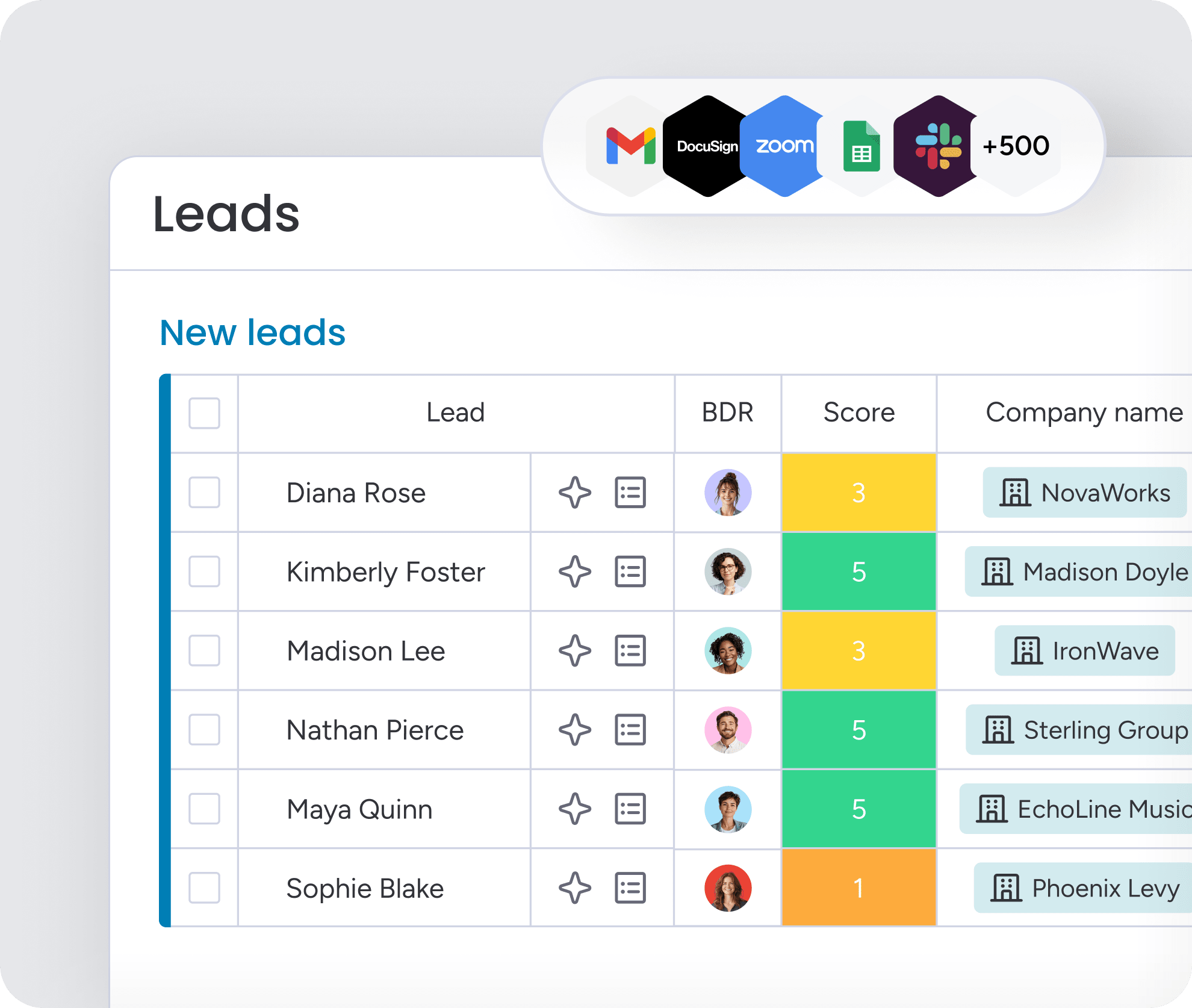
Lead qualification is the most common and highest-ROI example for AI calling agents. You ask discovery questions to see if prospects fit your criteria, then score them for sales readiness.
Why AI agents excel at qualification:
- Consistency: Every prospect receives the same thorough qualification questions regardless of call volume or time of day.
- Completeness: AI agents never skip questions due to time pressure, fatigue, or rushing to hit daily targets.
- Objectivity: Scoring based on defined criteria rather than subjective judgment.
- Scale: Hundreds of leads qualified daily without capacity constraints.
2. Automated appointment scheduling
Appointment scheduling is structured with clear goals — perfect for AI calling agents. It doesn’t need much personalization, and the value shows up immediately.
Key advantages:
- Real-time availability: AI agents provide real-time access to rep availability, eliminating back-and-forth scheduling emails.
- Instant confirmation: Prospects receive meeting confirmations during the call itself.
- 24/7 scheduling: Agents schedule appointments for leads arriving outside business hours.
- Persistent follow-up: Attempt multiple times to reach prospects without SDR fatigue.
3. Payment collection and follow-up
Payment collection eats up time. AI calling agents handle it so finance and sales teams can focus on bigger priorities.
Benefits for finance teams:
- Consistent follow-up: Every overdue account receives timely follow-up without manual tracking.
- Professional tone: AI agents maintain a courteous, non-confrontational tone across all conversations.
- Persistent outreach: Continue follow-up attempts on appropriate schedules without giving up.
- Complete documentation: Automatically log all payment commitments and conversation details.
Build a scalable AI-powered sales engine on monday CRM
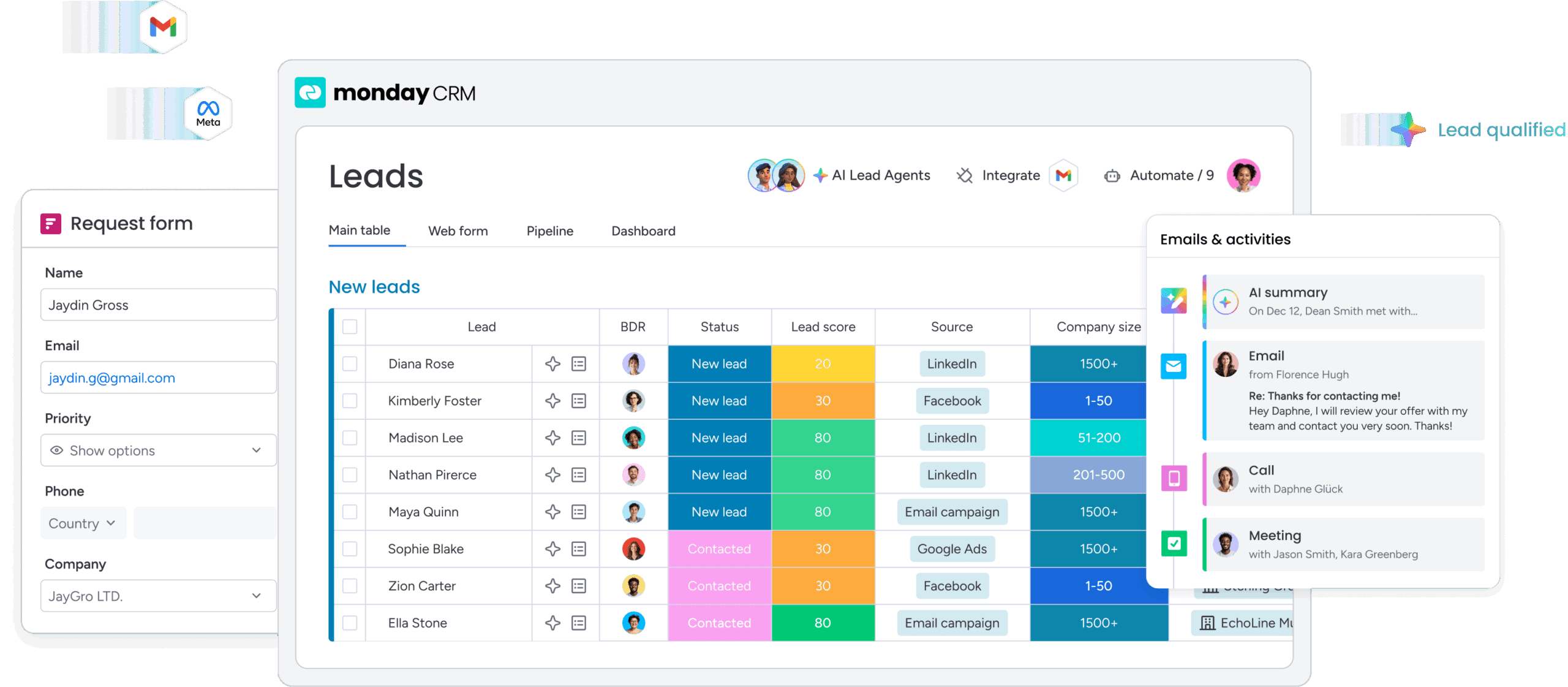
The platform you choose determines how effectively AI calling agents integrate into your sales workflow. monday CRM provides the foundation for connecting AI calling capabilities directly to your pipeline management, creating unified workflows where every call outcome automatically updates deal records and triggers appropriate next steps.
Here’s what makes monday CRM the right platform for AI-powered sales:
- Unified pipeline visibility: Track AI-qualified leads alongside human-sourced opportunities in customizable sales dashboards that show exactly where every deal stands.
- Automated workflow triggers: Configure automations that route qualified leads to the right reps, send follow-up emails based on call outcomes, and update deal stages without manual intervention.
- AI-powered data capture: Use AI autofill actions to transform unstructured call notes into structured CRM data that drives accurate forecasting and pipeline analysis.
- Real-time performance tracking: Monitor AI calling ROI through custom dashboards showing conversion rates by stage, rep performance leaderboards, and expected revenue from AI-qualified pipeline.
- Seamless team collaboration: Keep sales, marketing, and customer success teams aligned with shared visibility into AI calling outcomes and prospect engagement history.
Revenue teams using monday CRM eliminate the data silos that plague traditional sales tech stacks. When AI calling agents integrate directly with your CRM, every conversation becomes part of a complete customer journey — from initial outreach through closed deal — giving leadership the visibility they need to make data-driven decisions about scaling sales capacity.
Scale your sales team with AI calling agents
AI outbound calling agents multiply your sales capacity without adding headcount, handling hundreds of qualification calls daily while your human reps focus on closing high-value deals. From instant lead response to running high-volume campaigns at scale, AI calling technology delivers measurable ROI through lower costs, faster speed-to-lead, and consistent quality across every conversation.
With monday CRM, you can connect AI calling capabilities directly to your pipeline management, creating unified workflows where every call outcome automatically updates deal records and triggers appropriate next steps. Start building your AI-powered sales engine today.
Try monday CRM AI Sales CapabilitiesFAQs
What is an AI outbound calling agent?
An AI outbound calling agent is a voice-based AI system that autonomously conducts sales conversations with prospects over the phone, qualifying leads, answering questions, handling objections, and booking meetings without human intervention.
Can AI calling agents really handle objections during sales calls?
AI calling agents recognize common sales objections and respond with relevant counterpoints in real-time, though complex or unusual objections may trigger handoff to human reps for more nuanced handling.
How long does it take to implement AI outbound calling?
AI calling agents can be operational within weeks, including CRM integration, conversation script configuration, and team training, compared to months for human SDR onboarding.
Do AI calling agents identify themselves as AI to prospects?
Reputable AI calling solutions identify themselves as AI at the beginning of calls to maintain trust and comply with regulations, which doesn't significantly impact conversion rates when conversations deliver genuine value.
What types of calls work best for AI calling agents?
AI calling agents deliver strongest results with high-volume, structured call types including inbound lead qualification, event follow-up, appointment scheduling, re-engagement campaigns, and payment collection.
How do AI calling agents integrate with existing CRM systems?
AI calling agents integrate with CRM systems through APIs, automatically pulling contact information and account context while writing back call outcomes, conversation details, qualification scores, and next steps to maintain complete sales records.
What happens when prospects ask questions AI agents can't answer?
AI calling agents recognize when questions exceed their knowledge base and either provide general information with a promise for human follow-up or immediately transfer the call to an available human representative based on predefined escalation rules.
