


Most companies don’t fail because they lack a plan. They fail in the gap between the plan and the work that’s supposed to deliver it. A strong operations strategy is what closes that gap, turning high-level business goals into the daily workflows, resource decisions, and processes that move a company forward.
Building one is less about grand vision and more about disciplined execution: what to plan around, which strategies to choose, and the metrics that show it’s working. Get those right, and your operations strategy becomes a system for staying aligned as you scale, not a document that gathers dust. monday AI Workspace helps bridge this gap by connecting strategic goals directly to execution, giving teams one place where plans, workflows, and progress stay visible and actionable.
Key takeaways
- An operations strategy aligns your resources, workflows, and processes with long-term business goals so daily work supports the bigger picture
- Execution, not strategy, is where most teams struggle, so structure and clear ownership are what turn plans into measurable results
- Strong operations planning spans core areas like resource allocation, supply chain, automation, and performance tracking
- Clear KPIs such as cycle time, cost per operation, and resource utilization show whether your strategy is working
- monday AI Workspace connects strategy to execution by uniting goals, dashboards, automations, and AI agents on one data layer
What is an operations strategy?
In operations management, an operations strategy is the structured plan that aligns a company’s resources, workflows, and processes with its long-term goals. It dictates how work is completed at scale across key areas such as product management, supply chain management, resource allocation, workflow automation, scheduling, forecasting, facilities planning and management, performance tracking, financing, marketing, and human resources.
You’ll also see it called an operational strategy, and the two terms are used interchangeably. By implementing a well-structured operations strategy, businesses can streamline processes, improve collaboration, and make informed decisions that support growth. But strategy alone doesn’t drive results; execution does. A clear operational structure ensures that goals turn into measurable actions, resources are optimized, and teams stay aligned.
Think of it as the bridge between a business plan and the work itself. A business plan states that you’ll grow revenue by 20%. The operations strategy decides how the work behind that number gets done: which processes to standardize, where to add capacity, and how to route decisions.
Picture a growing logistics company. Its operations strategy might set a rule that every new warehouse follows the same intake, storage, and dispatch workflow, backed by shared performance targets. That single decision keeps quality consistent as the company scales from three sites to thirty, without reinventing how work runs each time.
Why structure matters for a successful operations strategy
A well-defined structure keeps operations efficient, predictable, and scalable. Without it, even the most well-planned strategies can lead to inefficiencies, misalignment, and stalled progress.
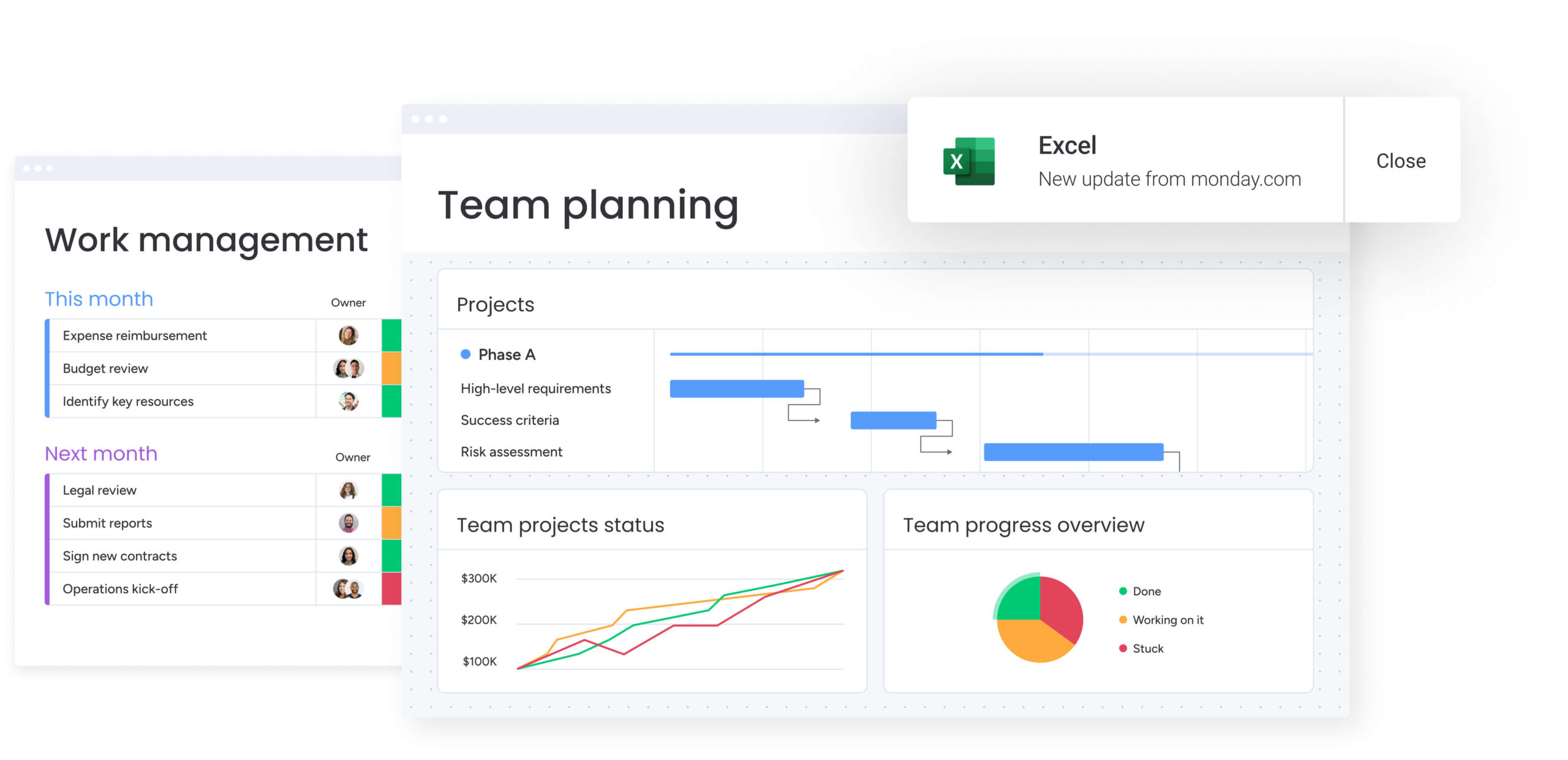
- Workflow standardization: Repeatable, scalable processes eliminate inconsistencies and reduce inefficiencies
- Smarter resource allocation: Proactive operational planning prevents teams from being overburdened or underutilized
- Measurable execution: Data-driven insights from live tracking and reporting tools allow teams to adjust strategies in real time
- Stronger cross-functional collaboration: A well-structured strategy breaks down silos and fosters communication
- Cost efficiency and risk reduction: Identifying wasteful processes and implementing proactive risk management minimize disruptions
- Scalability for growth: As organizations expand, structured business operations ensure processes and technology scale efficiently
Structure is also where value is won or lost. Gartner predicts that 60% of supply chain digital adoption efforts will fail to deliver their promised value by 2028, largely because organizations underinvest in the enablement needed to make new processes stick. A structured operational plan template gives you a repeatable starting point for documenting these processes so they hold up as you grow.
11 areas to focus on when developing an operations strategy
An operations strategy defines how key business functions work together to support long-term goals.
- Product management: A well-defined product management strategy ensures development, production, and delivery align with market needs
- Supply chain management: A strong supply chain strategy keeps suppliers, manufacturers, and distribution channels in sync
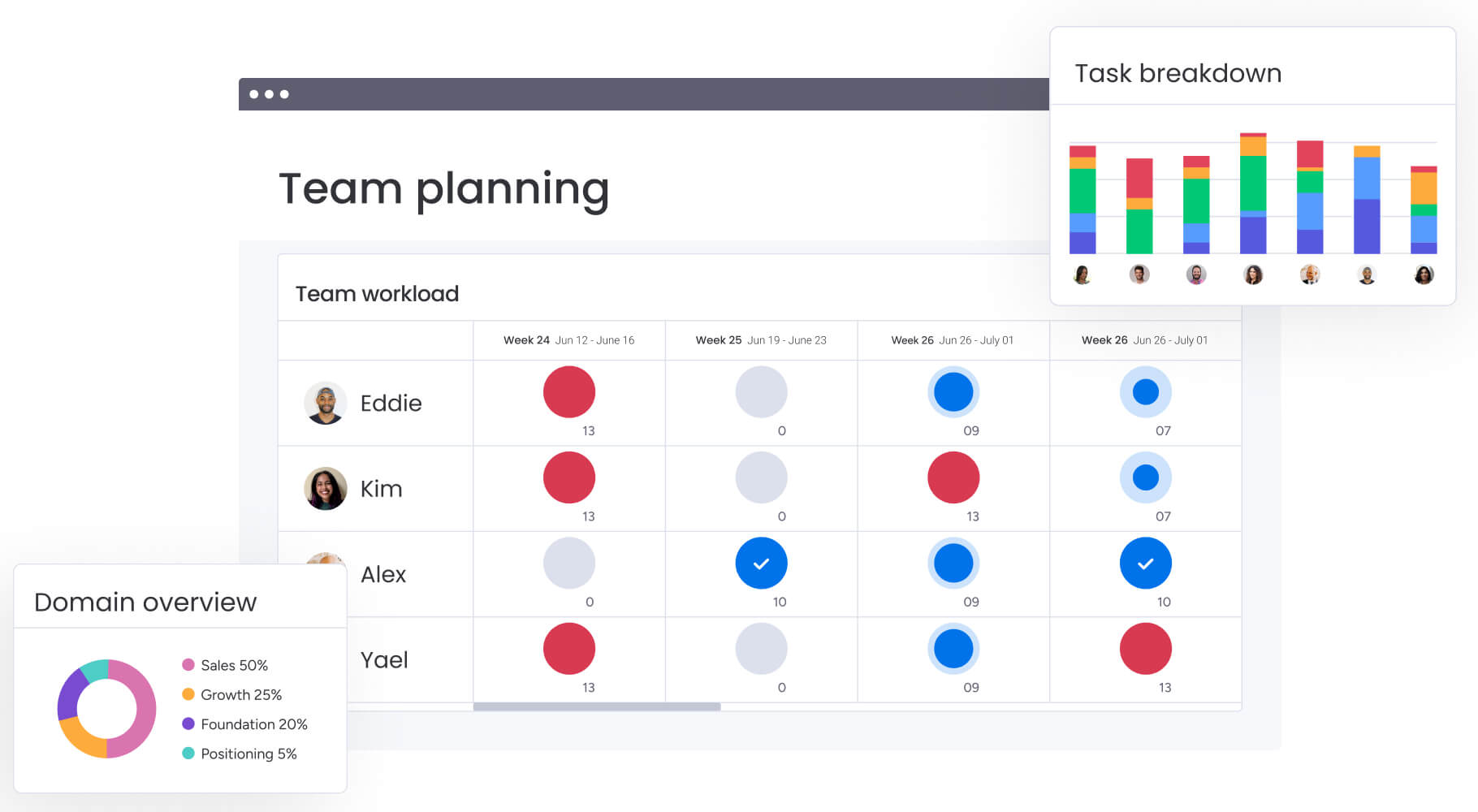
- Resource allocation: Strategic resource allocation ensures workloads are balanced and budgets are distributed effectively
- Workflow automation: Standardized process management allows teams to work more productively. For example, HR teams can automate workflows for employee onboarding
- Scheduling: Effective scheduling ensures projects, workforce management, and production timelines align with demand
- Forecasting: Data-driven forecasting helps businesses anticipate demand and allocate resources efficiently
- Facilities planning and management: Scalable facility planning ensures operational environments support long-term objectives
- Performance tracking: KPIs and analytics provide real-time visibility into operational efficiency
- Financing: Operational budgets must align with business priorities
- Marketing: An operations strategy ensures campaigns and content production align with broader business goals
- Human resources: HR plays a crucial role in workforce planning, talent management, and employee engagement
Five types of operations strategies
Every business operates differently, but how effectively a company executes its operations determines its success. So what does an operations strategy look like in practice? These five types show how different companies organize their operations around a central advantage.
- Core competency strategies: using a company’s core strengths to maximize profitability (e.g., Apple), which concentrates its operations on design and tight ecosystem integration rather than competing on price
- Corporate strategies: centered around a company’s mission and long-term vision, defining key performance indicators (KPIs) and decision-making processes (e.g., Tesla), whose operations are organized around a long-term vision of scaling electric vehicles and energy
- Competitive strategies: differentiate a business from others (e.g., Amazon Prime), which uses fast, reliable fulfillment as its core point of difference
- Product or service strategies: prioritize product development, quality control, and innovation (e.g., Dyson), which builds its operations around continuous engineering and product reinvention
- Customer-driven strategies: revolve around the customer experience (e.g., Starbucks), which designs its operations to deliver consistent service and store experience at scale
Most companies don’t pick just one. A product-led business still needs a customer-driven service layer, and a cost-focused operation still relies on core competencies. The useful question isn’t which single type you are, but which one leads. Naming the dominant strategy tells your teams what to optimize for when priorities compete, such as choosing speed over cost or customization over standardization.
Learn more: AI Chief of Staff agent
What is the difference between strategy, operations, and tactics?
The difference between strategy, operations, and tactics comes down to scope and timeframe. Strategy sets the long-term direction and the why. Operations is how the work runs day-to-day to support that direction. Tactics are the specific short-term actions teams take to execute the plan.
Confusing these three is a common reason plans stall. Leaders set strategy, then assume it will translate itself into daily work. It won’t without an operations layer connecting the two. The table below shows how the three levels relate.
| Level | Question it answers | Timeframe | Example |
|---|---|---|---|
| Strategy | Why are we doing this and where are we going | Long term | Become the lowest-cost provider in our category |
| Operations | How does work run to support the direction | Ongoing | Standardize fulfillment and automate reordering across warehouses |
| Tactics | What specific actions do we take right now | Short term | Renegotiate a shipping contract this quarter |
The three levels only create value when they stay connected. A brilliant strategy with weak operations produces plans that never ship. Sharp tactics with no strategy produce busy teams heading in different directions. Your operations strategy is the middle layer that translates direction into repeatable work and keeps day-to-day tactics pointed at the same long-term goal.
Building an operations strategy step by step
A clear method turns intent into a working system. Follow these eight steps to move from goals to a structured, repeatable operations strategy.
1. Define business goals and objectives
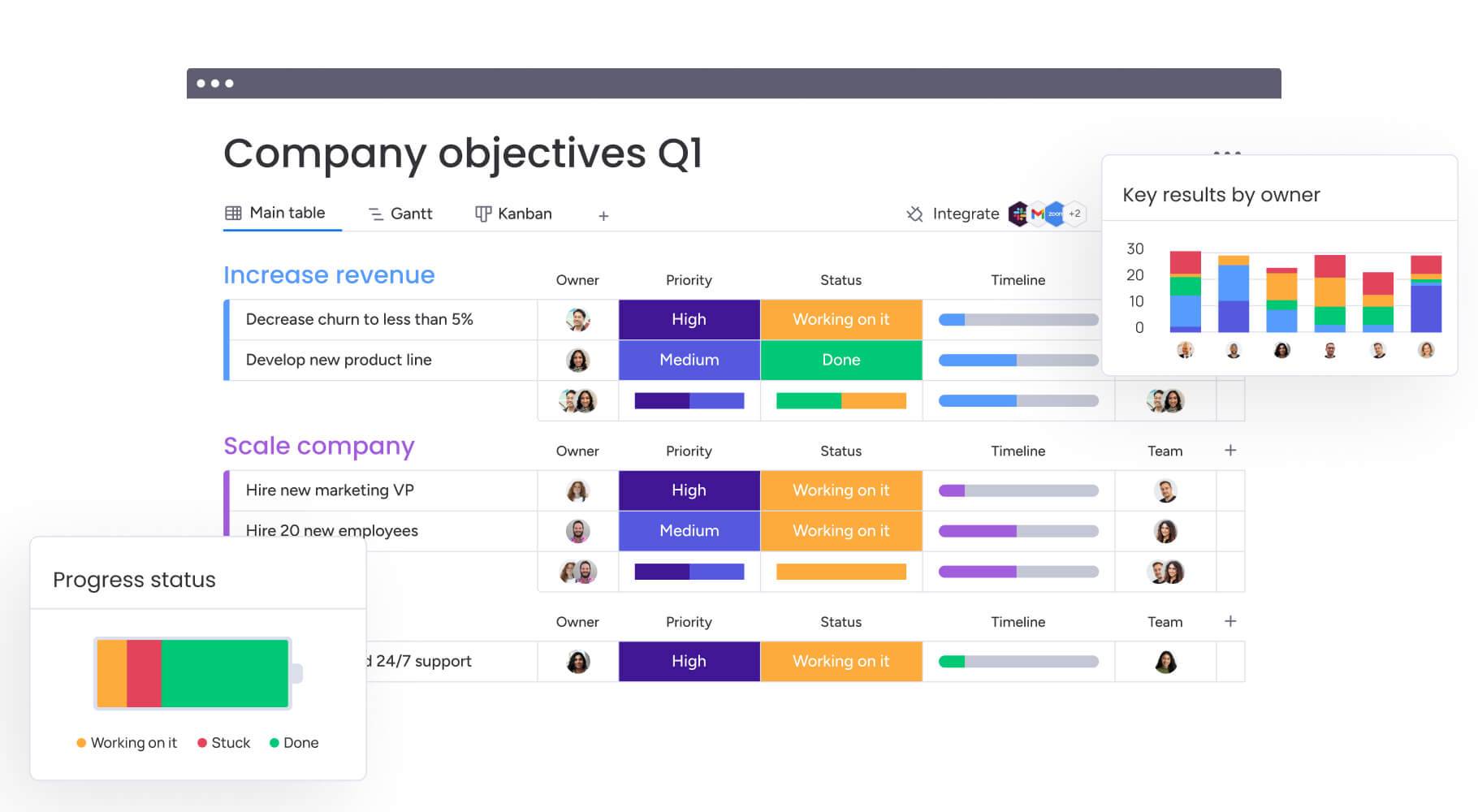
Start by outlining clear, measurable business goals and the objectives that support them. Tie each goal to a number and a deadline so progress is verifiable, and confirm every objective maps back to a company-level priority rather than a departmental preference.
2. Analyze current operations and resources
Assess your internal workflows, technology, and team capacity. Map how work moves today, where it slows down, and which steps depend on a single person or tool, because you can’t improve a process you haven’t documented.
3. Conduct market research and assess demand
Analyze industry trends, customer behavior, and competitor strategies. Use that view to size expected demand and pressure-test whether your current operations could absorb a sudden increase without breaking service levels.
4. Perform a SWOT analysis
A SWOT (Strengths, Weaknesses, Opportunities, Threats) analysis provides a structured way to evaluate strengths and weaknesses. Get the template: download your free SWOT analysis template to start. Translate each finding into an operational action, so a weakness like slow approvals becomes a concrete process to redesign.
5. Design a structured plan and workflows
Develop a detailed action plan with standardized workflows. Define each workflow’s trigger, owner, and expected output, and document the handoffs between teams so nothing stalls in the gaps between functions.
6. Allocate resources and assign responsibilities
Effective resource planning ensures teams, budgets, and technology are used efficiently. Integrate enterprise resource planning software. Assign a named owner to every workflow and milestone, since unowned work is the most common reason strategies quietly stall.
7. Implement automation
With automation and workflow tools, you can streamline repetitive operations and reduce manual overhead. Today, AI-driven automation and monday agents can run many repetitive operational tasks end to end, from routing approvals to flagging project risks, so your people focus on judgment and exceptions while Agents handle the routine work alongside them.
8. Monitor and optimize
Use interactive dashboards and performance tracking tools to measure key metrics. Review those metrics on a set cadence, then treat the strategy as a living system: adjust workflows, reallocate capacity, and retire steps that no longer earn their place.
Key metrics to measure the success of your operations strategy
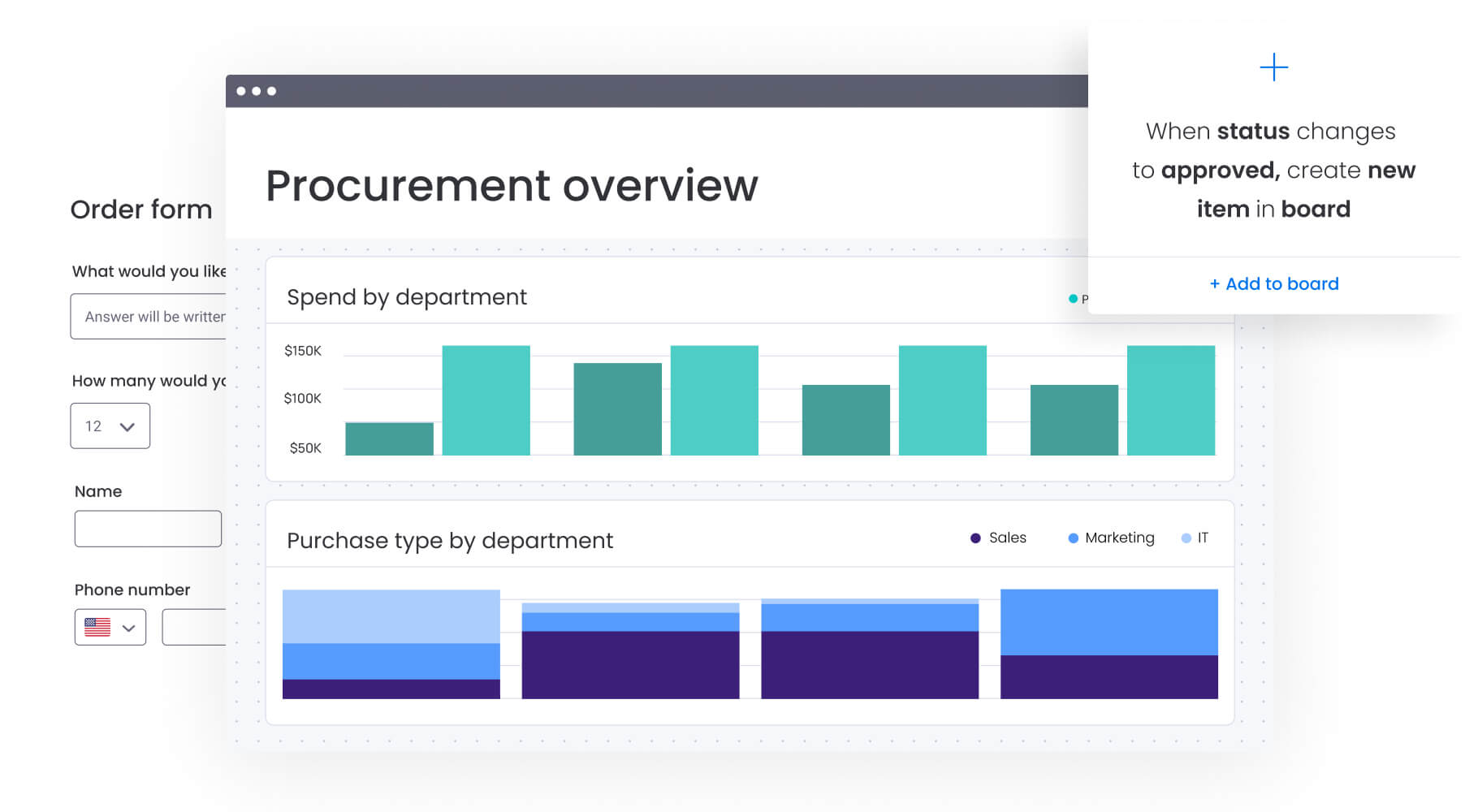
Tracking the right KPIs helps businesses assess efficiency and optimize workflows. The metrics below give you a balanced view of speed, cost, capacity, and customer impact, so you can tell whether your operations strategy is actually improving results.
| Metric | What it tells you | How to measure |
|---|---|---|
| Operational efficiency | How well processes convert effort into output | Track process completion time, automation adoption rates, and reductions in manual workload |
| Cycle time | How quickly work moves through a process | Monitor the average time required to complete key workflows |
| Cost per operation | Whether spending stays aligned with plan | Compare budgeted vs. actual operational costs |
| Resource utilization | Whether capacity is balanced across teams | Assess workload distribution, team capacity, and project load balancing metrics |
| Customer satisfaction and retention | How operations affect the customer experience | Track Net Promoter Score (NPS), customer churn rate, and feedback trends |
Read these metrics together, not in isolation. Falling cycle time looks like a win until you notice cost per operation climbing to fund it, or utilization spiking to a level that burns out teams. A balanced scorecard across efficiency, cost, capacity, and customer impact keeps you from optimizing one metric at the expense of the others.
Common pitfalls in operations strategy and how to avoid them
Operations strategies rarely fail because the thinking is wrong. They fail in execution, when goals drift, work stalls in silos, or no one owns the outcome. Watch for these five pitfalls and address them early.
- Unclear or shifting goals: set measurable, time-bound OKRs to keep teams focused. Revisit them on a fixed cadence so priorities stay stable between reviews
- Bottlenecks that slow execution: map where work queues up and add capacity or automation at that specific step rather than across the whole process
- Teams working in silos: give every function one shared view of goals and progress, so decisions in one team reflect what’s happening in the others
- Ignoring data until problems escalate: track leading indicators like cycle time and utilization, and set alerts that surface risks while there’s still time to act
- Processes that don’t scale: design workflows to be repeatable and owned from the start, then stress-test them against a realistic increase in volume before you need it
The pattern shows up in where leaders are investing. In a 2025 Gartner survey, 54% of infrastructure and operations leaders said cost optimization was their top goal for adopting AI. That signals a clear shift: automating the right processes has become a proven way to avoid waste and keep an operations strategy on track.
How monday AI Workspace turns operations strategy into execution
A well-designed operations strategy still needs a system to run it. Where does the right platform fit in? Without connected tools, like business process management software, even the best operations strategy can fragment across spreadsheets, chat threads, and disconnected apps. The monday AI Workspace brings strategy and daily execution into one place, so plans stay visible and work keeps moving.
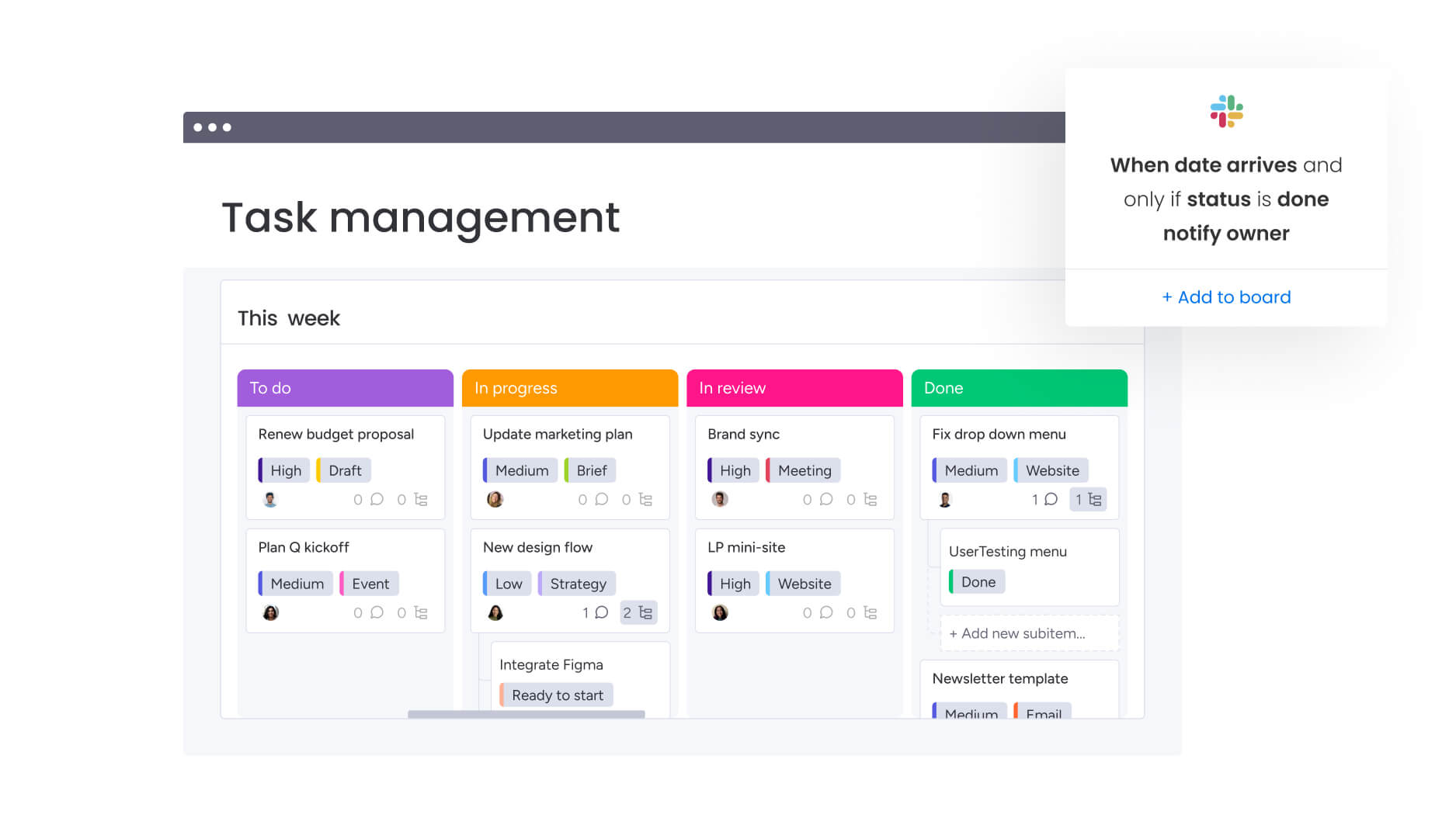
- Align strategy with execution: Goals & OKRs connect objectives to the boards where work actually happens, while dashboards give leaders real-time portfolio visibility into progress, timelines, and KPIs
- Optimize resources: Workload and resource views, Gantt charts, and dependencies show who is over- or under-allocated across projects, so you can rebalance capacity before delivery slips
- Automate execution: No-code automations and monday workflows run multi-step processes across teams and tools. Workflows can trigger Agents and task-specific AI workers like the Risk Analyzer and Process Automator to run operational tasks end to end. People and Agents work together as one team, with guardrails and full transparency into every action
- Build custom operational tools: With monday vibe, you describe the tool you need in plain language and Vibe builds it, from OKR monitors to supply chain trackers and executive overviews, natively connected to your data
- Connect the stack: 200+ integrations and monday MCP keep the rest of your tools in sync. MCP lets AI assistants like Claude, Copilot, and ChatGPT securely act on your monday.com data within existing permissions
All of this runs on mondayDB, one connected data layer that spans marketing, sales, operations, IT, HR, product, and legal. That shared context lets AI see how work connects across the organization, not just inside a single silo. For an operations strategy, it means a change in resourcing or a slipping deadline in one team is visible everywhere it matters, instead of surfacing weeks later in a status meeting.
Adoption is where most tools get it wrong, and where operations strategies most often lose value. Because these capabilities live inside the boards and views teams already use, you don’t have to learn new habits or keep a separate system in sync. Guardrails, granular permissions, and a full audit trail mean you can delegate operational work to Agents while staying in control of what they can see and do.
| Capability | Fragmented, manual approach | monday AI Workspace approach |
|---|---|---|
| Strategy-to-execution visibility | Goals live in slides while work happens in scattered tools, so progress is hard to see | Goals and OKRs connect to live boards, with dashboards showing real-time progress |
| Resource allocation | Capacity tracked in spreadsheets that go stale quickly | Workload and resource views flag over- and under-allocation across projects |
| Automation | Repetitive steps handled manually or with disconnected point tools | Automations and Workflows run multi-step processes, and Agents handle tasks end to end |
| Custom operational tools | Teams wait on developers or stitch together rigid apps | Vibe builds custom trackers and dashboards from a plain-language prompt |
| Cross-department data | Each team keeps its own version of the truth | mondayDB holds one connected data layer, extended by 200+ integrations and MCP |
A smarter way to manage your operations strategy
The hard part of an operations strategy was never writing it down. It’s keeping strategy and daily work connected as priorities shift, teams grow, and new demands land. Closing that gap depends on structure, clear ownership, and visibility into whether the plan is holding, not on a bigger or bolder document.
The direction of travel is clear. Operations strategy is moving from static annual plans toward continuously optimized execution, where people and AI agents adjust the work as conditions change. Start with a strategy grounded in measurable goals, then give your teams a connected system to run it, and you build an operation that adapts instead of stalling.
FAQs
What is operations strategy in operations management?
Operations strategy in operations management is the plan that aligns a company's workflows, resources, and processes with its long-term goals. It sets how work gets done at scale, guiding decisions on capacity, automation, and resource allocation so day-to-day operations consistently support the broader business direction.
What are the 4 competitive priorities in an operations strategy?
The 4 competitive priorities in an operations strategy are cost, quality, flexibility, and speed. Most operations decisions involve trade-offs among these four, and the priorities you emphasize should reflect what your customers value most and where you most want to differentiate from competitors.
What does a strategy and operations manager do?
A strategy and operations manager oversees resource planning, workflow optimization, and process improvements. They connect high-level strategy to daily execution by translating goals into structured plans, tracking performance against KPIs, and removing bottlenecks so teams can deliver priorities efficiently.
What are the 5 Ps of operations strategy?
The 5 Ps of operations strategy are people, processes, products, partners, and performance. Together they offer a simple framework for auditing an operations strategy, prompting you to check that the right people, workflows, offerings, external relationships, and metrics all work toward the same goals.
What are the four perspectives of operations strategy?
The four perspectives of operations strategy are top-down, bottom-up, market-led, and resource-based. Each describes where strategy originates: executive direction, frontline insight, market demand, and internal capabilities. Balancing all four keeps your strategy both ambitious and grounded in what the business can realistically deliver.
What is an example of an operations strategy?
An example of an operations strategy is a retail company optimizing its supply chain by implementing automation, improving inventory management, and enhancing distribution processes. The goal is faster, more reliable fulfillment at lower cost, with each operational change tied directly to a measurable business outcome.
What is the difference between strategy, operations, and tactics?
The difference between strategy, operations, and tactics is one of scope and timeframe. Strategy sets the long-term direction and the why. Operations is how the work runs day-to-day to support it. Tactics are the specific short-term actions teams take to execute the plan.
How does monday AI Workspace support an operations strategy?
monday AI Workspace supports an operations strategy by connecting goals, dashboards, automations, and AI agents on one data layer. Teams set OKRs, track progress in real time, automate routine steps, and use Agents to run operational tasks, keeping strategy and execution continuously in sync.
 Get started