














.svg)






For years, engineering has carried a reputation as the “black box” of the organization. Stakeholders submit requests, executives make strategic calls, and eventually, something ships — but what happens in between is often unclear to anyone outside of the engineering team. Progress feels hidden, decisions feel unclear, and updates rarely arrive until deadlines are looming.
The result is frustration on all sides:
- Leadership doesn’t know if strategy is being executed
- Business teams scramble to align around moving timelines
- Developers feel misunderstood or pressured without the space to focus
This disconnect is one of the most common sources of organizational silos — engineering speaks its own language, operates in sprints, and measures success in terms of velocity and story points. Meanwhile, business stakeholders care about revenue impact, customer value, and strategic goals. When those worlds don’t connect, execution suffers.
monday dev was built to solve exactly this problem. It’s not just another project management tool for engineers. It’s a product that connects engineering with the rest of the business in real time. monday dev helps companies break silos, surface risks, understand progress, and ensure that every line of code contributes directly to business success.
Read on to discover why the “black box” problem exists, how monday dev changes the game, and the features that make cross-functional connectivity not only possible but frictionless.
Why is engineering disconnected?
Before we get into solutions, it’s worth unpacking why software development has historically been disconnected from other business teams.
1. Different languages and metrics
Engineering teams think in user stories, commits, pull requests, and velocity. Business leaders think in OKRs, ROI, and revenue targets. Without a shared layer of translation, updates get lost in translation — or worse, never surface at all.
2. Fragmented tooling
Engineering stacks are filled with specialized tools: GitHub, Jira, CI/CD systems, and QA platforms. Marketing and operations teams don’t use (or understand) them. This creates a natural wall where context stops flowing across functions.
3. Lack of visibility and misaligned planning
Roadmaps live in documents, while sprint backlogs live in Kanban boards. Strategy is set quarterly, but engineering moves bi-weekly. The disconnect between planning and execution makes it hard for leadership to tie shipped features to broader goals.
4. Reactive communication
When something breaks, everyone scrambles. But until that moment, updates are often reactive or scattered. Teams outside engineering are left chasing answers, which only reinforces the “black box” perception.
The result? Frustration, wasted cycles, and a widening gap between strategy and execution.
A platform that connects — not divides
monday dev was built with a clear purpose: to connect product and engineering to the rest of the business so shipping becomes a driver of impact, not a black box. But what makes it especially powerful is that it’s not a standalone tool — it’s built on the monday.com Work OS. That means engineering and product teams benefit from the same core values that power every other workflow across the company: flexibility, transparency, and connection.
With all teams working in one shared platform, there’s no need for handoffs across disconnected systems or endless status meetings. Instead, updates flow naturally, blockers surface early, and every initiative stays tied to business goals. monday dev delivers specialized features for software development, but it does so in a way that’s inherently aligned with the broader organization — ensuring that what gets planned is what gets delivered, and what gets delivered clearly shows its impact.
Work Management Hybrid Portfolio — alignment without the guesswork
One of the most persistent challenges for leaders is understanding how engineering’s work aligns with business priorities. Often, roadmaps live in one place, project trackers in another, and sprint boards somewhere else entirely. The lack of a unified view forces teams into a reactive mode, where they must chase down updates, reconcile mismatched timelines, and try to piece together whether execution aligns with intent.
monday dev solves this with the Work Management Hybrid Portfolio. This feature brings together initiatives across the business and aligns them with the projects, epics, and sprints that will deliver them. Instead of juggling disconnected systems, leaders, engineers, and stakeholders all share a single portfolio view that spans both strategy and execution.
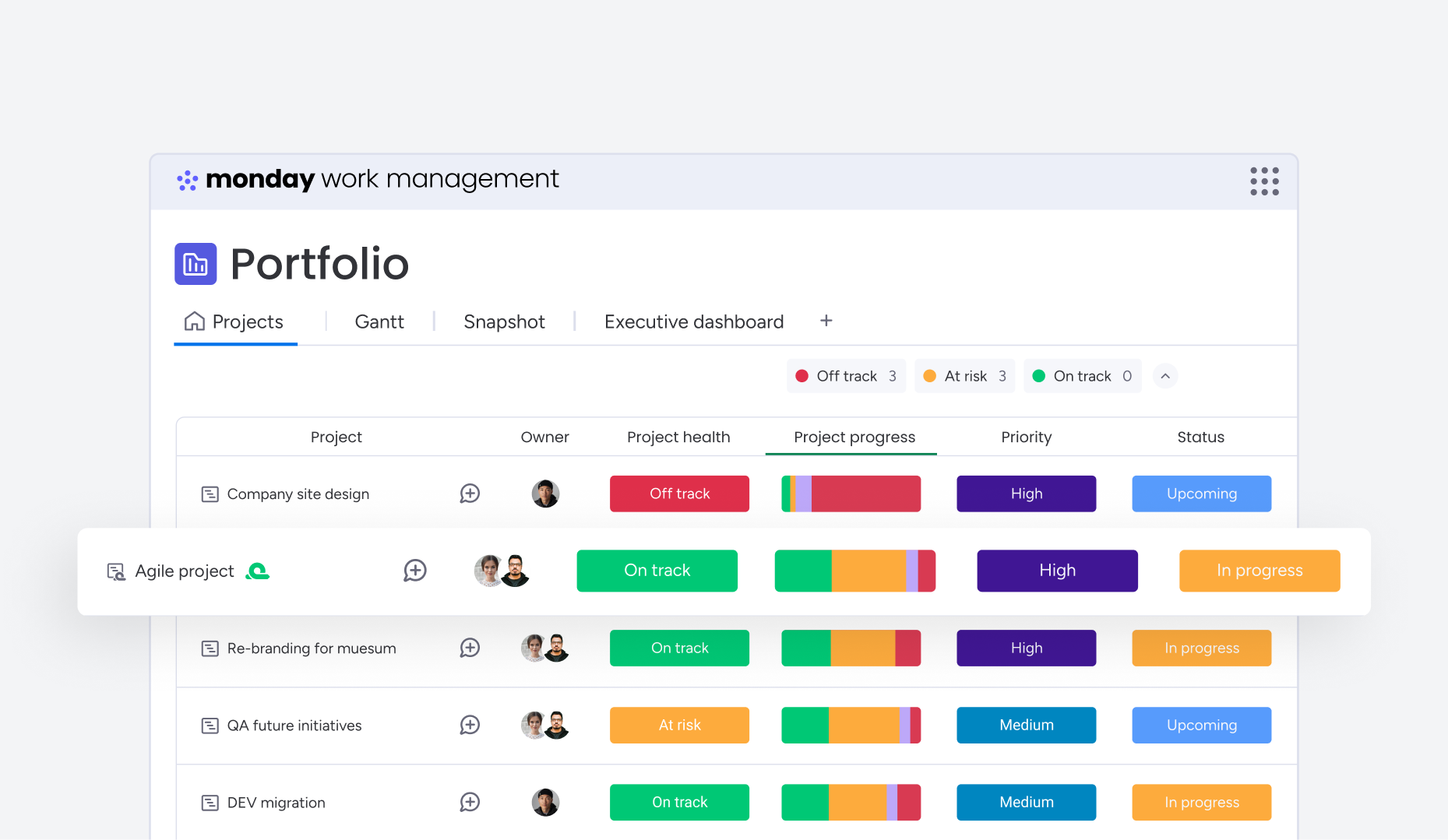
The impact is immediate — business leaders can see which initiatives are on track and where risks are emerging before they become blockers. Engineering teams gain clarity on how their epics relate to larger priorities, and cross-functional teams can track feature delivery in real-time.
The unified portfolio view reduces friction and simplifies alignment. When every initiative is visible and traceable across teams, organizations stop wasting energy reconciling disconnected systems and start focusing on delivering impact.
Hierarchy — from big picture to shipped results
Brilliant strategies too often fade into slide decks or quarterly plans that never translate cleanly into execution. The disconnect happens in the middle layer: high-level roadmaps rarely tie directly into the epics, stories, and tasks developers are working on. As a result, leaders can lose sight of whether strategy is moving forward, and engineers can lose connection to the why behind their work.
monday dev’s Hierarchy view closes that gap. Managers can link roadmaps, epics, stories, and tasks in one connected view. Strategy flows downward into concrete work, while execution rolls upward into visible progress against goals. Leaders can drill down from a strategic objective into the specific epics and sprints that bring it to life, while engineers can trace their current task back to the larger business priority it supports.
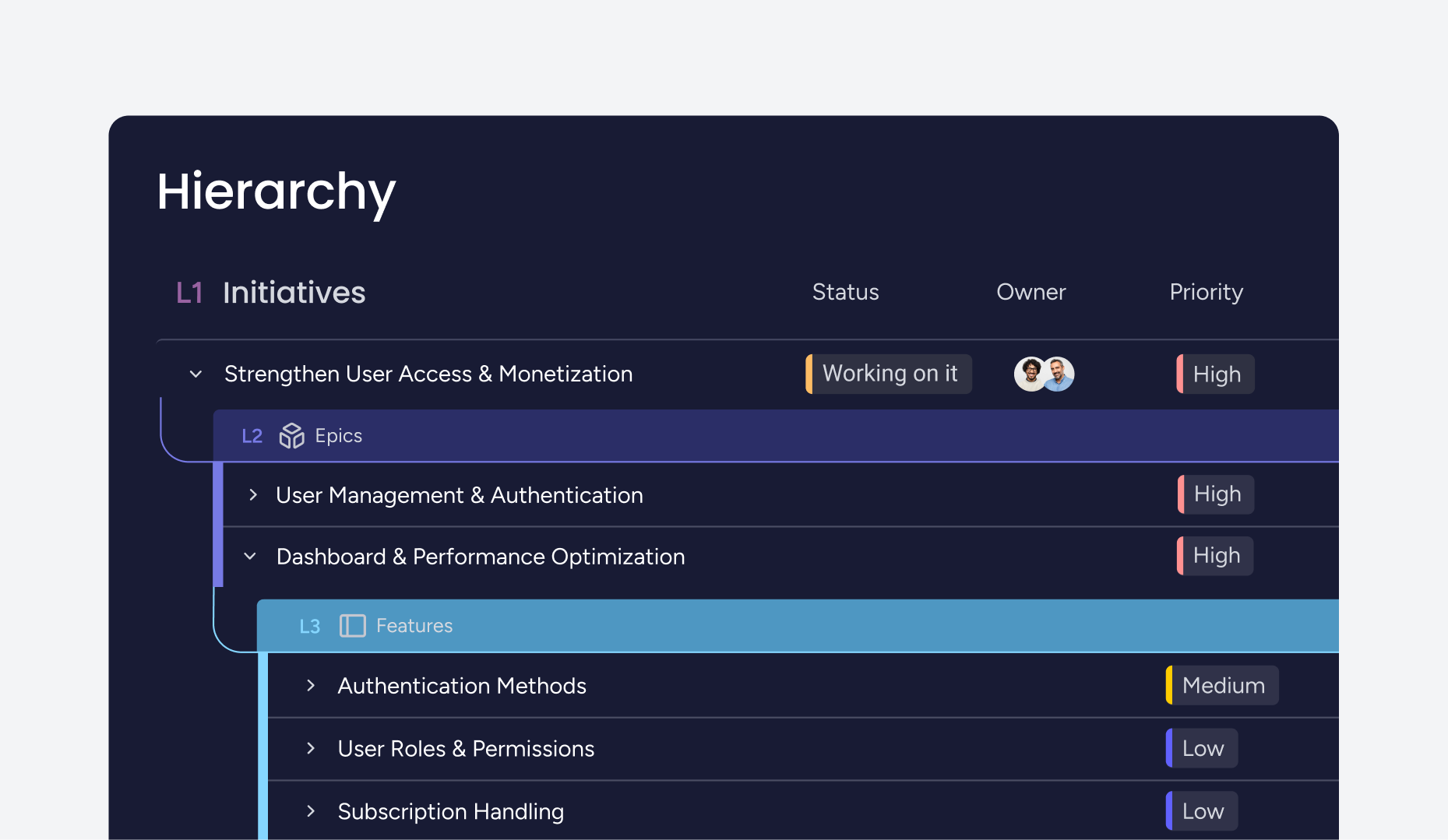
This structure brings clarity at every level. For executives, it means no more wondering whether a roadmap item is advancing — the connection is clear. For product managers, this means that planning is closely tied to delivery. Hierarchy also provides engineers with context: no task exists in isolation. Every line of code contributes to something bigger.
Dashboards — visibility that builds trust
Even when organizations have strong roadmaps and clear execution plans, progress often gets lost in translation. Non-technical stakeholders might wait for weekly updates or rely on secondhand summaries that lack nuance. By the time issues surface, it’s often too late to adjust. This reactive cycle not only slows delivery but also erodes trust between engineering and the rest of the business.
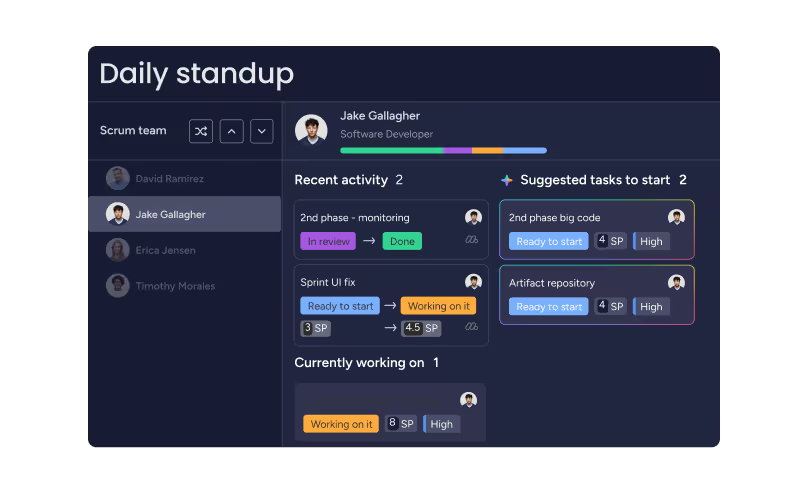
Dashboards in monday dev change that dynamic. They provide real-time visibility into delivery across the development cycle — from GitHib actions and velocity to bug counts and throughput. Product, QA, engineering, and leadership can all see progress and blockers as they emerge, without needing separate tools or status reports.
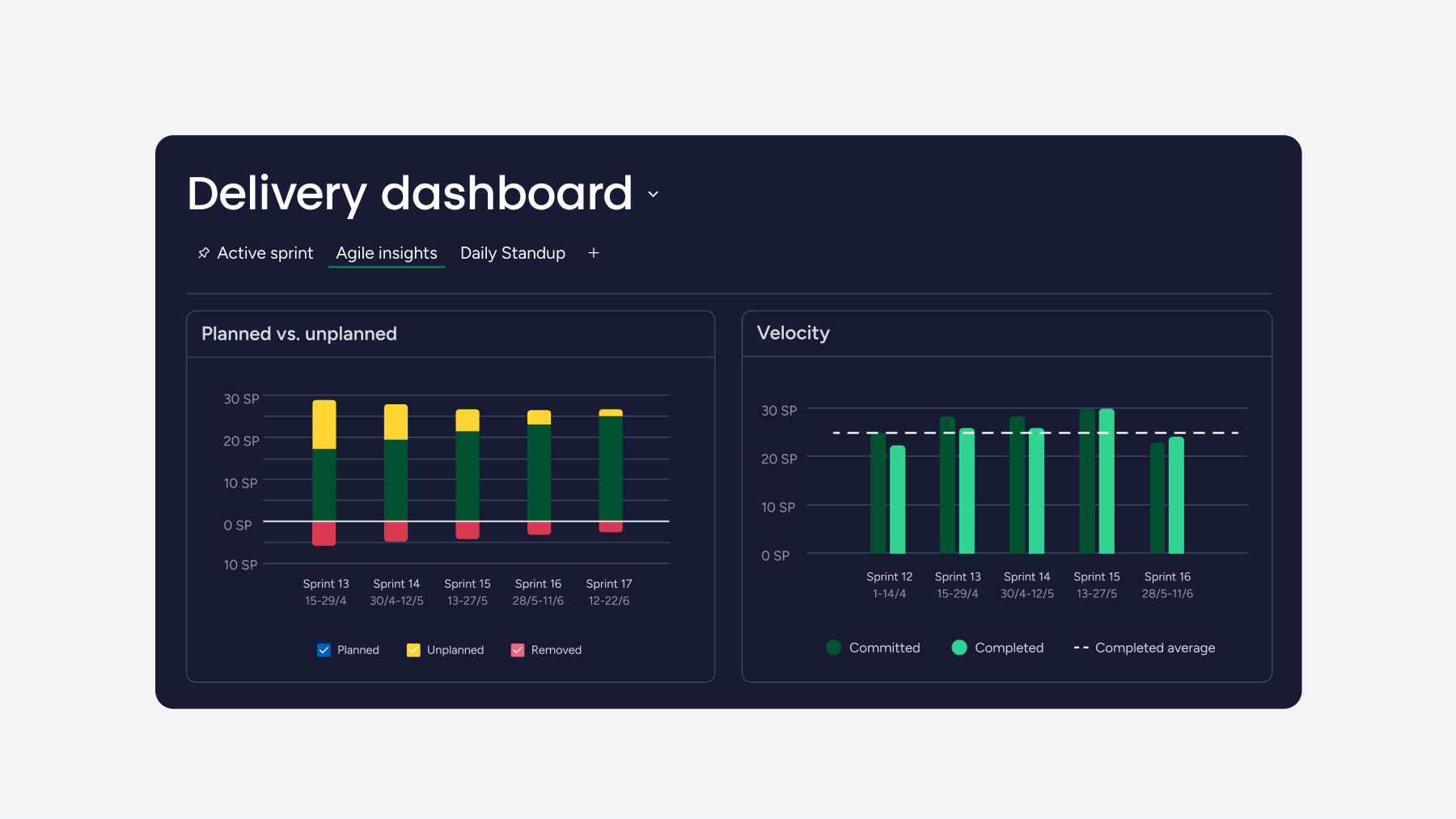
This transparency creates a cultural shift. Instead of chasing updates, stakeholders can self-serve the information they need. Instead of engineers spending hours preparing slide decks, their work speaks for itself in live dashboards. Instead of mistrust building when projects stall, blockers are visible early enough to be resolved together.
Companies like Vistra are already putting this power into practice. Their engineering teams use monday dev’s Battery chart to break down exactly how work is being allocated — for example, what percentage of effort is going toward roadmap initiatives versus bug fixes or technical debt. With this simple but powerful view, leaders can instantly see what their team is working on and rebalance priorities to stay focused on long-term goals. The ability to visualize work in this way not only sharpens decision-making but also builds a shared understanding across the business of where resources are going and why.
The future of connected engineering
The transformation that happens when engineering connects seamlessly with the business is profound — silos collapse, execution accelerates, and importantly, the work engineers are doing is clearly understood as a driver of business success.
With monday dev, this shift becomes possible because the platform is designed not just for engineers, but for the entire organization. The Work Management Hybrid Portfolio aligns strategy and execution in a single view. The Hierarchy feature ensures roadmaps flow into stories and tasks that actually ship. Dashboards provide live visibility into delivery across teams. Together, they replace opacity with clarity, disconnection with alignment, and friction with flow.
From black box to growth engine with monday dev
Software is no longer just a function within the business. Every customer experience, every product launch, every strategic initiative relies on engineering execution. In this environment, keeping engineering in a black box is no longer sustainable.
Organizations that thrive will be the ones that connect product, engineering, and business seamlessly. monday dev makes that future possible today by aligning portfolios, connecting strategy to execution, and surfacing progress in real time. It ensures that every sprint, story, and task contributes directly to impact.
No silos. No mysteries. Just clarity, alignment, and momentum.
If you know monday.com, you already know the power of connected work. Now meet monday dev — the platform that brings that same clarity and connection to your entire product development lifecycle.