

Talent challenges rarely appear all at once. They build gradually — a key role stays open longer than expected, high performers leave sooner than planned, or new priorities emerge without the skills needed to support them. Over time, these gaps slow progress and make growth harder to sustain.
The root issue is often not hiring effort or budget, but the absence of a clear system linking business direction to workforce capability. When hiring, development, and planning operate separately, organizations struggle to anticipate future needs or fully use the talent already available. Decisions become reactive, and valuable opportunities are missed.
A strong talent management strategy creates structure around how people are hired, developed, and supported as the organization evolves. In the sections below, this guide outlines how to align talent priorities with business goals, identify critical roles earlier, and create better coordination across teams.
With the right approach, talent becomes a source of stability and momentum rather than uncertainty.
Key takeaways
- Align talent strategy with business objectives: Organizations achieve better outcomes when workforce planning is directly tied to growth targets, revenue goals, and strategic priorities.
- Integrate core talent functions into one system: Workforce planning, hiring, development, performance management, and succession planning must operate together to ensure consistent and scalable results.
- Break down silos through cross-functional collaboration: Effective talent management requires coordination between HR, finance, and operations to improve hiring speed, resource allocation, and workforce agility.
- Leverage technology to streamline and coordinate processes: Centralized platforms such as monday work management help automate workflows, improve visibility, and keep talent initiatives aligned across departments.
- Use data and analytics to drive continuous improvement: Tracking metrics like time to productivity, internal mobility, and skills gap closure enables organizations to make informed decisions and refine their talent strategy over time.
Talent management strategy and why your business needs one

Talent management strategy is how you ensure your people’s skills consistently support what your business is trying to achieve. Instead of reacting to hiring gaps or performance issues, you start planning ahead and building strength into your workforce. As a result, your teams operate with more clarity, and your business gains a measurable advantage.
At its core, this strategy brings together how you attract, develop, retain, and move talent across the organization. It connects your long term goals with what happens in day to day work, especially in environments shaped by digital change or hybrid setups.
When departments align around this approach, the impact becomes clear. you hire faster, retain top performers longer, and improve output without constant course correction. In short, your workforce starts working as a system, not as disconnected parts.
Defining talent management strategy for modern organizations
Talent management strategy is a structured way to align what your people can do with what your business needs to deliver. It is not limited to HR, instead, it involves leaders across functions who shape how talent is used and developed. Because of this shared ownership, the strategy becomes more practical and easier to sustain.
Each part of the strategy works together to support your broader mission. Instead of isolated efforts, you build a connected system that adapts as your business evolves. That’s why organizations that get this right tend to move faster and make better use of their people.
To make this clearer, here are the core components that drive an effective strategy:
- Workforce planning: Anticipates future talent needs so you are prepared before gaps appear.
- Talent acquisition: Brings in the right mix of full time and flexible talent based on demand.
- Continuous development: Builds skills that directly support business goals over time.
- Performance management: Keeps individual work aligned with outcomes that matter.
- Succession planning: Protects knowledge and prepares future leaders early.
Each of these elements reinforces the others, creating a system that stays responsive as priorities shift. For example, a company preparing for AI driven products can identify required skills early, hire selectively, and upskill existing teams at the same time.
As a result, execution keeps pace with strategy instead of lagging behind.
Try monday work managementEach part of the strategy works together to support your broader mission. Instead of isolated efforts, you build a connected system that adapts as your business evolves. That’s why organizations that get this right tend to move faster and make better use of their people.
How a talent strategy drives real business outcomes
A well structured talent strategy does more than improve HR metrics, it directly supports how your business performs. When leaders understand this connection, it becomes easier to secure buy in and investment across teams. In addition, the benefits show up in areas that matter most to growth and stability.
Here are three key outcomes you can expect:
- Operational excellence: When skills match roles, work moves faster and with fewer errors. Teams spend less time fixing issues and more time delivering results.
- Strategic agility: You can respond quickly to market shifts because you know what capabilities exist within your workforce. This makes it easier to scale, enter new markets, or adjust priorities without delays.
- Risk mitigation: By planning ahead, you reduce the impact of employee turnover and protect critical knowledge. At the same time, you stay compliant and avoid disruptions that could slow down operations.
Together, these outcomes create a stronger, more resilient organization. Instead of reacting to challenges, you are positioned to handle them with confidence.
5 essential components of successful talent management
To make your strategy effective, you need a set of components that work together rather than in isolation. Each one addresses a specific need, yet all of them contribute to a unified system.
Before diving into the details, the table below outlines how each component connects to business impact.
| Component | Primary function | Business impact |
|---|---|---|
| Strategic workforce planning | Connects business strategy to talent needs | Prevents skill gaps before they impact delivery |
| Talent acquisition | Sources right talent across worker types | Reduces time-to-productivity for new hires |
| Continuous learning | Evolves workforce capabilities | Maintains competitive advantage |
| Performance management | Aligns individual work to goals | Increases engagement and output quality |
| Succession planning | Identifies and develops future leaders | Protects against knowledge loss |
Now, let’s look at how each component works in practice and why it matters.
- Strategic workforce planning: Connects your business direction to the talent required to execute it. You assess current capabilities, predict future needs, and identify gaps early. For instance, a retail business planning seasonal growth can time hiring precisely by analyzing past trends and current capacity.
- Talent acquisition across worker types: Goes beyond hiring full time employees and includes contractors, consultants, and flexible talent. This approach gives you the ability to adjust quickly based on project needs while still maintaining cultural alignment.
- Continuous learning and skills development: Keeps your workforce relevant as market demands change. Instead of generic training, you focus on targeted learning that closes real skill gaps when they appear. As a result, development becomes a business investment, not just an HR activity.
- Performance management and recognition: Shifts performance tracking from occasional reviews to ongoing alignment and feedback. This helps employees stay focused on priorities while also recognizing contributions that drive results.
- Succession planning and internal mobility: Ensures continuity by preparing future leaders and enabling movement within the organization. At the same time, it reduces turnover by giving employees clear growth opportunities.
When these components are connected, your talent strategy becomes more than a plan, it becomes a system that supports how your business grows and adapts over time.
7 steps to build your talent management strategy
Building a strong talent strategy starts with connecting what your people can do to what your business actually needs. Without that link, hiring and development efforts quickly lose direction. This framework gives you a clear path from planning to execution, so you can move forward with purpose and consistency.
As you work through each step, you will stay aligned with business goals while covering every critical area.
Step 1: connect talent goals to business strategy
Your talent strategy only works when it reflects where your business is heading. So first, align your hiring and development plans with your company’s priorities, growth plans, and competitive pressures. This means reviewing business plans and speaking with leadership to understand what upcoming initiatives require from your workforce.
If your company plans to expand into a new international market, your talent priorities shift accordingly. For example, you may need:
- Local expertise: Hiring professionals who understand the market and customer behavior
- Cultural readiness: Building training programs that strengthen cross cultural awareness
- Global flexibility: Creating team structures that support distributed work across regions
Once that’s clear, set measurable goals tied directly to outcomes. For instance, you might aim to reduce new sales hire ramp time by 30% or fill 80% of leadership roles internally. Because of this, your talent efforts stay focused on results, not activity.
Step 2: audit your current workforce capabilities
Before planning ahead, you need a clear view of where you stand today. A workforce audit helps you understand your strengths, identify skill gaps, and spot potential retention risks. This step combines hard data, such as headcount and performance ratings, with insights from employee feedback and manager input.
As a result, you get a full picture of your current capabilities and future risks. A flexible work platform makes this easier by mapping existing skills against future needs using customizable boards and dashboards. In addition, shared templates keep data consistent across teams, so you can compare departments without confusion.
Step 3: identify critical roles and future skills
You cannot prioritize everything at once, so focus on the roles that matter most. Start by identifying positions that directly impact revenue, are essential to operations, or are difficult to replace. Then, look ahead at industry trends and emerging technologies to understand which skills will stay relevant.
To make this analysis easier, group skills into clear categories:
- Core skills: Essential abilities for all employees, such as digital literacy and collaboration
- Functional skills: Role specific expertise required for particular teams or departments
- Strategic skills: Emerging capabilities that create long term advantage, such as AI prompt design or sustainability practices
This structure helps you decide where to invest in hiring and development. At the same time, it ensures your workforce stays prepared for what comes next.
Step 4: design cross-departmental talent processes
Talent management works best when it involves more than just HR. In reality, planning requires input from finance, operations, and leadership to stay accurate and actionable. When teams operate in isolation, decisions slow down and gaps appear.
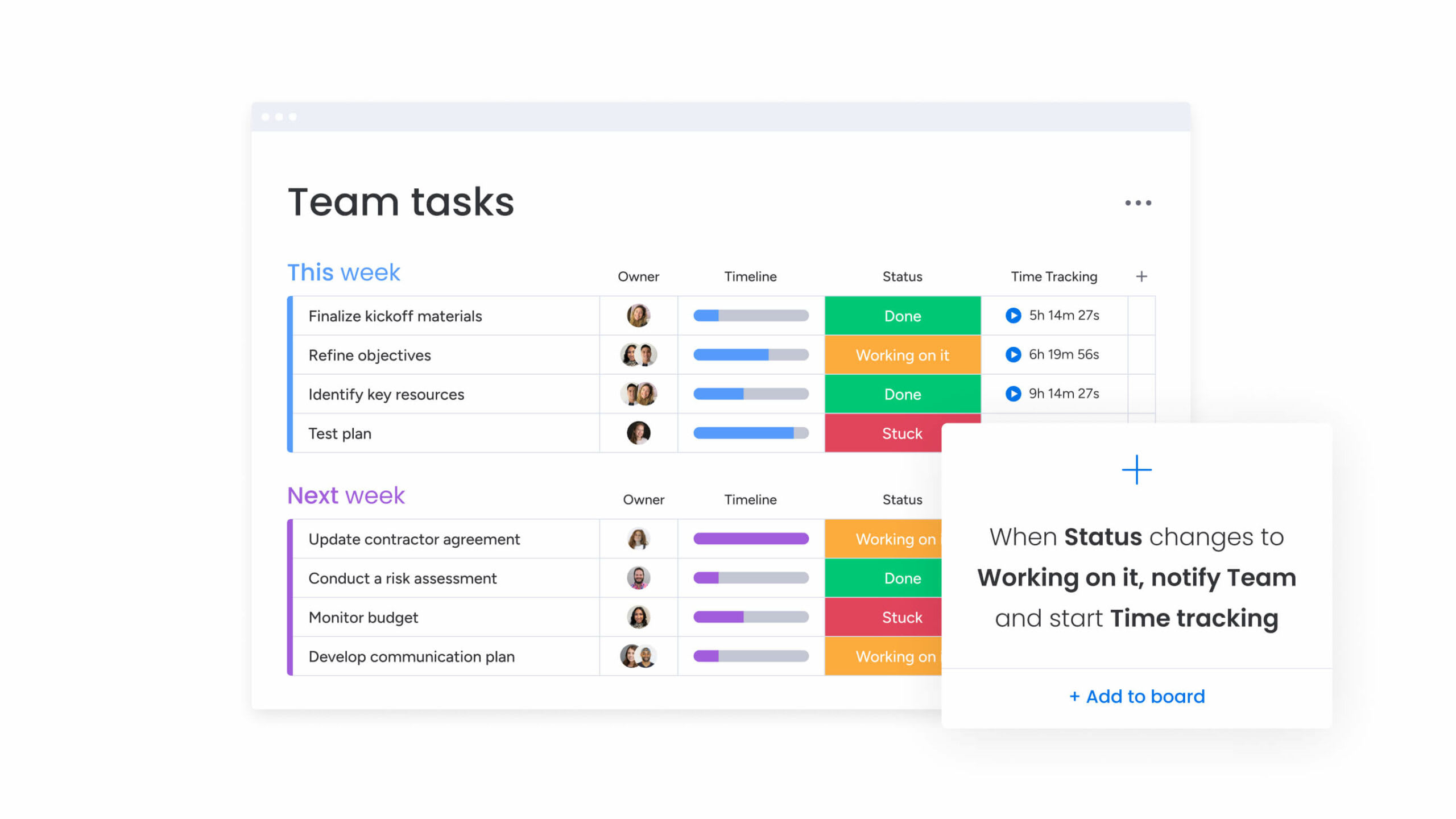
To avoid this, define clear responsibilities, establish communication flows, and ensure accountability across teams. A connected platform like monday work management allows you to build workflows where one team’s decision automatically triggers actions in another.
Step 5: select and implement talent management systems
Technology should support your strategy, not shape it. Start by identifying current gaps, then evaluate platforms based on functionality, integration, and ease of use. The right solution gives you visibility, supports collaboration, and helps you make informed decisions quickly.
That said, implementation matters just as much as selection. You need a clear rollout plan and strong change management to drive adoption. Platforms that are intuitive and flexible are more likely to be used across teams, which means your investment actually delivers value instead of adding complexity.
Step 6: build feedback and development programs
Employee development works best when it balances individual goals with business needs. Instead of relying on annual reviews, shift toward continuous feedback that keeps people engaged and improving over time. This approach builds momentum and helps you address issues early.
To create well rounded programs, combine different learning methods:
- Formal training: Structured programs that build specific competencies
- On the job learning: Practical experience that reinforces skills in real situations
- Peer learning: Knowledge sharing through collaboration and mentoring
Track how quickly employees build new skills and how often you promote from within. Over time, these insights help you refine your programs and focus on what delivers real impact.
Step 7: create dashboards for continuous monitoring
Without clear measurement, it is hard to know if your strategy is working. Dashboards give you real time visibility into key metrics, helping different teams make faster and better decisions. They also highlight issues early, so you can adjust before problems grow.
To stay on track, monitor metrics such as:
- Hiring speed: Time to hire across roles and departments
- Engagement levels: Employee satisfaction and feedback trends
- Internal mobility: Movement across roles and career progression
- Succession readiness: Preparedness for key leadership positions
Review these insights regularly and use them to refine your approach. As a result, your talent strategy becomes a continuous process instead of a one time plan.
Try monday work managementYour talent strategy only works when it reflects where your business is heading.
Advanced talent management strategies that drive results
Once your foundation is in place, you can start improving how you plan and respond to change. High performing organizations rely on data and technology to make faster, more accurate decisions. These strategies help you stay flexible while making better use of your resources.
AI-powered talent analytics for smart decisions
AI helps you move from reacting to workforce issues to anticipating them. By analyzing employee data, it can identify patterns that signal risk, highlight high potential employees, and recommend development actions early. Because of this, you can act before small issues turn into larger problems.
Here are a few practical ways organizations use AI:
- Resume screening: Matches skills to job requirements while reducing bias and speeding up hiring
- Performance insights: Flags potential turnover risks based on engagement trends
- Skills analysis: Compares current capabilities with market demands to guide training priorities
While these insights are powerful, human judgment still plays a key role. In the end, combining data with experience helps you make balanced and responsible decisions.
Internal talent marketplaces for skills mobility
Internal talent marketplaces give your employees a clear path to explore opportunities across the company based on their skills and interests. Instead of relying on informal networks, everyone gets equal visibility into available roles and projects. This makes career growth feel more accessible and less dependent on who you know.
Employees can discover stretch assignments, apply for internal rotations, or join cross functional initiatives that expand their experience. At the same time, your organization reduces reliance on external hiring and fills roles faster with people who already understand the business. As a result, teams stay productive and talent is used more effectively.
To make this work, you need transparent processes and clear criteria for selection. Success is typically tracked through internal fill rates and employee satisfaction, which show whether people feel the system is fair and worth engaging with.
Agile resource allocation across projects
Business priorities rarely stay fixed, so your approach to staffing should not either. Agile resource allocation allows you to move talent across projects based on current needs rather than rigid team structures. This creates flexibility and helps you respond quickly when priorities shift.
With real time visibility into who is available and what skills are needed, you can assign the right people to the right work without delays. This also helps balance workloads across teams, reducing burnout while improving overall efficiency.
A workload view adds another layer of clarity by showing how resources are distributed. Teams can quickly spot gaps or overloads, then adjust assignments to stay aligned with business goals.
Manage employees contractors and gig workers in one system
Modern teams rely on a mix of full time employees, contractors, and gig workers. Managing each group in separate systems often creates gaps in communication, visibility, and consistency. A unified approach keeps expectations clear while still allowing flexibility in how work gets done.
When all worker types are managed in one place, it becomes easier to understand capacity, track performance, and plan resources effectively. Consistent processes help ensure work is delivered to the same standard, regardless of contract type, while also supporting compliance requirements.
With shared visibility and clear workflows, teams stay aligned on responsibilities and priorities, reducing confusion and making collaboration more efficient.
Measuring talent management success with real-time data

To improve your talent strategy, you need more than intuition. Real time data gives you a clear view of what is working and where adjustments are needed. This allows you to make informed decisions that directly support business goals.
By focusing on the right metrics, you can evaluate performance across hiring, development, retention, and alignment with company objectives. Over time, this creates a feedback loop that helps you refine your approach and invest resources more wisely.
Essential talent management metrics and KPIs
The table below highlights key metrics that help you understand how your talent strategy is performing and where to focus your efforts.
| Metric | What it measures | Why it matters |
|---|---|---|
| Time-to-productivity | Duration from start date to full role effectiveness | Indicates quality of onboarding and hiring fit |
| Internal promotion rate | Percentage of open leadership roles filled by internal candidates | Validates development programs and succession planning |
| Skills gap closure rate | Progress in acquiring necessary future capabilities | Measures workforce readiness for strategic pivots |
| Quality of hire | Performance and retention of new hires over 12 months | Assesses long-term impact of acquisition strategies |
Building executive dashboards for workforce insights
Leaders need clear and actionable insights, not raw data. Executive dashboards bring together key metrics in a format that is easy to understand and act on. This helps decision makers stay informed without getting overwhelmed.
Dashboard components typically include:
- Talent pipeline health: Current and projected hiring needs.
- Succession readiness: Leadership bench strength and development progress.
- Workforce cost optimization: ROI on talent investments and programs.
Custom views allow different stakeholders to see data most relevant to their decisions. Real-time updates enable proactive management of emerging trends. With the right platform, teams can customize dashboards based on their needs with drag-and-drop widgets, viewing data the way they need to make sharper, faster decisions.
Using analytics to optimize talent investments
Analytics help you understand which talent initiatives deliver the best results. By examining data from training programs, recruitment channels, and retention efforts, you can identify what is worth scaling and what needs improvement.
For example, you might find that certain training programs directly improve sales performance. Because of this, you can justify increasing investment in those areas. At the same time, less effective initiatives can be refined or replaced.
Automated reporting makes this process easier by continuously providing insights without manual effort. This keeps your strategy aligned with real outcomes rather than assumptions.


“monday.com has been a life-changer. It gives us transparency, accountability, and a centralized place to manage projects across the globe".
Kendra Seier | Project Manager
“monday.com is the link that holds our business together — connecting our support office and stores with the visibility to move fast, stay consistent, and understand the impact on revenue.”
Duncan McHugh | Chief Operations OfficerAs organizations grow, managing talent becomes more complex, with disconnected systems, unclear ownership, and limited visibility slowing down execution. monday work management helps bring structure and clarity by connecting talent processes across teams and aligning them with business priorities.
- Disconnected workflows across teams: HR, finance, and operations often manage talent processes separately, making it difficult to coordinate hiring plans, workforce allocation, and development initiatives effectively.
- Limited visibility into workforce data: Leaders lack a single source of truth for skills, capacity, and talent pipelines, which makes it harder to plan ahead or respond quickly to changing business needs.
- Manual and inconsistent processes: Onboarding, performance tracking, and development programs are often handled through scattered tools or spreadsheets, leading to inefficiencies and lack of standardization.
- Slow response to talent risks: Without real time insights, organizations struggle to identify retention risks, succession gaps, or skill shortages before they affect operations.
- Challenges in scaling operations: As teams expand, inconsistent workflows and lack of automation create bottlenecks in hiring, internal mobility, and workforce planning.
By centralizing workflows, automating routine processes, and providing real time visibility, the powerful platform enables teams to operate with greater alignment, improve decision making, and scale talent strategies in a structured and efficient way.
Try monday work managementFrequently asked questions
What is the difference between talent management and talent acquisition?
Talent management covers the entire employee lifecycle, from hiring to development and retention. Talent acquisition focuses only on attracting and hiring new employees.
How long does it take to see results from a talent management strategy?
You may notice early improvements, such as faster hiring and higher engagement, within three to six months. Longer term outcomes like stronger succession planning and retention often take twelve to eighteen months.
What role does AI play in talent management?
AI supports better decisions by identifying patterns, predicting risks, and automating repetitive tasks. This includes areas such as resume screening, skills analysis, and personalized development recommendations.
How do you create a talent management strategy for hybrid teams?
Hybrid talent management requires flexible policies, digital collaboration platforms, and equitable access to development opportunities regardless of location. Performance management systems should focus on outcomes and deliverables rather than physical presence.
What are common mistakes in talent management strategy?
Key mistakes include treating talent management as solely an HR responsibility rather than a business strategy, focusing on short-term hiring needs instead of long-term planning, and failing to align talent objectives with broader business goals.
How often should you update your talent management strategy?
Annual strategic reviews with quarterly progress assessments are recommended. Rapidly changing industries may require more frequent updates to address evolving skill requirements and shifting market conditions.

 Get started