


A shared calendar app keeps your entire team’s schedule visible in one place, eliminating missed meetings, overlapping deadlines, and frantic “are you free at 2?” messages. When calendars live in silos, coordination breaks down fast, and small scheduling conflicts snowball into real productivity losses. For remote and hybrid teams, shared visibility isn’t a nice-to-have anymore. It’s a baseline expectation.
So which shared calendar app actually fits the way your team works? In this article, we’ll compare 7 of the top options for 2026, break down the features that matter most, and show you how to turn scheduling from a daily headache into something your team handles on autopilot. We’ll also look at how monday.com’s AI Work Platform connects scheduling directly to project work in one unified platform.
Key takeaways
- Shared calendar apps save real time: Teams using collaborative scheduling platforms recover hours otherwise lost to back-and-forth coordination and double-booked meetings.
- AI scheduling is now standard: The strongest apps in 2026 include smart scheduling, automatic conflict resolution, and natural-language calendar creation.
- Integration matters more than features: An app that syncs with your existing stack (Slack, Google Workspace, Outlook) drives adoption. One that doesn’t will collect dust.
- Free plans have real limits: Most apps offer free tiers, but team-size caps and missing integrations often push growing teams to paid plans quickly.
- monday.com connects scheduling to work: Unlike standalone calendars, it ties your team’s schedule directly to projects, deadlines, and resources in one place.
What features should a shared calendar app have?
Before you start comparing individual apps, it helps to know what separates a solid shared calendar from one that’ll frustrate your team within a week. Think of this as your evaluation framework. The features below should guide every comparison you make.
If you’re new to setting up shared calendars for your team, here’s a detailed guide on how to create a shared calendar that actually works.
Here are the features that matter most when choosing a calendar sharing app:
- Team visibility: Every team member should be able to see relevant schedules without asking around. Look for apps that let you set permissions by person or group, so people see what they need without exposing everything.
- Integration with existing platforms: Does it sync with Google Calendar, Outlook, and Apple Calendar? Does it connect to Slack, Microsoft Teams, Zoom, or your CRM? If your shareable calendar app doesn’t plug into the platforms your team already uses, adoption will stall.
- Real-time updates: Changes should appear instantly for all users. A sync delay of even a few minutes can cause double-bookings and missed meetings, which are exactly the problems you’re trying to solve — the category has shifted enough that a dedicated AI scheduling assistant is now the baseline teams expect, not a bonus feature.
- AI scheduling assistance: In 2026, the strongest apps suggest meeting times, resolve conflicts automatically, and create calendar entries from natural-language input. If an app doesn’t offer some level of AI scheduling, it’s already behind.
- Mobile access: Your team isn’t always at a desk. The mobile experience should be fully functional, not a stripped-down companion that forces people back to desktop for real scheduling work.
- Customization and color-coding: The ability to differentiate projects, teams, or event types visually keeps complex schedules scannable. Color-coding sounds minor, but it reduces cognitive load significantly when you’re managing multiple project timelines.
- Notifications and reminders: Customizable reminders and automated follow-ups keep everyone on track. The right notification settings prevent both information overload and missed commitments.
- Security and permissions: For enterprise teams, SSO, role-based access, and compliance certifications like SOC 2 and GDPR aren’t optional. Make sure the app matches your organization’s security requirements before rolling it out.
Not every app will check every box. So which ones come closest for your team? Let’s look at the top options side by side.
8 best shared calendar apps compared
The table below gives you a quick snapshot of each app’s strengths, pricing, and ideal use case. After the table, you’ll find a deeper review of each option to help you decide which fits your team’s workflow and budget.
| Platform | Best for | Free plan | Starting price | Standout feature |
|---|---|---|---|---|
| monday.com's AI Work Platform | Teams that need scheduling connected to project work | Yes (up to 2 seats) | $9/user/mo | Unified calendar and project management with AI scheduling |
| Google Calendar | Individuals and Google Workspace teams | Yes | Free (included in Workspace) | Deep Google ecosystem integration |
| Microsoft Outlook Calendar | Microsoft 365 organizations | Yes (limited) | Included in Microsoft 365 | Seamless Teams and Office integration |
| Zoho Calendar | Small businesses seeking an affordable suite | Yes | Free | Part of Zoho's integrated business suite |
| Teamup | Multi-group team visibility | No (basic plan) | $10/mo | Sub-calendar structure for complex teams |
| Calendly | Appointment booking and external scheduling | Yes | $10/user/mo | Booking page with availability rules |
| Doodle | Group meeting polls | Yes | $6.95/user/mo | Group availability polling |
| TimeTree | Small teams and personal use | Yes | $4.49/mo | Simple shared calendar for families and small teams |
1. monday.com’s AI Work Platform
Best for: Teams that need scheduling connected to project work
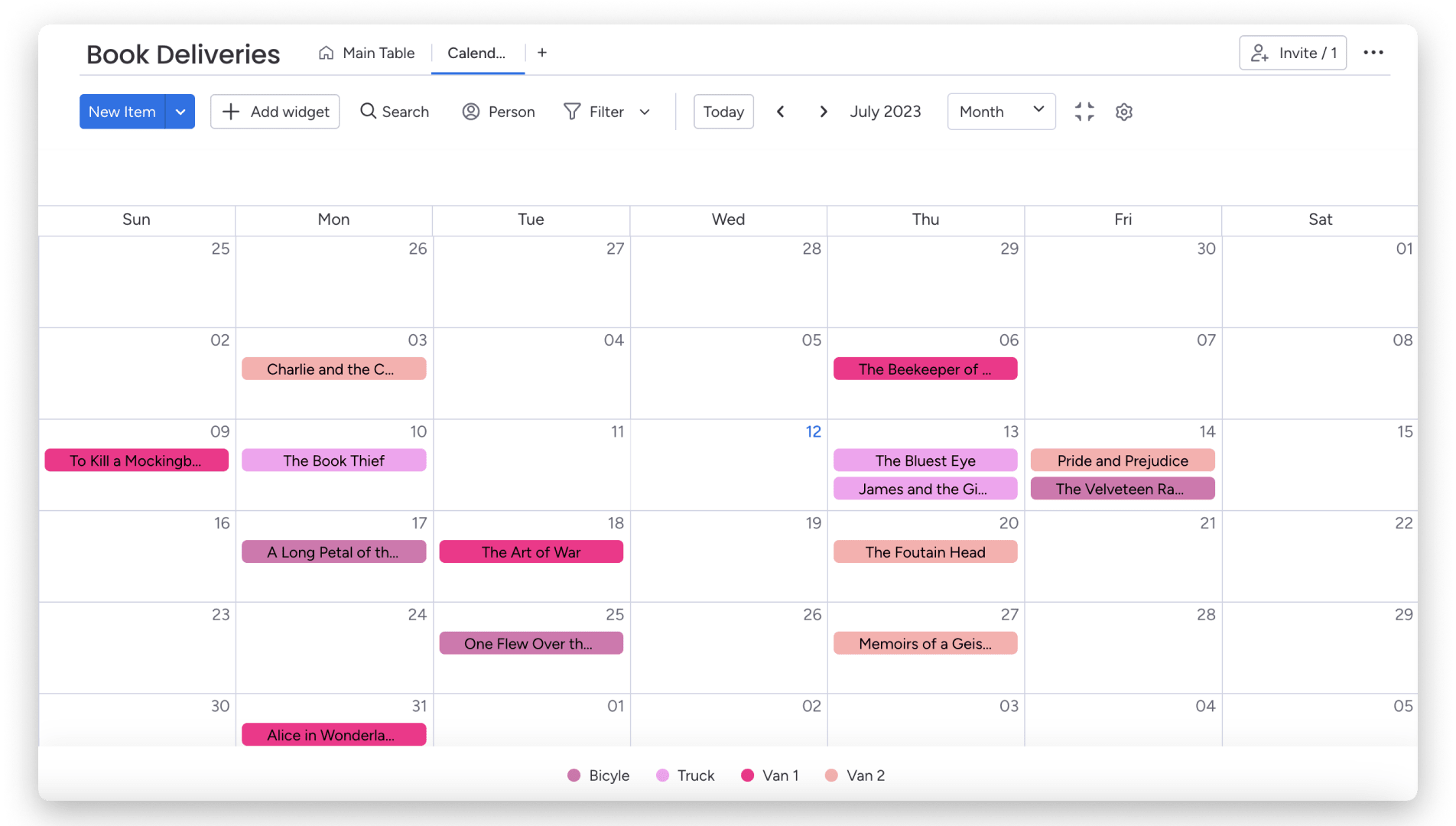
monday.com stands apart because it doesn’t just handle scheduling, it connects your team’s calendar directly to projects, deadlines, and deliverables in one unified platform. Instead of switching between a calendar app and project management tools, everything lives in the same place.
Key features
- Bidirectional sync with Google Calendar and Outlook keeps events current across platforms without manual updates
- 15+ view options (calendar, timeline, Gantt, Kanban, workload) let you visualize work the way your team thinks
- AI-powered scheduling with monday sidekick and 200+ integrations with tools like Slack, Microsoft Teams, and Zoom
Pricing
monday.com’s AI Work Platform offers a free plan for up to 2 seats. Paid plans start at $9/user/month (Basic).
Considerations
- According to a Forrester Total Economic Impact study, teams using the platform report 346% ROI and save an average of 3,564 hours annually
- Scheduling becomes part of your workflow, not a separate tool you have to remember to check
- Build custom scheduling apps with monday vibe, no code required
2. Google Calendar
Best for: Google Workspace teams

Google Calendar is the default choice for individuals and teams already embedded in the Google ecosystem. It’s free for anyone with a Gmail account, and for Google Workspace subscribers, it includes advanced features like appointment scheduling, shared team calendars, and meeting room booking.
Key features
- Time-blocking for focused work and side-by-side schedule comparisons with teammates
- Native integration with Google Meet, Gmail, and Google Drive
- Multiple calendars for different projects or teams with granular view-or-edit permissions
Pricing
Google Calendar is free for personal use. Google Workspace plans start at $7/user/month (Business Starter).
Considerations
- Lacks native project management features like dependencies, resource tracking, or workflow automations
- For teams that need their calendar connected to actual project work, it falls short
3. Microsoft Outlook Calendar
Best for: Microsoft 365 organizations
Outlook Calendar is the go-to for organizations running on Microsoft 365. It integrates seamlessly with Teams, Word, Excel, and the rest of the Microsoft suite, making it a natural fit for enterprise environments already invested in that ecosystem.
Key features
- Shared mailbox calendars and scheduling polls via FindTime
- Overlay multiple team calendars in a single view for better visibility
- Delegate access lets assistants manage executive schedules without workarounds
Pricing
Outlook Calendar is included with Microsoft 365 plans starting at $6/user/month (Business Basic).
Considerations
- Interface complexity can make the calendar feel cluttered, especially for teams that don’t use the rest of the Microsoft suite
- For non-Microsoft teams, the learning curve often isn’t worth the investment
4. Zoho Calendar
Best for: Small businesses seeking an affordable suite

Zoho Calendar shines as a budget-friendly choice for small businesses already using or considering the Zoho ecosystem. It integrates natively with Zoho Mail, Zoho CRM, Zoho Projects, and dozens of other Zoho apps, giving small teams a complete business suite without enterprise pricing.
Key features
- Group calendars, event reminders, and the ability to embed calendars on websites
- CalDAV syncing works with third-party calendar clients
- Genuinely functional free plan for small teams that don’t need advanced collaboration features
Pricing
Zoho Calendar is free as a standalone app. Zoho Workplace plans (which include Mail, Calendar, and other apps) start at $3/user/month.
Considerations
- Outside the Zoho ecosystem, the standalone calendar lacks the depth and polish of Google or Outlook
- Teams not using other Zoho products may find it underwhelming on its own
5. Teamup
Best for: Multi-group team visibility

Teamup is built for organizations that need to manage multiple groups, departments, or locations from a single calendar view without requiring individual user accounts. This makes it especially useful for schools, community organizations, and businesses with large rotating teams.
Key features
- Sub-calendar structure lets you create separate calendars for different groups and layer them in a single view with color-coded filtering
- Team members can access calendars via shareable links without creating accounts
- Simplifies onboarding for large or temporary teams significantly
Pricing
Teamup’s basic plan starts at $10/month. Paid plans unlock features like custom fields, images in events, and advanced access controls.
Considerations
- Less intuitive interface compared to consumer-focused calendars
- There’s a learning curve, and the design feels functional rather than polished
6. Calendly
Best for: Appointment booking and external scheduling

Calendly is the leader in appointment booking and inbound scheduling. If your team regularly schedules meetings with external contacts like prospects, clients, or candidates, Calendly makes the process frictionless with shareable booking pages and automated confirmations.
Key features
- Availability rules, round-robin scheduling across team members, and buffer times between meetings
- Integrations with Zoom, Google Meet, and Microsoft Teams
- Group events and webinar scheduling make it versatile for both 1:1 and large-format meetings
Pricing
Calendly offers a free plan for individuals with 1 event type. Paid plans start at $10/user/month (Standard).
Considerations
- Calendly is one-directional, designed for intake scheduling, not full team calendar management
- If you need a shared work calendar for internal coordination, Calendly alone won’t cover it
7. Doodle
Best for: Group meeting polls

Doodle is the go-to for finding a meeting time that works for everyone, especially when coordinating with people outside your organization. Its group polling feature lets participants vote on proposed times, making it ideal for cross-company meetings, committee scheduling, and event planning.
Key features
- 1:1 meeting pages, group polls, and booking pages with calendar integrations
- Dashboard for managing all your scheduled events in one place
- Automated reminders reduce no-shows for polled meetings
Pricing
Doodle’s free plan includes 1 booking page and basic polling. Paid plans start at $6.95/user/month (Pro).
Considerations
- Doodle isn’t a full calendar replacement, it’s a scheduling coordination layer
- Teams that need an always-on shared calendar will need to pair Doodle with another app for day-to-day scheduling
8. TimeTree
Best for: Small teams and personal use
TimeTree is designed for simplicity. It’s a shared calendar app built for small teams, families, and groups who need a straightforward way to keep everyone on the same page without the complexity of enterprise platforms.
Key features
- Shared calendars with in-app commenting and checklists attached to calendar events
- Mobile-first design that’s fast and intuitive
- Multiple shared calendars keep personal, family, and team schedules separate but accessible from one app
Pricing
TimeTree is free for personal use. TimeTree Premium starts at $4.49/month and adds features like Google Calendar sync and customizable themes.
Considerations
- Lacks project management capabilities, advanced permissions, and enterprise integrations
- Works well for lightweight coordination but isn’t built for managing deadlines, deliverables, or complex workflows
How shared calendar apps improve team productivity
How much of your team’s time disappears into scheduling back-and-forth each week? The answer is probably more than you’d expect.
Here’s how shared calendar apps improve team productivity:
- Eliminate scheduling back-and-forth: Instead of sending 5 messages to find a meeting slot, you check the shared view and book it. No more hopping between email, chat, and multiple calendar apps.
- Reduce context switching: Every platform switch pulls someone out of focused work and adds friction to simple coordination. Shared calendars keep scheduling in one place.
- Catch conflicts early: See scheduling conflicts days in advance instead of discovering them 10 minutes before a deadline. Fewer surprises means fewer reactive firefighting sessions.
- Protect deep work time: When your team calendar handles recurring events, automated reminders, and conflict detection, team members don’t need to spend mental energy managing schedules manually.
- Automate administrative tasks: Smart reminders, recurring event templates, and AI-driven scheduling suggestions remove the administrative burden entirely. Your team spends less time organizing when to work and more time actually working.
- Make coordination automatic: The right shared calendar app turns coordination from a daily manual effort into something that runs in the background. When your calendar connects directly to projects and deadlines, scheduling becomes even more seamless.
How monday.com handles shared scheduling
Most calendar apps handle scheduling. monday.com’s AI Work Platform connects scheduling to the work itself, so your team’s calendar isn’t a separate destination but a live view of what’s actually happening across projects, deadlines, and deliverables.
What does it actually take for a team to stay in sync across projects, locations, and time zones? It takes more than a shared calendar. It takes a platform where scheduling, project tracking, and collaboration happen in the same place.
AI-powered scheduling with monday sidekick
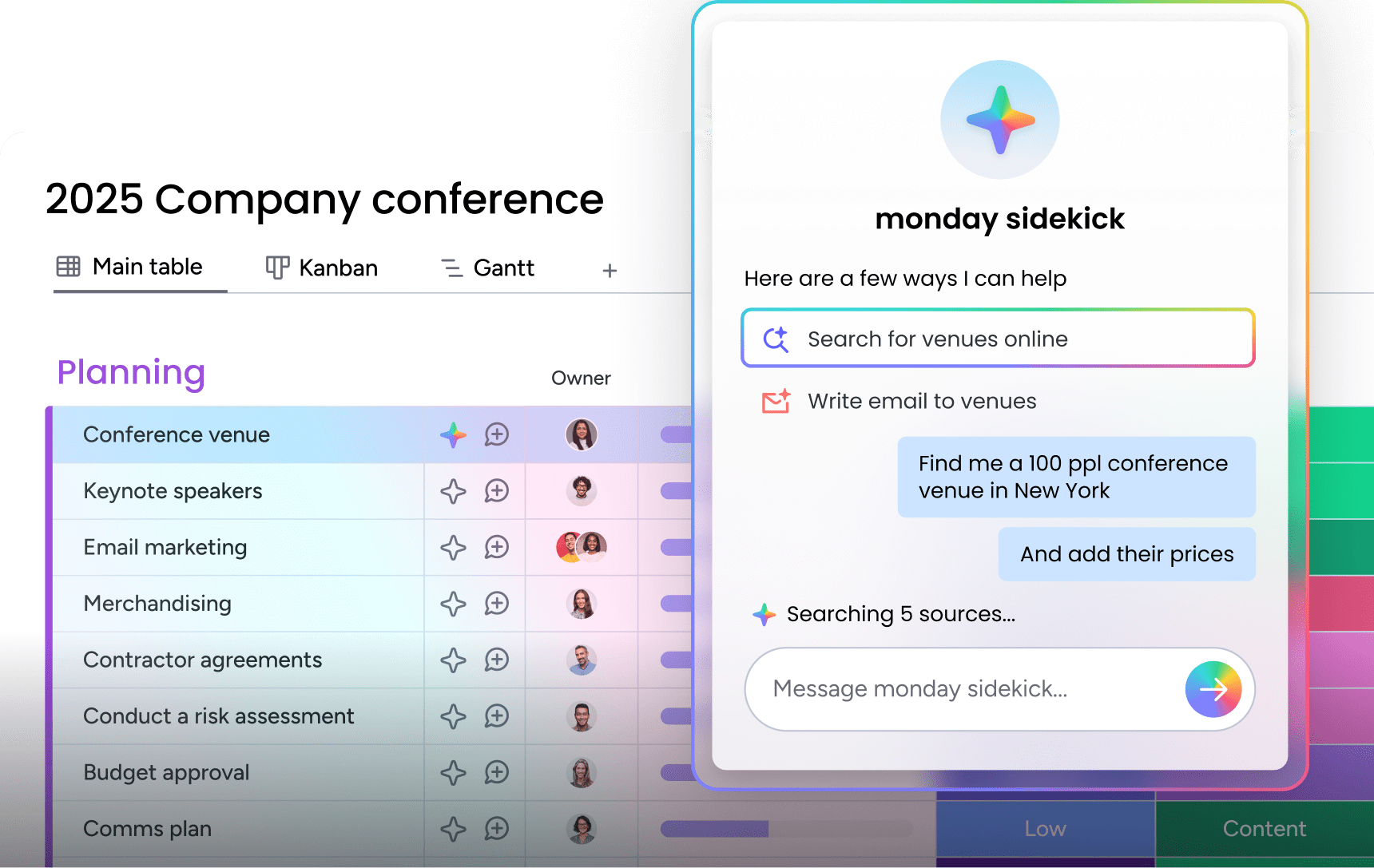
monday sidekick, the platform’s AI assistant, can draft schedules, surface conflicts, and handle meeting prep automatically. It analyzes your team’s workload and suggests optimal meeting times based on availability and project priorities. The AI learns from your team’s patterns to reduce scheduling friction over time. Instead of manually checking calendars and coordinating across time zones, sidekick handles the heavy lifting so your team can focus on actual work.
Unified calendar and project view
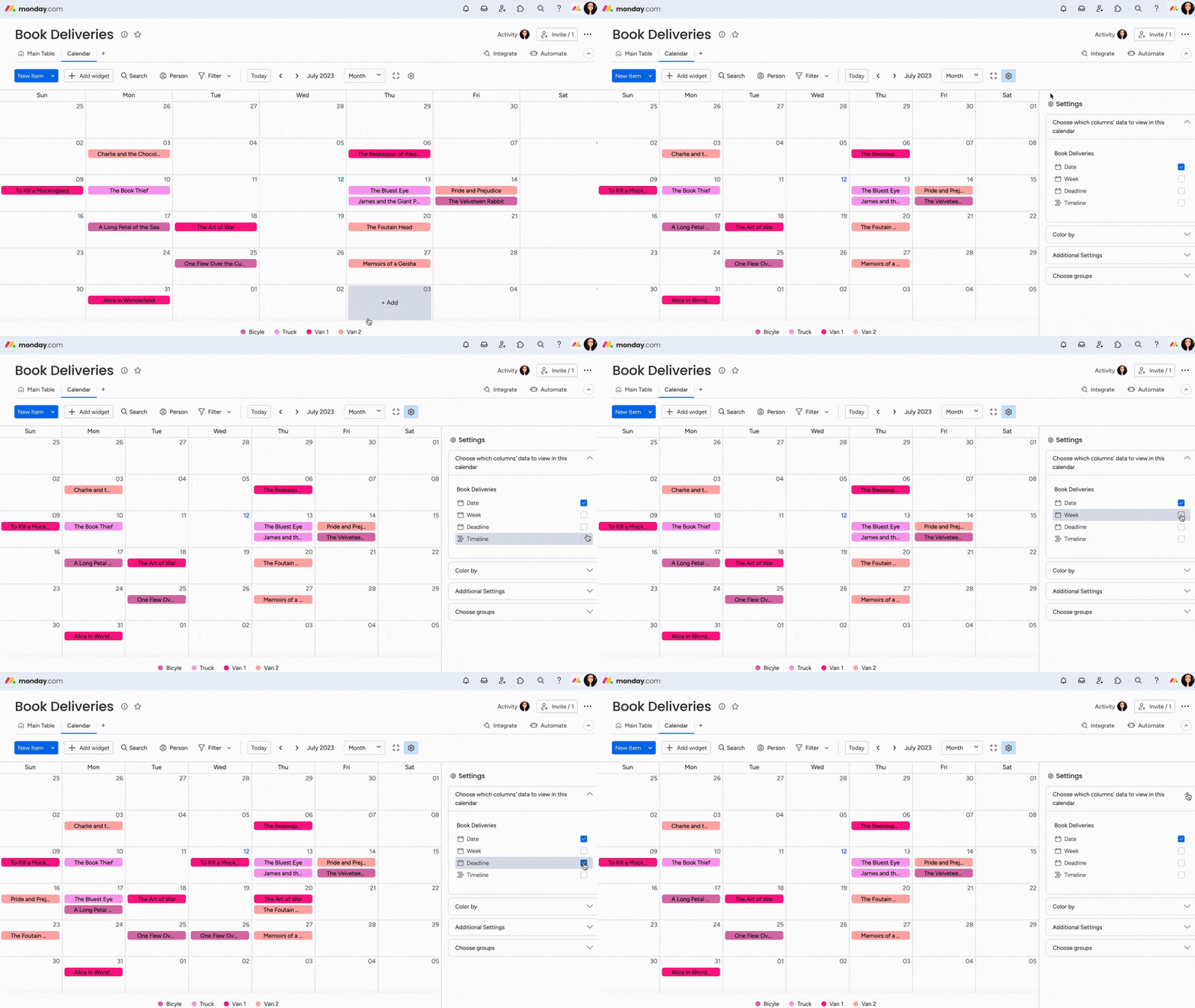
See your team’s full schedule alongside live project data without switching between platforms. Both Calendar View and Calendar Widget sit right next to your boards, dashboards, and timelines. This means deadlines, deliverables, and meetings exist in the same workspace, giving you complete visibility into how time connects to outcomes. When scheduling is integrated with project management, your team stops treating the calendar as a separate tool and starts seeing it as part of the workflow.
Custom scheduling apps with monday vibe

monday vibe lets you build custom scheduling apps tailored to your team’s workflow in minutes, without code. Whether you need a content calendar, event planning tracker, or resource scheduling system, you can create exactly what your team needs. The AI helps you design workflows, automate repetitive tasks, and connect scheduling to the rest of your work. Teams get the flexibility of custom-built tools without the development time or technical expertise.
Bidirectional calendar sync and 200+ integrations
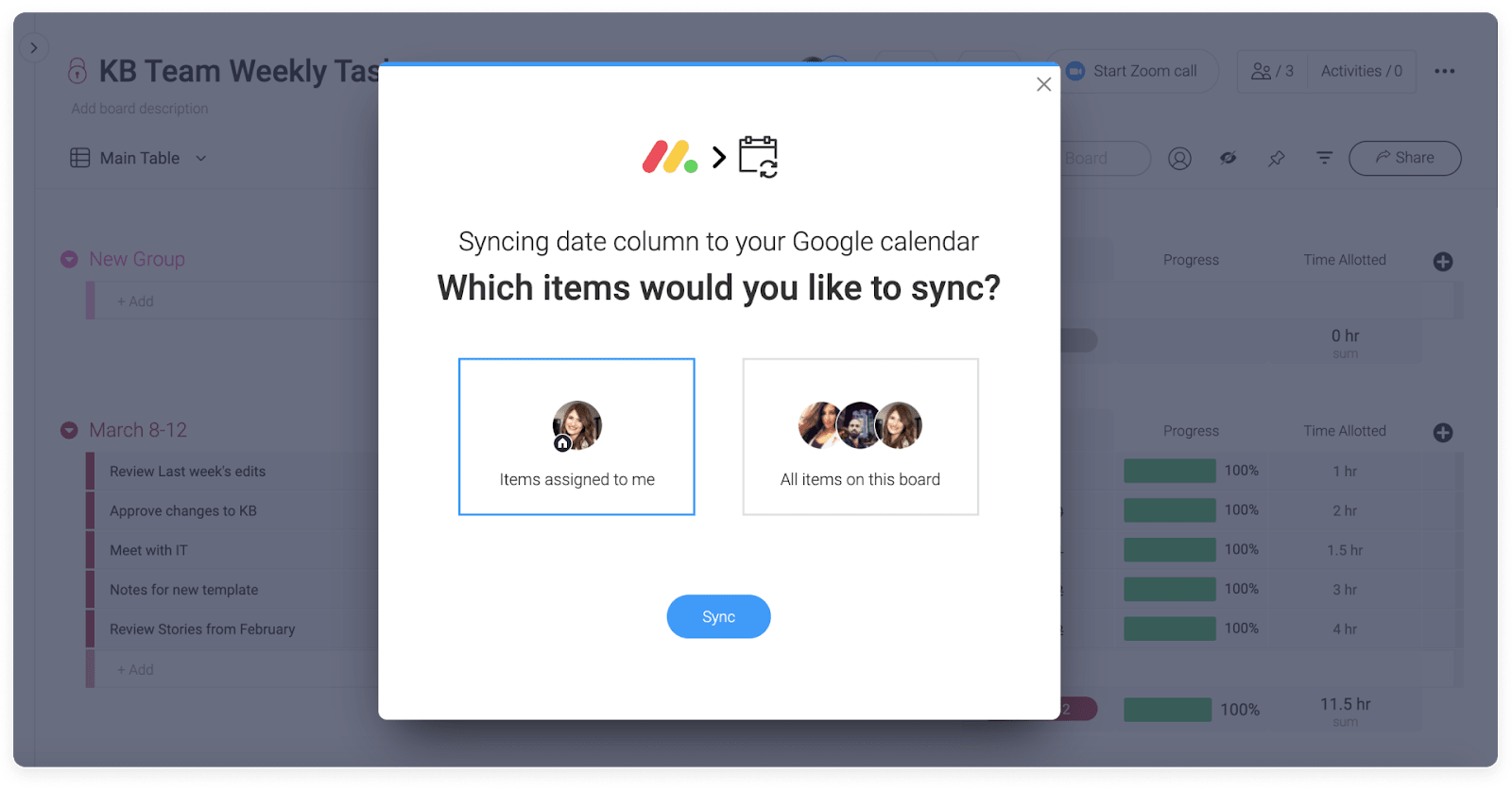 Your team’s existing Google or Outlook calendar syncs bidirectionally, so managing your projects and coordinating schedules happens in one place. monday.com also connects to Slack, Microsoft Teams, Gmail, Zoom, and 200+ other platforms your team already uses. This means scheduling updates flow automatically between systems, eliminating duplicate entries and version conflicts. Your calendar becomes part of a connected ecosystem instead of an isolated tool.
Need a head start? The Remote Work Calendar template gives distributed teams a ready-made scheduling framework they can customize in minutes. You can also explore work calendar templates for other team structures and use cases.

“monday.com has been a life-changer. It gives us transparency, accountability, and a centralized place to manage projects across the globe".
Kendra Seier | Project Manager
“monday.com is the link that holds our business together — connecting our support office and stores with the visibility to move fast, stay consistent, and understand the impact on revenue.”
Duncan McHugh | Chief Operations OfficerSync your team's schedule with the right shared calendar app
The right shared calendar app depends on your team size, existing tech stack, and whether you need standalone scheduling or one that connects directly to projects. Google Calendar works well for Google Workspace teams, Outlook Calendar fits Microsoft 365 organizations, and Zoho Calendar offers budget-friendly value for small businesses. For teams that need scheduling tied to actual project execution, monday.com brings calendars, deadlines, and collaboration together in one place.
The right app turns scheduling from a time drain into a productivity advantage. Ready to see the difference? Get started with monday.com’s AI Work Platform and connect your team’s schedule to the work that matters.
Get startedFAQs
What is a shared calendar app?
A shared calendar app is a scheduling platform that lets multiple people view, create, and manage events on the same calendar. Teams, families, and organizations use shared calendar apps to coordinate schedules, avoid conflicts, and keep everyone aligned, whether they're in the same office or working across time zones.
What is the best shared calendar app for teams?
The best shared calendar app depends on how your team works. Google Calendar is a strong choice for Google Workspace teams. Outlook Calendar fits Microsoft 365 organizations. For teams that want scheduling connected to project management, deadlines, and resources, monday.com combines calendar functionality with full work management in one platform.
Is Google Calendar good for shared team use?
Yes, Google Calendar works well for small to mid-sized teams already using Google Workspace. You can create shared calendars, set view-or-edit permissions, and overlay multiple team schedules. However, it lacks built-in project management features like dependencies, resource tracking, and workflow automations, so larger teams may need a more integrated platform.
Can you share a calendar across different platforms?
Yes, several apps support cross-platform calendar sharing between Google, Outlook, and Apple Calendar. monday.com's AI Work Platform offers bidirectional sync with both Google Calendar and Outlook, so events stay current regardless of which calendar your team members prefer. Many standalone apps also support CalDAV or iCal syncing for broader compatibility.
How do shared calendar apps improve productivity?
Shared calendar apps improve productivity by eliminating scheduling back-and-forth and reducing context switching. Research from the APA shows that switching between workflows can reduce productive time by up to 40%. A shared team calendar gives everyone real-time visibility into availability, cutting down on redundant messages and double-bookings.
Are there free shared calendar apps?
Yes, several shared calendar apps offer functional free plans. Google Calendaris free for anyone with a Gmail account. Zoho Calendar is free as a standalone app. monday.com AI Work Platform offers a free plan for up to 2 seats. Keep in mind that free tiers typically limit team size, integrations, or advanced features, so growing teams often move to paid plans as their needs expand.
What is the difference between a shared calendar and a scheduling app?
A shared calendar is a persistent, always-on view of your team's events and availability. A scheduling app (like Calendly or Doodle) focuses on finding available time slots for specific meetings. Many teams use both: a shared calendar for ongoing team coordination and a scheduling app for booking meetings with external contacts.

 Get started