

Someone excels in their role, earns a promotion, and suddenly the work feels very different. Conversations carry more weight, decisions affect more people, and success depends less on individual output and more on how well others perform. Without the right support, even high performers can struggle to adapt, and teams feel the impact quickly.
Leadership capability does not develop automatically with seniority. It grows through experience, guidance, and opportunities to apply new skills in real situations. When development is left to chance, organizations often see inconsistent results, uneven team performance, and gaps in future leadership readiness.
A well-designed leadership development program creates a clearer path from potential to performance. This article explores how to identify emerging leaders, embed learning into everyday work, and build programs that strengthen decision-making, collaboration, and long-term impact.
Key takeaways
- Shift from training to continuous development: Effective leadership programs move beyond one-time workshops and instead embed learning into daily work through ongoing, experience-based growth.
- Prioritize work-integrated learning models: The 70-20-10 approach ensures leaders build skills through real responsibilities, mentorship, and targeted education that directly applies to their roles.
- Design programs around measurable behavior change: Success should be tracked in skill progression, internal promotions, and business impact rather than simple completion rates.
- Develop leaders at all levels, not just management: High-potential individual contributors, new managers, and technical specialists all benefit from structured leadership development tailored to their stage.
- Centralize and connect development to execution: Platforms like monday work management help align learning activities with real business goals, making leadership growth visible, trackable, and tied to outcomes.
What is a leadership development program?

A leadership development program helps you build strong leaders across your organization through continuous learning, real work experience, and measurable progress. Instead of relying on one-time sessions, it blends structured learning with hands-on practice and mentorship to develop the skills your business actually needs.
The focus is not just on theory. Instead, leadership growth becomes part of everyday work, so your team develops naturally while getting results, rather than stepping away from their responsibilities to learn.
Traditional training vs development programs
Leadership development takes a very different approach compared to traditional training. While training prepares employees for their current roles, development prepares them for what comes next.
The table below highlights how the two approaches differ:
| Aspect | Traditional training | Leadership development program |
|---|---|---|
| Duration | 1-2 day workshops | Multi-month journeys |
| Approach | Passive content consumption | Active, work-integrated learning |
| Focus | Generic management theory | Organization-specific challenges |
| Measurement | Completion rates | Behavior change and business impact |
| Integration | Separate from daily work | Embedded in actual workflows |
This shift reflects how quickly skills become outdated and why leaders today need to adapt continuously, especially in hybrid and fast moving environments.
The evolution to continuous development
Leadership development has shifted from occasional training sessions to ongoing, real-time learning that supports leaders as challenges arise. Instead of stepping away from work to build skills, development now happens alongside everyday responsibilities.
Short, focused learning helps leaders apply new ideas immediately, making progress more practical and easier to sustain. When development goals are connected to real projects, growth becomes visible and directly linked to business outcomes.
Platforms like monday work management support this approach by connecting leadership development activities to the work leaders manage every day.
Work-integrated learning models
Work integrated learning connects development directly to real responsibilities. A widely used approach is the 70-20-10 model, where most learning comes from hands on experience, supported by mentorship and formal education.
Here are the key elements that make this effective:
- Stretch assignments: Leaders take on responsibilities beyond their current skill level, such as leading cross functional initiatives or managing high stakes projects.
- Cross functional rotations: Employees temporarily move across departments, which helps them understand the business more broadly and break down silos.
- Shadow boards: Emerging leaders work on real strategic challenges while gaining exposure to executive level thinking.
Because of this structure, organizations often see stronger results within one to two years.
Try monday work managementLeadership development takes a very different approach compared to traditional training. While training prepares employees for their current roles, development prepares them for what comes next.
Why your organization needs leadership development programs
Leadership development boosts performance and reduces succession risk. Organizations with strong programs move faster, keep talent longer, and adapt better to change.
Research even shows that companies applying comprehensive leadership development approaches can achieve 95% success rates in organizational redesign initiatives: the investment pays off in how well organizations handle change and seize opportunities.
Building strong leadership pipelines
When you actively develop future leaders, you create a clear path for succession. This ensures you always have capable people ready to step into critical roles.
Instead of scrambling to hire externally, you can rely on internal talent who already understand your business. This strengthens your bench and reduces risk.
Accelerating organizational transformation
Leaders play a central role in driving change. Without the right skills, even the best strategies can fail during execution.
Development programs help leaders handle uncertainty, communicate clearly, and guide teams through transitions. As a result, adoption improves and resistance decreases.
Enhancing team collaboration and performance
Strong leaders influence how teams work together. When leaders build trust, manage conflict well, and create psychological safety, teams perform better.
In addition, these programs help leaders align different teams and improve communication across departments, which reduces friction and improves outcomes.
Achieving measurable business impact
Leadership development directly affects key business metrics such as productivity, engagement, and retention. Strong leadership often leads to higher revenue per employee and better project outcomes.
Because of this, organizations that prioritize leadership see improvements not just in people development but in overall performance.
Key components of a successful leadership development program
Effective programs are built as connected systems, where each element supports the others. Below are the core components that make these programs work:
- Skills based assessment framework: Start by identifying gaps through feedback, assessments, and performance reviews so development targets real needs.
- Personalized development pathways: Tailor learning journeys based on individual goals, roles, and skill gaps, combining learning modules with real work experience.
- Experiential learning opportunities: Assign real business challenges so leaders apply what they learn while delivering actual results.
- Mentoring and coaching systems: Pair leaders with mentors for guidance and coaches for skill development and accountability.
- Cross functional projects: Give leaders opportunities outside their expertise to build broader business understanding and stronger networks.
- Continuous feedback mechanisms: Replace annual reviews with frequent, actionable feedback to support ongoing improvement.
- Performance integration: Connect development goals with performance metrics so leadership growth becomes part of business success.
Who should participate in leadership development programs?
Leadership is not tied to a title, it shows up in how people act every day. That is why strong programs include people at different stages of their careers, not just those at the top. When you focus only on executives, you miss out on building flexibility across the organization. As a result, you leave a lot of potential untapped.
High-potential individual contributors
These are the people who consistently exceed expectations and adapt quickly to new challenges. If you invest in them early, you shape strong leadership habits before poor ones take hold. That early support often delivers the best long term return.
Development for this group focuses on three core areas:
- Self leadership: Building personal effectiveness while strengthening emotional awareness and control.
- Influence without authority: Learning how to drive outcomes through collaboration, even without formal power.
- Project management: Gaining the skills needed to step confidently into first time leadership roles.
New and emerging managers
Moving from individual contributor to manager is a significant shift. Success is no longer defined by personal output, but by how effectively others perform. Many first-time managers find it challenging to delegate, guide former peers, and balance team performance with broader responsibilities.
Support at this stage helps build confidence and establish strong leadership habits early. Programs for this group typically focus on practical skills alongside the mindset shift needed to lead effectively:
- Management mechanics: Learning how to give feedback, run meetings, and understand basic employment guidelines.
- Psychological shifts: Adjusting from doing the work to guiding others to deliver results.
- Team dynamics: Building trust while managing performance across different personalities and working styles.
Senior leaders and executives
At senior levels, success depends less on technical skill and more on perspective and judgment. Leaders here need to navigate complexity while shaping direction and culture. At the same time, they must stay connected to both internal and external environments.
Programs often include more strategic elements:
- Peer coaching groups: Sharing experiences and learning alongside other senior leaders facing similar challenges.
- Industry exposure: Staying informed and avoiding the isolation that can come with senior roles.
- Strategic thinking: Strengthening long term planning and decision making in uncertain conditions.
Technical leaders and specialists
Technical leaders are often promoted because of their expertise, not their leadership ability. However, leading others requires a different set of skills. That is why tailored development tracks are important for this group.
Key focus areas include:
- Communication: Explaining complex ideas in a way that business stakeholders can understand and act on.
- Team leadership: Guiding highly skilled teams without falling into micromanagement.
- Strategic alignment: Linking technical decisions directly to business goals and outcomes.
These are the people who consistently exceed expectations and adapt quickly to new challenges. If you invest in them early, you shape strong leadership habits before poor ones take hold. That early support often delivers the best long term return.
5 steps to build your leadership development program

A strong leadership development program does not happen by chance. It takes a clear understanding of the capabilities your organization needs and a practical way to help people build them over time.
The steps below provide a straightforward path from assessing current leadership strengths to creating structured opportunities for growth that support real responsibilities.
Step 1: conduct leadership capability assessment
Start by getting a clear picture of where your organization stands today. This includes reviewing performance data, gathering feedback, and understanding how people collaborate. When you look closely, patterns begin to emerge.
Key activities include:
- Performance data analysis: Reviewing promotion rates, engagement scores, and turnover trends.
- 360 degree feedback: Collecting input from peers, managers, and direct reports.
- Organizational network mapping: Identifying how influence and collaboration actually flow across teams.
Step 2: define essential leadership competencies
Next, you need to clearly define what good leadership looks like in your organization. This should reflect your values and your business goals. Without this clarity, development efforts can feel scattered.
For example, a company focused on innovation may prioritize adaptability and experimentation. On the other hand, a regulated industry may focus more on consistency and compliance. Either way, competencies should be clear and measurable.
Step 3: design your program architecture
The structure of your program shapes how effective it will be. You need to decide how long it runs, how learning is delivered, and who participates. At the same time, it should fit into people’s daily work without overwhelming them.
Consider these elements:
- Program duration: Typically 6-18 months for deeper development.
- Learning mix: Combining in person sessions, digital learning, and hands on experience.
- Cohort design: Bringing together people from different roles to encourage shared learning.
Step 4: secure executive sponsorship and resources
Strong leadership support makes a big difference in how seriously a program is taken. When senior leaders are involved, participation and accountability increase. That is why securing buy in early is important.
You should connect the program to business outcomes, such as performance or retention. In addition, leaders should actively take part, model behaviors, and support participants throughout the journey.
Step 5: create your implementation timeline
Rolling out everything at once can create confusion and fatigue. Instead, phased implementation helps you test, learn, and improve along the way. Starting with a smaller pilot group is often a smart move.
Your plan should include clear timelines and communication. Participants and their managers need to understand expectations, time commitment, and the value they will gain.
Start by getting a clear picture of where your organization stands today. This includes reviewing performance data, gathering feedback, and understanding how people collaborate.
Effective delivery methods for leadership development
Leadership development today goes beyond traditional classroom sessions. It blends digital learning with real world experiences, making it easier to fit into busy schedules. At the same time, human connection remains a key part of the process.
Implementing the 70-20-10 model
This model works best when each part is intentionally designed and connected. It ensures that learning is not limited to theory but reinforced through real work and relationships.
Here is how it breaks down:
- 70% experience: Learning through real work, such as stretch assignments and job rotations, tracked within modern platforms such as monday work management.
- 20% exposure: Gaining insights through mentoring circles and peer learning communities.
- 10% education: Building knowledge through focused workshops and short learning modules.
When you bring these elements together, development becomes part of everyday work rather than a separate activity. As a result, people learn faster and apply what they learn more effectively.
AI-powered personalization
Personalization is becoming a key part of modern development programs. Instead of giving everyone the same content, you can tailor learning paths based on role, goals, and skill gaps. This makes development feel relevant rather than generic.
For instance, a leader preparing for performance reviews might receive timely resources on difficult conversations. Because of this, learning happens exactly when it is needed, which increases both engagement and impact.
Virtual and hybrid program design
Virtual learning is now a standard part of leadership development. However, simply moving sessions online is not enough. You need to design experiences that keep people actively involved.
Breaking sessions into shorter segments helps maintain focus. At the same time, using breakout discussions, shared workspaces, and reflection exercises keeps participants engaged. This approach respects how people actually work in remote and hybrid environments.
Building learning ecosystems
Instead of relying on one platform, strong programs connect multiple systems into a single experience. Learning, performance, and collaboration should all work together rather than sit in separate spaces.
For example, when leaders manage projects in monday work management, they can receive prompts or resources linked to real challenges. This creates a natural connection between work and development, making learning part of everyday activity rather than an extra task.
Try monday work managementMeasuring leadership development program success

Measuring success is what turns leadership development from a nice idea into a serious business investment. It helps you understand what is working, what needs fixing, and whether the effort is actually paying off. Without that clarity, it becomes difficult to justify continued funding or improve future programs.
Instead of only tracking attendance or completion, you need to look deeper. The real question is not what participants finished, but what they actually changed in how they lead.
Establishing program KPIs
To begin with, you need clear KPIs in place before the program even starts. These indicators help you monitor progress while also showing long term outcomes. A strong mix of early signals and outcome based metrics gives you a full picture.
Here are the key areas you should track:
- Leading indicators: Engagement rates, development plan completion, and participant Net Promoter Scores give early signals of program effectiveness and involvement.
- Lagging indicators: Promotion rates of graduates, retention of high potential employees, and internal fill rates for critical roles reflect long term impact.
Tracking skill progression
Skill development does not happen overnight, so you need ways to measure change over time. Pre and post assessments help establish a baseline and track improvement. In addition, 360 degree feedback gives a more rounded view of behavioral shifts.
At the same time, simulated exercises and real project work show whether skills are actually being applied. This combination gives you tangible proof of growth, not just theoretical learning.
Linking development to business results
Ultimately, leadership development should show up in business performance. That means connecting program participation to real outcomes like sales growth, employee engagement, or operational efficiency.
For example, you can compare teams led by program participants with those that are not. While it is difficult to isolate every variable, consistent patterns still provide strong evidence of value. Over time, these comparisons help build a clear business case.
Calculating program ROI
To understand financial impact, you need to compare program costs with measurable benefits. These benefits often include reduced turnover, lower hiring costs, and productivity improvements.
When you present this data clearly, leadership development shifts from being seen as an expense to a contributor to business value. That shift makes it easier to secure ongoing investment and executive support.
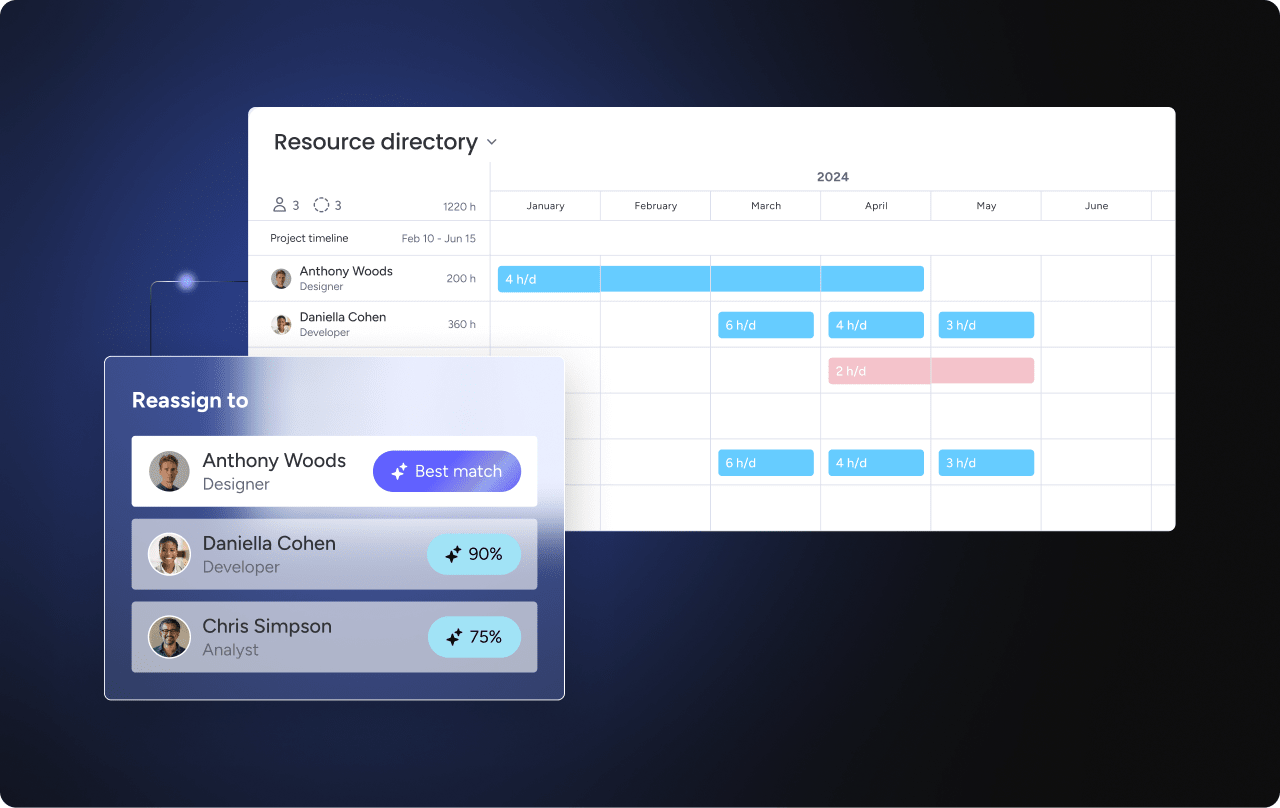
Leveraging AI in leadership development programs
AI is changing how leadership development is delivered and measured. It allows you to scale support, personalize learning, and gain insights that were previously hard to capture. At the same time, it complements human judgment rather than replacing it.
AI-driven skills assessment
AI can analyze data such as communication patterns and project outcomes to identify leadership behaviors. This creates a more objective and continuous assessment compared to self reported surveys.
In addition, it helps uncover hidden strengths and blind spots. As a result, you can design more targeted development plans for each individual.
Automated learning recommendations
Recommendation engines suggest content based on immediate needs and learning preferences. For instance, if engagement drops, the system can recommend resources to improve team motivation.
This keeps learning relevant and aligned with daily work. It also reduces the effort required to find the right materials at the right time.
Intelligent coaching solutions
AI powered coaching provides support whenever it is needed. Leaders can practice difficult conversations, structure feedback, or reflect on key moments.
Because of this, human coaches can focus on more complex and strategic discussions. Meanwhile, day to day guidance becomes more accessible.
Predictive analytics for talent planning
Predictive models help you anticipate future leadership readiness. They can highlight employees who may leave or identify those likely to succeed in new roles.
This insight supports better succession planning and smarter resource allocation. Over time, it strengthens your leadership pipeline.
Try monday work managementOvercoming common leadership development challenges
Even well-designed programs face friction. Anticipating hurdles allows organizations to build resilience into program structure and maintain momentum when obstacles arise.
1. Working with limited resources
When budgets and time are tight, you need to be intentional about how you use resources. Smart organizations focus on approaches that deliver high impact without heavy costs.
Here are a few practical methods:
- Internal leaders as teachers: This approach builds capability while reinforcing company culture at no additional cost.
- Peer coaching circles: These reduce reliance on external coaches while still providing valuable support and accountability.
- Platform efficiency: monday work management reduces administrative effort by automating tracking and communication, allowing smaller teams to manage complex programs.
2. Driving program engagement
Engagement often drops when development feels like extra work. That is why content must solve real problems leaders are facing right now.
When learning helps save time or reduce stress, participation increases naturally. In addition, elements like gamification, visible executive involvement, and clear career benefits help sustain interest.
3. Maintaining long-term momentum
Initial excitement tends to fade over time. To keep the program alive, development needs to become part of everyday work.
You can embed it into regular check ins and quarterly reviews. At the same time, alumni networks and refreshed content keep participants connected and engaged.
4. Scaling across distributed teams
Expanding programs across regions introduces challenges around consistency and cultural context. Core principles should remain stable, while allowing flexibility to reflect local needs and working styles.
Digital platforms help maintain a shared structure while giving regional teams the freedom to adapt delivery. This keeps leadership development consistent in direction while still relevant to different locations.

“monday.com has been a life-changer. It gives us transparency, accountability, and a centralized place to manage projects across the globe".
Kendra Seier | Project Manager
“monday.com is the link that holds our business together — connecting our support office and stores with the visibility to move fast, stay consistent, and understand the impact on revenue.”
Duncan McHugh | Chief Operations OfficerUsing monday work management to support leadership development
Organizations often struggle to connect leadership development with day to day execution. Programs can feel disconnected from real work, progress is hard to track, and leaders lack visibility into how development efforts impact business outcomes. This creates gaps in alignment, slows decision making, and reduces the overall effectiveness of leadership initiatives.
monday work management helps address these challenges by bringing development and execution into a shared system where work, learning, and performance are connected.
- Lack of visibility into development progress: Leaders and HR teams cannot easily track how individuals are progressing or where support is needed, which limits timely intervention.
- Disconnected learning and daily work: Development activities often sit outside core workflows, making it difficult for leaders to apply new skills in real business situations.
- Unclear alignment with business goals: Leadership development efforts are not consistently tied to strategic priorities, reducing their impact on performance and outcomes.
- Inefficient coordination and communication: Managing cohorts, mentors, and feedback across tools creates confusion and increases administrative workload.
- Limited accountability for growth: Without structured tracking and follow up, development plans lose momentum and become secondary to operational demands.
By centralizing workflows, aligning development with strategic goals, and making progress visible in real time, teams gain stronger coordination, clearer priorities, and more consistent leadership impact without adding unnecessary complexity.
Try monday work managementFrequently asked questions
How long does it take to implement a leadership development program?
Most organizations need three to six months to roll out a full leadership development program. However, the exact timeline depends on company size, internal readiness, and how detailed the program is.
What budget should organizations allocate for leadership development?
In most cases, organizations invest between 2% and 5% of total payroll into leadership development. This usually covers learning materials, platform access, external experts, and the time employees spend in the program.
Can leadership development programs succeed with remote teams?
Yes, remote programs can be highly effective when designed with intention. The key is to combine real time collaboration with flexible, self paced learning so participants stay engaged throughout.
How do you measure the ROI of leadership development programs?
You can measure ROI by comparing program costs with outcomes such as improved retention, higher internal promotions, and stronger team performance. In addition, tracking early indicators helps you understand progress before long term results appear.
What leadership competencies should programs focus on developing?
Most programs focus on strategic thinking, emotional intelligence, change management, and inclusive decision making. That said, priorities should still reflect your industry and overall business direction.
How do you keep participants engaged throughout the program?
Engagement improves when learning connects directly to real work challenges and career goals. Because of this, participants stay involved when they can immediately apply what they learn and see how it supports their growth.

 Get started