

Your best performers are leaving for leadership roles at other companies. Meanwhile, the managers you’re promoting struggle with strategic thinking, cross-functional collaboration, and the complex decisions that drive business results. This talent drain costs more than recruiting fees, it creates leadership gaps that slow execution and cap your growth potential.
A leadership program solves this by helping you identify, develop, and keep your best people. Instead of hoping leaders emerge naturally or hiring from outside, you can build the exact capabilities your business needs. The bonus? Better succession planning and stronger engagement.
Here are six steps to design, launch, and scale a leadership program that actually works. You’ll learn how to assess readiness, design experiences that change behavior, and prove ROI with metrics that matter. This guide also explores how a flexible work management platform can coordinate these programs, keeping participants engaged while giving directors full visibility across cohorts and learning paths.
Key takeaways
- Start with a leadership readiness assessment: Map current capabilities against future needs to identify specific skill gaps rather than applying generic solutions to your organization’s unique challenges.
- Design scalable frameworks using the 70-20-10 model: Structure development around experiential learning (70%), social learning (20%), and formal training (10%) to maximize real-world impact and skill retention.
- Break down silos with cross-functional experiences: Create stretch assignments and mentoring networks across departments to build leaders who understand the entire value chain, not just their vertical.
- Automate program coordination with monday work management: Streamline participant selection, learning journeys, and progress tracking through centralized dashboards and AI-powered insights that eliminate administrative friction.
- Measure ROI through business impact metrics: Track behavior change via 360 feedback and calculate financial returns by connecting development costs to tangible improvements like retention rates and productivity gains.
How to assess your organization's leadership readiness
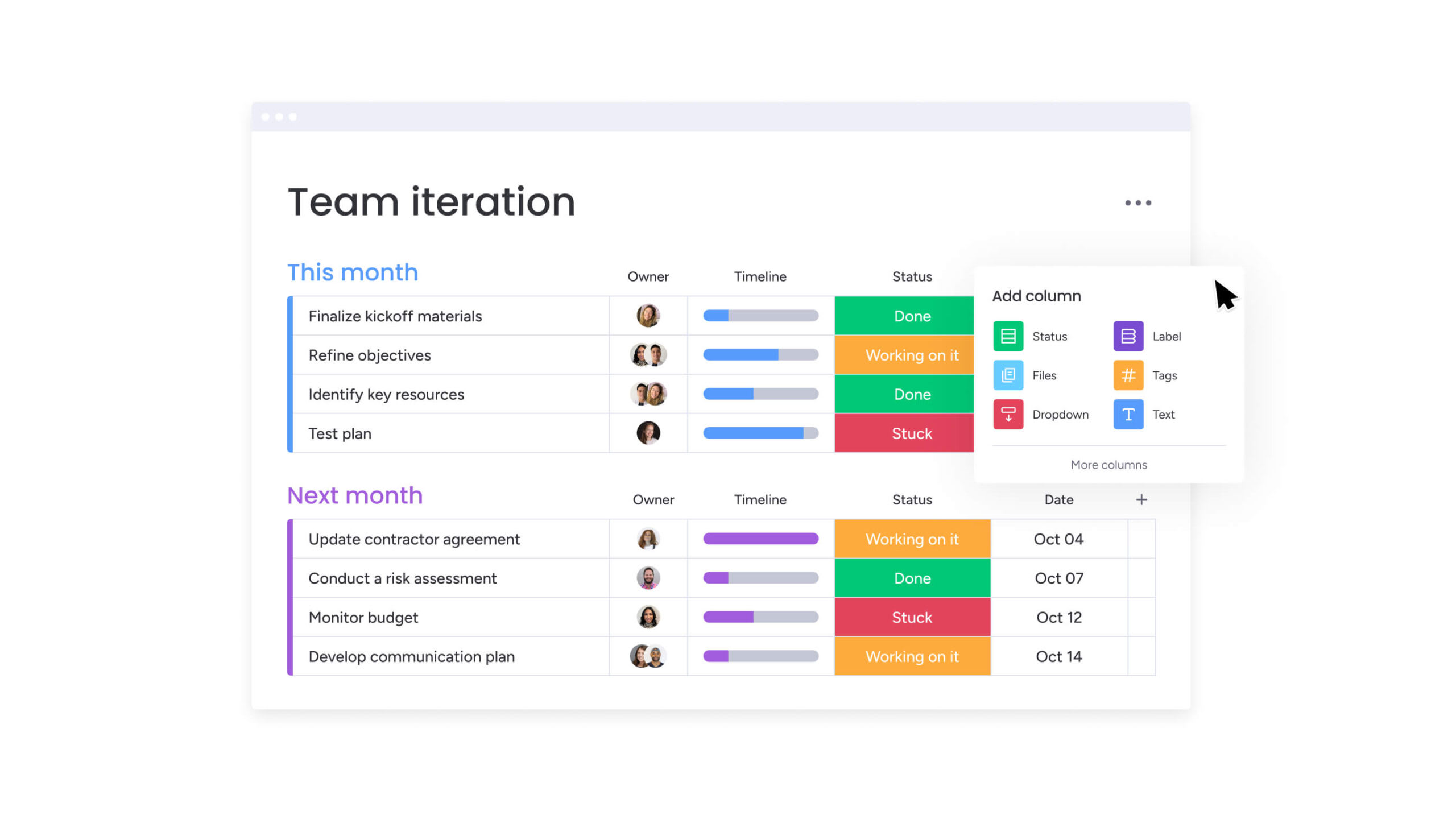
Before you design a leadership program, you need a clear picture of where your organization stands today. Without that baseline, it’s easy to invest in development that feels useful but doesn’t actually close the gaps that matter.
Assessing leadership readiness helps you understand which capabilities are already strong, where your pipeline is at risk, and what skills will be critical as your organization grows. It turns broad goals like “develop better leaders” into specific, actionable priorities.
The steps below break that process down so you can move from assumptions to data, and from general development plans to targeted, high-impact programs.
Step 1: map current leadership capabilities against future needs
A capability map inventories the skills you have now versus what you’ll need in 3-5 years. This goes beyond subjective performance reviews to give you objective data for more strategic decisions.
Here are the core competencies to map: each one matters for leadership effectiveness and should align with where you’re headed:
- Strategic foresight: The ability to anticipate market shifts and adjust operational plans before disruptions occur.
- Digital fluency: The capacity to leverage data analytics, automation, and AI to drive operational efficiency.
- Change orchestration: The skill to guide teams through structural transformations while maintaining productivity and morale.
- Cross-functional influence: The ability to drive projects forward across departmental boundaries without direct authority.
For a bit more context, consider a mid-sized logistics firm that mapped their leadership landscape and discovered high operational efficiency scores but nearly absent strategic foresight in middle management.
This insight shifted their program focus from process training to scenario planning.
Step 2: identify critical gaps in your leadership pipeline
Pipeline analysis shows the risk of leadership vacancies and where your succession planning falls short. This review of bench strength at every level catches vulnerabilities before they hurt operations.
The pipeline gap analysis follows a structured approach to uncover succession risks:
- Analyze retirement and attrition risks: Review demographic data and turnover trends to predict upcoming vacancies in critical roles over the next 24 months.
- Evaluate bench strength: Determine the readiness ratio for key positions, specifically how many candidates could step into a role immediately versus those needing 1-2 years of development.
- Identify high-potential talent: Use performance data and behavioral indicators to identify individual contributors who demonstrate leadership aptitude distinct from technical proficiency.
Automated tracking keeps tabs on pipeline health and flags departments where succession coverage gets too thin.
Step 3: define success metrics that connect to business outcomes
Strong leadership programs don’t measure success by attendance or feedback scores. What matters is whether behavior changes and whether those changes translate into better business results.
Setting baseline metrics early makes it possible to track progress over time, demonstrate ROI, and show leadership where the program is actually making an impact. Without that clarity, it’s difficult to justify continued investment or improve what isn’t working.
To get a complete picture, metrics should cover both immediate behavior changes and longer-term business outcomes. The table below outlines the key categories to track and how they connect back to performance:
| Metric type | Description | Example KPI |
|---|---|---|
| Behavioral | Observable changes in leadership actions and decision-making | 15% increase in cross-departmental project initiations |
| Performance | Improvements in team output and operational efficiency | 10% reduction in project delivery cycle time |
| Business impact | Direct correlation to financial or strategic goals | 20% higher retention rate among high-performing teams |
| Leading indicators | Predictive metrics that signal future leadership health | 90% of critical roles have at least one ready-now successor |
Assessing leadership readiness helps you understand which capabilities are already strong, where your pipeline is at risk, and what skills will be critical as your organization grows. It turns broad goals like “develop better leaders” into specific, actionable priorities.
How to design a leadership development framework that scales
Leadership development only works when it’s consistent, repeatable, and built into how your organization operates. One-off training sessions might create short-term momentum, but they rarely lead to lasting behavior change.
A scalable framework creates structure without slowing teams down. It ensures development happens continuously across roles, teams, and locations, while still adapting to different needs and growth stages.
Building that kind of system comes down to a few core decisions: how people learn, how the program is managed, and which capabilities your leaders need to succeed going forward.
Select the right learning mix for maximum impact
The 70-20-10 model is the backbone of adult learning. It prioritizes hands-on experience over classroom time. This mix reflects how professionals actually learn:
- Experiential learning (70%): Learning occurs through on-the-job experiences, stretch assignments, and real-time problem-solving.
- Social learning (20%): Development happens through feedback, coaching, mentoring, and peer knowledge sharing.
- Formal learning (10%): Knowledge acquisition takes place through structured courses, workshops, and digital modules.
Putting this model into practice means turning each component into real, day-to-day experiences. One manufacturing company did this by assigning shadow roles on major capital projects (experiential), pairing new managers with senior directors (social), and introducing micro-learning modules on financial literacy (formal).
Workflow platforms help coordinate these moving parts, ensuring participants progress through each stage without administrative friction while keeping the project team aligned.
Build governance structure for program accountability
Even the best-designed leadership programs lose momentum without clear ownership. Governance ensures the program stays aligned with business priorities, remains properly resourced, and continues to deliver measurable impact over time.
A strong governance model defines who is responsible for strategy, execution, and ongoing improvement. It also creates clear checkpoints so progress is reviewed regularly and issues are addressed before they slow the program down.
The structure doesn’t need to be complex, but it does need to be explicit. The table below outlines the core roles involved in running a leadership program and how each contributes to its success:
| Role | Primary responsibility | Time commitment | Key deliverable |
|---|---|---|---|
| Executive sponsor | Champions program and secures budget/resources | Quarterly reviews | Strategic alignment and budget approval |
| Program director | Oversees design, execution, and measurement | Full-time/significant | Program roadmap and ROI reporting |
| Steering committee | Reviews progress and resolves cross-functional blockers | Monthly meetings | Policy decisions and resource allocation |
| Talent managers | Facilitates individual development plans and coaching | Weekly engagement | Participant progress tracking |
Keeping these roles aligned requires shared visibility into progress, resources, and outcomes. Teams using monday work management centralize program tracking in one place, making it easier for stakeholders to stay connected, review performance, and make informed decisions without relying on scattered updates.
Create leadership competencies for human-AI collaboration
How ready are your leaders to manage hybrid workflows where people and AI work together? This shift demands new skills around coordination and ethical oversight:
- AI literacy: Understanding the capabilities, limitations, and optimal applications for AI within specific industry contexts.
- Algorithmic management: The ability to interpret AI-generated insights and combine them with human judgment for balanced decision-making.
- Ethical oversight: Frameworks for evaluating fairness, privacy implications, and reliability of AI-driven outputs.
For another real-world application example, leaders at a fintech firm practice these skills by managing digital colleagues, AI agents responsible for data processing, intervening only when complex judgment is required.
Try monday work managementDeveloping training programs for modern challenges
Leadership training only works when it reflects the reality leaders are operating in. Today’s environment is fast-moving, unpredictable, and often high-pressure, which means development programs need to go beyond theory and prepare people for real decision-making.
Instead of relying on generic frameworks, focus on building skills that help leaders navigate uncertainty, adapt quickly, and stay effective under pressure.
Integrate stagility into your leadership curriculum
Stagility blends long-term strategy with short-term agility. It lets leaders keep their long-term vision while adjusting tactics when things change. Building stagility means practicing how to balance these competing demands:
- Scenario planning: Participants navigate what-if simulations (supply chain collapse, competitor merger) to practice adjusting tactics without abandoning strategic goals.
- Information asymmetry drills: Leaders practice making high-stakes decisions with only 60% of desired information, building comfort with ambiguity.
- Pivot workshops: Teams receive a strategic objective then face sudden constraints (budget cuts, timeline compression) to test adaptive capacity.
Design experiences that build decision-making under tension
Crisis simulations prepare leaders for the mental and operational pressure of real emergencies. These experiences build stress tolerance so leaders can think clearly when real crises hit.
- Simulation design: Mimics real operational failures (data breach, PR crisis) with evolving inputs and time constraints to create authentic pressure.
- Stress inoculation: The intensity of simulations increases gradually, allowing participants to build resilience and recognize their own stress responses.
- Structured debriefs: Follow every simulation, focusing on the decision-making process rather than just outcomes.
Digital platforms enable remote simulations where distributed teams can practice crisis response together.
Incorporate real-world business projects
Leadership development becomes far more effective when it’s tied to real work. Action learning uses active business initiatives as the training ground, so participants build skills while contributing to meaningful outcomes.
Instead of separating learning from execution, this approach connects the two. Leaders apply new capabilities in real time, and the organization benefits from the results of those projects.
Different types of projects develop different leadership skills while driving measurable business value. The table below shows how common project types support both development and performance:
| Project type | Learning potential | Business value |
|---|---|---|
| Process optimization | Develops analytical skills and change management | Direct cost savings or efficiency gains |
| New market entry | Builds strategic foresight and risk assessment | Revenue growth and market expansion |
| Cultural transformation | Enhances influence and communication skills | Improved employee retention and engagement |
| Product innovation | Fosters creativity and cross-functional collaboration | New revenue streams and competitive advantage |
Tracking these initiatives in a centralized platform makes it easier to connect learning progress with project outcomes, giving leaders clear visibility into both development and business impact.
Stagility blends long-term strategy with short-term agility. It lets leaders keep their long-term vision while adjusting tactics when things change.
How to build cross-functional development experiences
Strong leaders need to understand how different parts of the business connect, not just their own function. Without that broader view, collaboration breaks down and decisions lose impact.
Cross-functional development experiences build this perspective by exposing leaders to new teams, challenges, and ways of working.
The approaches below show how to design these experiences so they strengthen collaboration and develop more well-rounded leaders.
Structure 70-20-10 learning pathways
Implementing the 70-20-10 model means structuring hands-on and social learning as carefully as formal training. Each part has a purpose:
- 70% experiential: Assignments are curated, not random. A marketing leader might lead a product sprint to understand development constraints.
- 20% social: Peer coaching circles bring together leaders from finance, operations, and sales to discuss shared challenges.
- 10% formal: Targeted micro-credentials provide theoretical frameworks supporting experiential and social components.
Workflow platforms coordinate these paths and make sure stretch assignments get logged, tracked, and evaluated.
Create stretch assignments that close experience gaps
Stretch assignments are controlled risks where leaders take on roles just beyond their current skills to accelerate growth. Match assignments to specific skill gaps:
- Turnaround assignments: Tasking leaders with fixing failing processes or teams develops resilience and problem-solving.
- Scale assignments: Giving responsibility for rapidly growing functions tests ability to manage complexity and volume.
- Start-up assignments: Building new teams or functions from scratch develops entrepreneurial thinking and vision setting.
- Cross-border assignments: Leading international or multi-regional projects builds cultural intelligence and global perspective.
For example, a regional sales manager might lead a cross-functional task force on customer retention, requiring them to influence product and support teams without direct authority.
Establish mentoring networks across departments
Mentoring becomes far more effective when it extends beyond a single team or function. Cross-functional pairings give leaders exposure to different perspectives, helping them build broader business understanding while strengthening relationships across the organization.
Different mentoring structures serve different purposes, from knowledge transfer to skill development and collaboration. The table below outlines the most common approaches and the value each brings:
| Mentoring type | Structure | Organizational benefit |
|---|---|---|
| Traditional | Senior leader + junior manager | Knowledge transfer and succession preparation |
| Reverse mentoring | Junior digital native + senior executive | Digital upskilling for leadership and cultural insight |
| Peer mentoring | Manager (Dept A) + manager (Dept B) | Silo-busting and lateral problem solving |
| Group mentoring | Senior executive + cohort of 5 | Scalable access to leadership thinking and culture |
Coordinating these relationships at scale requires clear visibility into sessions, progress, and outcomes. Centralized platforms help manage scheduling, track engagement, and keep shared resources accessible without adding administrative overhead.
Try monday work managementLaunch your leadership development process with smart automation

Launching a leadership program is where coordination gets complex fast. The key is building automation into the process from the start, so participant selection, onboarding, and learning journeys stay connected. Here’s how to structure that rollout without creating unnecessary overhead.
Streamline participant selection and onboarding
Data-driven selection cuts bias and gets the right people into the program. Automation creates a smooth onboarding that feels professional from day one.
The automated selection process follows these key stages:
- Data aggregation: Automated workflows pull performance ratings, tenure data, and manager nominations into a central review board.
- Criteria matching: Algorithms score candidates against weighted criteria (consistent high performance, retention risk) to surface a shortlist.
- Onboarding sequence: Once selected, automated workflows trigger welcome emails, schedule kickoff meetings, assign pre-work, and grant access to learning platforms.
- Stakeholder notification: Managers and mentors receive automated briefings on their roles and timelines.
Teams using intelligent platforms like monday work management use AI to spot high-potential candidates by analyzing performance reviews and project outcomes. Workflow automation handles the onboarding sequence.
Automate learning journey coordination
Manually managing timelines for over 50 participants is prone to error and administrative overload. Automation manages the journey so no one falls through the cracks. Automation manages the journey so no one falls through the cracks:
- Milestone triggers: Module completion automatically unlocks next assignments or schedules mentor debriefs.
- Resource allocation: The system automatically assigns coaches based on availability and matches participants to workshop cohorts.
- Nudge campaigns: Automated reminders reach participants who haven’t logged in for seven days or have upcoming deadlines.
For a 6-month program, automation handles content release, 360 review scheduling, and capstone submissions automatically.
Step 3: Enable self-service program management
Transparency gives participants control over their development. Self-service portals cut down on admin questions and boost engagement by giving participants control.
- Personal dashboards: Show participants their progress bar, upcoming deadlines, feedback scores, and badge achievements in real time.
- Resource libraries: Provide centralized, searchable repositories for templates, case studies, and recording archives on demand.
- Status visibility: Allows managers to view direct reports’ progress without emailing HR, enabling more timely and relevant coaching conversations.
How to measure leadership development program effectiveness

If you can’t measure it, you can’t improve it. Strong leadership programs go beyond feedback forms and track real changes in behavior, performance, and business results. Here’s how to build a measurement approach that shows impact and keeps your program evolving.
Track real-time engagement and progress
Engagement signals whether the program’s working. Monitoring it in real time lets you fix problems before people check out.
- Platform activity: Frequency of logins and interaction with learning materials indicates intrinsic motivation.
- Assignment velocity: The rate at which participants complete activities versus deadlines signals capacity and commitment.
- Social contribution: Peer feedback volume and forum participation reflects learning community health.
Real-time tracking helped one company spot a module causing a 40% drop-off, so they redesigned it on the fly.
Monitor behavior change through 360 feedback
The real signal of progress shows up in day-to-day interactions. 360-degree feedback captures how leadership behaviors are experienced from every angle, giving you a more complete view of what’s actually changing.
Use the table below to understand how each perspective contributes to a well-rounded assessment:
| Feedback source | Perspective | Insight value |
|---|---|---|
| Direct reports | Down | Impact on team morale and support |
| Peers | Across | Collaboration, influence, and silo-busting |
| Manager | Up | Strategic alignment and execution reliability |
| Self | Internal | Self-awareness and confidence gaps |
Each group highlights a different dimension of leadership performance, from team impact to strategic alignment. Comparing feedback across these perspectives helps surface blind spots and confirm where growth is sticking.
Digital platforms streamline this process by collecting feedback confidentially and tracking changes over time, making it easier to measure progress from before to after the program..
Calculate ROI with business impact metrics
Connecting development to dollars means building a clear case with evidence. ROI calculation compares total program costs to the dollar value of improvements.
- Cost capture: Sums facilitation costs, platform fees, participant time (wages), and materials.
- Benefit attribution: Isolates the program’s impact on metrics like retention (recruiting savings), productivity (revenue per employee), or internal promotion rates (executive search fee savings).
- ROI formula: ((Total Benefit – Total Cost) / Total Cost) x 100.
If a program costs $100,000 and reduces executive turnover by five people (saving $500,000 in replacement costs), the ROI is 400%.
Scaling leadership development across your enterprise
Expanding a leadership program from a pilot to a company-wide initiative takes deliberate structure. The goal is to keep leadership expectations consistent across the organization while giving teams the flexibility to adapt to local needs.
- Establish standardized core competencies: Define the essential skills and behaviors every leader should demonstrate to create a shared foundation
- Allow regional adaptation: Keep the core consistent, while enabling regions to tailor delivery, case studies, and context to what’s most relevant
- Develop internal facilitators: Build internal capability through train-the-trainer programs to scale delivery without over-relying on external partners
One organization scaled from 50 to 500 participants by digitizing its core curriculum and enabling regional leaders to run local cohorts, maintaining consistency while supporting growth.
Try monday work management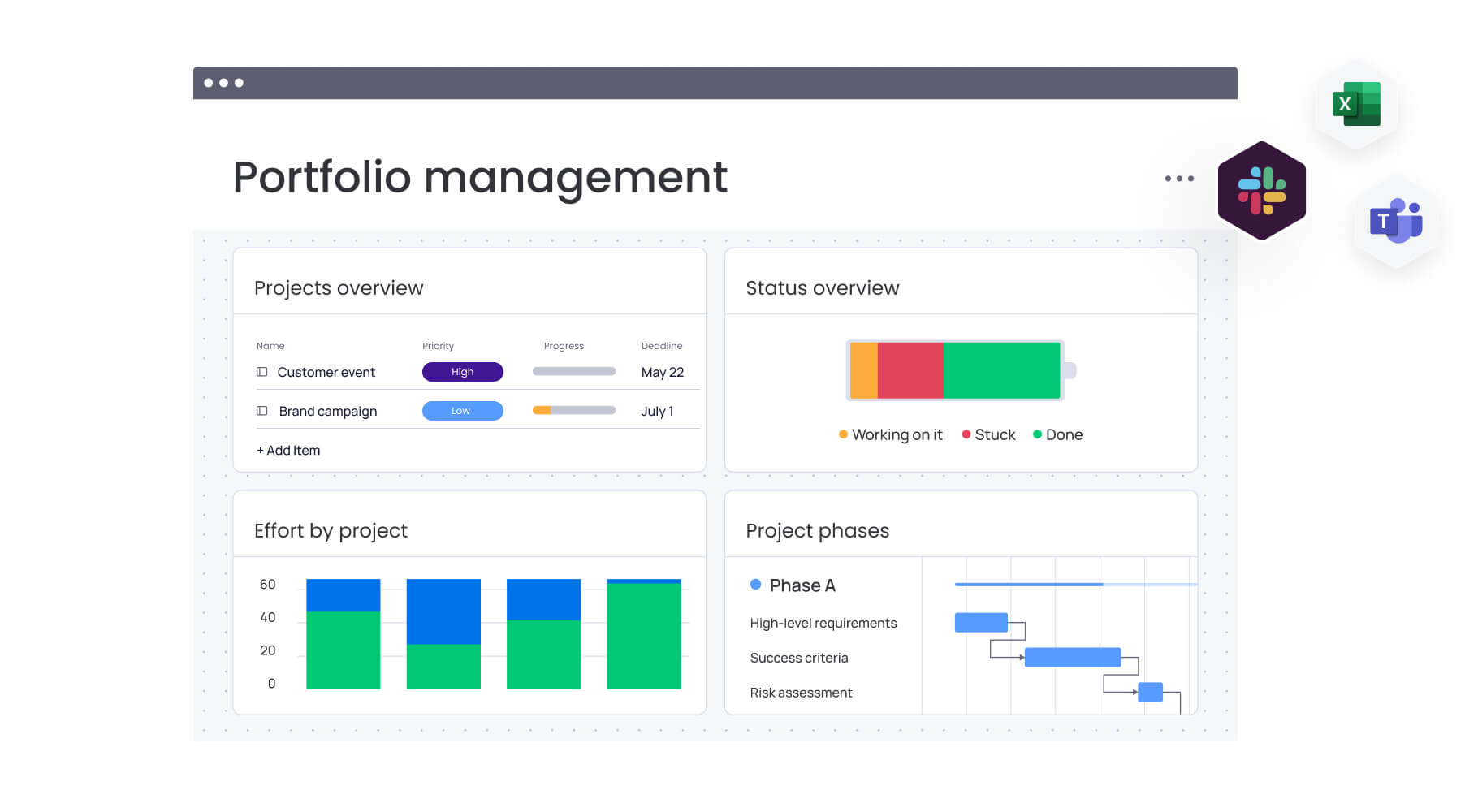
Optimize your leadership program with monday work management
Leadership programs are tough to coordinate. You’re juggling people, content, schedules, and data. Traditional methods using disconnected spreadsheets, siloed LMS platforms, and email threads create a fragmented experience and kill visibility.
monday work management unifies these elements into the powerful and intelligent monday Work OS, providing the structure needed to execute high-impact development programs at scale.
Program coordination capabilities
Portfolio management through high-level dashboards provides visibility across multiple leadership cohorts, tracking dependencies between curriculum design, facilitator availability, and participant progress. Resource management using Workload views further allows program directors to allocate trainers, coaches, and mentors effectively, preventing burnout and ensuring every cohort has adequate support.
Finally, goal alignment connects individual development plans to broader organizational strategy, allowing stakeholders to see how leadership growth contributes to company objectives.
Workflow automation for leadership development
Automated learning pathways trigger the next stage of a participant’s journey, sending materials, scheduling sessions, or unlocking assignments based on status changes or date milestones. Communication coordination through automated notifications reminds stakeholders of feedback deadlines, alerts mentors to scheduled check-ins, and keeps participants engaged without manual follow-up.
Progress tracking with real-time dashboards also visualizes participant advancement, flagging those falling behind so intervention can happen immediately.
AI-powered program enhancement
As programs grow, it gets harder to spot patterns and act quickly. AI helps you stay ahead by turning program data into clear, actionable insight.
On monday work management, AI Blocks group participants into cohorts based on shared development needs, learning styles, or time zones. Built-in AI features also summarize 360 feedback and learning reflections, surfacing key themes without manual effort. Analytics then flag early signs of disengagement, so program leaders can step in before progress slips.
For example, a global retailer might use monday work management to run a 12-month leadership academy for 100 store managers. AI helps structure cohorts, track engagement trends, and highlight risks early, while the platform manages applications, assigns mentors by region, automates module releases, and gives directors live visibility into progress and performance.

“monday.com has been a life-changer. It gives us transparency, accountability, and a centralized place to manage projects across the globe".
Kendra Seier | Project Manager
“monday.com is the link that holds our business together — connecting our support office and stores with the visibility to move fast, stay consistent, and understand the impact on revenue.”
Duncan McHugh | Chief Operations OfficerBuild the leadership pipeline your organization needs today
The volatility of the modern business landscape demands a leadership structure that is fluid, resilient, and constantly evolving. Organizations that treat leadership development as a strategic execution capability gain a decisive competitive advantage. By following this 6-step framework, companies move beyond ad-hoc training to build a renewable pipeline of decision-makers ready for whatever comes next.
Ask yourself these important questions: is your current leadership pipeline robust enough to handle your next strategic pivot? Are your high-potential employees preparing for the future, or are they managing the past? And most importantly, is your development process an engine for growth or an administrative burden?
Try monday work managementFrequently asked questions
How long does it take to develop a leadership program from start to launch?
The time it takes to develop a leadership program from start to launch is typically 3-6 months for a comprehensive assessment, design, and content development process. Utilizing existing frameworks and Agile pilot testing can accelerate this timeline to 8-10 weeks. Utilizing existing frameworks and Agile pilot testing can accelerate this timeline to 8-10 weeks.
What budget should I allocate for leadership development per participant?
Leadership development budgets typically range from $2,000 to $10,000 per participant annually. This covers assessments, facilitation, platform fees, and materials, with virtual-first programs often reducing costs by eliminating travel and venue expenses.
How do I measure leadership program ROI effectively?
ROI is measured by comparing program costs against tangible business improvements. Track metrics such as increased retention rates, higher internal promotion ratios, and improved team productivity to demonstrate value.
What's the ideal cohort size for a leadership program?
The optimal cohort size is 12-20 participants. This balances diverse perspectives with the intimacy needed for psychological safety and peer coaching, with larger groups broken into smaller pods for social learning components.
Should leadership development be mandatory or voluntary for high-potential employees?
Voluntary participation yields stronger results as it ensures intrinsic motivation and commitment. Nomination by senior leadership can serve as a strong signal of value and exclusivity while maintaining voluntary enrollment.
How often should leadership programs be updated to remain relevant?
Core content should be reviewed annually, but case studies and strategic context should be refreshed quarterly. This ensures programs reflect current market conditions and organizational priorities while maintaining foundational principles.

 Get started