


Democratic leadership in the workplace sits between two extremes: a manager who decides everything alone, and one who steps back and lets the team run itself. It pulls people into the decisions that shape their work, then still leaves one person accountable for the final call.
It’s a delicate balance act that builds real engagement without stalling the work. This guide explores democratic leadership in more detail, including when it works (when it doesn’t) and how to practice it consistently.
Get startedKey takeaways
- Democratic leadership shares decision-making: leaders gather team input and build consensus, then still own the final call.
- It drives engagement: giving people a real voice in decisions is a practical lever for the engagement most teams are missing today.
- Fit matters: it shines for innovation, complex problems, and expert teams, and struggles in crises or time-critical calls.
- Core traits are learnable: strong democratic leaders listen actively, stay engaged, prioritize transparency, and stay accountable for the outcome.
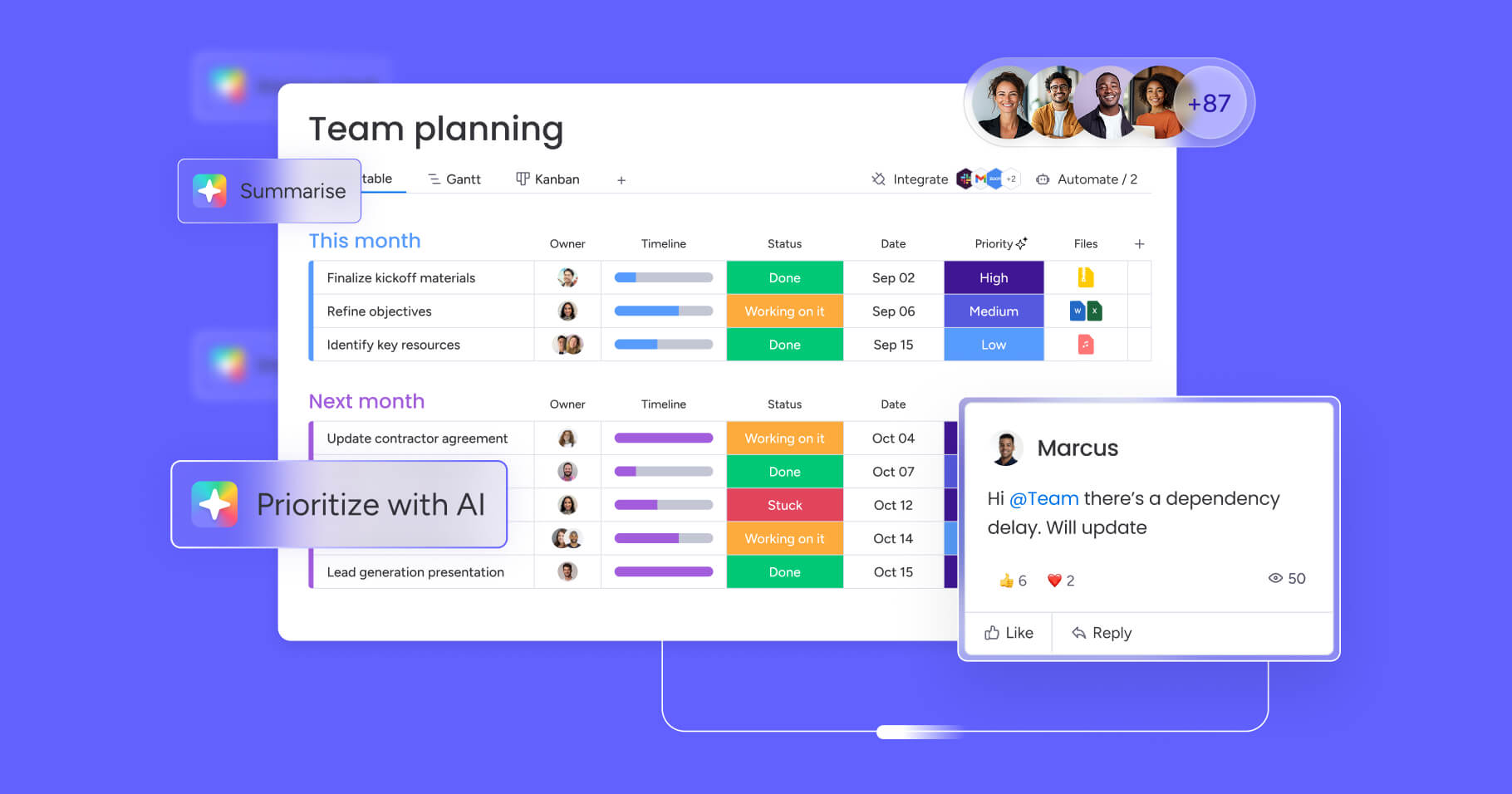
- monday AI Workspace gives democratic leaders shared dashboards, WorkForms, and Workdocs to gather input, keep decisions transparent, and turn agreement into action.
What is democratic leadership?
Democratic leadership is a style where leaders involve team members in decisions and build consensus before choosing a direction. Also called participative leadership, it distributes power while keeping the leader accountable for the final call.
Psychologist Kurt Lewin identified democratic leadership as the middle ground between autocratic (leader decides alone) and laissez-faire (team self-directs) styles. Democratic leaders invite participation and debate, then guide the group to a decision everyone understands and commits to.
The key is balance: you gather perspectives and identify disagreement early, but you still make the final decision. Democratic leadership works best with clear goals, where shared input sharpens the path forward instead of slowing it down. It’s not voting on everything or waiting for unanimity—it’s widening the circle of input, then narrowing to one clear owner who decides and commits.
6 characteristics of a democratic leader
Democratic leadership isn’t a personality type you’re born with. It’s a set of habits you can build. Across strong participative leaders, the same 6 traits show up again and again, and each one is something you can practice this week.
- Democratic leaders actively listen: democratic leaders ask real questions and let people finish. They treat input as data, not noise, and they make sure quieter voices get heard alongside the loudest ones.
- Democratic leaders stay consistently engaged: participation only works when the leader shows up for it. These leaders stay close to the work, join the discussion, and respond to feedback instead of collecting it and going silent.
- Democratic leaders are team-oriented: a democratic leader believes the group’s combined judgment beats any single opinion, including their own. They build a team they trust, then rely on that trust when decisions get hard.
- Democratic leaders can make the final decision: gathering input isn’t the same as endless debate. Good democratic leaders know when the conversation is done, then commit to a call and stand behind it.
- Democratic leaders prioritize transparency and communication: people can only contribute well when they see the full picture. Sharing the same real-time data, on dashboards everyone can open, keeps input grounded in reality rather than guesswork.
- Democratic leaders stay flexible while holding accountability: they’ll change course when the evidence says so, and they’ll own the outcome either way. Flexibility keeps the team engaged; accountability keeps the work moving.
Notice that none of these traits ask you to abandon authority. They ask you to use it differently: to open the decision, listen hard, and then close it with a clear call the team helped shape.
Democratic leadership examples in the workplace
Plenty of well-known executives lean on democratic leadership, The style spans industries, but it’s most visible where innovation and expertise drive results.
Consider a few widely reported examples:
- Sundar Pichai, CEO of Alphabet and Google: Pichai is frequently described as an empathetic, consensus-oriented leader who empowers teams and invites input before setting direction. His measured, listen-first style is often cited as a model of participative leadership at scale.
- Satya Nadella, CEO of Microsoft: Nadella built his turnaround of Microsoft around a “learn-it-all” culture that prizes curiosity, inclusion, and diverse perspectives over top-down command, hallmarks of a democratic approach.
- Sheryl Sandberg, former COO of Meta: Sandberg is known for a mentorship-driven style that draws people into decisions and develops their judgment, so teams grow more capable of contributing over time.
Pros and cons of democratic leadership
Democratic leadership delivers real advantages, but it isn’t free. The same openness that builds employee engagement can slow you down when speed matters most. Another subtle cost worth naming is emotional labor. Facilitating good discussion, drawing out quiet contributors, and synthesizing conflicting views is genuinely demanding work. A leader who runs every decision this way can burn out, and a team that never sees a fast, confident call can start to read participation as indecision. The style asks you to invest energy up front in exchange for stronger commitment later.
Weigh both sides before you commit, because the style rewards the right context and punishes the wrong one.
| Advantages | Disadvantages |
|---|---|
| Higher engagement and job satisfaction, because people help shape the work they own | Slower decisions, since gathering and weighing input takes time |
| More innovation and creative problem-solving from diverse perspectives | Less effective in crises or time-critical calls that need a fast, single decision |
| Multiple solutions surface before you commit, reducing blind spots | Manager strain from facilitating discussion and synthesizing feedback |
| Stronger trust and buy-in, which tends to lower turnover | Accountability can blur if it's unclear who owns the final call |
When to use democratic leadership and when to avoid it
Understanding your team’s working styles helps you spot who’s ready for shared decisions, and if your team is full of specialists who know their craft, this style fits.
Democratic leadership works best when the situation rewards diverse thinking. Reach for it in these scenarios:
- Innovation and R&D work: when the best answer isn’t obvious, more perspectives improve it.
- Cross-functional projects: shared decisions align teams that report to different leaders.
- Expert teams: skilled people resist being micromanaged and reward being trusted.
- Change management and buy-in: involving people in a decision makes them far more likely to support it.
Democratic leadership is a poor fit when speed or certainty outranks consensus. Avoid it in these scenarios:
- Crises and emergencies: in an urgent situation, someone needs to make a fast call without gathering votes.
- Rigid-compliance or safety-critical work: regulated environments leave little room for debate, and the process is the decision.
- Low-trust or inexperienced teams: democratic leadership depends on trusting a team of experts. If that trust or expertise isn’t there, the style stalls.
- Decisions with clear, non-negotiable constraints: when the budget, timeline, or scope is already locked, gathering input on fixed variables wastes everyone’s time.
Team maturity is the other variable to watch. A brand-new team, or one where people lack the context to weigh in usefully, may need more direction before they’re ready for shared decisions. But that’s not a permanent verdict. As people build expertise and trust, you can widen participation step by step. The goal isn’t to be democratic in every situation. It’s to know which situations earn it, and to lead differently the rest of the time.

How to practice democratic leadership in 6 steps
Knowing the theory is easy. Practicing it under deadline pressure is the hard part. These 6 steps turn participative leadership into a repeatable routine, so shared decisions speed work up instead of bogging it down.
- Gather input before you meet: collecting perspectives async respects people’s time and pulls in the quieter voices who rarely speak up live. Structured forms, like those you can build in monday WorkForms, make that input consistent and easy to compare.
- Rotate decision ownership: let different team members lead different calls. It develops judgment across the team and keeps you from becoming the bottleneck on every choice.
- Define the limits of collaboration: tell people up front which parts of a decision are open for input and which are already set. Clear boundaries prevent the false expectation that every vote is binding.
- Document decisions transparently: capture what you decided and why, where the whole team can see it. Collaborative docs, like monday Workdocs, keep the reasoning and the outcome in one place people can revisit.
- Close the loop and act: show people how their input shaped the result, then move. Nothing kills participation faster than feedback that vanishes, so shared dashboards help everyone see the decision turn into progress.
- Keep the final call clear: when the discussion is done, decide and say so. Reminders and approvals, handled by automations, keep consensus from stalling and make sure agreement actually converts into work.

How democratic leadership compares to other leadership styles
Democratic leadership is one leadership style among several, and the clearest way to understand it is to set it beside its neighbors. Each style makes a different trade between speed, autonomy, and control, and each fits a different kind of work.
Here’s how the major styles stack up:
| Style | Decision-making | Team autonomy | Speed | Best fit |
|---|---|---|---|---|
| Democratic | Shared input, leader decides | High | Moderate | Innovation, expert teams, cross-functional work |
| Autocratic | Leader decides alone | Low | Fast | Crises, safety-critical or highly regulated work |
| Laissez-faire | Team decides, leader steps back | Very high | Variable | Highly skilled, self-managing teams |
| Transformational | Leader sets vision, inspires buy-in | Moderate | Moderate | Change initiatives, culture shifts |
| Coaching | Leader guides, develops individuals | Moderate | Slower | Skill growth, long-term development |
The best leaders don’t pick one style for life. They match the style to the team and the moment.
These styles also blend in practice. A transformational leader who sets a bold vision often runs democratic decisions inside it, and a coaching leader leans on the same listen-first habits. Think of them less as rigid boxes and more as tools on a belt. Democratic leadership is the one you’ll reach for most when the work is complex, the stakes are shared, and the people around you know things you don’t.
How monday AI Workspace supports democratic leadership
Participative leadership lives or dies on execution. Gathering input, keeping decisions transparent, and turning agreement into action all take real coordination, and that’s exactly where the monday AI Workspace helps democratic leaders do the work consistently instead of relying on memory and meetings.
Each capability maps to a specific part of leading democratically:
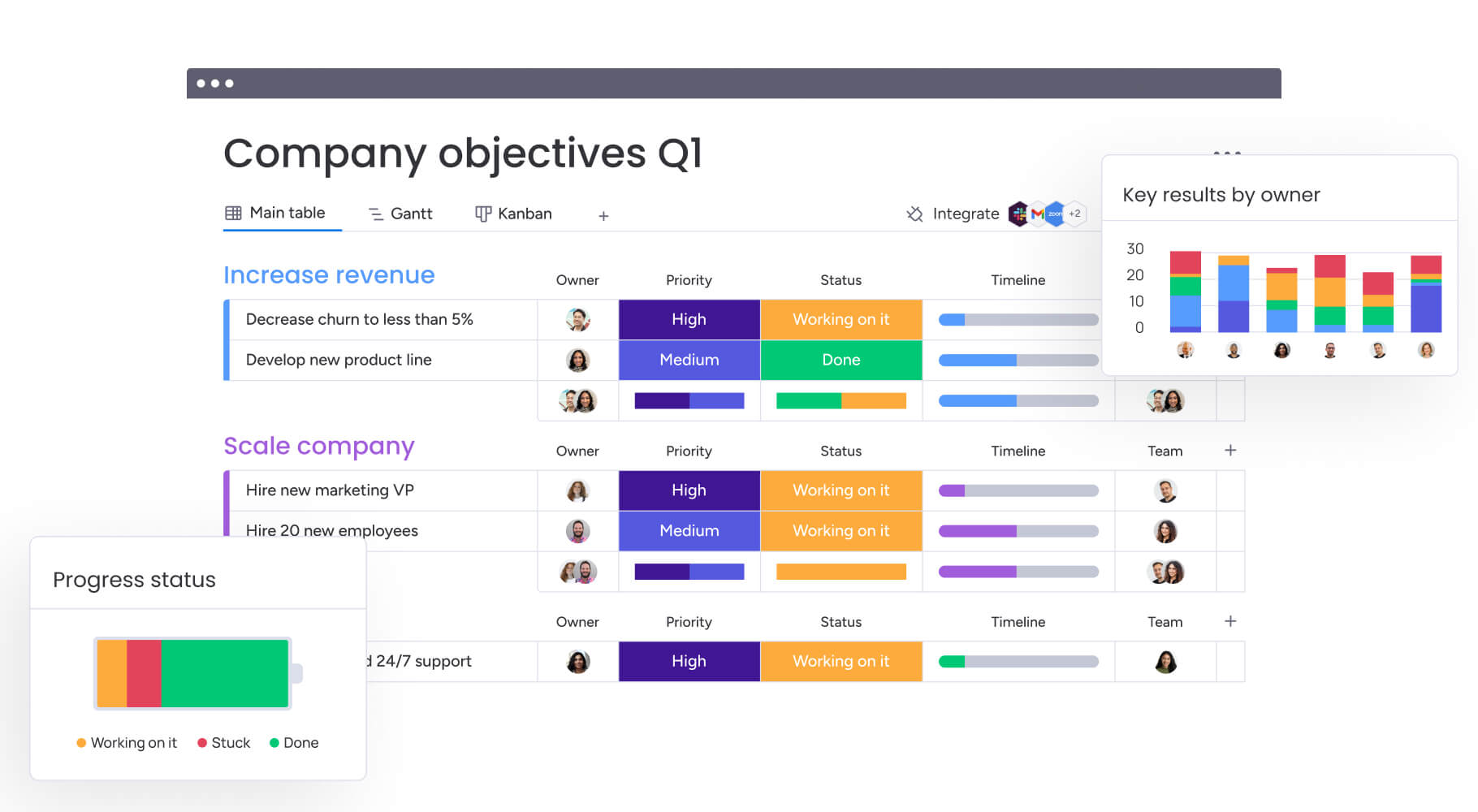
- Dashboards: a shared, real-time source of truth so every decision starts from the same data. When the team sees the same numbers, input stays grounded and debate moves faster.
- WorkForms: structured, async input and feedback collection. People contribute on their own time, and every response lands as organized data you can compare instead of scattered replies.
- Workdocs: collaborative brainstorming and documented decisions in one place. Teams co-create in real time, and the reasoning behind a call stays visible for anyone who needs it later.
- Automations: no-code reminders, approvals, and handoffs so consensus doesn’t stall. Once a decision is made, the next steps route themselves to the right people.
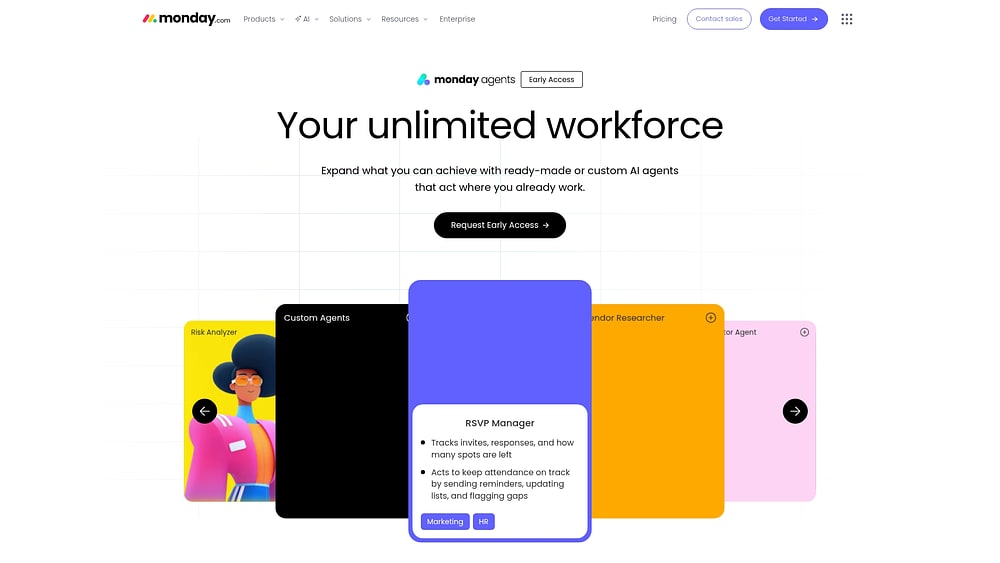
- monday agents: agents like Sentiment Detector and Meeting Summarizer surface team input at scale, so you catch the signal in long threads and long meetings. monday agents is currently in Early Access.
- monday vibe: describe a custom polling or decision-tracking app in plain language and build it in minutes, tailored to how your team actually decides.
- monday MCP: connect AI assistants you already use to securely turn meeting notes into structured tasks and decisions, so nothing agreed in the room gets lost.
The value shows up when you match a common leadership challenge to the capability that solves it:
| Democratic leadership challenge | How monday AI Workspace helps |
|---|---|
| Consensus stalls and decisions drag on | Automations send reminders and route approvals so agreement converts to action |
| Input arrives scattered across email, chat, and meetings | WorkForms collect structured, async feedback in one comparable place |
| People can't see the data behind a decision | Dashboards give everyone the same real-time view before they weigh in |
| Why a decision was made gets forgotten | Workdocs document the reasoning and outcome where the team can revisit them |
| Team sentiment gets lost in long threads | monday agents summarize discussions and surface sentiment at scale |
Convert participation into consistent execution
Democratic leadership works when participation and execution reinforce each other. Inviting input builds engagement and better ideas, but the value only lands when those ideas become work that ships. The leaders who get the most from this style pair open decisions with clear ownership and shared visibility, so consensus turns into momentum rather than another meeting.
It’s a shift worth making. Give people a real voice, keep the data and the decisions transparent, and put a system behind the follow-through. When you do, democratic leadership stops being a philosophy and becomes how your team consistently gets great work done together.
Get startedFAQs
What is another term for democratic leadership?
Democratic leadership is also called participative leadership, and sometimes shared leadership. All three describe the same core idea: the leader involves the team in decisions before making the final call.
What type of employee functions well with a democratic manager?
Self-directed, experienced employees who want a voice in their work tend to thrive. They bring expertise, welcome ownership, and contribute more when they're asked for input rather than simply told what to do.
When should you not use democratic leadership?
Avoid it in crises and time-critical situations that need one fast decision, and in rigid-compliance or safety-critical work where the process leaves little room for debate. In those moments, a more directive style serves the team better.
How does monday AI Workspace support democratic leadership?
It gives democratic leaders the tools to gather and act on input consistently: WorkForms for structured async feedback, Dashboards for a shared real-time view of the data, Workdocs for collaborative decisions, and automations to keep agreed work moving.

 Get started