



Development teams face a constant flood of requests from every direction. Sales wants a feature to close a deal, support needs urgent bug fixes, and leadership has a new strategic initiative. Without a system to manage this influx, teams get stuck firefighting, where the loudest voice or the most recent emergency dictates the work. A proactive system, by contrast, directs resources toward high-impact projects that might otherwise be delayed.
A product prioritization framework brings order to this chaos. It provides a structured, objective method for deciding what to build next, shifting decisions from subjective debates to data-driven discussions. By creating a shared language across product, engineering, and business teams, these frameworks ensure alignment around initiatives that generate the most value for customers and the company.
The sections below break down the most effective product prioritization frameworks, from RICE and Kano to the Value vs. Effort matrix, and explain how to choose the right one for your context. You’ll see how to avoid common pitfalls and implement a system that turns your backlog from a source of stress into a clear, strategic roadmap.
Key takeaways
- Replace subjective gut feelings with objective scoring: product prioritization frameworks help teams focus on high-impact initiatives instead of tasks that merely feel urgent today.
- Select frameworks based on organizational context: choose methods that align with your team size and available data, as small teams often require simple approaches like Value vs. Effort, while larger organizations benefit from structured methods such as RICE.
- Leverage specialized tools to manage workflows: prioritization is transformed from spreadsheet chaos into visual workflows within solutions like monday dev, which offers pre-built templates, real-time collaboration, and customizable scoring that adapts to any framework.
- Avoid common procedural pitfalls: prevent project stalls by avoiding overly complex processes or the use of a single framework for every situation, while ensuring you include key insights from support and sales teams.
- Match the framework to the specific objective: different methodologies serve distinct purposes, such as using RICE for data-driven decisions, MoSCoW for tactical sprint planning, and Kano to identify customer satisfaction gaps.
What is a product prioritization framework
A product prioritization framework is a structured method for deciding which features, bugs, or improvements to build first. It replaces gut feelings with objective scoring, helping teams focus on work that delivers the most value.
This approach functions as a scoring system for your backlog. Rather than building whatever feels urgent or responding to the most vocal stakeholder, teams evaluate each item against clear criteria such as user impact, business value, and development effort. This process creates a ranked list that provides transparency and builds organizational trust.
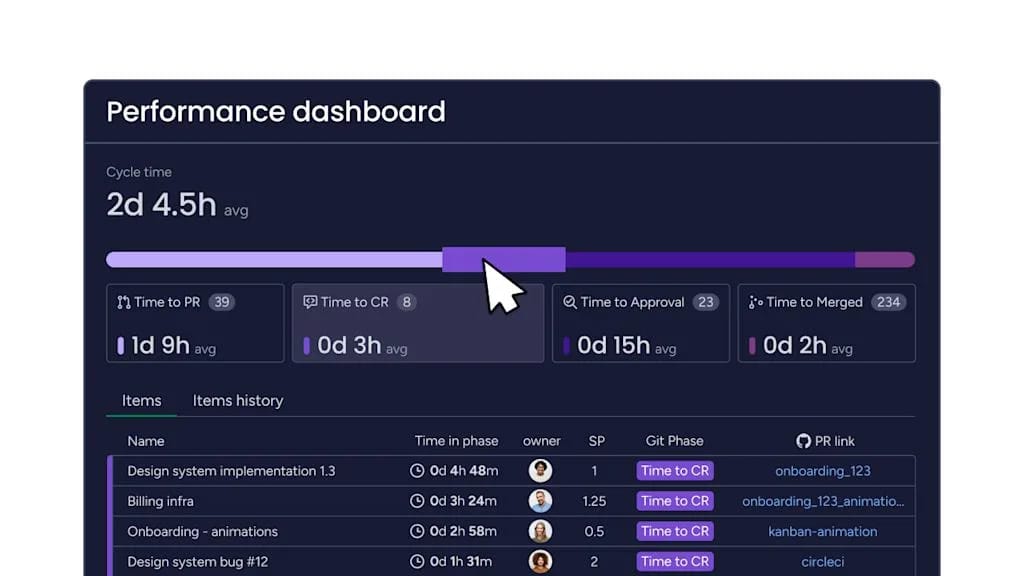
Why do teams need product prioritization frameworks?
Development teams face an endless stream of feature requests. Sales wants integrations, support needs bug fixes, and leadership pushes strategic initiatives. Without a framework, you’re stuck in constant negotiation, building whatever seems most urgent today.
This chaos creates real problems. Engineers waste time on low-impact features while critical improvements sit untouched, while teams miss deadlines because priorities shift mid-sprint.
Government data shows that persistent schedule slippages and cost overruns plague major IT efforts, with 1,881 GAO recommendations since 2010 and 463 still unimplemented as of January 2025, demonstrating how poor prioritization leads to failed delivery. A transparent process builds stakeholder trust by giving them clear visibility into the status of their requests.
The hidden costs multiply over time. When you lack clear priorities, your team switches context constantly, killing productivity. A 2024 study in the Journal of Applied Psychology found that daily multitasking measurably lowers flow and same-day job performance, with higher day-level multitasking predicting significantly less flow (β = −0.23, p < .001).
Your ship features nobody uses while competitors deliver what customers actually want. Your best engineers burn out from the constant firefighting and lack of meaningful progress.
How do frameworks solve prioritization challenges?
Product prioritization frameworks transform chaos into clarity by creating shared language and objective criteria. When everyone evaluates features using the same scoring model, political debates become data-driven discussions.
Align teams around shared goals
Frameworks establish common ground between product, engineering, and business teams. Instead of arguing about whose request matters more, you compare scores based on agreed criteria. This speeds up decision-making and reduces friction.
Advanced platforms like monday dev make this alignment visible through customizable scoring boards. Teams can see exactly why Feature A ranks above Feature B, building trust in the process.
Create transparency across the organization
Clear prioritization gives everyone visibility into what’s being built and why. Executives see how work connects to strategy, engineers understand the reasoning behind roadmap decisions and stakeholders can track their requests without constant check-ins.
This transparency prevents the “black box” problem where requests go in but nothing comes out. When priorities are visible and documented, teams spend less time explaining decisions and more time building.
Focus resources on high-impact work
Frameworks help you say no with confidence. When a low-scoring request comes in, you have objective data to explain why other work takes precedence. This protects your team’s time and ensures engineering capacity goes toward meaningful outcomes.
Prioritizing high-impact modernization can yield measurable ROI, as demonstrated by CBP’s $15M investment that saves $30M+ annually and processes 52M+ transactions.
Popular product prioritization frameworks
Different frameworks suit different situations. Here are the most effective approaches teams use today, each with unique strengths for specific contexts.
RICE scoring
RICE stands for Reach, Impact, Confidence, and Effort. You multiply Reach × Impact × Confidence, then divide by Effort to get a priority score.
Each component is calculated as explained below:
- Reach: how many users will this affect per quarter?
- Impact: how much will it improve their experience? (0.25 = minimal, 3 = massive)
- Confidence: how sure are you about these estimates? (percentage)
- Effort: how many person-months will this take?
RICE works best when you have solid user data and can estimate impact accurately. It’s ideal for mature products where you track usage patterns and understand your audience.
Value vs. Effort matrix
This simple 2×2 grid plots features by business value (vertical) and development effort (horizontal). Features fall into four quadrants:
- Quick wins: high value, low effort (prioritize first).
- Major projects: high value, high effort (plan carefully).
- Fill-ins: low value, low effort (maybe later).
- Time sinks: low value, high effort (avoid).
The matrix excels for rapid prioritization sessions. You can map dozens of features in minutes, making trade-offs visually obvious. It’s perfect for early-stage products or sprint planning where speed matters more than precision.
MoSCoW method
MoSCoW categorizes features into four buckets:
- Must have: essential for release.
- Should have: important but not critical.
- Could have: nice to have if time allows.
- Won’t have: explicitly out of scope.
This framework requires deliberate decision-making. Labeling every item as “must have” undermines the methodology’s effectiveness. MoSCoW proves particularly valuable for sprint planning when establishing clear scope boundaries is essential.
Kano model
The Kano model classifies features by their relationship to customer satisfaction:
- Basic needs: expected features that prevent dissatisfaction.
- Performance needs: more is better (linear satisfaction).
- Delighters: unexpected features that create joy.
Understanding these categories prevents over-investing in basics while missing opportunities to delight. For example, two-factor authentication might be basic for banking apps, while AI-powered insights could be a delighter according to the Kano model.
Opportunity scoring
This framework identifies gaps between importance and satisfaction. You survey users asking:
- Importance: how important is this feature? (1-10)
- Satisfaction: how satisfied are you with current solutions? (1-10)
High importance + low satisfaction = big opportunity. This approach reveals underserved needs competitors might miss.
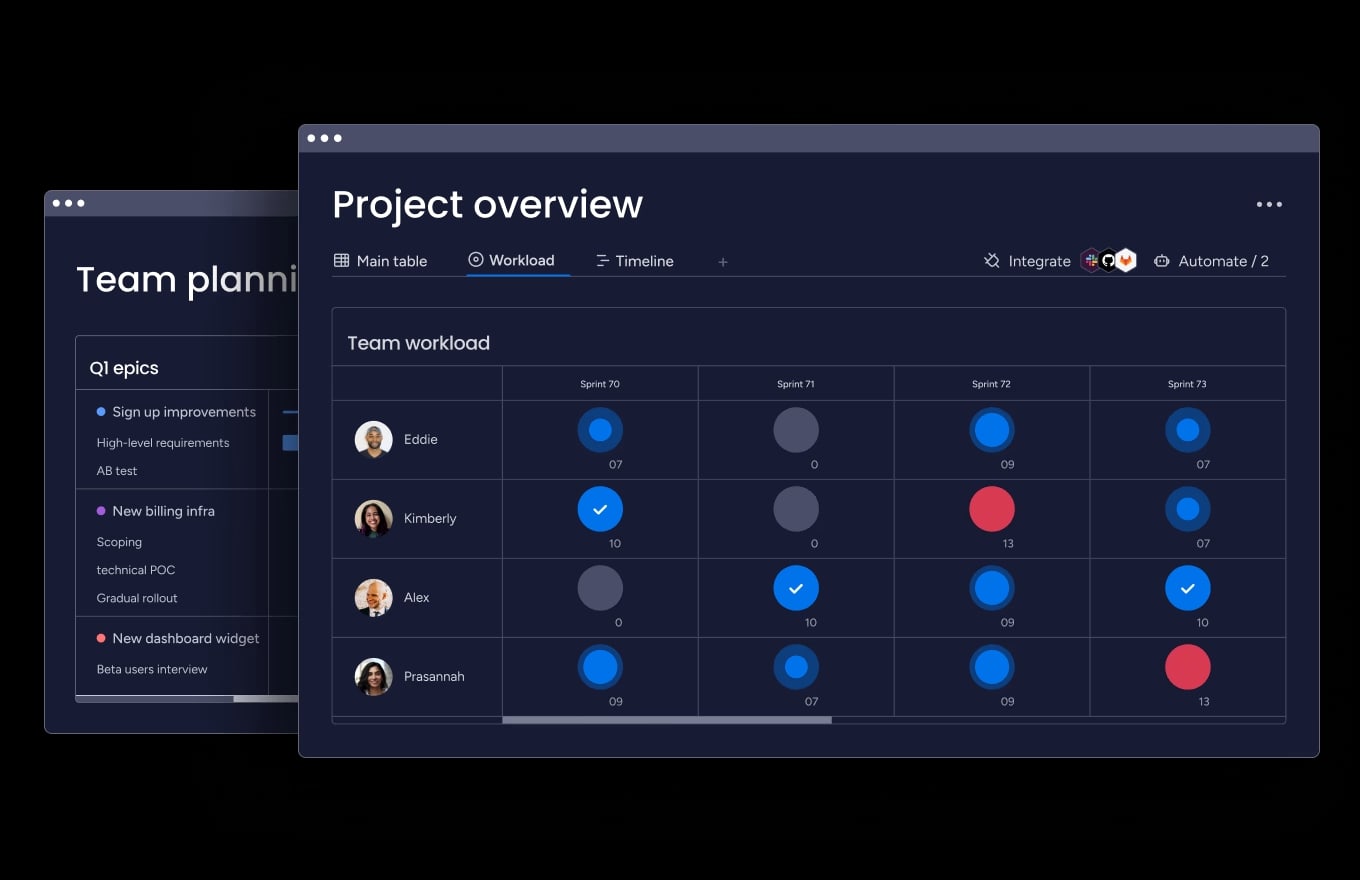
Choosing the right framework
Selecting a framework depends on your team’s context. Therefore consider these factors when making your choice.
Team size and structure
Small teams need lightweight frameworks. Value vs. Effort or MoSCoW let you prioritize quickly without overhead. You can reach consensus through discussion rather than complex scoring.
Large teams require more structure. RICE or Opportunity Scoring provide objective criteria that scale across departments. When 50+ people contribute to prioritization, you need clear rules everyone follows.
Available data and resources
Data-rich teams should leverage it. If you track user behavior and have historical metrics, RICE helps you make evidence-based decisions. The investment in analysis pays off through better outcomes.
Data-poor teams need simpler approaches. Early-stage startups can’t calculate precise reach or impact. Value vs. Effort lets you prioritize based on informed judgment rather than waiting for perfect data.
Product lifecycle stage
Your product’s maturity influences framework choice:
- Early stage: focus on Opportunity Scoring to find product-market fit.
- Growth stage: use RICE to optimize based on user data.
- Mature stage: apply Kano analysis to find differentiation opportunities.
Solutions like monday dev adapt to any framework through customizable fields and scoring formulas. You can start simple and add sophistication as your product evolves.
How to avoid common prioritization pitfalls?
Despite implementing frameworks, teams frequently encounter common challenges. These pitfalls and their solutions ensures more effective prioritization.
Relying on one framework for everything
Different decisions need different approaches. While using RICE for everything creates unnecessary overhead for simple choices, using MoSCoW for strategic planning lacks necessary rigor.
Match framework complexity to decision importance. Quick sprint decisions? Use MoSCoW. Quarterly roadmap planning? Bring out RICE. Customer research? Apply Kano.
Excluding key voices
Product managers often forget to include customer support, sales, and actual users in prioritization. These groups have crucial insights about what causes pain and drives value.
Build inclusive processes that gather diverse input:
- Support teams: know which features cause most tickets.
- Sales teams: understand what wins or loses deals.
- Users: provide direct feedback on real needs.
Ignoring changing circumstances
Market conditions evolve, competitors introduce new features, and regulatory requirements shift. Despite these changes, many teams establish priorities on a quarterly basis without subsequent review.
Implement review triggers that extend beyond scheduled calendar dates. When a competitor introduces a significant feature, reassess your priorities. When user feedback surfaces new insights, adjust your roadmap accordingly.
Over-engineering the process
Some teams create frameworks so complex that scoring takes longer than building. If prioritization becomes a full-time job, you’ve gone too far.
Keep it simple enough to be sustainable. If team members avoid the process because it’s painful, simplify until they engage willingly.
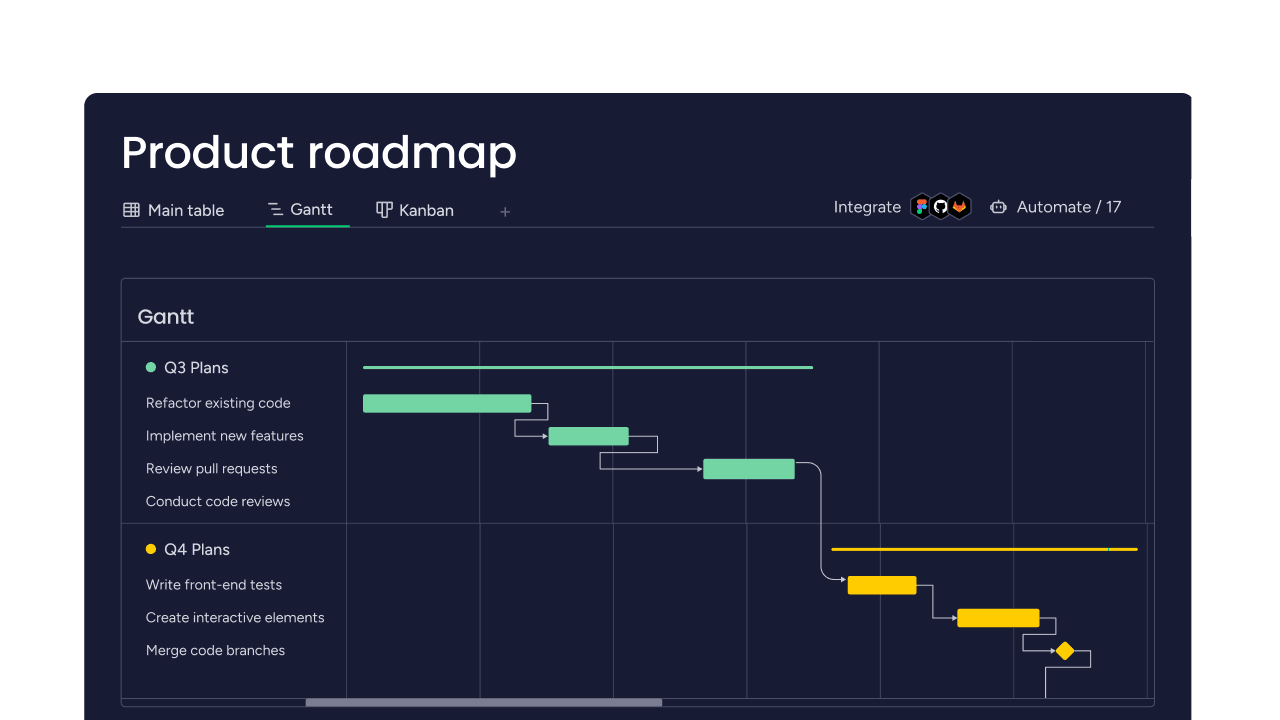
Implementing frameworks with monday dev
The platform transforms theoretical frameworks into practice through visual workflows and automation, allowing teams to implement structured prioritization without the overhead of complex spreadsheets.
Start with templates
Pre-built templates for RICE, MoSCoW, and other frameworks get you running immediately. These templates include the right columns, formulas, and views for each methodology. You can customize them to match your specific needs without starting from scratch.
Visualize priorities clearly
Visual boards make priorities tangible. Color-coded scores, priority lanes, and progress tracking keep everyone aligned. Stakeholders can see the backlog state without requesting updates.
Multiple views serve different audiences:
- Kanban boards: for sprint planning.
- Timeline views: for roadmap communication.
- Table views: for detailed scoring analysis.
Collaborate in real-time
Distributed teams can contribute to prioritization asynchronously. Comment threads capture discussion context. Notifications alert relevant people when priorities shift. Integration with development tools keeps prioritization connected to execution.
This real-time collaboration solves the common problem where priorities live in one system but work happens in another. When everything connects, alignment happens naturally.
Frequently asked questions
What is the 1/3/9 prioritization technique?
The 1/3/9 prioritization technique helps you focus daily effort by creating a list of 13 tasks: one critical task, three important tasks, and nine nice-to-do tasks. You complete the critical task first, then work through the important tasks in priority order, and finally tackle nice-to-do items if time allows. This technique works well for individual productivity but scales poorly for team-level product prioritization.
What is the 4 prioritization matrix?
The four prioritization matrix, also known as the Eisenhower Matrix, divides work items into four quadrants based on urgency and importance. You do urgent and important tasks first, schedule important but not urgent tasks, delegate urgent but not important tasks, and eliminate tasks that are neither urgent nor important. While useful for time management, this matrix lacks the nuance needed for complex product decisions.
What are the 5 levels of priority?
The five levels of priority typically include Critical, High, Medium, Low, and Nice-to-have, though specific labels vary by organization. Critical items block other work or risk significant negative impact, High priority items deliver major value, Medium priority items provide moderate benefit, Low priority items offer minor improvements, and Nice-to-have items add polish but aren't essential. These levels help teams communicate urgency consistently.
What is RICE vs Kano vs MoSCoW?
RICE uses data-driven scoring based on Reach, Impact, Confidence, and Effort to prioritize features objectively. Kano focuses on customer satisfaction by categorizing features as basic needs, performance needs, or delighters. MoSCoW divides features into Must have, Should have, Could have, and Won't have categories for sprint planning. Use RICE when you have good data, Kano for customer research, and MoSCoW for time-boxed delivery.
How do I transition from spreadsheets to a proper framework?
Start transitioning from spreadsheets by choosing a simple framework like Value vs. Effort and scoring just your top 10-20 features. Get comfortable with the scoring process before expanding to your full backlog. As your team gains confidence, add more sophisticated criteria or try frameworks like RICE that use additional data. The key is starting small and building habits before adding complexity.
Which framework works best for remote teams?
Remote teams succeed with frameworks that have clear, objective criteria like RICE or Opportunity Scoring. These frameworks produce defensible scores that team members can understand without lengthy discussions. The quantifiable nature reduces the need for real-time consensus-building, making asynchronous collaboration more effective. Avoid frameworks that rely heavily on subjective judgment or require extensive in-person negotiation.

 Get started