



Successful product launches rarely happen by accident. They come from clear coordination, where every team understands the plan, the timing, and the role they play in bringing a new idea to market. With the right structure, even fast-moving launches become predictable, focused, and aligned.
That’s where a product launch strategy template makes all the difference. It’s not about adding layers of process — it’s about giving teams a shared playbook that removes guesswork and keeps momentum high. A strong template turns scattered tasks into a connected workflow, helping everyone stay informed and work toward the same goals from the first planning meeting to launch day.
This guide walks through how these templates actually work in practice, what to include, and how to choose or customize the right structure for your team. The goal is simple: create a flexible, repeatable foundation that keeps launches on track and helps every release land with confidence.
Key takeaways
- Launch clarity: create a single source of truth that aligns every team around shared goals and timelines.
- Stronger planning: build a clear structure for defining objectives, audiences, messaging, and success metrics.
- Better coordination: outline roles, responsibilities, and cross-functional workflows to prevent miscommunication.
- Repeatable success: turn each launch into a framework you can refine and reuse for future releases.
- Flexible workflows: use monday dev to build custom launch processes with real-time visibility and automation
What is a product launch strategy template?
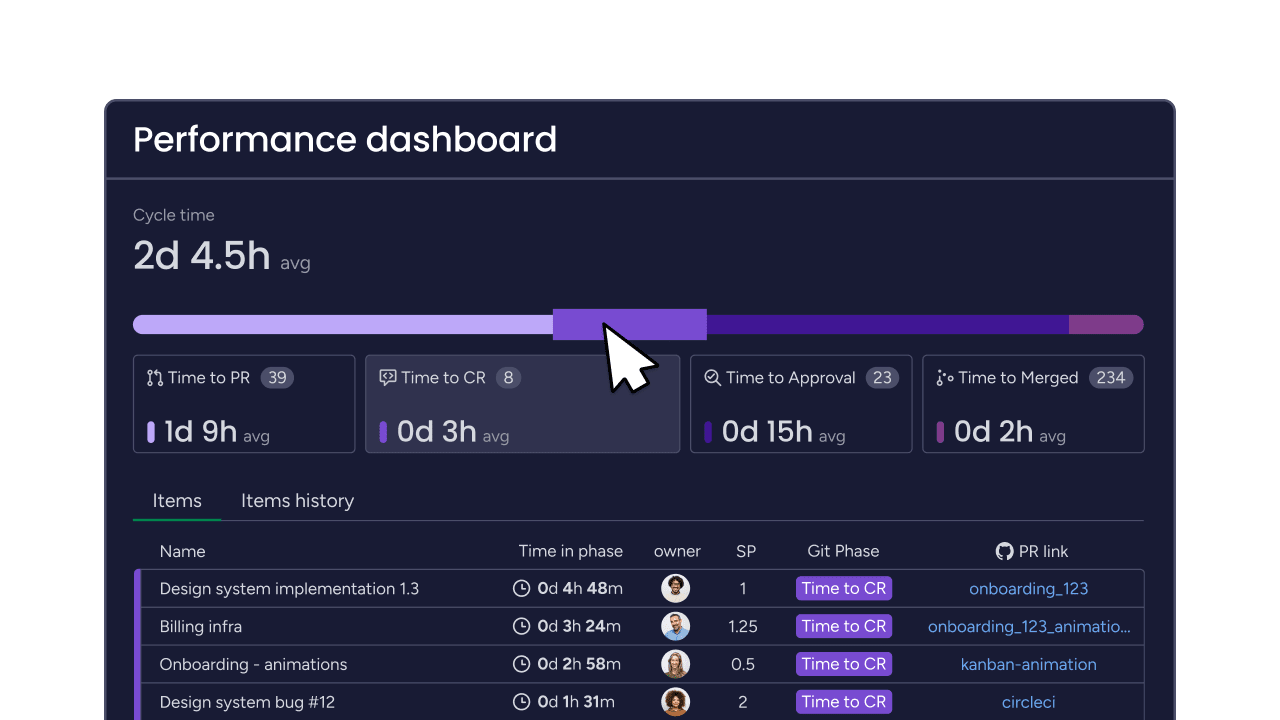
A product launch strategy template is a reusable framework that guides teams through bringing a new product or feature to market: a critical process, considering that according to McKinsey, over 25% of total revenue and profits for many companies comes from new products. It’s essentially a master checklist that covers everything from initial planning to post-launch analysis, ensuring nothing falls through the cracks.
Instead of starting from scratch each time, you have a proven structure that captures what works while staying flexible enough to adapt to different products and market conditions.
Why do product teams need launch templates?
Ever watched a product launch spiral into chaos? It’s a common story of teams in silos and missed deadlines, which helps explain why, according to McKinsey, over 50% of product launches fail to hit their business targets. This often happens when you realize marketing is promoting features that product development teams haven’t finished yet.
Templates solve these coordination nightmares by creating a single source of truth. When everyone works from the same playbook or a launching plan template, you eliminate the guesswork and miscommunication that derails launches.
The real value comes from turning unpredictable launches into repeatable successes. Here’s what templates deliver for product organizations:
- Cross-functional alignment: everyone speaks the same language and works toward shared milestones.
- Risk mitigation: spot potential roadblocks before they become emergencies.
- Scalable processes: what works for one launch can work for the next.
- Knowledge retention: your best practices survive even when team members move on.
10 essential components of winning launch templates
A strong launch template does more than list tasks — it gives every team a shared structure to plan, coordinate, and execute with confidence. The right components bring clarity to who’s doing what, when it needs to happen, and how success will be measured.
Before building or choosing a template, it helps to understand the core elements that make it useful in real-world launches. Below are the components that turn a simple checklist into a reliable framework your team can depend on.
1. Clear objectives and success metrics
Start with what success looks like. Your template needs spaces for both hard numbers (revenue targets, user signups) and softer goals (brand perception, market positioning).
Make sure you define primary metrics that drive major decisions and secondary metrics that provide early warning signals.
2. Target market and buyer personas
Who exactly are you launching for? Document your customer segments, their pain points, and what drives their purchasing decisions.
This isn’t just demographics. Include behavioral patterns and psychological drivers that help your team achieve product differentiation and understand why customers would choose you over alternatives.
3. Product messaging and value proposition
Your value story needs to stay consistent whether it’s on your website, in sales calls, or social media posts. Templates should include your core value props, key differentiators, and proof points while clarifying your product positioning.
Create message hierarchies too. What executives need to hear differs from what developers care about.
4. Timeline with key milestones
Break your launch into phases with clear deadlines and dependencies, guided by a product plan to keep teams aligned. Map out both internal milestones (feature freeze, content approval) and external ones (press announcements, customer communications).
Map out both internal milestones (feature freeze, content approval) and external ones (press announcements, customer communications), and be sure to build in buffer time, as projects often take longer than expected.
5. Cross-functional team assignments
Who owns what? Your template needs clear roles and responsibilities across departments, and using a PRD template ensures all stakeholders align on feature requirements. Specify decision makers, contributors, and approval chains.
When conflicts arise, everyone should know the escalation path without hunting through email threads.
6. Marketing and sales enablement plans
Coordinate how you’ll generate demand and convert interest into revenue. This covers everything from campaign timelines to sales training materials.
Make sure marketing promises align with what sales can actually deliver.
7. Risk management framework
What could go wrong? List potential technical issues, competitive responses, and market timing problems, and document your contingency plans with a kano model template to prioritize critical features.
Include both internal risks (resource constraints) and external factors (economic shifts) that could impact success.
8. Budget and resource planning
Track where money and time go across all launch activities. Include direct costs like advertising and indirect costs like engineering hours.
This comprehensive view helps calculate real ROI, not just surface-level metrics.
9. Launch day execution checklist
When the big day arrives, you need military precision. Document every task, who does it, and in what order, and consider a release note template to keep users informed of changes.
Include communication protocols and rollback procedures for when things go sideways.
10. Post-launch review process
How will you measure success and capture lessons learned? Build in feedback loops from customers, internal teams, and market responses.
These insights make your next launch even smoother.
Top 10 free product launch strategy templates for 2026
Ready to stop reinventing the wheel? These templates give you proven frameworks to build on. Each addresses different scenarios and team structures.
Pick one that matches your situation, then customize it to fit your exact needs.
1. Agile sprint-based launch template
Perfect for teams already using Scrum or Kanban. This template weaves launch planning into your existing sprint cycles.
It emphasizes rapid iteration and continuous customer feedback throughout the launch process.
2. Enterprise software rollout plan template
Built for complex B2B launches with long sales cycles. Covers everything from compliance requirements to phased rollouts.
Includes sections for technical documentation and change management across large organizations.
3. SaaS product launch checklist template
Optimized for subscription products with free trials and onboarding flows. Focuses on user acquisition and trial-to-paid conversion.
Features specific strategies for freemium models and customer success integration.
4. Mobile app release strategy template
Addresses the unique challenges of app store launches. Covers submission requirements, review management, and mobile-specific marketing.
Includes platform-specific considerations for both iOS and Android.
5. B2B product marketing launch plan
Designed for longer B2B sales cycles with multiple stakeholders. Emphasizes lead generation and sales enablement.
Contains detailed frameworks for case study development and channel partner programs.
6. Startup MVP launch framework
Lightweight template for testing new concepts quickly. Focuses on market validation over perfection.
Built on lean startup principles with experimentation baked into every phase.
7. Feature release planning template
For launching new capabilities within existing products. Addresses user communication and adoption tracking.
Includes change management strategies for established user bases.
8. Global market expansion template
Comprehensive framework for international launches. Covers localization, cultural adaptation, and regulatory compliance.
Details everything from translation management to local partnership strategies.
9. Product launch timeline template
Focuses on scheduling and dependencies across teams. Provides detailed project management structures.
Includes milestone tracking and resource allocation frameworks.
10. Cross-team coordination dashboard
Emphasizes visibility and collaboration across departments. Features communication protocols and decision frameworks.
Perfect for distributed teams needing real-time alignment.
How to select the perfect launch template
Choosing a template is like picking the right tool for a job. The fanciest option won’t help if it doesn’t match how your team actually works.
Start by honestly assessing your situation. What causes the most friction in your current launches?
Match templates to your product type
Hardware launches need supply chain coordination. Software launches focus on technical integration. Service launches emphasize training and documentation.
Pick a template that speaks your product’s language. Generic approaches force square pegs into round holes.
Consider your team structure
Small, co-located teams can use lightweight templates. Large, distributed organizations need more structure and formal processes.
Also consider your team’s experience level. Newbies benefit from detailed guidance while veterans prefer flexible frameworks.
Align with development methodology
Your template should complement, not fight, your existing processes. If you maintain a product roadmap, ensure the template aligns with it. Agile teams need iterative approaches. Waterfall teams need sequential phases.
Modern platforms like monday dev let you build templates that match your exact workflow, whether that’s Scrum, Kanban, or something uniquely yours.
Try monday dev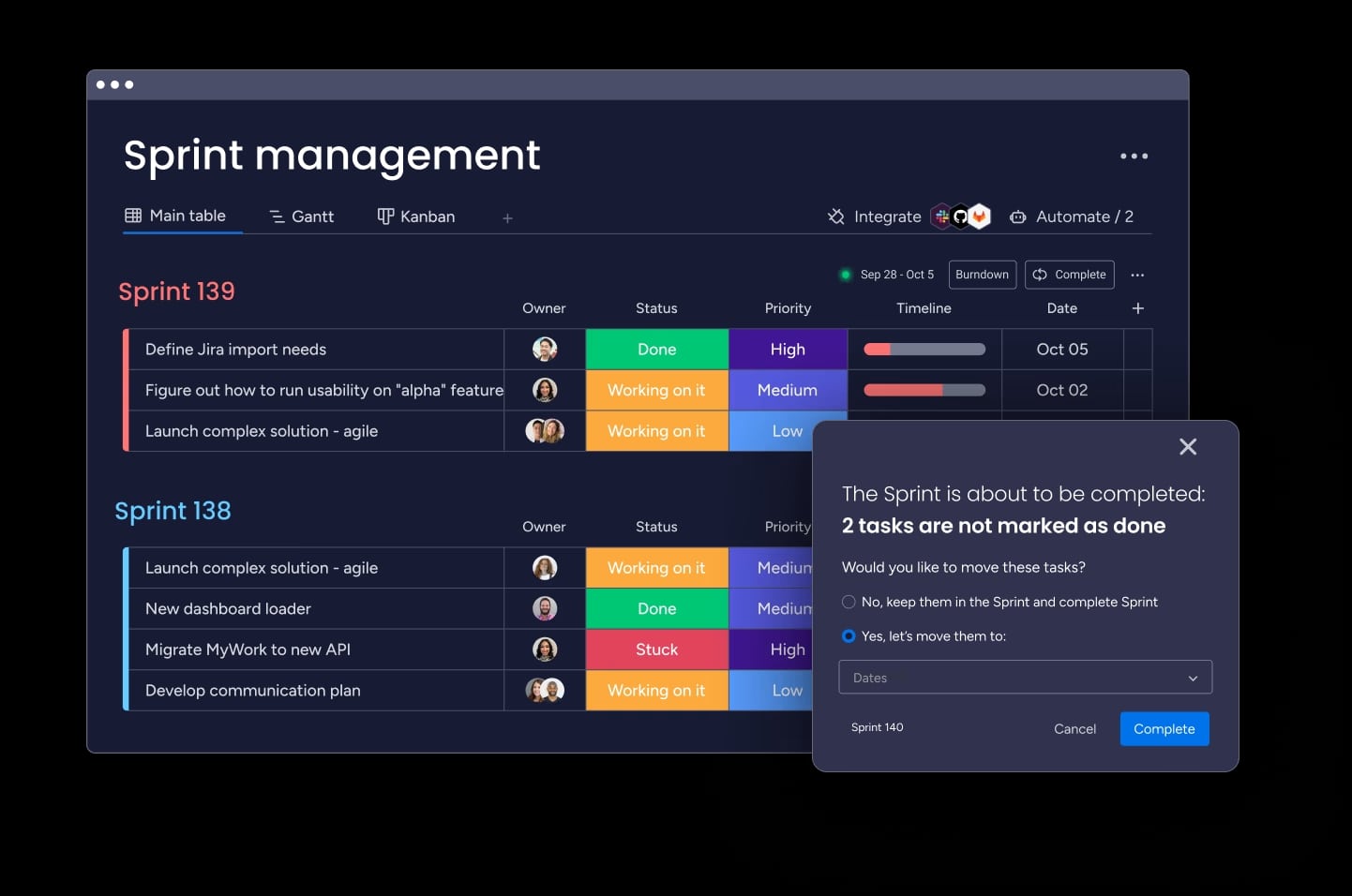
Customizing launch templates for maximum impact
Templates are starting points, not final destinations. The magic happens when you adapt them to fit your team’s reality — for instance, using a proof of concept template to validate your approach early on.
Successful customization balances structure with flexibility. You want guidance without bureaucracy.
- Adapt templates to your workflow: if your team loves visual planning, add more diagrams. If they’re data-driven, emphasize metrics and measurements. Remove what doesn’t apply. Add what’s missing. The template should feel natural, not forced.
- Integrate with existing platforms: don’t create information silos. Your template should connect with the platforms you already use, letting you build launch workflows that integrate with your development tools, communication channels, and reporting systems. Intuitive solutions like monday dev support that approach.
- Scale for multiple product launches: create a template hierarchy. Major launches get the full treatment. Minor releases use streamlined versions. This approach maintains consistency while respecting that not every launch needs the same level of planning.
How launch templates prevent the most common pitfalls
Even well-run teams can hit repeat issues during a launch. A structured template helps you avoid these missteps by making expectations clear, guiding deeper planning, and keeping teams aligned from start to finish.
These core safeguards show how templates strengthen your launch process:
- Aligned expectations: ensure every team understands goals, timelines, and success criteria from the start.
- Thorough research: require teams to validate audiences, needs, and market signals before major decisions.
- Stronger coordination: create clear communication paths so information doesn’t slip between departments.
- Proactive risk planning: surface potential blockers early enough that teams can address them with confidence.
- Consistent follow-through: build in review steps that help teams capture insights and improve the next launch.
Streamline your product launches with monday dev
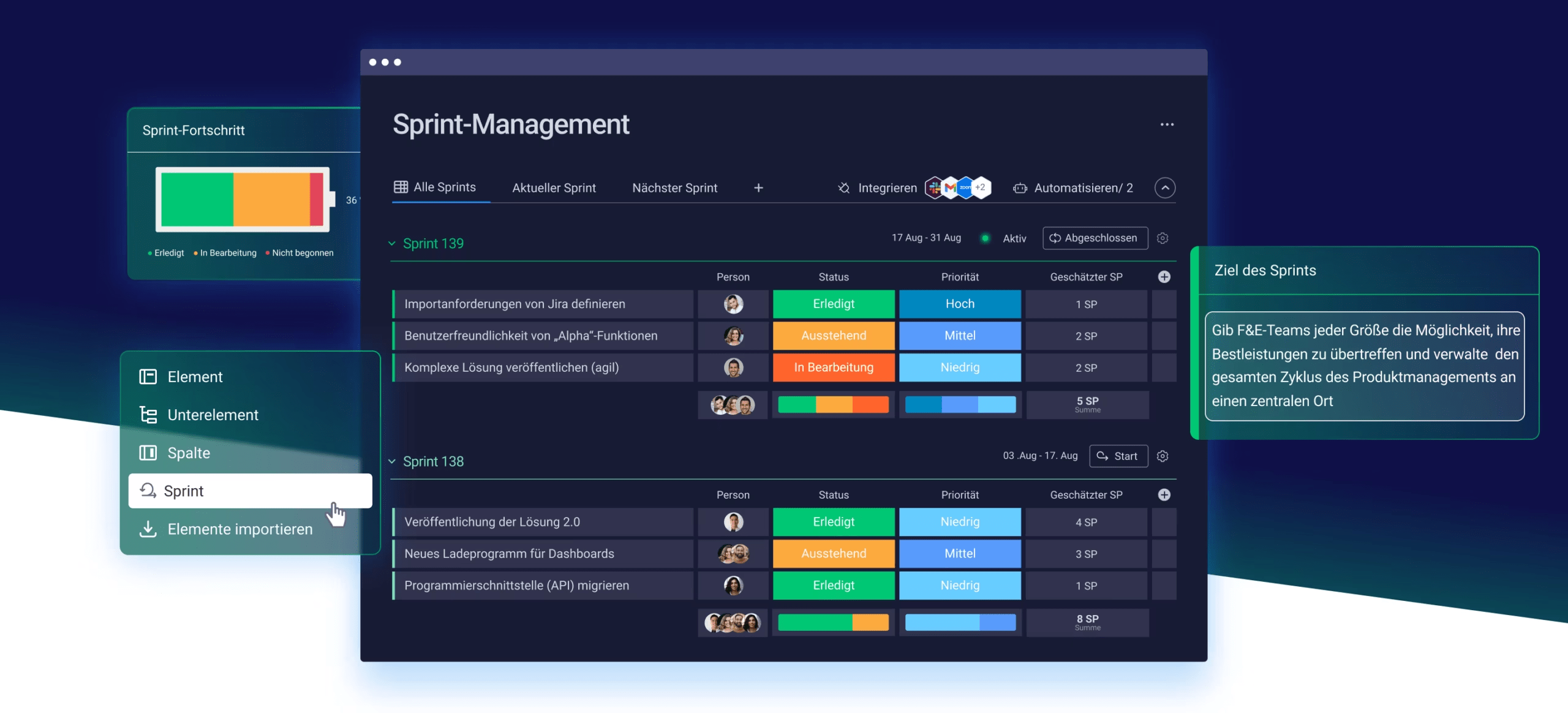
Templates give you the structure for a great launch, but you still need a place to bring that plan to life. That is where monday dev comes in, turning static checklists into live workflows that connect product strategy, development, and go-to-market teams.
Instead of juggling spreadsheets, docs, and status meetings, your launch plan lives in one shared workspace. Teams see what is coming next, who is responsible, and how work is tracking in real time, so every release moves forward with fewer surprises and a lot more control.
Build custom launch workflows in minutes
Start with templates, then make them yours. monday dev’s drag-and-drop interface lets you add custom fields, automation rules, and approval processes that reflect your reality — no coding required.
Use sprint boards to track development progress, Gantt charts to visualize dependencies, and Kanban views to manage marketing deliverables. Your workflows can evolve as you learn what works, without starting over each time.
Unite engineering and business teams
Break down the walls between technical and business teams with monday dev’s two-way integrations. Connect directly to GitHub, GitLab, and Jira to sync code commits and pull requests with launch milestones.
Shared visibility means faster decisions and fewer surprises. Real-time updates keep stakeholders informed without endless status meetings, while customizable dashboards give each team the view they need.
Track launch progress in real time
Real-time visibility keeps launches moving smoothly, especially when multiple teams are contributing at once. monday dev gives everyone the clarity they need without chasing status updates.
- Customizable dashboards: show launch health, milestone progress, and blockers in views tailored for executives or contributors.
- Timeline View: highlights scheduling conflicts early so teams can adjust before delays impact the release.
- Automated reporting: removes manual check-ins by sending updates and notifications when critical tasks fall behind.
Automate repetitive launch tasks
Let automation handle the boring stuff with monday dev’s no-code automation builder. Set up triggers that automatically move tasks through your workflow, send approval notifications to stakeholders, and assign follow-up tasks based on status changes.
Create custom automations like “When status changes to ‘Ready for Review,’ notify the marketing team and create QA checklist.” Your team focuses on high-value work while the platform manages the administrative overhead.
Frequently asked questions
How early should teams start using a product launch strategy template?
Teams should start using a product launch strategy template when core features are defined but before detailed development begins. This timing allows you to align goals, identify dependencies, and plan cross-functional activities while maintaining flexibility to adjust based on new insights.
Can one launch template work for different types of products?
One launch template can serve as a foundation for different products with appropriate customization. While core elements like timeline planning apply universally, you'll need to adapt sections for product-specific needs like regulatory requirements or distribution channels.
How do product managers get team buy-in for using launch templates?
Product managers gain buy-in by showing how templates solve current pain points rather than adding bureaucracy. Start with lightweight versions addressing obvious problems, demonstrate quick wins, then gradually expand usage as teams experience the benefits.
What is the difference between a product launch plan and a launch strategy template?
A product launch plan is the filled-out document for a specific launch with actual dates, names, and decisions. A launch strategy template is the blank framework you customize for each launch, containing standard sections and processes.
How often should product launch templates be updated?
Product launch templates need updates after major launches or every 3-6 months based on lessons learned. Regular reviews ensure templates reflect current best practices and evolving market conditions.
Which template format works best for distributed remote teams?
Distributed teams need cloud-based templates enabling real-time collaboration across time zones. Platforms like monday dev provide the visibility and coordination features remote teams require for complex launches.

 Get started