



A successful launch doesn’t happen by accident. It comes from a clear, shared plan that helps every team understand what needs to happen, when it needs to happen, and how their work contributes to the final release. Without that structure, teams fall out of sync, deadlines slip, and customers feel the impact long before internal teams realize what went wrong.
A strong launching plan template gives you a single framework to coordinate technical work, marketing activity, sales enablement, and customer support. It shows you how to connect sprint progress with market timing, how to prepare your teams for go-live, and how to measure success once your product is in customers’ hands.
In this article, you’ll explore the core elements every launch plan needs, learn a simple step-by-step process for building your own, and get templates for different launch scenarios — from MVPs to enterprise deployments. You’ll also see how to keep engineering and business teams aligned so your launch moves forward confidently instead of reactively.
Key takeaways
- Align early: start planning your launch well before development ends to prevent rushed decisions and last-minute blockers.
- Build cross-functional clarity: define ownership across engineering, product, marketing, sales, and support so every team knows what success looks like.
- Connect strategy to execution: map timelines, sprints, and customer-facing activities to avoid gaps between technical readiness and market timing.
- Use monday dev: track responsibilities, dependencies, and timelines in one place so teams stay aligned throughout the launch.
- Measure what matters: set clear technical, business, and customer metrics to evaluate launch impact and guide future improvements.
What is a product launch plan template?
A product launch plan template is a structured framework that coordinates all activities, teams, and timelines needed to bring a new product to market. This means it captures everything from technical requirements to marketing campaigns in one organized document that everyone can follow.
It’s helpful to imagine it as your launch playbook. Essentially, it tells each team what to do, when to do it, and how their work connects to everyone else’s efforts. Without this template, teams work in isolation, deadlines clash, and critical steps get missed.
Product launch plan vs project plan
A launch plan differs from a regular project plan in several key ways. Launch plans coordinate multiple departments—engineering, marketing, sales, and support — while project plans typically focus on one team’s work. Launch deadlines are fixed to market windows or events, while project deadlines can shift based on internal needs.
The stakes are higher too. Launch plans measure success through customer adoption and revenue, not just task completion. They also carry more risk since launches are public-facing events that impact your company’s reputation.
Why development teams need specialized launch templates
Launching a product involves far more than finalizing code. Development teams work with dependencies, shifting priorities, and tight release windows, which means a generic project plan won’t give them the structure they need.
A specialized launching plan template brings the technical, operational, and customer-facing pieces together so teams can move in sync and avoid costly surprises.
- Cross-functional coordination: you’re aligning teams with different priorities, timelines, and success metrics.
- Technical dependencies: your launch depends on infrastructure, integrations, and deployment procedures that generic templates overlook.
- Market timing: you must synchronize technical readiness with marketing campaigns and sales enablement.
- Risk management: dpecialized templates include rollback plans, monitoring protocols, and escalation procedures.
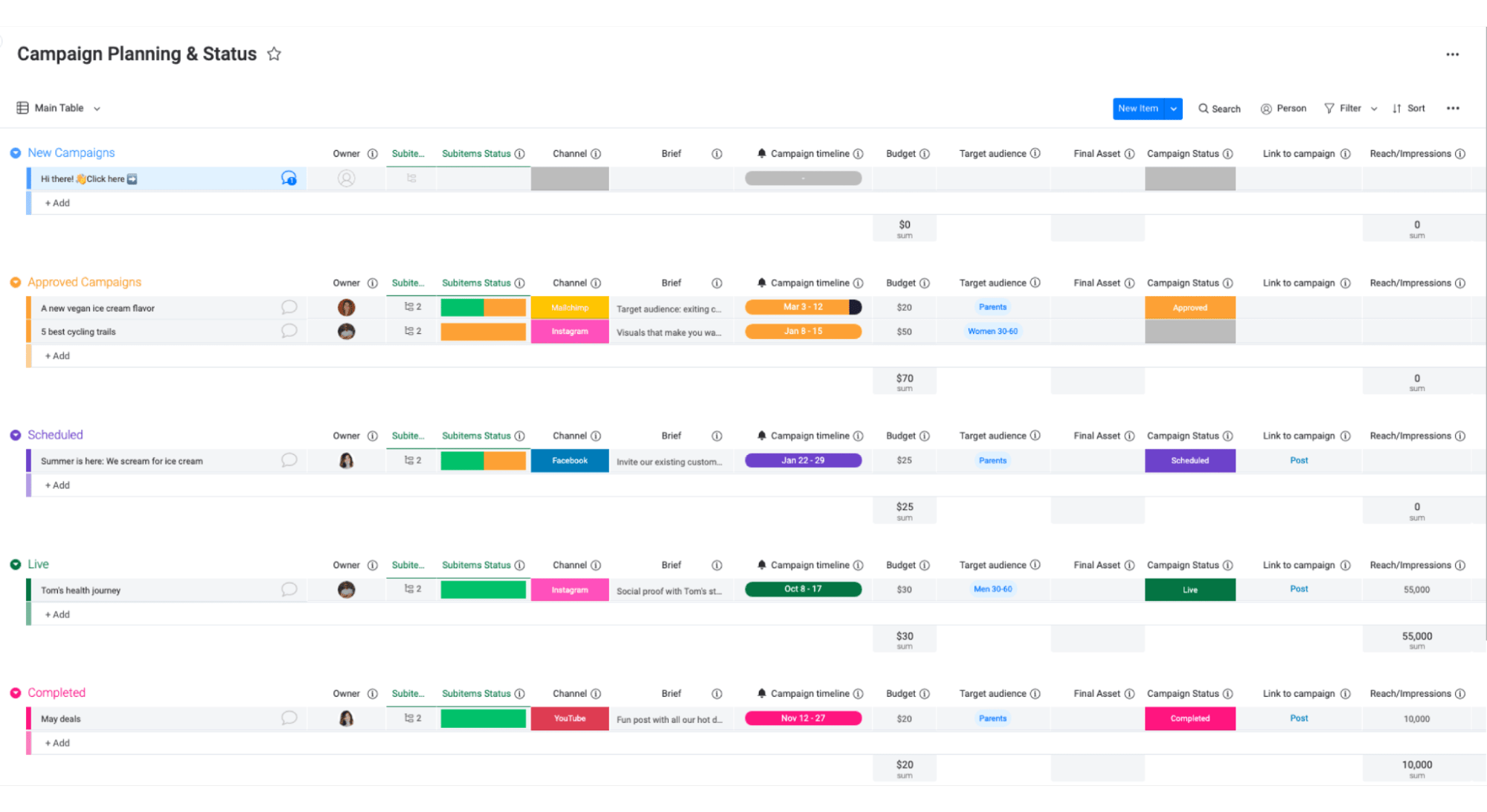
Essential components every launch plan must include
Your launch plan needs five core components to succeed. Missing any of these creates gaps that can derail your entire launch.
Pre-launch technical requirements
Technical readiness determines whether your launch succeeds or fails. Before going live, you must verify every technical element is tested and ready. This includes infrastructure that can handle expected load, comprehensive testing across all environments, and documented deployment procedures.
Your rollback plan acts as a safety net. If something goes wrong during launch, you need clear steps to revert to a stable state quickly. Performance benchmarks establish your baseline—without them, you won’t know if post-launch issues are normal or critical.
Cross-functional team responsibilities
Clear ownership prevents confusion and finger-pointing. Each team needs defined responsibilities that connect to the overall launch success.
- Engineering: code finalization and deployment.
- Product: scope definition and team coordination.
- Marketing: messaging and campaign execution.
- Sales: collateral preparation and rep training.
- Support: Documentation updates and customer Q&A readiness.
Utilize platforms like monday dev to help track these responsibilities with customizable workflows and automated notifications. When everyone knows their role and deadlines, launches move forward smoothly.
Marketing and go-to-market elements
Your technical work means nothing if customers don’t understand its value. Marketing elements bridge this gap by defining how you’ll communicate your product’s benefits.
- Messaging that resonates with your target audience.
- Channels that reach them effectively.
- Content that educates and excites.
Sales enablement ensures your sales team can articulate value and handle objections. Customer communication plans prepare users for changes and help them succeed with your new product.
Launch timeline and sprint milestones
Timing coordination prevents bottlenecks and missed opportunities. Your launch timeline must align development sprints with marketing campaigns, sales training, and support readiness.
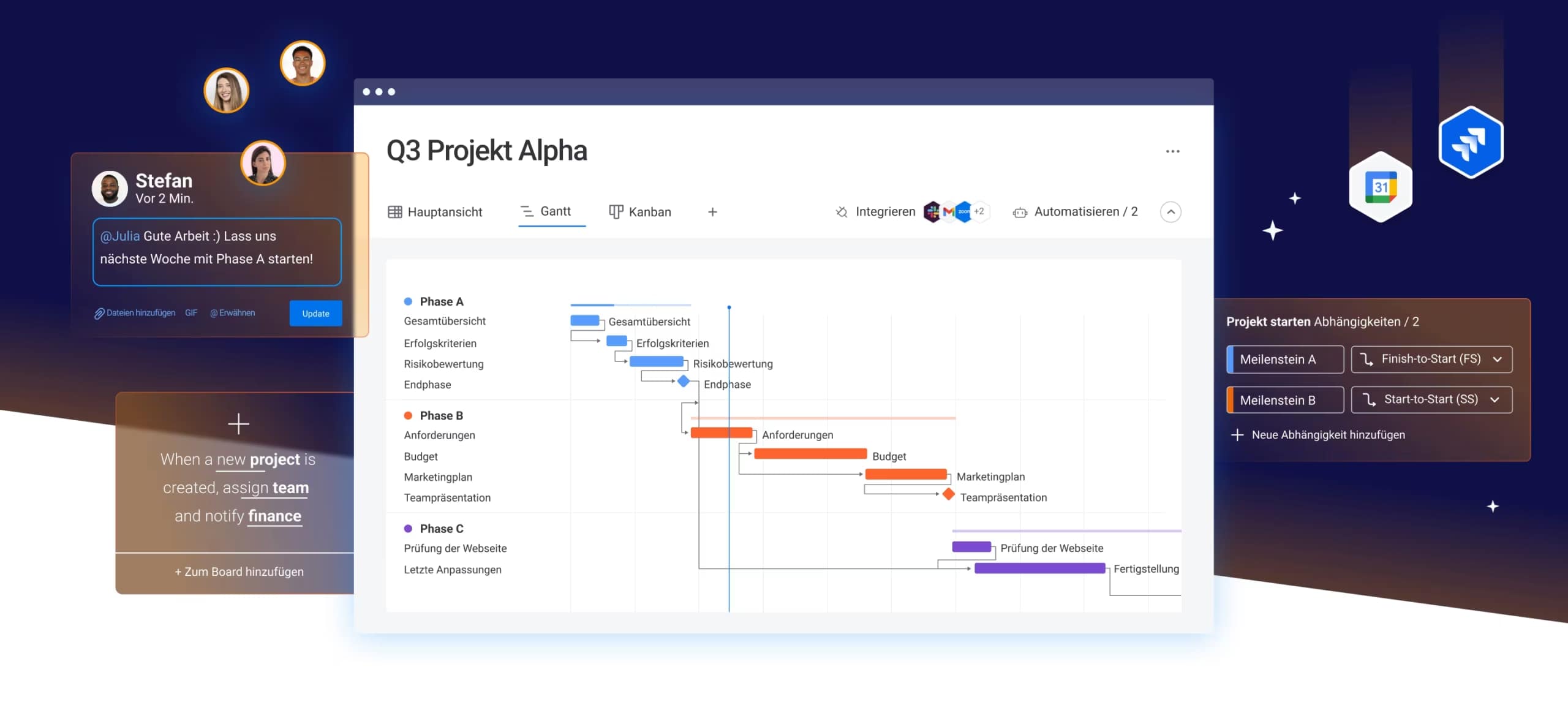
Visual timelines help teams see dependencies and adjust plans proactively. With platforms like monday dev, Gantt views make these connections clear: showing how delays in one area impact the entire launch.
Success metrics and KPIs
You can’t improve what you don’t measure. Launch metrics tell you whether your efforts succeeded and where to focus next.
- Technical metrics: uptime, response time.
- Business metrics: activation rate, revenue impact.
- Support metrics: ticket volume, customer satisfaction.
How to create your product launch plan
Building a launch plan doesn’t have to be overwhelming. Follow these five steps to create a comprehensive plan that keeps everyone aligned.
Step 1: define your product and target audience
Start with clarity on what you’re launching and who will use it. Document core features, technical specifications, and user personas. Validate assumptions through customer research—don’t guess what users want.
Step 2: build your cross-functional launch team
Assemble representatives from every department involved in the launch. Assign a launch lead who coordinates across functions and escalates issues. Schedule regular meetings — weekly during active launch phases — to maintain alignment.
Step 3: map your launch timeline to development sprints
Connect technical milestones to business activities. Code freeze should align with content finalization. Testing completion should precede customer announcements. This coordination prevents situations where one team is ready but waiting on another.
Step 4: create your go-to-market strategy
Your go-to-market strategy translates technical capabilities into customer value. Define positioning that differentiates your product. Select channels that reach your target audience. Prepare sales and support teams with training and resources.
Timing matters here too. Coordinate your launch with market events, avoid competitor announcements, and consider seasonal factors that impact adoption.
Step 5: set up real-time tracking
Real-time visibility prevents surprises. Set up dashboards that show technical health, marketing performance, and customer response. Automate alerts for critical metrics so teams can respond quickly to issues.
Turning to solutions like monday dev can really help with this step; customizable dashboards pull data from multiple sources, giving everyone a single view of launch health.

7 product launch templates for every scenario
Different launches require different approaches. Choose the template that matches your situation to save time and reduce risk:
1. Major feature release template
Major features require extensive coordination. This template includes comprehensive testing plans, staged rollouts, and detailed communication strategies. Use it when launching features that significantly change user experience or require migration.
2. MVP launch template
MVP launches prioritize learning over perfection. This lightweight template focuses on rapid deployment, user feedback collection, and quick iterations. It’s ideal for testing new ideas with minimal investment.
3. Internal solution rollout template
Internal launches need change management focus. This template emphasizes training, adoption tracking, and productivity metrics rather than external marketing. Success means employees actually use the new tool.
4. API launch template
Developer audiences require technical depth. This template includes API documentation, code samples, and developer support channels. It ensures third-party developers can integrate successfully.
5. Mobile app launch template
Mobile launches face platform-specific requirements. This template covers app store guidelines, device testing, and mobile-specific metrics. Separate tracks for iOS and Android prevent platform conflicts.
6. SaaS update template
Existing products need careful update management. This template handles backward compatibility, feature flags, and phased rollouts. It minimizes disruption while delivering new value.
7. Enterprise deployment template
Enterprise customers demand extra rigor. This template includes security reviews, compliance checks, and executive alignment. Longer timelines accommodate procurement and pilot phases.
How to align engineering and business teams
Engineering and business teams often work on different timelines and measure success in different ways. A launch only comes together when those perspectives stay connected.
Let’s explore how to build shared visibility, smooth communication, and a planning rhythm that keeps every team moving toward the same release goal.
Breaking down silos between development and marketing
- Joint planning sessions: bring teams together to review timelines and dependencies.
- Shared objectives: create KPIs that require cross-team success.
- Embedded liaisons: assign team members to bridge departments.
- Transparent documentation: make launch plans accessible to everyone.
Creating shared launch dashboards
Shared dashboards eliminate information gaps. Display metrics that matter to both technical and business stakeholders — deployment status alongside campaign performance, for example. Update automatically to reduce manual reporting burden.
Establishing clear communication workflows
Good communication prevents misunderstandings and delays. Establish regular touchpoints like daily standups during critical phases and weekly syncs during planning. Create escalation paths for blockers so issues get resolved quickly.
Centralize communication in dedicated channels. Whether using Slack, Microsoft Teams, or monday dev’s built-in features, keep launch discussions in one place.

"monday dev empowered us to optimize our GTM approach, resulting in faster, more dependable deliveries"
Steven Hamrell | Director of Product Management
"monday dev empowers us to manage the entire development process on one platform so we can speed up product delivery and improve customer satisfaction"
Mitchel Hudson | Head of Technology
"We're operating in an open, deep trusting, transparent environment with no silos of information. It's about completely opening access to everyone who needs it."
Alan Schmoll | Executive Vice President, Vistra PlatformReal-time launch progress tracking
Once launch work is underway, teams need a clear way to see what’s on track, what’s slipping, and what needs attention. Real-time tracking turns scattered updates into a single, reliable view of progress, helping every team respond quickly and keep the launch moving forward.
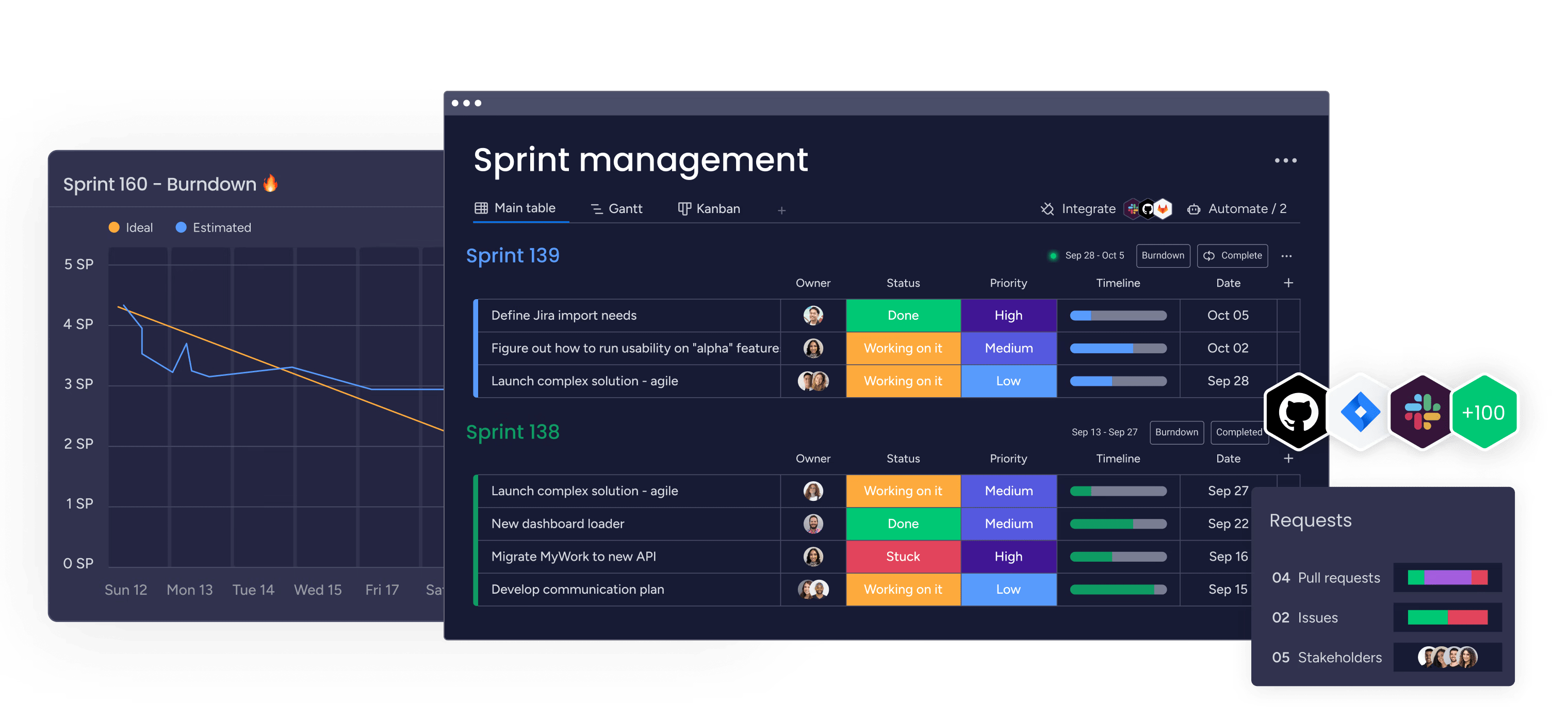
Connecting sprints to launch milestones
Make technical progress visible to business stakeholders. Show how sprint completion connects to marketing readiness or sales enablement. This translation helps non-technical team members understand dependencies and timing.
Early warning systems for delays
Set up automated alerts for potential problems. Monitor metrics like item completion rates, test pass rates, and dependency status. When indicators trend negative, teams can intervene before delays cascade.
With intuitive solutions like monday dev, automation features trigger notifications when tasks fall behind or blockers appear. This early warning gives teams time to adjust plans or allocate additional resources.
Portfolio views for multiple launches
Managing multiple launches requires portfolio-level visibility. See resource allocation across launches, identify conflicts between timelines, and balance priorities based on business impact.
Portfolio dashboards in platforms such as monday dev show executive teams where to focus attention and resources. This bird’s-eye view prevents individual launches from consuming disproportionate resources.
Best practices for successful launch planning
Strong launches rely on consistent habits, not just well-written plans. These best practices help teams stay aligned, manage complexity, and maintain momentum from early planning through go-live.
- Start early: begin planning at least two development cycles ahead so teams have time to surface dependencies, align timelines, and address risks before they escalate.
- Align priorities: bring engineering, product, marketing, sales, and support into regular planning sessions to ensure everyone is working toward the same launch goals.
- Track technical dependencies: map out integrations, infrastructure needs, and testing requirements early to prevent hidden blockers from delaying the release.
- Prepare for post-launch: document monitoring steps, support workflows, and iteration plans so teams can respond quickly once the product goes live.
Managing multiple product launches at scale
As your product lineup grows, launches start to overlap, compete for attention, and draw from the same teams. To keep them on track, you need a way to see everything in one place, allocate resources thoughtfully, and decide which milestones take priority.
The next steps break down how to create that structure so each launch gets the focus it needs without slowing others down.
Portfolio-level launch planning
Centralize launch planning to see the full picture. Track all active and upcoming launches in one system. Identify resource conflicts before they impact individual launches.
Smart resource allocation
Resources are always limited. Allocate them based on clear criteria: business impact, risk level, team capacity, and market timing.
Prioritizing competing deadlines
When everything is urgent, nothing is. Establish prioritization criteria before conflicts arise and communicate decisions transparently.
AI-powered launch planning strategies
I can help teams move from reactive planning to smarter, data-driven decision-making. When used well, it highlights risks earlier, sharpens timelines, and gives teams clearer insight into how a launch is progressing.
- Predict outcomes: use AI to analyze historical performance and forecast how current launch plans are likely to unfold.
- Spot hidden risks: rely on automated monitoring to identify patterns that signal delays or issues before they surface.
- Optimize timelines: let AI review capacity, dependencies, and past performance to recommend more efficient sequencing.
- Strengthen coordination: use AI-generated insights to help teams align efforts and adjust plans with greater confidence.
Learn more: AI feature launch agent
Kickstart your launch planning with monday dev
The intelligent monday dev platform addresses the specific challenges development teams face during launches. Built on the robust monday Work OS, it provides flexibility to work your way while maintaining visibility and alignment across teams.
Use monday dev’s Sprint Board to create custom workflows that match your process, not the other way around. Set up automation recipes that trigger handoffs between teams — like automatically notifying marketing when code review completes or alerting support when documentation updates are ready.
You can also build custom dashboards using widgets like Timeline, Chart, and Battery views to show executives progress without requiring constant status meetings.
Integration capabilities further connect your entire tech stack through 200+ pre-built integrations. Pull commit data and PR status directly from GitHub, communicate through Slack with bidirectional updates, and sync customer data with Salesforce or HubSpot automatically. This connection ensures information flows smoothly without manual updates.
Finally, real-time collaboration features keep distributed teams aligned. Use @mentions to comment on specific tasks, share updates through the Updates section, and resolve blockers with threaded conversations — all without switching between platforms.
Whether you’re launching your first product or managing a portfolio of releases, monday dev scales with your needs. Start with pre-built launch templates from the Template Center and customize them using the no-code builder as your launch process matures.
Frequently asked questions
How long does a typical product launch take to plan and execute?
A typical product launch takes 8 to 20 weeks from initial planning to market release. Simple feature launches might take 8–12 weeks, while complex products with multiple integrations, compliance requirements, or large market rollouts often require 16–20 weeks to ensure proper coordination across all teams.
What's the difference between a soft launch and full launch in terms of planning?
The primary difference between a soft launch and a full launch is scope and objective. A soft launch releases your product to a limited audience for testing and feedback, requiring focused planning on monitoring systems and rapid iteration capabilities. A full launch targets your entire market, demanding comprehensive coordination across all departments, complete marketing campaigns, scaled infrastructure, and full support readiness.
How do you handle unexpected delays during product launch execution?
Handle unexpected delays by immediately communicating with all stakeholders about the impact and revised timelines. Activate your contingency plans, which might include re-prioritizing features, adjusting marketing timelines, or allocating additional resources to critical path items that are blocking the launch.
Who should own the overall product launch plan in a development organization?
The product manager typically owns the overall launch plan because they sit at the intersection of engineering, marketing, sales, and support teams. They have the cross-functional perspective needed to coordinate activities, resolve conflicts between departments, and ensure the launch aligns with business objectives.
Can you use the same launch template for B2B and B2C product launches?
You can adapt the same base template for both B2B and B2C launches, but each requires specific modifications. B2B launches need sections for longer sales cycles, pilot programs, and enterprise security reviews, while B2C launches focus more on mass market messaging, app store requirements, and consumer support scaling.
How often should product launch plans be updated during execution?
Update your launch plan weekly during active execution phases, or immediately when major changes occur. Regular updates ensure all teams stay aligned on current priorities, timeline shifts, and emerging risks that could impact launch success.

 Get started